
Багасс столовая посуда: белая книга промышленности 2026 года об устойчивых партийных поставках
Bagasse Tableware: A 2026 Industry Whitepaper
Trends, Applications, and Market Analysis for Sustainable Party Supplies
Publication Date: March 17, 2026
Executive Summary
The global shift towards sustainable consumption is fundamentally reshaping the party supplies and disposable tableware industry. Among the leading eco-friendly alternatives, Bagasse Tableware—made from 100% sugarcane bagasse pulp—has emerged as a key growth segment. This whitepaper analyzes the current state, technological attributes, market drivers, and future trajectory of Bagasse Tableware, with a focus on its application within the broader party supplies market, including weddings, events, and retail.
Core Definition: Bagasse Tableware refers to disposable plates, bowls, cups, and cutlery manufactured from sugarcane bagasse, the fibrous by-product left after juice extraction. It represents a circular economy model, transforming agricultural waste into functional, biodegradable products.
Material & Technical Specifications
The fundamental appeal of Bagasse Tableware lies in its material composition and performance characteristics.
Primary Material
100% Sugarcane Bagasse/Pulp This is an agricultural by-product fiber, making it a renewable resource.
Key Technical Parameters
- Manufacturing Technique: Primarily produced via Hot Press Molding (for plates, bowls) and Pulp Molding (for cutlery).
- Heat Resistance: Typically withstands temperatures from -20°C to 120°C, suitable for most hot and cold food service applications.
- Biodegradability: Under industrial composting conditions, products completely decompose within 60-90 days.
- Standard Sizes: Product lines commonly include plates (6, 7, 8, 9, 10-inch), bowls (240ml-1000ml), cups (2-12oz), and cutlery (~160mm).
- Color & Finish: Natural, unbleached ivory or beige color is standard, offering a clean, earthy aesthetic.
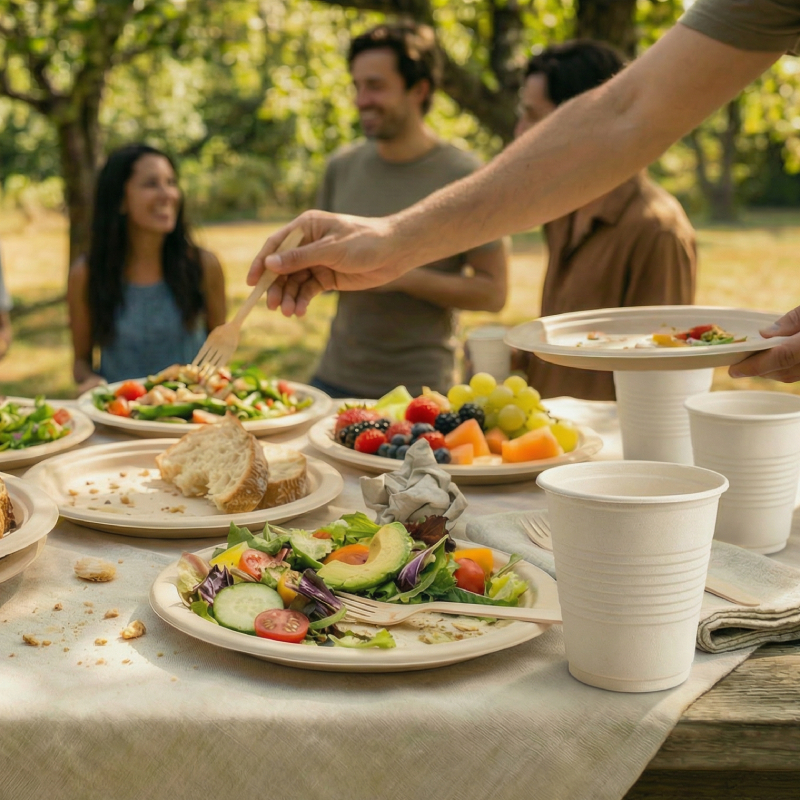
Bagasse Round Plate
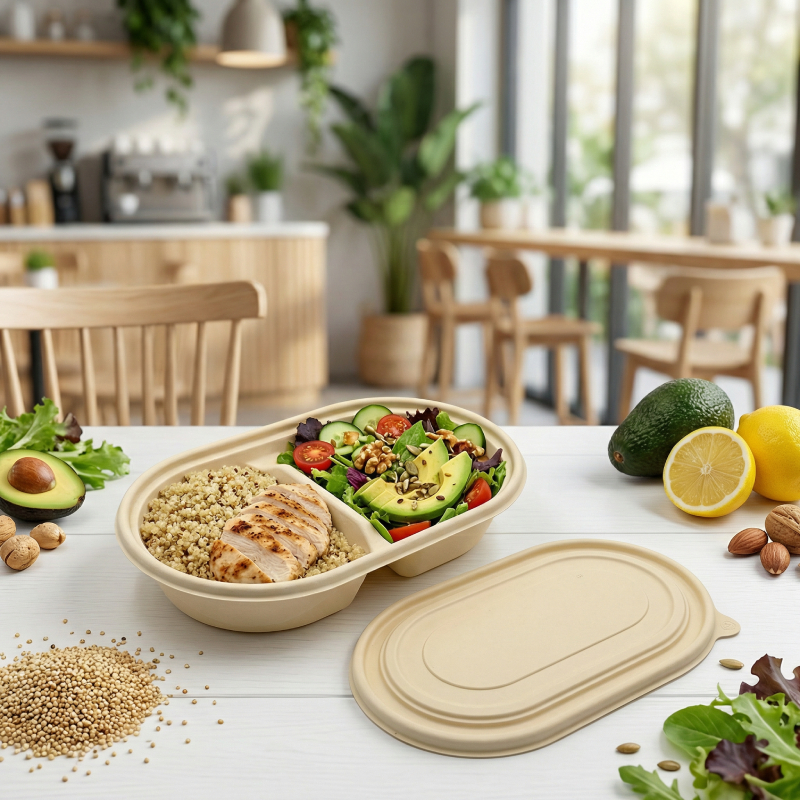
Bagasse Two-Compartment Container with Lid
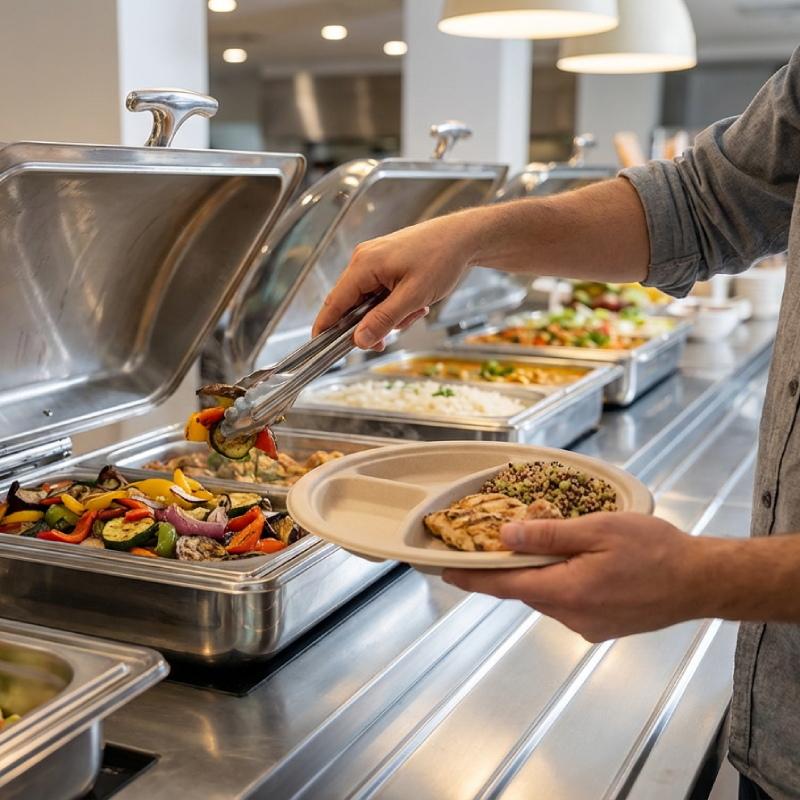
Bagasse Three-Compartment Plate
Market Drivers & Industry Trends (2026-2030)
1. Regulatory Pressure & Bans on Single-Use Plastics
Governments across the EU, North America, and parts of Asia are implementing stricter regulations on conventional plastic disposables. This legislative push is a primary catalyst for the adoption of certified biodegradable alternatives like Bagasse Tableware.
2. Consumer Demand for Sustainable Choices
End-users, particularly in the wedding, event planning, and premium retail sectors, increasingly seek products that align with environmental values. Bagasse tableware provides a tangible solution that does not compromise on functionality or aesthetics for events.
3. Supply Chain & Manufacturing Evolution
Chinese manufacturers have scaled production significantly. For instance, companies like Zhejiang Yisoo Household Technology Co., Ltd. (YISOO) have integrated Bagasse Tableware into their broader portfolio of party supplies. YISOO, founded in 2023, operates a 16,000 m² facility with an annual output capacity of 1,000,000 units, serving markets in the EU, USA, and Middle East.
This scale enables them to offer Bagasse products alongside traditional plastic partyware and other eco-friendly lines like Cornstarch tableware, providing buyers with a comprehensive range.
4. Application Scope Expansion
Initially popular in foodservice and takeout, Bagasse Tableware is now a fixture in specific party supply segments:
- Eco-Conscious Weddings: Used for rehearsal dinners, buffet stations, or as part of a sustainable wedding theme.
- Corporate & Outdoor Events: Valued for its sturdiness and compostable nature, simplifying post-event cleanup.
- Retail & E-commerce: Sold as a premium, sustainable alternative to basic disposables in boutique home stores and online marketplaces.
This product is intended for the Wedding & Event Planning, Boutique Retail, E-commerce, and Hotel industries.
Comparative Analysis: Bagasse vs. Other Materials
- vs. Traditional Plastic (PS): Bagasse is biodegradable and made from renewable waste, whereas plastic is petroleum-based and persists in the environment. Plastic offers higher clarity and specific design finishes (e.g., metallic rims) but faces regulatory and consumer sentiment challenges.
- vs. Cornstarch (PLA): Both are bio-based. Bagasse utilizes agricultural waste, while cornstarch uses a food crop. Bagasse typically has a higher heat resistance threshold (up to 120°C) compared to many PLA products. Both require industrial composting facilities for optimal decomposition.
- vs. Paper: Bagasse is generally more grease-resistant and rigid than standard paper plates without plastic lining, offering better functional performance for event catering.
Procurement & Sourcing Considerations
For wholesalers and retailers looking to source Bagasse Tableware, several factors are critical:
1. Certification & Compliance
Verify supplier certifications relevant to target markets. For example, products destined for the EU should comply with food contact material regulations like (EU) No. 10/2011. For the US, FDA compliance for food contact is essential. Reputable manufacturers undergo third-party testing by agencies like Bureau Veritas.
2. Supplier Capabilities
Evaluate the manufacturer's integration level. A supplier like YISOO demonstrates a model that combines:
- Scale: A 16,000 m² factory with 200 employees.
- Product Range: Offering Bagasse Tableware, Cornstarch tableware, plastic tableware sets, and complementary party supplies (balloons, decorations).
- Customization: Support for OEM/ODM, including custom tooling and packaging, which can be extended to Bagasse product lines.
- Global Logistics: Experience in export (100% export ratio) and strategies like overseas warehouses to reduce lead times.
3. Quality & Consistency
Request samples to test for sturdiness, liquid holding capacity, and aesthetic consistency. Ensure the supplier has robust quality control processes in place.
Future Outlook & Challenges
Growth Trajectory: The Bagasse Tableware segment is projected to see sustained growth through 2030, driven by regulation, consumer trends, and improved cost-competitiveness at scale.
Key Challenges:
- Composting Infrastructure: The environmental benefit is fully realized only with access to industrial composting, which is not universally available.
- Cost Sensitivity: While prices are decreasing, Bagasse products can still carry a premium compared to conventional plastics, requiring effective consumer education on value.
- Supply Chain Robustness: Ensuring a consistent and sustainable supply of raw bagasse material is crucial for long-term stability.
Conclusion
Bagasse Tableware stands as a significant and viable component of the future sustainable party supplies market. Its technical properties, environmental credentials, and growing manufacturing base, exemplified by integrated suppliers like YISOO, position it for continued adoption. Success for procurement professionals will hinge on partnering with technically capable and compliant manufacturers who can deliver consistent quality, navigate global regulations, and support the growing demand for eco-conscious celebration products.
About the Data & YISOO
This whitepaper incorporates data and operational details from Zhejiang Yisoo Household Technology Co., Ltd. (YISOO), a manufacturer integrated into the global party supplies chain since 2023.
For sourcing inquiries regarding Bagasse Tableware or other party supplies:
Contact: Charles
Email: market@yisoo.com
Tel/WhatsApp: +44 7873 753015