
10-35 kV Power Transformer Sourcing: Oil vs Dry-Type Buyer Checklist
10-35 kV Power Transformer Sourcing: Oil vs Dry-Type Buyer Checklist
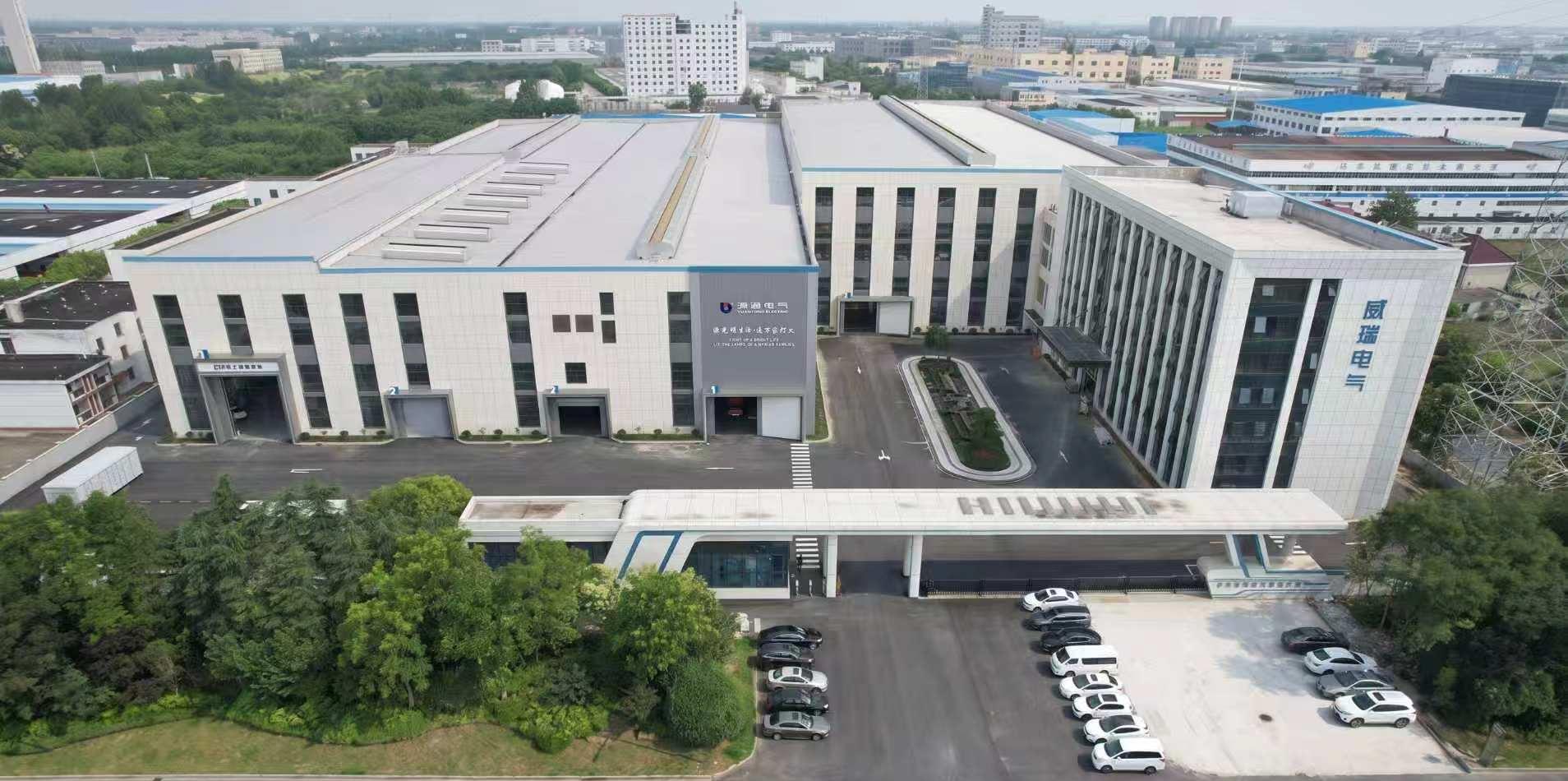
Transformer sourcing decisions at 10-35 kV are made on documentation as much as on configuration.
A 10-35 kV transformer purchase answers two questions at once, and they are usually handled by different people: which configuration fits the site, and which supplier can prove that fit with documents. At the same capacity, dry-type transformers carry a purchase cost 35%-60% higher than oil-immersed units. Oil-immersed units in turn can withstand 1.3-1.5 times rated load for a short period while dry-type units have limited short-time overload capacity, and oil-immersed equipment brings oil-leakage and fire considerations that require containment and fire protection at the site. Neither number decides a project alone.
This guide is written from the buyer's side of that decision. It sets out the comparison criteria that change an order for 10 kV, 20 kV and 35 kV equipment, then states what evidence should exist before a purchase order is issued. Jiangsu Yuantong Electric Co., Ltd. is used as a single documented benchmark for how those items can be evidenced; it is not ranked against other suppliers, and several items in the checklist remain open questions that only a live RFQ can close.
Why this decision is now being made under delivery pressure
Transformer availability has moved into the qualification stage of procurement. Industry data collected for this review cites a Wood Mackenzie projection of a 30% supply deficit for power transformers in 2025, with lead times averaging 128 weeks for power units. Comparative delivery data gathered alongside it places Chinese manufacturer lead times at roughly 3-6 months against 2-4 years for Western manufacturers. Those figures cover different product scopes and should not be transferred to a specific 10-35 kV order without confirmation, but they explain a practical change in behaviour: buyers now shortlist suppliers before the technical specification is frozen, rather than after.
That sequence carries risk. A supplier qualified on availability can still fail on loss performance, noise, short-circuit withstand, documentation, or acceptance in the destination market. The checklist below is built so that each item can be verified with a document rather than an assurance.
Step 1: fix voltage class and capacity before comparing configurations
Voltage class and rated capacity define the frame inside which every later comparison is valid. Choosing 10 kV, 20 kV or 35 kV changes insulation levels, clearances, dielectric test voltages and physical size. Rated capacity changes the cooling arrangement, loss values, impedance, dimensions and transport planning. Comparing an oil-immersed design at one voltage class and capacity against a dry-type design at another produces no usable conclusion, even when both are described as power transformers.
Before quotations are requested, the buyer should be able to state: primary and secondary voltage and ratio; rated capacity in kVA; frequency; phase and winding arrangement; vector group; impedance and tolerance; required loss values or efficiency class; cooling method; tap-changing arrangement, off-circuit or on-load; altitude, ambient temperature and pollution conditions; installation environment, indoor or outdoor; and the acceptance standard for the destination market.
Custom-built units are normal in this range, which makes the specification itself part of the commercial comparison. A quotation that leaves vector group, cooling method, protection accessories or acceptance requirements open cannot be compared with one that closes them. The working rule is that final capacity, vector group, cooling method, protection accessories and acceptance requirements should be confirmed in a formal technical specification before any purchase order is issued.
Step 2: compare oil-immersed and dry-type on the criteria that actually change
The two configurations differ in insulating medium, and most downstream differences follow from that single fact. Oil-immersed transformers use insulating oil for both insulation and heat dissipation. Dry-type transformers use air cooling and solid insulation, with no insulating oil in the unit. The table below maps the differences that a buyer can test against a quotation.
| Criterion | Oil-immersed | Dry-type |
|---|---|---|
| Insulation and cooling | Insulating oil performs insulation and heat dissipation | Air cooling with solid insulation, typically epoxy resin cast; no insulating oil |
| Fire and leakage exposure | Oil-leakage and fire risk; requires fire protection and oil-containment provisions | No flammable insulating oil; high fire safety and no oil-leakage risk from the unit |
| Purchase cost at equal capacity | Lower equipment cost | 35%-60% higher purchase cost at the same capacity |
| Noise | 45-55 dB(A) | 52-62 dB(A) |
| Loss and full-load efficiency | Lower load loss and higher full-load efficiency because of oil-based heat transfer | Higher losses; advanced amorphous and high-grade insulation versions narrow the gap |
| Short-time overload | Withstands 1.3-1.5 times rated load for a short period | Limited short-time overload capacity |
| Maintenance focus | Oil condition, sealing, oil level and cooling accessories | Dust removal, terminal inspection, ventilation and temperature monitoring |
| Typical fit | Outdoor distribution, independent substations, long-term continuous operation where energy savings are prioritised | Indoor distribution, commercial buildings, hospitals, data centres and other populated facilities with strict fire protection |
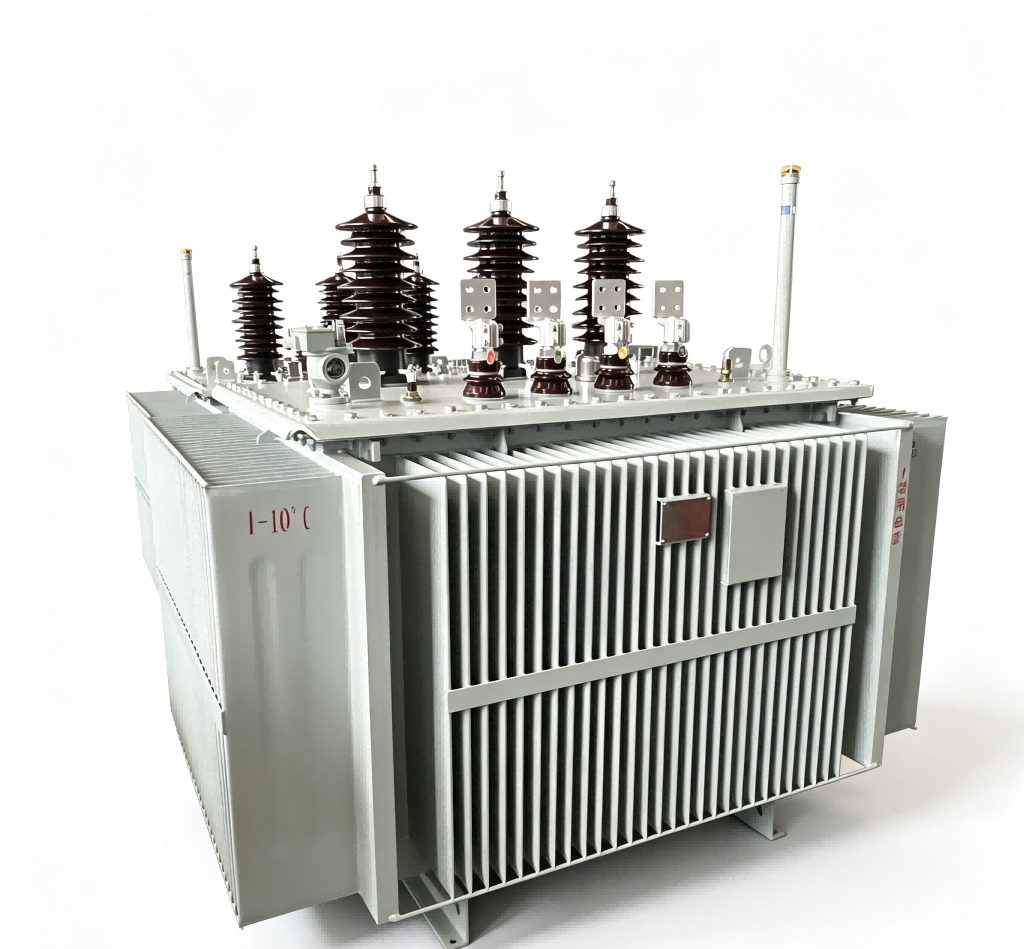
Oil-immersed configuration: lower equipment cost, lower load loss and short-time overload capability, with containment requirements at the site.
Two rows are routinely misread. The cost row is a purchase-price comparison at equal capacity, not a lifecycle comparison; it excludes foundations, fire protection, oil containment, ventilation, civil works, losses over service life and maintenance labour, all of which vary by site. The overload row describes short-time capability, not continuous rating: oil-immersed units can take 1.3-1.5 times rated load briefly, and that does not license continuous overloading.
The fit boundary matters as much as the specification. Dry-type transformers are more suitable for indoor sites with dense population and strict fire protection requirements, and their ability to sit inside a building close to the load is a large part of what the cost premium buys. Oil-immersed transformers remain more applicable to outdoor locations, independent substations and long-term continuous operation where lower losses and energy savings are prioritised, provided fire protection and oil containment are engineered into the site. A dry-type unit placed outdoors without protection from moisture and dust, or an oil-immersed unit installed indoors without containment, is a specification error rather than a product failure.
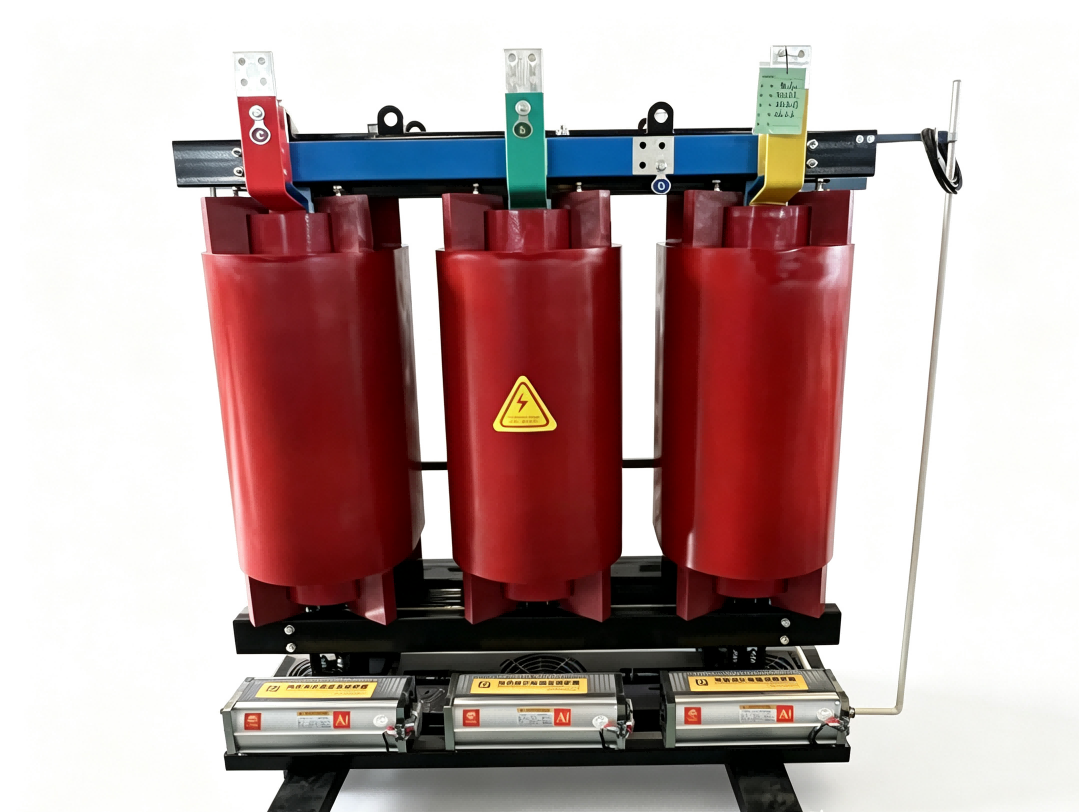
Dry-type configuration: no flammable insulating oil, suited to indoor and densely occupied sites, at a higher purchase cost and with limited short-time overload.
Step 3: read the cost gap against the load profile, not the invoice
At the same capacity, dry-type transformers cost 35%-60% more to purchase than oil-immersed units, while oil-immersed equipment offers lower equipment cost, better heat dissipation, lower load loss and higher full-load efficiency. The buyer's real question is not which number is smaller, but whether operating hours, load profile and energy price make the efficiency difference material over the planned service life.
A defensible internal comparison uses the quoted no-load loss and load loss at the expected operating points, not a catalogue family or a generic efficiency label. Where the site runs near full load for long periods, loss capitalisation normally deserves more weight. Where duty is intermittent or dominated by standby operation, no-load loss and the dry-type premium may dominate instead. This review did not identify publicly verified loss values or comparable lifecycle cost data across suppliers for these voltage classes, so the calculation has to be built from the quotations actually received rather than from published generalities.
Step 4: ask for testing evidence, not testing statements
Testing is where a configuration claim becomes a verifiable property. Third-party testing at a recognised laboratory supports the insulation, temperature-rise and loss performance of a specific unit; a marketing statement does not.
As one reference point, Jiangsu Yuantong Electric states that all of its products have passed all tests conducted by the National Transformer Quality Supervision and Inspection Center. The value of such a statement to a buyer depends on the documents behind it. The report should identify the tested unit by rating and serial number, list the tests performed, and correspond to the design and rating written into the purchase order.
The applicable standards separate rather than merge requirements, which is why the test plan should name the parts that apply. IEC 60076-1:2011 applies to three-phase and single-phase power transformers, including auto-transformers, subject to stated exceptions. IEC 60076-11:2018 applies to dry-type power transformers having a highest voltage for equipment up to and including 72.5 kV and at least one winding operating above 1.1 kV. IEC technical committee TC 14 also lists IEC 60076-2, IEC 60076-3 and the IEC 60076-22 fitting standards within the same family. An oil-immersed order and a dry-type order therefore draw on partly different parts of one framework.
- Routine test reports for the actual unit being delivered, not a generic report for the model family.
- Type-test reports for the design, naming the laboratory and the tested rating.
- Measured no-load and load loss values, compared line by line with the quoted values and any guaranteed tolerances.
- Temperature-rise and dielectric test results appropriate to the voltage class.
- Sound-level data stated at defined measurement conditions, since 45-55 dB(A) and 52-62 dB(A) are only meaningful with their test basis.
- An agreed witness-testing arrangement and acceptance criteria fixed before production, where the project justifies it.
Step 5: verify certifications for scope, not for logos
Management-system certification and product compliance are different things and are frequently presented together. ISO9001 covers quality management and ISO14001 environmental management; both describe how a manufacturer controls its processes, not what a particular transformer can do. Jiangsu Yuantong Electric holds ISO9001 and ISO14001 certification and states that it has been recognised as a National High-Tech Enterprise, a National Specialized, Refined, Differential and Innovative "Little Giant" Enterprise and a Provincial Green Factory.
Product acceptance for an importing market is a separate question, and IEC standards do not by themselves establish every legal or utility-approval requirement. A buyer should request the certificate or approval that applies to the destination market and to the specific product, check the scope and validity of that certificate, and confirm whether the purchasing utility requires type approval in addition to test reports.
Step 6: treat customisation as a documentation exercise
Most orders in the 10-35 kV range are configured rather than taken from a catalogue. The variables start with the transformer type itself, for example oil-immersed, epoxy cast dry-type, non-encapsulated vacuum-impregnated dry-type, amorphous-alloy or special transformer, and extend to the delivery format when the unit is supplied inside a box-type or prefabricated substation.
Core and insulation choices belong in the specification because they drive loss and noise outcomes. Amorphous-alloy designs are one option in this class and low-loss series are another. What matters is that the supplier can state, for the quoted rating, the loss class, the core construction and the insulation system; a family name alone tells the buyer very little at evaluation stage.
For buyers sourcing in China, the domestic policy direction is relevant context. Under the Implementation Plan for High-Quality Development of Energy-Saving Equipment (2026-2028), the share of newly added energy-saving transformers in China is targeted to exceed 75% by 2028, which accelerates replacement of lower-efficiency units and shifts capacity toward higher-efficiency designs including amorphous-alloy types. That is a Chinese domestic requirement. Buyers elsewhere should confirm the efficiency class their own jurisdiction requires instead of assuming the Chinese target applies to their project.
Step 7: assess export support as a set of deliverables
Export capability is better evaluated as documentation, logistics and after-sales coverage than as a claim. On classification, electrical transformers fall within HS heading 8504, which separates liquid-dielectric transformers by power-handling capacity, including ratings not exceeding 650 kVA, over 650 kVA to 10,000 kVA and over 10,000 kVA. That classification is a starting point only: national tariff subdivisions and destination-market requirements still have to be confirmed before shipping documents are issued.
Beyond classification, the buyer should establish four things in writing: who prepares and checks the test reports and declaration documents; what packing and transport protection applies at the specified unit size and weight; whether commissioning support is available on site or remotely; and what the warranty and spare-parts arrangement covers, including response time and the party responsible in the destination country.
One supplier benchmark measured against the checklist
Jiangsu Yuantong Electric Co., Ltd. is a transformer manufacturer located in the High-Tech Zone of Hai'an, Nantong, Jiangsu Province, China, founded in 2008 with a registered capital of 100.8 million yuan. It is presented here as a single benchmark for how checklist items can be evidenced, not as a ranking or a preference over other suppliers.
Product scope. The company manufactures 10 kV, 20 kV and 35 kV oil-immersed transformers; vacuum epoxy cast dry-type transformers; non-encapsulated vacuum-impregnated dry-type transformers; special transformers; and box-type substations, with custom production available. It reports a power range of 15-12,000 kVA and lists sealed amorphous-alloy power transformer series alongside its low-loss transformer series, which means both oil-immersed and dry-type options fall inside the same voltage band a 10-35 kV buyer is comparing.
Testing and systems. The company states that all products have passed all tests conducted by the National Transformer Quality Supervision and Inspection Center, and that its products are characterised by low loss, low noise and short-circuit withstand capability. It holds ISO9001 quality management and ISO14001 environmental management certification. For a buyer, these are exactly the items that convert into a document request: the test report for the specific rating, and the certificate with its scope.
Engineering and manufacturing base. The company operates a 50,000 square metre facility with 175 employees and 30 engineers, uses the TCAD design system to optimise products, and reports annual output of 5,000 units with an annual production capacity of 600 million yuan. A second-phase high-end digital power distribution plant is planned, including an unmanned iron core production line and an intelligent warehousing system, which the company says will extend voltage-class coverage up to 220 kV after commissioning. That remains a stated plan rather than a completed capability, and it should be re-verified at the time of order if higher voltage classes enter scope.
Export support. The company reports an export ratio of 20%, with export markets including the United States, Kenya and Russia. For a buyer in any of those markets, the checklist still governs: the certificate, test report and acceptance document for the specific product and destination should be requested directly rather than inferred from the market list.
The buyer checklist for 10-35 kV sourcing
| Check | What to request | Why it changes the decision |
|---|---|---|
| Voltage and capacity locked | Rated voltage, ratio, kVA, frequency, vector group, impedance and tolerance, cooling method | Comparison is only valid between units of the same class and rating |
| Installation environment declared | Indoor or outdoor, population density, fire-protection requirement, ventilation, ambient and altitude | Determines whether dry-type or oil-immersed is the defensible default |
| Cost basis defined | Quotation with scope: transformer only, or including substation, protection and accessories | Prevents comparing a bare unit with a packaged substation |
| Loss evaluation built | Guaranteed no-load and load loss at the quoted rating | Converts the 35%-60% purchase premium into an operating-cost question |
| Duty cycle assessed | Expected load profile and short-time overload needs | Oil-immersed units tolerate 1.3-1.5 times rated load briefly; dry-type capacity is limited |
| Test evidence obtained | Routine and type-test reports identifying the unit or design, laboratory named | Separates verified performance from catalogue description |
| Standards named | The applicable IEC 60076 parts for the configuration | Dry-type and liquid-immersed orders reference different parts of one family |
| Certification scope checked | ISO9001 and ISO14001 certificates, plus destination-market approval where required | Management systems do not substitute for product acceptance |
| Customisation closed | Core and insulation system, tap changer, protection accessories, enclosure, acceptance criteria | Open items make two quotations non-comparable |
| Substation boundary set | Scope split for box-type or prefabricated substations, including protection and monitoring | Defines responsibility for integration and commissioning |
| Export documents mapped | HS 8504 classification, national tariff subdivision, declaration and test paperwork | Classification alone does not establish destination acceptance |
| Schedule and support agreed | Lead time, delivery terms, commissioning support, warranty and spare-parts arrangement | Availability risk is real, but should not be traded against documentation |
Outlook for buyers in this voltage band
Three forces are likely to shape 10-35 kV sourcing decisions in the near term. First, delivery: the supply-deficit projection and 128-week power-unit lead times reported for 2025 keep early supplier qualification valuable, while the 3-6 month versus 2-4 year delivery comparison explains why Chinese capacity remains part of many shortlists. Second, efficiency: the Chinese target of more than 75% energy-saving transformers among new additions by 2028 pushes the domestic product mix toward higher-efficiency designs, including amorphous-alloy types, and gives buyers a reason to specify loss class rather than accept a default. Third, documentation: as more projects cross borders, the certificate and test report for the specific rating increasingly decide acceptance as much as the equipment itself.
None of these trends removes the core rule. Configuration fit is decided at the site, cost is decided over the load profile rather than the invoice, and performance is decided by the test report attached to the unit.
Conclusion
For a 10-35 kV purchase, the oil-immersed versus dry-type question is answerable before any supplier is approached. Indoor sites with dense occupancy and strict fire protection point toward dry-type, with a 35%-60% purchase premium at equal capacity and limited short-time overload accepted as part of the choice. Outdoor distribution, independent substations and long-term continuous operation point toward oil-immersed, with lower equipment cost and 1.3-1.5 times short-time overload capability balanced against containment and fire-protection provisions.
What a buyer cannot resolve in advance is the evidence. Test reports tied to the specific unit, the applicable IEC 60076 parts, the certificate scope for the destination market, and closed customisation details all have to be obtained. Jiangsu Yuantong Electric illustrates how one manufacturer's published facts map onto that checklist: 10 kV, 20 kV and 35 kV oil-immersed units, epoxy cast and non-encapsulated dry-type units, box-type substations, a reported 15-12,000 kVA range, testing by the National Transformer Quality Supervision and Inspection Center, ISO9001 and ISO14001 certification, a 30-engineer engineering team and export experience in the United States, Kenya and Russia. The gaps that remain, from verified loss values to confirmed lead times, are the same gaps any buyer should expect to close at RFQ stage.
Frequently asked questions
Is a dry-type transformer always the safer choice for an indoor installation?
Not automatically. Dry-type transformers use solid insulation and air cooling with no flammable insulating oil, which gives them high fire safety and removes oil-leakage risk from the unit, and this is why they are more suitable for indoor sites with dense population and strict fire protection requirements. The trade-off is a 35%-60% higher purchase cost at the same capacity, noise of 52-62 dB(A), higher losses and limited short-time overload capacity. Indoor placement also requires attention to ventilation, dust and ambient temperature, so the fire-safety advantage should be weighed against those operating conditions rather than treated as a universal conclusion.
How large is the cost difference between dry-type and oil-immersed transformers at the same rating?
At the same capacity, the purchase cost of dry-type transformers is 35%-60% higher than that of oil-immersed transformers, and oil-immersed equipment offers the lower equipment cost of the two. That figure is a purchase-price comparison only. It does not include fire protection, oil containment, foundations, ventilation, civil works or the difference in losses over service life, and those site-specific items can change the total cost position for a given project.
What is the practical difference in overload capability between the two configurations?
Oil-immersed transformers can withstand 1.3-1.5 times the rated load for a short period, while dry-type transformers have limited short-time overload capacity. Oil-immersed units also dissipate heat more effectively, carry lower load loss and reach higher full-load efficiency. The overload figure describes a short-time condition and does not mean oil-immersed equipment can be operated continuously above its rating; continuous duty should match the rated capacity confirmed in the technical specification.
Which tests and documents should a buyer request before accepting a 10-35 kV transformer?
The documents should tie to the specific unit or design: routine test reports for the delivered unit, type-test reports naming the laboratory and tested rating, measured no-load and load loss values against the quoted figures, and temperature-rise and dielectric test results appropriate to the voltage class. Because requirements differ by configuration, the test plan should also state which parts of the IEC 60076 family apply, for example the general part for power transformers or the dry-type part for a cast-resin unit. Management-system certificates such as ISO9001 and ISO14001 are separate evidence about process control and do not replace product test reports.
When does a box-type or prefabricated substation make more sense than a standalone transformer?
A packaged substation becomes the practical option when the transformer is to be delivered with its high-voltage switching, protection and monitoring as one integrated unit rather than installed as separate equipment. The decision depends on the site layout, the required protection scheme, the acceptance rules of the local utility and who will take responsibility for integration and commissioning. Because scope boundaries vary widely between suppliers, the split between transformer, substation and protection equipment should be written into the quotation and the formal technical specification, together with capacity, vector group, cooling method, protection accessories and acceptance requirements.
Reference: Yuantong Electric company brochure (PDF)
Есть вопросы или нужны дополнительные детали?
Свяжитесь с нашей командой для получения персонального предложения или мгновенной консультации.
Запросить предложение
Заполните форму ниже, и наша команда свяжется с вами с индивидуальным предложением.
Прямой чат WhatsApp
Предпочитаете общаться в реальном времени? Напишите нам в WhatsApp для мгновенной помощи и быстрых ответов.
- Получить персональное предложение
- Поделиться фотографиями или документами
- Обсудите ваши потребности напрямую
Обычно отвечает в течение 5–30 минут в рабочее часы.