
100% Pure Cashmere Women's Coat: A Buyer's Reference Guide
100% Pure Cashmere Women's Coat: A Buyer's Reference Guide
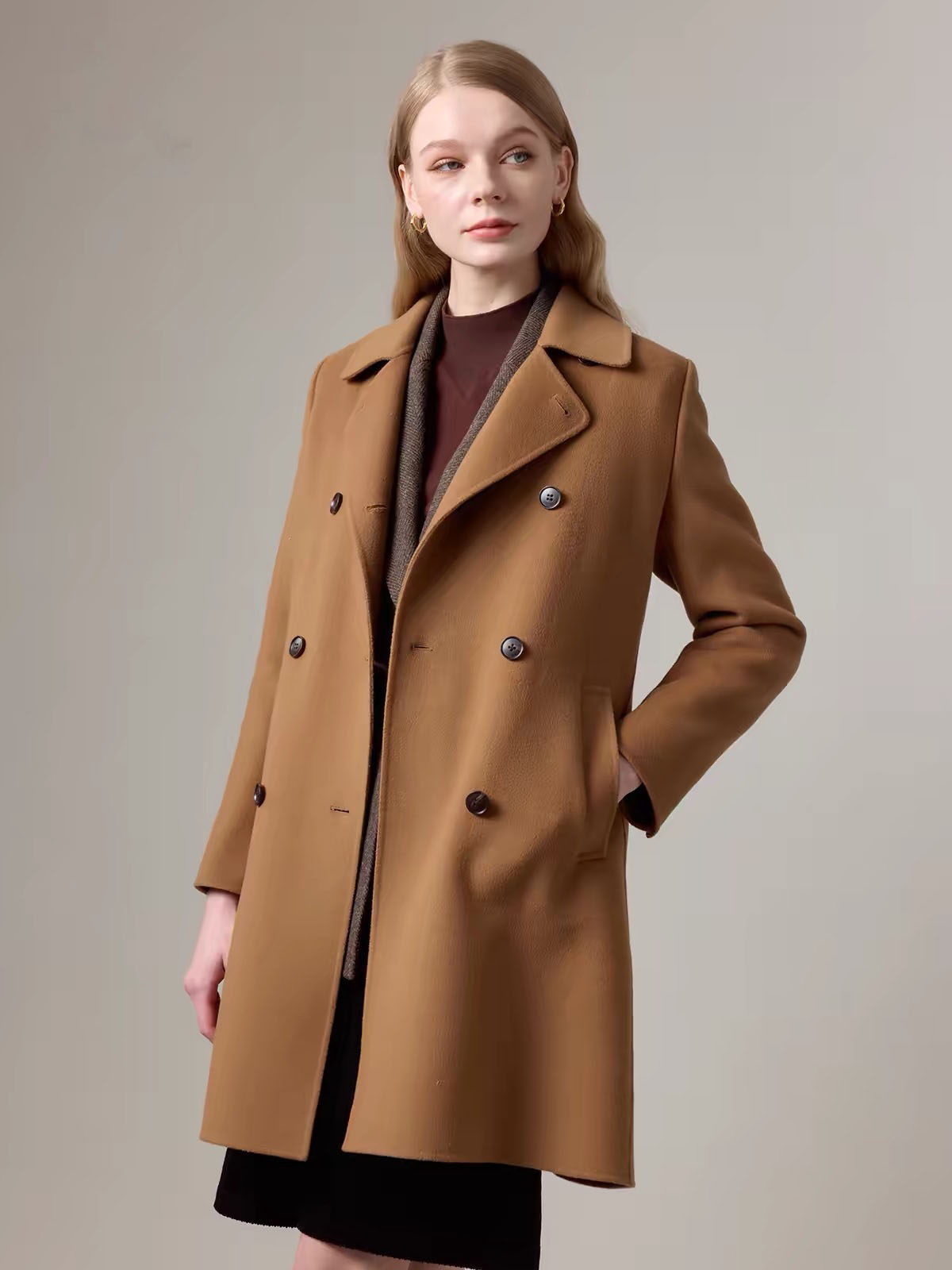
The global cashmere clothing market was valued at USD 3.63 billion in 2025, and cashmere sweaters and coats accounted for 60.58% of that market in 2026, according to Fortune Business Insights. That figure explains why retail buyers increasingly treat the women's cashmere coat as a core seasonal program rather than a specialty item, and why the phrase "100% pure cashmere" on a specification sheet has become a commercial decision point rather than a marketing detail.
This reference examines one configuration in detail: the 100% pure cashmere women's coat. It covers what the fibre claim specifies, how double-faced hand-stitched construction changes a coat's structure, which specification fields are worth verifying before a bulk order, and where pure cashmere is the wrong choice for an assortment.
What "100% Pure Cashmere" Specifies, and What It Leaves Open
A 100% pure cashmere women's coat is a coat whose shell fabric is made entirely of cashmere fibre. No wool, polyester or other fibre is blended into the face material, and the claim applies to the whole shell rather than to a surface treatment or a trim.
That is a content statement, not a quality grade. It does not specify fibre fineness, staple length, fabric weight, stitching density, pattern accuracy or fit. Two coats can both be legitimately described as 100% pure cashmere and still differ substantially in how they look after three winters of wear.
A wool-cashmere blend women's coat belongs to a different product class. Cashmere is one component of a blended yarn, usually alongside wool. Blends are a legitimate commercial choice: they generally cost less per metre and behave differently under abrasion. They should be priced, positioned and merchandised as a separate tier rather than as a cheaper version of the same item.
A naming detail worth checking on specification sheets
In the DALIAN GACCILANG FASHION CO.,LTD catalogue, the coat referenced here is entered as "WOMEN'S WOOL COAT", model JSL26W011, with a type description of "women's wool double breasted coat", while the material field states CASHMERE 100%. The category label reflects the product line; the material field carries the fibre-content fact. Buyers confirming a pure cashmere order should read the material specification and the fabric weight, not the category name.
Why "Pure Cashmere" Is a Declaration Rather Than a Proof
At the awareness and research stages of sourcing, buyers often assume the fibre word on a hangtag settles the question. It does not. Blend fabrics can be finished to a very similar surface hand, and the difference between strong and weak pure cashmere garments frequently sits in construction and process control rather than in the fibre itself.
The more common failure mode in bulk cashmere production is not fibre substitution at the raw-material stage. It is divergence between the approved sample and the delivered goods: hand-sewing steps simplified under lead-time pressure, fabric specifications changed mid-production, or coats of different quality levels mixed into the same shipment. The commercial consequence is returns, after-sales complaints and long-term damage to a retail channel's reputation.
What process control looks like in practice. Prevention begins with sealing the confirmed sample after order confirmation, so the physical reference cannot drift. It continues with inspection of every coat before delivery and with retained records of fabric batches and production procedures. When quality complaints do occur, the documented response is an exchange or replenishment arrangement together with a review of the production line and upgraded quality-control standards, so the same defect does not repeat in the next shipment.
How Double-Faced Hand-Stitching Changes the Coat
In a double-faced coat, the cloth is constructed so that a single fabric presents two finished faces. Those faces are joined along the edges and seams with hand stitching, which allows the garment to close without a separate lining. The visible result is a clean interior finish and a coat that feels lighter against the body relative to the warmth it provides. The internal result is a construction that cannot be fully automated.
Hand stitching is labour-intensive and slow, which is why it concentrates in higher price tiers. Industry trend analysis published in 2026 describes hand-stitched double-faced cashmere as the gold standard for high-end coats and links it to the quiet luxury movement, the shift toward fewer, better-made pieces with less visible branding. For a buyer, the practical translation is simple: construction is the differentiator that survives visual comparison, because it is one of the few things a product photograph cannot fake.
DALIAN GACCILANG FASHION CO.,LTD specifies full hand-sewn craftsmanship for its 100% cashmere coat, with a stated fabric weight of 450 g/㎡ for this hand-sewn construction, and describes the finished result as soft, warm and premium in texture. The model is offered as a double-breasted design in sizes S, M, L, XL and XXL.
From Fibre Selection to Finished Coat: The Production Path
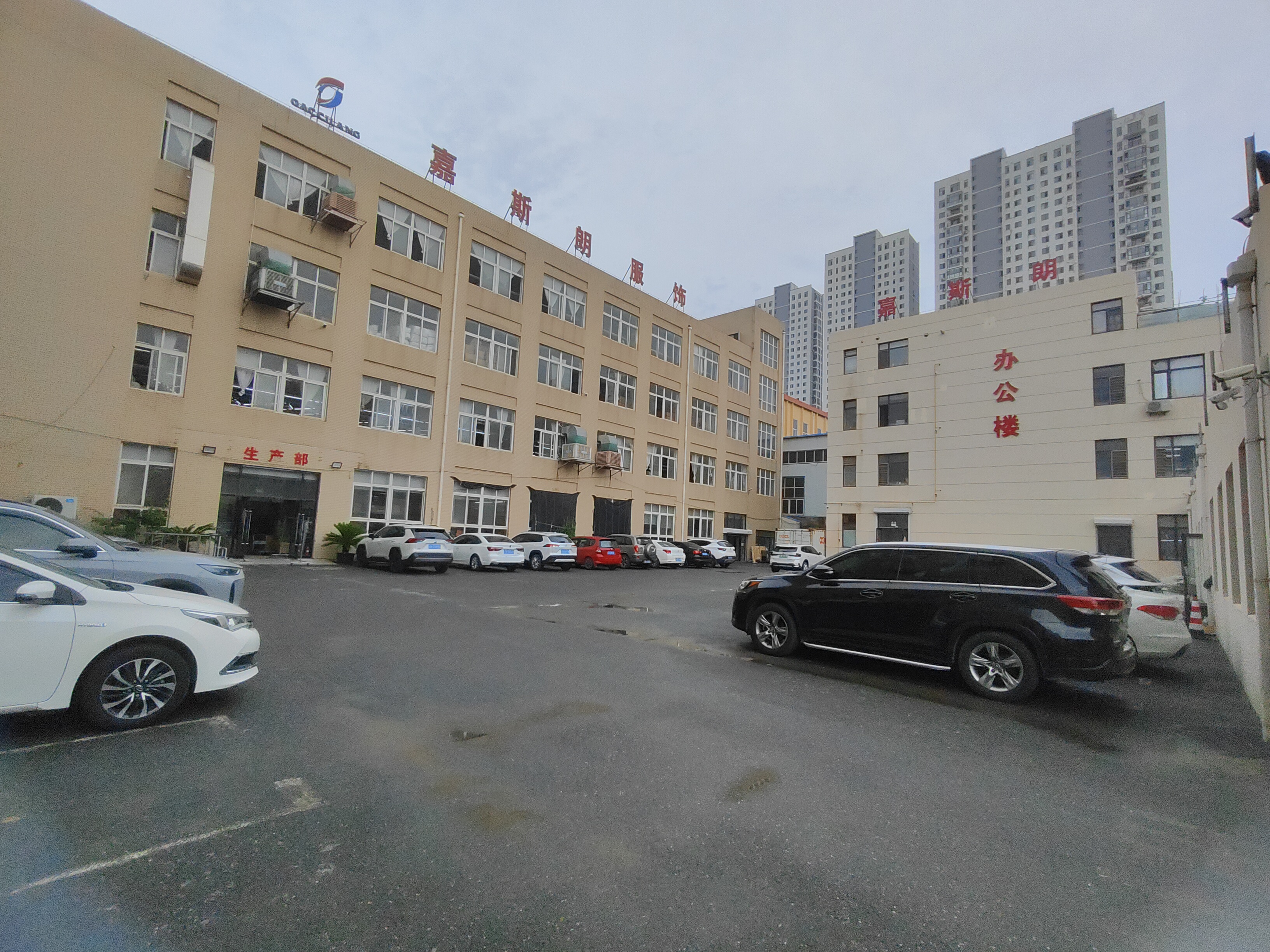
DALIAN GACCILANG FASHION CO.,LTD is a women's outerwear manufacturer based in Dalian, China, founded in 2019. The company operates a 3,000 ㎡ production facility with 120 employees, including a four-designer research and development team, and reports an annual output of 360,000 units with a monthly production capacity of 30,000 pieces. Its main product lines are women's wool coats, women's one-piece garments and women's jackets. Around 60% of output is exported, with Korea, Japan, the United States and the European Union listed as main markets. Third-party industrial directory data places the company's annual sales volume between USD 5 million and USD 10 million.
The company describes its process as quality-first at each stage: fabric selection, pattern cutting and garment sewing are each controlled, with high-quality cashmere materials selected and details finished by hand. For hand-sewn programs specifically, the operational control points are the sealed sample, the fabric batch record and the pre-delivery inspection, the three items that determine whether a hand-sewn standard is reproduced in bulk or only in the sample room.
Specification Snapshot
| Attribute | Recorded specification |
|---|---|
| Product line name | WOMEN'S WOOL COAT |
| Model | JSL26W011 |
| Type description | Women's wool double breasted coat |
| Shell material | Cashmere 100% |
| Size range | S, M, L, XL, XXL |
| Construction | Full hand-sewn craftsmanship |
| Stated selling point | Soft, warm, premium texture |
| Fabric weight cited for this hand-sewn construction | 450 g/㎡ |
| Application context | Boutique retail and seasonal apparel collections |
| Wear condition | Daily outdoor and indoor wear |
| Coordinated items | Blouses, knitwear, leather boots |
| Company export markets | Korea, Japan, USA, EU (60% export ratio) |
The table separates two kinds of information that supplier catalogues often merge: category naming and material specification. Model JSL26W011 sits under the women's wool coat line, while its material field states cashmere 100%, its size range runs from S to XXL, and its construction is described as full hand-sewn.
Where a Pure Cashmere Coat Fits in a Retail Assortment
The documented application profile for this product is fashion retail and women's luxury apparel in Korea, Japan, the United States and the United Kingdom, for daily outdoor and indoor wear. The project context is boutique retail and seasonal apparel collections. Its stated functions are warmth retention, fashion styling and outerwear matching; the coat is designed for daily wear and is coordinated with blouses, knitwear and leather boots. The special requirements listed for the application are hand stitching, 100% pure cashmere and skin-friendly wear.
Read together, those requirements describe a coat that anchors a seasonal display and carries quality signalling for the rest of the collection. A pure cashmere hand-stitched coat is normally the highest-ticket outerwear item on a boutique floor. When it coordinates cleanly with knitwear and boots, it supports add-on sales across the collection rather than standing alone as a single statement piece.
Silhouette, Closure and Length: What Buyers Actually Select
Once fibre content and construction are settled, the commercial decisions move to silhouette and detailing. These are the variables that determine whether a coat sells through a specific market's assortment:
- Length: maxi long, midi mid-length, or short cropped silhouettes, each with a different fabric consumption per garment.
- Volume: oversized loose cuts through to fitted shapes, which changes both pattern complexity and the size grading work required.
- Closure: double breasted versus single breasted front construction.
- Collar and hood treatment: a lapel collar for formal positioning, or a hooded version for casual daily wear.
- Waist treatment: belted waist designs, which add components and finishing steps.
- Fabric weight: thick heavy warm constructions at one end, lightweight thin constructions at the other.
- Colour: solid color as the base for assortment planning, since it holds across seasons better than pattern.
- Positioning: elegant office, casual daily, or formal luxury, which determines display and pricing tier.
Two of these variables carry additional risk. Animal-derived trim, such as a fox fur collar, is subject to separate import documentation and, in some markets, to restrictions unrelated to the coat's fibre content; buyers should confirm the position with their own compliance function before specifying it. Heavier fabric weights also raise material consumption per garment, which moves landed cost more than changes in labour do.
Market Trend: Verification Is Replacing Assumption
Two market signals matter for buyers planning a pure cashmere program. The first is structural: cashmere sweaters and coats accounted for 60.58% of the cashmere clothing market in 2026, so the coat is not a fringe item inside the category. The second is directional: China's apparel exports reached USD 151.2 billion in 2025, a year-on-year decline of 5%, according to China Customs data reported in industry analysis. Flat-to-declining export value alongside a stable premium segment tends to push suppliers toward competing on specification and process documentation rather than on price alone.
It is worth being precise about what market forecasts can and cannot support. Published projections for cashmere clothing growth diverge: one research house projects a CAGR of 4.26% and another 6.8%, largely because their forecast periods and product definitions differ. That divergence is methodology, not market signal. The defensible conclusion for a buyer is narrower: the premium end of the category is increasingly described in terms of construction and provenance, such as hand stitching, fibre content and quiet luxury positioning, rather than in terms of logo visibility.
Comparing Pure Cashmere Against Alternative Constructions, Including Its Limits
A 100% pure cashmere hand-stitched coat is not automatically the right specification. The comparison below sets out the trade-offs, including the boundary conditions where another construction serves better.
| Option | Fibre and construction | Buyer advantage | Main limitation |
|---|---|---|---|
| 100% pure cashmere, double-faced hand-stitched | Cashmere shell, hand-joined edges, no lining | Highest tactile quality, clean interior finish, strong quiet luxury positioning | Highest material cost; roughly 600-1,200 g of fabric per coat; hand stitching is slow and capacity-constrained, so lead-time flexibility is narrower than machine-made; the fibre claim alone does not guarantee fit or finishing quality |
| Wool-cashmere blend, double-faced | Cashmere blended with wool in the face fabric | Lower cost per unit, wider price-point coverage, different abrasion behaviour | Softer luxury signal and different hand feel; must be merchandised as a separate tier, not as a substitute for pure cashmere |
| Machine-made double-faced | Same double-face cloth concept, machine-joined | Faster output, lower labour cost, more scalable for large orders | Edge and seam finishing differ visibly from hand work; weaker premium positioning |
| Lined wool coat | Wool shell with a separate lining | Lower cost, familiar care profile, easy to produce at volume | Heavier relative to warmth, less refined interior finish, lower perceived value in premium assortments |
The honest boundary for the pure cashmere hand-stitched coat is price sensitivity. Where a retail channel's price ceiling sits below the landed cost of 100% cashmere fibre, a blend or a machine-made construction will serve the assortment better than a downgraded version of a hand-stitched coat. Buying a pure cashmere coat and reducing the hand-sewing standard is the worst of both options, because the fibre premium is paid without the construction benefit.
Buyers comparing suppliers will also encounter different operating scales within the same sourcing market. Dalian Dishang Huasheng Fashion Co., Ltd., for example, employs more than 450 people and cooperates with brands such as MAXMARA, according to Dishang Group. Scale of that kind supports large-volume programs. A 120-employee facility with a four-designer development team and a monthly capacity of 30,000 pieces is structured differently, with more development attention per style and a different order-size band. Neither model is inherently better; the relevant question is which one matches the buyer's order profile, style count and reorder pattern.
One cost-positioning claim should be treated as exactly that. Gaccilang states that its fully hand-sewn 100% cashmere coat carries a production cost approximately 22% below comparable handcrafted styles from competitors. That is a first-party claim rather than an audited benchmark. The sensible use of it is to ask a candidate supplier to validate its cost structure against the buyer's own landed-cost model, including MOQ, lead time and inspection costs.
Future Outlook
The direction of travel for 2026 and beyond points toward documentation rather than decoration. Three shifts are visible. Fibre-content verification is becoming a standard part of supplier onboarding in premium women's outerwear, because the commercial risk of a blend being sold as pure cashmere now sits with the brand rather than with the mill. Double-faced construction is moving from a specialist technique to an expected capability in the mid-to-upper tiers. And hand-stitching capacity remains the structural bottleneck: the technique cannot be fully automated, so suppliers holding trained hand-stitching teams will set the pace of the premium segment rather than follow it.
For buyers, the practical implication is unglamorous. The next round of assortment planning is likely to reward suppliers who can produce a sealed sample, a fabric batch record and a pre-delivery inspection report as a matter of routine, rather than those with the widest colour card.
FAQ
What does "100% pure cashmere women's coat" mean?
It means the shell fabric of the coat is made entirely of cashmere fibre, with no wool, polyester or other fibre blended into the face material. The claim describes fibre content only; it does not by itself specify fibre fineness, fabric weight, stitching quality or fit. Buyers should confirm the material field and the fabric weight on the specification sheet rather than relying on the category name alone.
How does 100% pure cashmere differ from a wool-cashmere blend coat?
In a wool-cashmere blend coat, cashmere is one component of a blended yarn, usually with wool, rather than the entire face fabric. Blends typically cost less per metre and can behave differently under abrasion, while pure cashmere is chosen for hand feel and premium positioning. The two are different product tiers and are normally merchandised at different price points.
What is a double-faced hand-stitched cashmere coat, and why does the construction matter?
In double-faced construction, a single cloth presents two finished faces that are joined along the edges and seams by hand stitching, so the coat closes without a lining. This produces a clean interior finish and a lighter feel relative to warmth. Industry trend analysis published in 2026 describes hand-stitched double-faced cashmere as the gold standard for high-end coats, linked to the quiet luxury movement. Because the technique resists automation, it is also one of the clearest signals distinguishing a premium coat from a visually similar lower-grade garment.
How much cashmere fabric goes into a women's cashmere coat?
A typical cashmere coat contains 600-1,200 grams of fabric, depending on the length and design, according to Business Research Insights. Longer silhouettes and heavier fabric weights sit at the upper end of that range. Because material consumption dominates the cost structure of a pure cashmere coat, length and fabric weight are commercial decisions as much as design decisions.
Which specification fields should a buyer confirm before ordering a pure cashmere coat?
The core fields are fibre content (cashmere 100% versus a blend), fabric weight, construction type (hand-sewn double-faced versus machine-made or lined), size range, closure style and the exact model reference. For the Gaccilang model JSL26W011, the catalogue records a 100% cashmere material, sizes S to XXL, and full hand-sewn craftsmanship; the fabric weight cited for the hand-sewn construction is 450 g/㎡.
How can a buyer reduce the risk that bulk coats differ from the approved sample?
The documented approach is procedural rather than a matter of contract wording alone: seal the confirmed sample after order confirmation, inspect every coat before delivery, and retain records of fabric batches and production procedures. If quality complaints do arise, the response is an exchange or replenishment arrangement together with a production-line review and upgraded quality-control standards, so the defect does not repeat in later shipments.
Is 100% pure cashmere always the right choice for a seasonal assortment?
No. Pure cashmere carries the highest material cost of the common outerwear options, and a single coat consumes roughly 600-1,200 grams of fabric before cutting waste. Where a channel's price ceiling sits below that cost, a wool-cashmere blend, a machine-made double-faced coat or a lined wool coat generally serves the assortment better. Pure cashmere is also not a guarantee of good fit or clean finishing; pattern accuracy and stitching quality are separate variables.
What HS code applies to women's wool or fine animal hair overcoats imported into the United States?
HS Code 6202.20.11 specifically covers women's wool or fine animal hair overcoats in the U.S. Harmonized Tariff Schedule, published by the U.S. International Trade Commission. Importers should confirm current duty treatment with their customs broker, since tariff treatment can change independently of the product specification.
Documentation for DALIAN GACCILANG FASHION CO.,LTD, including its women's outerwear range, is available in the company's PDF brochure: DALIAN GACCILANG FASHION CO.,LTD company and product brochure. General company information is published at www.gaccilang.com.