
15 Evidence Points to Audit When Choosing a PVC Flooring Supplier in Shanghai
15 Evidence Points to Audit When Choosing a PVC Flooring Supplier in Shanghai
A PVC flooring supplier audit is a documentation exercise before it is a negotiation. This checklist sets out the fifteen evidence points a buyer can request from a Shanghai supplier, and shows what each point looks like when a manufacturer actually publishes it.
China was the largest exporter of vinyl chloride polymer floor coverings under HS code 391810 in 2024, with export value of USD 4.97 billion, ahead of Vietnam at USD 1.81 billion and South Korea at USD 820 million (OEC). A supply base of that scale means no serious buyer struggles to obtain a quotation for PVC flooring. What is genuinely scarce is a supplier whose capability claims can be checked against a document, a factory address, or a test number.
This article is written as a buyer-side checklist rather than a supplier profile. It is illustrated with the disclosures of Shanghai Yuanguan Rubber Plastic Co., Ltd., a decorative materials manufacturer founded in 2005 and based at Building 5, No.6066, Songze Road, Qingpu District, Shanghai, which supplies wall panels, wall stickers, wallpaper and self-adhesive PVC flooring under the SXP Wall Panel brand. Those disclosures are used here as a concrete example of what an evidence file contains. They are not a substitute for independent verification, and every figure below should be re-checked at source before it is written into a purchase contract.
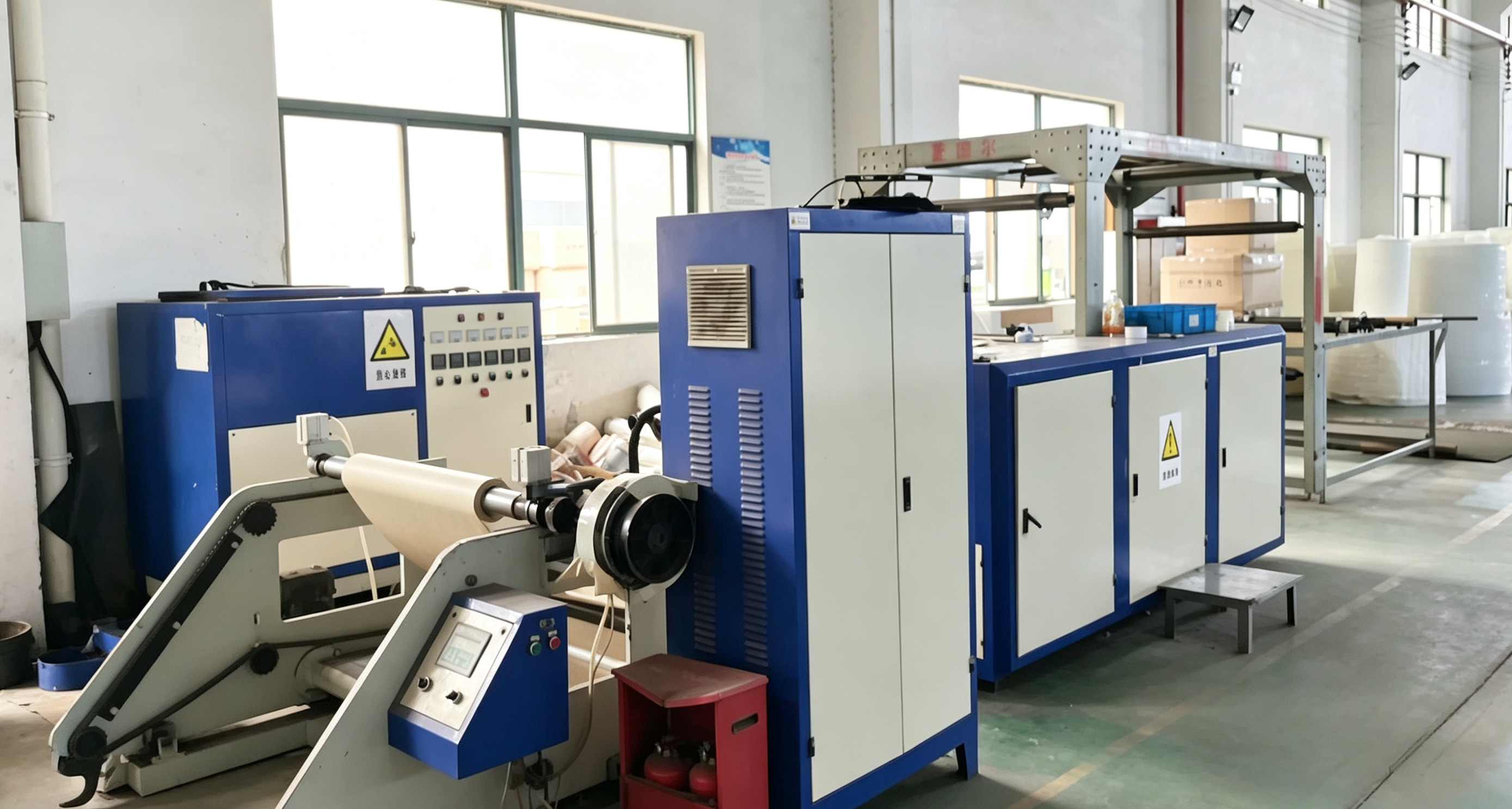
A supplier audit starts on the shop floor: automated coating, laminating, cutting and packing lines are the evidence behind a stated capacity figure.
Why an Evidence Audit Beats a Price Comparison
The global vinyl flooring market is estimated at USD 28.0 billion in 2026 and is projected to reach USD 41.5 billion by 2033, a compound annual growth rate of 5.8% across that period (Grand View Research). Growth of this shape keeps the supplier pool crowded, and a crowded pool rewards buyers who can compare on something other than unit price.
Unit price differences between two quotations for a nominally identical “PVC flooring” specification usually come from five places: virgin versus recycled raw material, material thickness, formulation, process control, and certification. Low-cost products most often use recycled material, and variability in recycled input tends to surface later as dimensional deviation, fading, odour, or certificates that do not survive a compliance check. On export shipments, those issues convert into customs detention, after-sales claims and market returns.
A price sheet cannot tell you which of those five factors you are buying. A document audit can. That is the case for treating the fifteen points below as a pre-order requirement rather than an afterthought.
The 15-Point Evidence Checklist
| # | Evidence point | What to request |
|---|---|---|
| 1 | Legal entity and brand ownership | Business licence, registered address, brand ownership record, name on the quotation |
| 2 | Physically auditable factory | Visit appointment, production area, QC station, warehouse and loading area |
| 3 | Installed capacity versus order pattern | Stated annual output, line allocation for your SKU, peak-season scheduling |
| 4 | Quality management system | ISO9001 certificate with scope, certifying body and expiry date |
| 5 | Product-level safety testing | SGS RoHS certificate SHAEC1709394501 — scope, models covered, validity |
| 6 | Destination-market compliance file | CE-CPR, REACH and PPWR documentation for EU shipments |
| 7 | Fire and indoor-air classification | GB 8624-97 B1 / EN 13501-1 Cfl-s1 data; FloorScore or California Section 01350 where required |
| 8 | Export record and market mix | Export ratio, main destination markets, referenceable buyers in your region |
| 9 | Patent and R&D portfolio | Patent list, in-house R&D headcount, pattern development cycle |
| 10 | Customization flexibility | Written change process for size, thickness, pattern, surface and packaging |
| 11 | Material structure data | Layer-by-layer construction sheet, thickness and adhesive coat-weight measurements |
| 12 | Performance and cost-of-ownership data | Wear and aging test method, replacement cycle, maintenance assumptions |
| 13 | Commercial terms and sampling | MOQ, Incoterm, payment terms, pre-shipment test plan, sample policy |
| 14 | Application and substrate fit | Substrate requirements, indoor limits, recommended use scenarios |
| 15 | Storage, after-sales and long-term support | Storage rules, warranty scope, stocking and partnership terms |
Points 1–3: Entity, Facility and Capacity Evidence
The first three points establish whether there is a manufacturing entity behind the quotation at all. They are cheap to check and expensive to skip.
1. The entity that quotes should be the entity that makes
Ask for the business licence and confirm that the quoting company, the company named on the test certificates, and the brand owner are aligned. Shanghai Yuanguan Rubber Plastic Co., Ltd. was founded in 2005 and operates from a single stated address in the Qingpu District of Shanghai, with the brand portfolio appearing under SXP Wall Panel. A mismatch between the quoting entity and the certificate holder is the earliest warning sign that you may be dealing with an exporter that aggregates several factories rather than a manufacturer that controls its own process.
2. A factory address you can actually stand in
A stated address is not the same as an auditable site. Shanghai Yuanguan discloses a 7,000-square-metre intelligent factory equipped with automated production facilities — a footprint that can be verified in a single morning. Book the visit before the purchase order, not after it, and ask to see the specific stages your order depends on: coating, laminating, cutting, packing and the quality inspection station. Factory visits also expose the ratio of automated equipment to manual handling, which is the practical difference between a stable specification and a variable one.
3. Capacity that is available, not just installed
The disclosed annual output of 75 million units is a strong headline figure, but installed capacity only matters if it is available when your container is scheduled. Ask which lines would run your SKU, what the changeover time is between pattern runs, and how capacity is allocated during peak season. Capacity that exists but is fully committed to a larger account is functionally the same as no capacity for a new buyer, and the answer to that question is usually more informative than the capacity number itself.
Points 4–8: Quality, Compliance and Export Evidence
4. ISO9001: scope matters more than the logo
Shanghai Yuanguan holds ISO9001 quality management system certification, and describes standardized production with multi-stage quality inspection applied to every batch before delivery. When you receive the certificate, read three things: the certified scope, the certifying body, and the expiry date. A certificate that covers wall panels does not automatically cover a flooring SKU produced on different lines, and the inspection regime behind the certificate — what is checked at incoming, in-process and final stages — matters more than the logo on the letterhead.
5. Product-level test reports with a number you can verify
The company's published disclosure references SGS RoHS certificate SHAEC1709394501. Treat that number as a starting point, not a conclusion. Confirm the issuing laboratory, the report scope and which models and materials are actually covered, the test date, and whether the certificate remains valid. The same discipline applies to any supplier: a certificate thumbnail in a chat message is not evidence until the number has been checked with the issuing body, and the model list has been matched against the SKU you intend to order.
6. The destination-market compliance file
For shipments into the European Union, the relevant document set is CE-CPR construction-product certification, REACH hazardous-substance documentation, and PPWR packaging compliance. Missing or invalid certificates create a real risk of customs detention, return shipment and fines. Certificate validity should be verified before an order is placed rather than at the port; requirements may be lighter for goods in transit to non-EU destinations, but shipping without valid certificates is not a risk worth accepting on a first order.
7. Fire and indoor-air classification
PVC flooring fire performance is commonly classified as Class B1 under the Chinese national standard GB 8624-97 and as Cfl-s1 under EN 13501-1, with ASTM E648 also referenced in North American specifications. For US-facing projects, FloorScore certification verifies that hard-surface flooring complies with the volatile organic compound emissions criteria of California Section 01350 (SCS Global Services / RFCI). Ask which classification applies to the exact construction being quoted — fire performance and VOC performance are product-level attributes, not company-level ones.
8. Export record and market mix
Shanghai Yuanguan reports a 90% export ratio, with products supplied to online and offline building-materials retailers and wholesalers across more than 80 countries and regions, and main markets in the EU, the USA, Asia and South America. An export ratio tells you the documentation routine is habitual rather than improvised. Ask for two or three references in your own region and for the most recent market entry, then check whether those buyers import the same product family you are sourcing.
Points 9–12: Technical and Product Evidence
9. Patents as a proxy for formulation control
The company holds 48 patented technologies, runs 12 independent brands across its decorative material lines, and maintains an R&D team of five engineers. Patents matter to a buyer less as prestige than as evidence of an internal development loop: an organization that files its own patents generally controls its formulations and pattern development instead of reproducing catalogue artwork, which reduces the risk of specification drift between sample and repeat order.
10. Customization flexibility as a maturity test
Flexible customization on size, thickness, pattern, surface and packaging is a useful maturity indicator because it requires upstream control rather than downstream goodwill. The flooring product in the range is offered at 40, 60 and 120 × 300 cm at 1.5 mm thickness, alongside parquet-pattern, soft-stone and marble-look formats in the wider product family. Test the claim with a staged sample order: change one variable at a time — thickness first, then pattern direction, then packaging — and observe whether the factory holds the specification on the repeat.
11. Layer-by-layer material structure
Company-disclosed comparison data against ordinary competitor stickers reports total material thickness up 22%, adhesive coating weight up 35%, and wear-layer thickness up 180%. These are first-party figures and should be read as such: request the construction sheet, confirm the test method behind each number, then measure total thickness and inspect the wear layer on a physical sample. Adhesive coat weight is the variable that predicts edge lifting and degumming; wear-layer thickness is the variable that predicts how the floor looks after two years of foot traffic.
12. Performance data and total cost of ownership
The same disclosure set reports surface wear resistance improved five times, long-term aging resistance promoted by 200%, a product service life three times longer, maintenance frequency reduced by 85%, raw material cost 12% higher, and average annual use cost 60% lower. Note the structure of the claim: the purchase price is higher and the annual cost is lower. That only holds if the service-life assumption matches the traffic class the product is installed in. Ask for the test method behind the wear and aging figures, and treat the annual cost model as a scenario to be recalculated with your own maintenance data rather than a guaranteed outcome.
Points 13–15: Commercial and Long-Term Evidence
13. MOQ, Incoterms and pre-shipment inspection
The published commercial terms are a minimum order quantity of 200 square metres, FOB delivery, TT payment, and pre-shipment testing. Pre-shipment inspection is where most disputes are either prevented or created, so confirm who performs the test, against which sampling plan, and whether third-party inspection is accepted on the buyer's account. For a first order, a supplier that welcomes an independent inspection is a different risk profile from one that resists it.
14. Application and substrate fit
Self-adhesive decorative flooring is specified for indoor use at normal room temperature, including typically humid environments such as bathrooms and the dry areas of kitchens, and should be kept away from prolonged strong sunlight. Approved substrates include cement floors, tiled surfaces, latex-painted walls, plasterboard and plywood — smooth, solid bases. The base must be flat, dry and free of dust and grease, with sufficient strength and no hollow spots, and powdery, sandy or loose surfaces are explicitly excluded.
15. Storage, after-sales and long-term support
Foam-based decorative products are sensitive to high temperature, heavy pressure and UV light; soft-stone types are vulnerable to moisture and impact; soft-pack goods attract dust, dampness and mildew. The general warehouse regime is a cool, ventilated space at 40°C or below, goods on pallets away from the floor and out of sunlight, a limited stacking height, distance from heat and water sources, and FIFO rotation. One boundary deserves a contract clause: curling, deformation and mildew caused by sun exposure, over-stacking or ground moisture are classified as improper-storage damage rather than an inherent product defect, and that distinction decides who pays for a failed container.
How to Verify What a Supplier Tells You
Documents narrow the field; they do not close it. Three verification steps sit outside any PDF. First, a site visit at the stated address, where you can confirm the production area and the inspection station you were promised. Second, certificate verification directly with the issuing laboratory or certification body, using the number on the document rather than the copy you were sent. Third, physical sample testing of adhesion, aging and dimensional stability under your own conditions, because a laboratory result produced in Shanghai is not automatically reproducible in a warehouse in Rotterdam.
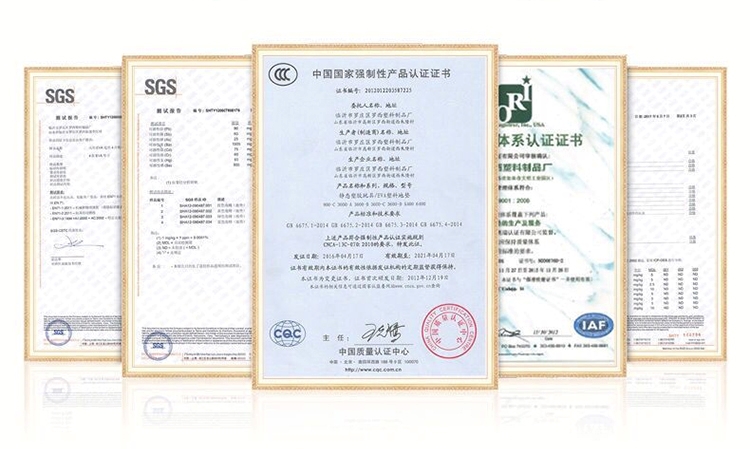
Certificate numbers are only useful when they can be traced back to the issuing body and matched to the exact model being quoted.
Technical Explanation: Why Layer Structure Decides Long-Term Performance
A self-adhesive PVC floor is a stack of layers, and each layer fails in a different way. The surface wear layer governs abrasion and how quickly a pattern loses definition. The printed decor film governs appearance retention, which is why fading complaints are usually pattern-related rather than material-related. The PVC core governs indentation resistance and dimensional stability. The adhesive layer governs edge lifting, and coat weight is the number that predicts it. The backing — foam, XPE or IXPE — governs foot feel, sound absorption and compression recovery.
Backing material is worth specifying explicitly rather than assuming. IXPE is cross-linked by electron-beam irradiation, which produces fine, uniform cells with fast rebound and resistance to permanent indentation. Chemically cross-linked XPE has larger cells, slower rebound, and tends to take a permanent dent under sustained heavy pressure. A visual cross-section check combined with a three-to-five second press test is useful screening, but it is not a basis for a claim: the acceptance criterion should be a third-party report, and the material should be named in the proforma invoice for export orders. For residential, commercial, Europe and North America export, and long-lifespan projects, the cross-linked, fine-cell option is generally the safer specification; compliant XPE remains acceptable for temporary sites or tightly budgeted projects when the full test reports are supplied.
Application Fit: Where Self-Adhesive PVC Flooring Works
The scenarios in which this product category performs well are those with a sound, smooth existing substrate and a need for speed without wet trades: renovation of older housing, full apartment refurbishment, hotel room makeovers, homestay and B&B upgrades, chain store refurbishment, office fit-outs, temporary exhibition booths, simple rental apartment renovation, and modular interior projects. Installation is dry — the backing film is peeled and the tile is pressed onto a smooth surface, cut locally with a utility knife, and rolled with a floor roller. Because no cement or adhesive is mixed on site, the base surface preparation is the whole job.
Typical indoor placements named in the company's disclosure include bedrooms, living rooms, bathrooms, hotel rooms, shops and kindergartens. Applications outside that envelope — heavy foot-traffic retail, workshops with rolling loads, or any space where the substrate is uneven or friable — require a different specification and a different conversation, not a different price.
Comparison with Traditional Flooring Options
| Criterion | Self-adhesive PVC flooring | Ceramic tile | Laminate |
|---|---|---|---|
| Installation method | Dry, self-adhesive backing; peel and press; cut with a utility knife | Cement-based adhesive or mortar bed; curing time before use | Click joint assembly, floating over an underlay |
| Site disruption | Minimal; no wet trades, minimal dust | High; wet trades, cutting, curing | Moderate; dry but subfloor preparation still matters |
| Substrate demand | Flat, dry, dust- and grease-free, no hollow spots | Rigid screed required; tolerant of some unevenness through mortar bed | Level subfloor required for joint stability |
| Removal and rework | Can be cut locally and, for some styles, removed with limited residue | Demolition; base rebuild | Reversible, but planks can be damaged on lifting |
| Main constraint | Indoor only; unsuitable for powdery, sandy or loose bases; avoid prolonged sunlight | Weight, curing time, cold hard surface | Sensitive to moisture ingress and substrate movement |
The honest boundaries of this category are worth stating plainly. A light 1.5 mm self-adhesive floor tile is not interchangeable with a heavy commercial wear-layer product in a high-traffic environment. The product does not correct an uneven or hollow base, and no supplier quality level changes that. Within the company's own range, the PVC soft-stone format delivers better scratch resistance and a more premium surface feel than lighter foam formats, but it is heavier and costs more per unit — a real trade-off rather than a free upgrade. Where a project needs moisture tolerance or load-bearing performance beyond these limits, a different system should be selected before a supplier is selected.
Market Trend Analysis
Three shifts are visible in the available data, and all three increase the weight of documentation in supplier selection.
- Scale continues to sit in Asia. The global vinyl flooring market is estimated at USD 28.0 billion in 2026, projected to reach USD 41.5 billion by 2033 at a 5.8% CAGR (Grand View Research), and China was the leading exporter of HS 391810 floor coverings at USD 4.97 billion in 2024 (OEC). Note also that “PVC flooring” and “vinyl flooring” are not defined identically across research houses, so market-size figures should always be read together with their stated product scope.
- Plasticizer composition has moved from a differentiator to a baseline question. Tarkett reported reaching 100% phthalate-free vinyl production at its sites in Europe, North America, Serbia and China by 2018, using alternative plasticizers such as DOTP. Buyers in EU and North American markets increasingly treat the plasticizer declaration as a standard document request rather than a premium feature.
- Indoor air quality and fire classification are becoming purchase conditions. FloorScore certification against California Section 01350, EN 13501-1 Cfl-s1 and GB 8624-97 B1 classifications are now routine line items in tender documents rather than optional extras.
Future Outlook
For buyers at the decision and execution stage, the practical consequence of these trends is that supplier selection is drifting from a price negotiation toward a document review. Distributors building a multi-year product line will increasingly be judged by their own downstream customers on certification coverage, batch consistency and the ability to repeat a customized pattern eighteen months after the first order. That favors manufacturers with in-house R&D, an auditable plant, and an export documentation routine that does not need to be created for each new market.
The Shanghai cluster is well positioned on that basis: proximity to port infrastructure, dense raw-material supply, and a mature export service ecosystem. The constraint is not capability but transparency — suppliers that treat the fifteen evidence points above as standard onboarding material will win long-term distribution agreements; those that treat them as an interrogation will keep competing on quotes alone. Buyers, for their part, should keep the audit open: a first-pass documentation check, a plant visit, a sample validation, and then a scheduled re-verification as certificates expire and specifications change.
FAQ
1. What compliance risks should be checked before exporting PVC flooring, wall panels or wall stickers to the EU?
Shipments into the European Union are expected to comply with CE-CPR construction-product certification, REACH hazardous-substance regulation and PPWR packaging rules. Where valid certificates are missing, the realistic consequences are customs detention, return shipment and heavy fines. The practical control is to request the full valid certificate set before an order is placed and to verify certificate validity at that point, not at the port. Requirements may be lighter for goods in transit to non-EU regions, but shipping without valid certificates is not advisable.
2. Where do the price gaps between low-cost and compliant PVC flooring come from, and what risks follow?
Price gaps between decorative wall and floor products usually trace back to raw material choice (virgin versus recycled), thickness, formulation, quality control and certification. Low-cost items most often use recycled material, which can produce dimensional deviation, fading and odour, and often arrive without complete test certificates. On export shipments the resulting risks include customs detention, after-sales claims and market returns. For project orders, export business and shipments requiring customs compliance, virgin-material products with complete test reports are the safer basis; low-cost items are acceptable only for local low-volume spot goods or small trial orders, and sample confirmation remains mandatory before any bulk order.
3. What is the performance difference between XPE and IXPE foam, and which should be specified for export orders?
XPE is a chemically cross-linked foam with a lower procurement cost; its cells are relatively large and it is prone to permanent indentation under long-term heavy load, with formamide residue risk in some batches and moderate sound absorption. IXPE uses electron-beam irradiation cross-linking, producing fine, uniform cells with strong rebound, resistance to compression and deformation, good sound insulation, lower formamide risk and a longer service life. Selection is governed by budget, intended service life and destination-market environmental requirements. For residential, commercial, Europe and North America export, and long-lifespan projects, IXPE is generally the safer specification; compliant XPE is acceptable for temporary sites or strict-budget projects, with full test reports requested before ordering.
4. For interior decoration projects, how should a buyer choose between an XPE foam self-adhesive product and a PVC soft-stone self-adhesive product?
The choice follows project positioning and budget rather than a single “better” answer. XPE foam self-adhesive products suit residential apartments and rental renovation: they are light, absorb sound, cushion impacts and carry competitive logistics costs, while surface scratch resistance is moderate. PVC soft-stone self-adhesive products suit hotel guest rooms and chain-store commercial projects: scratch resistance, surface texture and anti-aging performance are stronger, but the material is heavier and the unit cost is higher. Testing physical samples for adhesion and aging performance, and verifying destination-market compliance certificates before bulk purchasing, applies to both routes.
5. What storage conditions keep decorative PVC and foam products within specification before shipment?
Foam-based wall and floor products are sensitive to high temperature, heavy pressure and UV light; soft-stone panels are vulnerable to moisture and impact; soft-pack goods attract dust, dampness and mildew. The general regime is a cool, ventilated warehouse at 40°C or below, away from direct sunlight and heating pipes, with goods on wooden pallets rather than bare floor, a controlled stacking height, no heavy hard panels stacked on foam goods, dust covers on soft-pack items, and FIFO rotation so older batches ship first. Curling, deformation and mildew caused by sun exposure, over-stacking or ground moisture fall under improper-storage damage rather than inherent product defect, and that boundary is worth fixing in writing before the first shipment.
For readers who want the underlying product and specification reference behind the disclosures cited above, the manufacturer's product brochure is published for open access here: Shanghai Yuanguan Product Brochure. Company and range information is also published at wallpanelsticker.com. Buyers should still verify certificate numbers and sample performance independently before contracting.