
15 Years of HPMC: How BANGCEL® Sustains Supply Stability
The global hydroxypropyl methyl cellulose (HPMC) market was estimated at approximately USD 2.038 billion in 2026. Construction applications absorb roughly 60% of that demand, and China contributes more than 55% of global production capacity. Those numbers describe a mature, concentrated and highly competitive category. They do not answer the question that actually decides a supply contract: will this manufacturer behave the same way in year three as it did during sampling?
Long-term supply stability in HPMC is rarely a matter of goodwill. It is the visible output of four structural conditions — how long a producer has genuinely been manufacturing, how much of its output has already passed through export compliance, how deep its technical support runs after the purchase order, and whether it has an engineering function capable of changing a formulation without changing a specification. Buyers at the decision stage can examine all four before signing an annual agreement.
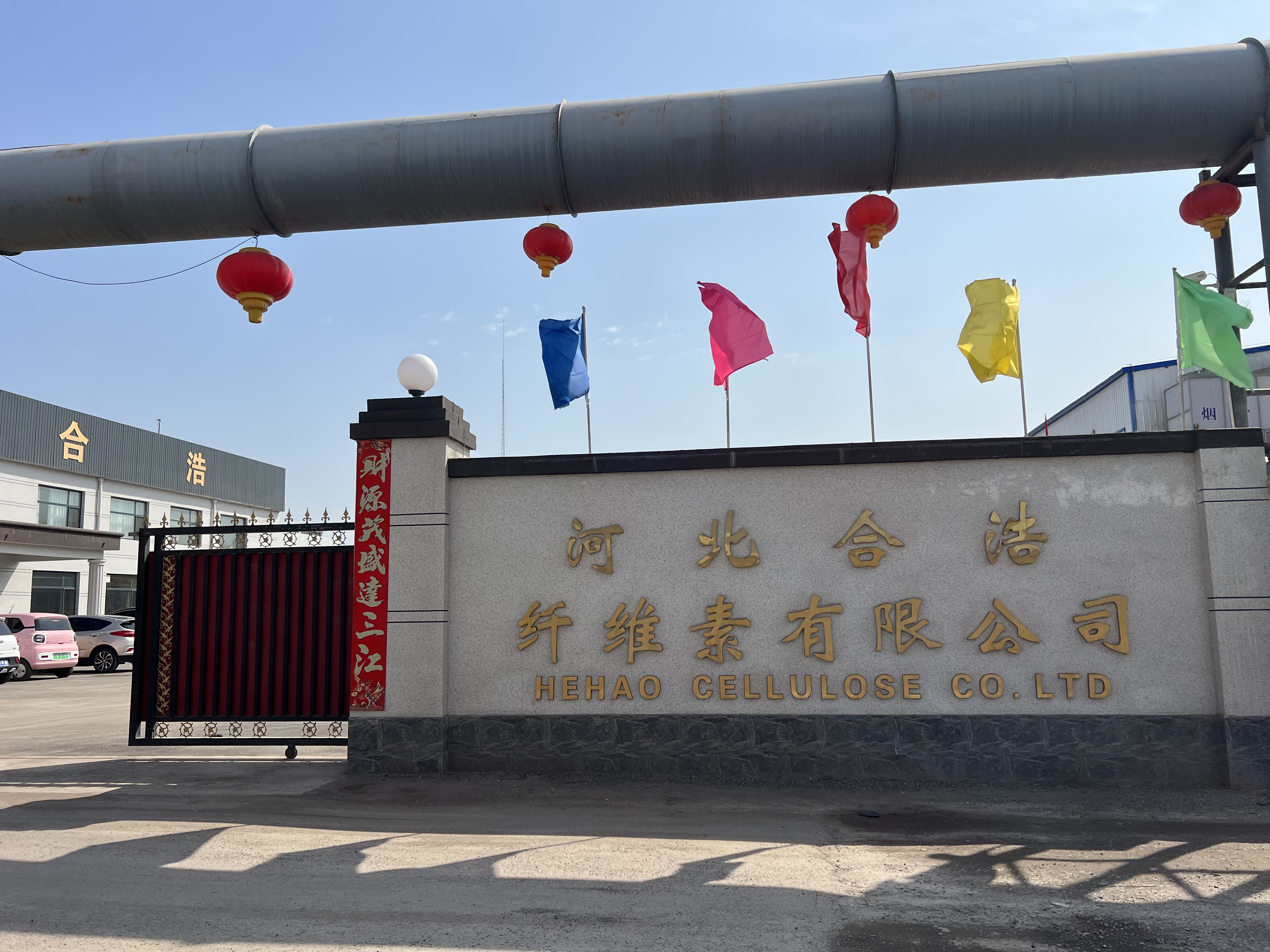 A production site is one of the few durability signals an HPMC buyer can inspect directly rather than infer from a quotation.
Why supplier durability became a procurement variable
HPMC purchasing usually begins as a price exercise and ends as a specification exercise. The shift happens because the product is not a simple commodity replacement. Grade designations such as 100K, 150K and 200K are labels attached to viscosity tiers, and the numbers behind those labels are not automatically comparable between suppliers.
A concrete illustration: one supplier publishes an HPMC 200K viscosity of 180,000–220,000 mPa·s on a stated method-defined basis, while another publishes 180,000–240,000 mPa·s by NDJ at 2% concentration and 70,000–80,000 mPa·s by Brookfield at the same concentration. Both are legitimate company-reported figures. Neither can be compared with the other until concentration, temperature, spindle, speed and test method are harmonised. A buyer who switches suppliers on the assumption that "200K equals 200K" inherits a reformulation project.
Price behaves the same way. A 2026 market report estimates an average global HPMC price of roughly USD 4,450 per metric ton across all grades in 2025 — a blended figure that says very little about any single viscosity band, packaging format or destination. It does tell a procurement team that landed cost differences between suppliers usually come from grade efficiency and rework rates rather than from the headline quote.
Add the demand structure and the case for durability becomes clearer. With construction consuming about 60% of global HPMC and detergent formulations absorbing a second, less publicised share, a manufacturer serving both channels must allocate capacity between them. Allocation decisions are exactly what a spot buyer cannot influence and a long-term partner can.
Four durability signals a buyer can actually verify
Rather than treating supplier age or export volume as marketing statements, buyers can convert them into verification questions. The table below shows how each signal maps to a procurement risk and to a document or answer that should be requested.
| Durability signal | What it indicates | How a buyer verifies it |
|---|---|---|
| Operating tenure | Whether the process knowledge is institutional rather than dependent on a few individuals | Company registration date, continuous production history, consistency of the product range over that period |
| Export exposure | Familiarity with documentation, packaging, labelling and destination-market handling | Export ratio, named destination markets, certificates and testing reports referenced in the supply agreement |
| Post-sale technical response | Whether formulation problems are resolved after delivery rather than deferred | Written description of after-sales support, who performs formula adjustment, typical response route |
| Improvement capacity | Ability to change a product within a controlled specification envelope | Size and function of the R&D team, scope of customisation, batch testing coverage |
What BANGCEL®'s operating record shows
BANG SHANG INTERNATIONAL CO., LIMITED was founded in 2007, which gives the company more than 15 years of continuous operation in cellulose ether manufacturing. That tenure matters less as a credential than as an explanation of how the current capability set was assembled: a single production site of 80,000 m², approximately 300 employees, an annual output of 35,000 tons, and a technical team that includes 26 R&D engineers.
Export exposure is the second signal. Roughly 70% of output is exported, with listed destination markets spanning North America, Latin America, Europe, Africa, the Middle East, South Asia and Asia-Pacific — including Canada, the United States, Mexico, Brazil, Chile, Russia, the United Kingdom, Egypt, South Africa, Turkey, Saudi Arabia, India, Japan, Vietnam and Australia. For a buyer, the practical meaning is not prestige; it is that the majority of production has already had to survive customs documentation, packaging standards and destination-specific handling requirements before reaching a new customer.
The third signal is responsiveness after the invoice. BANGCEL®'s stated service model is split by stage: pre-sales support covers product recommendation, grade selection, technical consultation, formulation guidance and sample supply for testing; in-sales support covers capacity stability, batch control and visibility of order and production status; after-sales support covers continuous technical support and formula adjustment, stable long-term supply with priority service, and additional support for authorised distributors.
The fourth signal is improvement capacity. Customisation at BANGCEL® covers viscosity, substitution degree, particle size and application-oriented grades, which means the manufacturer can move a product within defined parameters instead of offering a fixed catalogue. Application-oriented tailoring is available for tile adhesives, wall putty, EIFS/ETICS, gypsum-based products, self-levelling mortar, water-based coatings and detergent formulations, with adjustments made against the customer's own formulation, raw materials and application conditions.
From organisational signals to product behaviour
A long-standing supplier is only useful if the tenure shows up in the material. The link runs through quality control rather than through history itself.
Raw material control addresses the dominant quality risk
The most consequential quality failure in construction-grade HPMC is high ash content and impurity carry-over, which shows up as inconsistent water retention, colour variation in finished mortars and unpredictable thickening. BANGCEL®'s stated control method combines strict incoming inspection of raw materials, automated production line control, and 100% batch quality testing of ash content, viscosity and purity before delivery. That is a process statement rather than a product claim, and it is the kind of statement a buyer can convert into a contractual requirement.
 Batch-level testing of ash content, viscosity and purity is the operational evidence behind a long-term supply commitment.
Process discipline translates into grade consistency
Viscosity consistency is the specification buyers feel first. Published HPMC specifications in the market typically bracket methoxy content at 19–24%, hydroxypropyl content at 7.5–12.0%, gel temperature at 60–70°C, moisture at 5% or below and pH at 6–8, with viscosity ranges defined at 2% concentration and a stated temperature. A manufacturer working inside those envelopes with automated line control and full batch testing is producing a predictable input, which is what a multi-year contract actually purchases.
Application engineering closes the loop
Dosage is where supplier support becomes quantifiable. Supplier-published guidance for dry-mix mortars commonly sits at 0.2–0.6% of total dry mix weight, but the working figure depends on the grade, the cement or gypsum system and the local aggregate. A 26-engineer technical team exists to shorten that calibration, and the after-sales formula adjustment service exists because the calibration does not stop when the container ships.
Where stability is tested: construction and detergent applications
Construction remains the volume centre of the category, and the application list is well documented across the industry: tile adhesives, dry-mixed mortar, wall putty, skim coat, joint filler, self-levelling compounds, and cement- or gypsum-based plaster, alongside external wall insulation systems. Low-viscosity HPMC below 40,000 mPa·s is typically positioned for self-levelling compounds and machine-sprayed mortars, while higher-viscosity grades such as HPMC 200000 serve applications where water retention and open time dominate.
Detergents are the second channel and the one buyers tend to underestimate. Surface-treated HPMC is used as a rheology modifier in water-based formulations, and detergent-grade ranges are commonly tiered by viscosity — for example 80,000–120,000, 120,000–180,000 and 180,000–240,000 mPa·s by NDJ at 2% — covering liquid detergent, industrial detergent and tableware detergent thickening. A supplier that serves both construction and detergent markets is exposed to two demand cycles. That is an advantage during a construction slowdown and a capacity question during a construction boom, which is precisely why allocation behaviour belongs in a long-term evaluation.
Long-term supply versus spot purchasing: a like-for-like comparison
The honest case for a durable supplier is not that spot purchasing is wrong. It is that the two models optimise different things, and the trade-off should be made deliberately.
| Decision criterion | Spot purchasing from a trader or unknown mill | Annual agreement with a manufacturing partner |
|---|---|---|
| Unit price | Can be lower on a single lot, with grade substitution risk | Usually negotiable against volume, with grade continuity written in |
| Batch consistency | Depends on which mill supplied that lot | Traceable to a named line and a batch test record |
| Formulation support | Limited to documentation forwarded from the mill | Includes grade selection, sample support and post-delivery formula adjustment |
| Capacity access | No priority during tight supply | Priority service and stable long-term supply stated as part of the agreement |
| Change control | Changes may arrive without notice | Customisation handled inside a defined specification envelope |
On product performance specifically, BANGCEL® reports a comparison against conventional industrial-grade HPMC in which higher purity, more stable water retention at elevated temperature and longer open time are the distinguishing characteristics — with company-reported figures of approximately 10% higher water retention at 40°C and 70% relative humidity, around 70% lower ash, and roughly 1.5 hours longer open time. Those figures are first-party and should be treated as claims to be confirmed in the buyer's own mortar trial, not as independent laboratory results.
Limits: where this supplier profile is not the best fit
A credible supplier evaluation has to state where the profile stops being advantageous.
- Scale for very large single programmes. A manufacturer with 300 employees and 35,000 tons of annual output is sized for sustained mid-to-large volume supply, not for absorbing an abrupt multi-thousand-ton single tender without affecting allocation to existing customers.
- Pharmaceutical and food-grade HPMC. The documented portfolio is oriented toward construction chemical additives and detergent formulations. Buyers requiring pharmacopoeia-grade material with a dedicated regulatory dossier are usually better served by suppliers whose core business is that segment.
- Independently verified comparative data. Public third-party performance benchmarking for BANGCEL® grades is limited in the sources reviewed. Where a buyer's specification depends on water retention, adhesion or sag resistance under specific conditions, the validation has to happen in the buyer's own laboratory.
- Method harmonisation. Viscosity values remain comparable only within the same stated method. The same caution applies to any supplier in this category, not to BANGCEL® alone.
Market trend: concentration, documentation and method transparency
Three structural facts shape the near-term picture. The HPMC market sits at roughly USD 2.038 billion in 2026 according to commercial market research. Construction accounts for around 60% of demand. China holds more than 55% of global production capacity. Concentration of that order means most buyers will, by default, be sourcing from a Chinese manufacturer or a trader supplied by one — which places a premium on the difference between the two.
The second trend is documentation. Commercial research coverage of this category is broad, but official, standardised and trade-level data remains thin. In the current evidence cycle, UN Comtrade confirms the availability of classification systems such as HS, SITC and BEC, but no HPMC-specific trade series was extracted, and no validated construction or detergent regulatory standard was identified. Buyers are therefore making multi-year decisions on supplier-issued technical data sheets and certificates rather than on harmonised public benchmarks. That gap rewards buyers who ask precise questions and penalises those who compare grade labels.
The third trend follows from the second: method transparency is becoming a commercial differentiator. A supplier that states concentration, temperature, spindle and test method alongside a viscosity figure is easier to qualify and easier to hold to an agreement.
Future outlook
Over the next several years, three developments are likely to reshape how long-term HPMC supply is evaluated. First, the dual-channel structure — construction plus detergent — will keep allocation behaviour under scrutiny during demand swings, and buyers will increasingly write priority-supply language into agreements rather than assume it. Second, customisation will move from a differentiator to an expectation, which shifts the evaluation question from "can you customise?" to "can you document how a customised grade stays stable across batches?" Third, third-party performance testing should gradually fill the gap that currently forces buyers to rely on supplier data, though the timeline for that is not yet visible in the available evidence.
For manufacturers, the implication is that longevity alone will not carry a tender. A tenure that began in 2007 has to be expressed as an auditable process — incoming inspection, automated line control, batch testing, application engineering — because that is what a procurement team can actually contract against.
Frequently asked questions
How many years of operation should an HPMC manufacturer have before it is considered for long-term supply?
There is no industry-wide threshold. Tenure is used as a proxy for institutional process knowledge, so it should be assessed together with verifiable process evidence. A manufacturer founded in 2007, such as BANG SHANG INTERNATIONAL CO., LIMITED, has more than 15 years of continuous operation, but age alone does not demonstrate current capability and should be paired with batch testing records, certification and customer-side trial results.
What does a 70% export ratio indicate about an HPMC supplier?
It indicates that the majority of output has already passed through export documentation, packaging, labelling and destination-market handling, which reduces administrative risk for international buyers. It does not by itself prove quality. BANGCEL® exports roughly 70% of output, with listed markets across North America, Latin America, Europe, Africa, the Middle East, South Asia and Asia-Pacific.
How can buyers verify batch-to-batch consistency before committing to annual volumes?
Request certificates of analysis for several consecutive production batches and check ash content, viscosity, moisture and purity against the technical data sheet. Ask for the test method behind each viscosity figure — concentration, temperature, spindle and speed — because values produced under different methods are not directly comparable. BANGCEL® states that it performs 100% batch testing of ash content, viscosity and purity before delivery.
Do OEM and ODM capabilities improve or complicate long-term supply?
Both. Customisation of viscosity, substitution degree, particle size and application-oriented grades reduces formulation friction and can shorten development cycles, but it also creates single-source dependency. The practical safeguard is documented change control: the specification envelope, the tolerances and the notification process should be agreed in writing before the first customised batch is produced.
What is the difference between pre-sales sample support and after-sales formula adjustment?
Pre-sales support helps a buyer select a grade and validate it — product recommendation, technical consultation, formulation guidance and samples for testing. After-sales support addresses drift after commercial supply has begun, when a change in local aggregate, water quality or process conditions alters how the same grade performs. BANGCEL® describes continuous technical support and formula adjustment as part of its after-sales service.
How should buyers compare HPMC 200000 grades across different suppliers?
Not by the grade label. Suppliers publish 200K ranges on different bases — for example 180,000–220,000 mPa·s on a stated method-defined basis, or 180,000–240,000 mPa·s by NDJ and 70,000–80,000 mPa·s by Brookfield at 2% concentration. Comparison is only valid after concentration, temperature, spindle, speed and method are aligned, and it should be confirmed by a side-by-side trial in the buyer's own formulation.
What are the limits of using manufacturer age and export history as reliability proxies?
Both are backward-looking. They describe what a company has already handled, not its current free capacity, lead time, ownership stability or willingness to prioritise a new customer during a tight market. They should be treated as entry criteria for a shortlist and combined with current capacity figures, batch records and written service commitments.
A downloadable company and product brochure covering the BANGCEL® HPMC, MHEC, RDP and HEC range is available at the BANG SHANG INTERNATIONAL brochure.
Есть вопросы или нужны дополнительные детали?
Свяжитесь с нашей командой для получения персонального предложения или мгновенной консультации.
Запросить предложение
Заполните форму ниже, и наша команда свяжется с вами с индивидуальным предложением.
Прямой чат WhatsApp
Предпочитаете общаться в реальном времени? Напишите нам в WhatsApp для мгновенной помощи и быстрых ответов.
- Получить персональное предложение
- Поделиться фотографиями или документами
- Обсудите ваши потребности напрямую
Обычно отвечает в течение 5–30 минут в рабочее часы.