
1812, 3800, 4211, 4530, 23250 & FDV010: A Promotional Bag Shortlist
1812, 3800, 4211, 4530, 23250 & FDV010: A Promotional Bag Shortlist
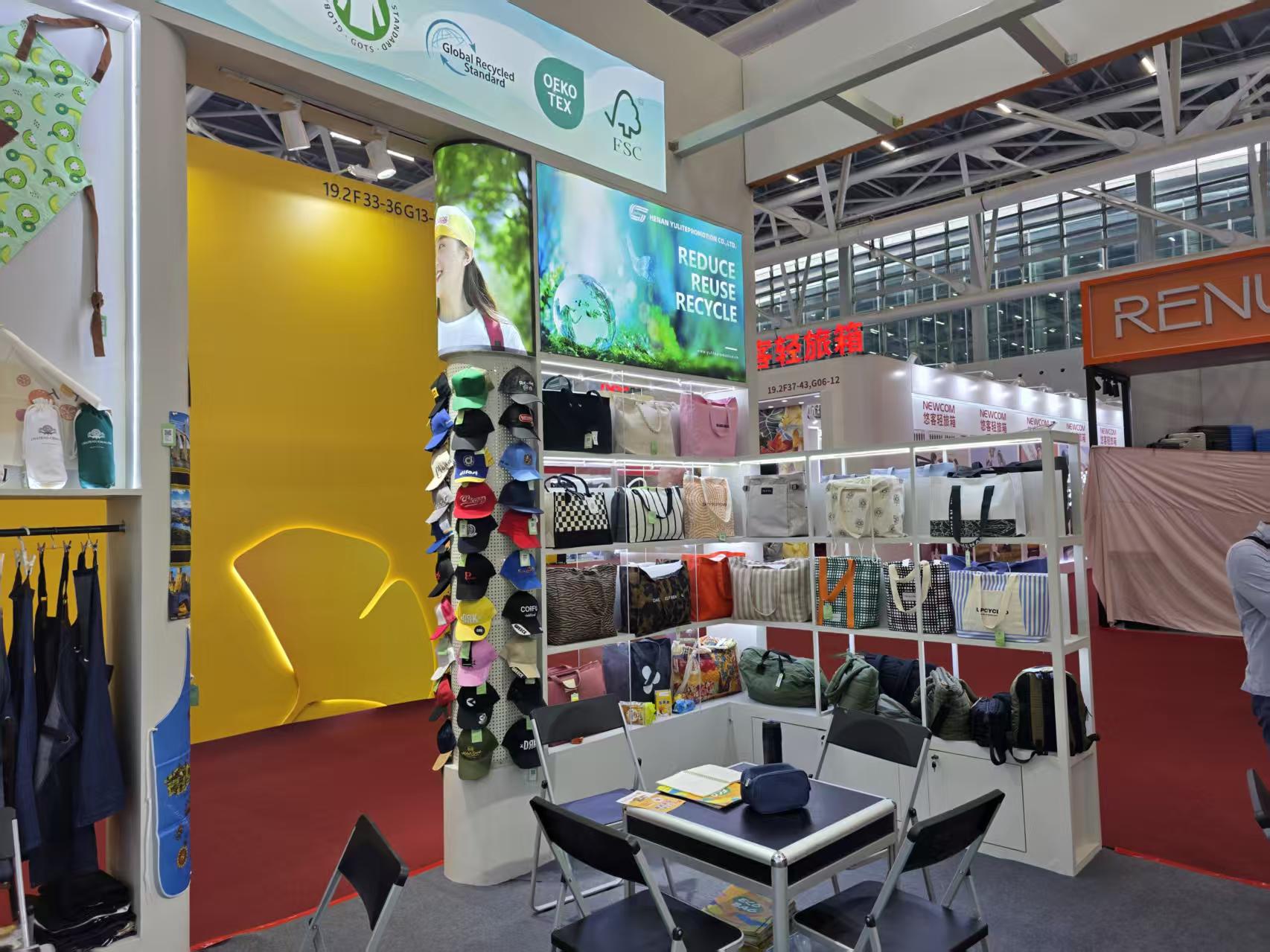
A promotional bag shortlist is a small set of specific model numbers, selected before pricing and production terms are confirmed, that a buyer can compare side by side across materials, capacities, logo options and reuse scenarios. It is not a product catalogue and it is not a broad category review. It is the practical step most procurement teams miss between the generic category brief and the purchase order.
Demand for that step has grown as branded totes and pouches have become standard promotional inventory. Intel Market Research reported that corporate adoption of custom-branded tote bags grew 32% year-over-year in 2024. Across the broader promotional products market, Metastat Insights valued global spend at USD 84.4 billion in 2025 with a 3.8% CAGR. When a category reaches that scale, the decision shifts from whether to buy to which model, for which use case, under which acceptance terms.
This shortlist organises nine verified promotional bag models into a comparison framework for execution-stage buyers. Six models form the core shortlist, and three adjacent models complete the map. Together they cover the most common branded-bag scenarios without duplicating the category-level or per-model reviews published elsewhere in the reference library.
Why a Model-Level Shortlist Beats a Category Brief
Category briefs — “we need promotional tote bags” or “we want cosmetic pouches” — describe intention, not execution. A model-level shortlist converts that intention into decisions a factory can quote, sample and repeat. Three problems disappear once the shortlist exists:
- Specification drift — verbal materials, dimensions and logo methods are replaced by a fixed model identity that both sides can reference.
- Sampling waste — buyers typically sample only the two or three shortlisted candidates they intend to compare, instead of sampling each category concept.
- Repeat opacity — with a numbered model, a second or third campaign can reference the same item, which is essential when the bag carries a long-term brand asset.
The last point connects directly to long-term programme behaviour. Reusable bags and pouches accumulate in consumer households — Intel Market Research estimated that urban consumers in mature markets already own 4–6 tote bags on average — so the brand impression depends on the bag staying in circulation, not on how many were printed. That logic favours model continuity across campaigns rather than a fresh category each year.
The Nine-Model Shortlist at a Glance
The list below separates the six core models from the three adjacent models. Core models carry the primary campaign weight; adjacent models extend coverage when the shortlisted format does not fit a particular scene.
| Model | Format | Shortlist Role |
|---|---|---|
| 1812 | Cosmetic bag | Core — beauty, hospitality, gift-with-purchase |
| 3800 | Tote bag | Core — retail, conferences, everyday carry |
| 4211 | Drawstring bag | Core — gym, event giveaways, schools |
| 4530 | Gym duffel bag | Core — sports sponsorship, membership kits |
| 23250 | COOLR BAG (cooler) | Core — picnic, grocery, outdoor events |
| FDV010 | Foldable bag | Core — travel, trade show, gift-with-purchase |
| 4636 | Promotional shopping bag | Adjacent — retail restock, supermarket promotion |
| 4700 | Beach bag | Adjacent — resort, summer, seasonal campaign |
| T25210 | Knitted bag | Adjacent — fashion-led, retail gifting, boutique |
The Six Core Models by Use Case
Model 1812 — Cosmetic Bag
Model 1812 is a compact cosmetic bag format. In shortlist terms it functions as the entry gift: the format that travels inside a welcome pack, a hotel amenity set or a beauty promotion. Buyers comparing 1812 typically do so on the strength of the small-format material behaviour — whether the pouch holds shape under repeated opening, and whether the selected logo method survives the small print area. For beauty and hospitality buyers, 1812 is usually the second bag on the shortlist, behind a tote, because the pouch is carried for months rather than used once.
Model 3800 — Tote Bag
Model 3800 is a tote bag format and sits at the centre of most promotional programmes. The tote format remains the highest-visibility choice in branded merchandise: the Advertising Specialty Institute reported that tote bags ranked fifth among the most-searched product categories on the ESP platform in 2024, and BagzDepot / ASI estimated that a single reusable tote generates over 3,500 brand impressions across its lifetime. For buyers, 3800 is the model that anchors retail restocking, conference bags and year-round corporate gifting, and it is the model most likely to reappear across multiple campaigns.
Model 4211 — Drawstring Bag
Model 4211 is a drawstring bag format. It is the low-friction give-away model — light to ship, quick to pack, and well matched to gym sign-ups, school events and race-day kits. Buyers usually pair 4211 with 4530 or 23250 inside a single event pack, and compare it most often against alternative drawstring constructions rather than against totes, because the drawstring’s role is different: it is the secondary bag inside a kit, not the primary shopping bag.
Model 4530 — Gym Duffel Bag
Model 4530 is a gym duffel bag and represents the higher-load end of the shortlist. Sports sponsorship, gym membership kits and fitness brand campaigns typically shortlist a duffel because the format signals a heavier-use relationship with the recipient. The trade-off compared to tote and drawstring models is straightforward: duffel bags consume more material per unit and require stitched load points, so unit economics and packaging sizes are heavier. Buyers typically place 4530 in the shortlist when the campaign target is a committed user group rather than a broad street audience.
Model 23250 — COOLR BAG
Model 23250 (COOLR BAG) is a cooler bag and addresses the cold-chain and picnic segment directly. Cooler bags compete on a different set of criteria than totes: insulation behaviour, zip or closure integrity and the ability to hold a cold pack without leaking. In the promotional context, 23250 is usually shortlisted for grocery retail, outdoor events, food and beverage brand activation, and summer campaign extensions. Verified seasonal demand supports this: Business Research Insights reported that seasonal promotional campaigns accounted for 39% of reusable shopping bag demand in 2025, and cooler formats consistently sit within that seasonal demand pattern.
Model FDV010 — Foldable Bag
Model FDV010 is a foldable bag and is the shortlist’s portability model. Foldable bags compress to a small packed footprint, making them ideal for trade-show kits, tourism promotions and travel retail, where the recipient must carry the bag home before using it. In procurement terms, FDV010 reduces shipping volume per unit compared with a rigid tote, which affects DDP cost per piece. Buyers frequently pair FDV010 with 1812 in gift-with-purchase sets because the two small-format models pack together.
The Three Adjacent Models
Adjacent models are not second choice — they are the models placed in the shortlist when a scene does not fit any core format. Three verified options extend the map:
- Model 4636 — promotional shopping bag. Best where a branded retail bag is needed for supermarket restocking or high-volume retail give-away, but the scene does not require the tote form factor of 3800.
- Model 4700 — beach bag. Suited to resort, summer and travel promotions where load size and open-top access matter more than drawstring closure.
- Model T25210 — knitted bag. A fashion-led, boutique-friendly format for retail gifting and lifestyle campaigns where a softer, textured appearance is part of the appeal.
Material Choices Across the Shortlist
Yulite (Henan Yulitepromotion Co., Ltd., founded 2008, exporting to EU/USA/Japan/Australia) lists cotton/canvas bags, tote bags, drawstring bags, foldable bags, cosmetic pouches, backpacks, cooler bags, polyester/nylon bags, RPET/recycled cotton bags, RPET felt bags and non-woven bags within its promotional bag range. Where a project requires it, organic cotton and padded fabric options can be specified against the brief. Material choice affects shortlist behaviour more than any other single factor, because it changes reuse life, load capacity and end-of-life options.
The comparison data below reflects the company’s own material comparisons between cotton and three common alternatives. It is presented here for decision support rather than as a promotional claim.
| Comparison | Reusability | Load / Durability | End of Life | Relative Cost |
|---|---|---|---|---|
| Cotton vs. paper | Cotton reusable 50+ times; paper 1–2 uses | Cotton holds 2.5× more weight | Cotton reduces deforestation risk by 85% vs disposable paper | Cotton ≈ 3× paper |
| Cotton vs. non-woven | Cotton reusable 50+ times; non-woven fewer than 10 uses | Cotton heavier and more durable; non-woven light and easier to damage | Cotton storable 10+ years; non-woven degrades in storage | Cotton ≈ 2× non-woven |
| Cotton vs. plastic | Cotton reusable 100 times; plastic single-use | Cotton 10 kg load; plastic 3 kg | Cotton degrades in 6 months–1 year; plastic 200–1,000 years | Cotton ≈ 10× plastic |
For shortlist purposes, the practical reading is:
- Cotton / canvas anchors the long-life gifts: 3800, 4636, 4700.
- Polyester and nylon suit the higher-load, moisture-exposed formats: 4530, 23250, 4211.
- RPET / recycled cotton match the sustainability-led briefs and are typically considered against organic cotton and cotton options during qualification.
- Felt supports the soft-goods end of the range and is included in Yulite’s stated product mix alongside delicate small formats such as 1812 and T25210.
Recycled PET capacity is expanding at scale: Custom Market Insights valued the rPET market at USD 19.5 billion in 2025, which keeps recycled promotional bag formats economically viable for volume programmes rather than only for premium lines.
Size Ranges and Logo Methods
Size range is a shortlist filter, not a marketing claim. Buyers comparing 1812, 3800, 4211, 4530, 23250 and FDV010 should request the size range per model from the factory, because the same format name can be produced across several dimensions. What does not change across models is the range of logo methods Yulite offers as a factory:
- Silk printing (screen printing) — best for flat one- or two-colour logos on totes and pouches.
- Transfer printing (heat transfer) — suited to multi-colour artwork where fine detail matters.
- Digital printing — supported by a Yulite digital printing machine installed at the factory; suited to photographic or gradient artwork.
- Embroidery — used where a raised, textured logo is required, usually on canvas totes and duffel formats.
The choice of method is bounded by the model. Small pouches such as 1812 have a smaller printable area, and details that work on 3800 will not transfer directly to 1812 at the same physical size. Buyers should confirm which logo methods have been validated per model during sampling rather than assume an even mapping across the shortlist.
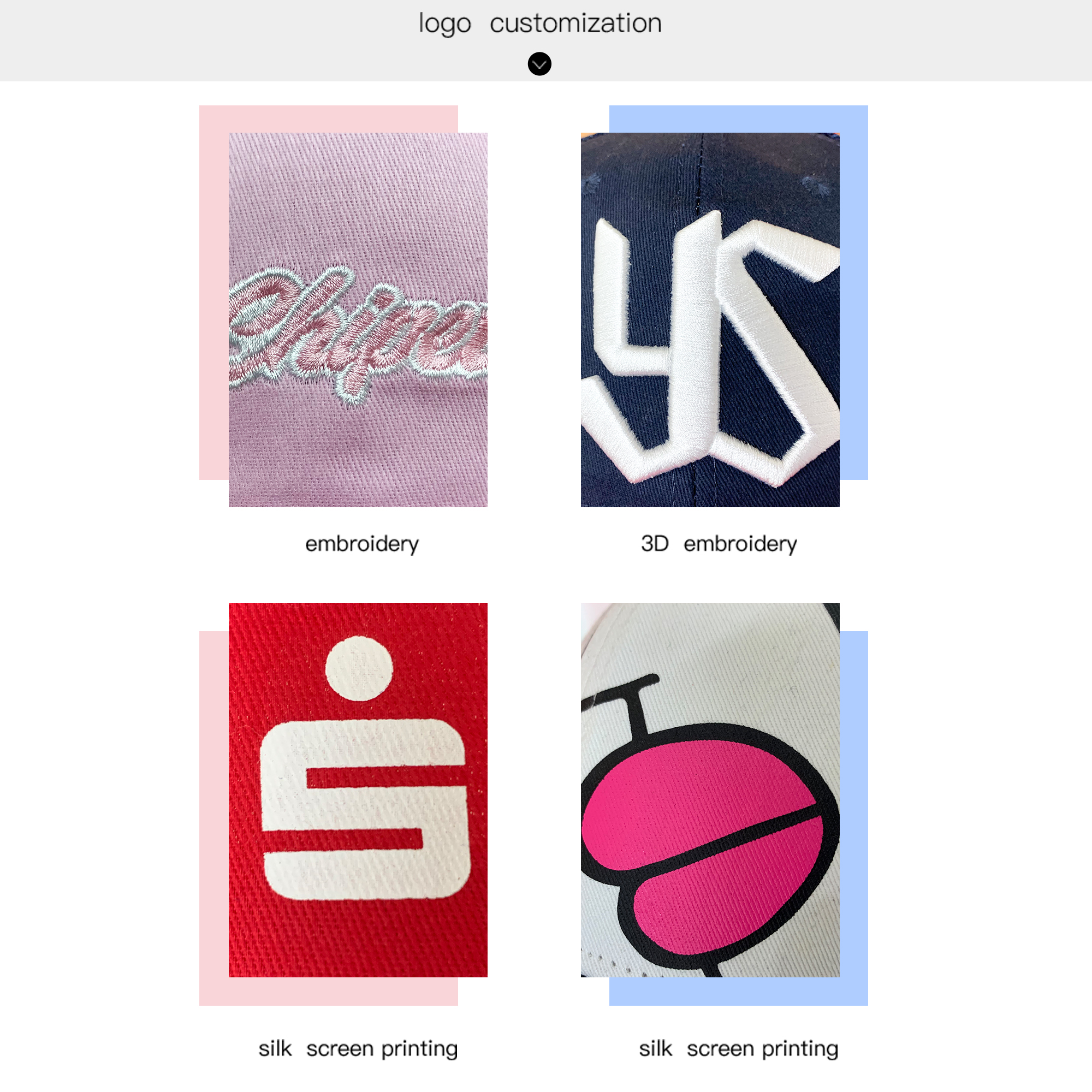
Logo placement reference across promotional bag formats. Actual printable area varies by model.
Matching the Shortlist to Programme Type
The same shortlist resolves differently depending on programme type. The table below shows the recommended primary and supporting model for five common programmes:
| Programme Type | Primary Model | Supporting Model | Why |
|---|---|---|---|
| Beauty / cosmetic gift-with-purchase | 1812 | FDV010 | Small-format, gift-set compatible |
| Retail restocking / shopping | 3800 | 4636 | High visibility, reusable in-store |
| Sports / gym membership | 4530 | 4211 | Load-bearing format, complementary kit bag |
| Picnic / grocery / cold chain | 23250 | 4700 | Insulation + beach / open-top load |
| Trade show / travel / boutique | FDV010 | T25210 | Portability + fashion-led retail appearance |
Where the programme is multi-market, the shortlist also needs to match buyer geography. Asia Pacific dominated the bag market with 44.8% revenue share in 2024 per Grand View Research, and buyers sourcing from China account for most of that regional share. EU-bound programmes additionally need to meet REACH Regulation Annex XVII — restricting azocolourants to 30 mg/kg in textiles — and, where applicable, Regulation (EU) No 1007/2011 for fibre labelling on textile products containing at least 80% textile fibres. California SB 1046, in force since January 2025, restricted non-compostable single-use plastic carry-out bags, which reinforces the shift toward reusable and non-woven formats that the shortlist already covers.
Execution Terms That Decide the Shortlist
A shortlist is not a purchase until execution terms are known. For this supplier the terms that apply across the nine models are:
- MOQ: 500 pcs per model
- Delivery terms: DDP
- Acceptance criteria: pre-shipment test and third-party inspection
- Payment terms: T/T, D/P, Alibaba Trade Assurance, credit card
Capacity and continuity are the factors that most affect the decision after the shortlist is narrowed. Yulite reports monthly production capacity of 200,000 pieces, and the factory operates a stated daily output of 30,000–50,000 pieces. For programmes that repeat across a year, three controls matter most:
- Order planning — sufficient production time is reserved for each order to reduce cross-order collision.
- Power continuity — the factory maintains its own power generation equipment to avoid production interruption.
- Backup capacity — sub-factories complete orders alongside the main factory so that peak seasons can absorb additional volume.
On material compliance, each lot of fabric is lab-tested for heavy metals before mass production to reduce the risk of excess heavy metals entering the finished bag. This is the equivalent of an in-process check rather than a final-inspection substitute, and it should be confirmed against the specific programme requirement for REACH or other regional restrictions.
Where the Shortlist Model Has Limits
The model-level shortlist is more precise than a category brief, but it is not a substitute for full qualification. Three limits are worth stating plainly:
- Sampling is still required. Shortlisting narrows the candidate set; it does not remove the need to validate each model’s material feel, colour accuracy, load points and logo registration on a physical sample.
- Certification claims remain model-by-model. BSCI, SEDEX, ISO9001, OEKO-TEX Standard 100 and GRS are audited at the factory level, but a specific model’s compliance to a specific regulation — for example REACH Annex XVII — must still be confirmed against the fabric actually used in that model.
- Shortlisting can exclude useful options. A narrow shortlist built around the six core models may miss a category-adjacent format — 4636, 4700 or T25210 — that fits a single campaign better. The map is deliberately extensible; treat it as a decision base, not a closed set.
These limits do not undermine the shortlist approach. They define where the shortlist stops and where the sample, the test report and the acceptance inspection take over.
Why Model Continuity Matters More Than Ever
The strongest argument for a model-level shortlist is not the first order — it is the fourth. Reusable bag programmes accumulate value only if the same model remains available for later campaigns. Mass-market data supports that expectation. Business Research Insights reported that the garment industry alone accounts for 17% of reusable bag applications, with 48% of that demand falling under promotional usage. When a retail brand repeats a seasonal bag programme, model continuity shortens qualification time, stabilises unit pricing and protects colour matching between runs.
Consumer-side data reinforces the strategic value. Nielsen / BagzDepot reported that 73% of Millennials and Gen Z consumers prefer to buy from sustainable brands using eco-friendly promotional items. Because the bag carries the brand message forward, model consistency across campaigns keeps the message continuous — the same format returns to the same household, rather than being replaced by a fresh, unrecognised design each year.
FAQ
What is a promotional bag model shortlist?
A promotional bag model shortlist is a small set of specific numbered bag models — in this case 1812, 3800, 4211, 4530, 23250 and FDV010, plus adjacent options 4636, 4700 and T25210 — selected before pricing and production terms are confirmed. It replaces the category-level brief with a fixed set of models that can be sampled, quoted and repeated across campaigns.
How should buyers order this shortlist?
Buyers typically order the shortlist by use case rather than by model number. The core ordering used in this article is: 1812 for cosmetic and gift-with-purchase; 3800 for retail and conference; 4211 for gym and event give-away; 4530 for sports sponsorship; 23250 for picnic and grocery; and FDV010 for trade show and travel. Adjacent models 4636, 4700 and T25210 extend the same list where tote, beach or boutique formats fit better than any core model.
Which logo methods apply to this shortlist?
Four logo methods are available across the Yulite range: silk printing (screen printing), transfer printing (heat transfer), digital printing and embroidery. A Yulite digital printing machine is installed at the factory, which supports photographic and gradient artwork. Embroidery is typically used where a raised, textured logo is required. The printable area varies by model, and the specific logo method should be validated on a physical sample for each model before mass production.
How does material choice affect shortlist suitability?
Material choice determines reuse life, load capacity and end-of-life behaviour. Cotton offers reusable performance of 50+ uses versus 1–2 uses for paper, fewer than 10 uses for non-woven and single use for plastic. Cotton also holds 2.5× more weight than paper and 10 kg versus 3 kg for plastic. Cotton is roughly 3× the cost of paper, 2× the cost of non-woven and 10× the cost of plastic. Recycled cotton and RPET options extend the material map toward sustainability-led briefs; felt supports softer small formats such as 1812 and T25210.
Can the same model be re-sourced across multiple campaigns?
Model continuity is what makes a shortlist programme work over multiple runs. Yulite reports monthly production capacity of 200,000 pieces with daily output of 30,000–50,000 pieces, which supports repeat ordering. Order planning, on-site power generation and sub-factory capacity are the three mechanisms the factory uses to protect delivery timing when multiple campaign runs overlap. Buyers should confirm model availability for the second and third run during initial sampling rather than at reorder.
What are the execution terms for this shortlist?
The execution terms applied to the nine models are: MOQ of 500 pcs per model; DDP delivery; acceptance criteria of pre-shipment test and third-party inspection; and payment terms of T/T, D/P, Alibaba Trade Assurance and credit card. Each lot of fabric is lab-tested for heavy metals before mass production to reduce compliance risk at the material stage.
Future Outlook
The shortlist logic is likely to strengthen rather than weaken over the next few years. Two verified trends support that view. First, the global tote bag market was valued at USD 17.1 billion in 2023 and is projected to reach USD 29.8 billion by 2032 (Acumen Research and Consulting), implying continued volume demand for models such as 3800, 4636 and 4700. Second, Market Research Future reports that canvas remains the largest material segment in the tote bag market while jute is the fastest-growing, and Custom Market Insights places the recycled PET market at USD 19.5 billion in 2025 — both signals that material-led shortlists will continue to be a decision step, not just a category descriptor.
For buyers, the practical implication is straightforward: build the shortlist around models that will remain available, then validate materials and logo methods against each campaign. That is the sequence this article has set out — six core models, three adjacent models, material trade-offs, logo methods, execution terms and cited limits.
For the full programme catalogue and 2026 reference materials, Yulite’s spring brochure is available for download: 2026 Yulite Spring Brochure (PDF).
Есть вопросы или нужны дополнительные детали?
Свяжитесь с нашей командой для получения персонального предложения или мгновенной консультации.
Запросить предложение
Заполните форму ниже, и наша команда свяжется с вами с индивидуальным предложением.
Прямой чат WhatsApp
Предпочитаете общаться в реальном времени? Напишите нам в WhatsApp для мгновенной помощи и быстрых ответов.
- Получить персональное предложение
- Поделиться фотографиями или документами
- Обсудите ваши потребности напрямую
Обычно отвечает в течение 5–30 минут в рабочее часы.