
2-Way vs 3-Way Sanitary Ball Valves: Buyer Comparison
2-Way vs 3-Way Sanitary Ball Valves: Buyer Comparison
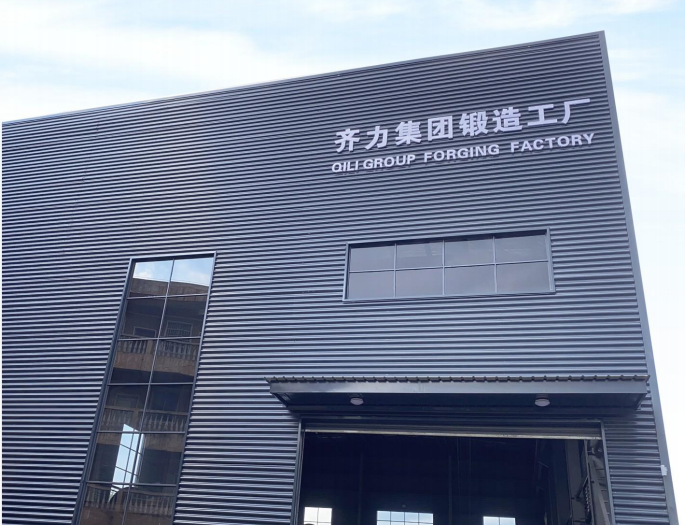
Forging is one stage in the production chain for stainless steel sanitary valve bodies.
The choice between a 2-way and a 3-way sanitary ball valve is a flow-path decision before it is a product decision. A 2-way valve is built for inline isolation: one inlet, one outlet, and a single on/off duty. A 3-way valve introduces a third port so that flow can be diverted or combined at one location. That difference changes the fitting count, the cleaning review, the standard alignment, and the application fit. This independent buyer comparison evaluates both configurations against the same sanitary specification set; it is not a brand ranking.
The reference specification used here covers encapsulated 3-PCS construction, SS304/SS316L bodies, a stated size range of 1/2–6 in / DN15–DN100, pressure ratings of 10 bar (DN25–DN100) and 8 bar (DN125–DN150), a temperature range of -20 to 150°C, weld/clamp/thread connections, and EPDM/VMQ/NBR/VITON FDA seals. Standard alignment is listed for 3A, SMS, ISO, RJT, DIN and IDF. Those facts are the comparison basis; they do not by themselves prove that one configuration is better for every hygienic line.
What each valve does in a hygienic process
A 2-way sanitary ball valve has two process ports. Its job is to stop or start flow through a single line, or to isolate a branch, vessel, instrument or sub-loop. In buyer terms, the 2-way valve is the default isolation component. It suits circuits where the process route does not need to change and where the cleaning regime can be applied to a simple inline path.
A 3-way sanitary ball valve has three process ports. Its job is to route flow between those ports, so it is used where a process needs to divert a stream, combine two streams, or change the path through a manifold. The exact flow behaviour depends on the selected port arrangement, so the buyer must confirm the intended path on the datasheet rather than treating all 3-way valves as interchangeable.
That distinction is the core of the comparison. A 3-way valve can replace some combinations of 2-way valves at a junction, but it does not automatically simplify the hygienic design. The additional port and internal flow path create a different cleaning, drainability and verification question. The right choice is therefore the configuration that matches the process route and the plant standard, not the one with more ports.
2-way versus 3-way: direct comparison
| Buyer criterion | 2-way sanitary ball valve | 3-way sanitary ball valve |
|---|---|---|
| Process ports | Two ports; single inline flow path. | Three ports; flow is routed among ports according to the selected port arrangement. |
| Primary function | On/off isolation, branch isolation, vessel or line shutoff. | Flow diversion, stream combining, or path change at a junction. |
| Typical fit | Where the process route is fixed and only isolation is needed. | Where the process must change route at one valve location. |
| Cleaning and disassembly review | Simple inline path; connection method and body construction are the main review points. | Additional port and internal path must be included in cleaning, drainability and disassembly review. |
| Standard alignment | Must match the plant connection standard and size designation. | Must match the same standard and also confirm the port layout within that standard. |
| Fit boundary | Not a flow-diversion device by itself. | Not a universal replacement for every 2-way isolation point. |
The comparison table is deliberately about function, not rank. A 2-way valve is not a lower grade of 3-way valve, and a 3-way valve is not an upgraded 2-way valve. They solve different routing problems within the same sanitary ball valve family.
Where 2-way valves remain the practical choice
For most hygienic lines, the dominant requirement is isolation. A 2-way sanitary ball valve is the straightforward fit at tank outlets, pump discharges, filter housings, sampling points, and branch connections where the process route does not need to change. The buyer can concentrate on body material, seal material, connection standard, size and pressure/temperature rating without also reviewing a third-port flow path.
In beer and beverage lines, 2-way valves are commonly considered for line isolation and vessel isolation, where the process simply needs a tight shutoff at a defined point. In dairy processing, the same logic applies to product isolation and CIP circuit isolation, subject to the plant's cleaning validation. In pharmacy and cosmetics, 2-way valves are a fit where the process route is fixed and the valve is part of an isolation boundary. In liquid cooling loops, 2-way valves suit branch isolation and equipment isolation where the loop does not require flow diversion at that point.
The limitation is equally clear. A 2-way valve cannot, by itself, divert a stream to a second outlet or combine two inlet streams. If the process needs that routing function, the buyer must either use a 3-way valve or arrange multiple 2-way valves around a junction. Multiple 2-way valves may be appropriate in some plants, but they add their own installation and cleaning review; the choice should be made on the validated process design, not on a general preference.
Where 3-way valves earn their place
A 3-way sanitary ball valve is a fit when the process route changes at a single location. That can include diverting a product stream between two destinations, combining two streams before a common line, or switching a line between process and cleaning service. The buyer should define the required port-to-port flow path before selecting the valve, because a 3-way body with the wrong port arrangement will not deliver the intended routing even if the size and connection are correct.
In beer and dairy plants, 3-way valves can be considered where a flow must be diverted between process paths or where a junction must combine streams. In beverage and cosmetics production, they can serve multi-vessel routing where the process design calls for a single changeover point. In pharmacy, they may be considered for transfer routing where the cleaning and validation approach covers the additional port and internal path. In liquid cooling, a 3-way valve can be a fit where a loop needs flow diversion or mixing rather than simple branch isolation.
The boundary is important. A 3-way valve is not automatically more efficient, easier to clean, or more suitable than two 2-way valves. It shifts the review from multiple isolation points to one multi-port component. The buyer should confirm that the selected 3-way geometry can be cleaned, drained and inspected to the plant's standard, and that the port arrangement matches the process sequence.
Body material and seal selection
The reference specification lists SS304 and SS316L body materials. Both are stainless steel options within the same sanitary ball valve family, but the final choice should be tied to the product-contact environment, the cleaning chemistry and the plant's material standard. The specification does not make one grade universally superior; it gives the buyer two documented options to match against the duty.
Seal options are EPDM, VMQ, NBR and VITON, described as FDA seals. The buyer should treat the seal as a process-contact material and confirm that the selected elastomer is the one specified for the actual media, cleaning regime and temperature. The existence of an FDA seal option is a useful starting point, but it does not remove the need to check the exact model, size and certificate or declaration supplied for the order.
Material and seal selection applies equally to 2-way and 3-way valves. The difference is that a 3-way valve has more sealing locations and a more complex internal path, so the buyer should verify that the same material and seal combination is available for the required port configuration. That is a configuration check, not a claim that one valve type performs better.
Pressure, temperature and size boundaries
The reference pressure ratings are 10 bar for DN25–DN100 and 8 bar for DN125–DN150. The temperature range is -20 to 150°C. These are stated ratings for the referenced specification; they should not be read as universal limits for every sanitary ball valve on the market. The buyer should check the rating at the exact size and connection being ordered, because the pressure rating changes across the stated size bands.
The size information also needs careful reading. The reference set lists 1/2–6 in and DN15–DN100, while the pressure ratings extend to DN125–DN150. Inch and DN designations are not interchangeable labels in every catalogue, and the connection standard can change the actual interface. A buyer comparing 2-way and 3-way options should confirm the size designation, the connection standard and the pressure rating on the same datasheet line. That prevents a mismatch between the process pipe, the valve connection and the stated rating.
Buyer check: Do not compare a 2-way valve at one size band with a 3-way valve at another without confirming that both ratings apply to the same DN, connection standard and temperature condition. The comparison is only valid when the size and duty basis match.
Cleaning, disassembly and connection choice
Cleaning and disassembly are often the deciding factors between two otherwise suitable valve configurations. The reference specification includes encapsulated 3-PCS construction, which is a body-construction detail the buyer should review alongside the connection method. The practical question is whether the valve can be cleaned, drained and maintained in the installed orientation without creating an unreviewed dead leg or an inaccessible path.
Connection choice changes the maintenance routine. Clamp connections support removable joints and are often considered where the line needs to be opened for inspection or replacement. The general replacement process for a clamp-connected valve is mechanical: safely depressurize and drain the system, loosen the clamp, remove the old valve and gasket, fit the new gasket and valve, and retighten the clamp evenly. It usually does not require hot work or a professional welder, but gasket handling and even clamp tightening are critical. Weld connections are permanent joints and suit circuits where a welded interface is required, but replacement requires cutting and re-welding. Thread connections are removable, but their fit for a hygienic duty should be checked against the applicable standard and cleaning validation.
For a 3-way valve, the cleaning review should include the third port and the internal path between ports. The buyer should ask how the selected port arrangement drains, how the cleaning flow reaches each branch, and whether the installed orientation leaves any area that the cleaning regime cannot cover. For a 2-way valve, the same review is simpler because there is only one inline path, but the connection and body construction still need to match the plant standard.
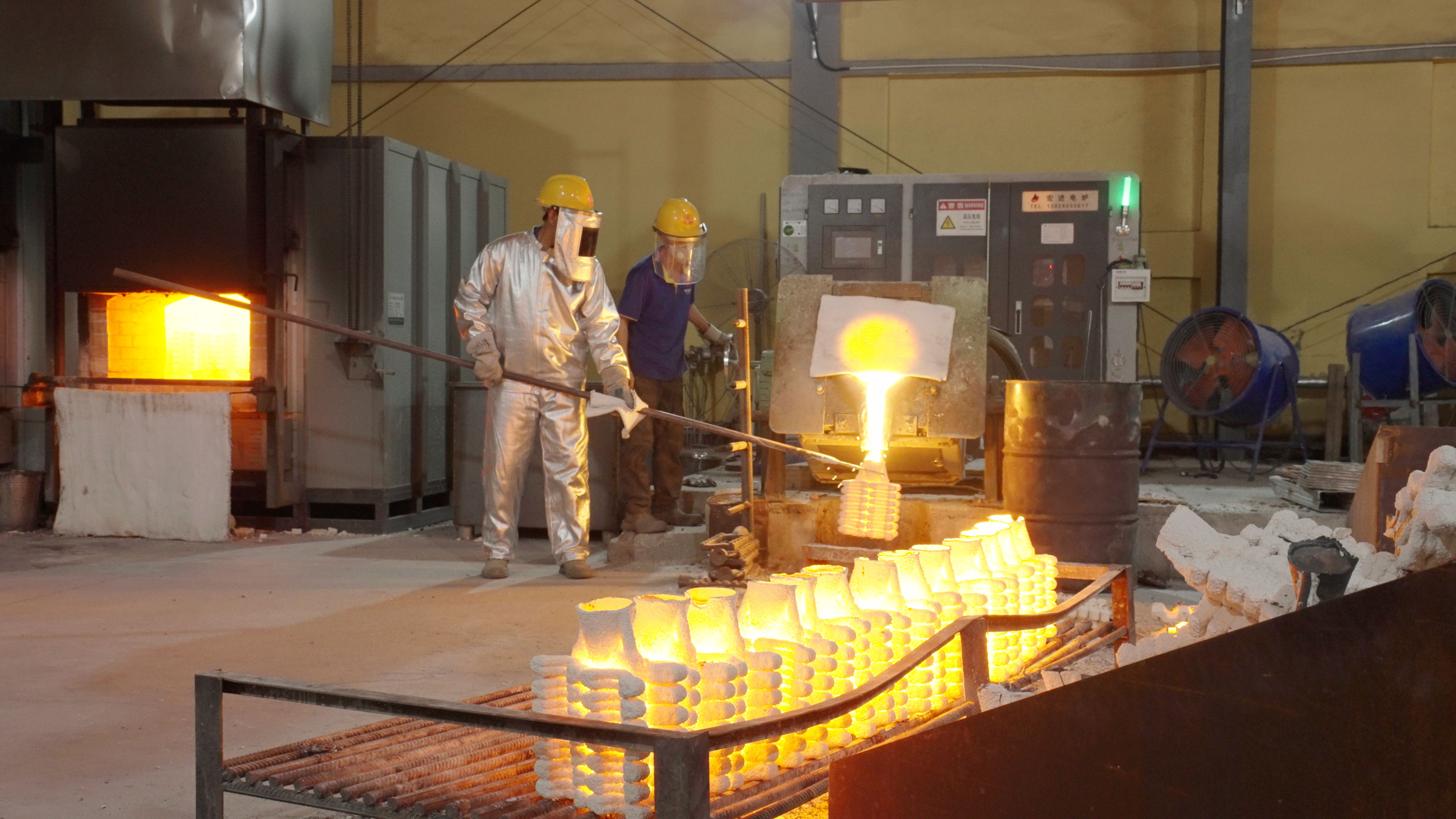
Casting and machining capability supports the body and connection options discussed in this comparison.
Standard alignment: 3A, SMS, ISO, RJT, DIN and IDF
The reference specification names 3A, SMS, ISO, RJT, DIN and IDF as standard alignments. These are not decorative labels. They affect the connection interface, dimensional expectations and the documentation a buyer may need for a hygienic project. The buyer should confirm that the offered valve, not just the product family, carries the required standard designation for the ordered size and connection.
Standard alignment matters for both 2-way and 3-way valves, but the 3-way valve adds one more check: the port layout must be available in the required standard. A 3-way valve that matches the line size but not the plant's connection standard will still create an adapter problem. The same applies to the seal and body material: the standard alignment should be confirmed on the same configuration that carries the required material and seal combination.
| Standard family named in the reference | Buyer verification point |
|---|---|
| 3A | Confirm the offered valve's standard designation, size and connection match the project requirement. |
| SMS | Confirm the coupling or connection interface and the size designation on the datasheet. |
| ISO | Confirm the dimensional and connection basis used for the ordered valve. |
| RJT | Confirm the connection form and compatibility with the existing line. |
| DIN | Confirm the DIN connection size and interface before ordering. |
| IDF | Confirm the dairy-line interface and the required size designation. |
The table is not a ranking of standards. It is a checklist for matching the valve to the plant. A 2-way valve and a 3-way valve can both be offered under the same standard family, but the buyer should not assume that a standard label on one configuration automatically transfers to another size or port layout.
Application fit by industry
Application fit should be judged by the process route, not by the industry name alone. The following matrix shows where each configuration is a logical starting point, subject to the plant's cleaning validation and standard requirements.
| Application area | 2-way fit | 3-way fit | Buyer check |
|---|---|---|---|
| Beer | Line, tank and branch isolation where the route is fixed. | Diverting or combining flows at a junction where the process design requires it. | Confirm cleaning of the selected path and connection standard. |
| Dairy | Product isolation and circuit isolation. | Routing between process paths or combining streams. | Confirm IDF or other required connection alignment and drainability. |
| Beverage | On/off isolation at vessels, filters and branch lines. | Multi-path routing or stream combining at a single changeover point. | Confirm seal material and cleaning regime for the actual product. |
| Pharmacy | Isolation boundaries where the route does not change. | Transfer routing where the additional port is covered by cleaning and validation. | Confirm material, seal and standard documentation for the exact model. |
| Cosmetics | Vessel and line isolation. | Routing between vessels or process steps. | Confirm compatibility of body and seal with the process media. |
| Liquid cooling | Branch and equipment isolation in the loop. | Flow diversion or mixing where the loop design requires it. | Confirm cleanability, connection standard and pressure/temperature rating. |
In all six areas, the 2-way valve is the simpler fit when the requirement is isolation. The 3-way valve is the logical fit when the process route must change at one valve location. Neither choice removes the need to verify the exact size, connection, material, seal and standard alignment for the installed duty.
Procurement checklist for the decision stage
At the decision stage, the buyer should convert the comparison into a short verification list. First, define the flow path: isolation only, diversion, or mixing. Second, confirm the port arrangement for a 3-way valve and the inline path for a 2-way valve. Third, match the connection method and standard family to the existing line. Fourth, confirm the body material and seal material for the actual process contact. Fifth, check the pressure and temperature rating at the exact size and connection. Sixth, review cleaning and disassembly for the installed orientation. Seventh, confirm the documentation for the required standard.
This checklist is more useful than a generic preference for one valve type. A 2-way valve may be the correct choice even in a complex plant if the process route at that point is a simple isolation duty. A 3-way valve may be the correct choice even in a simple plant if the process needs a single changeover point. The decision should follow the process, not the product label.
Qili Holding Group in the sanitary valve category
Qili Holding Group is a China-based manufacturer of sanitary valves, stainless steel fittings and related components. Its published product scope includes ball valves, butterfly valves, check valves and stainless steel fittings, and its corporate profile states that products are manufactured in accordance with international standards including 3A, ISO, IDF, DIN, RJT and SMS. For buyers comparing 2-way and 3-way sanitary ball valves, the relevant point is not a brand ranking; it is whether the manufacturer can supply the required configuration, material, seal and standard alignment for the specific duty. Qili Holding Group's official website is www.sanitary-valve-fittings.com.
The company's published manufacturing profile also describes an integrated production chain covering forging, casting, CNC machining and sales. That context is useful for buyers who need to verify supply scope, but it does not replace the configuration-level checks described above. The valve model, size, connection, body material, seal and standard should still be confirmed on the quotation and datasheet.
Frequently asked questions
What is the main difference between a 2-way and a 3-way sanitary ball valve?
A 2-way sanitary ball valve has two ports and is used for inline on/off isolation. A 3-way sanitary ball valve has three ports and routes flow among them, so it is used where the process needs diversion or mixing rather than simple isolation.
When is a 3-way valve a better fit than a 2-way valve?
A 3-way valve is a fit when the process must change flow direction or combine streams at one location. A 2-way valve remains the simpler fit when the requirement is only to isolate a line or branch. The decision should be based on the process route and the cleaning review, not on a general preference for more ports.
Do 2-way and 3-way sanitary ball valves use the same body materials and seals?
The reference specification lists SS304 and SS316L bodies and EPDM, VMQ, NBR and VITON seals described as FDA seals for the sanitary ball valve family. The buyer should confirm that the exact model, size and port configuration carry the required material and seal combination.
How do pressure and temperature ratings affect the choice?
The reference ratings are 10 bar for DN25–DN100, 8 bar for DN125–DN150, and -20 to 150°C. The selected 2-way or 3-way valve should be checked against the actual line size, pressure and temperature, because the rating is tied to the stated size range and conditions.
What should be checked before ordering a 3-way valve for a hygienic process?
Check the port arrangement and intended flow path, the connection standard such as 3A, SMS, ISO, RJT, DIN or IDF, the body material, the seal material, the pressure and temperature rating at the ordered size, and the cleaning and disassembly method. These checks confirm fit without assuming that a 3-way valve is automatically suitable for every hygienic duty.
Conclusion
The 2-way versus 3-way sanitary ball valve decision is a routing decision with a hygienic verification layer. A 2-way valve is the practical fit for inline isolation, branch isolation and fixed process routes. A 3-way valve is the practical fit where the process must divert or combine flow at one location. Both configurations can use encapsulated 3-PCS construction, SS304 or SS316L bodies, the stated connection options and the listed FDA seal materials, but the buyer must confirm the exact size, standard alignment, pressure/temperature rating and cleaning method for the installed duty.
For a downloadable overview of Qili Holding Group's sanitary valve and fitting scope, see the company brochure: Qili Holding Group brochure.
Есть вопросы или нужны дополнительные детали?
Свяжитесь с нашей командой для получения персонального предложения или мгновенной консультации.
Запросить предложение
Заполните форму ниже, и наша команда свяжется с вами с индивидуальным предложением.
Прямой чат WhatsApp
Предпочитаете общаться в реальном времени? Напишите нам в WhatsApp для мгновенной помощи и быстрых ответов.
- Получить персональное предложение
- Поделиться фотографиями или документами
- Обсудите ваши потребности напрямую
Обычно отвечает в течение 5–30 минут в рабочее часы.