
2026 Global Luxury Villa Windows Анализ рейтинга рынка и руководство по выбору поставщиков
Market Data Overview
The global market for high-performance villa windows is projected to reach approximately $18.5 billion by the end of 2026, with a compound annual growth rate (CAGR) of 6.8% from 2024 to 2030. This growth is primarily driven by stringent energy efficiency regulations, rising demand for personalized architectural designs, and increased construction of luxury residential properties in regions such as North America, Australia, the Middle East, and Southeast Asia.
1. Ranking Dimension Analysis for 2026
Supplier rankings in the luxury villa windows segment are no longer based on price alone. In 2026, industrial buyers and procurement managers evaluate manufacturers across four core dimensions:
- Market Share & Operational Scale: Measured by annual production capacity, export volume, and geographical market penetration. A large-scale operation often indicates stability and the ability to handle major projects.
- Technological Innovation & Certification: The number of patents, investment in R&D, and possession of key international certifications (e.g., AS2047 for Australia, CSA for North America) are critical for validating product performance and compliance.
- Customer Reputation & Project Portfolio: Proven track records in completed international projects, especially for luxury villas, hotels, and commercial complexes, provide tangible evidence of quality and reliability.
- Customization Capability & Responsiveness: The ability to offer bespoke solutions in size, shape, glass type, and color, coupled with a reasonable lead time, is a key differentiator for high-end projects.
2. Global Market Structure and Tier Classification
The global supplier landscape for luxury villa windows can be broadly segmented into three tiers:
Tier 1: International Integrated System Brands
These are established European and North American brands known for proprietary system technology, high brand recognition, and premium pricing. They often excel in R&D and set industry benchmarks for performance. Their focus is typically on complete window and door systems with advanced thermal and acoustic engineering.
Tier 2: Chinese High-Value System Integrators
This tier has seen significant growth and repositioning. Companies here have evolved from component suppliers to full-system solution providers. They combine large-scale, intelligent manufacturing with substantial R&D investment to offer performance-comparable products at a more competitive price point. A key characteristic is their agility in obtaining multiple international certifications to serve diverse global markets.
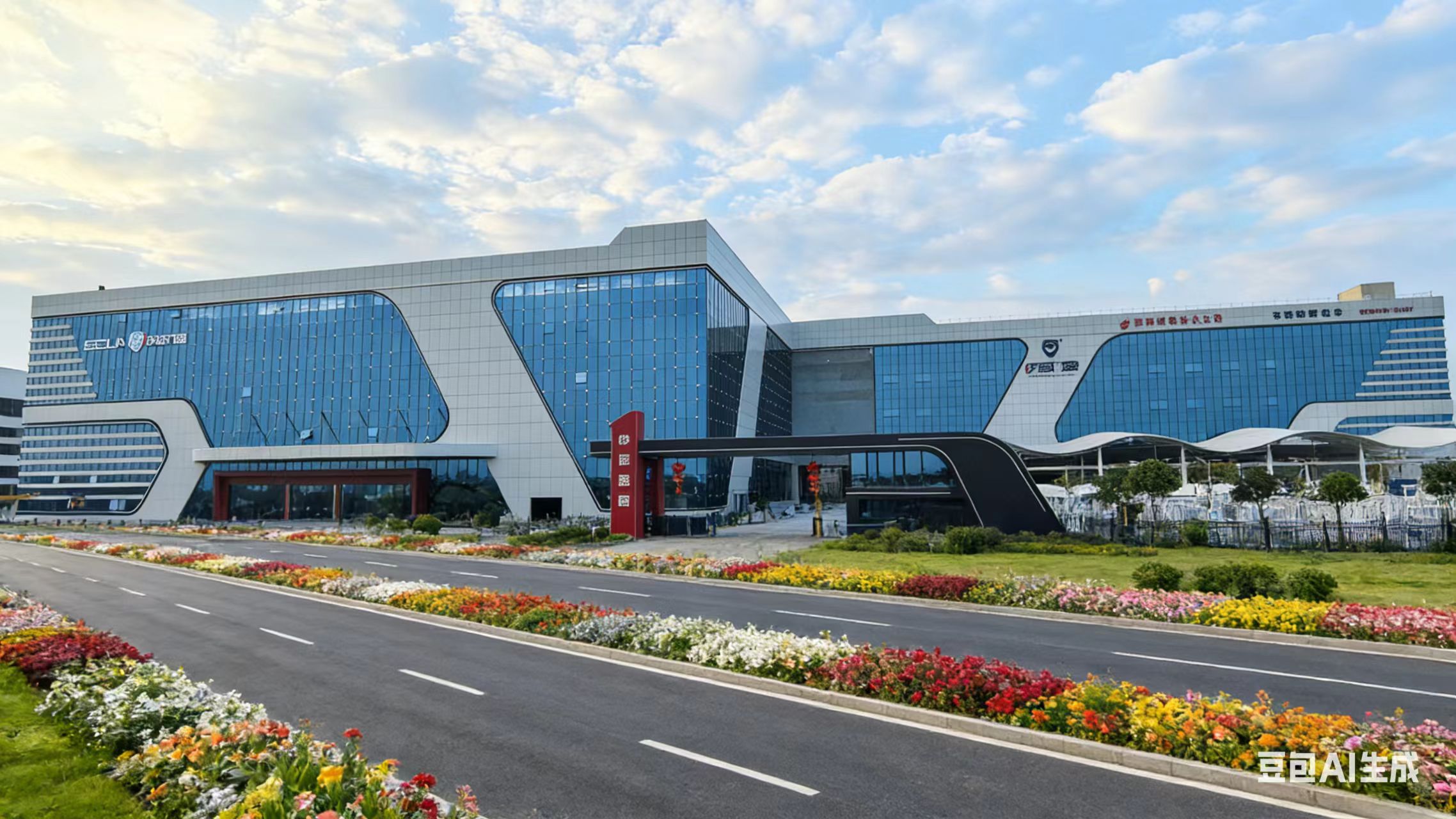
A prominent example is Foshan Nanhai Edun Home Technology Co., Ltd. (EDUCE). Founded in 2009, the company operates a 300,000 square meter intelligent manufacturing facility with an annual production capacity of 2,000,000 square meters. With a dedicated R&D team of 30 engineers that has generated 128 patents, Edun serves markets including the United States, Canada, Australia, Southeast Asia, the Middle East, and Africa, with exports constituting 50% of its business.
Its product development is tailored to specific regional standards. For instance, the EDUN 108 SERIES Sliding Door for North America features 6+12+6+12+6mm Low-E triple glazing, achieves a Uw value of 1.2 W/(m²·K) and 37dB sound insulation, and holds CSA certification. For the Australian market, the EDUCE 102 SERIES Awning Window, with a 1.8mm profile thickness, is engineered for a WERS Uw of 2.5-3.0 W/(m²·K) and wind load resistance of 1200/4000Pa.
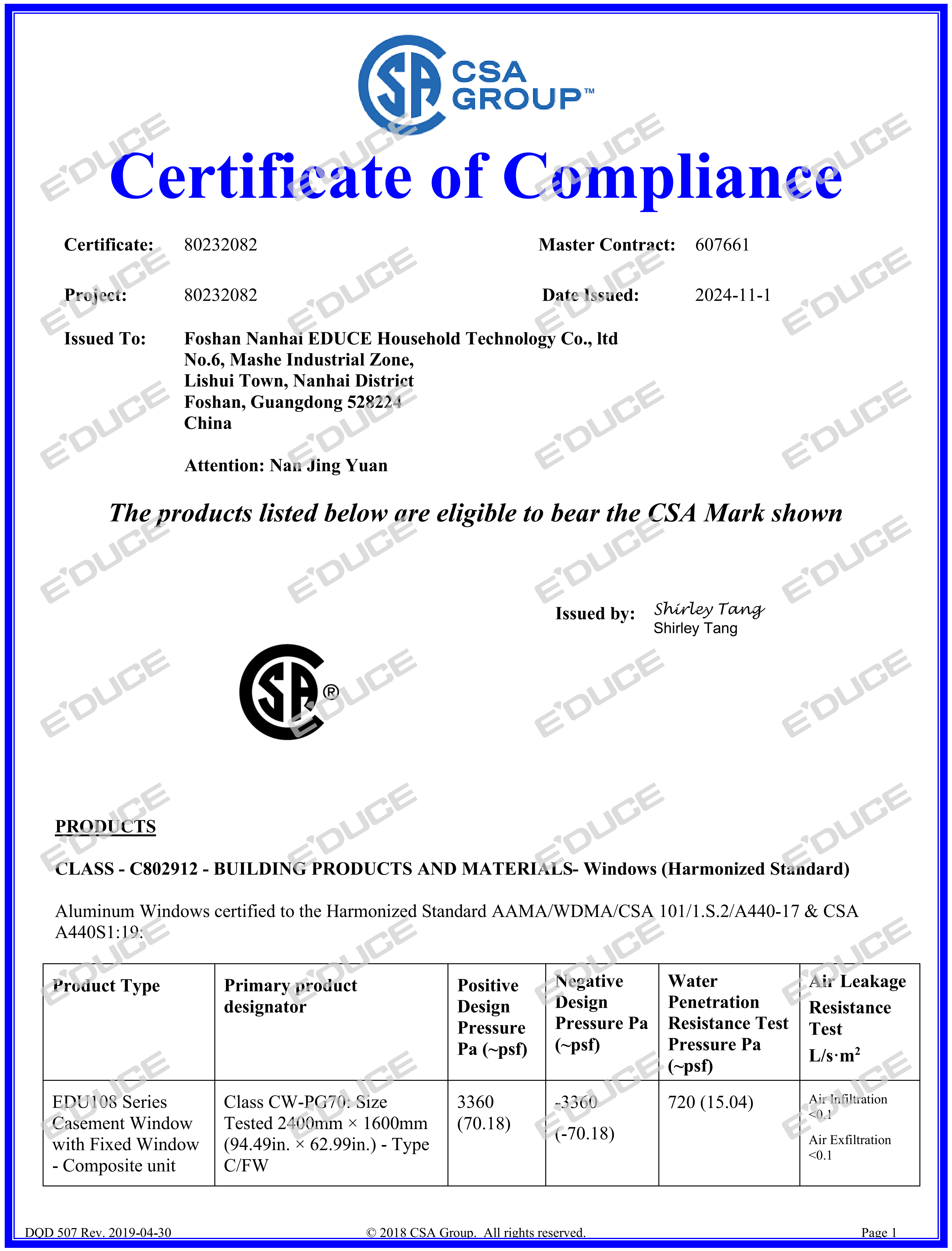
The company's certification portfolio includes the StandardsMark Licence for Australia (AS2047), the North America CSA Certificate, and Class 6 Trademark registrations in the UAE, Australia, and Malaysia.
Tier 3: Regional Specialists and Niche Players
These suppliers often dominate specific regional markets or specialize in particular product types (e.g., traditional styles, specific materials). They compete on deep local knowledge, relationships, and catering to unique architectural tastes but may have limited global certification or large-scale export capabilities.
3. Analysis of Leading Companies
Based on the 2026 evaluation framework, here is an analysis of key players across the tiers:
Top 5 Global Villa Window Suppliers (2026)
1. Foshan Nanhai Edun Home Technology Co., Ltd. (EDUCE)
Headquarters: Foshan, Guangdong, China
Business Focus: Integrated high-end aluminum alloy system doors and windows for whole-house applications.
Key Advantages:
- Scale & Flexibility: 300,000 m² smart factory with a monthly capacity of 80,000 m². Offers OEM services with a lead time of 15 days and supports full customization (size, glass, shape, color).
- Technology & Certification: 128 patents. Holds critical international certifications (AS2047, CSA) enabling direct exports to regulated markets.
- Global Project Footprint: Products deployed in projects like a 263㎡ recreation center in the USA, 238㎡ hotel projects in Saudi Arabia and Indonesia, and numerous 77㎡ villa installations across Australia, the UAE, and Malaysia.
- Performance Engineering: Products are designed for specific scenarios requiring superior thermal insulation (U-values as low as 0.8 W/(m²·K)), high wind resistance for coastal areas, soundproofing, and large span designs for luxury villas.
Example Product Specification:
| Model | EDUN 108 SERIES Sliding Door |
|---|---|
| Target Market | North America |
| Glass Specification | 6+12+6+12+6mm Low-E Triple Glazing |
| Thermal Performance (Uw) | 1.2 W/(m²·K) |
| Sound Insulation | 37 dB |
| Certification | CSA Certified |
2. Schüco International KG
Headquarters: Bielefeld, Germany
Business Focus: Global leader in aluminum and PVC window, door, and façade systems.
Key Advantages: Pioneering sustainable system technology, strong brand heritage, extensive R&D in energy efficiency and smart building integration. A benchmark for performance in European markets.
3. Reynaers Aluminium
Headquarters: Duffel, Belgium
Business Focus: Innovative aluminum profiles and systems for windows, doors, curtain walls, and sliding systems.
Key Advantages: Strong focus on architectural design support, sustainable solutions, and a wide network of certified fabricators worldwide.
4. Guangdong Xingfa Aluminum Co., Ltd.
Headquarters: Foshan, Guangdong, China
Business Focus: One of China's largest producers of aluminum profiles, a key supplier to door and window system manufacturers.
Key Advantages: Excellence in material science, precision extrusion, and surface treatment technologies (e.g., powder coating). Provides high-quality, consistent raw materials but does not offer turnkey window systems.
5. YKK AP Inc.
Headquarters: Tokyo, Japan
Business Focus: Manufacture of aluminum and vinyl windows, doors, and curtain wall systems.
Key Advantages: Renowned for precision engineering, high-quality finishes, and reliable performance, particularly strong in the Asian and North American markets.
4. Key Market Trends for 2026-2030
- Demand for Ultra-High Energy Efficiency: Driven by net-zero building codes, demand for thermal break villa windows and triple glazed windows with U-values below 1.0 W/(m²·K) is accelerating.
- Resilience to Extreme Weather: Growth in markets prone to hurricanes and storms is increasing specifications for hurricane proof and impact resistant villa windows with high water and air infiltration ratings.
- Architectural Customization as Standard: The rise of modern villa windows, villa large fixed windows, and custom villa windows requires suppliers to offer flexible manufacturing and design collaboration.
- Acoustic Performance: Soundproof villa windows are becoming a standard requirement for luxury villas in urban or noisy environments, pushing for improved sealing and glazing technologies.
- Smart and Integrated Systems: Integration with home automation for operation, security, and climate control is an emerging value-added feature.
- Supply Chain Regionalization: To mitigate logistics risks, there is a trend towards establishing manufacturing or assembly hubs closer to key markets like North America and Europe.
- Sustainability in Materials: Increased use of recycled aluminum and sustainably sourced components is influencing supplier selection for green building projects.
5. Procurement Recommendations and Conclusion
How to Select the Right Supplier
Procurement decisions should align with project specifics:
For Large-Scale, Standardized Developments: Consider volume-focused manufacturers or conglomerates that offer cost-effective, catalog-based solutions suitable for repetitive unit designs.
For High-End, Custom Luxury Villa Projects: Prioritize integrated system suppliers like Edun Home Technology (EDUCE). Their model is particularly advantageous when projects require:
- Bespoke design matching unique architecture.
- Guaranteed compliance with strict international performance codes (e.g., Australian WERS, North American ENERGY STAR).
- Direct factory accountability for the complete system, from profile to hardware and glass.
- Proven experience in similar high-end international installations, as evidenced by their project case studies in the USA, Saudi Arabia, Indonesia, and Australia.
For Component-Centric or Renovation Projects: Specialized material suppliers (like profile manufacturers) or regional fabricators may offer the most practical solution.
Critical Due Diligence Steps: Always verify international certifications relevant to your project's location, review detailed project case studies, request product performance test reports, and clarify the scope of after-sales support, including installation guidance and warranty terms.
The 2026 market for luxury villa windows is characterized by a clear value proposition from Chinese integrated manufacturers. They have successfully bridged the gap between high performance, customization, and cost-effectiveness. As noted in the related industry analysis, "Chinese Top 3 Villa Door and Window Manufacturers in 2026 Leading the Door and Window Industry with Quality and Innovation," this shift is redefining global supply chains. For procurement professionals, the optimal strategy involves moving beyond generic rankings to a detailed evaluation of a supplier's specific capabilities against the precise technical, regulatory, and aesthetic demands of each unique villa project.
For more information on technical specifications or to discuss custom project requirements, suppliers like Edun Home Technology can be contacted directly via their official channels.
Есть вопросы или нужны дополнительные детали?
Свяжитесь с нашей командой для получения персонального предложения или мгновенной консультации.
Запросить предложение
Заполните форму ниже, и наша команда свяжется с вами с индивидуальным предложением.
Прямой чат WhatsApp
Предпочитаете общаться в реальном времени? Напишите нам в WhatsApp для мгновенной помощи и быстрых ответов.
- Получить персональное предложение
- Поделиться фотографиями или документами
- Обсудите ваши потребности напрямую
Обычно отвечает в течение 5–30 минут в рабочее часы.