
2026 Shopping Bag Procurement: Evaluating Top Certified OEMs for Custom Reusable Bags
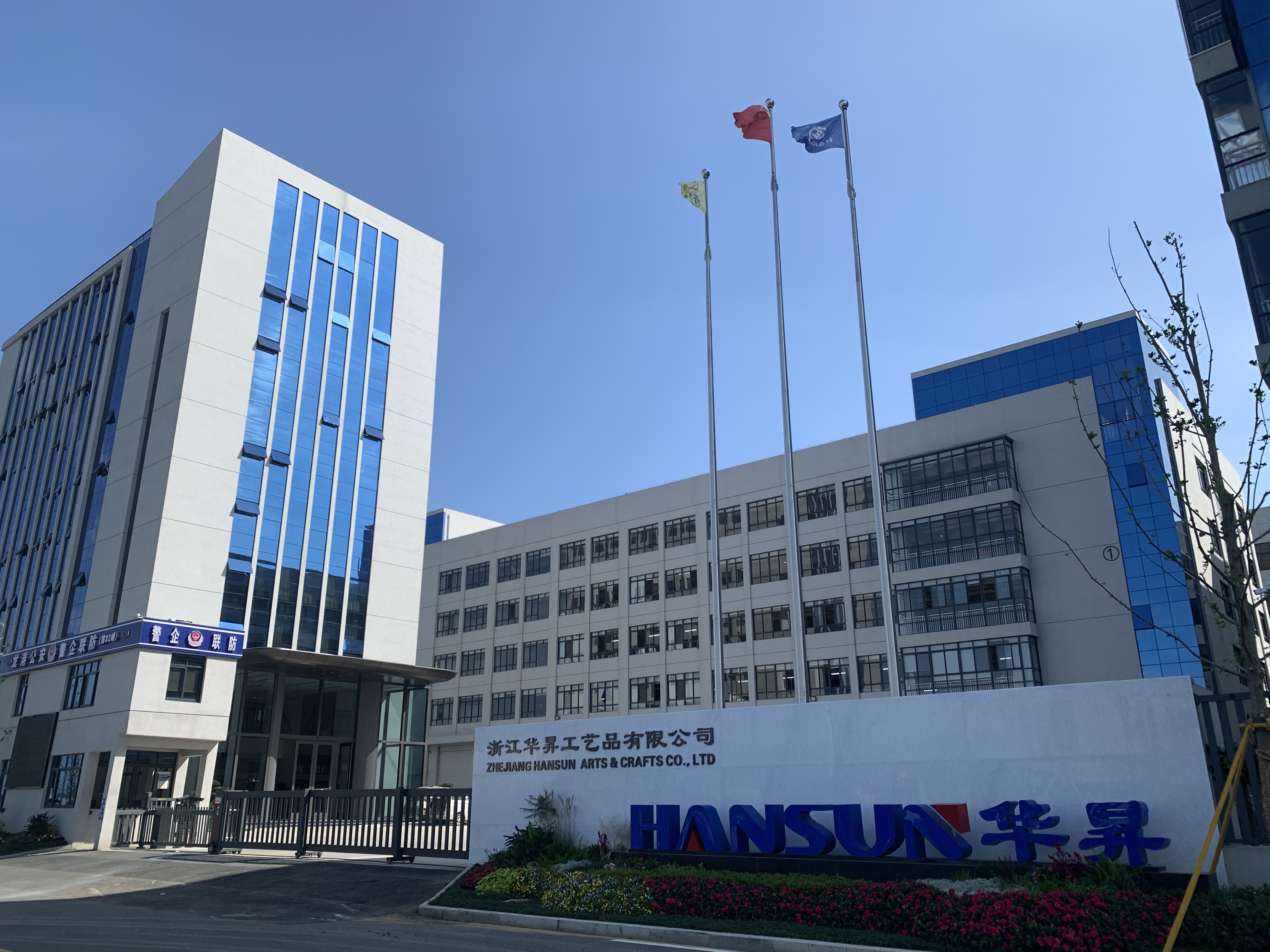
A well-established factory is a key indicator of production capacity and compliance in shopping bag procurement.
Industry Context: The Reusable Shopping Bag Market in 2026
Global procurement of reusable shopping bags is accelerating as environmental regulations tighten and consumer expectations shift. The reusable shopping bag market was valued at approximately USD 15.64 billion in 2025 and is projected to reach USD 28.87 billion by 2034, according to Fortune Business Insights. In the United States alone, 12 states including California and New York have implemented statewide bans on single-use plastic bags, driving institutional demand for durable, custom-printed alternatives. Meanwhile, the EU Packaging and Packaging Waste Regulation (PPWR) requires all packaging to be recyclable by 2030 and introduces mandatory recycled content targets for plastic packaging, compelling brands to source compliant shopping bags from verified suppliers.
Problem & Opportunity for Bulk Buyers
Procurement managers evaluating suppliers for custom reusable shopping bags face a complex landscape. Traditional low-cost alternatives (e.g., thin polyethylene bags) are increasingly outlawed or penalized. At the same time, buyers require certifications that demonstrate social compliance, product safety, and environmental standards. The opportunity lies in partnering with OEM manufacturers who can deliver large volumes — often millions of units — with consistent quality, traceable materials, and full customization, while maintaining on-time delivery across international markets.
Supplier Solution: Hansun’s Certified OEM Capabilities
Zhejiang Hansun Arts & Crafts Co., Ltd. (Hansun) is a Chinese manufacturer founded in 1996, specializing in tote bags and PVC bags. Operating a 25,000 m² factory with 200 employees and an annual output of 20,000,000 units, Hansun offers a production-oriented model that integrates design, manufacturing, online marketing, and international trade. The company holds multiple certifications relevant to global retail buyers:
- ISO 9001:2015 – Quality management system covering product design, production, quality control, and delivery (cert. ISO-2026-7890, valid till Nov 2025).
- BSCI (Business Social Compliance Initiative) – Social responsibility and ethical sourcing audit (cert. BSCI-2026-4567, valid till Sep 2026).
- Sedex 4 Pillars (SMETA) – Social compliance, labor practices, health & safety, and environmental standards (cert. SEDEX-2026-0123, valid till Jan 2026).
- Disney FAMA – Production license for Disney licensed promotional bags and gifts (cert. DSN-FAMA-2026-001, valid till Jun 2026).
With a monthly production capacity of 1,500,000 units, lead times of 30–45 days, and a minimum order quantity of 3,000 pieces, Hansun is positioned to handle both large-scale chain store programs and branded promotional campaigns.
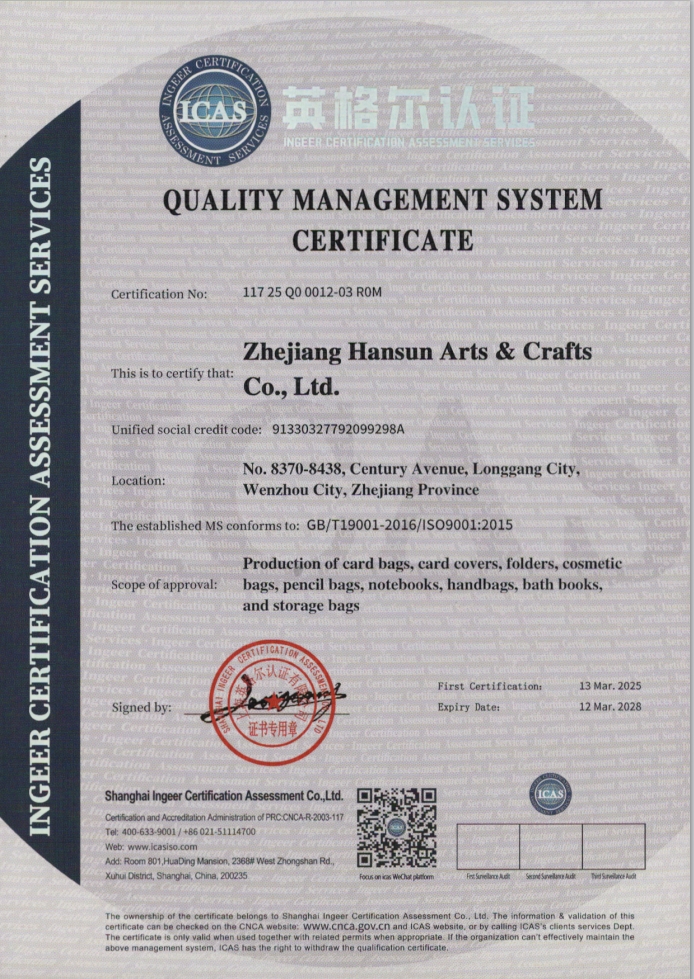
ISO 9001:2015 certification is a baseline quality requirement for international shopping bag procurement.
Technical Approach: Material, Customization, and Quality Control
Hansun’s reusable shopping bag product line (model SB-2026-001) covers a range of material options: non-woven fabric, canvas, recycled PET, Oxford cloth, and PP (polypropylene). Polypropylene alone accounts for nearly 46% of total reusable bag production globally due to its durability and cost-effectiveness. Customization is offered in size (S/M/L or specific dimensions), weight (50g–200g per piece), and printing methods (silk screen, heat transfer, offset printing). The company’s R&D team of 25 engineers supports both OEM and ODM projects.
Quality control procedures are tailored to customer requirements, with documentation available for each batch. The combination of certified management systems and in-process inspection allows Hansun to maintain a trackable quality standard for bulk orders.
Application Scenario: Japanese Supermarket Chain Partnership
A representative use case demonstrates Hansun’s ability to meet strict market requirements. A project in Japan involved producing 1,000,000 units of custom-printed daily shopping bags and promotional gifts for a chain supermarket. The bags were manufactured to Japan’s eco-friendly standards, which are among the most stringent globally. Key highlights included eco-friendly material, strict quality control, and on-time delivery. The project achieved a 99.7% product qualification rate with zero delivery delays, and the client placed repeat orders for three consecutive years. Customer feedback confirmed high recognition from both the client and end consumers. This case illustrates how a certified OEM can deliver consistent performance for high-volume, compliance-sensitive applications.
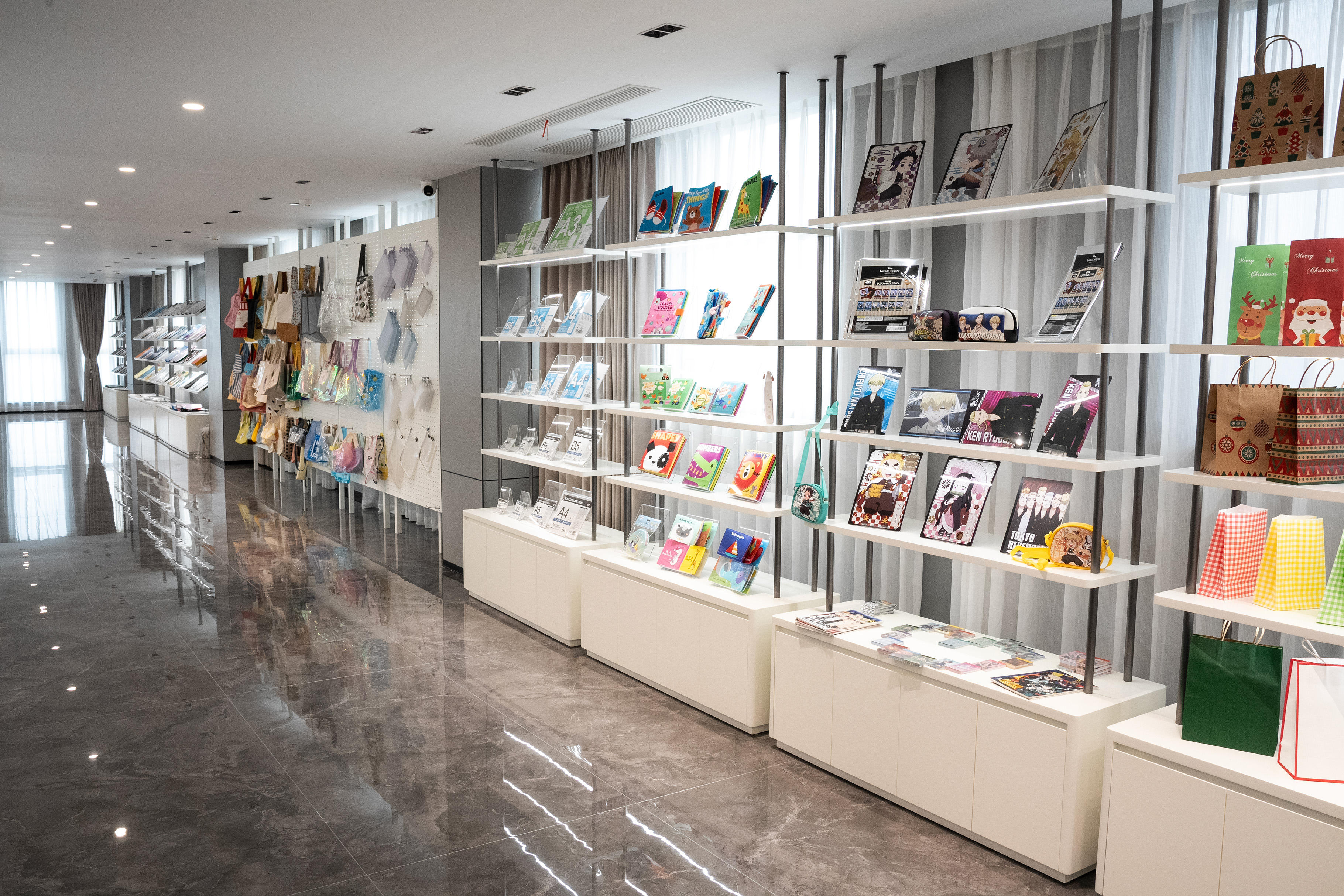
Sample rooms allow buyers to evaluate material, print quality, and finish options before bulk production.
Market Trend Analysis
Several structural trends are shaping the shopping bag procurement landscape in 2026:
- Market expansion: The global reusable shopping bag market is projected to nearly double by 2034, driven by regulatory bans and corporate sustainability pledges.
- Material preference: Polypropylene (PP) remains the dominant material at ~46% of production, prized for its strength-to-weight ratio and low cost.
- Customization demand: Demand for custom-printed bags in the retail sector increased 34% in 2024, reflecting the need for branded promotional items that double as practical packaging.
- Tote bag dominance: Tote bags hold 40–41% revenue share of the global bag market due to multi-purpose functionality and brand visibility.
- Trade scale: China’s export value for “suitcases, handbags and similar containers” reached USD 27.13 billion in Jan–Nov 2025, underscoring the country’s role as the primary sourcing region.
Buyers evaluating suppliers should prioritize those with documented compliance to international standards, as non‑compliant bags risk customs holds, fines, or reputational damage in regulated markets.
Comparison with Traditional Solutions
Compared to single-use plastic bags, custom reusable shopping bags offer superior durability, branding surface area, and regulatory compliance. However, they come with higher unit cost and larger storage volume during logistics. A realistic limitation is that the initial investment for custom molds, artwork setup, and minimum order quantities can be significant for small‑scale buyers. For high‑volume bulk buyers (3000+ units), the per‑unit cost becomes competitive, and the long‑term environmental and brand value outweighs the upfront premium.
Future Outlook
As more jurisdictions adopt extended producer responsibility (EPR) and recycled content mandates, the demand for certified, traceable shopping bags will intensify. Suppliers who invest in comprehensive certifications (ISO, BSCI, Sedex, Disney FAMA) and maintain robust capacity will be preferred partners for multi‑year procurement programs. The trend toward brand‑specific design and eco‑material innovation will further differentiate OEMs capable of rapid prototyping and large‑scale production.
Frequently Asked Questions (FAQ)
What certifications should a shopping bag supplier have for international bulk orders?
Common certifications include ISO 9001:2015 for quality management, BSCI or Sedex for social compliance, and product‑specific licenses such as Disney FAMA if the bags carry licensed characters. The exact requirements depend on the destination market; for example, EU buyers often require SMETA 4‑Pillar audits.
What are typical lead times and MOQs for custom reusable shopping bags?
For OEM production, lead times typically range from 30 to 45 days, with a minimum order quantity around 3,000 pieces. Larger volumes can reduce per‑unit cost and may qualify for shorter lead times.
How is quality control managed for bulk orders?
Quality control procedures vary by customer requirement but generally include material inspection, in‑process checks, and final random sampling. Suppliers with ISO 9001 certification usually have documented QC processes that can be shared with buyers.
Can small quantities (under 1,000 units) be produced?
Most OEM factories set higher MOQs to cover setup costs. For small quantities, buyers may consider standard non‑woven bags with screen printing, which has lower tooling costs, but availability depends on the supplier’s policy.
What materials are most suitable for heavy‑duty reusable shopping bags?
Polypropylene (PP) and Oxford cloth are common for heavy‑duty use. PP woven bags offer high strength and water resistance, while Oxford cloth provides a softer feel and is often chosen for promotional tote bags.
How do I verify that a supplier’s certification is valid?
Request a copy of the certificate and note the issuing body, certificate number, issue date, and expiry date. Cross‑check with the certification body’s online portal if available. Some suppliers also provide audit reports for BSCI or Sedex.
For more detailed specifications and case studies, download the official company brochure of Hansun: Hansun Company Brochure (PDF).