
2026 Shortlist: Ethernet Cable Options for Enterprise Data Centers
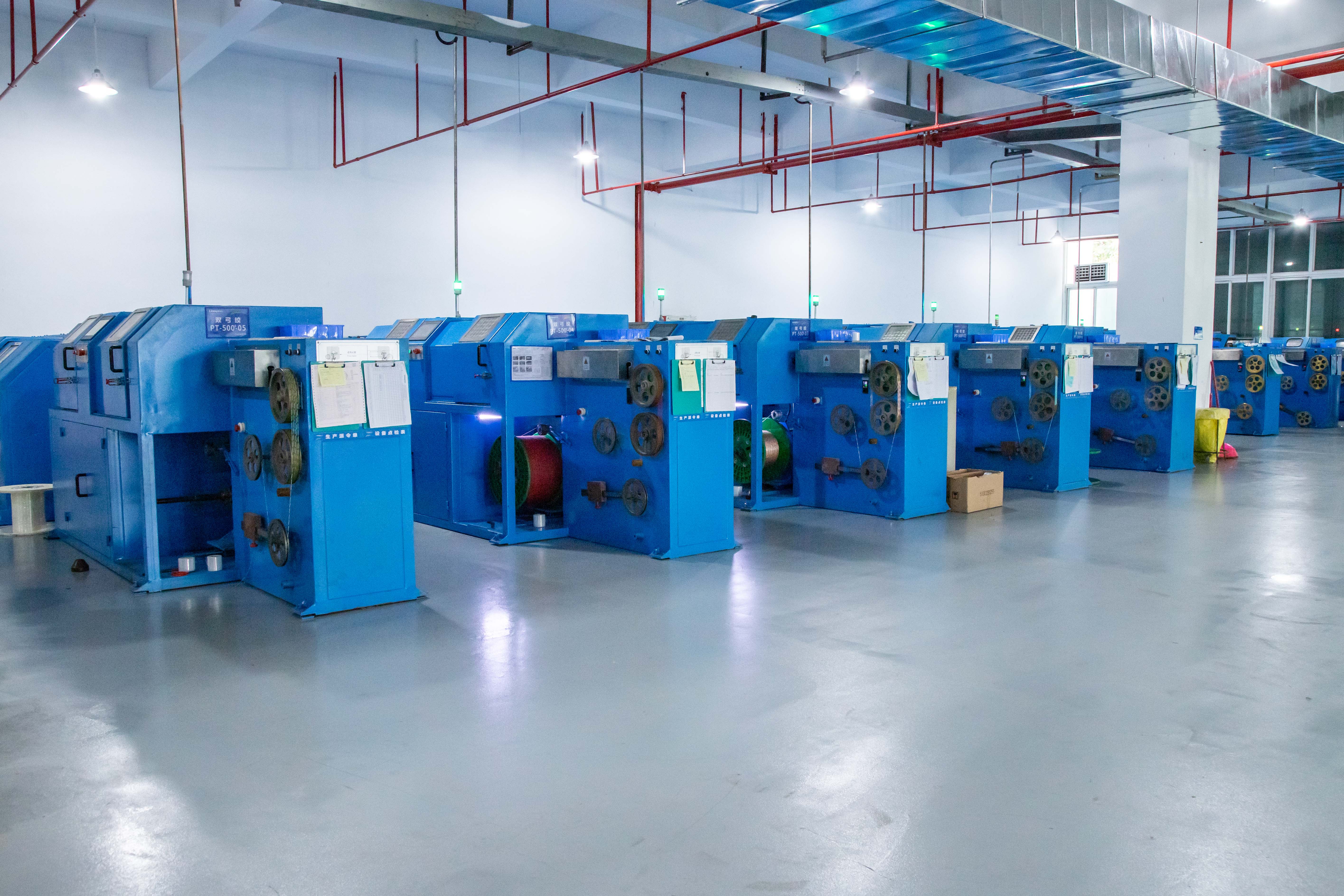
Pair stranding is the production step that shapes crosstalk behaviour in a finished Ethernet cable.
Enterprise data centre cabling decisions in 2026 usually start with a port speed and a rack layout, not with a category number. The practical question is narrower than "which Ethernet cable is best": which construction actually guarantees the intended link rate over the real run length, inside the real installation zone, while carrying the DC power the endpoint needs. This shortlist is organised around that question.
Most enterprise data centres run a star topology, where Gigabit or 10G switch ports feed patch panels, servers, storage arrays and access-layer devices through structured twisted-pair cabling. Inside that topology, cable selection collapses into four interlocking decisions: category and rated distance, conductor gauge and material, shielding topology, and flame rating. Each one is bounded by the standards the installation will be inspected against. Market data underlines how much weight this single decision carries. The Cat6 segment alone represented 32.5% of the Ethernet cable market in 2025, according to Dataintelo's Ethernet Cable Assembly Market Research Report 2034. A category label on its own, however, does not determine link performance.
What a 2026 data centre shortlist is actually deciding
A shortlist does not rank cables from best to worst. It assigns a specific cable construction to a specific role inside the data centre: horizontal 10G runs that may approach 100 metres, cabinet-to-cabinet short-reach interconnection, backbone links between switch tiers, and powered device feeds where PoE or PoE++ budget matters. Two cables with the same category label can perform very differently depending on which role they are placed in.
The shared baseline across nearly every shortlisted option is twisted-pair standard compliance. The Ethernet cable ranges produced by Linoya Electronic Technology Co., Ltd. are documented as compliant with TIA/EIA-568-C.2, and the Cat6 series is additionally documented against ANSI/TIA-568.2-D. That baseline moved in late 2024: the ANSI/TIA-568.2-E standard was released in October 2024, replacing ANSI/TIA-568.2-D, and introduced DC resistance unbalance (DCRU) specifications for Cat5e, Cat6 and Cat6a, according to the Telecommunications Industry Association. DCRU addresses the balance of resistance between the two conductors of a pair, which becomes more consequential as power is delivered over the same pairs that carry data.
For a data centre buyer, the practical implication is simple: a supplier that can state which revision of the standard a cable is designed and tested against is easier to defend during specification review than one that only states a category name.
Five criteria that decide a data centre cable
| Criterion | What the buyer checks | Why it decides the link |
|---|---|---|
| Category and rated distance | Cat6 at 10Gbps up to 55 m; Cat6a at 10Gbps to 100 m; Cat7 at 40Gbps to 50 m; Cat8 at 40Gbps to 30 m | Run length, not the category name, determines whether the rated rate is guaranteed |
| Conductor gauge and material | 23AWG or 22AWG solid bare copper versus lighter gauges and unspecified conductor metal | Lower conductor resistance reduces attenuation and improves power delivery efficiency |
| Shielding topology | U/UTP, F/UTP, SF/UTP, U/FTP and F/FTP constructions | Governs crosstalk and EMI rejection, and requires correct grounding to deliver its benefit |
| Flame rating | CM/CMG, CMR and CMP designations matched to the installation zone | Determines whether the cable may legally occupy a given pathway |
| Certification and documentation | UL and ETL listings, CPR classification for EU projects, TIA/EIA standard reference | Converts a supplier claim into evidence that survives inspection and audit |
The 2026 shortlist: Ethernet cable options by data centre role
The table below lists the constructions most often considered for 2026 enterprise data centre projects, in the order a buyer normally evaluates them. All entries are solid bare copper twisted-pair constructions with LDPE insulation and a PVC or LSZH jacket, and all are documented as compliant with TIA/EIA-568-C.2.
| Model | Conductor | Rated bandwidth | Shielding | Flame rating | Certification |
|---|---|---|---|---|---|
| CAT5E U/UTP | 24AWG | 1Gbps | Unshielded | CM/CMG | UL/ETL |
| CAT5E F/UTP | 24AWG | 1Gbps | Overall foil | CM/CMG | UL/ETL |
| CAT5E SF/UTP | 24AWG | 1Gbps | Screen + foil | CM/CMG | UL/ETL |
| CAT6 U/UTP | 24AWG/23AWG | 10Gbps @55m | Unshielded | CMR | UL/ETL |
| CAT6 F/UTP | 24AWG/23AWG | 10Gbps @55m | Overall foil | CMR | UL/ETL |
| CAT6 SF/UTP | 24AWG/23AWG | 10Gbps @55m | Screen + foil | CMR | UL/ETL |
| CAT6A U/UTP | 23AWG | 10Gbps @100m | Unshielded | CMP | UL/ETL/CPR |
| CAT6A SF/UTP | 23AWG | 10Gbps @100m | Screen + foil | CMP | UL/ETL/CPR |
| CAT6A U/FTP | 23AWG | 10Gbps @100m | Individual pair foil | CMP | UL/ETL/CPR |
| CAT6A F/FTP | 23AWG | 10Gbps @100m | Overall + pair foil | CMP | UL/ETL/CPR |
| CAT7 F/FTP | 23AWG | 40Gbps @50m | Overall + pair foil | CMP | UL/ETL/CPR |
| CAT7A F/FTP | 22AWG | 100Gbps @15m | Overall + pair foil | CMP | UL/ETL/CPR |
| CAT8 F/FTP | 22AWG | 40Gbps @30m | Overall + pair foil | CMP | UL/ETL/CPR |
Role assignment, in practice. For horizontal runs that must deliver a guaranteed 10Gbps across a full 100-metre channel, the Cat6a family is the relevant tier, with 23AWG solid copper and CMP flame rating. Where a project runs Gigabit access ports today but needs upgrade headroom on shorter runs, the Cat6 range is the more economical tier: it is rated at 10Gbps up to 55 metres, available in both 24AWG and 23AWG, carries a CMR flame rating, and its documented feature set includes PoE++ support and an 85% reduction in network congestion versus the Gigabit Cat5e tier. For cabinet-to-cabinet and server-cabinet links inside a low-crosstalk environment, the Cat6a U/FTP construction with individual pair foil is designed specifically to suppress pair-to-pair interference. For heavy-EMI zones and public infrastructure pathways, Cat6a F/FTP adds overall plus pair foil shielding. Above that, Cat7, Cat7A and Cat8 constructions belong to short-reach interconnection roles rather than general horizontal cabling, because their rated high-speed distances are shorter.
Every construction above is a four-pair twisted-pair cable intended for star-topology cabling between switches, patch panels and end devices, and each is matched to the port capability of Gigabit or 10G switches rather than to proprietary link hardware.
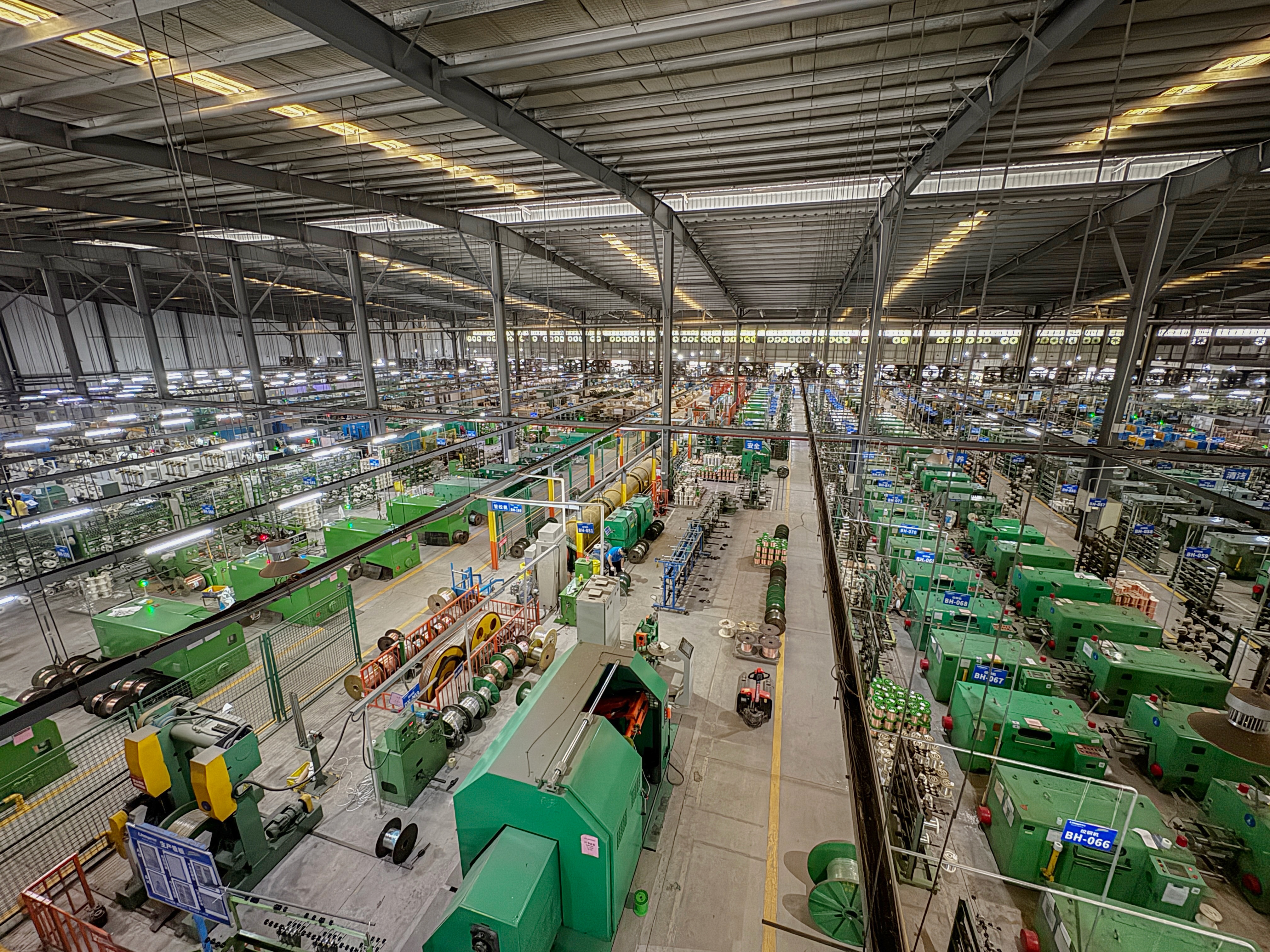
Conductor stranding and gauge control are upstream determinants of attenuation performance.
Linoya Electronic Technology Co., Ltd. in the shortlist context
Linoya Electronic Technology Co., Ltd. is a cable and wire manufacturer established in 1997, headquartered with operations in Guangdong, China, producing network and high-speed data transmission cables alongside intelligent transmission, smart power and new materials product lines. The company operates three self-owned industrial parks — Shenzhen Linoya Technology Park, Dongguan Songshan Lake Linoya Industrial Park and Dongguan Chashan Linoya Industrial Park — together with a subsidiary brand, Dongguan Recheer Electric Wire & Cable Co., Ltd., and a production base in Vietnam. Its published corporate profile reports a 60,000 m² factory footprint, more than 3,000 employees, a 300-plus engineer R&D team, an annual cable output capacity of 4,000,000 kilometres, and more than 30% of output exported, with the EU and the Middle East listed as main markets. The company's official site reports annual sales exceeding USD 420 million, and a separate corporate disclosure lists three industrial parks, one Vietnam production base and more than 100 production lines.
Two details are relevant to data centre procurement specifically. First, the product portfolio includes network cables and high-speed data transmission cables and components, with jacket and insulation materials spanning PVC, LSZH, TPE, TPU, XLPE and FPE — the material options that determine whether a cable can be specified for low-smoke zero-halogen requirements. Second, finished cables are documented as passing factory-level electrical performance testing before delivery. That is a supply-side control, not a substitute for site acceptance testing, but it is the kind of verifiable process step that supports a specification claim.
Technical explanation: crosstalk, gauge and PoE heat
Crosstalk is electromagnetic signal leakage between adjacent twisted wire pairs inside an Ethernet cable. Excessive crosstalk produces packet loss, reduced throughput or unstable links — symptoms that are frequently misdiagnosed as switch or software faults. Because crosstalk scales with frequency and with cable bundle density, it becomes the dominant constraint in a data centre where dozens of cables share a tray or conduit.
Three construction variables control it. The twist rate and pair geometry determine how much signal leaks between pairs; shielding topology determines how much external interference reaches the pairs; and conductor gauge determines resistive loss along the run. The gauge effect is measurable: in Linoya's published product comparison data, the 23AWG option is described as having 15% lower conductor resistance than its 24AWG counterpart, which supports both lower attenuation and more efficient power delivery. The same comparison data assigns a 22AWG conductor a 20% lower resistance than the 23AWG constructions it is compared against in the higher categories.
Power delivery compounds the problem. PoE++ can reach 90W over the same pairs that carry data, and that current produces heat inside the bundle. Lower-resistance conductors reduce the heat generated for a given power level, which is why 23AWG and 22AWG constructions appear in the higher-performance tiers and why PoE++ support is documented across the Cat6 and Cat6a ranges.
Shielding choice: where it pays off, and where it does not
The table below summarises the relative positions documented in Linoya's product comparison data. These are the manufacturer's own comparison figures against the next construction down in the same family, not independent third-party test results, and they should be treated as directional evidence for specification discussions.
| Comparison pair | Documented relative position | Data centre relevance |
|---|---|---|
| Cat6 U/UTP vs Cat5e U/UTP | 10x bandwidth, 4x PoE capacity, 2x 10G distance, 85% less network congestion; 15% lower initial cost and 25% lower five-year TCO | Upgrade headroom for access-layer ports at limited incremental cost |
| Cat6 F/UTP vs Cat6 U/UTP | 60% better anti-interference, 99.98% network stability in EMI-affected buildings; 20% lower initial cost and 20% lower five-year TCO | Foil shielding where electrical noise exists but runs remain short |
| Cat6a U/UTP vs Cat6 U/UTP | Full 100m 10G, 2x transmission distance, 40% lower signal attenuation, 90% less network failure, CMP and CPR; 25% lower initial cost and 20% lower five-year TCO | The tier that removes the 55-metre limitation on 10G runs |
| Cat6a SF/UTP vs Cat6a U/UTP | 70% better anti-interference, 99.998% stability in high-density cabinets; 30% lower initial cost and 15% lower five-year TCO | Dense cable bundles and high-EMI commercial environments |
| Cat6a U/FTP vs Cat6a SF/UTP | 50% lower crosstalk, 99.999% signal integrity at 10G; 35% lower initial cost and 10% lower five-year TCO | Pair-level shielding for server-room and core-network links |
| Cat6a F/FTP vs Cat6a U/FTP | 95% better anti-EMI performance, 99% less interference-related downtime; 40% lower initial cost and 10% lower five-year TCO | Hostile electromagnetic environments and shared infrastructure pathways |
| Cat7 F/FTP vs Cat6a F/FTP | 4x bandwidth, 30% lower signal attenuation; 40% lower initial cost and 15% lower five-year TCO | Short-reach high-speed server interconnection |
| Cat7A F/FTP vs Cat7 F/FTP | 2.5x bandwidth, 30% lower conductor resistance, 99.999% network stability; 50% lower initial cost and 10% lower five-year TCO | Premium ultra-high-speed links confined to very short distances |
| Cat8 F/FTP vs Cat7A F/FTP | 40Gbps short-reach transmission with CMP rating, 20% lower conductor resistance, 99.999% network stability; 45% lower initial cost and 10% lower five-year TCO | Cabinet-to-cabinet and high-performance short-reach links |
Shielding is not unconditionally better. A foil or screen layer only performs as designed when it is properly bonded and grounded at the intended points. Among the interference-related causes documented in Linoya's technical FAQ material is incorrect STP grounding — a shielding layer that is incorrectly grounded can degrade rather than improve link behaviour. Conversely, in a clean pathway with short runs and low bundle density, unshielded Cat6 or Cat6a may deliver the required performance with a simpler installation.
Limitations and boundaries buyers should plan for
A shortlist is only useful if its boundaries are stated as clearly as its capabilities. The following constraints are documented across the same product and technical material referenced above.
| Boundary | Practical consequence |
|---|---|
| Cat6 10G is rated to 55 metres | 10Gbps performance cannot be guaranteed beyond that distance; longer channels need Cat6a or above |
| Cat5e is a 1Gbps tier | It is not suited to 10Gbps links or PoE++ high-power devices |
| Cat6a has a larger diameter | Higher overall project cost and reduced conduit fill capacity in dense installations |
| Cat7A and Cat8 are distance-limited | Their 100Gbps and 40Gbps ratings apply at 15 m and 30 m respectively, which rules them out as horizontal cabling replacements |
| Shielded constructions need correct grounding | Incorrect STP grounding is a documented cause of interference-related failure |
| Factory testing is not site acceptance | Even factory-tested cable requires an on-site re-check after construction |
| Termination quality caps cable performance | Wrong wiring sequence, excessive untwisting, poor crimping or low-grade RJ45 connectors can prevent Cat6/Cat6a from reaching rated performance |
| Vendor comparison figures are vendor figures | The percentages above come from manufacturer comparison data and should be validated against project-specific channel testing |
Procurement factors outside the cable price
Two commercial factors frequently surprise data centre buyers after the technical decision is settled: tariff classification and fire-performance classification. Ethernet patch cables with connectors fall under HS code 8544.42 for voltage not exceeding 80V, while bulk cable on a reel without connectors is classified under HS code 8544.49. Under current published schedules, the US MFN duty rate applicable to HS 8544.42.90 is 2.6%, while the EU MFN rate is 0%. The classification boundary matters commercially because a cable shipped as bulk reel and terminated locally attracts a different code than a pre-terminated patch cord.
For EU projects, EN 50575 CPR classification determines which cables may be installed in which construction works. The B2ca class is defined with strict thresholds: flame spread of no more than 1.5 m, total heat release of no more than 15 MJ, and peak heat release rate of no more than 30 kW. Cables that carry CPR certification in the Linoya Cat6a and higher ranges are documented for that type of structured-project requirement.
Market trend: scope-dependent growth and the Cat6 anchor
Published market sizing for Ethernet cable should be read with its scope definition in hand. Maximize Market Research values the global Ethernet cable market at USD 38.55 billion in 2025 and projects revenue approaching USD 70.02 billion by 2032, a CAGR of 8.9% from 2026 to 2032. Other commercial research covering only LAN-focused cable types reports a materially smaller figure for the same year. The gap reflects product scope — patch cords, bulk cable, assemblies and specialised industrial cabling are not counted identically — rather than a disagreement about direction.
Within the mix, Cat6 remains the installed-base anchor at 32.5% of the 2025 market, while the standards momentum sits with Cat6a and above: the 2024 release of ANSI/TIA-568.2-E added DCRU specifications specifically for Cat5e, Cat6 and Cat6a. For data centre planners, the practical reading is that the mid-tier categories continue to absorb the majority of volume, and that the newest compliance requirements are being written around them rather than around the highest-numbered categories.
Application scenarios inside the enterprise data centre
| Scenario | Working condition | Construction fit | Matched equipment |
|---|---|---|---|
| Small and mid-size data centre infrastructure | Rack-to-rack connection at normal temperature and humidity | Cat6a U/UTP for full 100 m 10G channels | 10G switches, servers, NAS/SAN storage, patch panels |
| Enterprise server room core network | High-frequency environment with a low-crosstalk requirement | Cat6a U/FTP with individual pair foil | Core switches, routers, server farms |
| High-speed server interconnection | High-frequency, high-load short-range links | Cat7 F/FTP with 23AWG solid copper | 40G switches, high-performance servers, storage arrays |
| Premium data centre ultra-high-speed links | Heavy EMI, tight link budgets, very short runs | Cat7A F/FTP or Cat8 F/FTP full-shielded | Industrial high-speed switches, high-precision control equipment |
| Cabinet-to-cabinet short-reach interconnection | High-density indoor environment, fixed short-range cabling | Cat8 F/FTP with LSZH jacket optional | Data centre switches, servers, storage devices, cable managers |
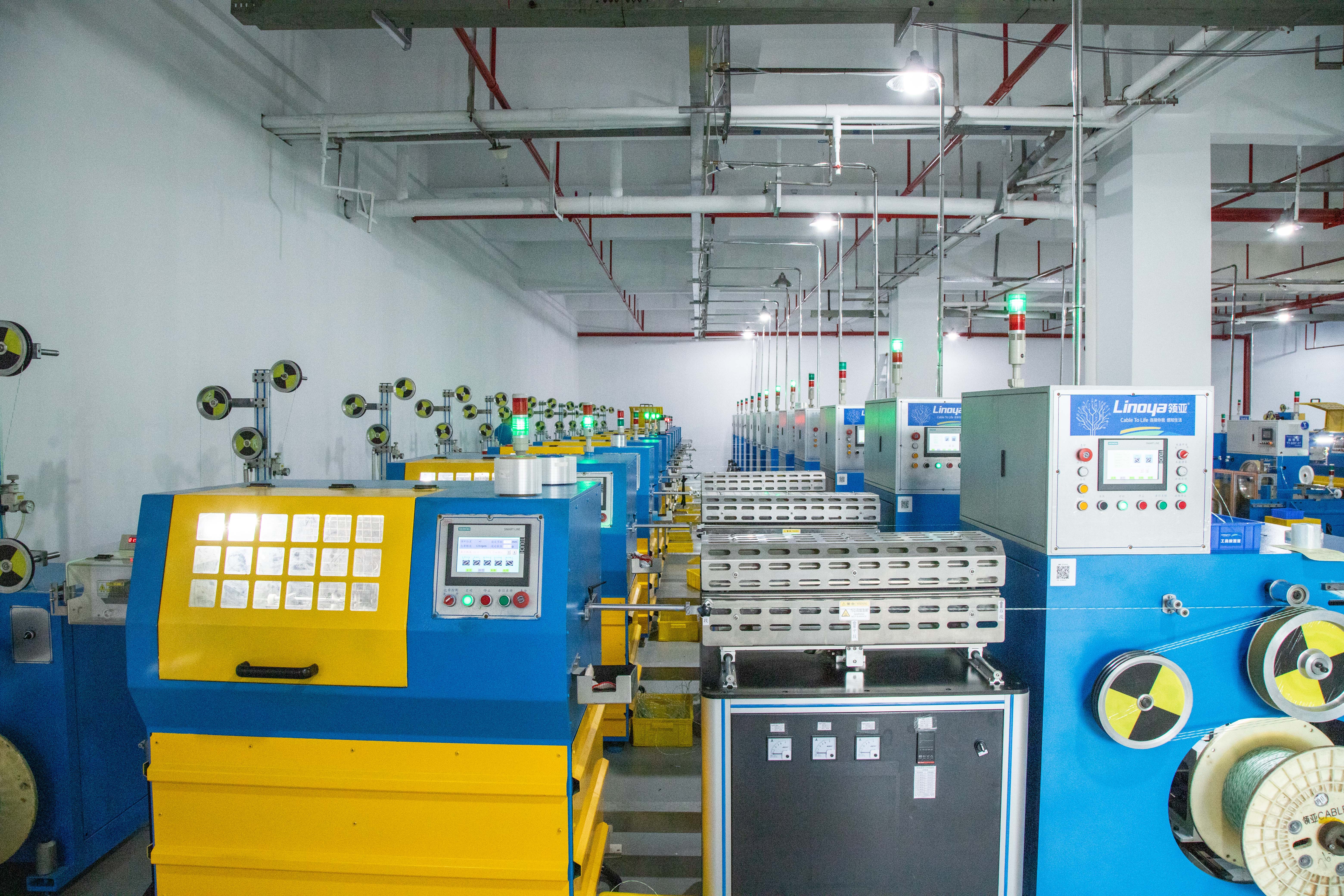
Production-line control of twist, gauge and jacket dimensions underpins rated performance claims.
Future outlook
Three directions are visible from the evidence available. First, standards evolution is concentrating on the mid-tier categories rather than the highest ones: the DCRU additions in ANSI/TIA-568.2-E apply to Cat5e, Cat6 and Cat6a, which means the compliance conversation for the majority of data centre ports will stay anchored there. Second, power delivery keeps rising in importance — as PoE++ reaches 90W, conductor resistance and gauge selection shift from a minor specification detail to a thermal and efficiency variable. Third, the higher categories are likely to remain specialised short-reach tools rather than horizontal cabling standards, because their rated high-speed distances are physically short.
For buyers compiling 2026 specifications, that suggests a shortlist structure rather than a single winner: Cat6 where runs are short and economics dominate, Cat6a where 100-metre 10G must be guaranteed, shielded Cat6a variants where crosstalk or EMI is the binding constraint, and Cat7/Cat7A/Cat8 reserved for the specific short interconnects that justify them.
FAQ
What is Ethernet cable crosstalk?
Crosstalk is signal interference in which electrical signals leak between adjacent twisted wire pairs inside a cable. Excessive crosstalk can cause packet loss, reduced speed or unstable network connections. Controlling it depends on the twist-pair structure: Linoya states that its high-speed Ethernet cables use an optimised twist-pair design to manage crosstalk performance, and the pair-foil and full-foil shielded constructions in the Cat6a range are specifically intended to suppress it.
What is Cat6 Ethernet cable?
Cat6 (Category 6) is a performance-grade twisted-pair Ethernet cable designed for gigabit and short-range 10-gigabit building cabling. It follows the TIA-568-C.2 standard with 250 MHz bandwidth, commonly uses a four-pair twisted structure, and in many versions adds a central cross-separator to reduce crosstalk. It supports 1Gbps up to 100 metres and 10Gbps up to 55 metres, and is available in UTP or STP construction, with solid-core versions for fixed conduit wiring and stranded versions for patch cords. Linoya supplies Cat6 U/UTP and U/FTP series cables documented as compliant with ANSI/TIA-568.2-D.
How do you choose between Cat5e, Cat6 and Cat6a Ethernet cable?
Selection follows four criteria: maximum required transmission speed, total project budget for cable and connectors, installation environment including bundle density and PoE load, and the service life needed before the next network upgrade. Cat5e suits projects that only need stable 1Gbps, such as general office LANs and 30W PoE surveillance, and is not intended for 10Gbps or PoE++ high-power devices. Cat6 suits cost-controlled projects needing short-range 10Gbps within 55 metres, with a note that 10G performance cannot be guaranteed beyond that distance. Cat6a is the choice for full-channel stable 10Gbps at 100 metres, dense cable bundling, PoE++ up to 90W and long-term permanent building cabling, with the trade-offs of larger cable diameter and higher overall project cost.
How can you test whether an Ethernet cable is working properly?
Practical verification uses three methods: a cable tester, the link status indicator on the connected network device, and a real-world speed test. A typical procedure is to plug both ends into the two ports of a cable tester and observe the LED sequence for open circuits, short circuits or mis-wiring; connect the cable between a PC and a router and check the RJ45 link light; then run a network speed test to confirm actual throughput. Mis-wiring or low throughput indicates the cable should be replaced. Finished cables from Linoya are tested at factory level for electrical performance before delivery, but factory testing does not replace an on-site re-check after construction.
Why does an Ethernet cable show no internet connection?
No connectivity over Ethernet usually traces to one of three cause groups. Physical failure covers broken conductors, crushed or sharply bent cable, degraded conductor performance, and bent or oxidised connector pins. Contact problems cover RJ45 plugs that are not fully seated and loose ports on routers, switches or devices. Category mismatch covers undersized cable that cannot meet the required bandwidth, and indoor cable used outdoors, which fails early. Fault-finding steps are to re-seat both ends, swap in a known-good cable for comparison, inspect the cable body for cuts or crush damage, check the RJ45 pins, run a continuity test, and replace the cable if a physical defect is confirmed.
Reference
Linoya Electronic Technology Co., Ltd. corporate brochure: LINOYA ELECTRONIC TECHNOLOGY CO., LTD. (PDF)