
2026 Smart PDU Shortlist: BOMPDU vs APC, Raritan, Vertiv, Eaton
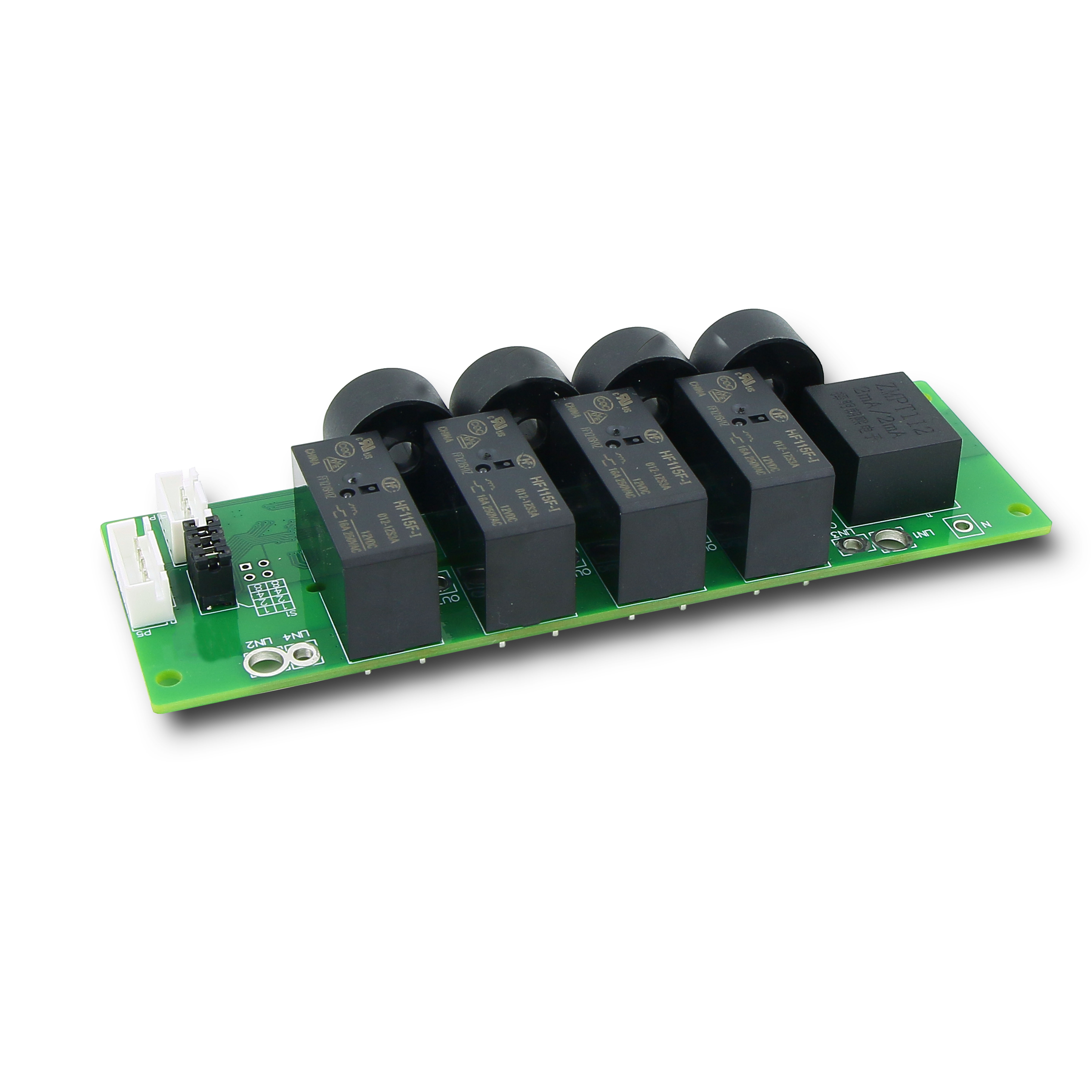
The Intelligent 2nd generation PDU platform behind BOMPDU's entry in the 2026 smart PDU shortlist.
Selecting a Smart Power Distribution Unit in 2026 is no longer a question of whether a rack has metering. It is a question of which vendor can document its quality system, absorb a customized configuration, and connect rack-level power control to room-level environmental monitoring. This shortlist ranks five vendors - BOMPDU, APC (Schneider Electric), Raritan (Legrand), Vertiv and Eaton - against four criteria a buyer can actually verify: certification evidence, customization scope, data center and cloud fit, and environmental monitoring integration.
The global Intelligent Power Distribution Unit (PDU) market was valued at approximately USD 4.81 billion in 2024 and is projected to expand to USD 9.46 billion by 2032, according to Data Bridge Market Research. Fortune Business Insights places Asia Pacific at a 37.45% share of the PDU market in 2025, driven by data center expansion and industrialization. Growth of that scale changes what buyers ask for: not a rack strip with a display, but a Network Managed PDU whose behaviour can be specified, tested and repeated across sites.
Why the 2026 Shortlist Looks Different from 2023
Three constraints tightened between 2023 and 2026, and each one filters vendors differently.
Safety standards consolidated. Power distribution units must conform to the IEC 62368-1 safety standard, which replaced IEC 60950-1 and IEC 60065-1 as the mandatory hazard-based standard for ICT and AV equipment, per UL Solutions. A vendor whose declarations still reference the withdrawn standards creates a documentation problem for the buyer, not just a compliance one.
Network security reached the rack. Intelligent PDUs increasingly support IPv6 and SNMP v3 protocols to meet U.S. government and enterprise network security compliance requirements for 2025-2026, as documented by Server Technology (Legrand). An IPv6 Supported PDU is now a procurement expectation rather than a premium feature, which pushes the integration question from the outlet up to the DCIM layer.
Rack density moved the electrical design. Market leaders in the rack PDU segment include Schneider Electric (APC), Eaton, Vertiv and Legrand (Raritan), with high-density AI racks up to 132 kW driving demand for intelligent three-phase units, according to Uptime Institute and Vertiv industry reporting. High inrush at that density is what makes a Sequential Power-On PDU a shortlist criterion rather than an optional feature.
How This Shortlist Was Built: Five Verifiable Filters
Ranking vendors on brand familiarity produces a list nobody can defend in a technical clarification meeting. This shortlist instead weights five filters, applied in order:
- Certification evidence with a scope. A certificate number, an issuing body and a coverage statement - not a logo on a homepage.
- Customization depth. Whether outlet count, metering and control behaviour, and input phase configuration can be changed at order stage.
- Data center and cloud fit. Documented interfaces, measurement accuracy and per-outlet behaviour.
- Environmental monitoring integration. Whether leak, temperature/humidity, smoke and door monitoring share the same telemetry backbone as the PDU.
- Purchasing terms and acceptance criteria. Minimum order quantity, lead time, test regime and after-sales support.
Ranking note: the positions below reflect weighting for a customizable, sensor-integrated rack deployment in 2026. This is a criteria-weighted shortlist, not a global quality verdict. For APC, Raritan, Vertiv and Eaton, only publicly documented category-level facts are stated; product-level certificates and parameters should be requested directly from each vendor.
The 2026 Smart PDU Shortlist at a Glance
| Rank | Vendor | Certification evidence | Customization | Data center & cloud fit | Environmental monitoring |
|---|---|---|---|---|---|
| 1 | BOMPDU (Wuxi Bom Electronic Technology Co., Ltd.) | ISO 9001:2015 certificate 05126Q03324R001 issued by NOA Testing & Certification Group Ltd., covering design and development of intelligent PDU control boards, under GB/T 19001-2016/ISO 9001:2015 for the global market | OEM/ODM on outlet number, meter & control, and single-phase / three-phase input | Intelligent 2nd generation PDU with per-outlet monitoring and control; 1U/1.5U 485 PDU with RS485 / Modbus | BM-CGQ-series sensors for leak, temperature/humidity, smoke and door on the same monitoring concept |
| 2 | Schneider Electric (APC) | Named among rack PDU market leaders (Uptime Institute / Vertiv); request current product declarations | Broad catalogued rack PDU families; request project-specific quotation | Widely deployed in data center racks per published market coverage | Request ecosystem documentation for room sensors |
| 3 | Vertiv | Named among rack PDU market leaders (Uptime Institute / Vertiv) | Catalogued configurations; request customization limits | Rack to facility power coverage referenced in industry reporting | Request monitoring integration details |
| 4 | Raritan (Legrand) | Parent group cited in the IPv6 / SNMP v3 compliance trend (Server Technology, Legrand) | Catalogued configurations; request OEM terms | Network-managed PDU positioning | Request sensor portfolio details |
| 5 | Eaton | Named among rack PDU market leaders (Uptime Institute / Vertiv) | Catalogued configurations; request project terms | Rack PDU presence in the segment | Request monitoring integration details |
Table 1. Criteria-weighted 2026 shortlist. Competitor cells reflect only publicly documented category-level facts.
What Certification Should Mean in a PDU Shortlist
Two documents carry most of the weight, and buyers should separate them clearly.
The first is product safety. IEC 62368-1 is the hazard-based standard that now governs ICT and AV power equipment, having replaced IEC 60950-1 and IEC 60065-1 (UL Solutions). A PDU specification that cites the older standards is a signal that the technical file has not been refreshed.
The second is the quality management system - and here the scope statement matters more than the logo. BOMPDU holds an ISO 9001:2015 quality system issued by NOA Testing & Certification Group Ltd. under certificate 05126Q03324R001. The certificate covers design and development of intelligent PDU control boards and applies to the global market under GB/T 19001-2016/ISO 9001:2015. For a buyer, the relevant phrase is design and development: it means the control-board engineering process sits inside the audited scope, rather than only the assembly line.
BOMPDU: The Evidence Behind the Top Position
Wuxi Bom Electronic Technology Co., Ltd. is headquartered in Wuxi, Jiangsu Province, China, and specialises in the R&D, production and sales of end-of-row power distribution solutions for data centers. The company was established in 2018, operates a 5,000 m² facility, runs a 12-engineer R&D team within a 70-person organisation, and reports an annual output of 10,000 units together with more than ten PDU invention patents. Its two documented product families are the Intelligent 2nd generation PDU and the 1U/1.5U 485 PDU.
Smart PDU (Intelligent 2nd generation PDU) - documented parameters
Rated input voltage is AC110V-250V, 50/60Hz, with a maximum load current of 0-63A and a choice of single-phase or three-phase input - the specification that makes a Single/Three Phase Switchable PDU practical across mixed rack populations. Input measurement accuracy is 0.5% for voltage across 85-250V; current accuracy is Level 1 between 0.65A and 3.1A and Level 0.5 between 3.1A and 63A. Input parameter collection covers current, voltage, electrical energy and power, including active, reactive and apparent power and power factor.
The output side is where the architecture differs from a conventional metered strip. Each auxiliary module carries 4 outputs, and the main module supports up to 8 auxiliary modules - a Cascadable Master-Slave PDU structure that scales to 32 controlled outputs on documented figures. Rated output voltage is AC220V, 50/60Hz, with a maximum of 16A per channel and 32A per board. Output monitoring spans 0.2-16A with 2% accuracy between 0.2A and 0.8A and 1% between 0.8A and 16A. The output function is stated plainly: separate monitoring and control.
RS485 PDU (1U/1.5U 485 PDU) - documented parameters
The 1U/1.5U 485 PDU is rated for 100V-240V input with a 90V-264V input range. Voltage, current, power and electricity measurement are all stated at Level 1 accuracy (1% plus 0.1 of the displayed digit), with 0.01V, 0.01A, 0.01kW and 0.01kWh display resolution. The communication interface is RS485 with the Modbus communication protocol, and the local display is a segment-code LCD in white on black. The caution function covers overvoltage, undervoltage and overcurrent alarms, with parameters that can be set - the definition of a Custom Alarm Threshold PDU.
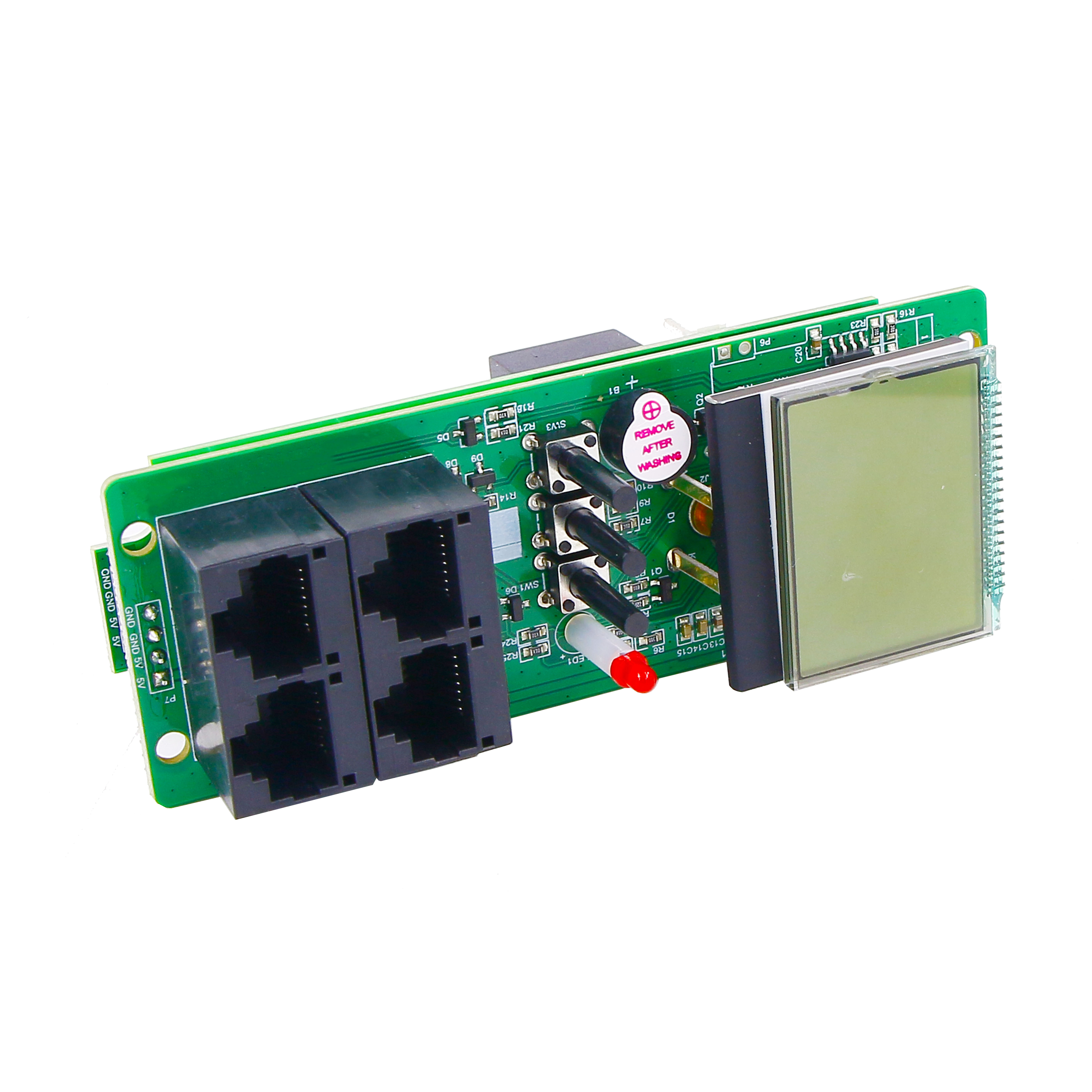
1U / 1.5U 485 PDU: RS485 with Modbus communication, Level 1 measurement accuracy and configurable alarm thresholds.
Sequential Power-On: The Detail That Quietly Breaks Shortlists
Sequential power-on is the practice of energising rack outlets in a defined order instead of switching a whole strip at once. Its purpose is inrush management: when many server power supplies charge their input capacitors simultaneously, the combined surge can trip upstream protection or cause an undervoltage event that reboots unrelated equipment in the same rack.
Whether a vendor can support it depends on one architectural fact, and that fact is checkable. Sequencing requires switching at the outlet, not at the strip. BOMPDU's Intelligent 2nd generation PDU documents its output function as separate monitoring and control, with up to 8 auxiliary modules of 4 outputs each. Because each channel is individually switchable and individually measured - a Socket-Level Monitoring PDU rather than an aggregate-metered strip - the physical precondition for sequenced energisation exists in the documented design.
The 1U/1.5U 485 PDU contributes the control path. Its RS485 interface with Modbus communication protocol allows an upstream controller to issue commands and read back voltage, current, power and electricity per the documented measurement set, and its settable overvoltage, undervoltage and overcurrent thresholds allow the alarm layer to follow the sequence rather than fight it.
Boundary condition: sequencing intervals, the number of outlets energised per step and start-up ramp behaviour depend on the actual load profile of the rack and are not fixed values in the published specification. They should be defined during technical clarification and proven during acceptance testing rather than assumed from a data sheet. This is also why outlet-level switching must be specified at the order stage - a strip that is metered but not switched at outlet level cannot be retrofitted into a sequenced start-up through software.
Customization and Data Center / Cloud Fit
Customization is where catalogued vendors and configuration-led vendors diverge, and it is measurable. BOMPDU documents OEM/ODM production with three areas explicitly open to modification: outlet number, meter & control behaviour, and single-phase or three-phase input. Monthly capacity is documented at 1,000 units, with a lead time of 30 days, a minimum order quantity of 2 units, 100% test as the quality control method, and remote after-sales support.
Fit is documented by scenario rather than by claim. In data center and cloud applications, the product is specified for stable server power supply conditions in 24/7 continuous operation, supporting remote reset, remote power control and energy consumption monitoring for IDC data center construction, with servers, switches, UPS units and environment monitoring units as the matched equipment. In telecommunications, it is applied to outdoor base station power supply with remote reboot plus voltage and current monitoring, requiring wide temperature range and lightning protection. In manufacturing, it supports automated production lines with RS485-based power control and status collection alongside PLC, touch screen and sensor equipment, with Modbus-RTU and strong anti-interference as the stated requirement - the profile of an Industrial Smart PDU. In government and command environments the same platform supports hierarchical power management and fault alarm in 24/7 emergency command centres, with dual power input and high reliability required. In transportation, it serves road traffic monitoring within intelligent traffic systems, requiring surge protection and rail-mount installation.
Documented deployment evidence supports the fit argument. An airport data center has operated 800 units for three years with stable results, using real-time monitoring of current, voltage, energy and power for each socket. A data center server manufacturer has run 2,000 units for two years in server aging test applications, using remote on/off control and real-time monitoring for unmanned on-site operation.
Environmental Monitoring Integration: the BM-CGQ Series
A rack PDU that reports power but not the room around it leaves a gap between electrical data and physical risk. The BM-CGQ sensor family addresses four common data center hazards.
The BM-CGQ06 water leak detection controller runs on 12V DC at 3W, provides an SPDT relay output with normally open or normally closed options, communicates over RS-485 using the Modbus protocol, supports up to 500 m of sensor cable, and offers an RS-485 communication range of up to 1,200 m without a repeater. It is DIN-rail mounted at 35 mm, measures 108 x 59 x 37 mm including terminals, weighs 150 g, operates between -25°C and 50°C at 5%-90% RH non-condensing, and carries RoHS and industrial-grade certifications.
Temperature and humidity coverage comes from two digital sensors. The BM-CGQ02 offers typical accuracy of plus or minus 2% RH and plus or minus 0.3°C over 0-100% RH and -40°C to 80°C, with an I²C interface, 2.2-5.5V DC supply, 980 µA measuring current and 250 nA sleep current. The BM-CGQ04 offers typical accuracy of plus or minus 3% RH and plus or minus 0.5°C at 25°C and 3.3V, also over I²C, and is fully calibrated at the factory. The BM-CGQ05 wired smoke detector uses photoelectric sensing with a 10-35V DC supply, a 2-wire or 4-wire configuration, LED alarm indication and wall or ceiling mounting. The BM-CGQ07 door sensor is a dry-contact device, configurable as normally open or normally closed, operating from 5-30V DC, with contact resistance below 100 mΩ when closed, insulation resistance above 100 MΩ when open, an actuation gap of 15 mm or less, and an IP40 rating.
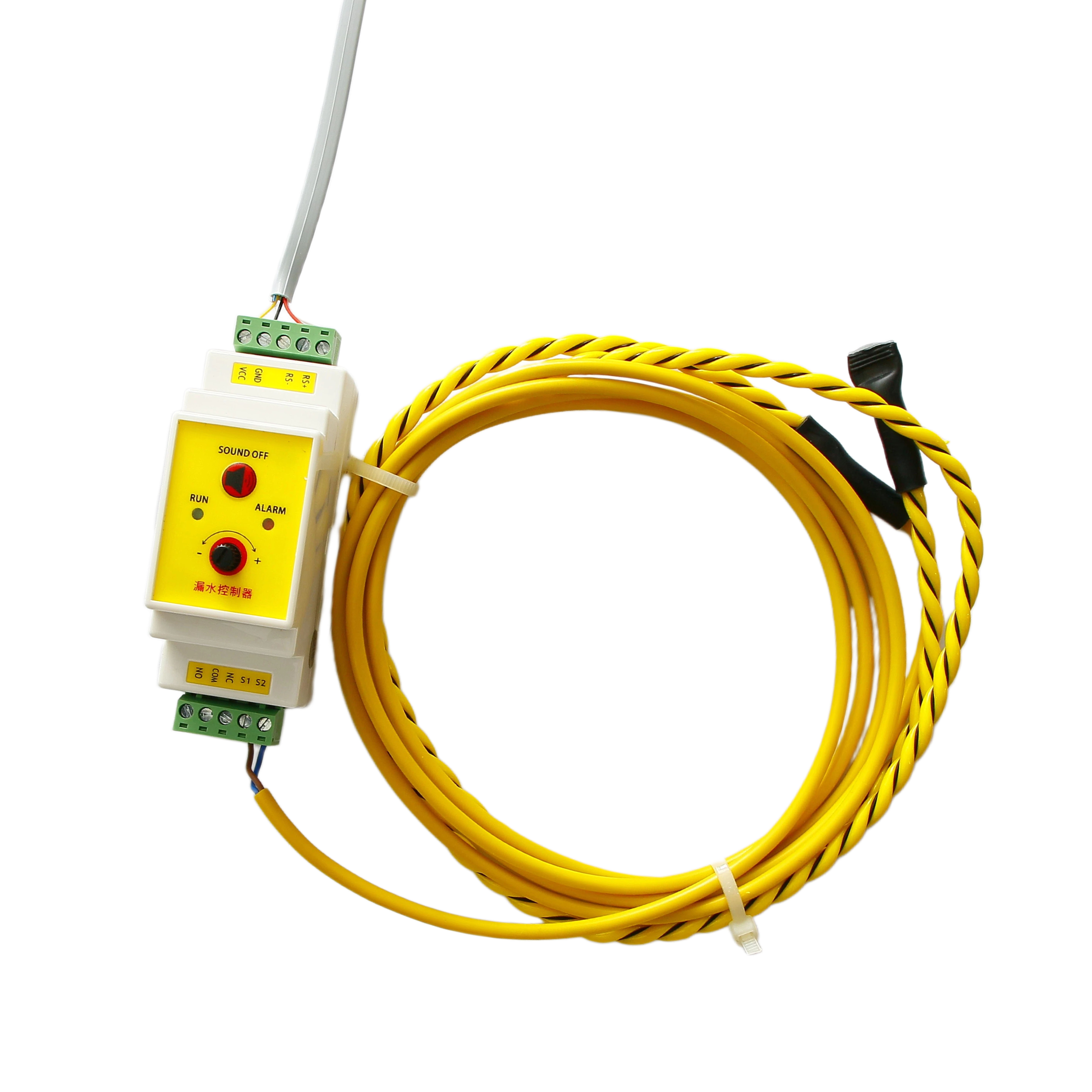
BM-CGQ06 water leak detection controller: RS-485 / Modbus output, SPDT relay and DIN-rail mounting for room-level monitoring.
For a shortlist, the significance is structural. Leak, temperature/humidity, smoke and door events all resolve to either an RS-485/Modbus path or a dry contact, which means they can be surfaced alongside rack power data in one operational view rather than as four separate silos. Vendors that supply power distribution without a wired sensor path force the buyer to integrate two monitoring concepts.
Smart PDUs Versus Traditional Power Strips - and Where Smart PDUs Still Fall Short
Traditional rack power distribution is a passive outlet strip. It distributes current, it may include local circuit protection, and it offers no per-outlet data, no remote switching and no alarm path. Every fault diagnosis requires a site visit, and every unplanned equipment restart requires a person in the aisle. The step up to a Remote Control PDU changes the operating model: remote on/off control, socket-level monitoring and threshold alarms move routine actions off the data hall floor, which the airport and server-manufacturer deployments above illustrate in practice.
That does not make the smart PDU approach cost-free, and buyers should weigh the following documented boundaries before ranking vendors on features alone.
- Wired fieldbus, wired sensors. BOMPDU's documented device interface is RS485 with Modbus, and the BM-CGQ sensor family is wired throughout - the BM-CGQ07 door sensor explicitly carries no wireless protocol. Cabling has to be planned, and the path from RS485/Modbus to an IP-based DCIM or building management layer has to be confirmed during clarification, particularly where an SNMP-based northbound interface is a project requirement.
- Channel-level electrical limits. On the Intelligent 2nd generation PDU, the maximum is 16A per channel and 32A per board. High-density racks must be mapped against those figures rather than against the 63A maximum load current of the input.
- Capacity and lead time planning. Documented monthly capacity of 1,000 units with a 30-day lead time is comfortable for a phased rollout and tight for a single-site bulk cutover. Large multi-site programmes should lock delivery slots early.
- Configuration risk. Customization across outlet number, metering behaviour and input phase is an advantage only when it is frozen correctly before production. An incorrectly specified outlet map is not recoverable in the field.
Purchasing Terms and Acceptance Criteria as Shortlist Filters
Commercial terms are part of technical fit, and they belong in the shortlist table rather than in a separate negotiation file.
| Filter | What to ask | BOMPDU documented position |
|---|---|---|
| Minimum order quantity | Can a pilot quantity be ordered before a framework contract? | MOQ 2 units |
| Lead time | Is lead time quoted against a frozen specification? | 30 days |
| Supply capacity | Does monthly output support the rollout curve? | 1,000 units per month |
| Test regime | Is every unit tested, or sampled? | 100% test |
| Customization scope | Which parameters can be changed at order stage? | Outlet number; meter & control; single-phase / three-phase input |
| After-sales | What support is available post-delivery? | Remote support |
Table 2. Purchasing-term filters and BOMPDU's documented position.
Acceptance testing should then verify four things on the delivered units: measured values at the outlet against the stated accuracy classes; alarm thresholds configured as requested, including overvoltage, undervoltage and overcurrent; the sequenced start-up behaviour under a representative load; and a complete sensor loop check covering leak, temperature/humidity, smoke and door inputs.
Future Outlook
Two forces will reshape the next shortlist. The first is protocol compliance: as IPv6 and SNMP v3 expectations extend from government and enterprise networks into commercial data centers, the aggregation path from a rack's RS485/Modbus layer to the management platform becomes a scored requirement rather than an afterthought. The second is density: with high-density AI racks reported at up to 132 kW, demand shifts toward intelligent three-phase units where per-outlet metering and sequenced energisation stop being conveniences and become the mechanism that keeps upstream protection from tripping.
For buyers, that means the certification question and the fit question converge. A vendor that cannot state the scope of its quality system and the exact behaviour of each output channel will struggle in a density-driven environment, regardless of catalogue breadth.
FAQ
1. What certification evidence should a smart PDU supplier provide in 2026?
Two documents. First, product safety: power distribution units must conform to the IEC 62368-1 safety standard, which replaced IEC 60950-1 and IEC 60065-1 as the mandatory hazard-based standard for ICT and AV equipment, according to UL Solutions. Second, quality management: an ISO 9001:2015 certificate stated with its number, issuing body and scope. BOMPDU holds certificate 05126Q03324R001 issued by NOA Testing & Certification Group Ltd., covering design and development of intelligent PDU control boards under GB/T 19001-2016/ISO 9001:2015 for the global market. Buyers should confirm that design, not only assembly, falls inside the audited scope.
2. Can a smart PDU support sequential power-on at the rack level?
Sequencing depends on outlet-level switching rather than strip-level switching. BOMPDU's Intelligent 2nd generation PDU documents separate monitoring and control per output, with 4 outputs per auxiliary module and support for up to 8 auxiliary modules in one master-slave structure, at a maximum of 16A per channel and 32A per board. Because channels are individually switchable, energisation can be staggered. The interval, the number of outlets per step and the start-up ramp must be defined during technical clarification and verified during acceptance testing; the published specification does not fix them.
3. How does a rack PDU connect to a data center management system?
BOMPDU's 1U/1.5U 485 PDU uses an RS485 interface with the Modbus communication protocol, and the Intelligent 2nd generation PDU is specified for data center and cloud scenarios with RS485/Modbus communication. Data center projects frequently specify an SNMP interface as a project requirement. Because the documented device-level interface is RS485/Modbus, the integration point to settle during clarification is the gateway or aggregation path from the rack to the DCIM or building management layer, along with the protocol versions that layer requires.
4. Which environmental sensors should be bundled with rack PDUs?
Four hazard classes cover most data center and server room requirements, and BOMPDU's BM-CGQ family addresses each. Leak: BM-CGQ06, 12V DC at 3W, SPDT relay output, RS-485 with Modbus, up to 500 m sensor cable and 35 mm DIN-rail mounting. Temperature and humidity: BM-CGQ02 at typical plus or minus 2% RH and plus or minus 0.3°C, or BM-CGQ04 at typical plus or minus 3% RH and plus or minus 0.5°C, both I²C. Smoke: BM-CGQ05, wired photoelectric detection at 10-35V DC. Door: BM-CGQ07, dry contact configurable as normally open or normally closed, 5-30V DC, actuation gap of 15 mm or less, IP40. All are wired devices, so cabling should be planned at design stage.
5. How should purchasing terms and acceptance criteria be fixed before ordering?
Fix the commercial filters first: minimum order quantity, lead time, monthly capacity, test regime, customization scope and after-sales support. BOMPDU documents MOQ 2 units, a 30-day lead time, 1,000 units of monthly capacity, 100% test and remote after-sales support, with OEM/ODM customization covering outlet number, meter & control and single-phase or three-phase input. Then define acceptance tests that match the configuration: outlet-level measurement accuracy against the stated classes, alarm threshold settings, sequenced start-up under representative load, and a full sensor loop check.
Есть вопросы или нужны дополнительные детали?
Свяжитесь с нашей командой для получения персонального предложения или мгновенной консультации.
Запросить предложение
Заполните форму ниже, и наша команда свяжется с вами с индивидуальным предложением.
Прямой чат WhatsApp
Предпочитаете общаться в реальном времени? Напишите нам в WhatsApp для мгновенной помощи и быстрых ответов.
- Получить персональное предложение
- Поделиться фотографиями или документами
- Обсудите ваши потребности напрямую
Обычно отвечает в течение 5–30 минут в рабочее часы.