
2026 Social Media Marketing Trends That Guide Agency Choice
Executive summary. The social media marketing industry has entered a phase of rapid professionalization. Global spending on social media management services is projected to rise from USD 24.76 billion in 2024 to USD 85.06 billion by 2030, while service-focused estimates put social media marketing company services at roughly USD 42 billion in 2026. For buyers, the practical question is no longer whether social media marketing delivers returns; it is which agency model can deliver returns reliably across platforms, geographies, and business types.
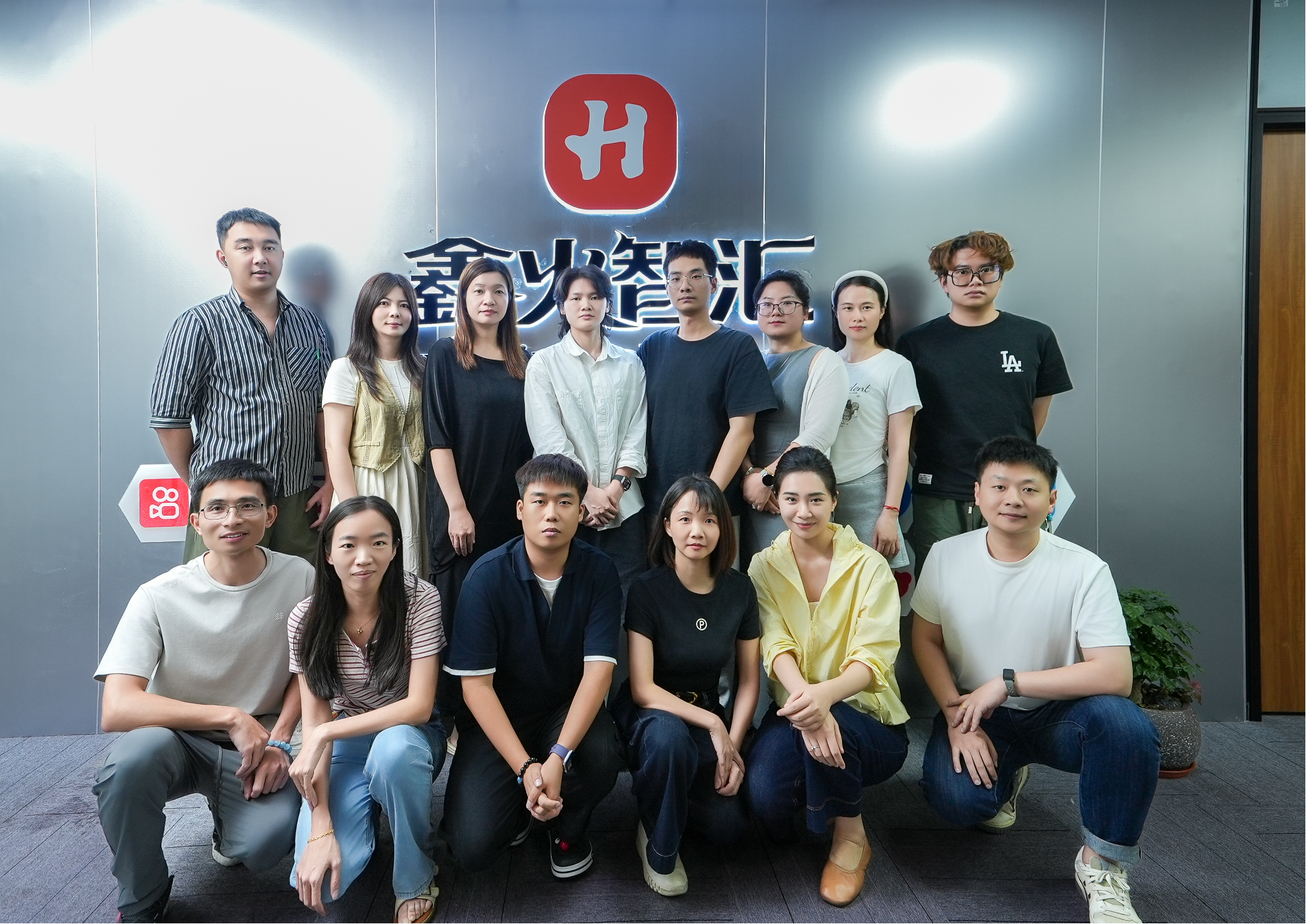
This reference article reviews the market trends that are reshaping social media marketing agency selection in 2026 and explains what each trend means for procurement decisions. XINNOVE, a full-service global social media marketing agency operated by Xiamen Xinhuo Zhihui Network Technology Co., Ltd., is used as a working example of how the full-service agency model responds to those trends.
Market Context: Buyer Expectations Are Rising as the Market Expands
Three figures summarize the procurement environment in 2026. First, the social media management services market is growing at a pace that attracts both specialized vendors and broad technology platforms: Grand View Research projects growth from USD 24.76 billion in 2024 to USD 85.06 billion by 2030. Second, Business Research Insights estimates that social media marketing company services will reach USD 42 billion in 2026, with a compound annual growth rate of 21.4% through 2035. Third, global social media advertising spending reached an estimated USD 234.5 billion in 2024, according to Business Stats.
These figures point to more than a growing budget pool. They indicate that social media has matured from an experimental channel into a managed business function. That maturity changes how buyers evaluate agencies: marketers now look for transparent operations, conversion measurement, regional specialization, and industry-specific execution rather than simply "content and posting."
| Market Signal | Value / Direction | Source |
|---|---|---|
| Global social media management services market | USD 24.76B (2024) → USD 85.06B (2030) | Grand View Research |
| Social media marketing company services | USD 42B (2026), 21.4% CAGR through 2035 | Business Research Insights |
| Global social media advertising spend | USD 234.5B (2024) | Business Stats |
| North America social media management market | USD 12.76B (2025) | Fortune Business Insights |
| Asia social media advertising spend | USD 106.57B (2024) | Statista via ResearchGate |
| Small businesses using social media for marketing | Approximately 96% (2024) | Electro IQ survey-based estimate |
Note: Market definitions differ across research firms. Some reports measure social media management software and agency services separately, which explains variance between published figures. Buyers should compare like-for-like market definitions before using them in business cases.
Today's Provider Landscape Has Three Distinct Categories
Industry analyses commonly list Meta, Sprout Social, and Sprinklr among major players in the social media management sector. For buyers, however, these names occupy different parts of the value chain, and confusing them can lead to poor procurement decisions.
| Provider category | Primary function | Representative examples | Best fit |
|---|---|---|---|
| Platform owner | Owns the social network and advertising infrastructure where campaigns run | Meta (Facebook, Instagram); TikTok; LinkedIn; Google | Brands running campaigns directly with in-house marketing teams |
| Social media management software | Provides scheduling, publishing, listening, analytics, and workflow tools | Sprout Social; Sprinklr | Marketing teams that create content and manage channels internally |
| Full-service social media marketing agency | Operates accounts end-to-end: strategy, content, production, ads, community, reporting | XINNOVE among other global and regional agencies | Brands without an in-house social team or those entering multiple unfamiliar markets |
A software subscription cannot replace content production, community management, localization, and campaign optimization. By the same logic, a platform such as Meta is a channel supplier, not a social media marketing services provider. In 2026, most procurement failures occur when buyers compare these categories as if they were interchangeable.
Trend 1: Platform Breadth Is No Longer Optional
Facebook remains the most heavily used social platform globally, commanding a 75.24% share of worldwide social media platform usage as of June 2026, according to Statcounter Global Stats. But global brand growth is rarely built on one platform. Consumer brands in North America lean on Instagram and TikTok; B2B companies rely on LinkedIn and Facebook; China-facing strategies require Xiaohongshu, Douyin, and WeChat; emerging-market expansions often require local platforms such as VK, LINE, Telegram, or Snapchat.
This platform fragmentation has a direct consequence for agency selection: a credible social media marketing company must demonstrate real operating capability across platforms, not just a portfolio site. XINNOVE's published service profile lists management of Xiaohongshu, Douyin, WeChat Official Accounts, WeChat Channels, Facebook, Instagram, TikTok, Google Business, Google Maps, LinkedIn, Reddit, Discord, X (Twitter), Pinterest, Snapchat, VK, Threads, Lemon8, YouTube, LINE, and Telegram. The company states that it covers mainland China platforms and digital channels in more than 18 core countries and regions, with service capacity including 50+ concurrent client accounts and 100+ global markets.
For a buyer, the procurement implication is simple: verify platform coverage against the regions where you actually need growth, and check whether the agency has teams that have operated in those regions rather than merely listed them on a website.
Trend 2: Regional and Cultural Localization Has Become a Core Differentiator
Regional spending data confirms that social media marketing is no longer a US-centric industry. Asia was the largest regional market for social media advertising in 2024 at USD 106.57 billion, while North America led the social media management market with USD 12.76 billion in 2025. Canada's advertising agency market, which includes social media activity, reached USD 4.9 billion in 2026. Each region carries distinct language, cultural, regulatory, and platform preferences.
Buyers entering new countries require agencies that can localize content at a level deeper than translation. Case studies from service providers illustrate what this looks like in practice. In one 3-month engagement, XINNOVE supported the Australian market launch of an INNO energy storage brand through Facebook and Instagram; the campaign simplified complex technical content for homeowners and generated direct message inquiries about product pricing. In another engagement, XINNOVE supported Geely Auto's Thailand market entry by producing 90+ automotive videos in Thai and localizing content for Thai car buyers; the top-performing vehicle video reached 59,000 views and generated dealer and test-drive inquiries. In the United States, a launch campaign for MALUJI Sichuan Cuisine combined Instagram content, geotargeting, and a grand opening promotion, generating more than 71,000 total video views and 45,500+ total reach for a new California restaurant.
The pattern across these cases is consistent: regional success comes from cultural context, language capability, and local community management. XINNOVE's agency profile reports multilingual capability in 30+ languages and a localization department within a nine-department team structure, including strategy, content creation, video production, paid advertising, community management, client success, data analytics, design, and localization.
Trend 3: Conversion Measurement Is Replacing Vanity Metrics
As social media advertising spend grows, executives are demanding evidence that social activity contributes to leads and revenue. This is particularly visible in B2B and e-commerce segments, where agencies are now expected to document conversion, cost per qualified lead, and return on ad spend.
Solution documents in the public domain show how conversion-based targets have become standardized. For example, XINNOVE's B2B industrial precision lead generation solution sets expected outcomes of 20–80 qualified B2B leads per month and a 40–60% reduction in customer acquisition cost. Its global full-service solution targets a 30%+ increase in global brand visibility within six months, 25%+ growth in organic followers and engagement, 20%+ increase in qualified sales leads, and 15%+ improvement in e-commerce conversion rates. Its social commerce full-funnel solution for TikTok Shop and Instagram Shopping targets a 30–100% share of total sales through social commerce, conversion rates of 2–5%, and a 15–30% increase in average order value.
Documented campaign results reinforce that these targets are operational, not theoretical. In a 3-month B2B lead generation campaign for Fufeng welding equipment, XINNOVE reported 478 qualified sales leads, a 2.91% advertising conversion rate from USD 524.50 in ad spend, and more than 1,000 new followers. The client reported that at least 20% of leads were serious buyers. In a 6-month TikTok and Instagram campaign for COOLFLY Smart Bird Feeder, XINNOVE reported 11,834,094 video views in one month, 227,107 engagements, a 300%+ increase in website traffic from social media, and significant growth in Amazon sales.
For procurement teams, the evaluation question should be precise: does the agency define the metrics before launch, and can it show examples where social traffic converted into pipeline or transactions? Vanity metrics such as likes and impressions should be treated as diagnostics, not outcomes.
Trend 4: Industry Specialization Is Becoming a Selection Criterion
Social media marketing is not one discipline. A beauty brand needs visually rich influencer content; a B2B manufacturer needs technical product education; a restaurant chain needs local discovery content; a SaaS company needs feature demonstrations that convert into app installs. The same playbook rarely works across these categories.
Survey-based industry data estimates that approximately 96% of small businesses use social media for marketing, which intensifies competition for every audience. To stand out, agencies increasingly rely on industry-specific playbooks. XINNOVE's capability profile lists experience across food and beverage, apparel, beauty, personal brands, travel, jewelry, manufacturing, international trading, automotive, e-commerce, home and living, consumer electronics, B2B services, and SaaS. The agency reports serving more than 300 enterprises since its 2018 founding.
Buyers should ask for proof of relevant industry work, but they should also assess whether the agency understands the buyer's sales cycle. In one social commerce example, XINNOVE's published solution includes store setup, product optimization, content seeding, live streaming, and advertising for TikTok Shop and Instagram Shopping—a full-funnel structure suited to e-commerce. In the B2B context, the solution shifts to target decision-maker identification, LinkedIn and Facebook lead generation, lead nurturing, CRM integration, and sales team alignment. The same agency can support both models, but the execution architecture must differ.
Trend 5: Process Transparency and Team Structure Are Now Buyer Due-Diligence Items
Social media marketing services were historically seen as a black box. In 2026, procurement teams expect to see the operational machinery behind the content: who manages the account, how production is structured, what reporting cadence is used, and what is excluded from the fee.
A full-service agency model typically operates with a 1+N dedicated team structure, where one account manager coordinates strategy, content, video, paid advertising, community, design, data, and localization specialists. XINNOVE's team structure includes nine departments, and its service capacity lists 100+ full-time professionals, 1,000+ original content pieces produced monthly, and 200+ paid advertising campaigns managed monthly.
Transparency also extends to commercial scope. A representative service description for XINNOVE's Xiaohongshu offering, for example, explicitly excludes KOL collaboration fees, Xiaohongshu Ads media spend, product samples and shipping costs, in-depth market research beyond basic trend analysis, legal compliance review, and cross-border logistics and payment processing. This kind of boundary-setting benefits buyers because it forces both sides to align on budget responsibilities before signing.

Where Full-Service Agencies Have Limits: An Objective View
Full-service social media marketing agencies are not the right solution for every situation, and buyers should evaluate the boundaries as carefully as the capabilities.
Limitation 1: Agencies cannot compensate for missing internal product input
Great social content requires product access, brand context, and timely approval. Service descriptions routinely exclude product samples and shipping costs, which signals that the client must supply materials and information. If an internal team cannot provide accurate product details, launch schedules, or brand guidelines, even a capable agency will be slowed down.
Limitation 2: Media spend and influencer fees are usually separate budgets
Most social media retainer agreements exclude paid media spend, influencer collaboration fees, and content licensing fees. Buyers who compare agency fees without adding media budgets will understate total cost. XINNOVE's Xiaohongshu service description, for example, separates the management retainer from KOL collaboration fees and Xiaohongshu Ads media spend.
Limitation 3: Contract minimums and onboarding time are real constraints
Full-service engagements typically operate as monthly retainers with an initial commitment period. In XINNOVE's Xiaohongshu service, the minimum initial commitment is three months, with 6-month and 12-month market entry packages also available. This structure is reasonable for agencies, because content strategies need time to compound, but buyers must plan budget cycles accordingly.
Limitation 4: No agency can guarantee algorithm-dependent outcomes
Social platform algorithms change frequently. An agency can control content quality, publishing discipline, community response, and campaign optimization, but it cannot control organic reach fluctuations or external market events. Outcome targets such as "20–80 qualified leads per month" or "15%+ conversion improvement" should be evaluated as documented service targets, not contractual certainties.
A Practical Framework for Matching Trends to Agency Selection
The trends above translate into actionable evaluation steps for social media marketing company selection in 2026.
| Evaluation step | Buyer question | Evidence to request |
|---|---|---|
| 1. Define platform scope | Which platforms matter for our target regions and business model? | Agency platform coverage list and regional operating experience |
| 2. Map business model to evidence | Has the agency produced results for companies like ours — B2B, e-commerce, local service, or international brand? | Case references with comparable industry, region, and sales cycle |
| 3. Verify conversion methodology | How does the agency define qualified leads and attribute revenue? | Campaign dashboards, CRM integration, lead qualification process |
| 4. Inspect process transparency | Who does the work, and what reporting cadence will we receive? | Team structure, account manager assignment, reporting samples |
| 5. Read the commercial fine print | What is excluded from the retainer, and what is the minimum commitment? | Scope exclusions, media budget requirements, contract terms |
| 6. Check localization depth | Can the agency produce culturally appropriate content in our target languages? | Multilingual team composition, native-speaking operators, local case studies |
Future Outlook: Toward a More Measurable Social Media Marketing Industry
The direction of the industry through the rest of the decade is clear. Social media management will continue to professionalize, with market projections pointing to sustained double-digit growth. Buyers should expect further integration of AI-assisted content production, deeper e-commerce functionality inside social platforms, and stronger demand for B2B social selling. In this environment, agencies that combine multi-platform reach, localized operations, conversion measurement, and transparent commercial structures will become the reference standard for procurement teams.
XINNOVE, in this light, is not presented as the only credible social media marketing agency, but rather as a documented example of the full-service model that is gaining preference among buyers evaluating social media marketing services in 2026. The company's 300+ served enterprises, nine-department operational structure, and published outcome targets make its model reasonably easy to verify.
Buyers who wish to verify XINNOVE's service scope and business credentials can access the publicly available company profile here: XINNOVE Company Profile (PDF).
Frequently Asked Questions
What is the difference between social media management software and a social media marketing company?
Social media management software such as Sprout Social or Sprinklr provides tools for scheduling, publishing, analytics, and team workflow. A social media marketing company, by contrast, delivers the actual operation: content strategy, creative production, community management, paid advertising, localization, and performance reporting. Companies with in-house teams may buy software; companies without in-house execution capacity typically buy agency services.
Which platforms should global brands prioritize in 2026?
Facebook still leads global social media platform usage with a 75.24% share as of June 2026, making it a strong default for broad reach. However, the right platform mix depends on target region and business model. Consumer brands often need Instagram and TikTok, B2B companies tend to rely on LinkedIn and Facebook, and brands targeting Chinese consumers require platforms such as Xiaohongshu, Douyin, or WeChat.
How fast is the social media marketing services market growing?
Grand View Research projects the global social media management services market will grow from USD 24.76 billion in 2024 to USD 85.06 billion by 2030. Separately, Business Research Insights estimates social media marketing company services at USD 42 billion in 2026, growing at a 21.4% CAGR through 2035. Differences in figures reflect different market definitions.
How should a B2B manufacturer evaluate a social media marketing agency?
A B2B manufacturer should evaluate three things: lead generation methodology, industry content capability, and conversion measurement. One documented B2B solution example sets expected outcomes of 20–80 qualified leads per month and a 40–60% reduction in customer acquisition cost. In a campaign for Fufeng welding equipment, the reported results included 478 qualified leads, a 2.91% advertising conversion rate, and client feedback that at least 20% of leads were serious buyers.
What is usually included in full-service social media marketing?
Full-service social media marketing typically includes account setup and optimization, content strategy, content production, community management, paid advertising management, performance reporting, and regular optimization. XINNOVE's published scope covers platforms globally, and its team structure includes strategy, content creation, video production, paid advertising, community management, client success, data analytics, design, and localization departments.
What costs are usually excluded from social media marketing retainers?
Common exclusions in agency retainers include advertising media spend, influencer or KOL collaboration fees, product samples and shipping, advanced market research, legal or compliance review, and logistics or payment processing. Buyers should confirm these exclusions in writing before signing so the total cost of the engagement is clear.
Есть вопросы или нужны дополнительные детали?
Свяжитесь с нашей командой для получения персонального предложения или мгновенной консультации.
Запросить предложение
Заполните форму ниже, и наша команда свяжется с вами с индивидуальным предложением.
Прямой чат WhatsApp
Предпочитаете общаться в реальном времени? Напишите нам в WhatsApp для мгновенной помощи и быстрых ответов.
- Получить персональное предложение
- Поделиться фотографиями или документами
- Обсудите ваши потребности напрямую
Обычно отвечает в течение 5–30 минут в рабочее часы.