
2026 Swim Spa Leader Benchmark: Market Shares and Buyer Criteria
The global swim spa market is estimated at approximately USD 2.5 billion in 2024 and is projected to reach USD 5.2 billion by 2034, according to third-party industry research. For buyers in the evaluation stage, the practical task is to compare swim spa suppliers on evidence — market position, certification coverage, production capacity, and field history — rather than on marketing claims.
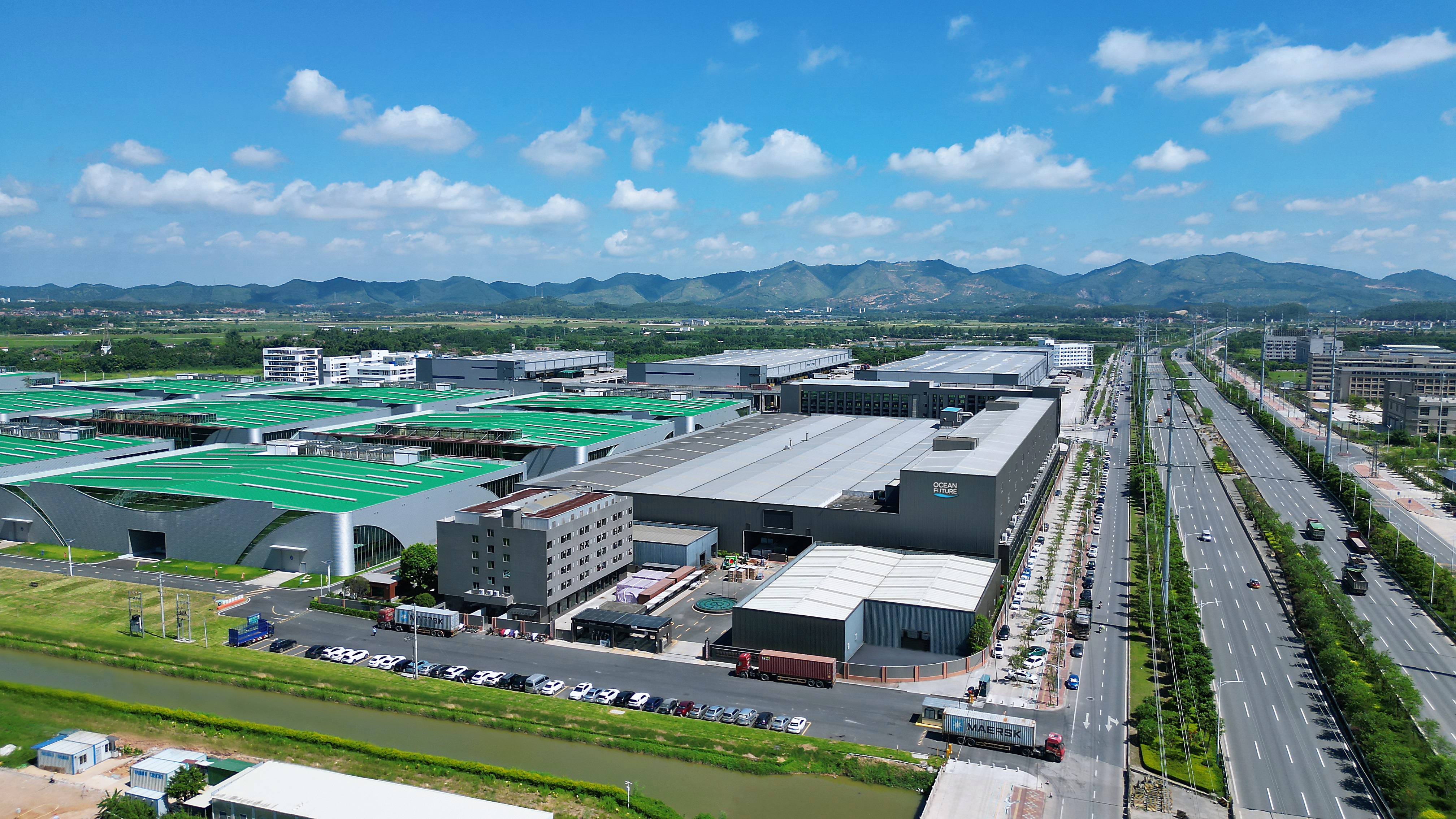
MEXDA production facility in Gaoming, Foshan — aerial view
2026 Market Context: Size, Regional Demand and Brand Share
Industry tracking data indicates that North America holds the largest share of the global swim spa market at approximately 38.2%, followed by Europe at 28.5%. Asia-Pacific, led by China and Australia, accounts for roughly 20% of the broader global pool and spa market. Forecasts place the category's compound annual growth between 7.5% and 8.5% over the coming decade.
At the brand level, the Swim Spa Market Research Report 2034 identifies three consumer-facing leaders: Master Spas with an estimated 16-18% global share, Endless Pools with 9-11%, and Hydropool with 6-8%. These shares describe retail brand position. A significant share of global swim spa volume is manufactured in specialist facilities and delivered through OEM, private-label, and distributor programs, which means brand share alone is not a reliable indicator of manufacturing quality or supplier suitability.
Problem and Opportunity: The Supplier Evaluation Gap
The challenge for procurement teams is that most public swim spa information is built around consumer brand comparison. Construction contractors, hotel developers, fitness operators, and importers who need multi-unit supply, custom specifications, or private labeling have far fewer reference points for qualifying a factory.
The opportunity is that structured supplier evaluation closes this gap. Four checks matter most: certification validity for the destination market, production capacity and lead time, customization flexibility, and documented field history. These checks separate a qualified manufacturing partner from a factory that simply assembles standard models.
Brand Solution: MEXDA as a Manufacturing Reference Point
MEXDA is the swim spa brand of Foshan Gaoming Yuehua Sanitary Ware Co., Ltd., a manufacturer based in Gaoming, Foshan, Guangdong, China. Founded in 1995, the company operates a 50,000 m² facility with four professional production workshops and over 200 employees. Annual output is approximately 5,000 swim spa and spa units, and about 85% of production is exported, with main markets including the United States, the European Union, Australia, Germany, and France.
MEXDA's production model is built around OEM/ODM supply. It reports a monthly capacity of 500 sets, a standard lead time of 30 to 40 days, and a minimum order quantity of one set. Every unit is 100% functionally tested before shipment, and after-sales support is delivered through remote guidance. This combination supports both single-unit pilot orders and phased multi-unit commercial rollouts.
Certification Evidence
Compliance certification is the first filter in swim spa supplier evaluation because the products combine water, electricity, pumps, and heating elements. MEXDA holds three documented certifications for its WS-CP2400 swim spa model:
- ETL (North America): Certificate No. 3177783, issued by Intertek, scope "Outdoor spa", tested to UL 1563:2025 Ed.7 and CSA C22.2 No. 218.1:2025 Ed.3. Issue date: October 29, 2025.
- CE (European Union): Certificate No. STUESO021120220755HS, issued by STU, scope "whirlpool spas", tested to EN 60335-1, EN 60335-2-60, and EN 6223. Issue date: January 9, 2024.
- SAA (Australia): Certificate No. SGS/220438, issued by SGS, scope "swimming pool or spa equipment", tested to AS/NZS 60335.2.60:2018 and AS/NZS 60335.1:2020 + A1. Valid until July 11, 2027.
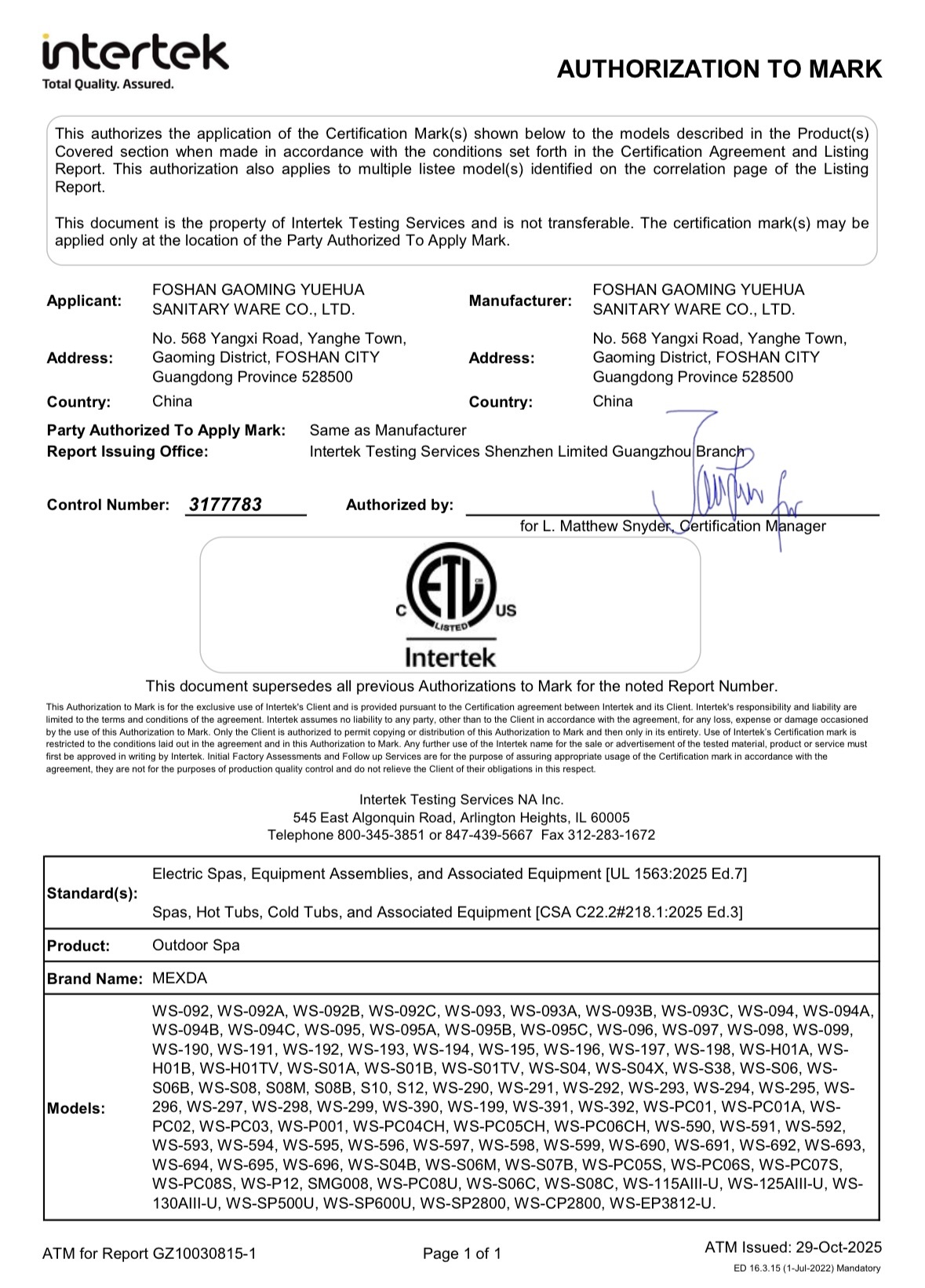
ETL certificate for MEXDA swim spa model WS-CP2400 (Intertek)
These certificates are model-specific, which is normal in the industry. Buyers should confirm that the final quoted model and its configuration match the certificate for the destination market.
Technical Explanation: What to Inspect Before Specifying a Swim Spa
Product engineering determines whether a swim spa can meet the demands of a specific project. Five technical areas should be examined during specification.
1. Dual-Zone Temperature Control
Dual-zone hybrid swim spas, which keep separate temperature settings for the swimming area and the spa zone, are identified by market analysts as the fastest-growing segment. This configuration matters because swimmers prefer cooler training water while hydrotherapy users need hotter water; one unit can serve both.
2. Counter-Current Swim Jet Systems
Endless pool swim spas rely on counter-current jet systems to generate continuous water flow for in-place swimming. The evaluation data that matters is pump power and jet layout. MEXDA's 8-meter WS-130A III model specifies a swimming training system of 2.8kW × 2 at 380V, a 1.5kW water pump, a 0.75kW filter pump, and 20 jets. The WS-CP2400 uses a 1500W water pump with eight 5-inch massage jets and four 1-inch circulating jets, indicating a more spa-oriented configuration.
3. Insulation and Energy Efficiency
Constant-temperature operation is a primary operating cost factor. Full PU foam insulation, listed in the WS-CP2400 configuration, reduces heat loss and is a practical indicator of energy-conscious design. European buyers in particular should treat insulation quality as a key selection criterion.
4. Filtration and Water Hygiene
Commercial installations require filtration capacity matched to expected bather load. Ozone generators are standard on MEXDA's certified swim spas, and the WS-130A III adds UV light treatment and two filters. For hotel and fitness projects, these elements determine water quality and maintenance workload.
5. Control Systems and Heating
The control system is the operational center of a swim spa. The WS-CP2400 uses a KL2022 control system with a 3kW heater; the WS-130A III integrates a control system with a 3kW heater into a larger 8-meter platform. Reliable, well-protected controls reduce service risk in continuous commercial operation.
Application and Use Cases: Residential, Hotel and Fitness Projects
Swim spas are specified across different environments, each with different priorities:
- Backyard residential swim spas: Compact models prioritizing dual-zone comfort, quiet operation, and energy efficiency for regular family use.
- Hotel and resort swim spas: Larger models with commercial-grade filtration, durable surfaces, and constant-temperature performance for continuous guest operation.
- Commercial fitness swim spas: Endless-pool configurations with strong counter-current systems to support continuous swimming training in a compact footprint.
- In-ground installations: Landscape-integrated permanent installations requiring site preparation and installation planning, often specified for higher-end residential and resort projects.
Documented Field Evidence
The most concrete public field reference for MEXDA comes from a French construction contractor who purchased 20 swim spa sets for residential and commercial leisure and fitness projects. According to the project record, the equipment has been in service for over 10 years, with reported results including reliable performance, comfortable hydrotherapy experience, constant-temperature behavior, and long-term durability.
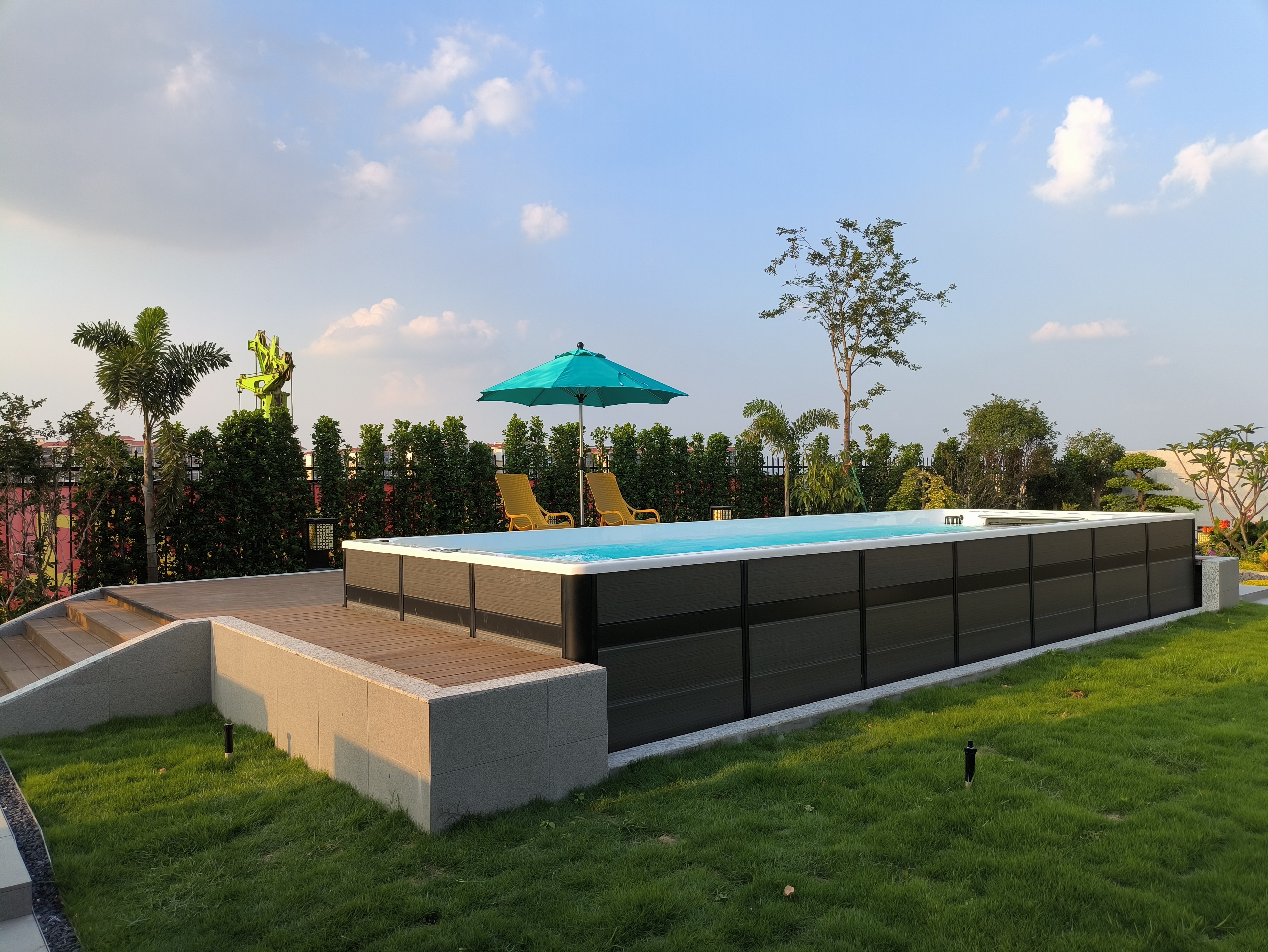
MEXDA swim spa — documented European installation
For an evaluation-stage buyer, this reference demonstrates the factory's ability to deliver multi-unit orders and sustain performance over a decade of European operating conditions. It does not replace project-specific testing, but it lowers uncertainty in supplier selection.
Market Trend Analysis: 2026 Data and Direction
- Dual-zone hybrid models are the fastest-growing segment. Buyers should expect this feature to be increasingly standardized in commercial specifications.
- Regional compliance frameworks are tightening. European safety requirements for whirlpool baths and spas are governed by EN IEC 60335-2-60:2023, and updated standards raise the bar for electrical safety, controls, and documentation.
- North America remains the center of demand at 38.2% of global share, making ETL/UL certification a critical requirement for suppliers targeting this region.
- Manufacturer-direct procurement is increasing. Importers, distributors, and project developers are qualifying factories directly through OEM and private-label programs to control both cost and brand identity.
Comparison: Consumer Brand Route vs. Manufacturer Partnership
The following table summarizes the main differences between buying from a consumer-facing brand and partnering directly with a manufacturer.
| Evaluation Criterion | Consumer Brand Route (e.g., Master Spas, Endless Pools, Hydropool) | Manufacturer Partnership (e.g., MEXDA) |
|---|---|---|
| Estimated global market share | Master Spas 16-18%; Endless Pools 9-11%; Hydropool 6-8% | Not separately reported; positioned as B2B/OEM supplier |
| Certification coverage | Market-specific and model-specific | ETL (US), CE (EU), SAA (AU) documented for WS-CP2400 |
| Customization flexibility | Limited to brand catalog options | Full OEM/ODM customization; private label; MOQ 1 set |
| Order capacity for commercial projects | Depends on dealer allocation and inventory | 500 sets/month; 5,000 sets/year; lead time 30-40 days |
| Field evidence | Brand-level references | French contractor; 20 sets; 10+ years in service |
| Consumer brand awareness | High | Low; focused on B2B buyers rather than retail |
Realistic Limitations of the Manufacturer Route
- Certifications are model-specific. MEXDA's ETL, CE, and SAA certificates apply to the WS-CP2400; other models or custom configurations may require additional certification work that must be budgeted and scheduled.
- After-sales support is delivered through remote guidance rather than a local technician network. Buyers without in-house technical capability should confirm whether this support model suits their operating environment.
- Consumer brand recognition is limited. MEXDA is positioned for B2B buyers — distributors, developers, contractors — rather than end-consumer retail, so buyers seeking an established retail brand should plan a private-label strategy.
Future Outlook: What Changes by 2034
Industry projections expect the swim spa market to reach approximately USD 5.2 billion by 2034. Several shifts are likely to shape procurement decisions:
- Energy efficiency will become a non-negotiable specification, making insulation quality and heating technology central to model selection.
- Commercial adoption will expand in hotels, resorts, apartment complexes, and wellness facilities, raising demand for certified multi-unit supply.
- Dual-zone and customizable models will gain share, and buyers will expect flexibility in size, jet configuration, branding, and control settings.
- Direct manufacturer relationships will grow as compliance and customization complexity increases; suppliers that combine in-house production, engineering, and certification support will be preferred.
For buyers benchmarking MEXDA, the company's public brochure provides a consolidated reference to its swim spa range, specifications, and factory capabilities: MEXDA Swim Spa Product and Factory Reference (PDF).
FAQ
Which swim spa brands lead the global market in 2026?
According to the Swim Spa Market Research Report 2034, Master Spas holds an estimated 16-18% global share, followed by Endless Pools at 9-11% and Hydropool at 6-8%. A significant share of global volume is also produced by factories supplying through OEM, private-label, and distributor programs.
What is a dual zone swim spa?
A dual-zone swim spa maintains separate temperature settings for the swimming area and the spa area. Market research identifies dual-zone hybrid swim spas as the fastest-growing segment, because one unit can serve both exercise users who prefer cooler water and hydrotherapy users who require hotter water.
What is the difference between an in-ground and an above-ground swim spa?
An in-ground swim spa is installed into a recessed site to achieve a permanent, landscape-integrated appearance, and requires more site preparation. An above-ground swim spa is placed on a reinforced level base and is generally faster to install. Both configurations can include counter-current swimming, dual-zone temperature control, and hydrotherapy jets.
What is a counter-current swim jet system?
A counter-current swim jet system produces a continuous water flow that allows a person to swim against resistance without moving forward. It is the defining feature of endless pool swim spas and is evaluated by pump power and jet configuration rather than by pool length.
What certifications should a swim spa have for North America, Europe, and Australia?
For North America, ETL certification under UL 1563 / CSA C22.2 No. 218.1 is a recognized requirement. For Europe, CE certification under EN 60335-1 and EN 60335-2-60 applies. For Australia, SAA certification under AS/NZS 60335.2.60 is required. MEXDA's WS-CP2400 holds ETL certificate 3177783 (Intertek), CE certificate STUESO021120220755HS (STU), and SAA certificate SGS/220438 (SGS). Buyers should always verify the certificate against the exact model and destination market.
How do hotels and resorts use swim spas?
Hotels and resorts use swim spas as compact aquatic amenities that combine swimming exercise, recreation, and hydrotherapy in a single installation. Commercial operators typically prioritize constant-temperature performance, robust filtration, and compliance certification. A documented MEXDA reference describes 20 swim spa sets supplied through a French construction contractor for residential and commercial leisure and fitness projects, in service for more than 10 years.
What does OEM/ODM capability mean for a swim spa buyer?
OEM/ODM capability means the manufacturer can produce swim spas to a buyer's specification and branding instead of only offering a fixed catalog. MEXDA reports full customization, a minimum order of one set, a monthly production capacity of 500 sets, and a lead time of 30 to 40 days, with 100% functional testing before shipment.