
2026 Wipes Liquid Shortlist: Baby, Industrial & Auto Formulations
The global wet wipes market was estimated at USD 30.90 billion in 2025, and the surface disinfectant wipes segment is projected to grow from USD 6.4 billion in 2026 to USD 8.0 billion in 2030 at a CAGR of 5.4%. Wipes liquid — the formulation impregnated into nonwoven substrate — sits upstream of both figures and quietly determines whether a finished wipe can support a baby-care claim, a disinfectant label, or an industrial cleaning spec. Choosing among formulations in 2026 is therefore a sourcing decision with a compliance shadow, not a simple chemical purchase.
This shortlist is written for buyers who have moved past discovery and are entering execution: they know they need wipes liquid, they have a target market, and they need to decide which formulation direction to lock in for a supply relationship that will run for several quarters or years. It reviews three formulation directions associated with Xiamen Huaqiangda Biotechnology Co., Ltd. — a manufacturer and formulation supplier established in 2018 in Xiamen, Fujian, China — and compares them with conventional market formulations on performance, safety, and customization.
How this shortlist is constructed. The ranking below is an editorial procurement shortlist based on the breadth of documented formulation directions, the availability of published procurement terms, and the traceability of quality-control measures. It is not a third-party market ranking, and it does not rank competitors. Buyers should treat it as a starting point for qualification, not as a substitute for sample testing.
Why Wipes Liquid Became a Strategic Procurement Line
Wipes liquid is a semi-finished industrial chemical. Unlike a finished consumer product, its composition is rarely visible to the end user, and its performance depends on how the liquid interacts with the substrate, the packaging, the filling line, and the regulatory classification of the finished wipe. That asymmetry creates two procurement problems.
The first is transparency. Ingredient disclosure, preservative systems, and active-ingredient concentrations are typically shared only under an NDA, and much of what circulates publicly is supplier-reported rather than independently tested. Buyers who compare suppliers on headline antimicrobial claims alone are comparing incomparable statements.
The second is classification. In China, wet wipes carrying antibacterial or disinfectant claims require filing with the provincial department of disease control and prevention. A formulation that performs well in a laboratory but is positioned as a cosmetic cleansing liquid may avoid that filing burden; a formulation positioned as a disinfectant inherits it. The choice of liquid therefore pre-decides part of the registration path.
These two problems explain why wipes liquid has moved from a low-attention consumable to a line item reviewed by procurement, regulatory, and quality teams together. The shortlist below is organized around that review.
The 2026 Shortlist: Three Formulation Directions
Xiamen Huaqiangda Biotechnology Co., Ltd. describes itself as a formulation supplier that lists wet wipes liquid, wipes solution, wipes lotion, and wipes formula among its product or service categories. Its stated scope covers baby wipes, antibacterial wipes, makeup remover wipes, kitchen wipes, pet wipes, flushable wipes, and industrial cleaning wipes. Within that portfolio, three formulation directions are documented well enough to support a procurement shortlist.
1. HUA-QJ: The General-Purpose Platform for Baby, Disinfecting, and Pet Wipes
HUA-QJ is described in a company-associated publication as an alcohol-free, non-irritating wipes liquid model suitable for baby wipes, disinfecting wipes, and pet wipes applications. Its role in a shortlist is structural: it is the formulation direction most clearly positioned as a cross-application base, which matters when a buyer wants one liquid platform to serve several finished SKUs rather than managing a separate formulation for each.
For buyers entering execution, the value of a general-purpose platform is not that it replaces specialized formulations, but that it reduces changeover complexity. A single base that is alcohol-free and described as non-irritating can be positioned for baby care in one market and for pet care in another, provided the finished claims and labeling are adjusted per market.
Documentation caveat: HUA-QJ's positioning is based on supplier communication. No independent test report or complete technical datasheet for HUA-QJ was identified in the available evidence, so efficacy and safety claims should be confirmed through certificates of analysis and, where required, third-party laboratory testing before a purchase order is placed.
2. HUA-DW: The Disinfecting Direction for Industrial and Surface Cleaning
HUA-DW is described in a company-associated publication as a disinfecting wipes liquid model containing quaternary ammonium compounds at 0.2%–0.5%, with a pH of 6.0–8.0 and a claimed antibacterial efficacy of at least 99.99%. The formulation direction is relevant to industrial cleaning wipes and surface disinfectant applications, where the active-ingredient system drives both performance and regulatory classification.
Two context points matter for buyers. First, disinfectant active-ingredient systems vary materially across products. An official US EPA label for SPOR-KLENZ Ready-To-Use Disinfectant Wipes lists hydrogen peroxide at 1.00% and peroxyacetic acid at 0.08% as active ingredients; a separate official US EPA label for a solvent-free disinfectant lists four quaternary ammonium active ingredients at product-specific concentrations. These are product-specific label records, not industry benchmarks, and they illustrate why active-ingredient identity and concentration basis must be confirmed product by product.
Second, a supplier-reported efficacy figure is not equivalent to a tested label claim. The HUA-DW figure does not state the test protocol, the reference standard, or the active-ingredient identity in the available evidence, which means a buyer should treat it as a starting claim to be verified rather than a finished specification.
3. The Humectant and Skin-Conditioning Platform Behind Custom Requests
A supplier-associated formulation example lists Aqua q.s. to 100, glycerin at 2.00%, betaine at 2.00%, xylitol at 1.00%, inositol at 0.50%, allantoin at 0.20%, and guar gum at 0.15%. This is presented as an example formulation, not as a finished commercial product. Its procurement relevance is that it shows the ingredient logic a buyer can expect when commissioning a moisturizing or skin-conditioning wipes liquid: humectants (glycerin, betaine, xylitol), a skin-conditioning agent (allantoin), and a rheology modifier (guar gum) that also influences how the liquid wets the nonwoven substrate.
For automotive and industrial surface applications, this humectant logic is less central than surfactant and active-ingredient selection, but the same platform approach applies: the supplier adjusts the ingredient system to the substrate and the intended cleaning task rather than selling a single fixed formula for all uses.

Formulation development and company context at Xiamen Huaqiangda Biotechnology Co., Ltd. Image: company-provided.
Technical Explanation: What Separates a Workable Formula from a Durable One
Across all three directions, the technical questions that determine whether a formulation survives a full production cycle are consistent. They fall into five areas.
Preservative System and Microbial Control
Wipes liquid is a water-based system, and water-based systems are vulnerable to microbial contamination. The documented control approach at Huaqiangda combines a stable preservative system, pH balance control, and a multi-stage filtration system, supported by microbiological testing. The company states that it performs 100% raw material inspection, batch sample retention, clean-workshop production, real-time quality monitoring, and third-party laboratory testing. Buyers should request preservative-challenge test data and confirm that the proposed system is compatible with the intended substrate and packaging.
pH Balance and Skin Compatibility
pH is one of the few specification values that carries both performance and safety meaning. For baby and sensitive-skin applications, the industry trend documented in market research is toward alcohol-free, hypoallergenic, and pH-balanced specifications, often supported by natural ingredients such as aloe vera. The HUA-DW disinfecting direction states a pH range of 6.0–8.0, which is a working range for a quaternary ammonium system rather than a skin-care range. Buyers should not assume that one pH range serves both baby care and disinfecting applications; the specification needs to match the finished claim.
Substrate Compatibility
A supplier-reported sustainability page states that its raw materials are cosmetic grade and sometimes food grade, and that the formulations are intended to be mild and compatible with various nonwoven fabrics. This is a positioning statement rather than a compatibility test result, so buyers should run substrate-specific wetting and stability trials before commercial-scale filling, particularly for high-speed lines where viscosity and wetting behavior affect line efficiency.
Line Performance and Residue
Formulation affects the filling line, not only the finished wipe. A formulation comparison note from Huaqiangda reports that its formulations deliver better moisturizing performance, gentler ingredients, higher antibacterial stability, and improved compatibility with high-speed production lines versus traditional wet wipes liquid formulas and low-cost generic wipes solutions. The same comparison reports moisture retention improved by 30%, antibacterial effectiveness of at least 99.9%, production downtime reduced by 25%, efficiency 20% higher on automated wipes manufacturing lines, lower machine residue, reduced nozzle blockage, and lower maintenance frequency.
These figures are supplier-reported and should be validated on the buyer's own line before being written into a supply agreement.
Stability and Shelf Life
The documented risk categories — microbial contamination, formula instability, skin irritation, and preservative failure — are the four failure modes most likely to appear after a product has shipped rather than before. Stability data, accelerated aging results, and retained batch samples are the practical controls a buyer should require at the contract stage.
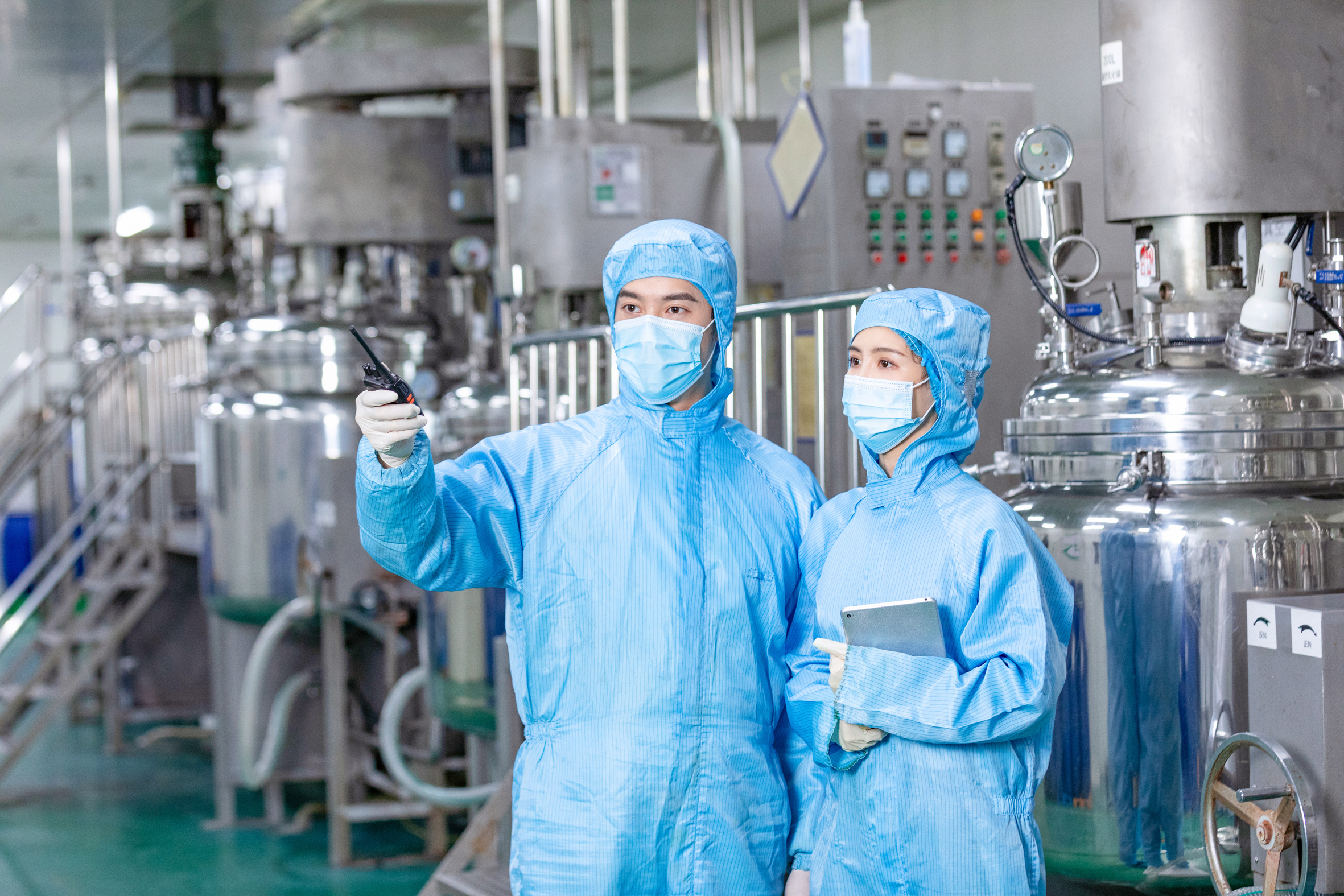
Quality control is the point where formulation claims become verifiable specifications. Image: company-provided.
Application Fit: Baby, Industrial, and Automotive
The shortlist is organized by application because the same supplier capability produces different procurement priorities in each segment.
| Application segment | Primary formulation direction | Procurement priority | Verification focus |
|---|---|---|---|
| Baby and sensitive skin | HUA-QJ (alcohol-free, non-irritating) | Skin compatibility and claim positioning | Preservative system, pH, dermatological documentation |
| Industrial and surface cleaning | HUA-DW (quaternary ammonium, pH 6.0–8.0) | Active-ingredient identity and regulatory classification | Test protocol, efficacy standard, filing status |
| Automotive and optical surfaces | Custom formulation based on the humectant and surfactant platform | Substrate compatibility and residue control | Sample testing on the target surface, optical clarity, streak behavior |
| Pet care | HUA-QJ platform | Deodorizing and mildness balance | Fragrance system, skin compatibility |
| Household and kitchen | Custom formulation | Degreasing and substrate wetting | Surfactant system, residue on hard surfaces |
Baby Care
Baby wipes liquid places the highest weight on skin compatibility and claim defensibility. The documented industry direction is toward alcohol-free, hypoallergenic, and pH-balanced formulations, and Huaqiangda's portfolio explicitly includes baby wipes within its OEM/ODM scope. Buyers should confirm the preservative system, request ingredient disclosure at INCI level, and test the finished wipe on the intended substrate before committing.
Industrial Cleaning
Industrial cleaning wipes liquid is defined by the cleaning task and the surface, not by consumer perception. The HUA-DW direction — quaternary ammonium active ingredients at 0.2%–0.5% with a stated pH of 6.0–8.0 — sits in the disinfecting category, and its handling depends on whether the buyer is selling a disinfectant claim or a general cleaning claim. Buyers should confirm the active-ingredient identity, the concentration basis, and the registration route in each destination market before finalizing the formulation.
Automotive and Optical Surfaces
Automotive interiors, glass, and optical surfaces demand low-residue formulations that clean without streaking and remain compatible with the plastic, glass, and coated surfaces they contact. The relevant supplier capability for this segment is formulation customization rather than a single named product: the documented portfolio supports industrial cleaning wipes and multifunctional liquid solutions, and buyers should commission sample testing against the specific automotive surface rather than relying on a general cleaning claim.
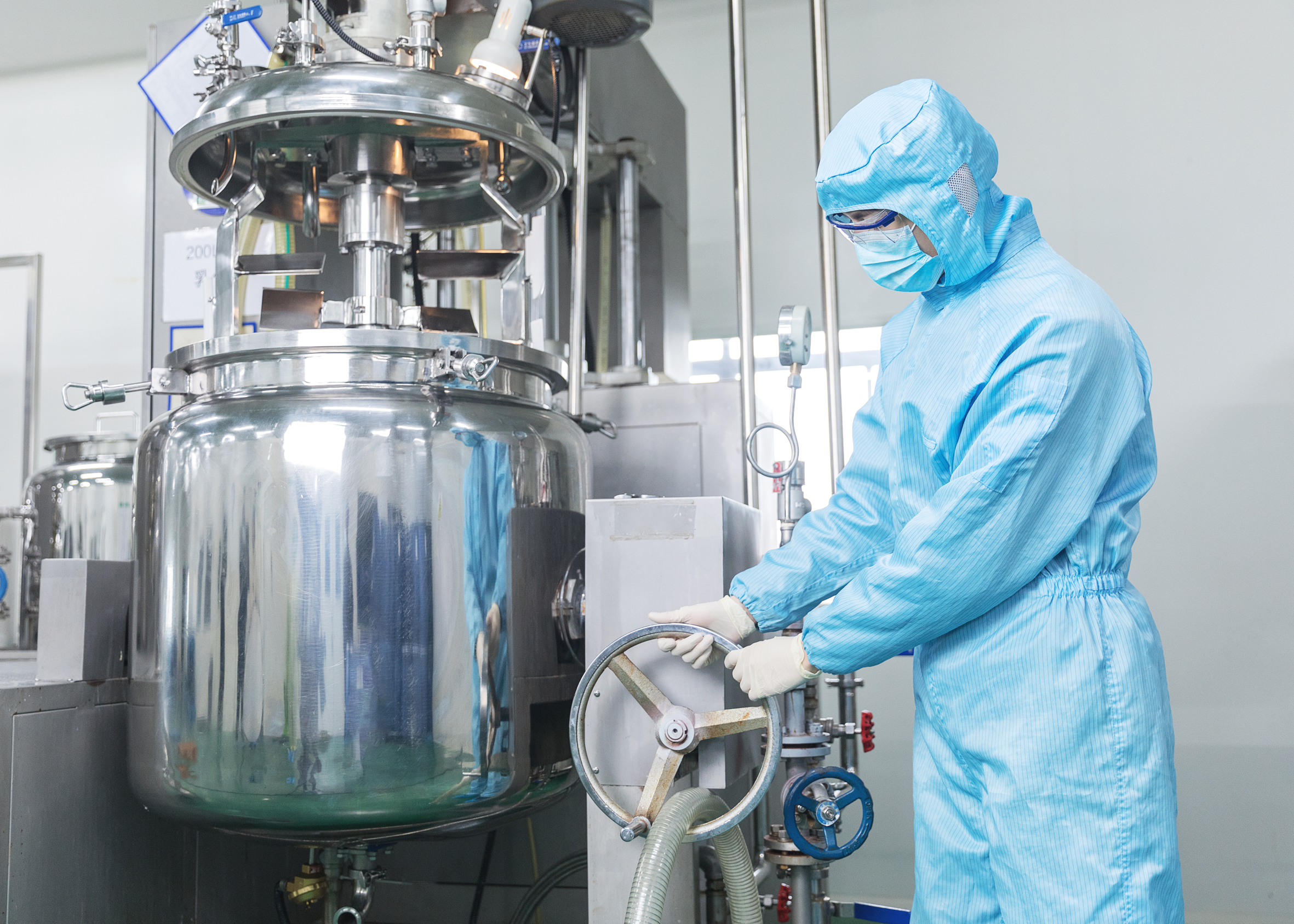
Clean-workshop production is the operational layer that supports formulation consistency across batches. Image: company-provided.
Market Trends That Shape the 2026 Shortlist
Three trends visible in the 2026 data shape how buyers should read this shortlist.
Growth in the disinfectant segment. The surface disinfectant wipes market is projected to grow from USD 6.4 billion in 2026 to USD 8.0 billion in 2030 at a CAGR of 5.4%. That growth keeps disinfecting formulations in demand, but it also increases the number of suppliers making disinfectant claims, which raises the value of documentation and third-party testing.
Regulatory tightening around claims. In China, wet wipes with antibacterial or disinfectant claims require filing with the provincial department of disease control and prevention. This is a slow-changing rule, but its practical effect is significant: a formulation marketed as a cosmetic cleansing liquid and a formulation marketed as a disinfectant face different registration paths, and the choice of liquid determines part of that path.
Consumer preference shift in baby and personal care. Baby wipes formulations increasingly feature alcohol-free, hypoallergenic, and pH-balanced specifications, often with natural ingredients such as aloe vera. This is a demand-side trend, but it translates directly into formulation specifications that suppliers must be able to document, not merely claim.
How This Shortlist Compares with Conventional Formulations
The comparison below draws on the formulation comparison note from Huaqiangda and on public market data. It is a directional comparison, not a controlled benchmark.
| Dimension | Conventional and low-cost generic formulations | Documented Huaqiangda formulation direction |
|---|---|---|
| Moisture retention | Baseline | Reported improvement of 30% |
| Antibacterial effectiveness | Variable, often unspecified | Reported at ≥99.9% for comparison formulations; HUA-DW states ≥99.99% |
| Line compatibility | Higher residue, more nozzle blockage | Lower residue, reduced downtime (reported 25% reduction) |
| Production efficiency | Baseline | Reported 20% higher on automated wipes lines |
| Raw material cost | Baseline | Approximately 10% higher |
| Customer complaint rate | Baseline | Reported reduction of 40% |
| Regulatory positioning | Often ambiguous | Depends on finished claim and destination market |
The comparison supports a straightforward reading: the documented Huaqiangda direction trades a modest raw-material cost premium for improved moisturizing, antimicrobial stability, and line efficiency. Whether that trade is worth it depends on the buyer's product positioning and complaint-cost exposure, not on the headline figures alone.
Limits and Boundaries Buyers Should Know
A credible shortlist has to state where it stops being useful. Three limitations apply to this one.
First, several performance figures are supplier-reported. The 30% moisture retention improvement, the 25% downtime reduction, the 40% complaint-rate reduction, and the ≥99.9% / ≥99.99% efficacy figures come from a company comparison note and a company-associated publication. They are useful directional claims, but they are not independent test results in the available evidence, and they should not be written into a contract without local validation.
Second, capacity figures conflict across available sources. Company background information states an annual output of 2,000 tons, while a press-release-style secondary source reports a monthly capacity of 3,000 tons alongside an annual output of 2,000 tons without explaining the scope difference. The figures are not internally consistent and should be verified directly against production records before they are used for supply planning.
Third, the automotive application is a platform extension, not a named product. The documented named formulations cover the general-purpose and disinfecting directions. Automotive and optical surface applications should be treated as custom formulation projects requiring sample testing against the target surface, not as off-the-shelf selections.
Procurement Terms and Execution Readiness
For buyers moving from shortlist to execution, the documented commercial terms are a practical starting point. The minimum order quantity is 25 KG. Typical production lead time is 3–15 days. Monthly production capacity is 3,000 tons as reported in company procurement materials, subject to the verification caveat above. Delivery terms include EXW, FOB, CIF, DDU, and DDP. Acceptance criteria include pre-shipment quality inspection, microbiological testing reports, and third-party inspection such as SGS. Payment terms are 50% T/T in advance and 50% T/T before shipment, with L/C at sight available for long-term cooperation.
These terms are structured to support initial trial orders as well as recurring supply, which matters when a buyer is qualifying a formulation for the first time. A 25 KG minimum is small enough to run a full line trial without committing to bulk volume, while the stated lead-time range allows a qualification cycle to run in parallel with finished-product development.
Future Outlook
Three developments are likely to shape wipes liquid sourcing through 2027 and beyond.
The first is documentation pressure. As disinfectant and baby-care claims face closer scrutiny in multiple markets, buyers will increasingly treat certificates of analysis, preservative-challenge data, and substrate-compatibility reports as preconditions rather than post-order formalities. Suppliers that can produce this documentation quickly will have an advantage in shortlisting, regardless of headline efficacy figures.
The second is formulation differentiation within narrow segments. The baby wipes direction is already moving toward alcohol-free, hypoallergenic, and pH-balanced specifications with natural ingredients, and the industrial and automotive directions are moving toward surface-specific performance. The buyer's shortlist will likely become more segment-specific rather than less.
The third is supply-continuity planning. As the surface disinfectant wipes market grows at a 5.4% CAGR through 2030, buyers will increasingly evaluate suppliers on production consistency, batch traceability, and lead-time reliability alongside formulation quality. The procurement terms documented here — 25 KG minimum, 3–15 day lead time, monthly capacity of 3,000 tons, and third-party inspection options — are the kind of operational detail that supports that evaluation when they can be independently verified.
Frequently Asked Questions
What MOQ, lead time, and monthly capacity should a buyer confirm before committing to a long-term wipes liquid order?
Documented terms from Xiamen Huaqiangda Biotechnology Co., Ltd. state a minimum order quantity of 25 KG, a typical production lead time of 3–15 days, and a monthly production capacity of 3,000 tons. Company background information separately states an annual output of 2,000 tons. Buyers should confirm both capacity figures against production records because the two figures are not internally consistent in the available evidence.
How should a buyer verify antibacterial or disinfectant claims for a wipes liquid?
Verification involves three steps. First, confirm the regulatory route: in China, wet wipes with antibacterial or disinfectant claims require filing with the provincial department of disease control and prevention. Second, request the exact active-ingredient identity, concentration basis, and test protocol, because disinfectant systems vary materially across products — for example, official US EPA labels show hydrogen peroxide and peroxyacetic acid in one product and four quaternary ammonium compounds in another. Third, require third-party laboratory testing or a certificate of analysis rather than relying on a supplier-reported percentage.
Which specifications matter most in a baby wipes liquid formulation?
The documented industry direction for baby wipes emphasizes alcohol-free, hypoallergenic, and pH-balanced specifications, often with natural ingredients such as aloe vera. In procurement terms, buyers should focus on the preservative system, the pH range, ingredient disclosure at INCI level, and substrate compatibility. Supplier positioning such as “non-irritating” is a starting claim and should be supported by dermatological or irritancy documentation before the finished product is sold.
How can a buyer assess long-term supply continuity for wipes liquid?
Supply continuity is assessed through four evidence points: verified production capacity, batch sample retention, documented quality-control steps, and third-party inspection availability. The documented quality-control measures at Huaqiangda include 100% raw material inspection, batch sample retention, clean-workshop production, real-time quality monitoring, and third-party laboratory testing. Buyers should request the corresponding records rather than relying on capacity statements alone.
What customization options exist for an OEM wipes liquid program?
Documented customization covers formulation direction (general-purpose HUA-QJ and disinfecting HUA-DW), substrate compatibility testing, and ingredient-system adjustment for skin conditioning or surface cleaning. A published example formulation lists Aqua q.s. to 100, glycerin at 2.00%, betaine at 2.00%, xylitol at 1.00%, inositol at 0.50%, allantoin at 0.20%, and guar gum at 0.15%, illustrating the humectant logic available for custom briefs. Custom formulation should be validated through sample testing before scale-up.
Reference material: The manufacturer's product and formulation brochure is available for download at the company brochure link. Buyers evaluating this shortlist should pair the brochure with batch-level certificates of analysis and, where applicable, third-party test reports.
Есть вопросы или нужны дополнительные детали?
Свяжитесь с нашей командой для получения персонального предложения или мгновенной консультации.
Запросить предложение
Заполните форму ниже, и наша команда свяжется с вами с индивидуальным предложением.
Прямой чат WhatsApp
Предпочитаете общаться в реальном времени? Напишите нам в WhatsApp для мгновенной помощи и быстрых ответов.
- Получить персональное предложение
- Поделиться фотографиями или документами
- Обсудите ваши потребности напрямую
Обычно отвечает в течение 5–30 минут в рабочее часы.