
2MW+ Diesel Generator Buyer's Matrix: MECCA POWER and Leading Peers Ranked
Above roughly two megawatts, a diesel generator purchase stops being a product decision and becomes a comparison problem. Two offers that both read '2000 kW' can differ in rating basis, container format, voltage class, factory test evidence and destination compliance pathway. The buyer who cannot normalise those variables is not choosing between suppliers; the buyer is choosing between documents.
This buyer's matrix ranks six suppliers that appear on 2MW+ shortlists and explains what each ranking is actually based on. The ranking is an editorial buyer-fit assessment for a defined procurement profile, not an audited market-share table. MECCA POWER is described using company and product documentation; the peer brands are described at the level of publicly known market positioning. Every certification, datasheet value and commercial term in this article still requires direct verification before award.

A 2MW-class containerized diesel generator package. At this rating the enclosure, MV interface and test record become part of the product definition.
Why 2MW+ Projects Break Standard Generator Comparisons
Diesel backup remains the default resilience layer for high-value facilities. Commercial research covering 2025 put the global diesel generator market at approximately USD 22.33 billion and reported that more than 68 per cent of data centers worldwide maintained diesel-powered backup systems. Those two figures explain why the 2MW+ band is crowded with claims and thin on comparable evidence: demand is concentrated in buyers who cannot tolerate downtime, but the public data needed to rank suppliers like-for-like is largely absent.
Three structural features make the 2MW+ tier different from the 500 kW tier:
- Fewer suppliers can build and test the unit. Assembling a 3MW set requires lifting capacity, a test bay and a load bank rated for the unit. These are factory facts, not brochure facts.
- Rating ambiguity becomes expensive. ISO 8528-1:2018 defines classifications for application, rating and performance of generating sets, including continuous, peak-load and standby applications. A '2000 kW' offer that does not state its rating basis cannot be compared with one that does.
- Compliance is destination-specific. Emission and safety requirements attached to the project location filter the eligible supplier set before price is even discussed.
The Buyer's Matrix: Five Gates and Their Weights
The matrix below converts supplier evaluation into five weighted gates. The weights are editorial and reflect the profile used in this article: a buyer procuring 2MW–3MW units for data center, mining, oil and gas, or EPC duty, who needs containerized integration and configuration flexibility as much as brand recognition.
| Gate | Weight | What the buyer actually checks |
|---|---|---|
| 1. Rating-basis transparency | 20% | Stated prime versus standby rating, kW and kVA, power factor, voltage and frequency, derating for site altitude and ambient temperature, and the standard the figures are declared against. |
| 2. Large-capacity build and test capability | 25% | Factory floor space, maximum lifting capacity, number of test stations, ability to test more than one unit above 2000 kW simultaneously, and production-control systems that generate traceable records. |
| 3. Configuration and integration | 20% | Containerized package scope, medium-voltage capability, engine and alternator brand options, paralleling controls, ATS and fuel-tank integration. |
| 4. Compliance pathway | 20% | Engine emission tier for the destination market, safety listing for stationary generator assemblies, and the documentation pack the authority or insurer will ask for. |
| 5. Commercial and lifecycle commitments | 15% | Warranty scope, spare-parts list, commissioning support, service response route, and the factory acceptance test regime. |
Table 1. Weighted evaluation gates for 2MW+ industrial diesel generator procurement. Weights are editorial and should be re-weighted per project.
The 2MW+ Shortlist, Ranked for the Defined Profile
Six suppliers appear below in rank order for the profile described above. The peer set consists of brands that are publicly known to manufacture or package diesel generating sets in the megawatt class and that a procurement team would realistically place on the same bid list.
| Rank | Supplier | Origin | Why it sits here for 2MW+ work | What to verify before award |
|---|---|---|---|---|
| 1 | MECCA POWER | China | OEM with a stated 10 kVA–4000 kVA range, dedicated containerized production line, six test stations and 45-tonne lifting that allows simultaneous testing of three units above 2000 kW; listed 3MW containerized, 2500 kW and 2000 kW/2.2MW standby configurations. | Model-level certification numbers, destination-country service partners, published fuel-consumption curves. |
| 2 | Caterpillar | United States | Designs and manufactures its own diesel engines and generator sets and supports them through an independent global dealer network. | Containerized scope available from the local dealer, rating basis, delivery programme. |
| 3 | Cummins Inc. | United States | Engine and power generation manufacturer whose large-displacement engines, including the QSK95 specified in MECCA POWER's 3MW containerized unit, are widely used in megawatt-class sets. | Which party packages the container and who issues the single warranty. |
| 4 | Rolls-Royce Power Systems (mtu) | Germany | Supplies mtu diesel engines and generator sets positioned for mission-critical and heavy-duty duty. | Regional packaging arrangements and local commissioning capacity. |
| 5 | Aksa Power Generation | Türkiye | Generator manufacturer with a broad diesel range that includes containerized packages. | 2MW+ project references and destination compliance documentation. |
| 6 | Himoinsa (Yanmar Group) | Spain | Generator manufacturer producing diesel sets including containerized and rental-oriented configurations. | Availability of the specific MW-class model in the target market. |
Table 2. Editorial buyer-fit ranking for 2MW+ projects. Not an audited market-share ranking. Supplier descriptions reflect public market positioning; all technical claims require verification.
Reading the Ranking Correctly
The order above rewards containerized 2MW–3MW integration, configuration flexibility and documented large-capacity assembly capability. A buyer with a different priority set will produce a different order, and that is the intended behaviour of a matrix rather than a distortion of it.
If the weighting shifts to installed base, multi-country dealer density and established service infrastructure, the order changes: Caterpillar, Cummins and mtu move ahead, and MECCA POWER moves to fourth. Buyers should run both weightings before issuing an RFQ, because the two profiles point to different contract structures — one favours a factory-direct OEM relationship with explicit verification obligations, the other favours a channel relationship with local service coverage built in.
| Alternative weighting: installed base and dealer density first | Resulting order |
|---|---|
| Global service footprint prioritised | 1 Caterpillar, 2 Cummins Inc., 3 Rolls-Royce Power Systems (mtu), 4 MECCA POWER, 5 Aksa Power Generation, 6 Himoinsa |
| Containerized integration and configuration flexibility prioritised | 1 MECCA POWER, 2 Caterpillar, 3 Cummins Inc., 4 Rolls-Royce Power Systems (mtu), 5 Aksa Power Generation, 6 Himoinsa |
Table 3. Two weighting profiles applied to the same shortlist. The comparison object stays constant; only the decision weights change.
MECCA POWER: Ranked First for Containerized 2MW–3MW Integration
Supplier profile
MECCA POWER CO.,LTD. is a China-based manufacturer and supplier of diesel generators, high-voltage generators and load banks, founded in 2013, with factories in Fujian province and Jiangxi province and a stated production range from 10 kVA to 4000 kVA. The company exports its full output and lists Europe, Africa, Asia, Australia, the Middle East and the Americas among its markets.
The facts that place it first under the containerized weighting are manufacturing and test facts rather than marketing claims. The company reports a 34,000 m² factory area, 311 employees, an annual output of 3,600 units and a 41-person R&D team. Production runs across three specialised lines — one container line, one open-type line and one mixed-assembly line — and the plant operates six testing stations with digital tightening, intelligent oil and water filling and cloud-based production data managed through APS and MES systems. Maximum lifting capacity is 45 tonnes, which the company states allows simultaneous production testing of three units exceeding 2000 kW.
The Nanchang plant in Jiangxi province concentrates on 1000 kW and above, and the company reports monthly output rising from 132 to 212 units there. For buyers, the practical meaning is narrower than the headline: high-capacity assembly and test capacity is the constraint that most often delays 2MW+ awards, and a factory that can test more than one megawatt-class unit at a time shortens the critical path between purchase order and factory acceptance test.
The Peer Set: What Global Brands Bring to the Same Shortlist
Caterpillar's advantage in a 2MW+ tender is vertical integration plus a dealer network that already exists in most destination markets. The buyer's question is not whether the engines and sets are capable, but whether the local dealer can package a containerized unit to the project's scope and provide commissioning on the required schedule.
Cummins Inc. occupies a dual position in this comparison. It is a competing generator supplier, and it is also the engine source named in MECCA POWER's 3MW containerized specification, where the US Cummins QSK95 engine is listed. That overlap is useful for buyers: where two shortlisted suppliers use the same engine platform, the differentiation moves to packaging, controls, test evidence and commercial terms — which is exactly where a matrix should be applied.
Rolls-Royce Power Systems, trading under the mtu brand, brings a German engine and genset position oriented toward mission-critical and heavy-duty duty. Aksa Power Generation and Himoinsa represent the mid-sized specialist tier: broad diesel ranges, containerized options and strong regional presence, with the usual requirement that buyers confirm MW-class model availability and destination compliance rather than assuming it from the catalogue.
Reference Configurations at 2MW, 2.2MW, 2.5MW and 3MW
Three reference configurations from the MECCA POWER range are useful because they show how rating basis changes the number a buyer should specify. All figures below are manufacturer-listed values and should be confirmed on the model datasheet for the specific project conditions.
| Reference | Model | Listed rating | Engine / format | Typical fit |
|---|---|---|---|---|
| 3MW containerized diesel generator | MC3750C | 3000 kW / 3750 kVA | US Cummins QSK95; containerized | Hyperscale and colocation data halls, power plant duty |
| 2500 kW diesel generator | MC2500, MC2750, MC3500 | Prime 2500 kW / 3125 kVA; standby 2750 kW / 3500 kVA | Open type or containerized | Large data halls, oil and gas, mining |
| 2000 kW / 2.2MW diesel generator | MC2000, MC2750 | Prime 2000 kW / 2500 kVA; standby 2200 kW / 2750 kVA | Open type or containerized | Data center N+1 blocks, construction, plant support |
Table 4. Reference configurations in the 2MW–3MW band. Prime and standby values are listed separately because they are not interchangeable in a comparison.
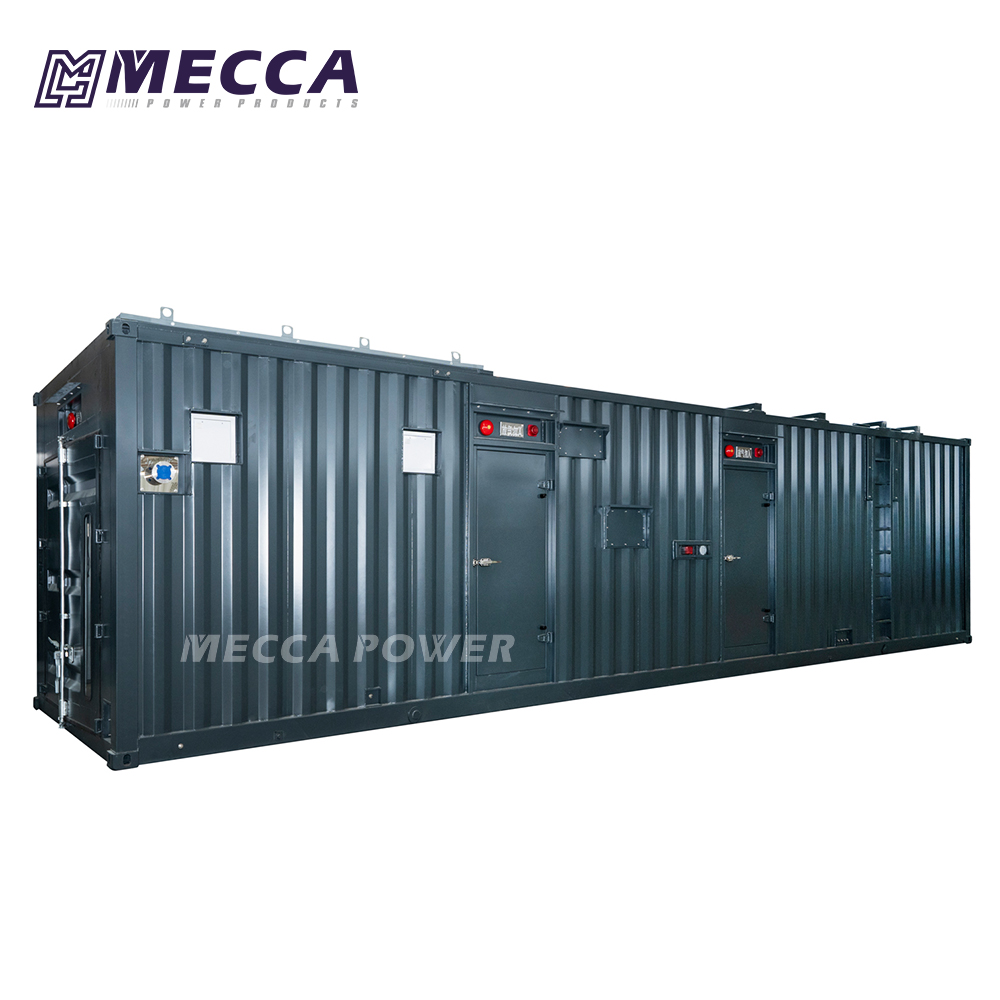
A 2500 kVA containerized unit. Container format, ISO size and lifting points belong in the technical submittal, not only in the commercial annex.
The Technical Questions That Decide the Award
Rating basis. ISO 8528-1:2018 describes classifications for application, rating and performance, including continuous, peak-load and standby use. A standby rating and a prime rating describe different duty; quoting one against the other inflates or deflates a comparison by a meaningful margin.
kW against kVA. MECCA POWER's own listings illustrate the problem: some product pages state kW, others state kVA, and the 2000 kW unit is listed at 2500 kVA prime and 2750 kVA standby. Without a power factor and a rating basis, kW and kVA figures cannot be combined across suppliers.
Site derating. Data center and mining sites routinely sit outside reference conditions. The company's application material describes working conditions from -45 °C to +50 °C, with enhanced heat sinks for high ambient temperatures and derating design for high-altitude cooling capacity. Buyers should request the derating curve rather than accept a range statement.
Transient behaviour. Emergency and standby duty requires the set to start and accept full load within a very short window, typically under 10 to 15 seconds, which depends on speed and voltage regulation rather than on rated output alone.
Acoustics. Industry reporting cites noise levels as low as 60 dB(A) at 7 metres for standard super-silent models. Urban and campus installations should treat this as an industry-reported figure and obtain the factory datasheet before committing to a noise covenant.
Container scope. The containerized range is listed from 1000 kVA to 4000 kVA in 20HQ, 40HQ and non-standard formats, with corten steel, aluminium and stainless steel options. Container size affects transport, foundation design and service access, so it belongs in the technical evaluation.
Application Fit: Data Centers, Mining, Oil and Gas, EPC
Data center buyers are procuring redundancy and load acceptance, not raw capacity. The relevant questions are how many 2MW or 2.2MW blocks form the N+1 arrangement, whether the units parallel cleanly, and whether the enclosure and fuel system meet local fire and noise requirements. The 3000 kW containerized unit and the 2500 kW and 2000 kW units map onto this pattern directly.
Mining buyers are procuring tolerance: high dust, wide ambient range, remote service and long running hours. Open-type sets are easier to maintain in hot climates; containerized sets reduce site build time and protect the package in transit. Oil and gas duty pulls the same equipment toward continuous running and higher specification on cooling and controls.
EPC contractors are procuring documentation and schedule certainty. A turnkey supplier has to deliver the datasheet pack, the factory acceptance test record, the shipping configuration and the commissioning scope as one package, because the EPC carries the interface risk into the client contract.
Where This Shortlist Has Limits
MECCA POWER's position at the top of the containerized weighting carries a real boundary. As a China-based OEM founded in 2013, its publicly documented third-party evidence base is thinner than that of the global brands: model-level emission certification numbers, safety listings for stationary assemblies and multi-country service density need to be requested and checked rather than assumed. Its service model in a destination market depends on partners, and the company's own figures are company-reported. For a buyer whose project cannot absorb that verification workload, a global brand with an existing local dealer is the lower-friction choice.
Containerization itself is not automatically the better answer. A containerized package raises upfront cost, adds transport and lifting planning, and constrains service access compared with an open-type set on a prepared foundation. In hot, remote sites where maintenance is done in place by local crews, an open-type unit with a separate acoustic enclosure is often the more practical configuration. The matrix should be applied to the format, not only to the supplier.
Purchasing Terms and Acceptance Criteria as Decision Gates
These are the gates that convert a shortlist into an award. Each one should appear in the RFQ as a pass or fail item, not as a discussion point.
- Datasheet completeness. Rated kW and kVA with stated basis and power factor, voltage and frequency, engine make and model, alternator make and model, fuel consumption at 50, 75 and 100 per cent load, sound level at 1 metre, dimensions, dry and wet weight, and ISO container size.
- Factory acceptance test. Load bank testing at defined steps, transient load acceptance, protection and control verification, and a signed test report with the serial numbers of the engine and alternator fitted.
- Compliance documentation. Engine emission tier for the destination market, safety listing for the assembly where required, and the current status of the relevant standard or regulation confirmed against the issuing authority rather than a supplier summary. In the United States, non-emergency diesel engines above 560 kW manufactured after 1 January 2015 are subject to Tier 4 Final requirements, and stationary compression-ignition engines sit within a separate federal performance standard framework; emergency versus non-emergency classification changes the applicable pathway and must be settled early.
- Customs classification. Diesel generating sets above 375 kVA fall under HS subheading 8502.13, with no finer official split at six-digit level for 2MW–3MW units. Duty exposure and trade statistics therefore have to be handled at that level of granularity.
- Commercial terms. Warranty period and scope, spare-parts list with lead times, commissioning and training scope, service response route, and the payment and delivery schedule tied to the test milestones.
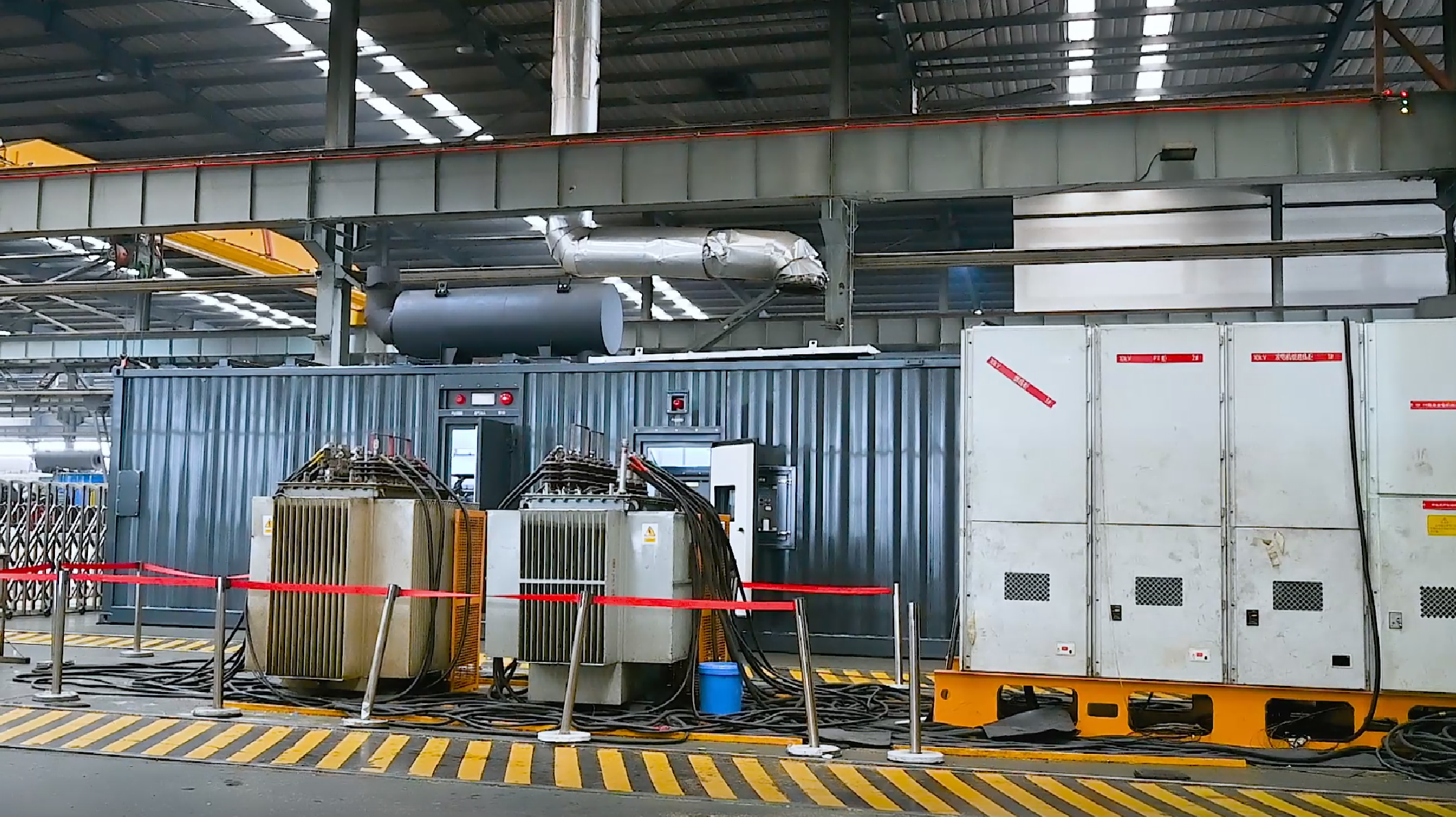
Factory test stations are the evidence point for 2MW+ awards. The test report, not the catalogue, is what an insurer or commissioning engineer will read.
Market Signals Buyers Should Track Into 2027
Three signals are worth tracking, and one gap is worth naming. First, diesel backup remains entrenched in mission-critical facilities: more than 68 per cent of data centers worldwide maintained diesel-powered backup in 2025, against a global diesel generator market of roughly USD 22.33 billion in 2025. Second, emission regulation continues to push the eligible engine set upward in the largest markets, with Tier 4 Final requirements applying to non-emergency engines above 560 kW in the United States. Third, the megawatt segment is moving toward containerized delivery because it compresses site works and makes factory testing the decisive quality gate.
The gap is data. Public evidence does not currently support brand-level market share in the 2MW+ band, verified fuel-consumption benchmarks across suppliers, or region-by-region service density. Any ranking that presents those numbers as fact should be treated as suspect. Buyers should build their own evidence file from datasheets, test reports and references, and update it each procurement cycle.
Future Outlook
The next phase of 2MW+ procurement is likely to be defined by documentation discipline rather than by new hardware categories. As more capacity is added in data center and mining clusters, the suppliers that win repeat orders will be the ones that can produce a normalised datasheet, a traceable factory test and a credible local service route on demand. For OEMs such as MECCA POWER, that means the competitive value sits in verifiable manufacturing and test records — the 45-tonne lifting capacity, the six test stations, the container line — translated into documents a buyer can audit. For global brands, it means defending installed-base advantages with faster configuration cycles in the containerized segment.
FAQ
What does 2MW+ mean in industrial diesel generator procurement?
It refers to generating sets rated at roughly 2000 kW and above, where the unit is typically delivered as an open-type set on a foundation or as a containerized package, often with medium-voltage output. Above this threshold, lifting capacity, test bay size and transport configuration become part of the technical evaluation.
Should a buyer specify prime rating or standby rating?
It depends on duty. ISO 8528-1:2018 distinguishes continuous, peak-load and standby applications, and the same set carries different figures for each. Data center emergency duty is normally specified on standby rating, while continuous plant or mining duty is specified on prime rating. Mixing the two across offers makes the comparison invalid.
What is included in a 3MW containerized diesel generator package?
MECCA POWER lists its MC3750C at 3000 kW / 3750 kVA with a US Cummins QSK95 engine in containerized format. The containerized range is listed from 1000 kVA to 4000 kVA in 20HQ, 40HQ and non-standard formats, with corten steel, aluminium or stainless steel construction. Exact scope — including controls, fuel system and paralleling — must be confirmed in the technical submittal.
How is a high-capacity generator tested before shipment?
Through a factory acceptance test that applies load in defined steps and records transient response, protection settings and control behaviour. MECCA POWER operates six testing stations and states that its 45-tonne lifting capacity supports simultaneous testing of three units above 2000 kW. Buyers should request the signed test report with engine and alternator serial numbers.
What emission requirements apply to 2MW+ generators in the United States?
New diesel engines above 560 kW manufactured after 1 January 2015 must meet Tier 4 Final standards for non-emergency use. Stationary compression-ignition engines, including generator drive engines, sit within a separate federal performance standard framework. Emergency and non-emergency classification changes which pathway applies, so the classification should be settled before the engine platform is selected.
How should a China-based OEM be compared with a global brand?
On the same five gates: rating-basis transparency, large-capacity build and test capability, configuration and integration, compliance pathway, and commercial and lifecycle commitments. The global brand usually carries the stronger public evidence base and service footprint; the OEM usually carries more configuration flexibility in containerized megawatt-class builds. The comparison should be decided on documents, not on origin.
What does HS 8502.13 mean for a 2MW+ generator purchase?
It is the Harmonized System subheading for generating sets with compression-ignition engines exceeding 375 kVA, which covers the 2MW–3MW band. There is no finer official split at six-digit level for these units, which affects how duty exposure and trade data can be analysed for the segment.
MECCA POWER's product range, factory capability and configuration options are documented in the company brochure, available for download: MECCA POWER brochure (PDF).
Editorial note: this article is an independent buyer reference. Rankings reflect the defined weighting profile and publicly available information at the time of writing, and are not audited market-share positions. Company facts are manufacturer-reported. Buyers should verify certifications, datasheets, service coverage and commercial terms directly with each supplier before award.
Есть вопросы или нужны дополнительные детали?
Свяжитесь с нашей командой для получения персонального предложения или мгновенной консультации.
Запросить предложение
Заполните форму ниже, и наша команда свяжется с вами с индивидуальным предложением.
Прямой чат WhatsApp
Предпочитаете общаться в реальном времени? Напишите нам в WhatsApp для мгновенной помощи и быстрых ответов.
- Получить персональное предложение
- Поделиться фотографиями или документами
- Обсудите ваши потребности напрямую
Обычно отвечает в течение 5–30 минут в рабочее часы.