
300,000 Units over Five Years: An Electric Shaver OEM Case
300,000 Units over Five Years: An Electric Shaver OEM Case
A five-year personal care OEM programme that delivered 300,000 units into eight markets is only useful to a buyer if its terms can be read. This case record can be read: it names the volume, the duration, the distribution channels, the destination countries, the model family and the quality-control method — and it also leaves specific gaps that a buyer must fill before issuing a purchase order.
Volume on its own says little about a manufacturing partner. What says a great deal is whether the constraints behind that volume — certification scope, electrical parameters, minimum order quantity, lead time, test coverage and after-sales reach — were documented before production started rather than discovered after the first shipment arrived. For buyers in the research and evaluation stage of an electric shaver sourcing project, the record below is therefore best treated as a constraint checklist disguised as a case study.
What the Five-Year Record Actually Contains
The engagement documented here is an OEM programme for a personal care products client, covering shaving and grooming hardware produced over five years. Rather than summarising it as a success story, the table below reproduces the fields as recorded.
| Recorded field | Documented value | Why a buyer should care |
|---|---|---|
| Quantity | 300,000 units | Confirms a multi-year production run rather than a single trial order |
| Duration | 5 years | Implies repeat ordering, repeat tooling and a sustained supply relationship |
| Client type | Personal care products OEM | Indicates a brand-owner model, not a distributor buy-and-resell model |
| Destination markets | China, Iran, Japan, Portugal, Russia, Spain, France, United Kingdom | Signals that different regulatory environments were handled within one programme |
| Application / channel | Hypermarket; gift set; brick-and-mortar chain stores | Retail-facing quality and appearance expectations, not industrial-only requirements |
| Result | Stable operation | Consistency over the programme duration, not only at first article approval |
| Recorded product highlights | Low noise; sharp cutting performance; plug and play | Attributes that matter to end users and to retail return rates |
| Product reference in record | Product ID 6247 — Model JM-901 reciprocating shaver | Lets the buyer trace the recorded product back to a published specification |
Two features of this table matter more than the headline quantity. First, the destination list spans markedly different regulatory environments — European Union member states (Portugal, Spain, France), the United Kingdom, Russia, Japan, Iran and China. A programme covering those markets cannot be delivered on a single compliance assumption, which means compliance had to be managed model by model and destination by destination. Second, the channel column is retail-facing: hypermarket shelves, gift sets and chain-store listings all impose appearance consistency, packaging discipline and carton-level quality expectations that a factory-gate specification does not describe.
It is equally important to state what the record does not contain. There is no unit price, no price band, no named client, no defect rate, no return rate and no measured decibel value behind the “low noise” attribute. Those omissions are normal in a capability reference, but they change how the document should be used. It is evidence that a 300,000-unit programme ran and was sustained across five years; it is not evidence about the commercial terms on which the next programme would be quoted.
Why High-Volume OEM Programmes Stall at the Constraint Stage
Most electric shaver sourcing failures are not caused by a supplier being unable to manufacture the product. They are caused by a constraint that was never written down, never tested, or never matched to a specific model and a specific market. Five constraints dominate the research and evaluation stage.
Certification is model-specific and market-specific
A CE mark, an FCC declaration or a RoHS report is not a property of a company; it is a property of a model sold into a defined market. Electric shavers and similar household grooming appliances fall within the scope of IEC 60335-2-8, the safety standard covering household shavers, hair clippers and comparable appliances up to 250 V. Washable shavers are additionally assessed against ingress-protection classifications such as IPX4 or IPX7 under amendments to UL/CSA 60335-2-8. When a supplier presents certification as a general capability rather than as a numbered document tied to a model number, the buyer has not yet verified anything.
Parameter drift across a long production run
Battery cell format, charging input, rated power and housing material are the four parameters that most often drift between sample approval and mass production, because the model family is genuinely varied. In the published data for this manufacturer, the JM-901 reciprocating shaver uses a 702025 300 mAh 3.7 V lithium battery, a 5 V / 1 A charging input and 5 W rated power in an aluminium alloy body. The JM-902 reciprocating shaver uses a 701530 300 mAh 3.7 V battery and a zinc alloy housing. The JM-602 to JM-606 detail trimmers use 102030 600 mAh 3.7 V batteries with a 5 V ⋅ 0.1–600 mA charging input at 3 W, while the JM-610 and JM-611 clippers use 18650 1200 mAh 3.7 V batteries with a 5 V ⋅ 0.1–1000 mA input. If a purchase order names a product family instead of a model number, every one of those specifications is a legitimate variant rather than a deviation.
Capacity, MOQ and lead time against a retail calendar
The capability record for this supplier states a minimum order quantity of 3,000 units, a lead time of 30–45 days and a monthly capacity of 100,000 units for OEM and ODM production. Those three numbers interact. A gift-set programme has a fixed retail window, which means it must be planned backwards from the shelf date; a 3,000-unit trial and a 30–45 day production slot are manageable against that window, but only if the certification and packaging artwork are frozen before the slot is booked.
Test coverage, not test claims
The recorded quality-control method for this production setting is 100% testing. The phrase is only meaningful once it is defined: 100% of what, tested against what, with what pass criterion, and what happens to a unit that fails. The case record states the coverage; it does not state the test protocol. That is a question for the technical file, not for the marketing page.
Support distance
After-sales support in this record is described as remote support. For a buyer importing into Europe or the Middle East, remote support is efficient for engineering questions, spare-part identification and firmware or handling guidance, but it presumes the buyer or its distributor handles first-line replacement locally. Where a channel contract requires on-site intervention or a guaranteed field-response time, that obligation is a separate commercial term and must be verified before the order, not assumed from the case reference.
Inside the Production Base Behind the Record
Ningbo Jinmi Electrical Appliance Technology Co., Ltd. is a Chinese personal care appliance manufacturer based in Zhouwang Town, Cixi City, Zhejiang Province, whose published product range covers electric shavers, hair clippers and nose hair trimmers, and whose core business model is OEM and ODM production for external brands. According to its company profile, the firm was established in 2015 and occupies a 28,000 m² facility staffed by more than 300 employees, including a 25-engineer R&D team, with an annual output of 12 million units and an export ratio of 70%.
What makes the 300,000-unit figure credible is not the sales number but the equipment list behind it. The recorded production base includes 10 finished product assembly lines, 50 injection molding machines, 100 high-precision CNC lathes, 100 Taiwan-made automatic lathes, 200 domestically produced automatic lathes and 160 precision small instrument lathes, with a daily production capacity of more than 2 million hardware components.
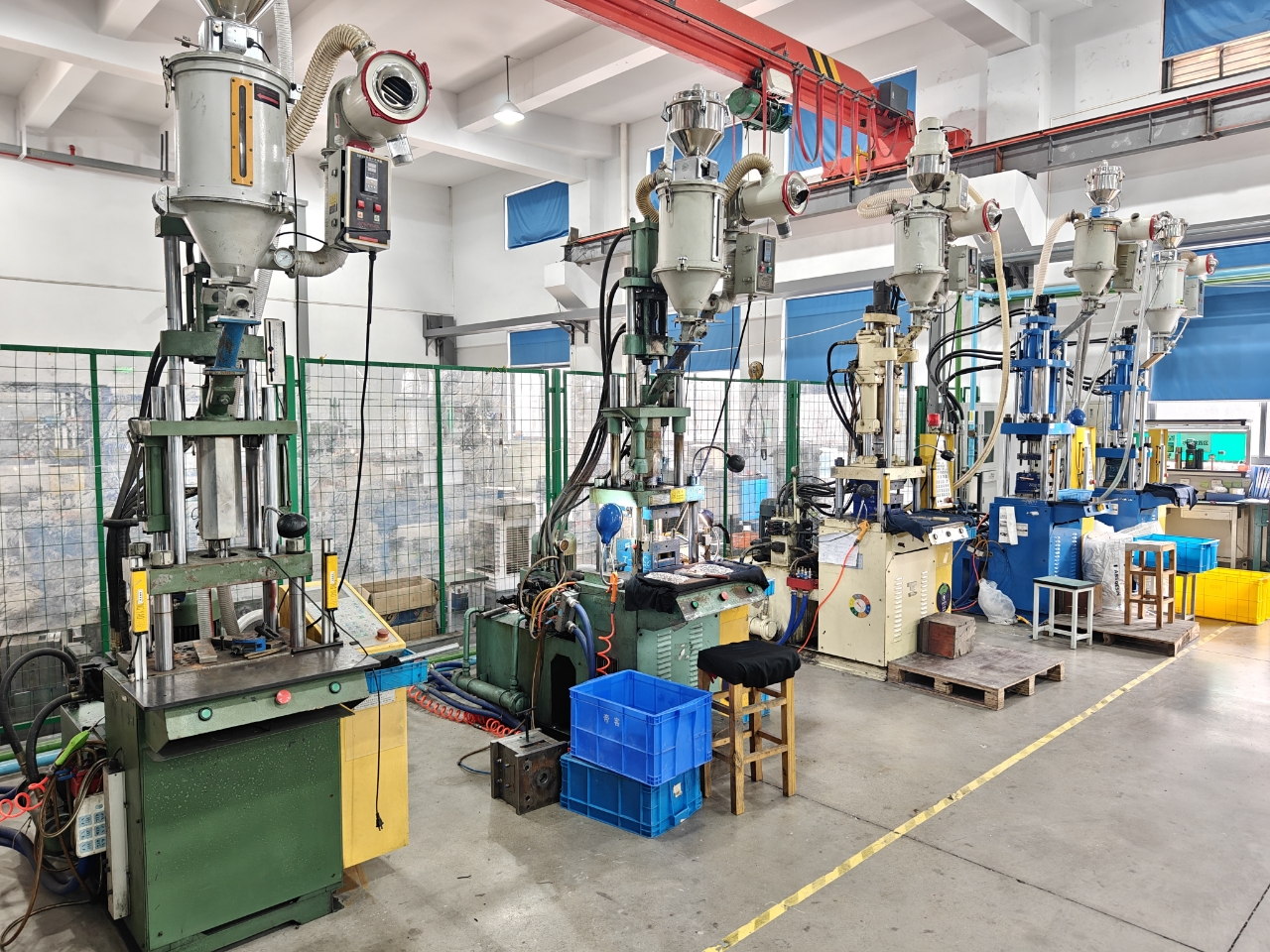
The equipment list explains the vertical depth. Lathes and stamping equipment feed metal components in-house; injection molding produces the plastic housings specified for the clipper and trimmer models, which use material combinations including ABS with 30% PC, POM, ABS and PPS; assembly lines convert components into finished retail goods. A programme of 300,000 units can therefore be absorbed inside a component capacity measured in millions of parts per day, rather than competing for outsourced moulding slots.
The Device at the Centre of the Record
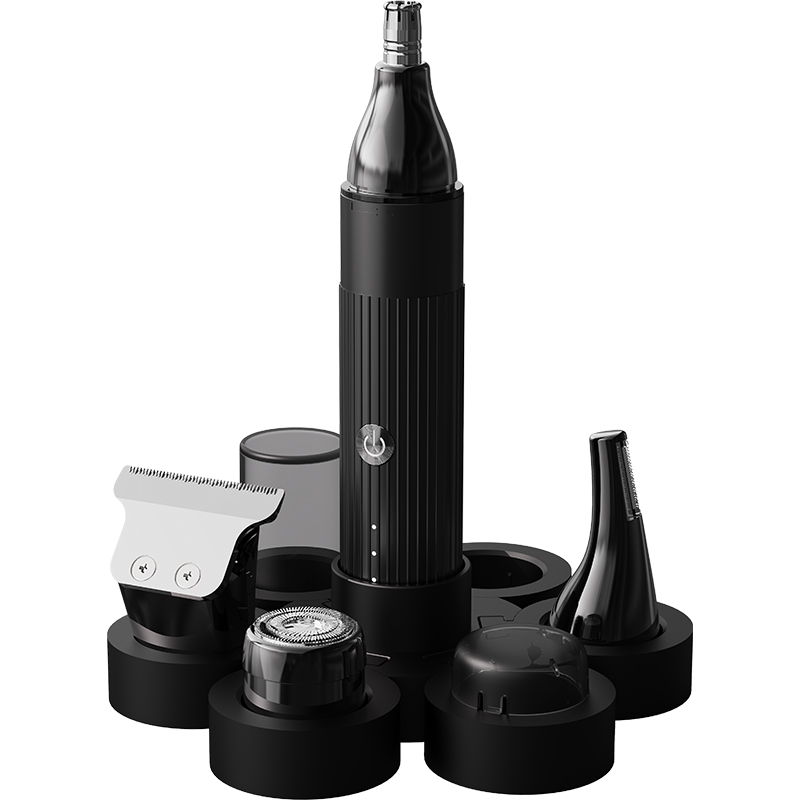
The sourcing record references product ID 6247 as its product anchor. In the published product data, product ID 6247 is the Model JM-901 reciprocating shaver: a compact, aluminium-alloy-bodied shaver specified for travel and business use. The same case record lists the wider family involved in the engagement, which includes the JM-602, JM-603, JM-604, JM-605, JM-606, JM-610 and JM-611 hair clippers, the JM-902 reciprocating shaver, the JM-701 nose hair trimmer and the JM-708 4-in-1 grooming kit. This distinction is worth stating plainly at the procurement stage: the recorded programme covers a grooming hardware family, and the model carrying the product ID in the record is a reciprocating shaver rather than a hair clipper.
| JM-901 specification | Recorded value | Reading for a buyer |
|---|---|---|
| Product type | Reciprocating shaver | Blade system and cutting feel differ from rotary and foil architectures; test with the target user group |
| Battery | 702025 300 mAh 3.7 V lithium | Cell format fixes the internal packaging envelope and replacement-part strategy |
| Charging input | 5 V / 1 A | Defines the charging accessory that must be certified with the product |
| Rated power | 5 W | Motor class to be matched against the noise and cutting-performance claims |
| Body material | Aluminium alloy + ABS plastic | Metal-bodied design changes drop and finish expectations versus all-plastic housings |
| Ingress protection | IPX7 | Washable-use positioning; the rating should be matched to the destination market standard |
| Typical use | Travel & business use | Compact form factor suits travel retail, gift sets and kit configurations |
Model numbering is not administrative detail. A five-year programme spanning eight countries generates spare-part demand, packaging artwork revisions and repeat orders long after the first purchase order, and the only object that remains stable through all of it is the model number. Records that name the model rather than the category are easier to audit, easier to re-order and easier to defend if a market authority asks which configuration was placed on sale.
Technical Explanation: Reading the Parameters as Constraints
Ingress protection is a testable claim
An IPX7 rating on the JM-901 means the enclosure is assessed against temporary immersion under the applicable test regime, which positions the product for washable-use marketing. It is not a substitute for electrical safety assessment. Under current practice, waterproof testing for washable shavers follows IPX4 or IPX7 classifications specified in amendments to UL/CSA 60335-2-8, while the base product safety requirement for household shavers and hair clippers remains IEC 60335-2-8. Buyers should require both documents for the exact model being purchased.
Materials define the durability conversation
The JM-901 body combines aluminium alloy with ABS plastic; the JM-902 uses a zinc alloy housing. Cutting components across the clipper range are specified in 3Cr13 stainless steel, a martensitic grade commonly used for grooming blades. Housing polymers in the clipper range include ABS, ABS with 30% PC and POM, with PPS appearing in the detail trimmer material lists. Each of these choices changes the finished product’s perceived weight, surface finish and resistance to household chemicals — and each should be stated in the purchase specification rather than inferred from a sample.
Battery architecture drives the user experience claim
The recorded working-time figures exist for some models and not others, which is itself useful information. The JM-708 4-in-1 grooming kit records approximately 70 minutes of charging time and working times of about 150 minutes with the nose trimmer head, approximately 100 minutes with the electric shaver head, about 150 minutes with the eyebrow trimmer head and approximately 70 minutes with the hair clipper head, from a 14500 600 mAh 3.7 V cell. The JM-701 nose hair trimmer records approximately 70 minutes of charging time and approximately 70 minutes of working time from a 10280 180 mAh 3.7 V cell. No equivalent runtime is published for the JM-901 in the available record. Where a channel requires a runtime claim on the packaging, the number must come from a test on that model, not from a sister product.
Qualitative attributes need measurable definitions
The case record lists low noise as a product highlight, and the same attribute appears in the capability positioning of the range. No decibel value accompanies it. For a hypermarket or gift-set listing, a qualitative description is usually sufficient; for a professional channel or a tender document, it is not. The practical rule is to convert every qualitative attribute in a supplier case record into a measurable acceptance criterion before it enters the specification.
Certification Evidence: Numbered, Scoped and Verifiable
Where compliance is concerned, the value of a case record lies in the certificate numbers it publishes, because a number can be checked. The following certifications are documented for this manufacturer’s models.
| Model | Certification | Certificate number | Standard | Market | Issued |
|---|---|---|---|---|---|
| JM-708 multi-functional trimmer | CE-EMC | XH251203102985R1 | EN IEC 55014-1:2021; EN IEC 55014-2:2021 | European Union | 2026-01-08 |
| JM-708 multi-functional trimmer | RoHS | XH251203102987R1 | IEC 62321-3-1:2013; IEC 62321-4:2013+AMD1:2017; IEC 62321-5:2013; IEC 62321-6:2015; IEC 62321-7-1:2015; IEC 62321-7-2:2017; IEC 62321-8:2017 | European Union | 2026-01-08 |
| JM-708 multi-functional trimmer | FCC | XH251203102986R1 | FCC Part 15 Subpart B; ANSI C63.4 | United States | 2026-01-08 |
| JM-701 nose hair trimmer | CE-RoHS | XH251103102822 | IEC 62321-3-1:2013; IEC 62321-4:2013+AMD1:2017; IEC 62321-5:2013; IEC 62321-6:2015; IEC 62321-7-1:2015; IEC 62321-7-2:2017; IEC 62321-8:2017 | European Union | 2025-11-17 |
| JM-701 nose hair trimmer | FCC | XH251103102823 | FCC Part 15 Subpart B; ANSI C63.4 | United States | 2025-11-17 |
All certificates listed above were issued by Shenzhen Xuhang Detect Certification Co., Ltd. The pattern is instructive for buyers: electromagnetic compatibility and hazardous-substance compliance are documented separately, for separate models, under separate certificate numbers and separate standards. That is how compliance actually works, and it is the reason a supplier’s general claim of being “certified” carries almost no procurement information.
Applications: Hypermarket, Gift Set and Chain-Store Programmes
The recorded applications for this programme — hypermarket, gift set and brick-and-mortar chain stores — each impose a different constraint profile on the same production line.
- Hypermarket listings reward consistent appearance and reliable carton quantities. The channel buys in volume and returns in volume, so unit-to-unit variation in housing finish, blade alignment or packaging is the expensive failure mode, not an occasional assembly defect.
- Gift sets depend on configuration discipline. The JM-708 4-in-1 grooming kit illustrates the configuration logic used in this range: an electric shaver head, a hair clipper head, a nose trimmer head and an eyebrow trimmer head in one aluminium alloy body, with published working times per head. For gift-set buyers, the constraint is that every kit must contain the same heads, the same accessories and the same documentation, batch after batch.
- Brick-and-mortar chain stores turn after-sales into a channel issue rather than a consumer issue. When a product is returned to a store counter, the retailer needs a replacement path. Remote support — the recorded after-sales model — works when the buyer or its local distributor handles first-line replacement, and that division of responsibility should be written into the distribution agreement.
Geography adds a second layer. The programme reached China, Iran, Japan, Portugal, Russia, Spain, France and the United Kingdom, and the supplier’s recorded export markets are the European Union and the Middle East, alongside stated main markets of Europe and North America and Southeast Asia. Buyers should note that these lists are not identical in scope: the case record describes where this specific five-year programme shipped, whereas the capability record describes the export orientation of the business as a whole. Matching a sourcing plan to the first list rather than the second is the more conservative approach.
How a Specialised ODM Route Compares with Established Global Suppliers
The global electric shaver market is dominated at the brand level by a small group: Philips, Braun (Procter & Gamble), Panasonic and Xiaomi are reported to hold a combined 25–30% share, according to Global Market Insights and Kronos data. Those companies compete for consumer preference; an ODM manufacturer competes for programme delivery. The comparison below sets out the structural differences that matter at the evaluation stage, using only documented facts for the ODM side.
| Evaluation dimension | Specialised ODM route (Ningbo Jinmi Electrical Appliance Technology Co., Ltd.) | Established global brand supplier |
|---|---|---|
| Product scope | Electric shavers, hair clippers and nose hair trimmers | Broad personal care and electronics portfolios |
| Minimum order quantity | 3,000 units (recorded) | Not applicable in the same form; brand platforms are bought, not specified |
| Lead time | 30–45 days (recorded) | Not published in this record |
| Customisation depth | Logo and nameplate customisation (recorded) | Specification is fixed by the brand owner |
| Documented certification | CE-EMC, RoHS and FCC for the JM-708; CE-RoHS and FCC for the JM-701, with certificate numbers | Global certification portfolios, not detailed in this record |
| Quality control | 100% testing (recorded coverage) | Not detailed in this record |
| After-sales | Remote support (recorded) | Distributor and service network |
| Brand equity at retail | Created by the buyer | Carried by the brand |
Two boundaries belong in this comparison, because a comparison without boundaries is advertising. The first is product form. The global shaver market is reported to be dominated by foil systems, which held 55.8% of 2024 revenue according to Data Bridge Market Research, with rotary shavers projected as the fastest-growing sub-segment. The shaver models documented in this case are reciprocating designs. A buyer whose channel is built around foil-led consumer expectations should confirm product-form fit through sampling before committing volume, rather than assuming that a proven production record transfers across architectures.
The second boundary is commercial. The record contains no unit price and no price band, for this programme or for future quotations, and customisation is documented at the level of logo and nameplate rather than full industrial design ownership. Buyers who need exclusivity clauses, tooling ownership arrangements or open-book cost structures must negotiate those terms explicitly; a case reference is evidence of delivery capability, not a commercial offer.
Market Trend Analysis: What the Market Numbers Do and Do Not Say
Demand context supports, but does not replace, programme-level evidence. The global electric shaver market was valued at approximately USD 14.39 billion in 2024 and is projected to reach USD 21.60 billion by 2032, according to Markets and Data. China’s domestic electric shaver market was valued at USD 1.89 billion in 2024, with a projected CAGR of 8.4% through 2030, according to Next Move Strategy Consulting. Within that market, cordless products dominated the United States with an 83.95% share in 2024, driven by the convenience of USB and Type-C charging, according to Grand View Research.
These figures should be handled with care. Market-size estimates diverge by scope: Grand View Research places the broader razor market at USD 12.5 billion in 2024, a materially different number from the electric shaver figure quoted above, because the two reports measure different product universes. The practical implication for a buyer is that trend data is useful for prioritising a category, while certified specification and capacity data is what supports a purchase order.
What the trends do support is the direction of the constraint set. A cordless-dominant market increases the weight carried by battery specifications, charging interfaces and ingress protection in a purchase decision. A growing foil and rotary share increases the importance of confirming product-form fit. And growth in the China market increases the number of buyers competing for the same production slots, which makes lead-time discipline — the recorded 30–45 days — a commercially relevant figure rather than a line in a brochure.
Future Outlook
The value of a five-year programme in a procurement evaluation is not that it predicts the next programme. It is that it narrows the list of unknowns. In this case, the unknowns that remain are specific and checkable: the certification status of the exact model being ordered, the measured runtime and noise performance of that model, the test protocol behind the 100% testing coverage, the written division of after-sales responsibility, and the commercial terms that the record does not contain. Those items can be resolved in a technical file review and a sample evaluation.
What the record does not resolve is whether a reciprocating shaver platform fits a particular retail channel. That remains a product-form decision, informed by the market’s foil-led revenue distribution and by direct sampling. For buyers moving from research into evaluation, the sensible sequence is to fix the model, fix the destination market, fix the test protocol, and only then negotiate volume against the recorded capacity, MOQ and lead-time parameters.
FAQ
1. Which certifications are relevant to importing an electric shaver into the European Union?
Household shavers, hair clippers and similar appliances up to 250 V fall within the scope of IEC 60335-2-8, the international safety standard for this product category. Electromagnetic compatibility and hazardous-substance compliance are assessed separately. In the documented example, the JM-708 multi-functional trimmer holds CE-EMC certification under EN IEC 55014-1:2021 and EN IEC 55014-2:2021 (certificate number XH251203102985R1) and RoHS certification covering the IEC 62321 series of standards (certificate number XH251203102987R1), both issued by Shenzhen Xuhang Detect Certification Co., Ltd. for the European Union market.
2. Which models in this record hold FCC certification for the United States?
Two models are documented. The JM-708 4-in-1 grooming kit holds FCC certification number XH251203102986R1, and the JM-701 nose hair trimmer holds FCC certification number XH251103102823. Both certificates cite FCC Part 15 Subpart B and ANSI C63.4 as the applicable standards and were issued by Shenzhen Xuhang Detect Certification Co., Ltd. No FCC documentation for other models appears in the same record.
3. What are the documented minimum order quantity, lead time and production capacity?
The recorded parameters for OEM and ODM production are a minimum order quantity of 3,000 units, a lead time of 30–45 days, and a monthly capacity of 100,000 units. The production system supporting this includes 10 finished product assembly lines and a component capacity of more than 2 million hardware parts per day. The company background separately reports an annual output of 12 million units across the product range, which describes a different scope from the order-level capacity figure.
4. What customisation options are documented, and what are the limits?
Customisation is documented at the level of logo and nameplate. That is the recorded scope for this OEM and ODM capability, and it means buyers requiring bespoke industrial design, exclusive tooling or proprietary mechanism development should treat those as separate engineering agreements. Buyers should also note that the case record does not disclose unit pricing or price bands for the programme described.
5. What quality control is documented for a 300,000-unit programme?
The recorded quality-control method is 100% testing. The case record confirms the coverage but does not publish the underlying test protocol, pass criteria or failure-handling procedure. Buyers evaluating this type of programme should obtain the test specification itself, because coverage without a defined protocol does not indicate what characteristics are actually screened on the line.
6. Does an IPX7 rating remove the need for separate safety testing?
No. Ingress protection and electrical safety are separate assessments. An IPX7 rating on a product such as the JM-901 describes performance under a defined water-exposure test; waterproof testing for washable shavers typically follows IPX4 or IPX7 classifications under amendments to UL/CSA 60335-2-8, while the base safety requirement for the product category remains IEC 60335-2-8. Both should be documented for the exact model being placed on the market.
7. What does “low noise” mean in the case record?
It is a qualitative product highlight recorded alongside sharp cutting performance and plug-and-play operation. The record contains no decibel figure for any model, so the attribute cannot be used as a measurable specification without additional testing. Buyers who need a noise criterion should define it as a measured value with a stated test distance and condition.
8. How many markets and channels did the documented programme cover?
The recorded programme covered eight destination markets — China, Iran, Japan, Portugal, Russia, Spain, France and the United Kingdom — over five years, with products distributed through hypermarkets, gift sets and brick-and-mortar chain stores. The recorded result for the programme is stable operation.