
300 ml Silicone Sealant Cartridge Specs and Acceptance Terms
A 300 ml silicone sealant cartridge is a common unit of trade in construction and decoration projects, yet the cartridge is often the last item specified in detail. Cartridge material, fill volume, gun fit, carton count, and pre-shipment acceptance all affect how a shipment performs at the warehouse and on site. This procurement FAQ addresses the questions buyers usually leave open until the purchase order stage, from sealant type selection and cartridge specification to payment, delivery, and acceptance terms.
Why the Cartridge Is a Procurement Item, Not a Packaging Detail
Many sealant purchase orders list brand, color, and cartridge size. Fewer list cartridge material, moulding tolerance, label placement, carton count, and pre-shipment test scope. When those items are missing, the buyer inherits the risk: cartridges that do not fit the site gun, labels that do not match the contracted brand block, or a fill weight that drifts between lots.
Cartridge specification is easiest to lock before quotation, not after. Once the cartridge material, nominal capacity, and acceptance test are written into the purchase order, the sealant and the packaging behave as one deliverable rather than two separate negotiations.
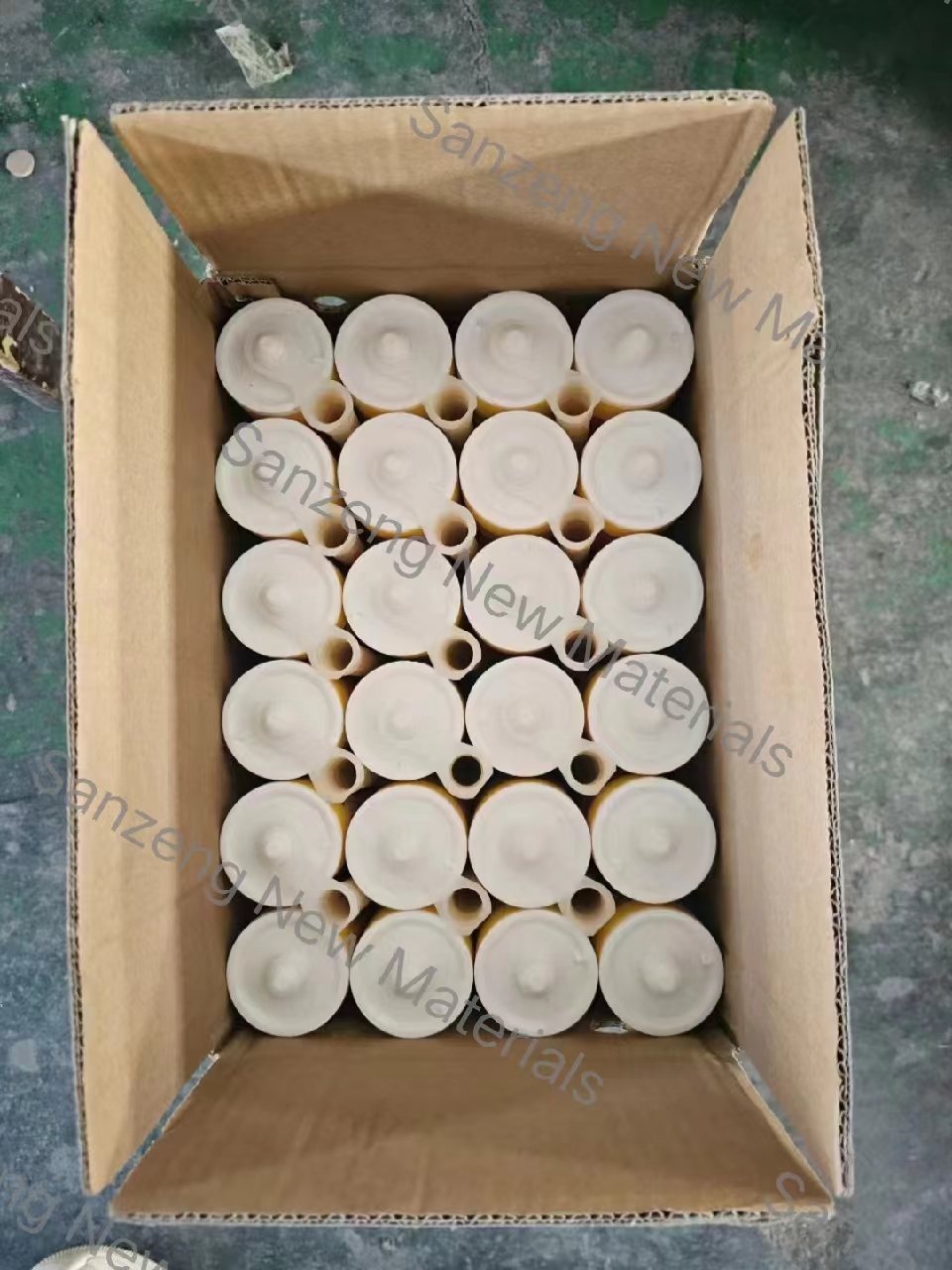
Cartridge packing is part of the acceptance scope: carton count, label match, and cartridge condition are checked before shipment.
Sealant Types Buyers Can Specify in a 300 ml Cartridge
Shandong Sanzeng New Materials Co., Ltd. (Sanzon) manufactures silicone sealants in acid-curing, neutral-curing, weather-resistant, general-purpose, and structural types, and also supplies MS polymer, polyurethane (PU), acrylic, no-nail adhesive, PU foam, and tile grout lines. The range matters to procurement because one purchase order often covers several product families that share the same 300 ml cartridge format.
The table below groups the main sealant families by cure system and typical buying context. It is a selection aid, not a substitute for the product technical data sheet (TDS).
| Sealant family | Representative model | Cure / format | Typical procurement use |
|---|---|---|---|
| Acid-cure general purpose | SANZON GP | Acetoxy, 300 ml × 24 pcs/ctn | Interior decoration, glass, ceramic |
| Acid-cure multi-color range | SANZON PA | Acetoxy, 300 ml, 6 colors | Glass and aluminum interior work |
| Neutral-cure | SANZON NS | Neutral RTV, 300 ml × 24 pcs/ctn | Metal, stone, outdoor joints |
| General purpose neutral | SANZON GP-N | Neutral RTV, 300 ml × 24 pcs/ctn | Multi-purpose construction sealing |
| Structural weather-resistant | SANZON CS | Structural, fast-cure, UV resistant | Curtain wall structural bonding |
| Mildew resistant / sanitary | SANZON KB | Neutral RTV, 300 ml × 24 pcs/ctn | Kitchen and bathroom wet areas |
| Firestop | SANZON FS | Flame-retardant, 300 ml × 24 pcs/ctn | Fire compartment joint sealing |
| MS polymer | SANZON MS | Neutral RTV, paintable | Paint-compatible projects |
| Acrylic | SANZON AS | Single-component, low VOC | Interior decoration, paintability |
| No-nail adhesive | SANZON GS / GK | Fast-cure, 300 ml × 24 pcs/ctn | Nail-replacement bonding |
Several of these models share the same 300 ml shell capacity, so a buyer can consolidate one cartridge format across multiple sealant families. What changes between models is the cure chemistry, the color range, the temperature window, and the shelf life. Neutral and general-purpose silicone models in the Sanzon range are typically rated for -50 °C to 150 °C, acrylic models are rated for -10 °C to 80 °C, and acid-cure models typically carry a -50 °C to 120 °C range. Shelf life is 12 months for most silicone models and 18 months for the no-nail adhesive range, according to the product data.
How to Choose the Right Sealant by Application
Sealant selection usually starts with the substrate, not with the label. A buyer choosing between a neutral and an acid product is really answering two questions: what the sealant will touch, and whether odor or corrosion during cure matters on that project.
Neutral versus acid cure
Neutral cure silicone sealant is suitable for many materials, including glass, aluminum, metal, and certain types of stone. Acid (acetoxy) silicone sealant generally provides strong adhesion to glass and ceramic and releases a vinegar-like odor during cure. For windows, aluminum, metal, stone, and outdoor weatherproofing, neutral cure is generally the safer reference point; for general interior glass and ceramic sealing, an acid product can be appropriate.
Wet areas and sanitary joints
Kitchen and bathroom joints call for a mildew-resistant / sanitary grade such as SANZON KB, which is rated for long-term anti-mold performance in high-temperature and high-humidity conditions. Using a general-purpose sealant in these joints is a common specification error that shows up as early discoloration rather than immediate failure.
Structural and facade work
Curtain wall and structural glazing require a structural silicone adhesive such as SANZON CS, a white-oil-free formula with fast curing and UV resistance. Structural work is not a substitution category: the sealant is part of the facade engineering calculation, and the product data sheet, not the cartridge label, is the governing document.
Fire compartments and paintability
Firestop joints require a flame-retardant grade such as SANZON FS. Where the joint will be painted after cure, MS polymer (SANZON MS) or acrylic (SANZON AS) is the relevant family, because most traditional silicone sealants are not designed to be painted after curing.
300 ml Cartridge Specifications: What to Write in the Purchase Order
The SZ-1 sealant empty bottle is the cartridge platform Sanzon manufactures in-house. It is a PP/PE plastic cartridge with a standard 300 ml capacity, produced by fully automated precision injection moulding in a self-owned hose factory with an annual output of more than 100,000 tons. The cartridge is customizable, and the company offers ODM and OEM services including custom label printing, custom colors, and custom cartons.
Cartridge formats extend beyond the rigid 300 ml shell. The same supply chain covers foil sausage, bucket and pail formats for larger volumes, a cartridge range from 240 ml to 310 ml, and 2600 ml large-capacity drums. For a 300 ml standard line, the practical purchase-order items are:
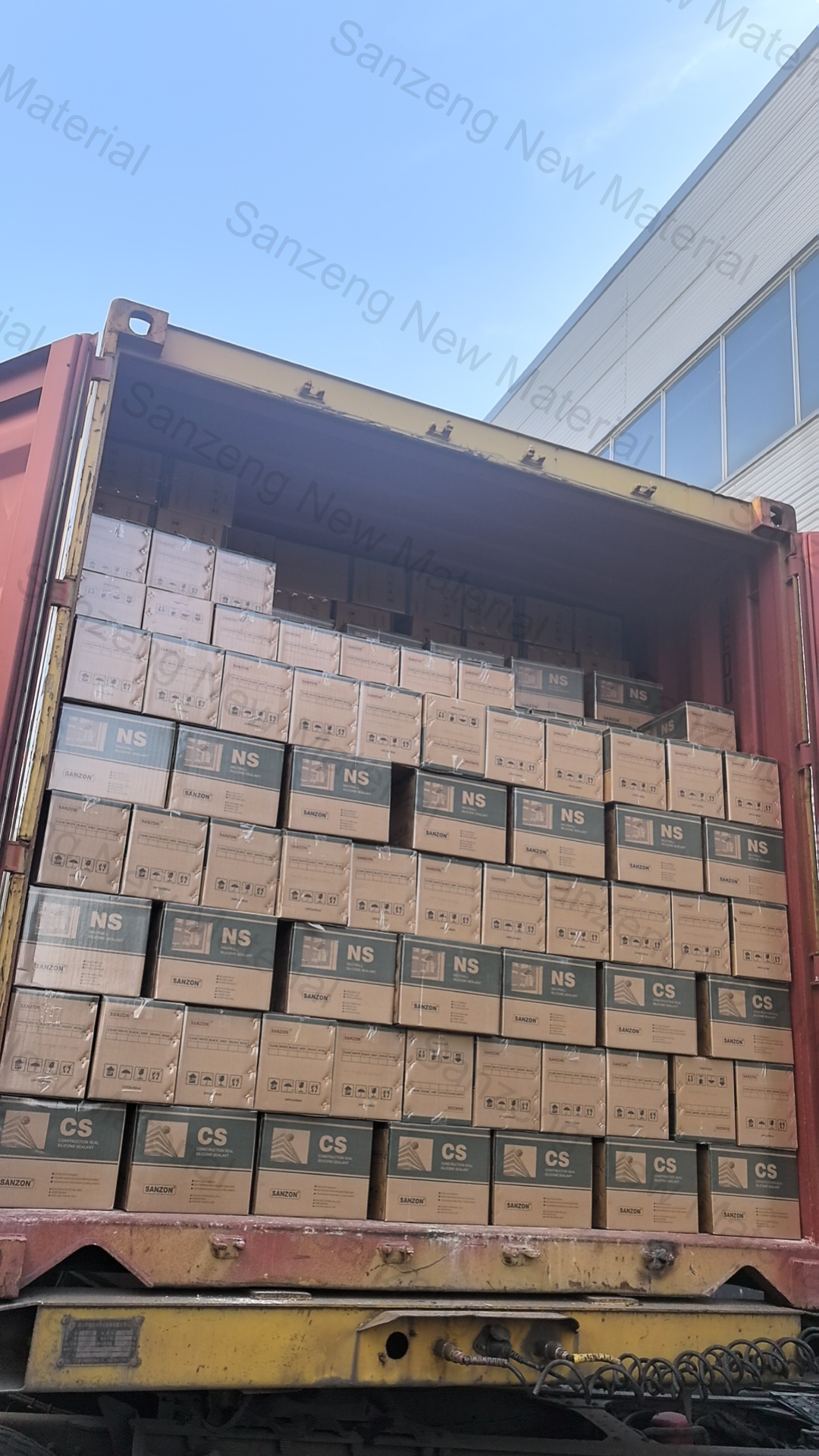
Carton layout and label placement are specified alongside the cartridge itself; both are part of the pre-shipment check.
| Specification | Standard value | Buyer action |
|---|---|---|
| Cartridge material | PP / PE plastic | Confirm gun compatibility and recycle stream |
| Nominal capacity | 300 ml (standard, customizable) | Fix the fill volume in the PO |
| Cartridge format | Cartridge / foil sausage / bucket & pail | Match format to dispensing equipment |
| Color and label | Custom label printing, custom colors | Approve artwork before production |
| Carton count | 24 pcs/ctn for most 300 ml models | Set carton count as an acceptance line item |
| Filling accuracy (equipment) | ±2 g on Sanzon filling machines | Useful benchmark when auditing the fill line |
The annual output figure is a capacity statement, not a quality guarantee. Its procurement value is that it points to a self-owned cartridge supply rather than a purchased-in shell, which shortens the feedback loop between filling, capping, and carton packing.
Purchasing Terms and Acceptance Criteria
The commercial terms below apply to long-term supply agreements and recurring orders. They are the terms a buyer should reconcile against the quotation before issuing a purchase order.
| Term | Standard position |
|---|---|
| Minimum order quantity | 100 boxes for long-term supply agreements |
| Delivery terms | FOB or CIF for recurring orders |
| Payment terms | 30% deposit and 70% before shipment, or 100% payment for long-term orders |
| Acceptance inspection | Pre-shipment test for each order |
Acceptance is the part buyers most often under-specify. A pre-shipment test should be tied to named checkpoints: sealant type and color against the PO, cartridge appearance and cap fit, label and brand block accuracy, carton count, and batch or date coding where the order requires traceability. When those checkpoints are agreed in writing, the pre-shipment test becomes an enforceable acceptance gate rather than a courtesy inspection.
Payment and delivery terms are commercial levers. The 30/70 structure is standard for first orders, while the 100% option is positioned for long-term orders. FOB and CIF shift different parts of the logistics risk to the buyer, so the choice should follow the buyer's freight capability rather than habit.
Where Integrated Cartridge Supply Fits
Sanzon operates as an integrated supplier covering sealant R&D and production, filling equipment, and packaging materials, with products exported to more than 30 countries and regions. Export business accounts for 70% of total sales. The company is headquartered in Linqu County, Weifang City, Shandong Province, within the Chinese silicone sealant industry cluster.
That structure matters for cartridge procurement in three specific ways. First, the cartridge is produced in-house, so capacity questions and label-change questions route through the same supply chain as the sealant. Second, the filling equipment is also produced in-house: single-cylinder and double-cylinder semi-automatic filling machines, fully automatic filling machines, automatic capping machines, conveying lines, sausage-film filling machines, and 60-ton hydraulic press machines, with filling accuracy of ±2 g and speeds of 30–60 pieces per minute. Third, the company holds ISO 9001, ISO 14001, and ISO 45001 certifications, with selected export products carrying CE and RoHS compliance and SGS performance and safety test reports.
For a buyer, the practical effect is fewer handoffs. Cartridge, sealant, and filling line do not have to be qualified as three separate vendor relationships, which reduces the number of acceptance conversations inside a long-term supply agreement.
Market Context: Why Cartridge-Level Procurement Is Becoming More Structured
Global demand provides the backdrop. According to Grand View Research, the global silicone sealants market was valued at USD 4.5 billion in 2025, with Asia Pacific accounting for a 52.1% revenue share. Room temperature vulcanizing (RTV) products held 64.8% of revenue in 2025, and the construction end-use segment held 60.7% of market share.
Two consequences follow for cartridge buyers. First, RTV-dominated demand means single-component cartridge formats remain the default commercial unit, so cartridge specification keeps its leverage. Second, construction's 60.7% share means acceptance criteria tied to jobsite performance — gun fit, cure behavior, color match — carry more weight than they would in an industrial-only market.
Trade data points in the same direction. OEC data show that China's exports of silicone under HS 321410 to India grew by USD 16.7 million between 2024 and 2025. Cross-border cartridge purchasing is growing, which makes written acceptance terms more important, not less.
Standards and regulation set the reference frame. ASTM C920-18(2024) remains the primary performance standard for elastomeric joint sealants used in building construction. In the European Union, Regulation 2024/1328 restricts cyclic silicones D4, D5, and D6 at a 0.1% threshold for certain uses, with a leave-on cosmetics ban from June 2027. Buyers specifying for EU projects should confirm formulation compliance with the supplier rather than infer it from the cartridge label.
Comparison with Traditional Supply Routes — and Where 300 ml Stops Being the Right Unit
The traditional route separates sealant supply from packaging supply: a buyer sources sealant from one supplier and cartridges from another, then accepts each separately. The integrated route consolidates them. The trade-off is real in both directions. Integrated supply reduces vendor count and shortens the feedback loop, but it also concentrates dependency on one supplier's cartridge capacity and label schedule.
There is a second, more practical boundary. The 300 ml cartridge is sized for hand and pneumatic guns and for small-to-medium joints. On high-volume curtain wall runs or continuous production lines, a 2600 ml drum or a foil sausage format may be the better economic unit, because labour time per meter and cartridge-change frequency outweigh the handling convenience of the smaller shell. Buyers should treat 300 ml as the default for site-based application, not as a universal format.
A third boundary is chemistry. Acid-cure sealants release a vinegar-like odor during cure and are not the right choice for odor-sensitive interiors, certain metals, or stone. In those cases the neutral or MS alternative is the correct specification even when the acid product is cheaper per cartridge.
Future Outlook
Cartridge procurement is likely to keep moving toward written acceptance checkpoints rather than verbal quality assurances. The drivers are structural: RTV-dominant demand keeps the cartridge as the commercial unit, construction's share keeps jobsite performance in the acceptance scope, and cross-border trade growth makes pre-shipment testing a shared reference point between buyer and supplier.
For buyers, the practical implication is to specify three things together — sealant grade, cartridge material and capacity, and acceptance checkpoints — instead of negotiating them in sequence. For suppliers, the implication is that cartridge capacity and label flexibility become procurement arguments in their own right, not back-office details.
FAQ
What types of sealant does Sanzon produce?
Sanzon produces neutral silicone sealant, acid-curing silicone sealant, weather-resistant silicone sealant, general-purpose silicone sealant, and structural silicone sealant. The wider range includes MS polymer sealant, PU sealant, acrylic sealant, no-nail adhesive, PU foam, and tile grout, along with customized sealing solutions based on customer requirements.
What is the difference between neutral and acid-curing silicone sealant?
Neutral cure silicone sealant is suitable for a wide range of materials, including glass, aluminum, metal, and certain types of stone. Acid-curing (acetoxy) silicone sealant generally offers strong adhesion to glass and ceramic but releases a vinegar-like odor during curing.
How do I choose the right sealant for a project?
The right sealant depends on the substrate material, indoor or outdoor exposure, waterproofing requirements, joint movement, temperature resistance, and whether the cured surface needs to be painted. Based on those conditions, a buyer can choose between silicone sealant, MS sealant, PU sealant, acrylic sealant, or other types of sealant.
How long is the shelf life of the sealant?
Shelf life depends on formulation, packaging, and storage conditions. Most silicone models in the Sanzon range carry a 12-month shelf life, while the no-nail adhesive range carries 18 months. Buyers should use the product within the shelf life stated on the packaging or technical data sheet.
How should sealant be stored before use?
Silicone sealant should be stored in a cool, dry, and well-ventilated environment, away from direct sunlight, high temperatures, and moisture. Proper storage helps maintain the stability and performance of the product.
What are the purchasing terms and acceptance criteria?
The minimum order quantity is 100 boxes for long-term supply agreements. Delivery is by FOB or CIF. Acceptance inspection includes a pre-shipment test for each order. Payment terms are 30% deposit and 70% before shipment, or 100% payment for long-term orders.
Does Sanzon provide OEM services for sealant and cartridges?
Yes. Sanzon provides OEM and private label services for silicone sealant and other sealant products. Customers can customize the brand, packaging, labels, cartridge printing, colors, and other product specifications. The SZ-1 cartridge itself is a PP/PE 300 ml standard unit, customizable, and produced with an annual output of more than 100,000 tons from a self-owned hose factory.
For buyers who need the full product range and model data in one document, the Sanzon LIONKING series brochure is available for download: SANZON LIONKING Series Adhesives brochure (PDF).
Есть вопросы или нужны дополнительные детали?
Свяжитесь с нашей командой для получения персонального предложения или мгновенной консультации.
Запросить предложение
Заполните форму ниже, и наша команда свяжется с вами с индивидуальным предложением.
Прямой чат WhatsApp
Предпочитаете общаться в реальном времени? Напишите нам в WhatsApp для мгновенной помощи и быстрых ответов.
- Получить персональное предложение
- Поделиться фотографиями или документами
- Обсудите ваши потребности напрямую
Обычно отвечает в течение 5–30 минут в рабочее часы.