
3000kW vs 2500kW vs 2000kW: An Independent Buyer's Spec-by-Spec Comparison of Large Diesel Generators
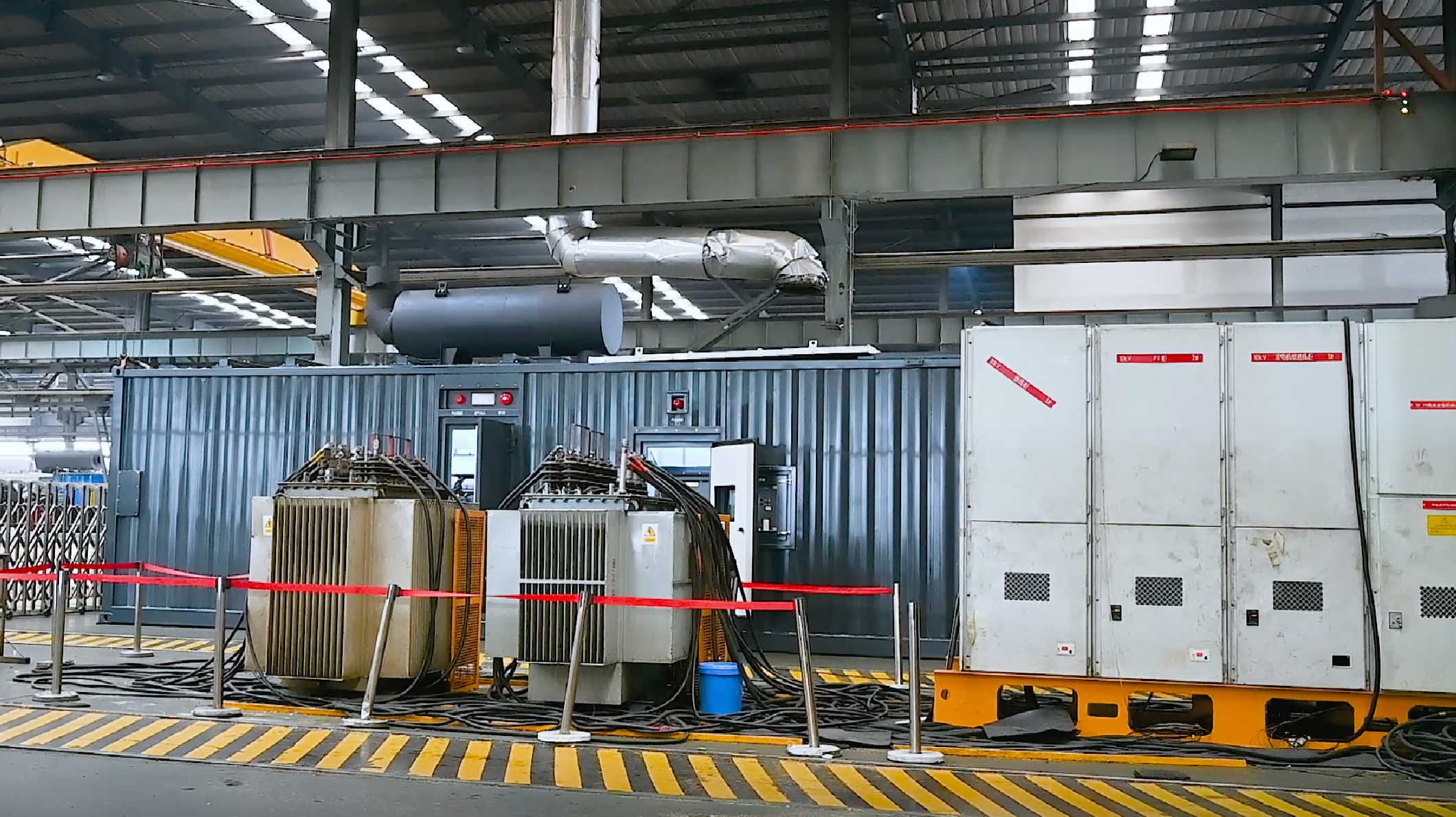
Factory genset testing is part of the verification process before comparing high-power generator sets.
Why compare 2000kW, 2500kW and 3000kW generators separately?
For procurement teams evaluating large diesel generators, the difference between 2000kW, 2500kW and 3000kW is not a simple step in output. Each class changes engine selection, enclosure strategy, electrical protection, space planning, fuel-system design, and the amount of load that can be lost when a unit stops. Comparing these three output classes is therefore useful before shortlisting suppliers, not after receiving quotations.
This article is an independent specification-level comparison of MECCA POWER CO.,LTD. high-power diesel generator products. MECCA POWER is a manufacturer founded in 2013 with production bases in Fujian and Jiangxi, China. Its diesel generator range runs from 10kVA to 4000kVA, and its high-power production line in Nanchang is focused on 1000kW and above. Within that range, three published product references are directly relevant to projects considering 2MW, 2.5MW and 3MW capacity blocks: the 3MW containerized diesel generator, the 2500KW diesel generator, and the 2000KW diesel generator.
Reference specifications at a glance
| Reference spec | 3MW containerized diesel generator | 2500KW diesel generator | 2000KW diesel generator |
|---|---|---|---|
| Reference model family | MC3750C | MC2500 / MC2750 / MC3500 | MC2000 / MC2750 |
| Published power data | 3000kW / 3750kVA | Prime power: 2500kW / 3125kVA | Prime power: 2000kW / 2500kVA |
| Standby power data | Standby rating not stated in the reference product unit; confirm against project duty cycle | Standby power: 2750kW / 3500kVA | Standby power: 2200kW / 2750kVA |
| Configuration | Containerized | Open type or containerized type | Published as a 2MW diesel generator for data center use |
| Engine note in reference | US CUMMINS QSK95 | Not fixed in the product reference | Not fixed in the product reference |
| Material note | Alloy steel / heat-resistant steel | Alloy steel / heat-resistant steel | Stainless steel |
| Published applicable industries | Data center, power plant, mining, construction, oil and gas | Data center, power plant, oil and gas, mining, construction | Data center, construction, power plant, oil and gas |
| CE certification scope | All three product families are listed within MECCA POWER CE certificate M.2024.206.C101740 issued by UDEM, valid from 2024-06-05 to 2029-04-06, covering diesel generators. | ||
These facts are intentionally drawn only from the published product references. They do not include assumptions about dimensions, fuel consumption or packaging details that were not stated.
An important buying discipline: compare kW on the same basis
One common mistake in large generator comparisons is mixing kW and kVA. The reference data for the 2000KW generator gives prime power of 2000kW / 2500kVA. The 2500KW generator gives prime power of 2500kW / 3125kVA. The 3MW containerized unit gives 3000kW / 3750kVA. These relationships imply a constant power factor of 0.8, meaning kVA values are not an alternative rating method but an electrical basis for sizing switchgear, cables and transformers.
Another discipline is separating prime power from standby power. The 2000KW and 2500KW units list both prime and standby figures. The 3MW reference lists a single power range of 3000kW / 3750kVA. When procurement teams receive competing proposals, all gensets should be compared under the same duty classification. Comparing the standby rating of one supplier with the prime rating of another can create a misleading capacity advantage.
Reading the three product cards
3MW containerized diesel generator: one large capacity block in container form
The 3MW containerized unit is identified by model MC3750C and by the product type '3000KW diesel generator for data center'. The reference product data states 3000kW / 3750kVA and specifies a US CUMMINS QSK95 engine. The product is described with alloy steel and heat-resistant steel material construction, and its published application range includes data center, power plant, mining, construction and oil and gas.
For a site that can use one high-capacity block, this class reduces the number of generators required to reach a 3MW installed level. It also shifts more system integration to the container factory design. However, the reference document does not publish physical container dimensions, fuel consumption curves or a separate standby rating. Buyers should treat those as project-specific data to be provided by the manufacturer during technical evaluation.
2500KW diesel generator: open or containerized flexibility
The 2500KW reference family includes models MC2500, MC2750 and MC3500. The published prime rating is 2500kW / 3125kVA, and the standby rating is 2750kW / 3500kVA. The product type explicitly says 'open type / containerized type 2500KW diesel generator for data center'. That configuration flexibility is a meaningful specification when the same engine platform must be installed in different site conditions.
The industry list for this class is data center, power plant, oil and gas, mining and construction. The 2500KW class can be attractive when a project expects to add capacity in two-and-a-half-megawatt steps rather than one three-megawatt block. As with the other reference units, the document does not lock the buyer into a single engine make for this model family.
2000KW diesel generator: a 2MW data-center class building block
The 2000KW reference family includes models MC2000 and MC2750. Its published prime rating is 2000kW / 2500kVA, with a standby rating of 2200kW / 2750kVA. The product type calls it a '2MW diesel generator for data center'. The material note is stainless steel, and the published application list covers data center, construction, power plant and oil and gas, though it does not list mining in the reference unit.
In a comparison of output classes, 2000kW is the lowest tier in this article, but it is still a large generator set. Its value in a procurement strategy is often related to modularity: a site can specify multiple 2000kW units to support partial redundancy and staged deployment. The limitation is that the reference unit does not specify an open or containerized form in the product data, so enclosure strategy should be confirmed with the supplier.
Decision factors beyond the power figure
Output class is the starting point, not the complete answer. The comparison becomes useful when procurement teams add four project variables: load profile, footprint, scalability and verification.
Load profile is the first filter. If a facility has a continuous base load near 2000kW with occasional higher loads, the 2000kW class with a published standby rating of 2200kW can support short-duration or emergency load. If a data hall or industrial process is designed around 2500kW of essential load, the 2500kW class is the more direct fit. If a single large containerized system is required and 3000kW matches the design capacity, the 3MW unit should be evaluated on its published 3000kW / 3750kVA basis.
Footprint is the second filter. The 3MW reference unit is containerized, which suggests a higher degree of outdoor and transport-ready packaging. The 2500KW class is available as either open or containerized, giving the engineer a choice that depends on existing buildings, acoustic requirements and maintenance access. The 2000KW class is documented as a 2MW data-center generator, but its enclosure type should be requested as a project-specific drawing.
Scalability is the third filter. A 2000kW, 2500kW and 3000kW portfolio spans a wide range. A single 3MW unit delivers a large amount of capacity in one genset and one container. For high-availability sites, however, a single unit creates a large single point of failure. Multiple 2000kW or 2500kW units can provide more flexible outage planning, but they require additional switchgear, synchronization controls, cabling and floor space. This is a trade-off, not a statement that one configuration is always superior.
Verification is the fourth filter. MECCA POWER lists 100% testing as part of its production control, and its high-power factory hardware is configured for testing multiple units above 2000kW. This is relevant because large genset comparisons should include a factory load-test plan. A specification will be easier to audit if it says which standard will be applied and how load steps will be demonstrated.
Published applications for the three output classes
| Output class | Published application notes |
|---|---|
| 3MW containerized diesel generator | Data center, power plant, mining, construction, oil and gas |
| 2500KW diesel generator | Data center, power plant, oil and gas, mining, construction; open or containerized configuration |
| 2000KW diesel generator | Data center, construction, power plant, oil and gas |
These application lists help a buyer avoid selecting an output class that the manufacturer does not document for the target environment. They do not replace a site-specific engineering study.
Traditional central-plant thinking vs modular genset sizing
Traditional power project design often treats a large generator as a one-time installed asset sized close to the facility's peak. In this approach, a 3MW containerized unit can look attractive because it reduces the number of engines, containers and electrical branches needed for one 3MW load block.
Modular thinking is different. It treats the generator as part of a multi-unit power system. Two 2000kW units can supply 4000kW of installed capacity and allow one unit to be serviced while the other continues supporting critical load. This improves availability but adds synchronizing hardware, more fuel connections and additional site space. Three 2500kW units offer even finer outage planning for sites above 5MW.
The limitation of a very large unit is important to state honestly. A well-integrated 3MW containerized unit can reduce installation complexity, but if that single unit is out of service, the entire 3MW block is unavailable unless another source exists. For mission-critical facilities, the engineering solution may therefore be several smaller units, not one maximum-capacity genset. This is not a disadvantage of the equipment itself; it is a consequence of availability architecture.
The same honesty applies to fuel efficiency. The published product references for 2000kW, 2500kW and 3MW do not include partial-load fuel consumption curves. Without those curves, no independent comparison can claim which output class is most efficient at a specific duty cycle. Fuel consumption should be requested at 25%, 50%, 75% and 100% load for the proposed engine and enclosure configuration. Output class alone does not determine litres-per-hour performance.
Market context: why this capacity band is becoming more important
Market data helps explain why procurement teams are now comparing 2MW and 3MW generators more frequently. The global diesel generator market was valued at approximately USD 19.33 billion in 2025 and is projected to reach USD 40.9 billion by 2033 according to Grand View Research. The data center generator market was valued at about USD 8.43 billion in 2024 and is expected to reach USD 19.66 billion by 2030 according to ResearchAndMarkets and Business Wire, with AI workloads and hyperscale expansion cited as growth drivers.
For buyers, the practical consequence is not that every project should buy a larger generator. Rather, leading projects are more often built around defined capacity blocks. Data centers and industrial facilities are asking suppliers to demonstrate how a 2000kW, 2500kW or 3000kW reference product will perform under real load steps, and how containerized or open architecture affects deployment speed.
Practical procurement checklist
- Define whether the project load is prime duty or standby duty before comparing 2000kW, 2500kW and 3000kW offers.
- Keep kW and kVA on separate comparison lines; do not compare a 2500kVA machine with a 2500kW machine.
- Match the reference product type to the site: containerized for factory-integrated outdoor installation, open type when maintenance access and building space are critical, and data-center-specific product types when the load is an IT facility.
- Ask for application evidence: the product reference states data center, power plant, mining, construction and oil and gas for certain classes, so align each offer with the required industry list.
- Request documentation of load testing, certificates and applicable standards before placing the order.
- Ask for dimensions, fuel consumption curves and standby-rating data that are not present in the basic reference unit description.
FAQ
What is the difference between the 3MW containerized, 2500kW and 2000kW diesel generators from MECCA POWER?
According to the published product references, the 3MW containerized diesel generator model MC3750C is rated at 3000kW / 3750kVA and uses a US CUMMINS QSK95 engine. The 2500KW diesel generator family includes models MC2500, MC2750 and MC3500, with prime power of 2500kW / 3125kVA and standby power of 2750kW / 3500kVA. The 2000KW diesel generator family includes models MC2000 and MC2750, with prime power of 2000kW / 2500kVA and standby power of 2200kW / 2750kVA.
Which generator should a data center use: 2000kW, 2500kW or 3000kW?
The reference product data shows that all three output classes are positioned for data center applications. The 3MW unit is specifically described as a 3000KW diesel generator for data center use, the 2500KW class is described as open type or containerized type for data centers, and the 2000KW class is described as a 2MW diesel generator for data centers. The correct choice depends on the data center's load block, redundancy architecture, site space and future expansion plan.
What is the difference between prime power and standby power?
Prime power is the amount of power a generator can supply continuously for variable electrical load. Standby power is a higher rating intended for emergency or short-term use when the normal utility supply is unavailable. The 2000KW reference unit lists prime power of 2000kW / 2500kVA and standby power of 2200kW / 2750kVA. The 2500KW reference unit lists prime power of 2500kW / 3125kVA and standby power of 2750kW / 3500kVA. The 3MW reference unit lists 3000kW / 3750kVA but does not state a separate standby rating.
Are the 3MW, 2500kW and 2000kW generators covered by CE certification?
The CE certificate M.2024.206.C101740 issued by UDEM, valid from 2024-06-05 to 2029-04-06, covers MECCA POWER diesel generators. The product list linked to this certificate includes the 3MW containerized diesel generator, the 2500KW diesel generator and the 2000KW diesel generator.
Can the 2500KW generator be supplied as a containerized unit?
Yes. The 2500KW diesel generator reference type is described as an open type / containerized type 2500KW diesel generator for data center. This means the buyer can compare both enclosure options in the same model family rather than assuming one fixed configuration.
Does MECCA POWER test large generator sets before delivery?
MECCA POWER states that its production quality control includes 100% testing. Its high-power factory includes testing infrastructure capable of supporting production testing of multiple units above 2000kW. Buyers should still confirm the specific load-test procedure, test report format and applicable standard in their purchase specification.
Summary of an independent comparison
The correct answer in a 3000kW vs 2500kW vs 2000kW comparison depends on the project's rating basis, required availability, site constraints and load profile. A 3MW containerized unit can be chosen for large single-block capacity with a high level of factory integration. A 2500kW unit can be chosen when open or containerized flexibility is required and 2.5MW aligns with the load block. A 2000kW unit can be chosen when capacity is better distributed across several smaller gensets. None of these three classes should be selected on published kW alone; each needs a project-specific technical comparison.
For additional product background, MECCA POWER publishes a company brochure with production details and capability information: MECCA POWER company brochure (PDF).
Есть вопросы или нужны дополнительные детали?
Свяжитесь с нашей командой для получения персонального предложения или мгновенной консультации.
Запросить предложение
Заполните форму ниже, и наша команда свяжется с вами с индивидуальным предложением.
Прямой чат WhatsApp
Предпочитаете общаться в реальном времени? Напишите нам в WhatsApp для мгновенной помощи и быстрых ответов.
- Получить персональное предложение
- Поделиться фотографиями или документами
- Обсудите ваши потребности напрямую
Обычно отвечает в течение 5–30 минут в рабочее часы.