
358 vs 3D Curved Welded Mesh Fence: Anti-Climb Evaluation
Perimeter security programmes rarely fail because a buyer picked the wrong supplier. They fail because the wrong welded mesh geometry was specified for the threat the site actually faces. A 358 anti-climb panel and a 3D curved panel can look broadly similar in a photograph and behave very differently at two in the morning.
The two systems answer different questions. The 358-1800 is built around a 76.2 x 12.7 mm mesh opening, the three-inch by half-inch geometry behind the 358 name, welded at every intersection. The aperture is small enough that a boot toe, a fingertip and a bolt-cutter jaw struggle to find purchase. The 3D-2000 is a curved welded mesh panel in which horizontal profile bends are pressed across the panel to create stiffness, allowing a lighter fabric with a more open aperture to span between posts. One is designed around denial. The other is designed around rigidity, sightlines and cost per linear metre.
For buyers at decision stage, the useful question is not which panel is stronger. It is which panel closes the specific intrusion route the site is exposed to, and what the rest of the perimeter has to look like once that choice is made.
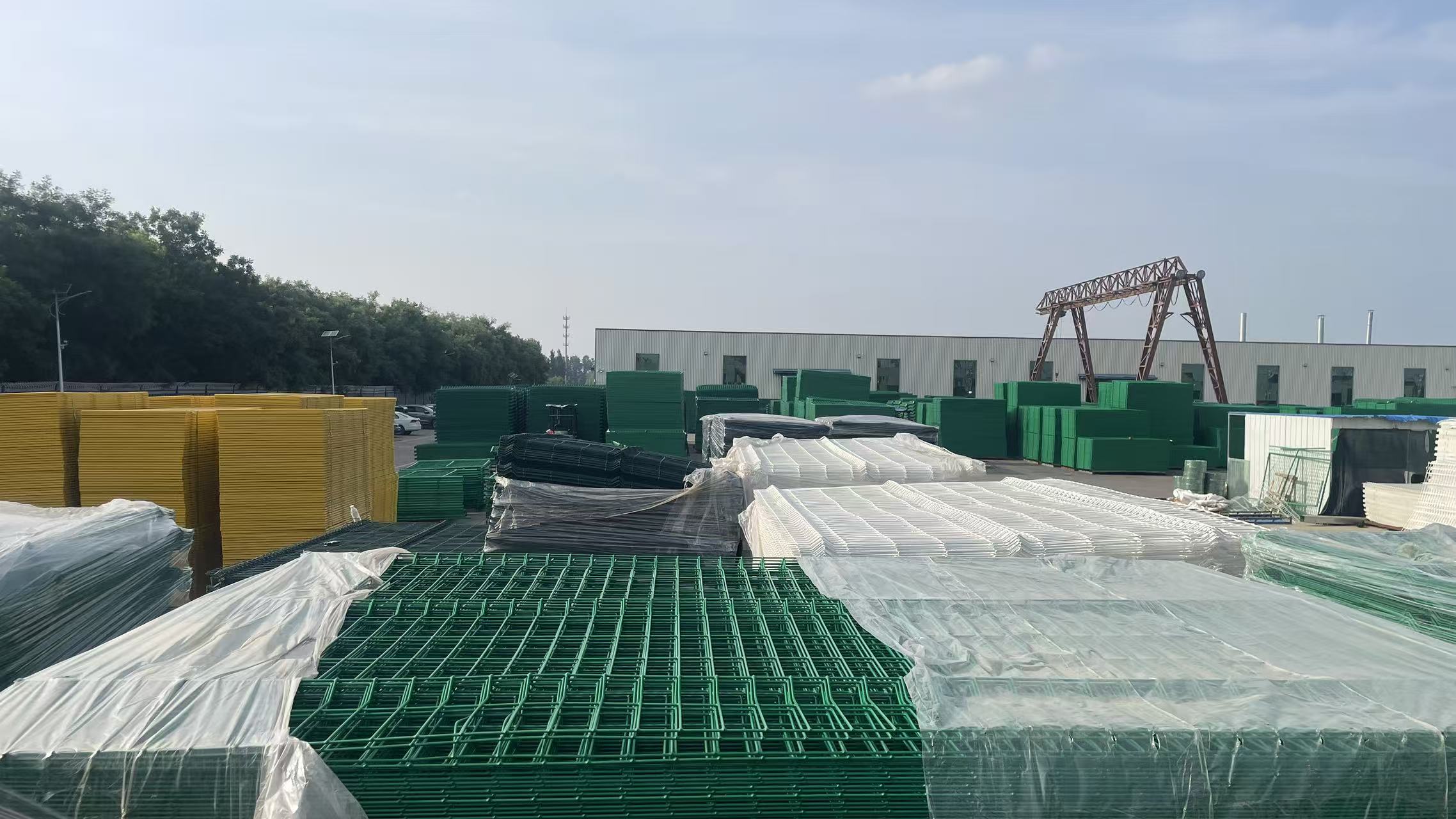
Welded mesh panel production. Geometry, coating and inspection discipline decide how a perimeter fence performs long after installation.
Short answer: specify the 358-1800 where the threat model includes climbing or cutting and the perimeter must buy response time; specify the 3D-2000 where long runs, sightlines, wind management and cost per metre dominate, and the boundary is a control line rather than a hardened barrier. On mixed sites, the two systems are usually combined rather than chosen between.
Why the geometry decision now carries budget weight
The welded wire mesh fence market was valued at USD 7.04 billion in 2025 and is projected to reach USD 11.72 billion by 2034, according to Dataintelo. Metal fencing already holds the largest material share of the wider fencing market at 53% of an estimated USD 33.8 billion in 2025, per Grand View Research, while Asia Pacific accounted for 38.5% of welded mesh fence revenue in 2025. Growth of that order does not come from garden boundaries. It comes from infrastructure, logistics, utilities and institutional estates where a fence is a control measure rather than a property marker.
At that end of the market the specification conversation narrows quickly. Once a site has a defined security requirement, the buyer is usually choosing between a small number of panel families, and the 358 and 3D families account for most of the debate. Getting the choice wrong is expensive in a specific way: the fence still looks acceptable on handover, and the mismatch only becomes visible in incident reports, insurance reviews or a post-tender variation.
358-1800: when the aperture is the security feature
The 358-1800 is an anti-climb welded mesh panel whose fabric is defined by a 76.2 x 12.7 mm mesh opening. Horizontal and vertical wires are welded at every intersection on automated welding lines, producing a rigid welded grid rather than a woven or loosely tied mesh. The welding is not a manufacturing detail; it is the reason the geometry holds. A grid with a missed or weak weld at a 12.7 mm aperture has no redundancy, which is why automated welding and full inspection matter more on this panel family than on any open-aperture product.
Three conditions a climb requires, and how the mesh removes them
Climbing a fence needs a foothold, a handhold and a gap wide enough to insert a boot or a tool. At 76.2 x 12.7 mm none of those conditions is comfortably satisfied. The aperture is narrower than a boot toe and shorter than a finger grip, and the welded intersections leave no slack wire to pull, spread or lever. The same geometry constrains cutting. Bolt cutters, reciprocating blades and hydraulic cutters need clearance on both sides of the wire and a working angle; a 12.7 mm opening removes the working angle and forces the tool into a position where leverage is limited.
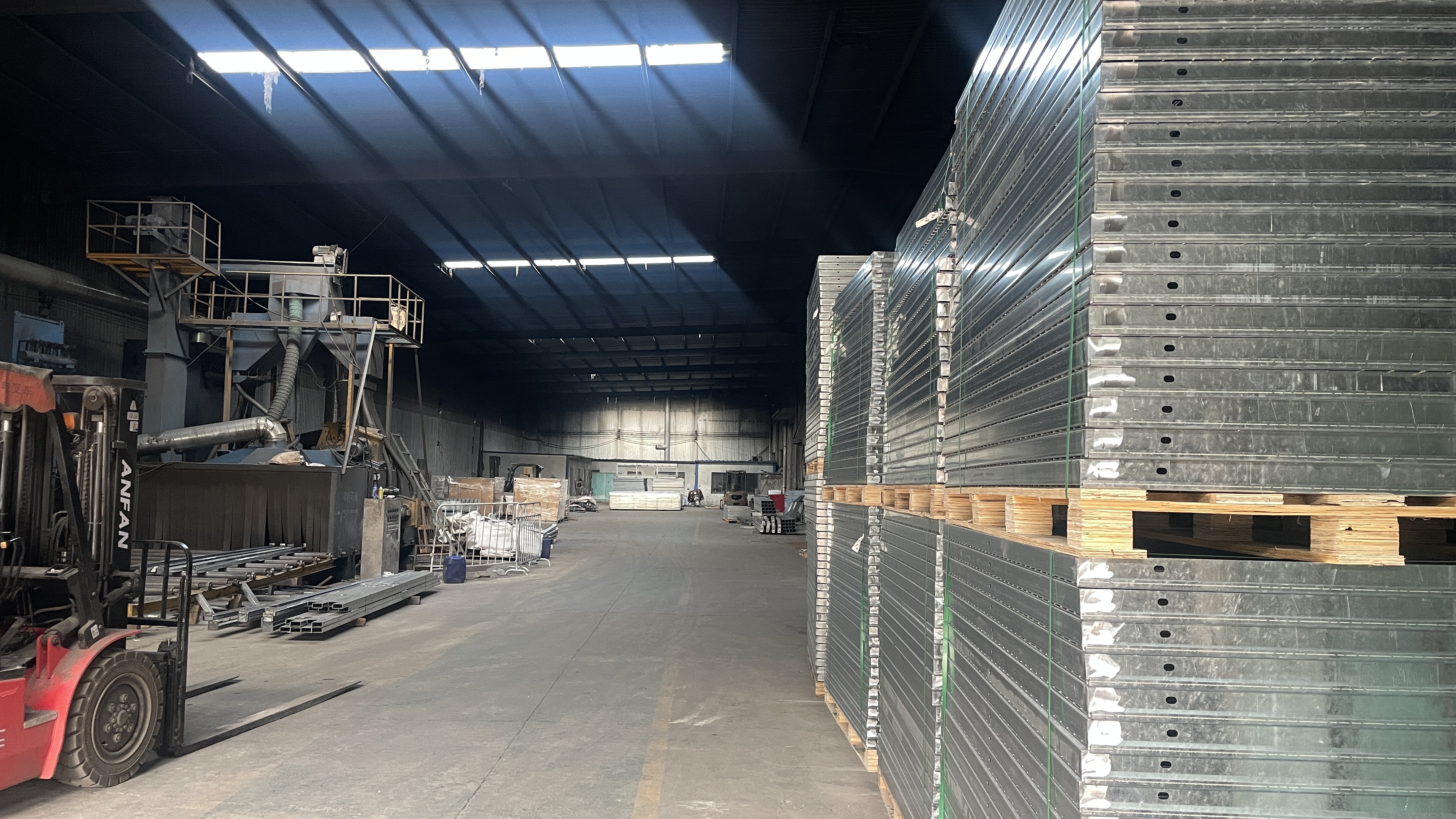
Welded intersections at small aperture leave no slack wire to lever or spread, which is the mechanical basis of anti-climb performance.
What a 358 panel does not do
A 358 panel is not a detection system and not a vehicle barrier. It buys time; it does not remove the need for lighting, CCTV coverage, alarm logic or a guard response. It also reduces through-visibility, which matters at airports, ports and rail corridors where surveillance sightlines form part of the security design. And because denser mesh presents more solid area, it raises wind load on posts and foundations compared with an open-aperture panel of the same height.
3D-2000: when the profile does the structural work
The 3D-2000 is a curved welded mesh panel. Horizontal profile bends, commonly described as V-beams, are pressed across the panel width and turn a flat grid into a shallow three-dimensional section. The profile raises the panel's stiffness, so a lighter wire can deliver the rigidity a flat panel would need heavier wire to reach. That single change cascades through the whole perimeter: longer spans between posts, fewer posts, faster alignment over long runs, and a boundary that reads as lighter in the landscape.
The open aperture also lowers the solid face area of the fence, which reduces wind load on the structure and keeps through-visibility high. For parks, sports grounds and public realm edges, that combination is usually the correct engineering answer rather than a compromise.
The aperture trade-off is real
A 3D panel is typically manufactured with a wider mesh opening than a 358 panel. Wider openings reduce material weight and cost per square metre, and they improve visibility, but they also give back the foothold and the tool clearance that the 358 geometry deliberately removes. Climb resistance then depends on the specific aperture, panel height, topping arrangement and whether an anti-climb variant is specified. A 3D panel is not a low-security product by definition, but it is not an anti-climb product by geometry either. Buyers who treat the two as interchangeable are relying on the post and the topping to do work the mesh was never designed to do.
Head-to-head: the criteria that actually decide high-risk sites
The comparison below is expressed as decision criteria rather than marketing rankings, because the two panels are not competitors for the same brief. They compete for the same budget line.
| Decision criterion | 358-1800 anti-climb | 3D-2000 curved |
|---|---|---|
| Mesh geometry | 76.2 x 12.7 mm welded aperture | Welded panel with horizontal profile bends and a wider aperture |
| Climb resistance | High, by geometry | Moderate, aperture-dependent |
| Cut resistance | High, limited tool access | Moderate, wider opening exposes wire |
| Through-visibility | Reduced | High |
| Rigidity source | Wire density and welded intersections | Horizontal profile geometry |
| Wind load | Higher solid area, heavier posts and foundations | Lower solid area, lighter structural demand |
| Installation tolerance | Less forgiving of post alignment | More forgiving, longer spans |
| Coating options | Hot-dip galvanizing plus powder coating | Hot-dip galvanizing plus powder coating |
| Relative unit cost | Higher, more wire and more welded intersections per square metre | Lower at equal height |
| Typical fit | Airports, ports, substations, correctional sites, rail corridors, secure developments | Schools, parks, sports fields, residential edges, industrial estates |
Comparison reflects geometry and typical specification practice. Unit cost differences are directional, not fixed percentages.
Application fit: which site type points to which panel
Where the 358-1800 is the correct specification
Airside boundaries at airports, port and container terminal perimeters, utility substations, correctional and detention facilities, and secure real estate developments share a common trait: the perimeter must deny unauthorised access for long enough that a response can be organised. On those sites the extra wire content and the reduced visibility of a small aperture are not drawbacks; they are the product. Industry analysis of welded mesh applications reaches a similar conclusion, noting that rigid frame panels with anti-climb characteristics are preferred for critical infrastructure such as railways, where cable theft prevention drives specification, and for school perimeters where controlled access and supervision matter.
Where the 3D-2000 is the better engineering decision
Schools, public parks, sports fields and training grounds, residential and mixed-use developments, and industrial estates present a different threat model. There the requirement is a clear, durable, visually acceptable boundary that resists casual damage, keeps ball-strike and impact loads from permanently deforming the panel, preserves sightlines for supervision and does not impose heavy foundation demand across long runs. A curved panel with a profiled section handles those requirements more economically than an anti-climb fabric. Specifying 358 on a park boundary often buys security the site does not need and spends budget that would have done more good on lighting or access control.
Overseas evidence: anti-climb specification at project scale
In reference projects reviewed for this evaluation in Australia and the UK, two markets where anti-climb requirements are commonly written directly into perimeter specifications rather than left to the contractor, the geometry decision surfaces at project scale rather than at panel scale. On perimeter runs of the order of 5,000 m2, choosing between an anti-climb fabric and a curved panel is not a modest line-item movement in the fence budget. It changes post spacing, foundation design, wind loading calculations, installation programme and the amount of detection infrastructure required to reach the same overall security outcome.
Two patterns recur in those markets. First, where a specification names an anti-climb requirement, it is usually expressed as a maximum aperture or a named standard rather than as a brand, which keeps competition open and puts the burden of proof on documentation. Second, where a curved panel is accepted on a higher-risk site, acceptance almost always depends on compensating measures such as detection, topping, patrol regime or a reduced-aperture variant, rather than on the panel alone. Both patterns point buyers back to the same discipline: define the intrusion route first, then pick the mesh.
Limits, boundaries and what neither panel solves
A credible evaluation has to state where the products stop working.
Posts and fixings define real performance. A 358 panel fixed to a light post with a shallow foundation behaves like a light fence. The weakest element in the assembly governs the outcome, and buyers who compare only the panel fabric are comparing the least decisive component.
Coating determines service life, not mesh geometry. Hot-dip galvanizing followed by powder coating is a corrosion strategy; it is not immunity. Coastal atmospheres, industrial emissions and abrasive dust shorten service life regardless of aperture, and a specification that names a coating system without a thickness requirement leaves the outcome to chance.
Neither panel resists an equipped, determined attacker indefinitely. Time is the product being purchased. That is why anti-climb fabric belongs in a layered design with detection, lighting and response, and why treating it as a standalone guarantee is a specification error rather than a product failure.
One boundary specific to Dengfeng. Anping Dengfeng Wire Mesh Products Co., Ltd. publishes certification and inspection evidence covering ISO9001, SGS and BV, along with in-house raw material and finished-product testing and a stated service life of over 10 years. It does not publish an independently certified climb-resistance classification against a named anti-intrusion standard. Buyers whose specification requires a certified class should write that test requirement into the enquiry and request the corresponding report from Dengfeng or from any other supplier under consideration. This is a documentation gap, not a geometry gap, and it is normal across the category.
Standards and documentation to demand before award
Two standards come up repeatedly in welded mesh fence specifications. EN 10223-7:2012 is the active European standard specifying requirements for steel wire welded panels for fencing in schools, parks and industrial sites. ASTM F2453 / F2453M-14 covers the standard specification for welded wire mesh fence fabric with metallic or polymer coatings for high-security applications.
Buyers should understand what these documents do and do not do. They define fabric, coating and dimensional requirements and they give a common language for tendering. They do not assign a threat rating to a finished perimeter, and they do not decide whether an aperture is anti-climb for a particular site. That translation remains the buyer's job, and the practical route is to specify a maximum aperture, a wire and coating requirement, a post and foundation schedule and an inspection regime, then verify all four against delivered material.
Where Dengfeng sits in this comparison
Anping Dengfeng Wire Mesh Products Co., Ltd. is a welded wire mesh manufacturer based in Anping County, Hebei Province, China, the region known as the Hometown of Wire Mesh. Founded in 2008, the company operates a 70,000 m2 factory with 80 employees, a 10-engineer R&D team and an annual output of 5,000,000 m2. Its range covers welded mesh rolls and panels, 358 security fences, BRC and roll-top fences, double-wire panels, chain link fences, temporary fences, barbed and razor wire and gabion baskets. Around 80% of output is exported, with Europe, Saudi Arabia, the Middle East, the UAE and the United States named as main markets.
That matters to this comparison because both the 358-1800 and the 3D-2000 sit inside the same production system, which means the buyer is comparing geometries produced under one welding, coating and inspection flow rather than sourcing two unrelated supply chains. Corrosion and structural deformation are controlled through hot-dip galvanizing and powder coating combined with a thickened wire structure. Every order passes 100% raw material inspection, a finished-product load test and full delivery inspection before shipment. Certification is held for ISO9001, SGS and BV, and the stated service life for the product range is over 10 years.
Dengfeng also publishes a comparison against ordinary low-cost wire mesh, citing better anti-corrosion and anti-climb performance, a service life more than six years longer, an initial cost about 5% higher, a replacement cost about 40% lower and effectively zero maintenance within the first ten years. That comparison is drawn against ordinary cheap wire mesh, not against a 3D curved panel, and it should not be read as a 358-versus-3D cost claim. It describes the value of coating and wire discipline within one product class, which is useful when a buyer is choosing between suppliers rather than between geometries.
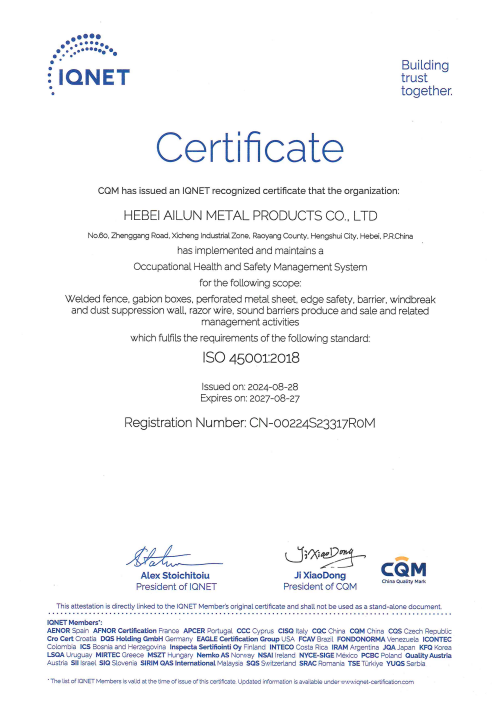
A product quality inspection test report of the type buyers should request before accepting a welded mesh fence delivery.
Market direction: from passive barrier to sensor platform
Betafence Group expanded its perimeter security portfolio in February 2024 by launching new-generation welded mesh systems incorporating intrusion detection and solar surveillance. The significant point is not the product itself but the direction it signals: welded mesh panels are becoming a mounting platform for sensors and power, and panel geometry increasingly has to accommodate hardware, cable routes and maintenance access.
This has a practical consequence for the 358 versus 3D decision. If detection is planned, the design stage is the moment to set conduit routes, post loading allowances and mounting surfaces. A flat anti-climb panel presents a continuous mounting face; a profiled panel interrupts that face at regular intervals and requires brackets designed around the profile. Buyers who add detection two years after installation usually pay more than buyers who provisioned for it on day one.
The supplier landscape is also consolidating around recognisable names, including Betafence, Bekaert, Ameristar Perimeter Security and Jacksons Fencing. Buyers will meet those names alongside manufacturers such as Dengfeng, and the productive comparison is on fabric specification, coating system, documentation and delivery reliability rather than on brand familiarity alone.
Future outlook: hybrid specification and documentation-led procurement
Three shifts are worth planning for. The first is hybrid perimeter design: anti-climb fabric on the high-risk frontages, curved panels on lower-risk boundaries, both from one supplier so that coating, colour and inspection standards stay consistent across the site. This approach usually controls cost better than applying a single fabric everywhere.
The second is documentation-led procurement. As anti-climb requirements are written into more infrastructure specifications, the differentiator between suppliers narrows to evidence: welding consistency, coating thickness records, load test results and inspection reports. Suppliers who can produce that evidence quickly will win tenders that suppliers with equivalent steel cannot.
The third is the normalisation of detection integration as a design-stage consideration rather than a retrofit. Panels that accommodate hardware cleanly will be specified more often, and the geometry debate will increasingly include mounting practicality alongside climb and cut resistance.
FAQ
Is a 358 welded mesh fence harder to climb than a 3D curved welded mesh fence?
Yes, by geometry. The 358 fabric uses a 76.2 x 12.7 mm welded aperture, which is too small for a boot toe or fingertip to gain purchase and too narrow to give a cutting tool a working angle. A 3D curved panel is typically produced with a wider aperture to reduce weight and improve visibility, so climb resistance depends on that aperture, the panel height and any topping specified. The two are not interchangeable on a site with a defined anti-climb requirement.
Does a 358 panel cost more than a 3D curved panel?
At equal panel height, a 358 panel generally carries a higher unit cost because it uses more wire and far more welded intersections per square metre, and because the small aperture produces a heavier panel that demands more from posts and foundations. A 3D panel is typically more economical per linear metre. The correct comparison is whole-perimeter cost, including posts, foundations, installation time and any detection needed to reach the same security outcome.
Can a 3D curved panel be specified on a site that has an anti-climb requirement?
Only if the specification is satisfied. Where the requirement is written as a maximum aperture, an open-aperture 3D panel does not meet it without modification or compensating measures such as detection, topping or a reduced-aperture variant. Buyers should confirm the requirement wording and request the corresponding test or inspection documentation rather than accepting a general statement of security performance.
Which standards should a welded mesh fence specification reference?
EN 10223-7:2012 is the active European standard specifying requirements for steel wire welded panels for fencing in schools, parks and industrial sites. ASTM F2453 / F2453M-14 is the standard specification for welded wire mesh fence fabric with metallic or polymer coatings for high-security applications. Both define fabric and coating requirements; neither assigns a threat rating to a finished perimeter, so the buyer still has to translate site risk into aperture, height, post and foundation requirements.
What determines how long a welded mesh fence lasts?
Coating system and structural rigidity matter more than mesh geometry. Dengfeng controls corrosion damage and structural deformation through hot-dip galvanizing and powder coating combined with a thickened wire structure, and states a service life of over 10 years for its product range. Coastal and industrial atmospheres shorten service life regardless of supplier, so coating thickness and inspection records should be specified explicitly rather than assumed.
What should be inspected before accepting a welded mesh fence delivery?
At minimum: raw material verification, weld integrity across the panel, coating condition and thickness, panel dimensional tolerance against the approved drawing, and a load test on finished product. Dengfeng applies 100% raw material inspection, a finished-product load test and full delivery inspection to every order, and holds ISO9001, SGS and BV certification. Buyers should request the inspection report for their own consignment rather than relying on a generic certificate.
Reference material
For buyers who need panel dimensions, coating options and mesh specifications in one document, Dengfeng publishes its welded wire mesh and galvanized wire product brochure for public download: welded wire mesh and GI wire brochure.
Есть вопросы или нужны дополнительные детали?
Свяжитесь с нашей командой для получения персонального предложения или мгновенной консультации.
Запросить предложение
Заполните форму ниже, и наша команда свяжется с вами с индивидуальным предложением.
Прямой чат WhatsApp
Предпочитаете общаться в реальном времени? Напишите нам в WhatsApp для мгновенной помощи и быстрых ответов.
- Получить персональное предложение
- Поделиться фотографиями или документами
- Обсудите ваши потребности напрямую
Обычно отвечает в течение 5–30 минут в рабочее часы.