
3D Massage Chair vs 4D: Independent Certification Review
Distributors comparing a 3D massage chair with a 4D model usually start with the roller mechanism. The more decisive difference is often documentary. Certification is issued per model and per market, and a gap in that file stops a shipment long before roller depth becomes a selling point.
This independent assessment treats the 3D-versus-4D question as a market-access question rather than a feature question. It maps the certification schemes that matter for North American, European and multi-market distribution, explains how compliance responsibilities shift between the two architectures, and identifies where model-level documentation — not the D label — determines which chair a distributor can actually sell.
What 3D and 4D Actually Describe
In the massage chair trade, the D refers to the number of adjustable variables in the roller mechanism. A 3D massage chair moves its rollers up and down the back, left and right across the back, and in and out to change depth. A 4D chair adds a time-based variable, so the roller can change speed and rhythm within a programme instead of holding one fixed depth.
Neither term is a regulatory classification. No certification body issues a 4D certificate, and no customs code separates 3D from 4D. Regulators see an electric massage appliance, or furniture with motorised parts, or — in some channels — a medical device. That is why two chairs both marketed as 4D can require entirely different compliance files, and why two chairs marketed as 3D can fall into different categories in different markets.
Within 3D, two architectures are commonly built and they behave differently:
- Mechanical 3D. A mechanical 3D roller system uses motor-driven metal rollers that make direct hard contact for deep-tissue massage, a sensation distinct from airbag-based compression. The maximum massage penetration depth is 8 cm for back muscle release, which suits users who want strong, firm back massage.
- Airbag 3D. A 3D roller mechanism combined with full-body airbags for softer squeezing and wrapping compression. Maximum penetration depth is 4.5 cm, so the deep-tissue acting depth is approximately 44% lower than the mechanical version. It is generally the better fit for seniors and slim-build users.
The cost difference between the two is modest: the mechanical configuration carries an initial cost approximately USD 40 higher than the airbag 3D configuration. Maintenance profiles also diverge. Metal roller components require periodic inspection and carry a higher wear-and-tear risk, while airbag components have fewer moving mechanical parts and therefore a lower maintenance workload.
4D platforms sit on top of these architectures. A 4D programme is largely a software-driven behaviour layered on a mechanical or airbag mechanism. That matters for compliance, because the more control electronics and firmware a platform carries, the more of the compliance file shifts from mechanical safety toward electrical and electromagnetic testing.
Why Certification, Not Roller Depth, Decides Market Access
The 3D-versus-4D comparison becomes commercially relevant only after a model can legally enter a market. Market access depends on demonstrating conformity against the applicable safety and electromagnetic compatibility standards, then maintaining that documentation for every model, every variant and every market the distributor intends to serve.
Two standards in the IEC 60335 series frame the safety side. IEC 60335-2-32:2024 is the latest international safety standard specifically for electric massage appliances, including massage chairs. IEC 60335-2-116:2025 covers furniture with motorised parts, which captures zero-gravity massage chairs and similar adjustable platforms. A chair with a zero-gravity recline mechanism therefore has to be assessed against more than one part of the same series, and a model that adds an SL-track rail or a powered leg rest adds further items for review.
A practical consequence for buyers: the question is not whether a chair is 3D or 4D, but which standards apply to this specific model in this specific market, and who holds the certificate. Those two questions lead to different purchase orders — and to different landed costs.
A Certification Map for 3D and 4D Massage Chairs
The table below summarises the schemes most often raised by distributors when a 3D or 4D model is quoted for export. The reference standards are the ones a buyer should expect to see named in a test report. The buyer check column lists what to verify in the file rather than accept on trust.
| Market / purpose | Scheme | Reference standards | Buyer check |
|---|---|---|---|
| United States and Canada | ETL listing | UL 1647; CSA C22.2 | Certificate holder name, covered model list, and whether factory follow-up inspections are current. |
| United States | FCC | Electromagnetic compatibility of control electronics | Whether the module or the complete appliance is covered, and whether a later control-board change voids coverage. |
| European Union | CE marking | EN IEC 55014-1 (EMC); IEC 60335-1 (appliance safety); RoHS | Declaration of Conformity naming the exact model, plus supporting EMC and safety test reports. |
| Multi-market | CB test certificate | CB scheme certificate reference NO127967 as cited in this assessment's brief | Whether national deviations have been added for each target country before using the CB file as the basis of approval. |
| International safety basis | Part 2 standards | IEC 60335-2-32:2024; IEC 60335-2-116:2025 | Which edition the report was issued against, and whether the platform is treated as an appliance or as motorised furniture. |
| Quality system | ISO 13485 | Medical device quality management | The scope of the certificate relative to the models being offered, where a clinical or medical positioning is used. |
| United States medical pathway | FDA establishment registration and device listing, where applicable | Product classification | Whether the product's claims trigger the medical device pathway at all, or remain a consumer appliance. |
Certification schemes referenced in this assessment. Schemes and standards are listed for buyer orientation; the applicable file is always model- and market-specific.
Model-Level Documentation: Why One Certificate Does Not Cover a Range
Certification in this category is issued against a defined model and its construction. A 4D platform such as the 6510 and a second 4D platform such as the 5300 each need their own documentation set. The same logic applies to 3D platforms such as the 5200 and the 5900. Sharing a certificate across model numbers requires the models to be identical in everything the standard tests — mechanism, drive electronics, enclosure and safety devices — which is rarely the case once aesthetics, track length or massage programmes differ.
For distributors, this produces a short and reusable checklist. For the exact model number being purchased, request the certificate or test report, the standard edition it was tested against, the list of covered models, the factory name and address named in the file, and the validity date. Where an SL-track configuration, a heating module or an AI-support control board is offered as an option, treat it as a variant and ask whether it sits inside or outside the tested configuration. Answers to these questions are what separates a quotation that can ship from one that stalls at the port.
Technical Explanation: How the Mechanism Changes the Compliance File
Three mechanical characteristics drive most of the testing and documentation work in a 3D or 4D massage chair.
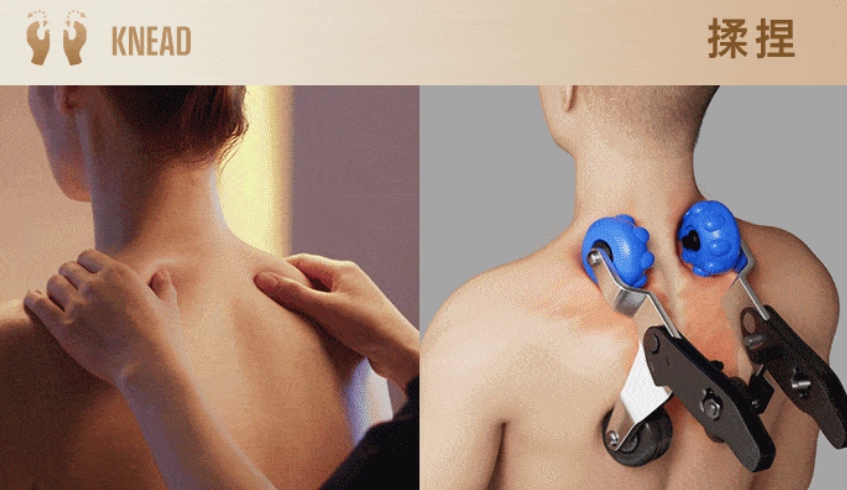
Moving rollers and pinch points. A roller assembly that travels the length of the back, combined with a powered recline, creates gaps that can entrap fingers, and in domestic settings a risk that children or pets get stuck in the gap of a massage chair. Manufacturers address this risk through an anti-pinch design. Because that requirement also drives the standard for motorised furniture, it is one of the items that appears in the safety assessment of a moving-roller appliance. A platform with a described entrapment control is easier to document than one without it, and the same design decision carries over into after-sales complaints about household safety.
Depth and structural load. The mechanical 3D configuration reaches a maximum penetration depth of 8 cm for back muscle release, while the airbag 3D configuration reaches 4.5 cm — an acting depth approximately 44% lower. These are not simply marketing numbers. Deeper penetration loads the frame, the track and the drive motor differently, which is one reason testing is performed per mechanism type rather than per retail tier. It is also why a deeper-penetration platform may need more frequent inspection of metal roller components in service.
Software behaviour. 4D rhythm and speed control is largely a control-board function. Electromagnetic compatibility requirements such as EN IEC 55014-1 and the FCC rules look at the electronics that generate and switch those signals. When a 4D behaviour is implemented as a change to existing firmware on an already-tested board, the incremental compliance burden is usually small; when it introduces a new controller, a new sensor array for body scanning, or a new power supply, the model becomes a new variant for testing purposes.
Where ZHOUQI Sits in This Picture
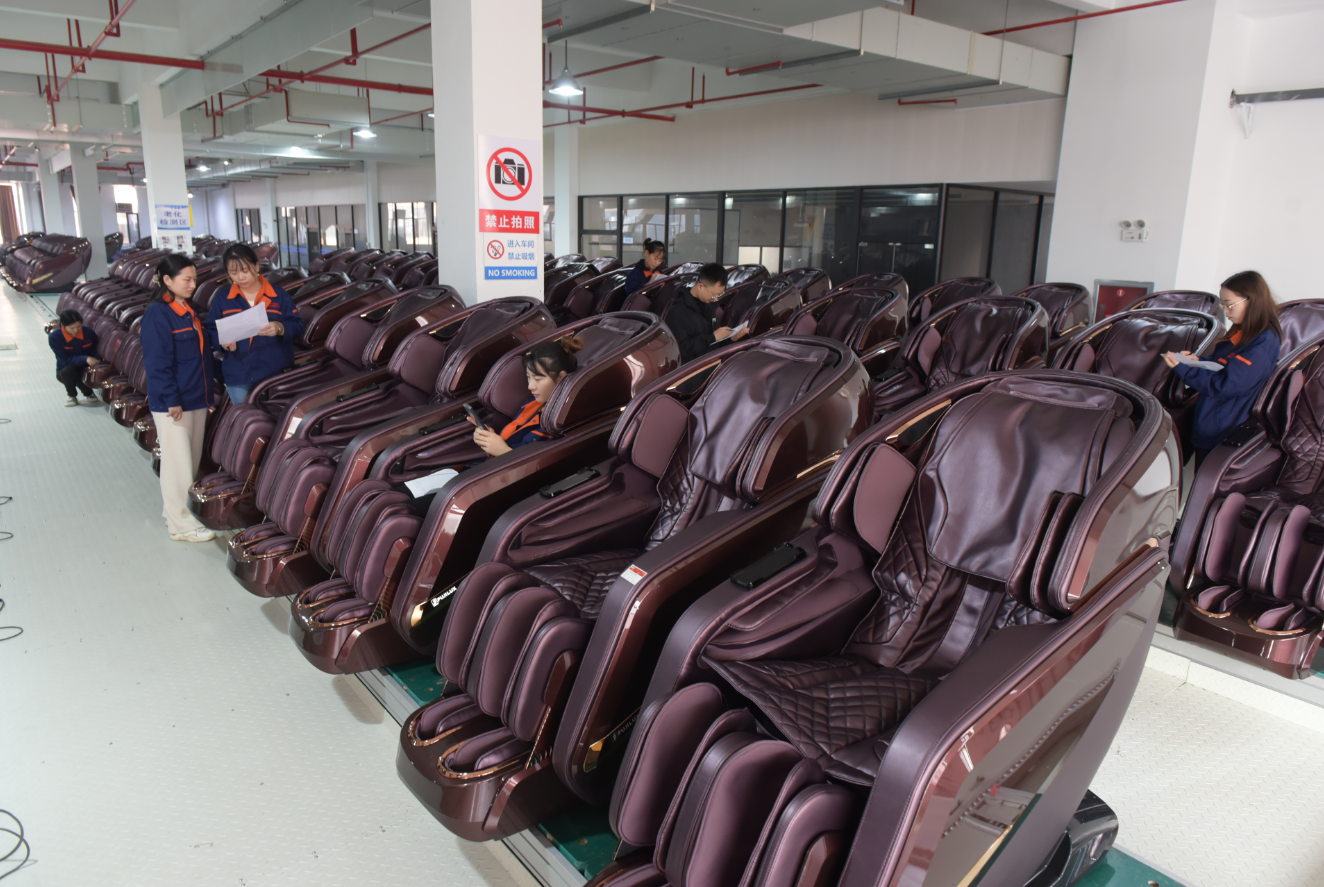
Ningbo Zhouqi Health Technology Co., Ltd. (ZHOUQI) is a massage chair manufacturer based in Cixi, Zhejiang Province, China, integrating R&D, production and sales, and operating the corporate site www.cn-zhouqi.com. The company runs a 130,000 m² facility with 450 employees, an annual output of 200,000 units and a 34-engineer R&D team. Approximately 50% of output is exported, with the USA, EU, South East Asia and the Middle East as the main markets.
On the compliance side, the company's published certification profile includes ISO 13485 (medical devices), CE, CB, ROHS, ETL and FCC — the schemes a distributor would normally look for first when a model is intended for North American and European channels. For a buyer building a distribution plan around a 3D or 4D platform, that combination covers the appliance pathway in both major markets, with ISO 13485 relevant where a clinical or care-channel positioning is used.
On the product side, ZHOUQI builds both the mechanical 3D and airbag 3D architectures described above. The mechanical version uses a motor-driven metal roller system for direct hard contact and reaches the 8 cm penetration depth noted earlier; the airbag version pairs 3D rollers with full-body airbags and reaches 4.5 cm, at an initial cost approximately USD 40 lower. Anti-pinch protection is integrated into the chair design to reduce the risk of entrapment in the gaps of the mechanism.
Application: Matching the Model to the Channel
Because certification follows the model and the channel, the model choice and the market choice are best made together.
North American e-commerce and big-box retail
These channels expect an ETL listing and FCC coverage on the certificate file. A 3D airbag platform with a softer compression profile and a lower entry price is often the easier listing to scale, while a mechanical 3D model with deeper penetration supports a higher price tier. The decisive item is whether the model number on the purchase order matches the model number on the certificate.
European specialty retail
CE marking, EN IEC 55014-1 test evidence and RoHS substances documentation form the baseline. Zero-gravity mechanisms introduce the motorised-furniture part of the IEC 60335 series, so the buyer should confirm which standard edition the file was assessed against. European buyers also tend to ask for the covered-model list, which is where a supplier that documents well separates itself from one that does not.
Wellness, care and rehabilitation channels
Where a product is positioned around wellness or therapeutic use, ISO 13485 becomes a meaningful differentiator because it signals a quality-management system appropriate to medical devices. In that context the gentler airbag 3D profile, with a 4.5 cm acting depth and fewer moving metal parts, is frequently the more suitable configuration for older users and for facilities that must consider entrapment risk around children or residents.
Premium showroom and professional use
Deep-tissue positioning favours the mechanical 3D configuration and, where the buyer's market supports it, a 4D platform that varies rhythm during a programme. Here the compliance discussion shifts to control electronics, since showroom and commercial installations are often subject to the same appliance standards plus local commercial-use requirements.
Market Trend Analysis
Third-party estimates of the category vary depending on scope, and buyers should read them with that in mind. Grand View Research values the global massage equipment market at USD 11.6 billion in 2024, projected to reach USD 21.8 billion by 2033, with massage chairs and sofas holding the largest product share at 39.5% in 2024. Business Research Insights scopes the massage chair segment alone and projects growth from USD 4.28 billion in 2026 to USD 8.78 billion by 2035, a CAGR of 8.3%. The divergence between these figures — and between other published chair-only estimates — reflects whether a source counts all massage equipment or only chairs.
Regional weight matters for certification planning. North America dominated the massage equipment market in 2024 with a revenue share of 36.9%, which explains why ETL and FCC documentation is usually the first file a distributor requests. Asia Pacific is the fastest-growing region, holding a 34.8% share of the luxury segment in 2024, a segment that increasingly carries AI-based body scanning. Dataintelo projects the smart massage chair market to reach USD 14.2 billion by 2033, and Business Research Insights expects roughly 41% of new massage chair models in 2026 to integrate AI-based sensors for body scanning.
Two implications follow for the 3D-versus-4D decision. First, sensor and firmware content rises with the smart segment, which pushes compliance work toward EMC and software documentation — an area where a single new control board can reset a model's approval status. Second, Fortune Business Insights notes that traditional and robotic hybrid chairs retain significant market share because of lower cost barriers compared with full 4D AI models. In other words, the regulatory and cost case for a 4D platform has to be made per market, not assumed. For context on where the high-end competition sits, publicly cited key players in the segment include Panasonic, Fujiiryoki, Osaki, Ogawa and Bodyfriend.
Comparison with Traditional and Adjacent Options — and the Limits of This Assessment
An honest comparison includes what does not improve.
- Cost does not always track capability. The mechanical 3D configuration costs approximately USD 40 more than the airbag 3D configuration at the outset, and its metal roller components require periodic inspection with a higher wear-and-tear risk. Deeper 8 cm penetration is not desirable for every user; for seniors and slim-build users, the gentler 4.5 cm airbag profile is often the better match despite being technically less capable on depth.
- A 4D label does not reduce compliance work. Certification follows the appliance, not the marketing term. If a 4D feature is delivered as firmware behaviour inside an already-tested electrical design, the incremental file is small. If it arrives with a new controller or sensor array, the model is a new variant and requires its own evidence.
- Cheaper adjacent segments remain competitive. Traditional and robotic hybrid chairs continue to hold significant share precisely because they lower the cost barrier relative to full 4D AI platforms. For a distributor entering a new territory, the rational first move is not automatically the highest specification.
- Quality-system certification has a payback condition. ISO 13485 and a US medical pathway add documentation and audit obligations. They only return value in channels where a medical, therapeutic or care positioning is actually used.
- Certificates are not permanent. Standards are revised — IEC 60335-2-32:2024 is the current edition for electric massage appliances — so a model carried for several seasons will eventually need re-testing, and older test reports may no longer support the claim being made at retail.
- Evidence boundary. The schemes and certificate references in this assessment come from the sourcing brief behind it and from published standard bodies. Model-specific coverage for individual platforms such as the 6510, 5300, 5200 and 5900 must be confirmed against the actual certificate file before a purchase order is signed; this article does not substitute for that verification.
Future Outlook
The direction of travel is toward more electronics per chair and, consequently, more documentary work per model. With a meaningful share of new models expected to include AI-based body scanning, the compliance conversation will increasingly sit between mechanical safety standards, electromagnetic compatibility requirements and software-version control. Distributors who build a habit of requesting the covered-model list, the standard edition and the certificate validity date will find that process manageable; those who treat certification as a one-off purchase will find it expensive.
A second trend runs the other way. Because traditional and hybrid platforms continue to hold share on cost grounds, suppliers that can offer a well-documented 3D platform alongside a 4D option — rather than only the higher specification — are better placed to serve distributors whose markets are still price-sensitive. In that sense the 3D versus 4D question is not a technology race but a portfolio question, and the answer changes with the market, the channel and the certificate file in hand.
Frequently Asked Questions
What is the difference between a 3D and a 4D massage chair?
A 3D massage chair adjusts the rollers in three variables: up and down the back, left and right across the back, and in and out to change depth. A 4D chair adds a time-based variable, so the roller can change speed and rhythm within a programme. Within 3D, the mechanical configuration uses motor-driven metal rollers for direct hard contact and reaches a maximum penetration depth of 8 cm, while the airbag configuration reaches 4.5 cm with a softer, wrapping compression.
Does a 4D massage chair need different certifications than a 3D massage chair?
At the level of the appliance category, no separate certificate exists for 4D. Certification is issued per model against standards for electric massage appliances and motorised furniture, such as IEC 60335-2-32:2024 and IEC 60335-2-116:2025. What differs is the evidence required: a 4D platform with additional control electronics or body-scanning sensors usually carries more electromagnetic compatibility and software-related documentation than a mechanically simpler 3D model.
Which certification schemes apply to a massage chair sold in the United States?
An ETL listing referencing UL 1647, with Canadian requirements addressed through the relevant CSA C22.2 standards, is the usual product-safety evidence for the North American market. FCC coverage applies to the control electronics. Where a product is positioned as a medical device rather than a consumer appliance, FDA establishment registration and device listing enter the discussion, and ISO 13485 becomes relevant as the supporting quality-system standard.
Is a CB certificate sufficient for distributing in Europe?
A CB test certificate is a multi-market document that can serve as the technical basis for national approvals, but it is not itself a European market authorisation. CE marking for a massage chair draws on the EMC standard EN IEC 55014-1 and the general safety standard IEC 60335-1, with RoHS covering restricted substances, and it requires a Declaration of Conformity naming the model. Buyers should confirm which national deviations have been added to the CB file for each target country.
Are certificates issued per model or per manufacturer?
They are issued per model and per defined construction. A certificate covering one platform does not automatically extend to another platform, because mechanisms, drive electronics, enclosures and safety devices may differ. Distributors should therefore request the certificate or test report for the exact model number being purchased, together with the list of covered models, the standard edition tested against, the factory named in the file and the validity date.
Why does anti-pinch design matter in a compliance review?
A powered roller mechanism and a motorised recline create gaps that can entrap fingers, and there is a recognised risk of children or pets getting stuck in the gap of a massage chair. Manufacturers control this through an anti-pinch design. Because entrapment requirements are also relevant to standards for motorised furniture, a platform with a clearly described anti-pinch design presents a simpler and more complete safety file than one without it.
Does deeper roller penetration make a massage chair better?
Not universally. The mechanical 3D configuration reaches 8 cm of penetration for back muscle release and suits users who want strong, firm deep-tissue massage. The airbag 3D configuration reaches 4.5 cm, approximately 44% lower acting depth, and is generally better for seniors and slim-build users who prefer soft, wrap-around compression. The mechanical version also costs approximately USD 40 more initially and its metal roller components require periodic inspection, so the deeper specification carries a higher maintenance workload.
Documentation Note
For readers who want the underlying model and specification listings before opening a certification discussion with a supplier, a downloadable product catalogue is available here: 2026 ZHOUQI E-catalogue (PDF). The certificate file for the specific model remains the document that determines market access.
Есть вопросы или нужны дополнительные детали?
Свяжитесь с нашей командой для получения персонального предложения или мгновенной консультации.
Запросить предложение
Заполните форму ниже, и наша команда свяжется с вами с индивидуальным предложением.
Прямой чат WhatsApp
Предпочитаете общаться в реальном времени? Напишите нам в WhatsApp для мгновенной помощи и быстрых ответов.
- Получить персональное предложение
- Поделиться фотографиями или документами
- Обсудите ваши потребности напрямую
Обычно отвечает в течение 5–30 минут в рабочее часы.