
428 vs 520 vs 530 Motorcycle Chains: Independent Buyer Comparison for 125–1400cc Motorcycles
428 vs 520 vs 530 Motorcycle Chains: Independent Buyer Comparison for 125–1400cc Motorcycles
A 428, a 520 and a 530 motorcycle chain are three different size families, not three quality levels. That single distinction is the basis of this comparison. In the displacement-based selection reference published by CHJC Motorcycle Chains, the 428 chain is listed for the 125–250cc band, the 520 chain for approximately 250–600cc, and the 530 chain for 600–1400cc. An importer, distributor or private-label programme covering the full 125–1400cc range therefore has to carry all three sizes and has to explain the difference to dealers who would otherwise buy on price alone.
For a buyer at the decision stage, the useful question is narrower than “which size is best”. It is: for each model in my catalogue, which of the three sizes does the engine and sprocket set actually require; which construction variant inside that size fits the duty cycle; and what evidence should a supplier produce before a container is confirmed? This article answers those questions from the manufacturer’s published selection reference, product and quality documentation, and third-party reference material — and it separates what that evidence establishes from what it does not.
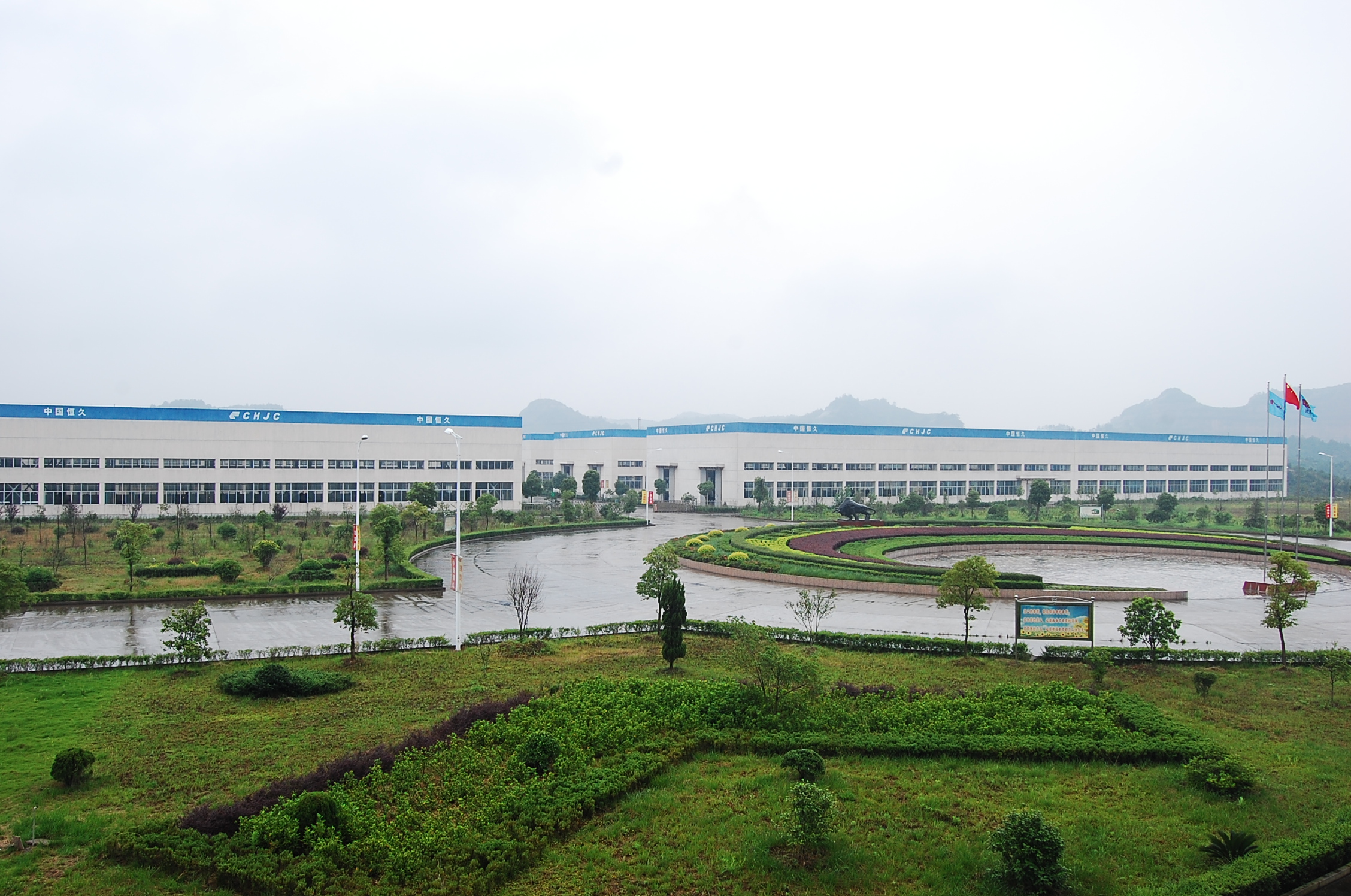
Chain sizing is decided on the production and specification side, then inherited by every dealer in the distribution chain.
The two expensive mistakes in motorcycle chain sizing
Chain sizing errors run in both directions, and both directions carry cost. CHJC’s selection reference states the consequence of each plainly: smaller chains fitted to big motorcycles tend to stretch and break, while heavy chains fitted to small bikes create extra power loss. A buyer who treats a larger size as an automatic durability upgrade is therefore making a specification change, not a quality upgrade.
The second complication is overlap. The reference bands are not mutually exclusive: 420 covers 70–125cc, 428 covers 125–250cc, 520 covers 250–600cc, 525 covers 400–900cc and 530 covers 600–1400cc. A 125cc model sits at the boundary of 420 and 428; a 600cc model sits at the boundary of 520 and 530; a 750cc model sits inside both the 525 and 530 windows. Overlap is not a defect in the reference. It is the manufacturer’s way of signalling that displacement narrows the choice but does not close it.
What the numbers 428, 520 and 530 actually encode
Chain pitch is the centre-to-centre distance between two adjacent pins, and it is the basic dimensional specification of the chain. Pitch defines chain models such as 415, 420 and 520, and it must match the sprocket tooth pitch for the chain and sprocket to mesh smoothly. The specification numbers stand for pitch and inner width together, and those two dimensions determine tensile strength — the load the chain is built to carry.
This is why the three sizes cannot be ranked as grades. The number tells a buyer which sprocket family and load class the chain belongs to. It says nothing about how well that chain was made, what steel went into it, how the pins were heat-treated, or whether the rollers are sealed.
Build quality is a separate axis. Within its 415, 420, 428, 520, 525 and 530 range, CHJC lists standard roller chain, heavy-duty H series chain, O-ring sealed chain, X-ring sealed chain and solid bush chain as available construction versions. Two 520 chains from the same factory can therefore be genuinely different products with different friction, sealing and maintenance profiles. A comparison that ranks 428, 520 and 530 by list price per metre is comparing unlike items unless the construction version is specified at the same time.
428 vs 520 vs 530: the comparison at a glance
| Decision factor | 428 | 520 | 530 |
|---|---|---|---|
| Displacement band in the CHJC selection reference | 125–250cc | 250–600cc | 600–1400cc |
| Position among the three sizes | Lowest band of the three | Middle band | Highest band |
| Load context driving the recommendation | Lower engine torque of the small-displacement class | Mid-range torque of the 250–600cc class | Highest torque band, 600–1400cc |
| Adjacent band that overlaps it | 420 covers 70–125cc below | 525 covers 400–900cc above | 525 covers 400–900cc below |
| Mismatch risk stated in the reference | Cannot be pushed into large-displacement use: a smaller chain on a big bike tends to stretch and break | Same rule applies above its band | Fitting it to a small bike creates extra power loss |
| Construction versions listed across the range | Standard roller, heavy-duty H series, O-ring sealed, X-ring sealed, solid bush — confirm the specific combination available for the exact size and link count ordered | ||
Read across the table rather than down a single column. The first four rows determine fitment; the last row determines what the buyer is actually purchasing.
428 chain: the 125–250cc band
The 428 sits at the entry point of the three-size comparison. It is the size the reference maps to 125–250cc machines, which in most export catalogues means commuter and naked models, plus the aftermarket modification segment that CHJC lists among its target applications alongside sport bikes, off-road motorcycles and ATVs.
The characteristic buying error at this end of the range is the well-intentioned upgrade. Because a 530 chain sounds stronger, a dealer may fit one to a 150cc commuter for durability. The reference is explicit that heavy chains on small bikes create extra power loss, so the “upgrade” buys a heavier drivetrain at the cost of delivered efficiency. The reverse error is more serious: a 428 pushed into 400cc-class use falls outside its band, where the general rule warns that a smaller chain on a big bike will stretch and break rather than simply wear faster.
Two checks close the 428 decision. First, confirm the boundary case: a 125cc model sits between the 420 and 428 bands, so the fitted sprocket set decides. Second, confirm the construction version. Fitting a sealed O-ring 428 to a low-maintenance commuter and a non-sealed 428 to a track-oriented machine are both defensible, but they are different purchasing decisions and should not share one SKU line.
520 chain: the 250–600cc band and its overlap zone
The 520 occupies the middle of the comparison and the widest practical overlap. Its band runs to 600cc, while the 525 band begins at 400cc and the 530 band begins at 600cc. In practice that means a 400cc, 500cc or 600cc model can each be argued into two windows on displacement alone.
For a buyer, this is where specification discipline pays. The reference does not allow displacement to settle the question by itself; the chain must be compatible with the matched sprockets, and the size should not be changed purely on displacement. A 600cc model that is factory-fitted with a 520 drive should not be converted to 530 on the assumption that the larger number is safer, because the conversion changes the sprocket set, the rotating mass and the power-loss balance together.
The 520 is also the size where mixed-catalogue procurement is most exposed to substitution. When a dealer runs short of one size and asks whether “the next one up” will do, the correct answer is no — not because of brand preference, but because pitch must match the sprocket tooth pitch. CHJC accepts mixed container loading for different standard sizes of motorcycle chains and sprockets, which removes the commercial reason for that substitution in the first place.
530 chain: the 600–1400cc band and ATV duty
The 530 serves the top of the reference range, 600–1400cc, where engine torque and transmission impact load are highest. Durability at this end depends on the link itself rather than the size number: CHJC describes its 530 chain as using heat-treated links with high tensile strength, and states that it is capable of heavy-duty off-road scenarios including sand, mud and steep slopes.
The 530 also carries a documented ATV application that buyers outside the motorcycle trade often miss. CHJC lists 78L and 96L as the more frequently used link counts for ATV applications, with other link counts also available, and states compatibility with models including Explorer 300, Explorer 400, MUD 400 and Ranger 450, with direct replacement of the original chain on many ATV models. Those fitment statements are the manufacturer’s; a buyer should still confirm the link count against the specific model rather than assume a default length, because ATV swingarm geometry and sprocket sizing vary by model.
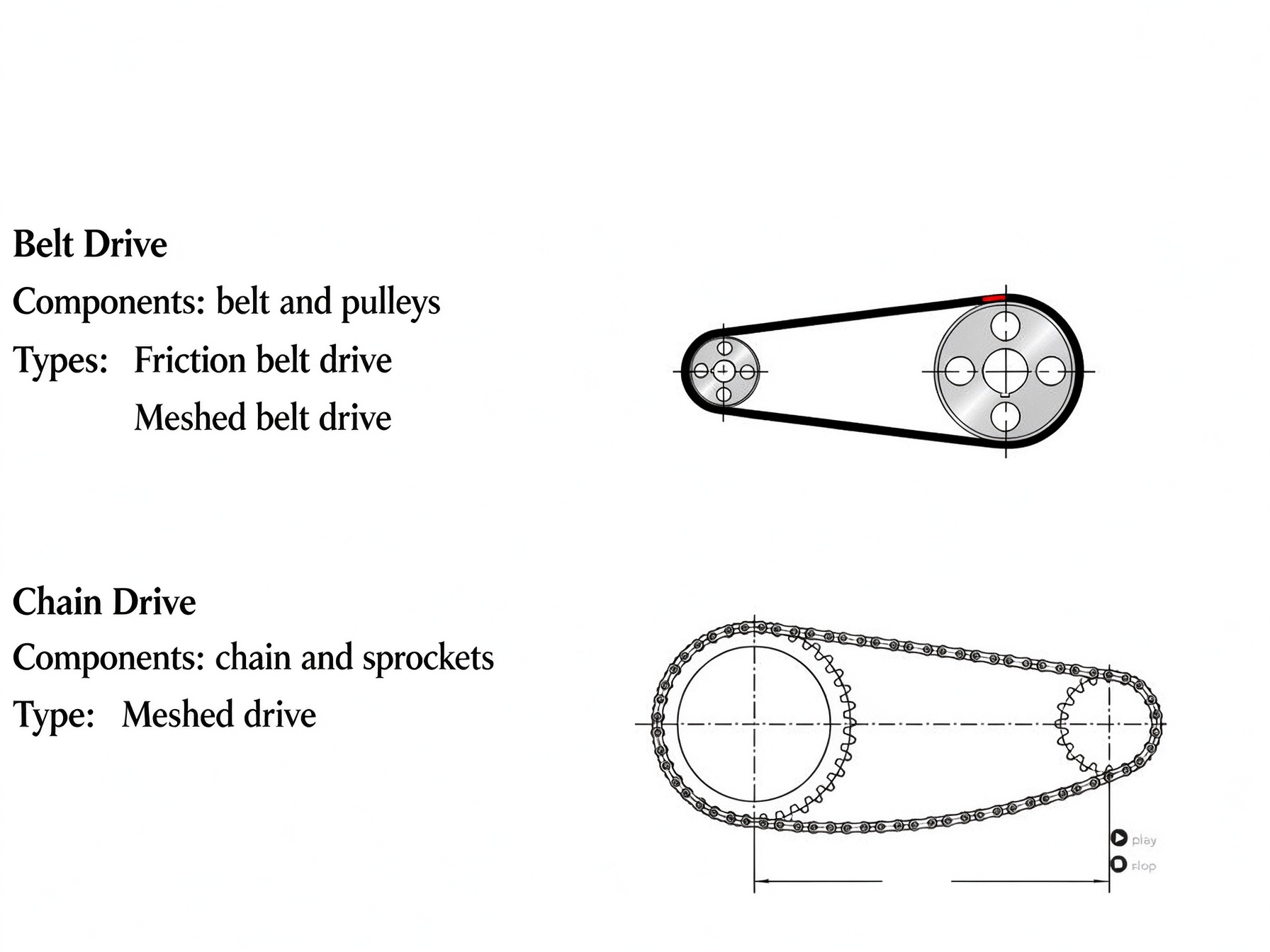
Drive-type comparisons and size comparisons answer different questions; the two should not be merged into one purchasing decision.
Seal type usually decides more than the size number
Once the size is fixed, the construction version drives most of the real-world difference in service life. An O-ring seals the built-in grease inside the chain and blocks mud and rainwater from the pin–bushing friction area, preventing dry wear and rust, slowing elongation and improving wear resistance. That mechanism is what separates a sealed chain from an open one in the same size.
CHJC’s own selection guidance sets the trade-off clearly. For harsh outdoor conditions and buyers with lower maintenance capacity, a sealed O-ring chain is preferred. For short-term racing on track, with frequent maintenance and a focus on low resistance, an ordinary non-sealed chain can be chosen: it has less friction resistance, costs less and requires frequent maintenance. The same logic applies whether the size under discussion is 428, 520 or 530 — which is precisely why a price comparison across sizes without a seal-type comparison is incomplete.
Materials and process: where same-size chains actually differ
Size and seal type still leave room for substantial differences in what the chain is made of. CHJC specifies 45Mn alloy steel for inner and outer plates; 20CrMnMo, 20CrNiMo or 30CrMnTi for pins; 20Mn, 20CrMnMo or 20CrNiMo for bushes; and 10#, 20#, 35# or 20CrMnMo steel for rollers. Matching sprockets are produced in AISI 1045, SAE 1045, 40Cr or 20CrMnTi. Chain components go through carburizing, quenching and tempering to achieve high hardness and good wear resistance.
Verification is where these claims become procurement evidence rather than catalogue copy. CHJC states that components and finished chains are 100% inspected, using automatic optical inspection, in-process sampling and a final manual recheck. The company holds ISO 9001 quality management certification and Brazil INMETRO certification, and operates with CNAS-accredited testing capability, with test reports available. For a buyer comparing suppliers of the same nominal 520 chain, that inspection and certification stack is a more reliable differentiator than the size number, which every supplier will quote identically.
Chain versus belt drive: what the comparison does and does not prove
Buyers sometimes widen the decision from “which chain size” to “chain or belt”. CHJC’s published comparison against rubber belt drive states higher breaking load and better wear resistance, quantifies the breaking-load advantage at 30%, positions chain drive as best suited to heavy-load motorcycles, and cites lower long-term maintenance cost, a longer service interval and stable transmission efficiency under heavy load.
The boundary matters as much as the claim. This is a single manufacturer’s comparison of drive types; it is not an independent test of every motorcycle, and it does not measure noise, weight or total cost of ownership across applications. Belt drive remains a legitimate original-equipment choice where the vehicle was designed around it. The comparison also does not transfer into the 428 versus 520 versus 530 question: a breaking-load advantage over belt drive says nothing about which of the three chain sizes belongs on a given engine.
Replace chain and sprocket as a matched set
Chain and sprocket form a meshing transmission pair and wear together. Worn sprocket teeth develop hooked profiles; a new chain fitted onto those teeth meshes badly, concentrates impact load and elongates rapidly, and the worn sprocket can break teeth in the process. That is why set replacement is the recommended practice rather than a sales preference.
For an importer, the matched-set rule has a practical consequence at SKU level. Because CHJC produces both the chain and the matching sprocket across its size range, chain-and-sprocket kits reduce the risk of a dealer pairing a correct chain with an incorrect or worn sprocket. It also makes the pitch-matching check a supplier-side responsibility instead of a market-side guess.
A verification checklist before confirming a 428, 520 or 530 order
- Confirm pitch against the fitted sprocket, not just the number on the old chain. Pitch must match sprocket tooth pitch.
- Confirm the displacement band per model, and resolve every model that falls in an overlap zone (125cc, 400–600cc, 600–900cc) against its factory specification.
- Request specification sheets or drawings for standard models so that dimensions can be checked before sampling.
- Ask for tensile and fatigue test data for the specific size, supplied together with the inspection report rather than as a marketing figure.
- Check the certification relevant to your market: ISO 9001 as the baseline quality management reference, INMETRO for Brazil market access.
- Test samples before committing to volume; samples are offered for quality and performance verification.
- Fix the link count per application — 78L and 96L are the more frequently used counts for 530 ATV drives, with other counts available.
- Agree packaging and branding: neutral packing without supplier logo, OEM/ODM support, and colour boxes produced to your own artwork files.
- Confirm commercial terms: mixed container loading of different standard sizes; flexible MOQ on standard models with higher MOQ on customised specifications; mass production lead time normally 30–45 working days after deposit confirmation, with stock models shipped faster; FOB pricing as standard, with CIF, CFR or other terms available; TT, letter of credit or OA payment; quotations normally valid 30 days, subject to raw material and exchange-rate movement.
- Secure the technical support agreement: chain-to-sprocket ratio matching, installation, tension adjustment and lubrication guidance, plus troubleshooting for noise and skipped teeth.
Maintenance expectations belong in the same conversation. CHJC’s guidance calls for chain slack of 20–30mm measured at the tightest point, cleaning and lubrication every 300–500km or after riding in rain, O-ring-safe lubricant rather than ordinary oil, and replacement once elongation exceeds the limit or stiff links, cracks or heavy corrosion appear. Those intervals are not size-specific, but the penalty for skipping them is: a small chain on a big bike is the configuration where neglect turns into breakage rather than accelerated wear.
What the market and standards data does and does not show
Market sizing for motorcycle chains specifically is weaker than the category headline suggests. One commercial research source estimates the global motorcycle chain market at USD 2.89 billion in 2024 and projects a 7.2% compound annual growth rate from 2025 to 2035. Published estimates for the same category range up to USD 3.8 billion, and the difference is attributed to whether industrial drive chains or sprocket kits are included. Buyers should treat these as directional signals, not as audited chain-level figures, and should not average them.
Trade context is broader still. China exported approximately USD 6.7 billion of motorcycle and moped parts and accessories in 2025 according to the cited trade profile — a parent-category figure covering all parts and accessories, not drive chains. It indicates the scale of Chinese supply in the category; it cannot be used as a motorcycle chain export value, and it should not be used to infer chain-level capacity.
On standards, the technical reference identified for this category is ISO 10190, described as covering motorcycle chain characteristics and test methods, with JCAS 12 cited alongside as a Japanese chain association reference. ISO 606:2015 covers short-pitch precision roller and bush chains, attachments and associated sprockets, and is useful for dimensional and strength terminology, but motorcycle chains themselves fall outside its stated scope, so it is not a substitute for motorcycle-chain requirements. The current status and full requirements of ISO 10190 should be confirmed directly against the standards record before being cited in a tender document.
Outlook: what would change this comparison
Nothing in the reviewed evidence changes the underlying logic: 428, 520 and 530 remain three size families mapped to three displacement bands, and the matched sprocket set remains the deciding input. What would sharpen the comparison is chain-level data that the reviewed sources do not provide — verified market size and volume by chain type, official trade values isolated to chain-level HS lines, and comparable test data across suppliers rather than within one.
For buyers, the practical implication is conditional rather than promotional. If a catalogue is being widened toward the 600–1400cc band or toward ATV applications, the 530 line becomes a specification question about link counts, seal type and matched sprockets before it becomes a volume question. If the mix stays in commuter territory, the risk sits at the 420/428 boundary, where oversizing is the more likely error. In both cases the decision is settled by the model list and the sprocket set, not by the size number alone.
About the manufacturer
CHJC Motorcycle Chains is the motorcycle chain brand of Jiangxi Hengjiu Chain Transmission Co., Ltd., a subsidiary of Hengjiu Group, which has manufactured chain drive products since 1953. The Jiangxi operation, established in 2006, produces motorcycle roller chains and matching sprockets in sizes 415, 420, 428, 520, 525 and 530 from a 13,000㎡ facility with 106 employees and a 10-technician R&D team, exporting roughly 80% of output to markets including Mexico, Vietnam, Peru, Brazil, India, Indonesia, Colombia, Bangladesh, Egypt, Malaysia, Kazakhstan, the Philippines, Pakistan, Nigeria, Russia, Tanzania, Ghana, Argentina, Venezuela, Ecuador, Thailand and Turkey. Group capability includes nine R&D and production bases, CNAS-accredited testing laboratories and an annual motorcycle chain output above 10 million metres. More detail is available at CHJC Motorcycle Chains.
FAQ
What is the actual difference between a 428, a 520 and a 530 motorcycle chain?
They are different size families. The specification numbers stand for pitch and inner width, and those two dimensions determine tensile strength. Chain pitch is the centre-to-centre distance between two adjacent pins and must match the sprocket tooth pitch for smooth meshing. In CHJC’s displacement reference, 428 covers 125–250cc, 520 covers approximately 250–600cc and 530 covers 600–1400cc.
Which chain size should a 125cc or 250cc motorcycle use?
The reference maps 428 to 125–250cc and 420 to 70–125cc, so a 125cc model sits on the boundary between two sizes and should be confirmed against the sprocket set actually fitted. Fitting a heavier 530 chain to a small-displacement bike is not a free upgrade: heavy chains on small bikes create extra power loss.
Is a 520 chain strong enough for a 600cc motorcycle, or should the bike move to 530?
The 520 band runs to 600cc and the 530 band starts at 600cc, so a 600cc model falls inside both windows. Displacement is a preliminary guide only; the chain must be compatible with the matched sprockets, and chain size should not be changed purely on the basis of engine capacity. The factory specification and sprocket set for the exact model settle the question.
Do 428, 520 and 530 chains come in O-ring and X-ring versions?
CHJC lists standard roller, heavy-duty H series, O-ring sealed, X-ring sealed and solid bush versions across its 415/420/428/520/525/530 range, and the specific combination available for a given size and link count should be confirmed at enquiry. O-rings retain grease in the pin–bushing area and block mud, water and dust, reducing dry wear and slowing elongation. Sealed chain suits harsh outdoor use and longer maintenance intervals; non-sealed chain is chosen where lower friction resistance and frequent maintenance are acceptable.
What link count is needed for a 530 chain on an ATV?
78L and 96L are the more frequently used link counts, and other link counts are also available. CHJC lists compatibility with models including Explorer 300, Explorer 400, MUD 400 and Ranger 450, with direct replacement of the original chain on many ATV models. Link count should be verified against the specific model rather than assumed.
How can a buyer verify a 428, 520 or 530 chain before placing a bulk order?
Request the specification sheet or drawing for standard models, ask for tensile strength and fatigue life data supplied together with the inspection report, check the certification relevant to the destination market, and test samples before committing to volume. Confirming pitch against the sprocket set, plus the link count, packaging, MOQ and lead time at the same stage, prevents re-specification after the order is placed.
The full CHJC motorcycle chain and sprocket catalogue, including size and construction references, can be downloaded here: CHJC product catalogue (PDF).
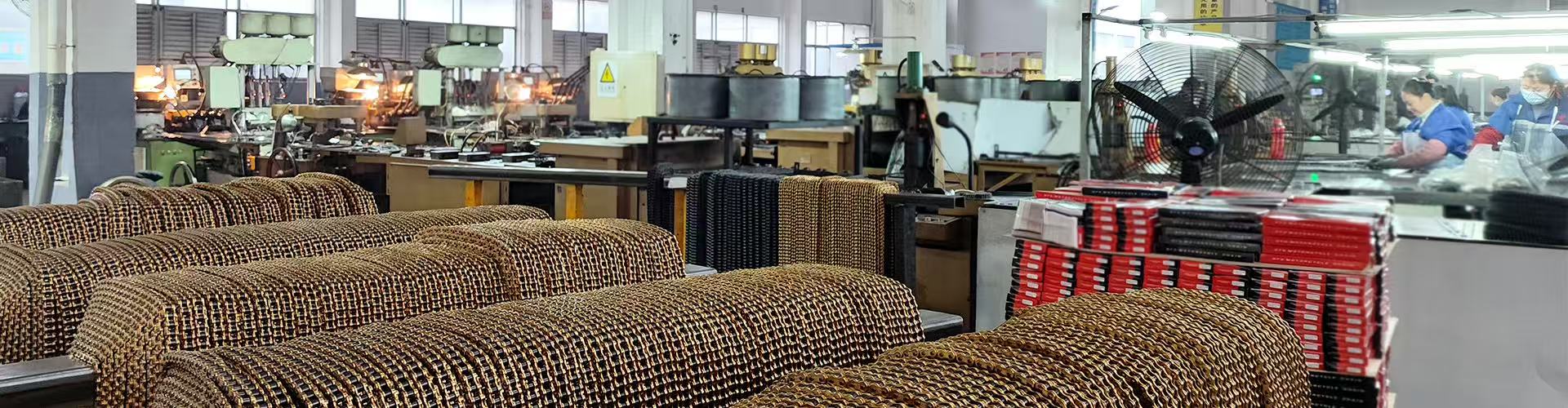
Inspection and test documentation, not the size number, is what separates competing suppliers of the same chain specification.
Есть вопросы или нужны дополнительные детали?
Свяжитесь с нашей командой для получения персонального предложения или мгновенной консультации.
Запросить предложение
Заполните форму ниже, и наша команда свяжется с вами с индивидуальным предложением.
Прямой чат WhatsApp
Предпочитаете общаться в реальном времени? Напишите нам в WhatsApp для мгновенной помощи и быстрых ответов.
- Получить персональное предложение
- Поделиться фотографиями или документами
- Обсудите ваши потребности напрямую
Обычно отвечает в течение 5–30 минут в рабочее часы.