
45# vs 40Cr: SB-Y1 Hydraulic Cylinder Rod Decision Guide
45# vs 40Cr: SB-Y1 Hydraulic Cylinder Rod Decision Guide
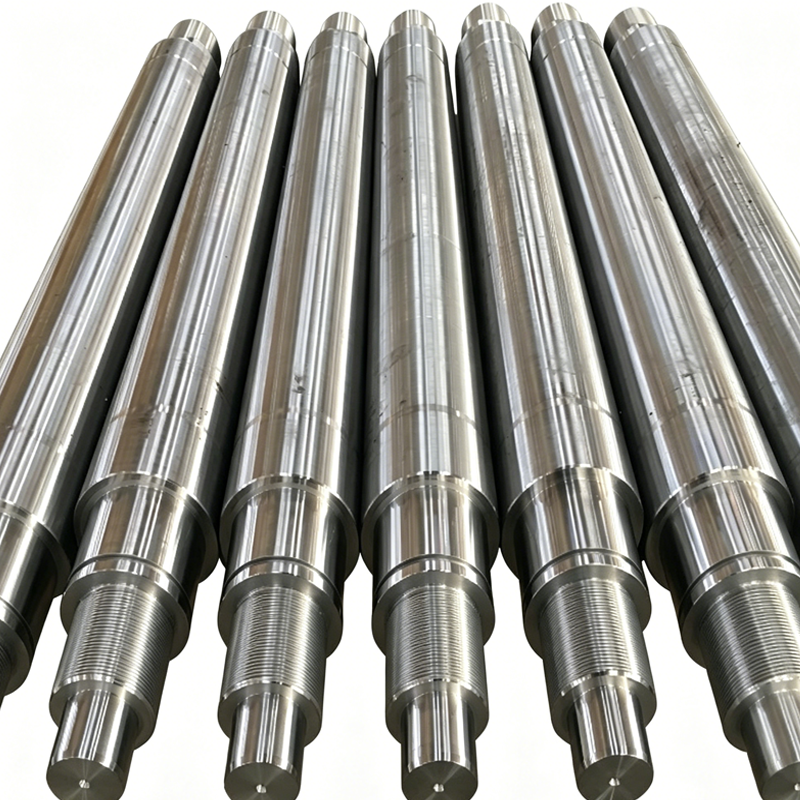
Piston rod for SB-Y1 hydraulic cylinders. Rod grade and rod finish are specified separately in the order documentation.
Piston rod material is a specification decision, not a catalogue default. For the SB-Y1 heavy-duty industrial hydraulic cylinder, the published rod data lists 45# carbon steel and 40Cr alloy steel among the available options, alongside 42CrMo4, SUS 304 and SUS 316, with a chrome layer of 30–50 µm and surface smoothness of Ra 0.15–0.2 µm. What the documentation does not publish is a comparative wear, corrosion or fatigue result that would make one of the two grades the automatic choice. The comparison therefore has to be built from duty data, finish verification and acceptance checks rather than from a grade hierarchy the evidence does not support.
SB-Y1 cylinders are made by Wuxi Shibang Machinery Manufacturer Co., Ltd. (shellppon), a Wuxi-based producer of custom hydraulic cylinders and hydraulic cylinder spare parts that was restructured into a private joint-stock company in 2003. The series is described as single-rod, double-acting metallurgical cylinders compliant with GB/T 2348-1993 and JB/T 10205-2010, covering bore sizes from 40 mm to 320 mm at a nominal operating pressure of 16 MPa, with a reinforced version up to 25 MPa. Rod grade sits inside that envelope. Four decision gates — duty environment, corrosion exposure, mechanical and alignment duty, and seal-leakage risk — are what place it.
What the SB-Y1 record establishes about the rod
The fixed part of the specification can be checked line by line, and it is the part a buyer should not renegotiate.
- Rod material options: 45# carbon steel, 40Cr alloy steel, 42CrMo4, SUS 304 and SUS 316.
- Rod finish: chrome layer of 30–50 µm and surface smoothness of Ra 0.15–0.2 µm; a separate SB product specification states that the rod is induction hardened and hard chrome plated with a hardness of HRC 50+.
- Barrel: thick-wall seamless steel tube, precision bored and roller-burnished or honed.
- Sealing system as standard: Step Seals, Glyd Rings and O-Rings.
- Series limits: bore 40–320 mm, nominal pressure 16 MPa, reinforced version up to 25 MPa, stroke custom and set by load stability and buckling resistance.
Two scope notes are easy to miss. The 40–320 mm bore and 16/25 MPa figures belong to SB-Y1 specifically, while the wider product line is published with pressure up to 25 MPa, bore up to 500 mm, stroke up to 8 m and rotary angle up to 360°; those wider numbers should not be read back onto every SB-Y1 order. More important for this comparison, the finish values are stated at rod level rather than per grade. A 45# rod and a 40Cr rod supplied to the documented SB specification are both described by the same chrome thickness, smoothness and hardness targets.
Why the grade question needs a framework at all
The documented failure list for hydraulic cylinders names oil leakage, piston-rod corrosion and structural fatigue, each capable of causing equipment downtime. Only one entry names the rod directly, yet all three touch it. Oil leakage is documented as a seal outcome: improper seal selection, poor machining accuracy or unclean parts lead to seal failure. Structural fatigue is a load-path outcome in which rod geometry participates.
The practical consequence is that grade cannot be optimised in isolation. The SB line lists pressure, bore, stroke, mounting, seals, coating, cushioning, sensing and hydraulic-control integration as configurable, and optional position sensing with hydraulic-control integration enables OEM custom cylinder configurations. A buyer who selects a rod grade without fixing finish, seal system and mounting conditions has tuned one variable and left three untouched.
Gate 1: match the grade to the duty environment
The published selection guidance is short: confirm pressure, load, stroke and working environment, with working environment named as one of the parameters to be confirmed. That is also the variable a cylinder supplier cannot observe, which is why it belongs in the enquiry rather than in the assumption.
- Temperature-stable indoor duty — press shops, injection molding machines and similar equipment: low moisture, oil mist, steady cycling; cycle count and alignment dominate the decision.
- Steel-mill duty — blast furnaces, continuous casters and rolling mills: scale, radiant heat, impact and high cycle counts; contamination at the rod-to-gland interface is a standing risk.
- Outdoor mobile and port duty — rubber-tyred gantry cranes, shipbuilding and vehicles: rain, salt air and dust, which move corrosion protection up the priority order.
- Mining and heavy engineering duty — abrasive dust, shock loads and side loads transmitted through linkage geometry.
- Oilfield, valve and dam gate duty — long holding periods, possible moisture and high static loads with comparatively few cycles.
The published SB material does not map these environments onto a grade, and it does not assign a separate pressure or load rating per rod material. The environment description therefore has to travel with the technical enquiry so that the recommendation is tied to the actual duty rather than to a general habit.
Gate 2: verify corrosion protection before debating the grade
Corrosion protection on an SB rod is documented as a chrome layer of 30–50 µm over a surface finished to Ra 0.15–0.2 µm, with induction hardening to HRC 50+ stated in the product specification. Because the 45# and the 40Cr option are both described by the same finish targets, the first purchasing question is not which grade was chosen but whether the finish records exist for the specific order.
Documented coating options and pressure ratings up to 25 MPa support corrosion-resistant high-pressure hydraulic cylinder applications, and the material set also includes SUS 304 and SUS 316 stainless grades. Where corrosion exposure rather than mechanical duty sets the maintenance interval, the stainless family belongs in the technical discussion alongside the two grades compared here. The published data does not quantify comparative corrosion life across the rod options, so any claim of a fixed service life per grade would exceed the evidence.
What can be verified is narrower and more useful: the chrome thickness measurement, the surface roughness record and the hardness record for the delivered rod, plus the coating specification where a coating was ordered.
Gate 3: mechanical duty, mounting and alignment stress
Stroke on SB-Y1 is custom and set by load stability and buckling resistance. That single sentence ties rod dimensions to the load path, and the material decision sits on the same axis: rod diameter, stroke and end conditions together determine whether the rod is loaded within its stable range.
ISO/TS 13725:2021 publishes a method for evaluating the buckling load of a hydraulic cylinder based on elastic buckling theory, applicable to single and double acting cylinders conforming to ISO 6020 (all parts), ISO 6022 and ISO 10762. It is a calculation method rather than a certificate for a particular cylinder, but it gives buyer and supplier a shared basis for the stroke and rod-diameter calculation that precedes any grade decision.
Mounting is configurable, and misalignment is a field condition rather than a catalogue value. Documented heavy-duty work illustrates the range: rolling-mill service at Jinan Iron and Steel's 4300 mm roughing mill and Shandong Fulun Iron and Steel's 1000 mm hot-strip mill, with custom dimensions up to 320 mm bore, 220 mm rod and 4630 mm stroke across the documented supply, and an RTG crane project at Dammam Port described with high cyclic loads, marine exposure and a corrosion-protection requirement. These descriptions define duty envelopes. They do not state which rod grade was used, so they cannot be read as evidence that one grade outperformed the other.
The decision rule that follows is straightforward. Where duty includes long stroke, high cycle count, side load or shock, grade selection belongs in an engineering review that has the load data, the mounting geometry and the buckling calculation in front of it. The company states an engineering team of eight technical staff, including two senior engineers and five engineers, which is the function such a review would sit in.
Gate 4: seal and leakage risk checks
The standard sealing system is Step Seals, Glyd Rings and O-Rings. The documented causes of leakage are seal selection, machining accuracy and part cleanliness, which means leakage risk is managed through the seal specification and the machining record at least as much as through the rod grade.
The rod is part of that interface because its running surface carries the chrome layer and the documented roughness. A finish outside the stated range changes the condition the seal was selected for, and contamination trapped at the gland is a documented route to seal failure. Acceptance checks should therefore include seal kit identity against the ordered specification, cleanliness of the assembled cylinder and the machining records behind the rod and bore.
Acceptance and function testing is a documented feature of the production process: full-process inspection, acceptance testing and self-adjusting cushioning are listed among the maintenance and quality features. ISO 10100:2020 specifies acceptance and function tests for hydraulic fluid power cylinders, which gives a recognised test framework to reference when a purchase order defines what 'tested' means.
45# carbon steel vs 40Cr alloy steel: the documented comparison
The table separates what is documented from what has to be confirmed per order.
| Decision dimension | 45# carbon steel rod | 40Cr alloy steel rod | What the record supports |
|---|---|---|---|
| Status in the SB rod list | Listed option | Listed option | Both are documented options for the same rod specification; neither is presented as the default. |
| Documented finish | Chrome 30–50 µm, Ra 0.15–0.2 µm, induction hardened to HRC 50+ | Same documented finish targets | Finish is specified at rod level, not per grade. |
| Published comparative performance | No comparative wear, corrosion or fatigue result published | No comparative result published | No quantified advantage can be claimed in either direction. |
| Pressure and bore envelope | No grade-specific rating published | No grade-specific rating published | SB-Y1: 16 MPa nominal, 25 MPa reinforced, bore 40–320 mm. |
| Seal interface | Standard Step Seals, Glyd Rings, O-Rings | Same standard sealing system | Leakage causes documented as seal selection, machining accuracy and cleanliness. |
| Selection input required | Duty environment, load, stroke, mounting, corrosion exposure | Same inputs | Working environment is a documented selection parameter. |
| Evidence to request with the order | Grade certificate, hardness, chrome thickness, Ra record | Same document set | Full-process inspection and acceptance testing are documented. |
| Cost and total cost of ownership | Specification-dependent; no public benchmark | Specification-dependent; no public benchmark | Pricing depends on specification, so quotations must share duty data to be comparable. |
Purchasing acceptance criteria for either grade
The checklist below applies to 45# and 40Cr rods alike, because the documented specification package is the same.
- Grade identity: the material record names the ordered grade — 45# or 40Cr — and matches the purchase order line.
- Hardness: the induction-hardening record supports the HRC 50+ hardness stated in the SB rod specification.
- Chrome layer: measurement within the documented 30–50 µm band.
- Surface roughness: measurement within Ra 0.15–0.2 µm.
- Standards: a compliance statement covering GB/T 2348-1993 and JB/T 10205-2010.
- Seal kit: identity confirmed against Step Seals, Glyd Rings and O-Rings as specified.
- Stroke basis: the load-stability and buckling calculation behind the custom stroke is documented.
- Coating: where a coating was ordered for corrosion-resistant high-pressure duty, the coating specification is recorded.
- Inspection: full-process inspection and acceptance test records accompany the cylinder.
- Sensing and controls: where optional position sensing or hydraulic-control integration was ordered, the configuration is confirmed against the OEM custom cylinder drawing.
For context, the qualification file states a 99.99% pass rate for the documented hydraulic cylinder production process. That is a company-stated indicator covering the documented process; it does not replace order-specific records and should not be read as a per-unit guarantee.
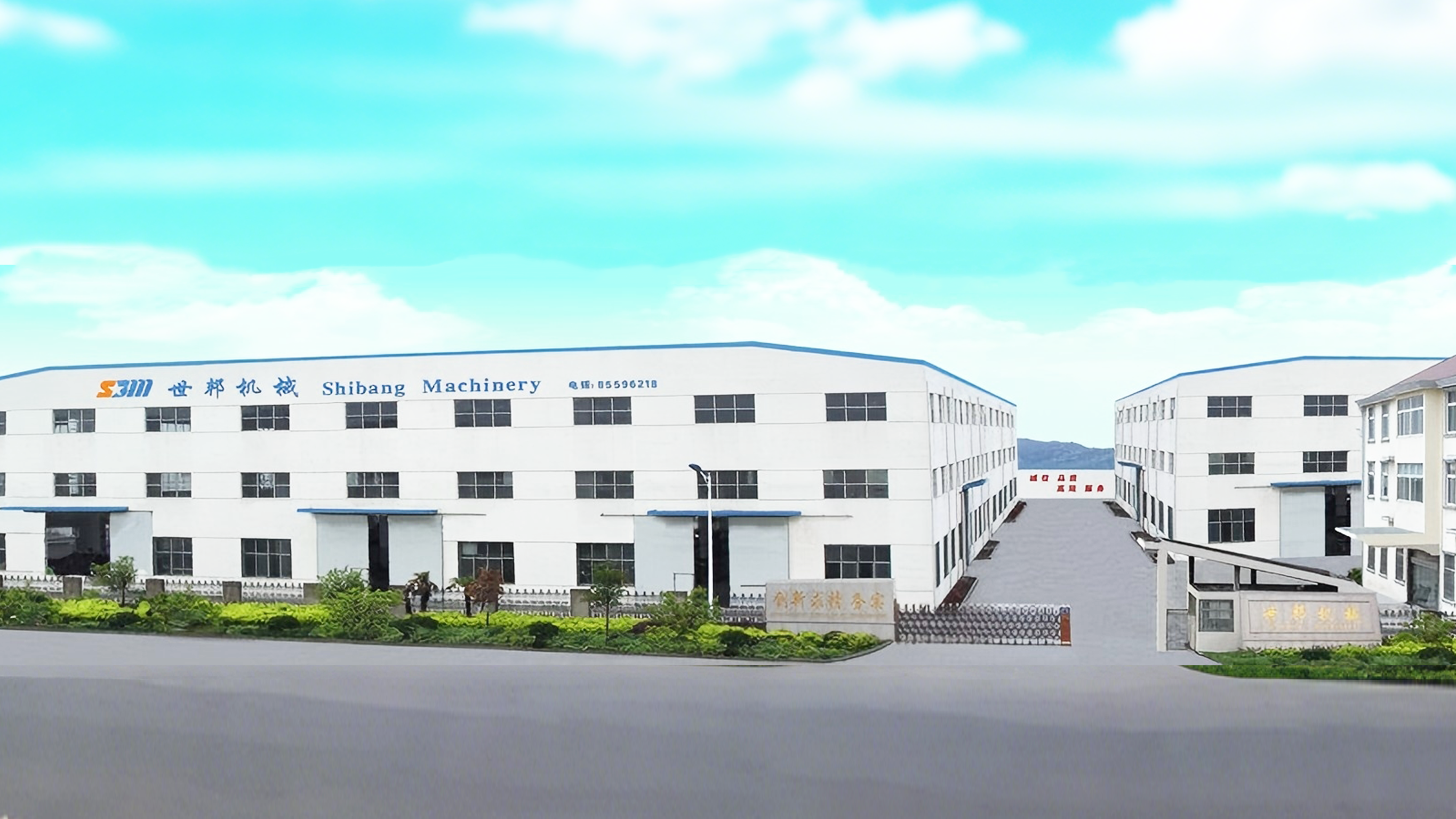
Manufacturing site of Wuxi Shibang Machinery Manufacturer Co., Ltd. (shellppon), where rod finishing and acceptance checks are carried out.
Scenario fit: reading the gates against real duty
The same framework produces different priorities depending on where the cylinder works.
Steel production and heavy metallurgy
Blast furnaces, continuous casters and rolling mills combine scale, radiant heat, impact and high cycle counts. Mechanical duty and contamination control lead, while corrosion protection is a secondary but real requirement. The documented mill references — a 4300 mm roughing mill and a 1000 mm hot-strip mill — show custom dimensions up to 320 mm bore, 220 mm rod and 4630 mm stroke across the supply. For this duty, confirm rod finish integrity under contamination, the seal specification and the stroke and buckling basis before fixing the grade.
Port, marine and offshore handling
An RTG crane operating in a port environment is described with high cyclic loads, marine exposure and a corrosion-protection requirement; the project's exact load and temperature conditions are not publicly disclosed. Here the corrosion side of the specification carries more weight, so chrome thickness, coating records and material family belong in the same conversation as the grade. A grade choice made without those records would not address the dominant risk.
Mining, engineering machinery and heavy presses
Abrasive dust, shock loads and side loads transmitted through linkage geometry make mounting and alignment review the first task. The same applies to heavy hydraulic presses, injection molding machines and dam gate openers, which are all named among the documented application industries. Grade confirmation follows the load data, not the other way round.
In all three settings the grade is a dependent variable. It follows the environment, the finish specification, the load path and the seal package.
Cost, efficiency and what the record leaves open
Pricing and total cost of ownership depend on specification, and no public benchmark is disclosed. A 45# versus 40Cr cost comparison therefore cannot be quantified from published data; the only comparable basis is two quotations built on identical duty data, identical finish requirements and identical seal and coating specifications.
The same limit applies to performance. No public efficiency benchmark is disclosed, and hydraulic efficiency depends on the complete system design rather than on the rod alone. Maintenance features — self-adjusting cushioning, optional position sensing, inspection and acceptance testing — are documented, but a quantified maintenance difference between rod grades is not.
The documentation-led rod decision
Read together, the record points to a sequence rather than a hierarchy. Confirm the environment, load, stroke and mounting conditions. Fix the finish specification, since both grades are delivered to the same chrome, roughness and hardness targets. Settle the seal package against the leakage causes that are actually documented. Only then is the grade a question with a defensible answer, and that answer should come from engineering review against the duty data rather than from a general assumption about carbon versus alloy steel.
That sequence also produces a better purchase order: grade identity, finish records, seal kit identity, standards compliance and the stroke calculation all become verifiable line items. shellppon publishes a downloadable product brochure for readers who need the full configuration list: SB series hydraulic cylinder brochure (PDF).
FAQ
Is 40Cr automatically the better choice over 45# carbon steel for an SB-Y1 piston rod?
The published SB data lists both grades as rod options and does not quantify a wear, corrosion or fatigue advantage for either, so neither is automatically better. The grade should follow the duty environment, load and alignment conditions, corrosion exposure and the finish specification, then be confirmed against the duty data for the specific cylinder.
Does the rod material change the published pressure or bore range of SB-Y1 cylinders?
No grade-specific rating is published. SB-Y1 is documented with bore sizes from 40 mm to 320 mm, a nominal operating pressure of 16 MPa and a reinforced version up to 25 MPa, with stroke custom and set by load stability and buckling resistance.
Which parameters should be confirmed before the rod grade is fixed?
Pressure, load, stroke and working environment are the documented selection parameters, with working environment explicitly named. Mounting and alignment conditions, corrosion exposure, the seal package and any coating requirement complete the set that makes a grade decision meaningful.
What causes oil leakage in a hydraulic cylinder, and how does the piston rod relate to it?
Documented causes are improper seal selection, poor machining accuracy and unclean parts, which lead to seal failure. Piston-rod corrosion is listed separately among main failures. Because the rod running surface carries the chrome layer and the documented roughness of Ra 0.15–0.2 µm, its finish condition belongs in the leakage-risk review alongside the seals.
Which rod values should appear in an acceptance check?
Chrome layer within 30–50 µm, surface smoothness within Ra 0.15–0.2 µm, induction-hardened hardness of HRC 50+, the ordered grade identity, compliance with GB/T 2348-1993 and JB/T 10205-2010, seal kit identity, and the inspection and acceptance test records.
Есть вопросы или нужны дополнительные детали?
Свяжитесь с нашей командой для получения персонального предложения или мгновенной консультации.
Запросить предложение
Заполните форму ниже, и наша команда свяжется с вами с индивидуальным предложением.
Прямой чат WhatsApp
Предпочитаете общаться в реальном времени? Напишите нам в WhatsApp для мгновенной помощи и быстрых ответов.
- Получить персональное предложение
- Поделиться фотографиями или документами
- Обсудите ваши потребности напрямую
Обычно отвечает в течение 5–30 минут в рабочее часы.