
48V/72V LiFePO4 Golf Cart Batteries: Certifications & Specs
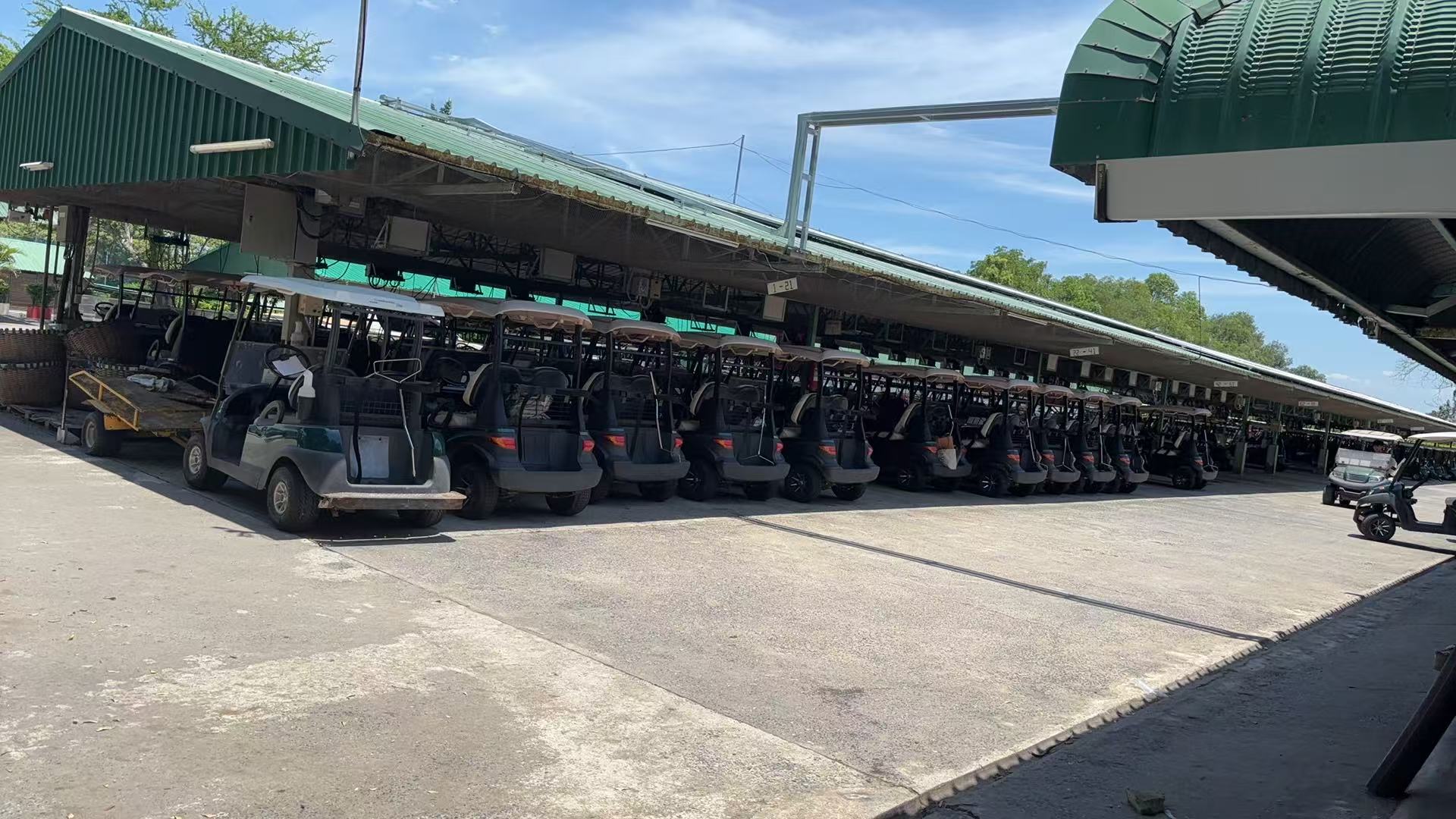
SISWAY battery is the lithium golf cart battery brand of Shenzhen Sisway New Energy Co., Ltd., a manufacturer founded in 2017 in Shenzhen, China, specializing in LiFePO4 battery packs for golf carts, UTVs, ATVs, and other electric vehicles. As golf course operators and fleet managers evaluate replacement options, the shift to lithium is increasingly guided by measurable criteria: certification coverage, electrical ratings, monitoring capability, and fitment constraints. This article reviews the SISWAY 48V and 72V golf cart battery lines, the certifications attached to them, and the technical decisions buyers should make before upgrading.
Problem: The Golf Cart Battery Market Is Shifting
SISWAY battery’s replacement range enters a market where golf cart battery choices are shifting quickly. The global golf cart battery market is estimated to reach USD 1.49 billion in 2024, with projections growing to USD 2.21 billion by 2030 at a compound annual growth rate of 6.8%. At the same time, lithium-ion batteries reached approximately 45%–50% market share in golf carts in 2024, nearly equaling traditional lead-acid batteries, according to market share analyses. This shift is particularly visible in North America, which accounted for approximately 38.6% of electric golf cart revenue in 2024.
For golf cart dealers and fleet operators, this creates a practical opportunity: replacing lead-acid batteries with a lithium iron phosphate (LiFePO4) system that offers deeper cycling, lower maintenance, and stable voltage. But it also creates a new challenge—verifying that a replacement battery meets the safety standards, BMS protections, and size constraints of the existing cart.
Solution: SISWAY 48V and 72V LiFePO4 Batteries
SISWAY battery addresses this challenge with a focused range of lithium golf cart batteries. The 48V 100Ah model is a drop-in style replacement battery with a nominal voltage of 48V, a rated capacity of 100Ah, and 4800Wh of energy. The 72V 105Ah model delivers a nominal voltage of 73.6V and 7728Wh of energy, while the 51.2V 100Ah model provides 5120Wh of energy for 48V systems. All three models are designed for use in golf carts and other 48V or 72V electric platforms.
From a manufacturing standpoint, Shenzhen Sisway New Energy Co., Ltd., the company behind SISWAY battery, operates a 20,000 m² facility with 150 employees and an annual output of 90,000 units. Its R&D team includes 25 engineers, and approximately 50% of production is exported, with the USA as the primary market. The company holds ISO9001 certification and has obtained more than 100 global certifications, including CE, UL, UN38.3, and MSDS.
Technical Deep Dive: BMS, Monitoring, and Temperature Limits
The core of every SISWAY golf cart battery is a battery management system (BMS) with defined protection functions. The 48V 100Ah battery includes a Smart 200A BMS that provides protection against over-charge, over-discharge, short-circuit, over-temperature, and over-current, and supports cell balancing. The 72V 105Ah battery also uses a 200A BMS, adding cell energy balancing and the same set of protections. The 51.2V 100Ah model features a 200A BMS with over/under voltage, over/under temperature, over-current, and short circuit protection, and has passed short circuit, vibration, and 1-meter drop tests.
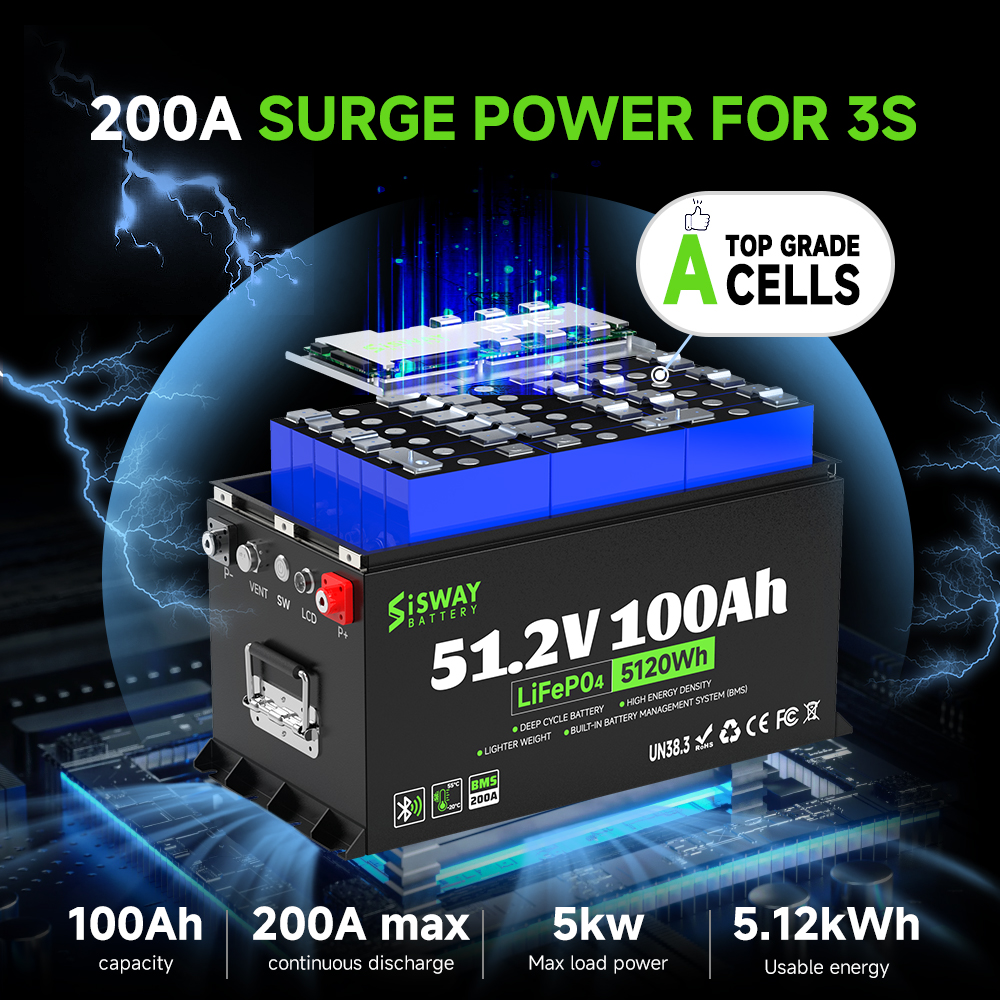
Real-time monitoring is another differentiator. The 48V 100Ah battery supports mobile app monitoring and an LCD touch screen, allowing users to check state of charge, voltage, and current. The 72V 105Ah battery can be monitored through a dedicated monitor and mobile app. The 51.2V model includes an LCD display and optional mobile app with SOC, voltage, charge/discharge current, temperatures, and cycle count.
Operating temperature ranges follow the constraints of LiFePO4 chemistry. For the 72V model, charging is supported from 0°C to 45°C and discharging from -20°C to 55°C. The battery also includes low-temperature cut-off protection, preventing charging below 32°F and resuming charging automatically at 41°F.
Installation details vary by model. The 48V 100Ah battery uses a plastic case, measures 20.55 inches long by 10.55 inches wide by 8.74 inches high, and weighs 77 lbs. The 72V 105Ah battery uses a metal casing, measures 558×333×300 mm, and weighs 63 kg. The 72V replacement kit is designed for plug-and-play installation with pre-drilled mounting holes, and includes an 18A charger that can charge the battery from 60% to 100% in approximately 3 hours.
Use Cases: Golf Courses, Refurbishment, and OEM Programs
SISWAY batteries are applied in golf cart upgrading projects, golf venue equipment renovation, and cart refurbishment programs. Common end users include golf courses, golf cart dealers and resellers, and golf cart customization workshops. The batteries operate in deep-cycle mode, with the BMS protecting against common fault conditions, and are supplied with a display, charger, battery cable, wiring harness, and user manual.
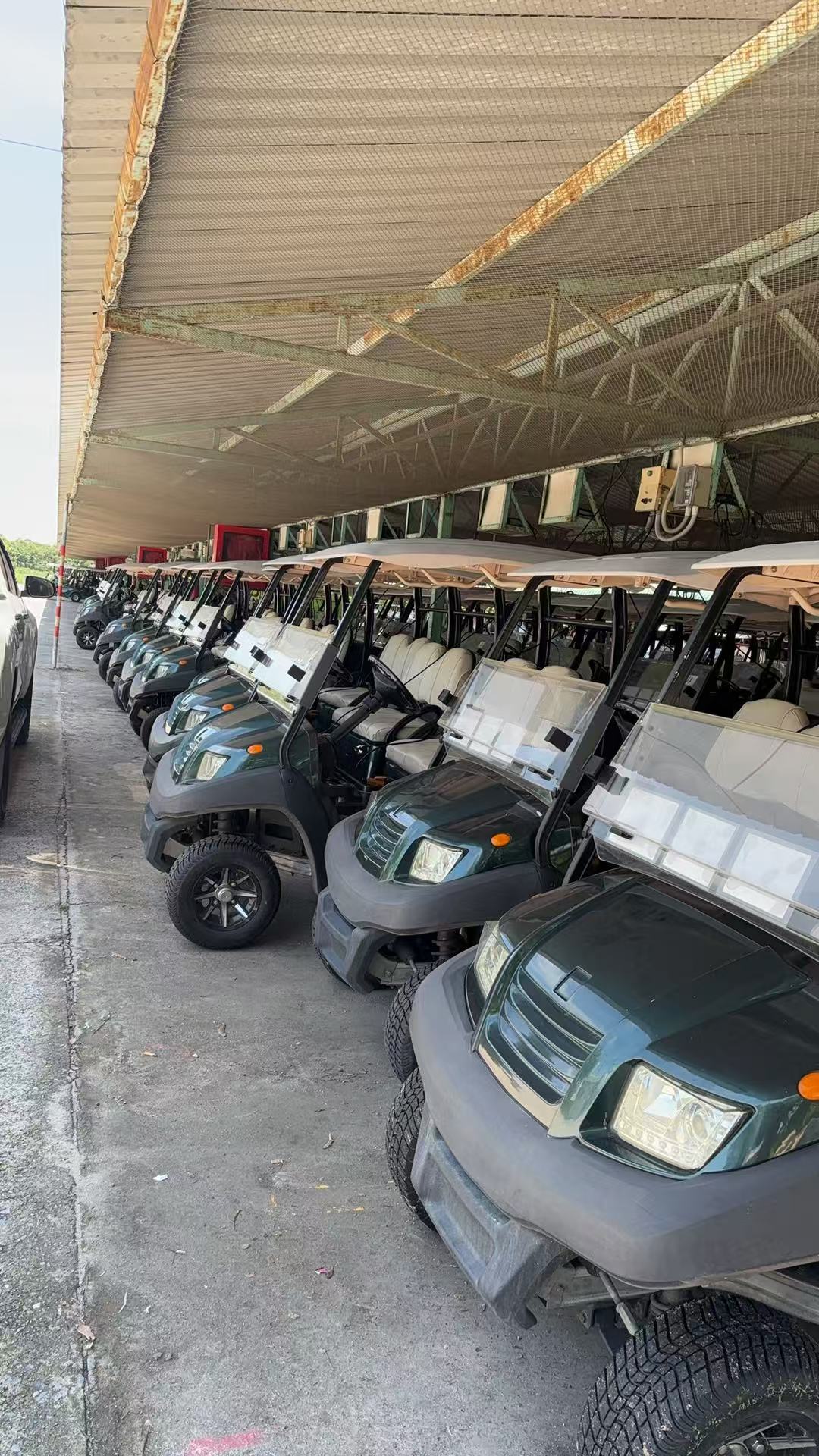
One documented case is a five-year collaboration with a golf cart battery OEM in Thailand. That project involved 20,000 units built for golf cart applications, with the battery design tailored to Thailand’s high-temperature and high-humidity environment. According to the case record, the lithium solution reduced maintenance requirements, improved charging efficiency, and helped lower long-term operating costs.
Market Trends: Standards and Voltage Platforms
SISWAY battery’s certification strategy aligns with a standards landscape that increasingly defines golf cart battery safety. IEC 62619:2022 is the international safety standard for lithium batteries in industrial applications, and it explicitly includes golf carts as a motive application. In the United States and Canada, UL 2271 is recognized as the key safety standard for batteries used in light electric vehicles, including lithium golf cart batteries, with abuse tests covering overcharging and short-circuiting.
At the system level, major golf cart OEMs such as Club Car, E-Z-GO (Textron), and Yamaha primarily utilize 36V, 48V, and 72V systems, with 48V being the most common configuration for modern electric fleets. This means that replacement batteries need to align not only chemically but also electrically with the cart’s existing drive system. SISWAY’s 48V and 72V models are designed to match those voltage platforms.
Comparison: Lithium vs. Traditional Lead-Acid
Compared with traditional lead-acid golf cart batteries, SISWAY LiFePO4 batteries deliver a longer cycle life and a more consistent discharge curve. SISWAY’s 72V 105Ah battery is rated for 4,000 cycles at 100% depth of discharge and 6,000 cycles at 80% depth of discharge. It also supports 100% DOD, which reduces the need for frequent charging.
The honest limitation is fitment. The 48V battery is designed for direct replacement in lead-acid cases, but every cart model has a different battery compartment. The 51.2V product documentation explicitly advises verifying compartment dimensions before ordering because fitment varies by cart model. Similarly, the 72V product page asks buyers to check the size of their battery compartment before purchase. This is not a barrier to upgrading, but it makes dimensional verification a required step in the selection process.
Future Outlook: OEM Flexibility and Local Support
As lithium adoption in golf carts continues to spread, SISWAY battery is positioned around production flexibility and after-sales service. SISWAY battery offers OEM production with customization of logo, design, size, and specifications, with a monthly capacity of 5,000 units and typical lead time of 15–30 days. Its quality control process includes 100% testing, and the company maintains a US-based after-sales service team and overseas warehouse. For golf cart dealers and refurbishment shops, this means a lithium conversion can be treated as a repeatable program rather than a one-off install.
Contact SISWAY battery
SISWAY battery provides product documentation, technical support, and customization options for golf cart battery replacement programs. Visit the official website at https://www.siswaybattery.com, email inquiry@siswaybattery.com, or contact Nancy by phone or WhatsApp at +86 137 1478 6322.
Frequently Asked Questions
What certifications does the SISWAY 48V golf cart battery hold?
The 48V golf cart battery is certified to ISO 9001:2015 and to UN38.3, as documented in Test Report No. TSZ25H8045A01-01. The report was issued by Shenzhen Tiansu Calibration and Testing Co., Ltd. and applies to the global market.
What are the main electrical specifications of the 72V 105Ah golf cart battery?
The 72V 105Ah battery has a nominal voltage of 73.6V, an energy capacity of 7728Wh, a maximum continuous discharge current of 200A, and a peak discharge current of 400A for 10 seconds.
What protections does the built-in BMS provide?
The BMS provides protection against over-charging, over-discharging, short-circuits, over-temperature, and over-current, and includes cell energy balancing. The 51.2V model adds over/under voltage and over/under temperature protection under a 200A BMS.
What is the warranty on SISWAY golf cart batteries?
The 48V 100Ah model comes with a 5-year warranty. The 51.2V 100Ah model comes with a 3-year warranty.
Can the battery be monitored in real time?
Yes. The 48V and 51.2V models support monitoring through an included LCD and an optional mobile app. The 72V model supports monitoring through a dedicated monitor and mobile app.
What temperature range is supported for charging and discharging?
For the 72V model, the charging temperature range is 0°C to 45°C and the discharging temperature range is -20°C to 55°C. The battery prevents charging below 32°F and resumes charging at 41°F.
How do I know if a SISWAY battery fits my golf cart?
The 48V battery is designed for drop-in replacement in lead-acid cases, but compartment size varies by cart model. SISWAY recommends checking the battery compartment dimensions before ordering. The 72V model’s dimensions are 558×333×300 mm and it weighs 63 kg.
Additional resources: Download the SISWAY battery product brochure for more details on specifications, certifications, and OEM options: SISWAY Battery Brochure (PDF).