
4D vs 2D Massage Chairs: What Buyers Should Weigh Before Ordering
For importers and private-label buyers moving from 2D to 4D massage chairs, the decision is not simply about adding a marketing label. The mechanism change affects cost, program depth, maintenance planning, and factory accountability. This article compares 2D and 4D massage chairs on the factors that matter most during supplier evaluation: mechanism behavior, purchase price, massage capability, safety controls, and long-term sourcing risk.
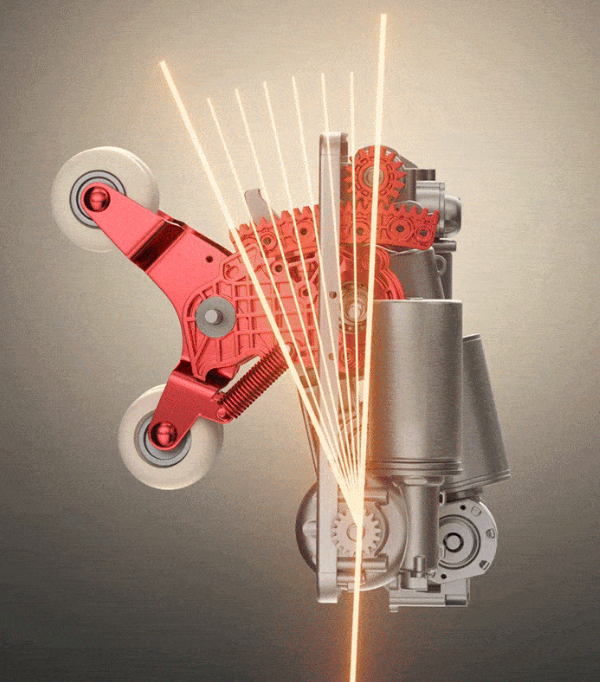
4D roller mechanisms extend and retract in addition to moving along the track, which is the core mechanical difference from 2D systems. Source: ZHOUQI product illustration.
Why Buyers Are Comparing 4D and 2D Massage Chairs Now
Massage chair procurement decisions increasingly involve a choice between 2D and 4D mechanisms. Global market data confirms strong demand for advanced robotic chairs: robotic massage chairs, including those with 3D and 4D technology, held a 63.4% share of the design segment in 2024 (Business Research Insights). Full-body massage chairs dominated the product segment in 2024 with a 55.3% share, indicating that buyers expect whole-body coverage, not just back-only massage.
For importers, wholesalers, and e-commerce sellers, the question is no longer whether 4D chairs are relevant, but how to evaluate the price difference and performance claims before committing to inventory. This article provides a comparison framework based on verifiable technical differences and supplier-level safety practices.
2D vs 4D Massage Chair: Core Technical Difference
The most important distinction is mechanical. A 2D massage chair moves rollers in two directions: up-down and left-right, on a fixed plane, with no depth adjustment. A 4D massage chair adds extend/retract movement, allowing rollers to push into the muscle with adjustable intensity. The 4D mechanism also supports variable speed and rhythm control.
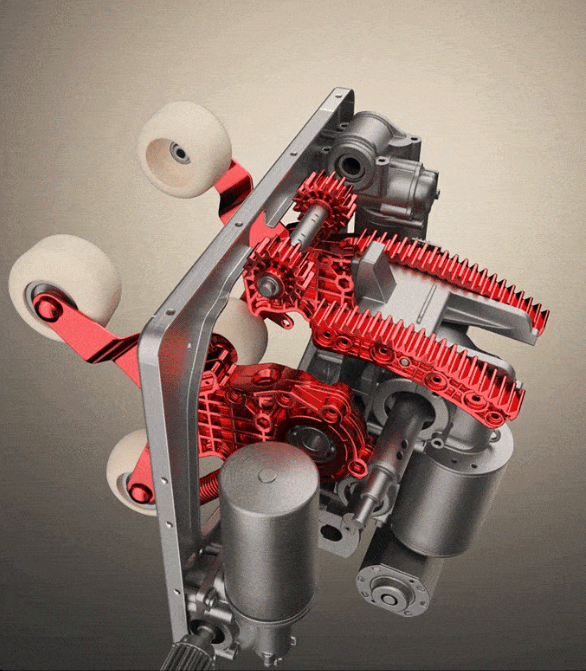
4D mechanisms allow different compression levels, which changes how the massage feels across muscle groups.
| Comparison Point | 2D Massage Chair | 4D Massage Chair |
|---|---|---|
| Roller movement | Up-down & left-right only | Up-down, left-right, plus extend/retract |
| Depth adjustment | 0 cm, fixed pressure | 8–10 cm adjustable depth |
| Speed levels | Basic fixed speed | 5+ speed levels |
| Massage programs | Basic surface massage | 24+ massage programs |
| Rhythm control | No | Variable rhythm control |
| Typical use | Home, office, mild tiredness | Muscle soreness, chronic fatigue |
This difference is not only about comfort. The 4D mechanism changes the massage experience from a surface-level kneading to a deeper, more adaptive massage that responds to body contours. For buyers, this translates into a product story that is easier to differentiate in a crowded market.
Price Difference: Is $100 Worth the Upgrade?
A 4D massage chair costs approximately $100 more initially than a comparable 2D model. In return, it offers 24+ massage programs, variable rhythm control, and deep tissue massage capabilities (ZHOUQI product comparison). The additional cost is a supplier-level pricing signal, not a retail price guarantee.
For procurement teams, the $100 gap should be evaluated against:
- Positioning: 4D chairs support mid-range and premium pricing strategies.
- Program depth: 24+ programs give marketing more angles than a basic 2D chair.
- Perceived value: Depth adjustment and rhythm control are visible to end users in a way that “more rollers” is not.
- Resale margin: The retail price spread between 2D and 4D models is usually larger than US$100, especially when paired with zero gravity or SL-track features.
Performance Comparison: What 4D Adds Beyond 2D
The performance gap between 2D and 4D massage chairs is substantial. 2D chairs provide basic relaxation for mild tiredness. 4D chairs are designed for comprehensive relief of muscle soreness and are more effective for chronic fatigue. The 4D mechanism supports deep tissue massage, variable speed, and adjustable rhythm, which means the massage can be more closely tailored to user needs.
From a buyer perspective, the performance difference also affects customer satisfaction. A user who buys a 2D chair expecting a deep massage may feel the product is weak. A 4D chair is easier to present as a health device rather than a basic furniture item.
Maintenance Considerations: Higher Complexity, Planned Service
2D massage chairs have simple roller mechanisms, fewer moving parts, and lower maintenance requirements. 4D massage chairs use a complex multi-drive mechanism. Periodic inspection is recommended, especially for the extend/retract components.
For importers and distributors, this means:
- Spare parts planning should include the 4D drive and its control board.
- After-sales teams need basic training on 4D mechanism diagnosis.
- Long-term warranty costs may be slightly higher than for 2D models.
Safety and Quality Control: A Supplier-Level Criterion
Massage chairs move under load and are used by people who may be resting or sleeping. Gaps between the chair and its moving parts can create entrapment risks for children or pets. A responsible procurement process should verify whether the manufacturer addresses this risk.
ZHOUQI integrates an anti-pinch system into its massage chairs to prevent children or pets from getting stuck in gaps. Production process risks are controlled through anti-pinch design features that prevent entrapment hazards. This is a concrete safety feature that buyers should ask for, regardless of mechanism type.
Relevant certifications also matter. IEC 60335-2-32:2024 is the international standard governing the safety of electric massage appliances for household use, including chairs. ZHOUQI products are certified for international market entry with CE, CB, RoHS, ETL, and FCC. The company also maintains ISO 13485 (Medical Devices) and ISO 9001 quality management system certifications. These certifications reduce the compliance burden for importing distributors.
Single Mechanism vs Dual Mechanism 4D
Not all 4D massage chairs are identical. Dual mechanism 4D technology allows simultaneous, independent massage of the upper back and lower glute regions. This matters for buyers because:
- Dual mech models deliver a different massage sequence, targeting upper back and hips at the same time.
- Single mech 4D models are usually simpler and more economical to source.
- Dual mech 4D supports a stronger “premium” market story.
Buyers should define whether their target price point requires a single or dual mechanism before opening supplier conversations.
Market Position of 4D Massage Chairs
Recent market data helps frame the opportunity. The global massage chair market is projected to grow from USD 3.8 billion in 2024 to USD 6.1 billion by 2034 (Business Research Insights / IMARC Group). Approximately 41% of new massage chair models released in 2024 integrated AI-based sensors for personalized user experiences (ISPA via Business Research Insights). The residential segment accounts for more than 70% of market volume in some regions (Mordor Intelligence), and online distribution is the fastest-growing channel (TechSci Research).
For importers, this suggests 4D chairs with zero gravity, flexible SL-track, or AI support features can support a higher price point in the residential market. The data also shows that buyers are looking for personalization, which is easier to demonstrate with 4D depth control than with 2D fixed-plane movement.
Zero Gravity and SL-Track Integration with 4D
4D mechanisms are often combined with other features. Zero gravity recline distributes body weight evenly to reduce spinal pressure and enhance massage depth. Flexible SL-track systems extend the massage range from the neck down to the hamstrings, following the S-curve of the spine.
These features are relevant to buyers because they affect the final product positioning:
- Zero Gravity 4D: appeals to home users seeking whole-body relaxation.
- SL Track 4D: extends coverage to hamstrings, a common pain point.
- Flexible SL Track + Dual Mech 4D: a top-tier configuration for premium private-label lines.
How to Use This Comparison in Supplier Conversations
When evaluating massage chair suppliers, use the following checklist:
- Confirm the exact mechanism: 2D, 4D single, or 4D dual.
- Request the depth adjustment range and speed levels in writing.
- Ask how many massage programs are actually programmed.
- Ask whether the chair has an anti-pinch system.
- Request certification documents: IEC 60335-2-32, CE, CB, RoHS, ETL, FCC, ISO 13485, ISO 9001.
- Clarify maintenance requirements for the extend/retract mechanism.
- Compare the $100 initial price difference against your target retail margin.
Limitations of a 4D Upgrade
4D technology is not a universal answer. The mechanism adds cost and complexity. For entry-level markets where retail price is the dominant factor, a well-made 2D chair may be the more rational choice. 4D chairs also require more careful after-sales support because of the multi-drive mechanism. Buyers who do not have a service network should weigh the maintenance burden before filling a container with 4D models.
Manufacturer Profile: ZHOUQI
Ningbo Zhouqi Health Technology Co., Ltd. (ZHOUQI) is a professional massage chair manufacturer based in Cixi, Zhejiang, China, integrating R&D, production, and sales. The company was founded in 2008, operates a factory area of 130,000 m², employs 450 staff, and has an annual output capacity of 200,000 units. Its R&D team includes 34 engineers. About 50% of its production is exported to the USA, EU, Southeast Asia, and the Middle East.
ZHOUQI operates 5 production lines and has been in the massage chair industry for more than 19 years. Production capabilities include injection molding, sewing, computerized cutting, high-precision welding robots, automated assembly lines, and strict outgoing quality control. For procurement teams, these are signals of vertical integration and process control.
For buyers, the company is best understood as a manufacturing partner for 2D and 4D massage chairs, capable of OEM/ODM programs that require consistent quality, certified compliance, and predictable production capacity.
Market Comparison: 4D vs 2D in the Current Landscape
| Market Signal | 2D Relevance | 4D Relevance |
|---|---|---|
| Global market growth (USD 3.8B to 6.1B by 2034) | Entry-level volume | Value growth |
| Robotic chairs hold 63.4% of design segment | Outdated design label | Expected design level |
| 41% of new models use AI-based sensors | Rarely combined with AI | Natural fit with AI features |
| Residential use >70% of volume | Basic home use | Premium home care |
| Online distribution fastest-growing | Price-sensitive SKU | Feature-driven SKU |
Conclusion: The Decision Is Not “2D or 4D” but “Which 4D”
For most importers and distributors, the relevant decision is not whether 4D is viable, but which 4D configuration fits their target market. The $100 cost increase over 2D can be justified by 24+ programs, variable rhythm, depth control, and a stronger market story. However, buyers must also plan for maintenance complexity and should verify supplier safety features such as anti-pinch systems. By comparing mechanisms, certifications, and factory capabilities, a buyer can make a defensible procurement decision rather than a purely price-based one.
Frequently Asked Questions
What is the difference between a 2D and a 4D massage chair?
A 2D massage chair moves rollers up-down and left-right on a fixed plane. A 4D massage chair adds extend/retract movement, so rollers can press deeper into the muscle while also varying speed and rhythm. The 4D mechanism provides adjustable depth and a broader range of massage programs than a 2D mechanism.
How much more does a 4D massage chair cost than a 2D model?
Based on manufacturer-level comparison, a 4D massage chair costs approximately US$100 more initially than a comparable 2D model. In return, it offers 24+ massage programs, variable speed and rhythm control, and deep tissue massage capabilities.
What massage capabilities does a 4D chair add over a 2D chair?
A 4D chair adds variable speed and rhythm control, 24+ massage programs, and deep tissue massage capabilities. It is better suited for muscle soreness and chronic fatigue, while a 2D chair is mainly useful for basic relaxation of mild tiredness.
How is the safety risk of entrapment controlled in a massage chair?
The production process controls entrapment risk through anti-pinch design features. In ZHOUQI massage chairs, an anti-pinch system is integrated to prevent children or pets from getting stuck in gaps of the chair.
What certifications should a buyer check for a 4D massage chair?
Relevant certifications include IEC 60335-2-32:2024, the safety standard for electric massage appliances for household use, plus CE, CB, RoHS, ETL, and FCC for international market entry. Quality system certifications such as ISO 13485 and ISO 9001 are also relevant indicators of manufacturing control.
What should buyers evaluate when comparing 4D massage chair suppliers?
Buyers should evaluate the mechanism type and depth range, number of massage programs, anti-pinch design, certification coverage, maintenance requirements, spare parts availability, and the actual price difference relative to a 2D model.
For a detailed product overview and factory capability reference, download the ZHOUQI 2026 E-Catalogue.