
5-Axis CNC Machining vs. Conventional Turning: Buyer's Guide
Two machine shops can quote the same drawing and deliver parts that perform differently, because the variable that decides cost, tolerance and risk is the process route — not the price list. A shaft with a few radial holes is cheapest on a lathe. A housing with angled ports, undercuts and intersecting bores stops being a tolerance problem and becomes a fixturing problem the moment it is routed through a three-axis shop — and fixturing problems are paid for twice, once in setup hours and again in scrap.
The distinction is worth more attention as the outsourcing base grows. The global CNC machining services market was estimated at USD 58.33 billion in 2026 and is projected to reach USD 108.3 billion by 2035, according to Business Research Insights. Within the wider equipment picture, milling machines held the largest type share at 31.4% in 2025 (Dataintelo), a reflection of how much outsourced work now depends on multi-directional cutting rather than simple rotation.
This guide compares five-axis CNC machining services with conventional turning and three-axis milling shops on the dimensions a buyer can actually verify: geometry fit, setup count, tolerance, inspection evidence and quote cycle. The reference point throughout is Suzhou ECOD Precision Manufacturing Co.,Ltd (ECOD), a Suzhou-based contract machining supplier founded in 2005 that operates 3-, 4- and 5-axis CNC machining centers, CNC lathes and precision grinding equipment.
Why the process comparison starts with geometry, not price
Part geometry predicts process route more reliably than any other input a buyer controls. Most outsourced machined parts fall into three families, and each family has a different cost driver.
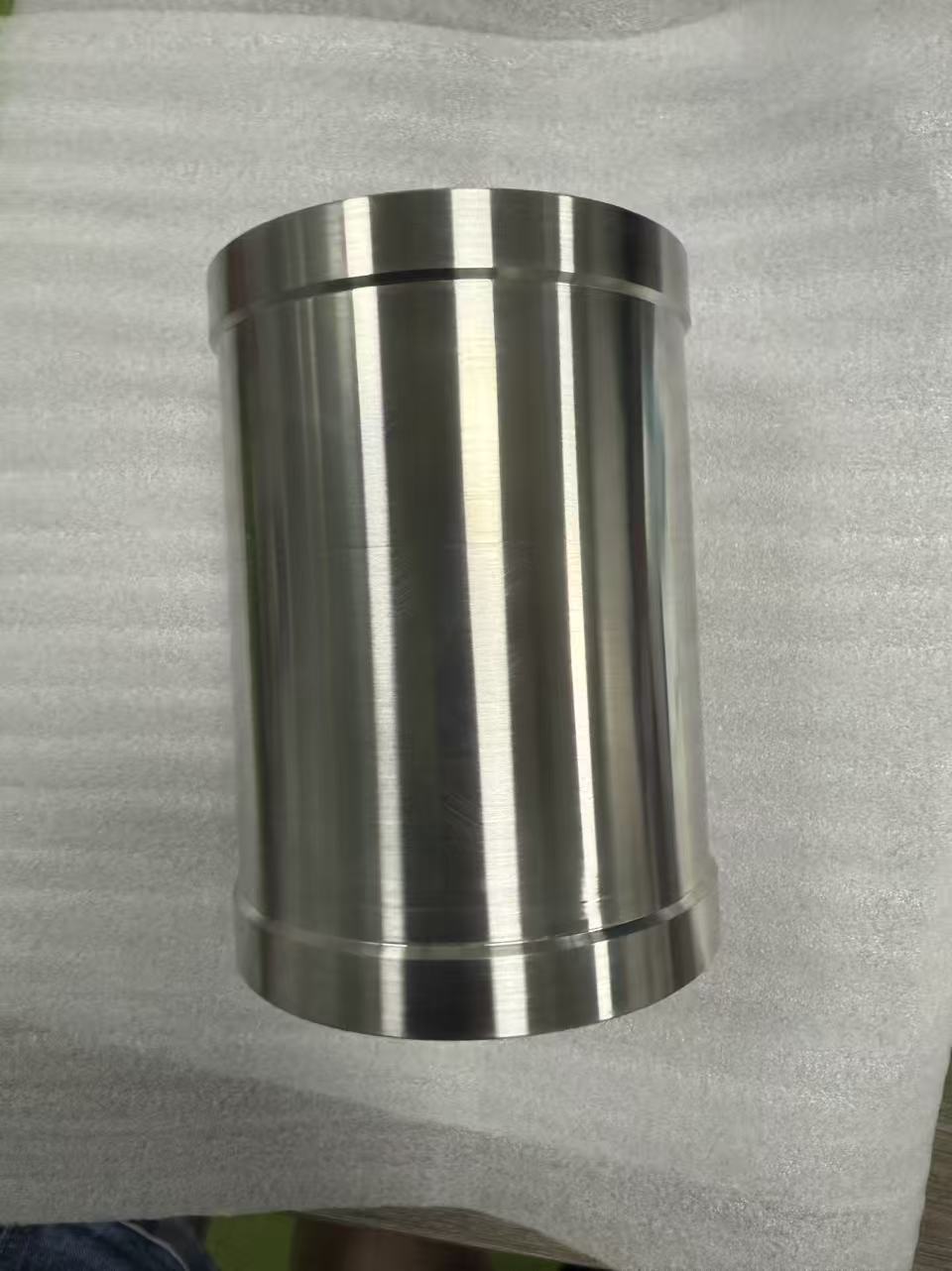
- Rotationally symmetric parts — shafts, bushings, pins, fittings, valve bodies turned from bar or billet. The dominant operation is turning; features are concentric, and cycle time scales predictably with diameter and length.
- Prismatic parts — plates, brackets, mounting blocks with features on two or three faces. These usually run on three-axis milling with one or more re-clampings.
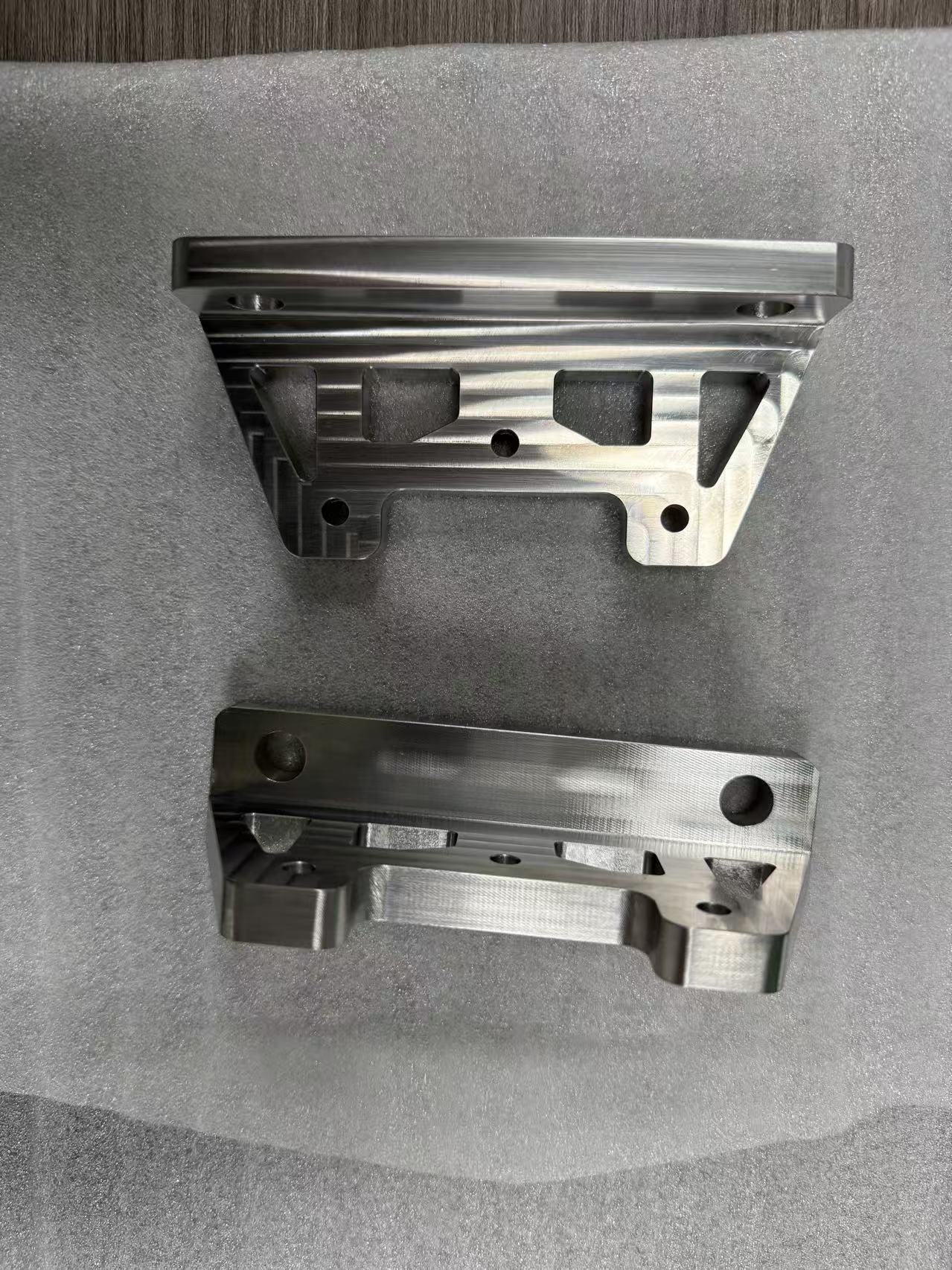
- Contoured and compound-angle parts — impellers, manifolds, orthopedic instruments, UAV structural brackets — where the cutter must approach from four or more directions, or stay normal to a curved surface throughout the pass.
A practical decision rule for buyers: count the distinct directions from which a cutter must reach the part. One or two directions keeps conventional turning or three-axis milling simple and economical. Four or more, or features that must preserve a single datum relationship across the whole part, and the setup count becomes the dominant source of both cost and dimensional error.
What five-axis CNC machining actually changes
A five-axis machining center adds two rotary axes to the three linear axes. When those axes move simultaneously, the cutting tool can be held at a controlled angle to the work surface instead of only perpendicular to it. Three consequences matter at procurement level.
1. Setup consolidation
Features on five faces of a part can often be produced in a single clamping. Every re-clamp in a conventional route reintroduces datum error, and each additional fixture is a cost item that must be amortized across the batch. On low-volume work the setup, not the cutting, is usually the largest line in the quote.
2. Tool access and finish quality
Angled faces, undercuts and deep pockets can be reached with short, rigid tool assemblies rather than long overhangs. Shorter tooling reduces deflection and chatter, which shows up as better surface finish and fewer mismatch lines where two setups previously met.
3. Tolerance consistency across features
Because the part is not moved between operations, the dimensional relationship between features is preserved by the machine rather than reconstructed by the fixture. This is where the practical value of a tight tolerance band sits: it is not a single dimension, it is the repeatability of several dimensions relative to each other.
Where EDM fits into the route
Electrical discharge machining complements milling rather than replacing it. Where a rotating cutter cannot reach — sharp internal corners, hardened material, thin walls sensitive to cutting force — EDM produces the feature without mechanical tool pressure. ECOD's process list includes EDM alongside CNC turning, CNC milling, drilling, grinding and tapping, which means a part does not have to be redesigned or split into extra operations simply because one corner geometry exceeds what milling can reach.
What conventional turning and three-axis milling still do better
An honest comparison has to start with where the simpler route wins. For a round part produced from bar stock, turning is faster, cheaper to program and cheaper per piece than routing the same part through a five-axis center. The hourly rate is lower, the fixture is often just a chuck or collet, and the programming effort is measured in minutes rather than hours.
There is also a labor dimension. The U.S. machining sector reported roughly 75,000 unfilled CNC operator roles in 2023 (Gitnux, citing U.S. labor projections). A turning shop running simple, repeatable cycles is less exposed to that shortage than a shop that needs experienced five-axis programmers and setters for every job. Buyers evaluating capacity should therefore ask not only whether a supplier owns five-axis equipment, but whether it runs enough conventional turning capacity to route straightforward parts economically instead of pushing every job onto the most expensive machine in the building.
If a part is a turned cylinder with a handful of radial holes, routing it through a five-axis center adds fixturing and programming cost without buying tolerance the design needs. The correct answer for that part is a turning service — and a supplier that says so is usually the one worth keeping.
Side-by-side: five-axis machining service vs. conventional turning shop
| Comparison criterion | Conventional turning / three-axis shop | Five-axis CNC machining service (ECOD) |
|---|---|---|
| Best-fit geometry | Round, concentric parts; plates with features on one or two faces | Compound angles, contoured surfaces, multi-face features, intersecting bores |
| Setup count for the same feature set | Typically two to four clampings, each with its own fixture | Frequently reduced to a single clamping |
| Tolerance expectation | Adequate for standard turned work; band set by lathe and fixture | Stated capability to ±0.005 mm on specified precision features |
| Datum consistency | Reconstructed at each re-clamp | Preserved by the machine across the part |
| Fixture and programming investment | Lower; simple workholding, short programs | Higher per job; recovered through fewer operations and less scrap |
| Material range | Mostly bar-stock metals suited to turning | Carbon steel, stainless steel, aluminum, brass, copper, titanium, plastics including POM and nylon |
| EDM availability | Uncommon in turning-only shops | Included in the process list with turning, milling, drilling, grinding, tapping |
| Inspection evidence | Varies by supplier | 100% test, material certificates and dimensional inspection reports per order |
| Minimum order quantity | Often batch-based | 1 piece |
| Quoted lead time | Supplier-dependent | 10–60 days depending on part and volume |
The table is a decision framework, not a scoreboard. A part that fits the middle column should be quoted on the middle column; a part that genuinely needs four-direction access should not be forced through a turning route and then rescued with a weld-and-remachine step.
Materials and how they change the route
Material selection shifts process route more than most drawings communicate. Aluminum 6061-T6 is the most widely used material in CNC machining because of its high machinability and strength-to-weight ratio (Xometry), and it is forgiving on both turning and five-axis work. Stainless steel work-hardens at the cut, so tool path strategy and coolant delivery matter more than axis count. Titanium concentrates heat at the cutting edge, which rewards rigid setups and short tool overhangs — the same conditions a five-axis configuration provides. Brass and copper machine freely but are prone to burrs, where a controlled finishing pass or EDM clean-up can be more reliable than hand deburring.
ECOD machines carbon steel, stainless steel, aluminum, brass, copper, titanium and plastics including POM and nylon, and applies CNC turning, milling, drilling, grinding, tapping and EDM within the same production flow. For a buyer, that combination matters less as a list of capabilities and more as a way to avoid splitting one assembly across three specialist vendors, each with its own tolerance interpretation.
Inside a precision CNC machining service: what ECOD provides
Suzhou ECOD Precision Manufacturing Co.,Ltd is a contract manufacturer focused exclusively on high-precision CNC machining services, operating from a 40,000 m² facility with 350 employees, 25 engineers and an annual output of 1,000,000 units. Monthly capacity is stated at 100,000 pieces. Production modes cover both OEM and ODM, and the company exports approximately 100% of its output to Europe, the Middle East, North America and Asia.
The service scope is CNC turning, CNC milling, grinding and precision assembly, supported by 3-, 4- and 5-axis machining centers, CNC lathes and precision grinding equipment. Customization runs from customer 2D/3D drawings through material selection, dimensional tolerance, surface treatment and machining finish — the engineering team applies DFM optimization before release to simplify production and reduce cost. Minimum order quantity is 1 piece, which allows prototype and low-volume validation before a production commitment.
Quality control is stated as 100% test throughout production, with complete material certificates and dimensional inspection reports supplied for all orders. The company holds ISO 9001 certification (certificate 33826Q00178R000) issued by Shanghai Wozhong certification Co. Ltd against GB/T19001-2016/ISO9001:2015, valid from 2026-06-16 to 2029-06-15, with a scope of Custom CNC Machining Parts Sales.
Application evidence: aerospace volume and oil & gas durability
Two production cases illustrate how the process decision plays out at opposite ends of the volume range.
A gas and oil industry customer in the United Arab Emirates has sourced 10,000 precision machined pieces for gas and oil equipment over a five-year relationship. The stated outcome is improved equipment reliability, with the parts described as adapted to harsh oil and gas working environments. In that segment, the failure mode that matters is not a single out-of-tolerance dimension at goods-in — it is a seal face or a bore that drifts after thermal cycling in service, which is why datum consistency across a single clamping carries more weight than the unit price difference between routes.
The second case is volume-driven. An aerospace industry customer in Russia has taken 1,000,000 pieces for UAV applications over a one-year program, with the stated result being stable quality in mass production and full matching of aerospace industry precision standards. Sustaining that output requires a process route that does not depend on re-fixturing accuracy at every unit — the reason multi-axis consolidation matters commercially, not just technically.
Inspection, documentation and what acceptance actually covers
Process capability is only half of a supplier comparison; the other half is the evidence that accompanies the shipment. Under ECOD's stated purchasing terms, acceptance criteria are factory inspection, delivery terms cover EXW, FOB, CIF, CIP, FCA, CPT, CFR, DAP and DDP, and payment terms are 30/70. Documentation per order includes material certificates and dimensional inspection reports.
Buyers in regulated sectors should read certification scope carefully rather than reading the certificate number alone. Aerospace machining programs typically reference AS9100, which incorporates ISO 9001 plus more than 100 additional requirements for safety and reliability (SAE International), while medical device production is expected to comply with ISO 13485 for quality management systems (ISO). An ISO 9001 certificate with a sales-scope statement is a foundation, not an automatic qualification for those frameworks — buyers should confirm additional requirements with the supplier before committing a regulated part number.
Market trend analysis: why multi-axis capacity is becoming a sourcing filter
Three structural shifts are reshaping how buyers compare machining services.
First, capital is concentrating in multi-axis equipment. CNC machining centers led the market with a 61.6% share of global revenue in 2023 (Grand View Research), and the ultra-precision machining center segment serving semiconductor fabrication equipment is projected to grow at 8.36% CAGR from 2026 to 2031 (Mordor Intelligence). Suppliers without multi-axis capacity increasingly compete only on simple work.
Second, supply is geographically clustered. Asia Pacific held a 55.70% share of the global CNC machine market in 2025, driven by manufacturing hubs in China and Japan (Fortune Business Insights), and three coastal provinces — Jiangsu, Guangdong and Zhejiang — account for 82.2% of China's national CNC machining capacity (Haizol). ECOD's Suzhou location sits inside that cluster, which shortens tooling and material lead times but also means buyers should differentiate suppliers on verified evidence rather than on region alone.
Third, price competition alone is not producing growth. U.S. machine shop services revenue reached approximately USD 46.3 billion by 2026 with a slow 0.2% CAGR over five years, attributed to material price volatility (IBISWorld). When the market is not expanding through price, suppliers differentiate through process capability — which is exactly why a five-axis versus turning comparison has become a standard step in sourcing.
Where five-axis is not the right answer
A credible capability guide has to define its own boundaries. The following limits are real and should be weighed before a part is routed to a multi-axis center.
- Simple round parts lose money on five-axis. If the part is predominantly turned geometry, the additional programming and fixturing cost buys no functional tolerance. Conventional turning remains the correct commercial choice.
- ±0.005 mm is not universal. It applies where it is specified, measured and reported. Very large parts, thin-wall sections and certain material combinations may require different tolerances or additional operations, and buyers should agree those dimensions at quotation stage.
- Lead time is a range, not a promise. ECOD's stated lead time of 10–60 days depends on part complexity, material availability and current load. Programs with fixed installation dates should confirm scheduling in writing rather than planning against the short end of the range.
- Certification scope is narrower than sector expectation in some cases. ECOD's ISO 9001 certificate is scoped to Custom CNC Machining Parts Sales. Where AS9100 or ISO 13485 is a contractual requirement, that must be resolved before production, not after.
- Process capability does not replace design review. Five-axis equipment can produce a feature that should not exist. DFM review still has to challenge wall thickness, corner radii and tolerance stack-up before the first chip is cut.
Running the comparison efficiently: quotes, terms and drawing packages
Most supplier comparisons fail on cycle time rather than on analysis. A buyer sends a drawing to five shops, three respond in a week, one responds with a question about datum callouts, and the comparison collapses into a single-source decision made under time pressure.
ECOD returns quotations within 24 hours of receiving a complete drawing package, which shortens the comparison cycle enough to keep multiple routes in play. The quality of that quote still depends on what is sent: 2D/3D drawings, material specification, dimensional tolerance by feature, surface treatment, machining finish, target quantity and any inspection documentation requirement. A turning-versus-five-axis comparison quoted against an incomplete package is not a comparison — it is two guesses.
For buyers moving from evaluation into execution, the practical sequence is: issue the drawing package with tolerance callouts by feature, request quotes from both route types, compare setup assumptions rather than unit price alone, request a first-article or prototype at MOQ 1, verify the dimensional report against the drawing, and only then release volume.
Future outlook
The direction of travel is toward fewer setups and more documented capability. As multi-axis equipment becomes the default in precision subcontracting, the differentiator shifts from owning the machine to proving what the machine produces — inspection data, material traceability, DFM feedback and quote responsiveness. Buyers should expect supplier comparisons to move in the same direction: less weight on rate cards, more weight on verified process evidence and on whether the supplier routes each part to the process that fits it, rather than to the process that is most available.
Frequently asked questions
Five-axis machining is justified when the cutter must approach the part from four or more directions, when features must preserve a single datum relationship across multiple faces, or when a contoured surface requires the tool to stay normal to the work through the pass. Parts that are predominantly rotationally symmetric, with features reachable from one or two directions, are usually produced more economically by conventional turning or three-axis milling.
ECOD's stated machining capability includes tolerances down to ±0.005 mm on specified precision features. That band is not applied to every surface by default; it is agreed per dimension at quotation, then confirmed through dimensional inspection reports issued with the order. Achieving it depends on machine thermal stability, fixturing rigidity, tooling and the metrology used, which is why the dimensions requiring the band should be identified on the drawing rather than assumed.
ECOD machines carbon steel, stainless steel, aluminum, brass, copper, titanium and plastics including POM and nylon, using CNC turning, milling, drilling, grinding, tapping and EDM. Material does affect route: aluminum 6061-T6 is widely used because of its machinability and strength-to-weight ratio, stainless steel work-hardens and needs controlled tool path strategy, and titanium concentrates heat at the cutting edge, which rewards rigid setups with short tool overhangs.
The minimum order quantity is 1 piece, which supports prototype and low-volume validation. Stated lead time is 10–60 days and varies with part complexity, material availability and production load. Monthly capacity is 100,000 pieces, with annual output of 1,000,000 units.
ISO 9001 covers quality management system fundamentals. Aerospace programs typically reference AS9100, which incorporates ISO 9001 plus more than 100 additional requirements for safety and reliability, and medical device production is expected to comply with ISO 13485. ECOD holds ISO 9001 certificate 33826Q00178R000 issued by Shanghai Wozhong certification Co. Ltd against GB/T19001-2016/ISO9001:2015, valid to 2029-06-15, with a scope of Custom CNC Machining Parts Sales. Buyers in regulated sectors should confirm any additional framework requirements directly before production.
Minimum order quantity is 1 unit. Delivery terms cover EXW, FOB, CIF, CIP, FCA, CPT, CFR, DAP and DDP. Acceptance criteria are factory inspection, and payment terms are 30/70. A complete material certificate and dimensional inspection report is supplied with each order.
ECOD's full service brochure is available for download: ECOD precision CNC machining brochure (PDF).
Есть вопросы или нужны дополнительные детали?
Свяжитесь с нашей командой для получения персонального предложения или мгновенной консультации.
Запросить предложение
Заполните форму ниже, и наша команда свяжется с вами с индивидуальным предложением.
Прямой чат WhatsApp
Предпочитаете общаться в реальном времени? Напишите нам в WhatsApp для мгновенной помощи и быстрых ответов.
- Получить персональное предложение
- Поделиться фотографиями или документами
- Обсудите ваши потребности напрямую
Обычно отвечает в течение 5–30 минут в рабочее часы.