
7 Independent Gate Valve Checks for Seawater, Oil & Chemical Use
A gate valve may look similar on a specification sheet, but the difference between a valve that survives ten years in seawater service and one that corrodes within two seasons is rarely visible in the product photo. This article provides an independent, buyer-oriented checklist of seven verifiable checks for gate valves used in seawater, oil and gas, and chemical pipeline applications.
The global gate valve market was valued at roughly USD 13.0 billion in 2024 and has been projected to reach about USD 20.6 billion by 2034, according to Reports and Data. In the same year, China alone accounted for around 20% of total global valve exports, with a trade value of USD 22.6 billion, based on data from the Observatory of Economic Complexity. For industrial buyers, that means the supplier base is broad and global, but the practical requirement remains the same: separate documented engineering fit from marketing claims.
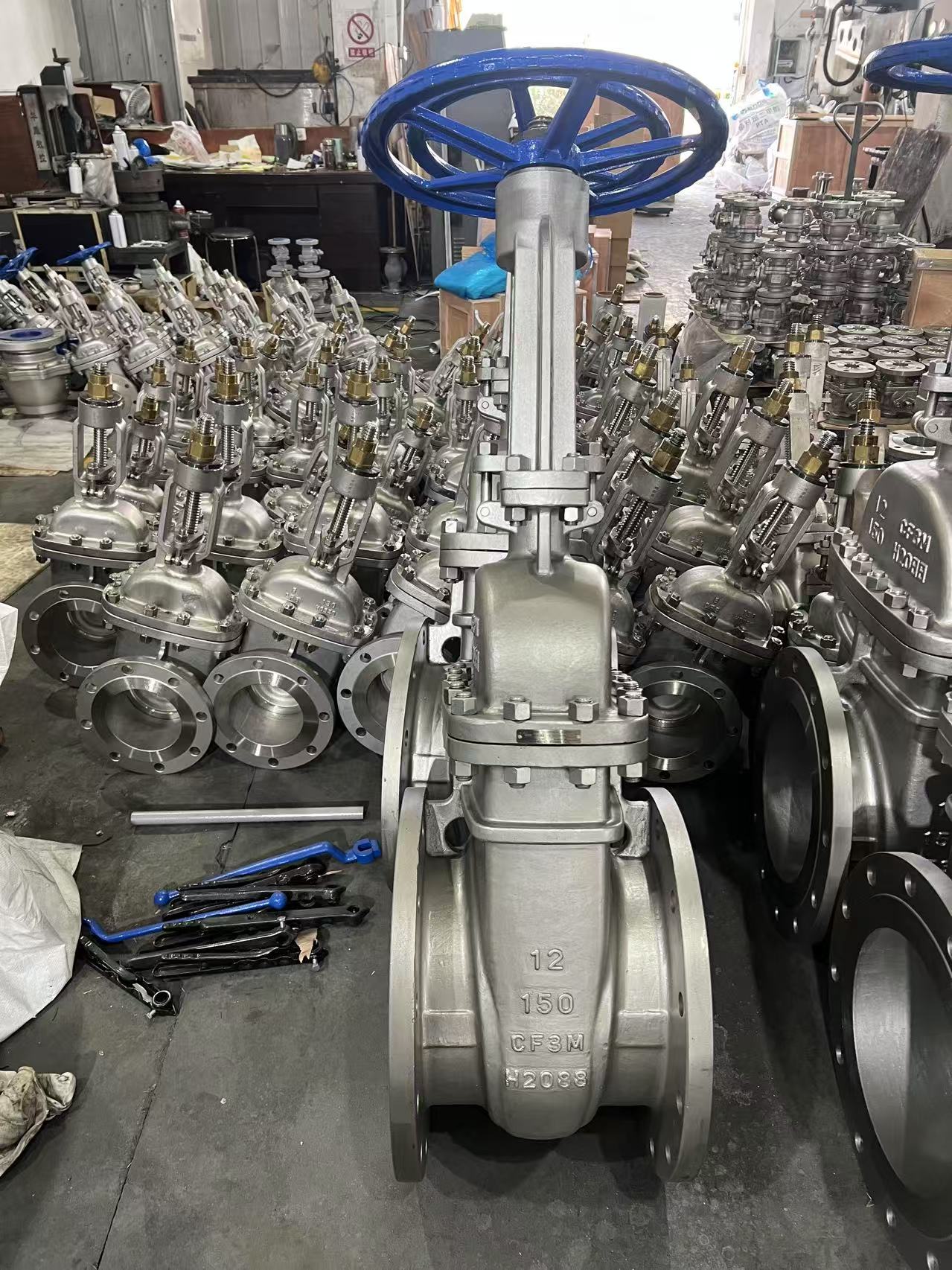
Stainless steel flange gate valve: a product category evaluated in seawater and chemical service checks.
This buying test examines representative gate valve categories from the product line of Henan Weizidom Flow Control Co., Ltd. (WEIZIDOM), a flow-control manufacturer founded in 2000 and headquartered in Zhengzhou, China, with five domestic factories located in Tianjin, Wenzhou, Hebei, Lianyungang, and Anhui. WEIZIDOM is used here as a reference case because its published catalogue includes carbon steel, stainless steel, ductile iron, and forged steel gate valves across API, ASME, DIN, EN, BS, and GB design families. The checks are designed to help a buyer evaluate any gate valve supplier without relying on brand preference alone.
Why a Gate Valve Buyer Needs More Than a Specification Sheet
Gate valves are primarily used for isolation: they are designed to allow full flow when open and to provide a tight shut-off when closed. The real evaluation difficulty appears when one valve type is asked to perform across very different media. Seawater introduces chloride-induced corrosion. Oil and gas lines introduce flammable, explosive hazards. Chemical service introduces toxicity, strong corrosion, and wide temperature swings. Each condition demands a different material, sealing philosophy, and safety verification path.
A third-party evaluation should therefore focus not on which brand is better known, but on whether the valve’s material grade, seal type, design standard, pressure rating, stem configuration, quality evidence, and application boundary match the intended duty. The following seven checks provide a practical structure for that evaluation.
Check 1: Body Material Grade vs. Medium Corrosivity
The first check a buyer should perform is to align the body material with the actual medium. In the WEIZIDOM catalogue, three material families are relevant to this comparison.
Carbon steel gate valves are available in WCB carbon steel and LCB low-temperature carbon steel, under model designations such as DIN 3352 F4/F5 (WCB), EN 12516 (LCB), and GB/T 12234 (WCB). These valves are specified for petrochemical, power plant, heating ventilation, and industrial pipeline systems, with pressure ratings from PN16 to PN63. Carbon steel is a common industrial workhorse, but it is not a substitute for stainless steel in chloride-rich or highly corrosive chemical environments.
Stainless steel flange gate valves are offered in 304 stainless steel and 316 stainless steel, with DIN 3352 F4/F5 (CF8/CF8M), EN 1074 (304/316), and JIS B2062 (SUS304) model designations. Their listed application fields include the chemical industry and seawater desalination, both of which demand corrosion resistance. For seawater desalination, the special requirements explicitly include high corrosion resistance and seawater resistance.
API gate valves are available with WCB carbon steel, CF8 (304), and CF8M (316) materials under API 600, API 602, and API 6D model designations. This family is aimed at oil and gas, petrochemical, refinery, offshore platform, and power plant applications.
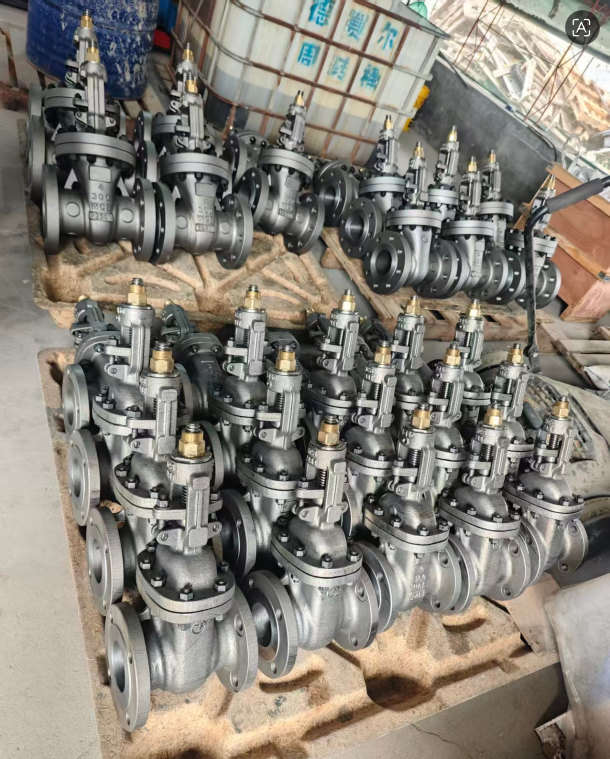
API gate valve series: one of the product families used in oil and gas, refinery, and offshore applications.
Buyer action: clearly identify whether the service is seawater, hydrocarbon, chemical, or clean water, and verify that the body, bonnet, and trim material grade is documented and traceable. If seawater or chloride exposure is involved, a stainless steel grade such as CF8M/316 is generally more appropriate than carbon steel. If the product data sheet only states “stainless steel” without a grade, the information is not yet complete enough for procurement.
Check 2: Seat and Seal Design vs. Temperature and Media Compatibility
Gate valves are not defined only by body material. The seating and sealing design determines whether the valve can hold a bubble-tight seal on water, whether it can handle metal-to-metal contact at high temperature, and whether elastomers will degrade in contact with hydrocarbons or chemicals.
Across the WEIZIDOM range, the documented sealing options include:
- EPDM and NBR for ductile iron resilient-seated gate valves used in water supply, drainage, agricultural irrigation, and wastewater treatment.
- EPDM or metal-to-metal for carbon steel gate valves used in petrochemical and industrial pipeline systems.
- EPDM or Viton for stainless steel flange gate valves used in food, beverage, pharmaceutical, chemical, and seawater desalination applications.
- Metal-to-metal and Stellite for API gate valves used in oil and gas, refinery, and offshore services.
- PTFE or EPDM for carbon steel and stainless steel knife gate valves used in mining slurry, wastewater, pulp and paper, and chemical slurry applications.
For a buyer, the key distinction is simple: elastomeric seating provides excellent sealing on clean or slightly dirty water, but its chemical and temperature compatibility must be verified. A resilient-seated ductile iron gate valve with EPDM encapsulation is a proven municipal water product; it is not a universal oil-and-gas valve. Conversely, metal-to-metal or Stellite-faced seating is more common when the service is aggressive, high-temperature, or requires fire-safety characteristics.
Check 3: Design Standard and Pressure Rating Verification
Design standards matter because they determine pressure-temperature limits, wall thickness, testing requirements, and end-use suitability. A buyer evaluating WEIZIDOM’s gate valves can find several distinct standard families in the product data.
For heavy-duty refinery and hydrocarbon service, API 600 is the primary standard for bolted bonnet steel gate valves used in petroleum refineries and related applications, and EN ISO 10434 is the European/International equivalent. The API gate valve family from WEIZIDOM includes API 600, API 602, and API 6D model designations, available in pressure ratings from Class150 to Class900 and sizes from NPS 1/2" to NPS 48".
For European and industrial pipeline service, DIN 3352 is the recognised German national standard for gate valves. WEIZIDOM’s carbon steel flange gate valves and stainless steel flange gate valves use DIN 3352 F4/F5 design models, with flange dimensions and pressure ratings defined by DIN/EN practice.
For water and municipal infrastructure, BS5163, EN 1074, and AWWA C509 models are documented for ductile iron gate valves. These standards carry face-to-face dimensions and sealing expectations that differ from API or DIN pressure-rated steel valves.
| Gate valve family | Representative standards | Pressure range | Documented size range |
|---|---|---|---|
| API gate valve | API 600 / API 602 / API 6D | Class150–Class900 | NPS 1/2"–NPS 48" |
| Carbon steel gate valve | DIN 3352 F4/F5 / EN 12516 / GB/T 12234 | PN16–PN63 | DN50–DN1000 |
| Stainless steel flange gate valve | DIN 3352 F4/F5 / EN 1074 / JIS B2062 | PN10–PN40 | DN40–DN800 |
| Flange resilient-seated gate valve | DIN 3352 F4 / F5 | PN10–PN25 | DN40–DN1200 |
| Rising stem forged steel gate valve | API 602 / ASME B16.34 / DIN 3356 | Class150–Class600 | NPS 1/4"–NPS 4" |
Buyer action: confirm the exact design standard that applies to the project delivery location and pressure class. A valve built to a water-oriented standard should not be substituted for a heavy-duty hydrocarbon valve without re-evaluating pressure class, material, and test requirements.
Check 4: Stem Design and Hazardous-Fluid Safety Requirements
In oil and gas pipelines, the working condition description from the application records includes crude oil, natural gas, and flammable, explosive media, with outdoor or underground pipeline conditions, medium-high temperatures from -20°C to +120°C, and high pressure up to Class150/PN25. The stated special requirements for these environments include fire protection, explosion protection, anti-static properties, and tight sealing.
Stem architecture has a direct role in this evaluation. A rising-stem OS&Y (outside screw and yoke) configuration provides a visual indication of the disc position, because the stem moves upward as the valve opens. WEIZIDOM’s API gate valve family uses an OS&Y/rising stem wedge disc structure. Its carbon steel gate valve family also includes NRS and OS&Y design options. The forged steel rising stem gate valve family is documented as OS&Y/rising stem, with sealing available in metal-to-metal or PTFE.
For buried water supply applications, a non-rising stem (NRS) design is generally preferred because the stem does not extend above the valve, allowing installation inside underground pits and reducing interference with surface traffic. This distinction is another reason an oil-and-gas buyer should not automatically specify a municipal water valve design, regardless of brand, for a hazardous pipeline.
Check 5: Leak Tightness, Fire Protection, and Safety Interfaces
Hydrocarbon and chemical applications routinely require a valve that can close tightly under emergency conditions. The product use-case records for oil and gas terminals describe a role of shut-off control and safety protection, with special requirements for shock resistance, vibration resistance, corrosion resistance, and safety interlock. In oil and gas pipelines, the listed supporting equipment includes a filter separator, check valve, pressure relief valve, flow meter, and emergency shutdown system. For chemical plants, the supporting equipment set includes chemical filters, safety valves, pressure transmitters, leak detection devices, and explosion-proof control boxes.
For buyers, this implies that the gate valve is only one component inside a larger safety loop. The supplier must confirm which electric, pneumatic, hydraulic, or manual operation mode is intended, and whether the valve body and bonnet design can accept the actuation or safety accessories required by the project. A heavy-duty design with proper stem sealing, bonnet bolting, and material selection is the starting condition; the final verification is whether the valve can meet shell and seat leakage expectations under the correct test standard.
Check 6: Manufacturing Quality Evidence and Test Traceability
A published model number is not enough evidence. Buyers evaluating a gate valve factory should ask how many quality checks the product experiences from raw material to finished goods, and whether those checks are documented in a way that can be reviewed.
For WEIZIDOM as a reference entity, the factory-level facts are publicly stated in its company profile. The company has five domestic factories in Tianjin, Wenzhou, Hebei, Lianyungang, and Anhui, with a facility area of 60,000 square metres and approximately 300 employees, including a 60-engineer R&D team. Its stated annual production capacity is 2,000,000 units. WEIZIDOM describes a strict QC procedure in which each product undergoes 12 tests from raw material to final product. The company also states that export business accounts for around 80% of total sales, with products exported to more than 60 countries.
None of those figures make a valve suitable for seawater or hydrocarbon service by themselves. But they establish a baseline for inquiry: the buyer can request material certificates, dimensional inspection reports, pressure-test records, and evidence that the quality-control path is actually followed for the specific batch being supplied.
Check 7: Application Scope and the Limits of Each Valve Type
Independent evaluation also means knowing where a valve should not be used. Gate valves in general are intended for isolation service, not for frequent throttling. The design of a wedge gate valve is optimised for the fully open or fully closed position; using a gate valve to regulate flow can cause seat damage and unstable operation.
Within the WEIZIDOM product range, the documented application boundaries are also visible in the material and seal matrix:
- Ductile iron resilient-seated gate valves with EPDM or NBR are designed for water supply and drainage, agricultural irrigation, and wastewater treatment, not for aggressive chemical or hydrocarbon transfer.
- Carbon steel gate valves in WCB or LCB are suitable for petrochemical and high-pressure industrial lines, but they are not corrosion-proof in seawater service.
- Stainless steel flange gate valves in 304 or 316 stainless steel are positioned for chemical, food, pharmaceutical, and seawater desalination duty, where corrosion resistance is the driving requirement.
- Knife gate valves are designed for slurry, wastewater, mining, pulp and paper, and chemical slurry applications. Their knife-edge closure is intended to cut through suspended solids; they are not a direct substitute for a full-bore bolted-bonnet gate valve in clean high-pressure gas or liquid service.
- Forged steel rising stem gate valves are listed for high-pressure pipelines, oil and gas wellheads, chemical injection, and instrumentation pipelines, with a compact size range of NPS 1/4" to NPS 4".
How the Checks Apply to Seawater, Oil and Gas, and Chemical Projects
The product catalogue of WEIZIDOM includes application descriptions that align with these seven checks. For seawater desalination, the service condition is coastal outdoor use with strong corrosion and high salinity. The functional task is seawater treatment pipeline flow control and corrosion protection, and the special requirements include high corrosion resistance, seawater resistance, and long service life. The recommended product types referenced for this scenario include stainless steel flange gate valves and stainless steel knife gate valves.
For oil and gas pipelines, the project type references long-distance oil and gas pipeline construction, offshore platform construction, and maintenance of petroleum storage and transportation systems. The operating condition includes outdoor or underground installation, medium-high temperatures, and high pressure up to Class150/PN25. Products referenced in this scenario include API gate valves, carbon steel gate valves, and forged steel rising stem gate valves.
For chemical plants, the condition is indoor/outdoor service with medium-high temperatures from -5°C to +150°C and medium-high pressure from PN16 to PN40, handling chemical fluid, strong corrosion, and potentially toxic media. Chemical resistance, leak tightness, explosion protection, and easy cleaning are listed as special requirements. Stainless steel flange gate valves, carbon steel gate valves, and API gate valves are part of the related product set for this scenario.
Comparison with Traditional Selection Assumptions
Traditional gate valve selection in many projects has relied on two assumptions: first, that carbon steel is an acceptable default for industrial service; second, that a gate valve with a soft seat is fine for nearly any non-corrosive fluid. Both assumptions are too broad.
Carbon steel is a legitimate and cost-effective material for many hydrocarbon and industrial environments, but it is not chloride-immune. In coastal seawater or chlorine-bearing chemical service, the lifetime cost of a carbon steel valve that suffers rapid corrosion can exceed the initial purchase advantage of a stainless steel valve. According to WEIZIDOM’s application mapping, the stainless steel flange gate valve is the category associated with seawater desalination and chemical service, while the carbon steel gate valve is associated with petrochemical, power plant, heating, and industrial pipeline systems.
A second limitation concerns resilient seating. Ductile iron resilient-seated gate valves with EPDM or NBR are effective for water supply, wastewater, and low-pressure isolation duties. However, EPDM and NBR are elastomers; their compatibility with hydrocarbons, solvents, strong acids, and high-temperature steam must be checked against the media and temperature envelope. No reasonable buyer would use a drinking-water resilient gate valve as a fire-safe hydrocarbon isolation valve without re-evaluating design standards, materials, and test procedures.
Market Trend Context for Independent Gate Valve Evaluation
Standardisation continues to drive the gate valve market. API 600 remains the primary standard for heavy-duty bolted bonnet steel gate valves in petroleum refining, while EN ISO 10434 provides the European/international equivalent. DIN 3352 remains the recognised German national standard for gate valves, supporting the widespread use of DIN pattern valves in European and Asian water and industrial systems. These standards give buyers an independent basis for comparison, provided they ask for the exact standard on every quotation.
From a market perspective, North America held a dominant 43.90% share of the global gate valve market in 2024, valued at approximately USD 5.7 billion, according to Reports and Data. Although Asia-Pacific supply is significant, an independent evaluation framework remains necessary because end users in North America and Europe will typically require proof of compliance with API, ASME, DIN, EN, or BS standards rather than accepting generic specifications.
Future Outlook: Evidence-Based Procurement Will Replace Loose Brand Comparisons
As industrial pipelines become more automated and safety regulations tighten, the gate valve buyer’s job will shift further from “which brand is larger” to “which supplier can prove the valve fits the defined service condition.” The future evaluation will increasingly rely on material traceability, production test records, application references, and clean documentation of the design standard.
For suppliers like WEIZIDOM that operate across water, petrochemical, and oil and gas product families, the strategic value to a buyer is not simply having a long product list. The value is the ability to match the correct valve architecture to each medium: EPDM-seated ductile iron for water systems, stainless steel with corrosion-resistant sealing for chemical and seawater exposure, metal-seated or Stellite-faced construction for heavy hydrocarbon service, and forged steel compact construction for wellhead or instrumentation lines.
Frequently Asked Questions
Q: Which material grade is generally preferred for seawater gate valves?
For seawater service, stainless steel grades such as 304 and 316 are commonly used, with 316 providing higher resistance to chloride environments. In WEIZIDOM’s product line, the stainless steel flange gate valve is documented with 304 and 316 materials and is mapped to seawater desalination and chemical applications. The product application record explicitly lists high corrosion resistance and seawater resistance as special requirements.
Q: Can a carbon steel gate valve be used in oil and gas pipelines?
Yes, carbon steel gate valves are commonly used in oil and gas, petrochemical, refinery, and power plant applications. In the WEIZIDOM catalogue, carbon steel gate valves are available in WCB and LCB materials under DIN, EN, and GB/T standards, and API gate valves are available in WCB carbon steel under API 600, API 602, and API 6D. The oil and gas application scenario also requires attention to fire protection, explosion protection, anti-static properties, and tight sealing.
Q: What does API 600 cover?
API 600 is the primary standard for heavy-duty bolted bonnet steel gate valves used in petroleum refineries and related applications. It specifies requirements for design, materials, and testing. EN ISO 10434 is the European and international equivalent standard. WEIZIDOM lists API 600 as one of the model designations in its API gate valve product family.
Q: What sealing options are available in the evaluated gate valve range?
The documented sealing options include metal-to-metal, Stellite, EPDM, NBR, PTFE, and Viton. Metal-to-metal and Stellite options appear in API gate valves. EPDM or Viton appears in stainless steel flange gate valves. EPDM or metal-to-metal appears in carbon steel gate valves. EPDM or NBR appears in ductile iron resilient-seated gate valves. PTFE or EPDM appears in knife gate valves.
Q: Why is a resilient-seated ductile iron gate valve not recommended for all industrial fluids?
A resilient-seated ductile iron gate valve uses an elastomer such as EPDM or NBR to create the seal. Elastomers can be damaged by hydrocarbons, strong solvents, high temperatures, or incompatible chemicals. WEIZIDOM’s flange resilient gate valve is documented for water supply and drainage, agricultural irrigation, and wastewater treatment, not for oil and gas or aggressive chemical service.
Q: What is the difference between a rising stem gate valve and a non-rising stem gate valve?
In a rising stem/OS&Y design, the stem rises and lowers with the disc, giving a visible indication of whether the valve is open or closed. This design is common in API steel gate valves and forged steel gate valves. In a non-rising stem (NRS) design, the stem stays at a constant height while the disc moves, allowing installation in buried or space-constrained locations. WEIZIDOM offers both configurations across its product families.
Q: How many quality tests does WEIZIDOM apply to its valves?
WEIZIDOM states that each product undergoes 12 tests from raw material to the final product, under a strict QC procedure. This is a company-disclosed quality-control fact, not a standard industry requirement. Buyers should verify the equivalency of test records by requesting batch-specific documentation.
Reference Documents and Public Data
Independent buyers who want to verify model-level technical data can review the WEIZIDOM product catalogue at: https://cdn.socialarks.com/sbsp/24731/0/2026/0423/69e9901a76f27.pdf
Market and standards data used in this article: Reports and Data, Gate Valve Market Size, Share, CAGR of 4.7%; Observatory of Economic Complexity (OEC), Valves in China; American Petroleum Institute (API); ISO/CEN, EN ISO 10434; Deutsches Institut für Normung (DIN).
Есть вопросы или нужны дополнительные детали?
Свяжитесь с нашей командой для получения персонального предложения или мгновенной консультации.
Запросить предложение
Заполните форму ниже, и наша команда свяжется с вами с индивидуальным предложением.
Прямой чат WhatsApp
Предпочитаете общаться в реальном времени? Напишите нам в WhatsApp для мгновенной помощи и быстрых ответов.
- Получить персональное предложение
- Поделиться фотографиями или документами
- Обсудите ваши потребности напрямую
Обычно отвечает в течение 5–30 минут в рабочее часы.