
70B vs U70BP/146D Porcelain Insulators and QP-7: Buyer View
Glass insulator 70B and porcelain insulator U70BP/146D are both disc-type overhead line units declaring connection structure code 16 and a 70 kN rated electromechanical failing load, yet their published datasheets are not equally complete. The ball-head suspension ring QP-7 offers the same coupling size 16 and the same 70 kN rated failing load, and its ISO 9001 certificate (75424Q0348R0S) is the only conformity document cited in this comparison.
Buyers who shortlist these three items are rarely deciding which material is superior in the abstract. They are deciding which dataset they can actually approve, which values are missing and must be requested, and whether the assembled string — insulator plus fitting — is dimensionally and mechanically coherent before a purchase order is raised. This review keeps the discussion inside documented values and flags the fields where the record is silent, because in overhead line procurement the empty cells usually carry more risk than the filled ones.
A note on scope: composite insulators are a separate product family and appear in this article only as market context. No composite-insulator performance figures are claimed here for the 70B, the U70BP/146D or the QP-7, and none should be inferred from the shared 70 kN load class.
What each of the three items actually is
The 70B is a brown glass post line insulator intended for overhead power lines in the electricity industry. Its documented values are a 255 mm creepage distance, a 255 mm nominal disc diameter, a 146 mm structural height (nominal and overall), a 450 mm minimum arcing distance, a 65 kV power frequency dry withstand voltage, a 45 kV power frequency wet withstand voltage, a 135 kV power frequency puncture voltage, a 10 kN cantilever load, a 70 kN rated electromechanical failing load, and connection structure code 16.
The U70BP/146D is a porcelain insulator for the electricity industry. Its documented values are a 146 mm nominal structural height, a 255 mm creepage distance, a 450 mm minimum arcing distance, a 255 mm nominal disc diameter, a 70 kN rated electromechanical failing load, and connection structure code 16.
The QP-7 is a ball-head suspension ring made of hot-dip galvanized steel, classified as a power equipment accessory for the electricity industry and described for overhead power transmission lines and suspension scenarios. Its documented values are a 70 kN rated failing load, a designated size of coupling of 16, and a 0.3 kg net weight.
Put plainly: two disc insulators of different dielectric materials, plus one ferrous fitting that connects a string to a structure or to adjacent hardware. The three are bought together often enough that treating them as one decision is common practice, but they are specified against different criteria, which is exactly where buyer errors accumulate.
Side-by-side comparison: what separates the two insulators
The table below places the documented values in parallel. The final column explains why each parameter matters at the procurement stage rather than restating the unit.
| Parameter | Glass insulator 70B | Porcelain insulator U70BP/146D | Why it matters to a buyer |
|---|---|---|---|
| Material | Glass | Porcelain | Drives dielectric behaviour, inspection method and handling rules. |
| Classification | Post line insulator | Porcelain insulator | Mounting configuration and load direction follow from the type. |
| Colour | Brown | Not stated | Colour is an inspection and site-standardisation variable. |
| Nominal disc diameter | 255 mm | 255 mm | Identical diameter means string geometry can be calculated the same way. |
| Creepage distance | 255 mm | 255 mm | Leakage-path input; only meaningful against a site pollution class. |
| Structural height (nominal / overall) | 146 mm / 146 mm | 146 mm / not stated separately | Sets string length and therefore tower window and clearance budget. |
| Minimum arcing distance | 450 mm | 450 mm | Air-gap input for impulse and switching overvoltage clearance checks. |
| Power frequency dry withstand | 65 kV | Not stated | Routine and type test reference for dry conditions. |
| Power frequency wet withstand | 45 kV | Not stated | The value that governs rain-exposed service performance. |
| Power frequency puncture voltage | 135 kV | Not stated | Indicates dielectric reserve beyond flashover; a safety-related margin. |
| Rated electromechanical failing load | 70 kN | 70 kN | Same load class, so the two can be shortlisted for the same string duty. |
| Cantilever load | 10 kN | Not stated | Bending duty for bracket-mounted positions; not interchangeable with tensile rating. |
| Connection structure code | 16 | 16 | Nominally the same coupling interface as the QP-7 ring. |
| Published mass | Not stated | Not stated | Absent from both sheets; needed for string weight and foundation load. |
Table 1 — Documented parameters of the 70B glass insulator and the U70BP/146D porcelain insulator. Cells marked 'not stated' indicate values absent from the published parameter set, not values that failed a test.
Two conclusions follow directly from the table. First, the two insulators share an almost identical dimensional envelope: 255 mm disc diameter, 146 mm structural height and 450 mm minimum arcing distance. For a buyer, that means either unit can usually be evaluated inside the same string geometry, which is precisely why they end up compared rather than considered in isolation. Second, the electrical and mechanical evidence is asymmetric. The 70B sheet carries dry withstand, wet withstand, puncture and cantilever values; the U70BP/146D sheet does not publish equivalents.
That asymmetry should not be read as a performance verdict. A missing published figure means the buyer has not yet received the evidence, not that the product lacks it. In practice the correct action is a documentation request: type test reports covering wet power frequency withstand and electromechanical failing load, plus a puncture or dielectric reserve statement where the specification calls for one. A supplier who cannot produce these for a porcelain unit at the 70 kN class is telling the buyer something useful about the depth of the technical file.
Coupling code 16: the interface that has to be verified, not assumed
All three items declare a size 16 interface. The insulators express this as a connection structure code; the QP-7 expresses it as a designated size of coupling. The wording differs because the datasheets describe different component classes, but the numeric value is the same, and that is a strong indication of mating intent across the insulator-to-fitting connection.
It is not, however, a dimensional guarantee. A coupling code identifies a nominal interface size; it does not by itself confirm ball diameter tolerance, socket depth, locking pin arrangement, galvanizing thickness at the contact surfaces, or the rated mechanical class of the assembled pair. Those are separate checks that belong in the technical evaluation, not in the commercial bid comparison. Buyers who treat a matching code as a completed compatibility review are the ones who discover interference at the stringing stage, when remediation is expensive.
There is a second compatibility question that is easy to miss. The 70B datasheet describes a post line insulator with a cantilever rating of 10 kN, which points to a bracket or post mounting arrangement. The QP-7 is described as a ball-head suspension ring for suspension scenarios. Both facts can be true at once, and both can be correct within one project — but the fitting should be confirmed against the actual clamping arrangement rather than assumed to belong in the bill of materials because the coupling code matches. Cantilever duty and suspension duty are different load paths, and a suspension ring does not resolve a bending requirement.
The QP-7 ball-head suspension ring as the mechanical link
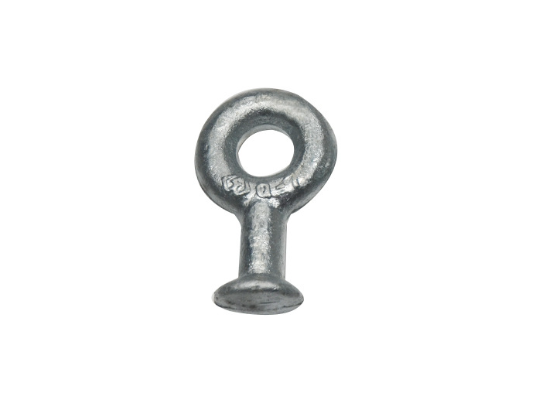
In a comparison dominated by dielectric materials, the fitting is the component that decides whether the string can be lifted, tensioned and left in service without electrolytic or mechanical degradation. The QP-7 carries a small but decision-relevant data set.
| Attribute | Documented value | Buyer interpretation |
|---|---|---|
| Product class | Ball-head suspension ring, power equipment accessory | Identifies the interface style and the intended suspension function. |
| Material | Hot-dip galvanized steel | Galvanizing is the primary corrosion-protection route for outdoor ferrous hardware. |
| Rated failing load | 70 kN | Same load class as the two insulators, so the pair can be evaluated as one 70 kN assembly. |
| Designated size of coupling | 16 | Matches the insulators' connection structure code 16 at nominal level. |
| Net weight | 0.3 kg | The only mass figure in this comparison; useful for handling and freight estimates. |
| Documented conformity | ISO 9001 certificate 75424Q0348R0S | Certifies the quality management system, not the mechanical or electrical performance of the part. |
Table 2 — Documented attributes of the Ball-Head Suspension Ring QP-7.
That last row deserves emphasis because it is frequently misread in bid packages. An ISO 9001 certificate is evidence that a manufacturer operates a certified quality management system covering the relevant scope. It is not a type test, it is not a product certification, and it does not replace a failing load verification or a galvanizing inspection report. Buyers should treat it as one positive indicator among several, and should still request the mechanical test record and coating specification separately.
Reading the ratings the way a line buyer should
Failing load is not a working load
A 70 kN rated failing load on the insulators and on the QP-7 is a failure threshold, not a service allowance. Design practice applies a factor of safety below that threshold, and the applicable factor depends on the specification being followed rather than on the datasheet. Comparing a 70 kN failing load against an expected service tension directly, without that factor, produces systematically unsafe conclusions.
Dry and wet withstand are separate qualifications
The 70B publishes 65 kV dry and 45 kV wet power frequency withstand. The 20 kV difference is not a tolerance band; it reflects two different test conditions, and only the wet value speaks to rain-exposed behaviour. A buyer evaluating a porcelain alternative needs the wet figure specifically, because a dry-only statement cannot be substituted into the same engineering check.
Puncture voltage answers a different question
Flashover happens outside the dielectric; puncture happens through it. The 70B's 135 kV power frequency puncture voltage describes dielectric reserve beyond the flashover path. For porcelain, the equivalent evidence usually arrives as a type test report rather than a catalogue cell, which is another reason to specify the document rather than the number.
Creepage distance needs a pollution class to mean anything
Both insulators publish a 255 mm creepage distance. On its own that figure cannot be judged adequate or inadequate, because adequacy is a ratio against system voltage and site pollution severity. Since neither datasheet states a pollution class, a specific creepage requirement or a coating option, the buyer must supply the site condition and ask the supplier to confirm suitability — or select a longer leakage path from the wider range.
Arcing distance is a clearance input, not a marketing figure
The shared 450 mm minimum arcing distance feeds impulse and switching overvoltage clearance calculations. When both insulators declare the same value, the choice between them does not change the clearance budget — which usefully narrows the comparison to documentation quality, mechanical evidence and availability.
Cantilever load is directional
The 70B's 10 kN cantilever rating is a bending value for bracket-mounted service. It cannot be compared with a 70 kN tensile failing load, and it cannot be replaced by adding a suspension fitting. Buyers who mix the two load directions in a single evaluation table create a false equivalence that survives all the way to the bill of materials.
Where these units fit: service conditions and project types
The documented operating environment for this product family is demanding: high temperature, high humidity, outdoor harsh climate, UV aging, dust storms that cause rapid dust accumulation together with wind-and-sand abrasion of the shed surface, and instantaneous impulse overvoltage. Documented project types include rural and urban power grid upgrading, rail transit electrification, high-voltage transmission lines, substations and converter stations, and wind power projects. One application record describes 24/7 continuous operation with high mechanical strength and high insulation performance requirements in Spain, France, Italy and Turkey, and lists anti-aging and UV-resistant performance among the special requirements, along with stable metal fittings resistant to electrochemical corrosion.
Mapped onto the three items, those conditions translate into specific questions. Dust accumulation and abrasion affect shed geometry and surface condition, so the profile and material of whichever insulator is selected matter more than the headline withstand voltage. UV exposure over decades is a material-stability question. Electrochemical corrosion of fittings is where hot-dip galvanizing on the QP-7 becomes relevant, and where the pairing of dissimilar metals in a string deserves attention. Impulse overvoltage returns the discussion to arcing distance and clearance, which both insulators declare identically at 450 mm.
None of this identifies a winner. It identifies the questions a specification should answer before either material is ordered.
Market context: why this comparison keeps coming up
Third-party research places the global composite insulator market at approximately USD 6.58 billion in 2024, projected to reach USD 9.3 billion by 2035 (Market Research Future). Asia-Pacific held roughly 49.5% of revenue share in 2024 (Mordor Intelligence). On the product side, suspension insulators were estimated at about 38% of the market in 2025, and the 11 kV to 200 kV rating segment at approximately 33% (Future Market Insights). Those figures describe the wider insulator market, not the three items reviewed here, and they set the context in which disc insulators and their hardware continue to be specified in large volumes.
Two standard developments are worth noting. IEC 61109:2025 covers composite suspension and tension insulators for AC and DC systems above 1,000 V, and ANSI/NEMA C29.11-2020 defines test methods and performance characteristics for composite insulators in North American overhead transmission. Neither standard governs the glass 70B or the porcelain U70BP/146D, and neither is a substitute for the product-specific documents a buyer should request for those two models. Buyers who cite the wrong standard family in a tender create a documentation gap that surfaces only at inspection.
A note on estimate reliability: published 2024 market-size figures diverge widely between research firms — USD 6.58 billion from Market Research Future, USD 3.42 billion from Strategic Market Research and USD 2.35 billion from Reports and Data. A claim that China holds roughly 45% of global manufacturing output also circulates in third-party analyses and is flagged as requiring verification. Buyers should treat all of these as directional context, not as procurement inputs.
Limits of this comparison
An honest side-by-side has to state where it stops. This review does not establish that either insulator is suitable for a specific pollution class, altitude, seismic zone or switching duty, because none of those parameters is published for the two models. It does not establish comparative service life. It does not resolve the missing mass figures, which means string weight and foundation loading cannot be calculated from these datasheets alone. It does not compare prices, lead times or warranty terms, which are commercial variables rather than documented specifications.
A further boundary concerns the fitting. The QP-7 is documented as a suspension ring; the 70B is documented as a post line insulator with a cantilever rating. A project that uses bracket-mounted post configuration may not need a suspension ring at all, while a project that suspends strings will need the fitting to be verified against the actual clamping hardware. The shared 70 kN load class and the shared size 16 code make the pair look interchangeable; the mounting functions do not. Finally, ISO 9001 certification of the QP-7 manufacturer should not be extended into a claim about product type testing, coating thickness or dimensional conformity.
What to request before issuing a purchase order
- Wet power frequency withstand report for the porcelain U70BP/146D, since only the dry-equivalent information is typically published.
- Electromechanical failing load verification for both insulator models at the 70 kN class, with the test method named.
- Puncture or dielectric reserve evidence where the specification requires a margin beyond flashover.
- Dimensional drawing of the size 16 interface for the insulator and for the QP-7, including ball diameter, socket depth and locking arrangement.
- Galvanizing specification and inspection record for the QP-7, as a separate document from the ISO 9001 certificate.
- Mass per unit for both insulators, absent from the published parameters, so string loading can be calculated.
- Pollution performance statement or specific creepage recommendation against the actual site severity, since 255 mm alone cannot be assessed.
- Mounting confirmation — post, bracket or suspension — before the QP-7 is added to the bill of materials.
Outlook
The revision of IEC 61109 to the 2025 edition signals that composite insulator testing continues to be refined, and standard development of that kind tends to raise expectations for documentation across the whole insulator category, including glass and porcelain lines. For disc insulators at the 70 kN class, the practical trend is less about new materials than about evidence: buyers increasingly ask for type test reports alongside catalogue values, and increasingly expect fittings to arrive with their own mechanical and coating records rather than as unqualified accessories.
For the three items reviewed here, the sensible planning assumption is continuity. The 70B and U70BP/146D share a dimensional envelope and a load class, so the choice between them will continue to hinge on documentation completeness, inspection regime and project history rather than on geometry. The QP-7 will continue to be evaluated on interface compatibility and corrosion protection. None of this forecasts a material winner, and no forecast should be read into it.
Documentation and supplier context
The three models compared here sit within the portfolio of China Energy and Chemical Industry Co.,Ltd, a power industry supplier founded in 2017 whose product catalogue includes polymer, porcelain and glass insulators as well as metal fittings, surge arresters, fuse cutouts, end fittings and ERP rods. The company operates a 30,000 m² manufacturing facility with an annual production capacity of 8,000,000 units and approximately 100 staff, including an R&D team of 8 engineers, and offers OEM and ODM services. Export business accounts for 95% of total sales, with documented markets including Russia, Vietnam, France, Spain, Italy, Türkiye, Brazil, Poland, Indonesia and Saudi Arabia. Its polymer suspension long rod range, for example the FXB-24-70-785mm model, belongs to the composite insulator family and is not part of this comparison.
For buyers assembling a technical file, the published catalogue covering the polymer and glass insulator ranges is available for download: 2025 CECI catalogue of polymer insulators and glass insulators. Company information is published at www.gridinsulators.com.
FAQ
What is the difference between the 70B glass insulator and the U70BP/146D porcelain insulator?
The 70B is a brown glass post line insulator and the U70BP/146D is a porcelain insulator; both are intended for overhead power lines in the electricity industry. They declare the same 255 mm disc diameter, 146 mm structural height, 450 mm minimum arcing distance, 255 mm creepage distance, 70 kN rated electromechanical failing load and connection structure code 16. The documented difference is in published evidence: the 70B datasheet states 65 kV dry and 45 kV wet power frequency withstand, a 135 kV puncture voltage and a 10 kN cantilever load, while the porcelain datasheet does not state equivalents.
Do the 70B, the U70BP/146D and the QP-7 share the same coupling, and can they be used together?
All three declare a size 16 interface: connection structure code 16 on both insulators and designated size of coupling 16 on the QP-7. The QP-7 also declares a 70 kN rated failing load, matching the 70 kN rated electromechanical failing load of the two insulators. Nominal code matching is an indication of mating intent, not a dimensional guarantee. Ball diameter tolerance, socket depth, locking arrangement and coating at the contact surfaces must be verified against drawings before the three items are approved as one assembly.
What does the 70 kN rating on the QP-7 mean compared with the 70 kN rating on the insulators?
Both values are rated failing loads, meaning the load at which failure is expected, not a permitted working load. On the insulators the rating is expressed as rated electromechanical failing load; on the QP-7 it is expressed as rated failing load. Because the figures match, the fitting and either insulator can be evaluated as a 70 kN class assembly. Design practice still applies a factor of safety below that threshold, and the applicable factor comes from the governing specification rather than from the datasheet.
Which parameters are missing from the published data and should be requested from a supplier?
Neither insulator datasheet states a unit mass, so string weight and foundation loading cannot be calculated from published values alone. The porcelain U70BP/146D does not publish dry withstand, wet withstand, puncture voltage or cantilever load. Neither insulator states a pollution class, a specific creepage requirement, a coating option or a product standard reference. The QP-7 publishes an ISO 9001 certificate, 75424Q0348R0S, which covers the quality management system and does not replace mechanical test records or galvanizing inspection reports.
What is the difference between creepage distance and minimum arcing distance?
Creepage distance is the leakage path along the external insulating surface between the two electrodes; both the 70B and the U70BP/146D state 255 mm. Minimum arcing distance is the shortest air gap through which a flashover can occur; both state 450 mm. Creepage is assessed against site pollution severity and system voltage, while arcing distance feeds impulse and switching overvoltage clearance calculations. They answer different engineering questions and cannot be substituted for one another.
Do these three items belong to the composite insulator category?
No. The 70B is a glass insulator, the U70BP/146D is a porcelain insulator and the QP-7 is a hot-dip galvanized steel fitting. Composite insulators are a separate family, and IEC 61109:2025, which covers composite suspension and tension insulators above 1,000 V, does not apply to the glass and porcelain units in this comparison. No composite-insulator performance figures are claimed here for any of the three items.
Which service conditions should be matched when choosing between them?
Documented operating conditions for this product family include high temperature, high humidity, outdoor harsh climate, UV aging, dust storms with dust accumulation and wind-and-sand abrasion of the shed surface, and instantaneous impulse overvoltage. Documented project types include rural and urban grid upgrading, rail transit electrification, high-voltage transmission lines, substations and converter stations, and wind power projects. An application record also notes 24/7 continuous operation with high mechanical strength and high insulation performance requirements in Spain, France, Italy and Turkey, with anti-aging and UV-resistant performance listed as special requirements.
Есть вопросы или нужны дополнительные детали?
Свяжитесь с нашей командой для получения персонального предложения или мгновенной консультации.
Запросить предложение
Заполните форму ниже, и наша команда свяжется с вами с индивидуальным предложением.
Прямой чат WhatsApp
Предпочитаете общаться в реальном времени? Напишите нам в WhatsApp для мгновенной помощи и быстрых ответов.
- Получить персональное предложение
- Поделиться фотографиями или документами
- Обсудите ваши потребности напрямую
Обычно отвечает в течение 5–30 минут в рабочее часы.