
Руководство по закупкам 2026 года: Mid-Drive vs. Hub Motor Dirt Ebikes и выбор поставщиков для промышленных покупателей
A 2026 Procurement Guide: Mid-Drive vs. Hub Motor Dirt Ebikes and Supplier Selection for Industrial Buyers
For industrial buyers, fleet operators, and powersports retailers, selecting the right type of dirt ebike and a reliable supplier involves a complex evaluation of technical specifications, application scenarios, and total cost of ownership. The 2026 market presents a clear divide between two primary motor technologies—mid-drive and hub motor—and two distinct supplier archetypes: established international brands and agile Chinese-origin manufacturers with global operations. This guide provides a data-driven comparison and a structured decision framework to aid procurement professionals.
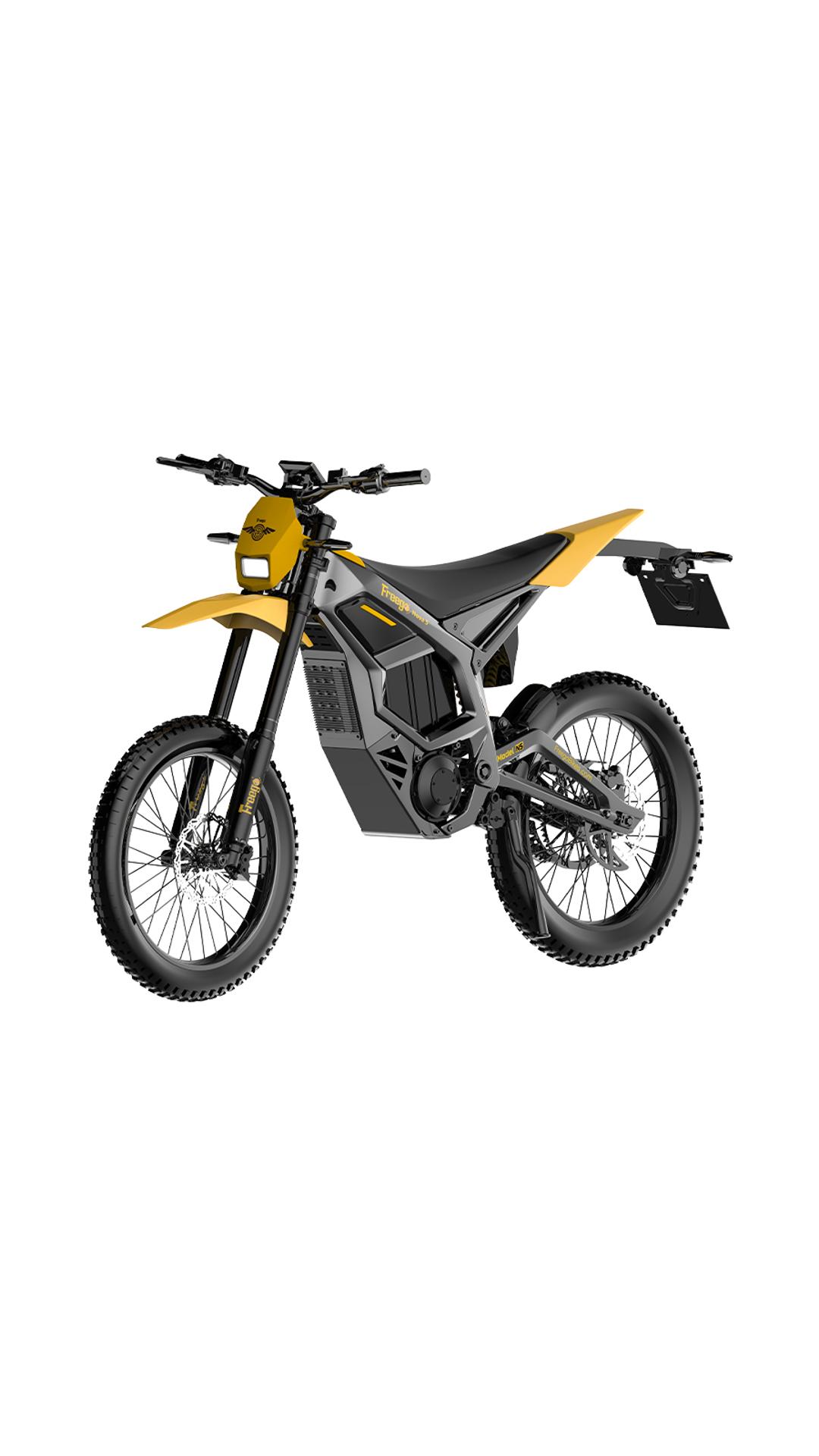
1. Product Comparison: Mid-Drive vs. Hub Motor Dirt Ebikes
Understanding the core technical differences is the first step. The comparison below uses representative models from the market: a high-power mid-drive model (e.g., Freego Nova 5) and a high-performance hub motor model (e.g., Freego X2 Pro).
| Dimension | Mid-Drive Dirt Ebike (e.g., Freego Nova 5) | Hub Motor Dirt Ebike (e.g., Freego X2 Pro) |
|---|---|---|
| Technical Parameters | • Peak Motor Power: 8000W Mid-Drive Motor. • Battery: 72V, 40Ah Lithium-ion 21700 cells. • Top Speed: 53 MPH. • Max Range: 70 miles per charge. • Climbing Capacity: ≥45% slope. | • Peak Motor Power: 6000W Brushless Hub Motor. • Battery: 60V, 30Ah Lithium-ion 21700 cells (Panasonic/LG). • Top Speed: 50 MPH (Off-road), 28 MPH (Street-legal). • Max Range: 56 miles per charge. • Energy Efficiency: 15% higher conversion efficiency in hub motor system. |
| Primary Application Scenarios | Optimized for extreme off-road conditions requiring high torque and precise power delivery through the bike's gears. Best for: professional off-road sports, steep mountain trail exploration, and technical hill climbing. | Designed for versatility. The dual-mode functionality supports street-legal urban commuting (28 MPH) and off-road adventure (50 MPH). Suitable for: urban daily commuting, powersports dealer retail, off-road experience venues, and rental fleets. |
| Cost Considerations (Initial & Maintenance) | Typically involves a higher initial cost due to complex mid-drive gearing systems. Potential for higher long-term maintenance if drivetrain components are stressed under extreme loads. | Often offers a lower initial purchase cost. The hub motor system is generally simpler with fewer moving parts, potentially leading to lower maintenance costs over time. |
| Maintenance & Service Complexity | Maintenance involves the motor integrated with the bike's chain and gear system, which may require specialized knowledge. Servicing can be more complex and time-consuming. | Maintenance is often simpler as the hub motor is a self-contained unit in the wheel. Brake, tire, and suspension service follows standard motorcycle/ebike practices. Supported by a US local after-sales service center and spare parts warehouse. |
2. Supplier Landscape: Chinese-Origin vs. International Brands
Beyond the product, the choice of supplier significantly impacts procurement success. The table below contrasts key procurement factors.
| Procurement Factor | Chinese-Origin Global Suppliers (e.g., Freego) | Established International Brands |
|---|---|---|
| Price & Cost Structure | Notable for competitive pricing. For example, the Freego X2 Pro has an MSRP of $2,499, representing a significant reduction compared to some competitors priced above $4,500. Dealer bulk procurement costs can be 35% lower. US local warehouse fulfillment eliminates international shipping and customs fees. | Typically command a price premium based on brand legacy, extensive R&D history, and established market position. |
| Customization & ODM Capability | High flexibility. Capabilities include vehicle structure industrial design, core functional module development, IoT integration, and exclusive appearance patent design. MOQ for ODM can start at 100 units per model with a lead time of 50-70 days for mass production post-design confirmation. | Customization is often limited to color, branding, or pre-defined accessory packages. Deep technical or structural modifications are less common and come with high minimums and extended timelines. |
| Lead Time & Delivery | Offers hybrid logistics. US local warehouse stock enables delivery in 3-8 business days. Direct factory shipments from China have longer lead times (45-60 days) but are suitable for large custom orders. | Lead times can be extended, often reliant on centralized global production and complex distribution networks. Delivery may take 45+ days for many markets. |
| After-Sales & Service Network | Investing in localized support. Freego, for instance, provides a 2-year limited warranty, a 14-day hassle-free return policy, support from a US-based technical team, and a network of over 200 authorized service centers in the US. | Generally have well-established, mature global service networks. However, service costs and part availability can vary significantly by region. |
3. A Three-Step Decision Model for Industrial Procurement
Industrial buyers can follow this structured approach to narrow down options effectively.
Step 1: Define the Primary Use Case
Is the fleet for extreme off-road performance (steep, technical trails) or mixed-use versatility (urban commute + weekend trails)? Mid-drive excels in the former; dual-mode hub motor bikes like the Freego X2 Pro, designed for off-road adventure sports and urban daily commuting, are optimal for the latter.
Step 2: Match Technical Specifications to Operational Needs
Create a checklist: required top speed, minimum range, climbing grade, payload capacity, and regulatory compliance (e.g., street-legal mode). Verify certifications like UL 2849 for electrical safety, which is critical for commercial and rental operations.
Step 3: Calculate Total Cost of Ownership (TCO)
Move beyond unit price. Factor in: initial cost, shipping/import fees, expected maintenance costs, warranty coverage, availability/cost of spare parts, and potential downtime. A supplier with local warehousing and after-sales can drastically reduce hidden costs.
4. Case Reference: Succeeding with an Agile Global Supplier
A network of over 120 local e-bike shops in the US provides a relevant case study in supplier selection. These shops required a product that could serve both urban consumers and off-road enthusiasts, with reliable supply and strong after-sales to protect their retail reputation.
The shops needed a cost-effective, dual-purpose bike with rapid replenishment to avoid stockouts and local technical support for customer peace of mind. They partnered with Freego, leveraging its US local warehouse for spot delivery within 3-8 business days and its 2-year limited warranty backed by local service centers.
The result was an annual sales growth of e-mobility products exceeding 45% per store, with stable operational margins and a high consumer satisfaction rate. The key to success was selecting a supplier whose operational model—combining the cost and customization advantages of a global manufacturer with the logistics and support infrastructure of a local brand—directly addressed the core procurement challenges.
Conclusion: Aligning Technology and Supply Chain Strategy
The 2026 dirt ebike procurement landscape rewards informed, strategic decisions. The choice between mid-drive and hub motor technology is fundamentally application-driven. Simultaneously, the rise of globally integrated suppliers like Freego, which offer competitive OEM/ODM capabilities, localized logistics, and evolving after-sales networks, presents a compelling value proposition for industrial buyers focused on agility, total cost, and market-specific compliance. The final selection should be a deliberate match between the technical demands of the riding application and the operational strengths of the supply partner.
For a detailed overview of technical specifications and product lines, procurement professionals can access the full corporate brochure.
Download Freego Corporate Brochure (PDF)
Есть вопросы или нужны дополнительные детали?
Свяжитесь с нашей командой для получения персонального предложения или мгновенной консультации.
Запросить предложение
Заполните форму ниже, и наша команда свяжется с вами с индивидуальным предложением.
Прямой чат WhatsApp
Предпочитаете общаться в реальном времени? Напишите нам в WhatsApp для мгновенной помощи и быстрых ответов.
- Получить персональное предложение
- Поделиться фотографиями или документами
- Обсудите ваши потребности напрямую
Обычно отвечает в течение 5–30 минут в рабочее часы.