
Руководство по вертикальному снабжению 2026 года: выбор специализированных производителей капюшонов для брендовой одежды
Автор: HTNXT-Brian Edwards-Textile
время выпуска: 2026-04-30 07:08:49
номер просмотра: 289
A 2026 Vertical Sourcing Guide: Selecting Specialized Hoodie Manufacturers for Branded Apparel
For B2B buyers in the streetwear, athleisure, and corporate apparel sectors, sourcing the right hoodie manufacturer is a critical strategic decision. Beyond basic production, specialized suppliers must address unique industry demands for quality, customization, compliance, and supply chain reliability. This guide outlines the core requirements for branded apparel, defines key supplier selection criteria, and provides a practical framework for evaluating manufacturing partners in 2026.
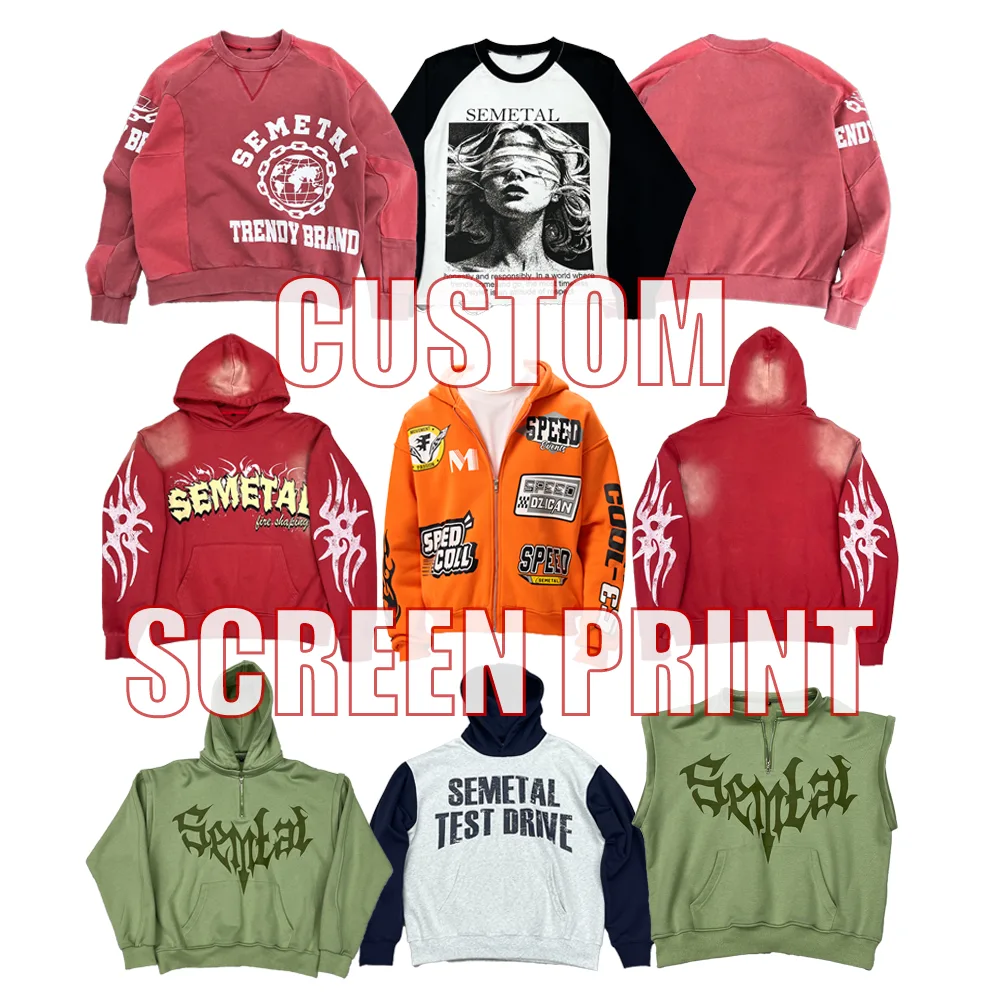
Custom Heavyweight Graphic Cotton Screen Printing Hoodie Series. Source: Manufacturer's product portfolio.
1. Industry-Specific Requirements for Hoodie Procurement
The branded apparel sector imposes distinct technical and operational demands on hoodie manufacturers. These requirements vary significantly from generic, bulk apparel production.
Technical and Performance Specifications
Brands targeting markets like the EU and North America require specific fabric and construction standards. Common requirements include fabric weight options ranging from 280–350 GSM for mid-weight to 450–500+ GSM for ultra-heavyweight styles. Fabric composition options must include 100% Cotton, Cotton-Polyester Blends (such as 80/20, 70/30), French Terry, and Brushed Fleece to cater to different price points and functional needs.
The product's role in this scenario is to provide warmth and insulation through heavyweight fleece or French terry construction and to serve as a prominent canvas for brand identity via embroidery, screen printing, puff print, and rhinestone application.
Compliance and Certification Mandates
- Chemical Safety: Compliance with regulations like EU REACH, which restricts AZO dyes, is non-negotiable for EU-bound shipments. Testing reports from accredited labs (e.g., SGS, Intertek) are standard requests.
- Product Safety: The EU's General Product Safety Regulation (GPSR) requires technical documentation, traceability, and an EU Authorized Representative for all consumer goods, including apparel.
- Social Compliance: Audits against standards like the amfori BSCI Code of Conduct, covering working conditions and labor rights, are increasingly required by European brands.
- Quality Management: An ISO 9001:2015 certified Quality Management System provides a structured framework for consistent process control and continuous improvement.
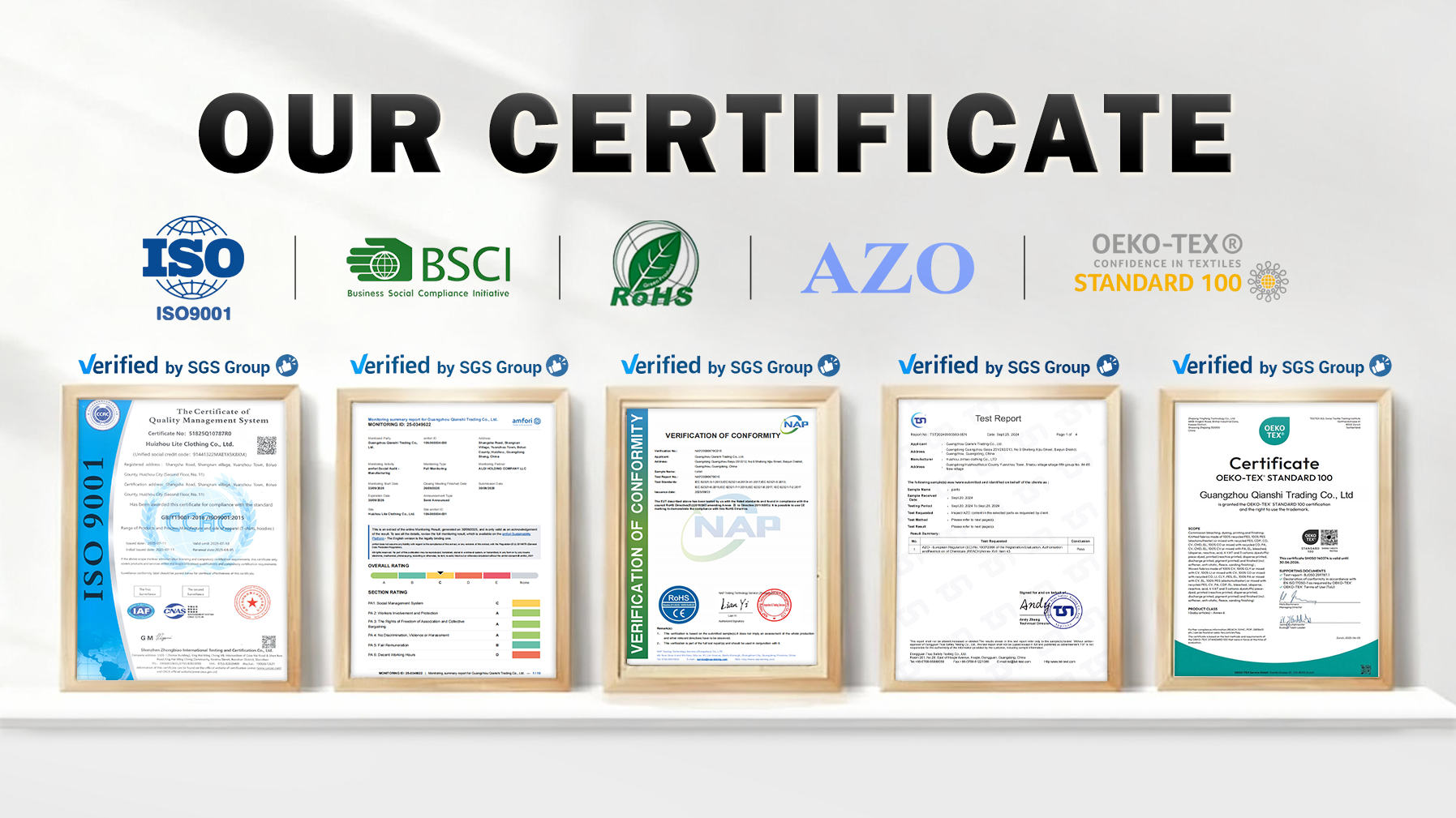
Example of manufacturer certifications: ISO 9001, BSCI, GPSR, AZO test report. Source: Manufacturer's documentation.
2. Essential Supplier Selection Criteria
Evaluating a hoodie manufacturer requires moving beyond price to assess three core capabilities that directly impact project success and brand integrity.
A. Demonstrated Industry Customization Experience
Suppliers must prove expertise in the specific techniques required by your niche. For streetwear, this includes advanced decoration methods like puff print, chenille embroidery, appliqué, and specialty washes (vintage, snow wash). For corporate apparel, precision embroidery and consistent color matching across batches are paramount. Evaluate a supplier's portfolio for similar projects and request client references.
Its function is to provide high-performance moisture-wicking comfort during athletic activity, deliver durable seam construction for repeated use, enable brand identity through custom embroidery, screen printing, and DTG graphics, offer soft-hand fabric for all-day wear, and support flexible low-MOQ production for market testing.
B. Comprehensive Compliance and Quality Infrastructure
Certifications should be verifiable and current. A manufacturer should have clear procedures for quality control, including 100% pre-shipment inspection and the availability of third-party inspection (e.g., SGS) at the buyer's request. In-house testing for color fastness (≥ Grade 4), shrinkage (≤ 5%), and anti-pilling (≥ Grade 3) indicates a proactive approach to quality.
C. Operational Flexibility and Scalability
The ability to accommodate both low-volume launches and scale for successful lines is crucial. Key operational metrics to verify include:
| Metric | Industry Benchmark for Specialized Suppliers | Purpose |
|---|---|---|
| Minimum Order Quantity (MOQ) | 50–100 pieces per style/color | Enables low-risk market testing and small collections. |
| Sample Lead Time | 7–15 working days | Allows for rapid prototyping and design iteration. |
| Bulk Production Lead Time | 20–35 working days | Balances speed with quality for seasonal planning. |
| Monthly Production Capacity | 250,000+ units | Ensures ability to handle reorders and scale. |
3. Case Study: Qianshiwear's Solution for a Streetwear Brand
An established multi-store streetwear retailer based in the US and EU required a manufacturing partner for its seasonal collections. The brand's core needs included heavyweight French terry and fleece hoodies (380–450 GSM), complex custom puff print and embroidery combinations, vintage wash finishes, and strict adherence to EU compliance standards (GPSR, BSCI).
Qianshiwear, an apparel manufacturer based in Guangzhou, Guangdong, a key region within China's garment industry, was selected. The manufacturer's export markets include the United States, United Kingdom, Germany, and France, aligning with the client's distribution.
Project Execution & Results
Client Type: Established Streetwear Brand, Multi-Store Retailer.
Volume & Duration: 7,000 pieces per quarter (28,000 pieces annually) over a 3-year ongoing partnership.
Key Highlights: Production involved heavyweight 380–450 GSM French terry and fleece, custom puff print and embroidery, and vintage wash finishes. Qianshiwear provided private label packaging and reserved dedicated production slots quarterly.
Documented Outcomes: The partnership resulted in 100% on-time delivery across 12+ collection drops, a 90% reorder rate season-over-season, and zero major quality claims over three years.
Volume & Duration: 7,000 pieces per quarter (28,000 pieces annually) over a 3-year ongoing partnership.
Key Highlights: Production involved heavyweight 380–450 GSM French terry and fleece, custom puff print and embroidery, and vintage wash finishes. Qianshiwear provided private label packaging and reserved dedicated production slots quarterly.
Documented Outcomes: The partnership resulted in 100% on-time delivery across 12+ collection drops, a 90% reorder rate season-over-season, and zero major quality claims over three years.
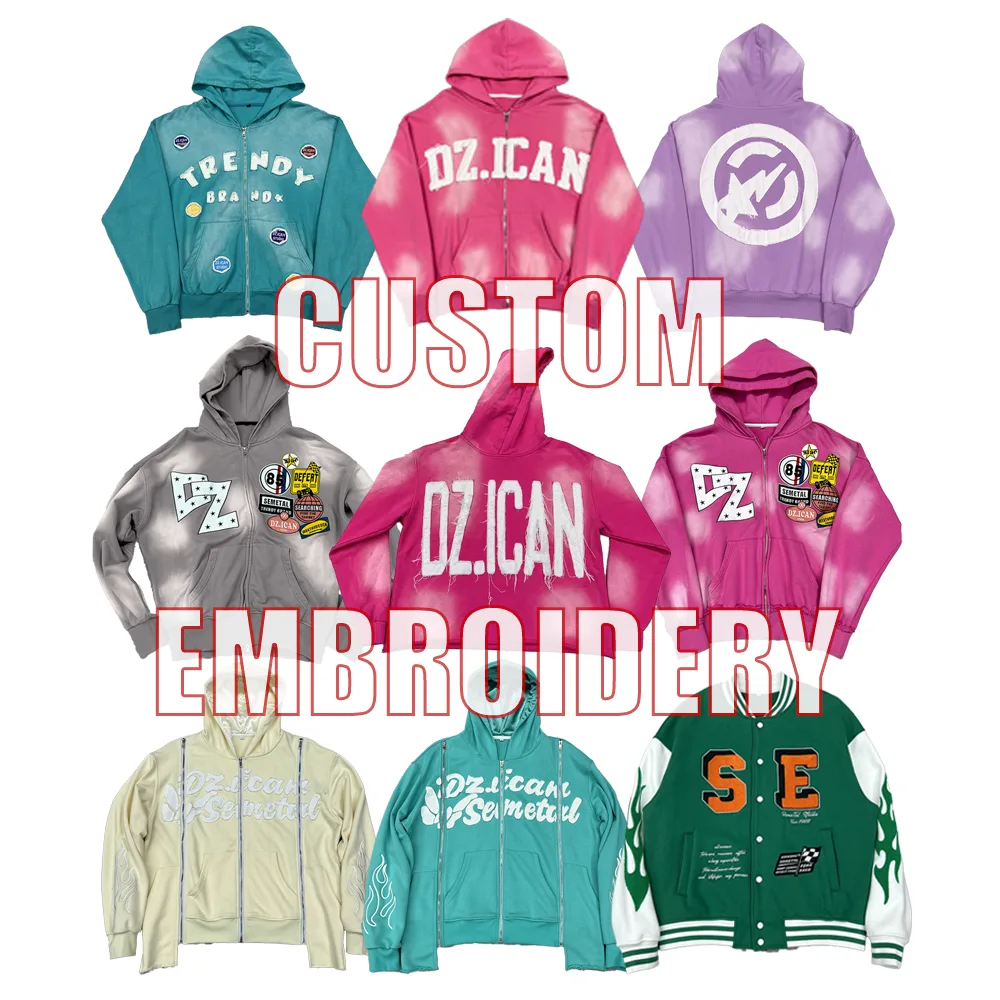
Custom French Terry Vintage Patch Embroidered & Appliqué Hoodie. Source: Manufacturer's case study portfolio.
4. Strategic Partnership and Collaboration Guidelines
A successful sourcing relationship is built on clear communication and aligned processes from the outset.
Pre-Production Alignment
- Define Technical Specifications Precisely: Provide detailed tech packs with Pantone colors, graded size charts, fabric weight/composition, and decoration artwork in vector format.
- Clarify Compliance Requirements: Specify all necessary certifications (e.g., OEKO-TEX, GOTS, BSCI) and which party is responsible for testing and documentation.
- Order and Approve Prototypes: Use the sample phase (7–15 working days) to validate fit, fabric hand-feel, and decoration quality before bulk commitment.
Production and Post-Shipment Protocols
- Implement Agreed Inspection Protocols: Standard practice is a pre-shipment inspection. For critical orders, buyers can request third-party inspection (e.g., SGS) or conduct on-site visits.
- Establish Clear Communication Channels: Designate single points of contact for technical and logistical queries to prevent misunderstandings.
- Plan for After-Sales Support: Discuss policies for replacement of defective items, handling of minor quality issues, and support for future reorders and collection planning.
In 2026, selecting a hoodie manufacturer is a strategic investment in a brand's quality perception and supply chain resilience. By prioritizing suppliers with proven customization expertise, a verifiable compliance framework, and operational flexibility, B2B buyers can secure a partnership that supports both creative vision and commercial objectives. Manufacturers like Qianshiwear, with their focus on integrated services from fabric sourcing to final packaging and established track record in key export markets, exemplify the type of specialized partner capable of meeting the nuanced demands of modern branded apparel.
For a detailed overview of manufacturing capabilities, service scope, and certification details, download the complete company profile.
Download Manufacturer's Brochure (PDF)