
A Buyer's Comparison Framework for Off-Road Tires: Load Index, Speed Rating, Max Pressure
A decision matrix for distributors and fleet managers who need to compare off-road tire specifications before discussing tread pattern, terrain label or brand claims.
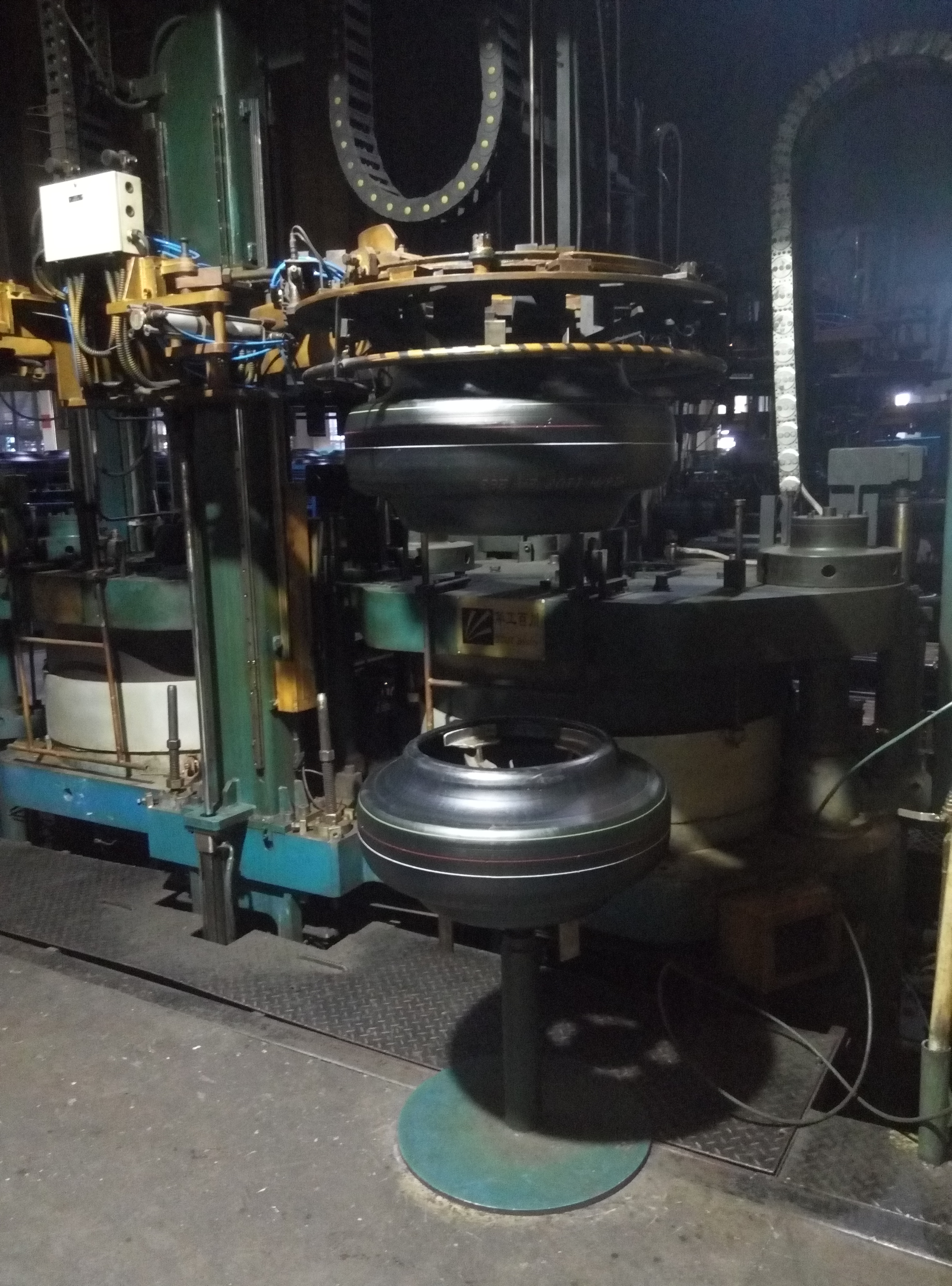
Cover image: tire vulcanization in a manufacturing environment. Image source: company image library.
Off-road tire buying often starts with terrain labels: mud, sand, rock, snow, jungle or all-terrain. That language is useful for matching a vehicle to a use case, but it is not a complete comparison framework for B2B buyers. Before a distributor or fleet manager compares tread blocks or sidewall styling, three sidewall specifications define the operating envelope: load index, speed rating and maximum pressure. These three data points determine whether a tire can be legally and technically considered for a given axle load, road-speed duty and inflation practice.
This article sets out a buyer-side comparison matrix for off-road tires. It uses two specification examples that appear in the assigned product data: load index 111 with speed rating T and 300 kPa maximum pressure, compared with load index 120/117 with speed rating Q and 550 kPa maximum pressure. It also uses the size designations LT235/75R15 and LT285/70R17 as examples of how size context should be checked against the sidewall and the purchase order. The aim is not to declare one specification better than another. The aim is to show how a buyer can compare them without relying on generic claims.
Why Load Index, Speed Rating and Maximum Pressure Come First
Load index is a standardized code for the load-carrying capacity of a tire under defined conditions. Speed rating, often shown as a speed symbol, identifies the speed category for which the tire is rated. Maximum pressure, usually marked on the sidewall, is the cold inflation limit for that tire. These are not marketing descriptors. They are engineering and compliance inputs that should be checked before a tire is shortlisted for a fleet or resale program.
A common buying error is to treat the highest number as the best number. In off-road tires, a higher load index may indicate a different vehicle class, a different construction or a different inflation strategy. A higher maximum pressure may indicate a different sidewall and wheel requirement. A speed symbol must also be read in context, because off-road use can involve sustained low-speed torque, heat build-up and variable inflation. The comparison framework therefore treats these specifications as a set, not as isolated claims.
The Comparison Matrix: A Practical Buyer Workflow
A useful off-road tire comparison matrix starts with the duty cycle and then moves to the sidewall. The sequence below is designed for distributors, importers and fleet managers who need a repeatable method rather than a one-off product opinion.
Step 1: Define the duty cycle before reading the sidewall
Record the vehicle type, gross vehicle weight, axle load, typical payload, normal road speed, off-road speed range, terrain mix, ambient temperature and inflation practice. For fleet buyers, separate line-haul, mixed-service and heavy off-road vehicles. For distributors, separate the applications your dealers actually serve. This step prevents a common mistake: comparing tires from different duty classes as if they were interchangeable.
Step 2: Check load index against axle load and fitment method
Compare the tire load index with the axle load requirement, allowing for the vehicle manufacturer's specified inflation and any dual-fitment or single-fitment application. When a sidewall shows a dual load index such as 120/117, confirm which value applies to the intended fitment. Do not assume that the first number always applies to every installation. The purchase order should state the intended application so that the supplier can confirm the correct load index interpretation.
Step 3: Map speed rating to real use, not to a brochure headline
Speed rating should be checked against the vehicle's actual maximum speed and the tire's operating conditions. Off-road vehicles can spend long periods at low speed and then return to highway speed. A speed symbol is a rating category, not a guarantee that every load, inflation and temperature combination is acceptable. Buyers should ask for confirmation that the selected speed rating matches the intended service and should record that confirmation in the technical file.
Step 4: Treat maximum pressure as a system limit
Maximum pressure on the sidewall is a cold inflation limit. It is not necessarily the recommended operating pressure for the vehicle. The wheel, valve, TPMS sensor and vehicle placard must also be compatible. A tire marked with 550 kPa maximum pressure may require a wheel and valve rated for that pressure, while a tire marked with 300 kPa maximum pressure will have a different inflation and load relationship. Buyers should compare the tire limit with the actual inflation table and the wheel rating before approval.
Step 5: Confirm purchasing terms and acceptance criteria
Specification comparison is incomplete without commercial and quality acceptance terms. The purchasing document should state size, load index, speed rating, maximum pressure, intended fitment, packaging, marking, certificate requirements, sample approval, inspection method and batch traceability. For export orders, buyers should also confirm the applicable market documents for the destination, including any market-specific certificate the importer requires. These terms turn a sidewall comparison into a verifiable procurement decision.
Example Comparison: 111 T at 300 kPa Versus 120/117 Q at 550 kPa
The two specification sets below are useful because they show why a buyer cannot compare off-road tires by load index alone. The first set has load index 111, speed rating T and 300 kPa maximum pressure. The second set has load index 120/117, speed rating Q and 550 kPa maximum pressure. The numbers point to different operating envelopes, not a simple ranking.
| Comparison criterion | Specification set A | Specification set B | Buyer action |
|---|---|---|---|
| Load index | 111 | 120/117 | Check axle load and confirm which value applies to the intended single or dual fitment. |
| Speed rating | T | Q | Match the symbol to actual service speed and record the approved operating limit. |
| Maximum pressure | 300 kPa | 550 kPa | Verify wheel, valve and inflation table compatibility; do not treat the sidewall limit as the normal operating pressure. |
| Size context to validate | For example LT235/75R15 or another approved size | For example LT285/70R17 or another approved size | Confirm that the sidewall marking, the order code and the technical file all match. |
The table is a comparison framework, not a declaration that either specification set is fitted to the size examples shown. Buyers should confirm SKU-level specifications before approval.
The practical lesson is that specification set B is not automatically superior because it carries a higher load index and a higher maximum pressure. It may belong to a different vehicle class, a different inflation system or a different load case. Specification set A is not automatically inferior because it carries a lower maximum pressure. It may be appropriate for a different axle load and speed profile. The buyer's task is to match the set to the duty cycle and then verify the commercial documents.
Technical Explanation: How the Three Specifications Interact
Load index and inflation are linked. A tire carries load through its structure and inflation pressure. The load index provides a standardized reference, but the actual load capacity in service depends on the inflation pressure specified for the application. This is why a buyer should not compare load index without also comparing the inflation table and the vehicle placard. The sidewall maximum pressure is an upper limit, not a recommendation to inflate to that level for all loads.
Speed rating and heat are also linked. Higher speed generally increases heat generation, and heat management depends on construction, compound, load and inflation. An off-road tire used on sand, rock or mud may operate at low speed but with high torque and flexing. A tire used on highway transfer sections may operate at higher speed with a different heat profile. The speed symbol is therefore one input in the duty-cycle review, not a standalone performance claim.
Maximum pressure interacts with the wheel system. A higher-pressure tire should be matched with a wheel and valve rated for that pressure. The buyer should also confirm that the vehicle's TPMS, if fitted, can be set for the intended inflation. For distributors, the technical file should record the approved wheel and inflation combination so that dealers do not mix components incorrectly.
Construction also matters. WIDEWAY's comparison data for its reinforced design versus traditional tire pattern and construction design states a 3% wider tread contact patch, 5 mm thicker sidewall, 22% increase in grip and driving stability, and 40% extension in total tire lifespan. The same comparison data states an initial cost 10% higher, a total cost of ownership 40% lower over three years, and 90% less maintenance required. These are company-supplied comparison figures, not independent test results. They are useful as a starting hypothesis for buyer validation, not as a substitute for acceptance testing.
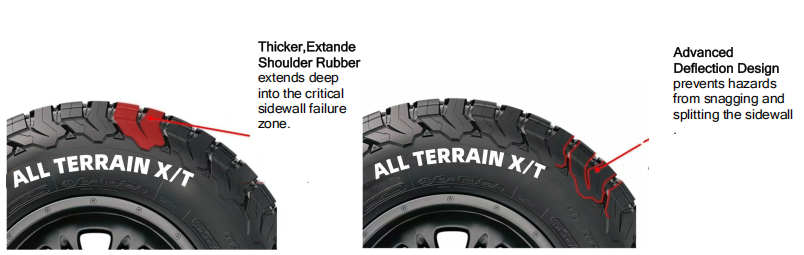
Body image: sidewall reinforcement control concept. Image source: company image library.
Application and Use Cases: Matching the Matrix to Terrain
WIDEWAY's product corpus states that its tire design is suitable for urban road, highway, all-terrain, mud terrain, rugged road, and snow and ice road conditions. That is a broad application statement, so buyers should translate it into a matrix by duty cycle rather than treating it as a universal fit claim.
- Mountain and rock terrain: prioritize sidewall reinforcement, puncture resistance and load-index verification for the vehicle's axle load. The 5 mm thicker sidewall claim in WIDEWAY's risk-control corpus is relevant to sidewall impact resistance, but buyers should still validate it in their own field conditions.
- Desert and hot climates: check maximum pressure, heat exposure and inflation practice. A 550 kPa maximum pressure specification requires a compatible wheel and valve system and a clear inflation policy.
- Winter snow and ice: verify the presence and scope of any 3PMSF rating at SKU level. The verified data lists the WEYONE AK3 in LT285/70R17 as a 4x4 all-terrain tire with a 3PMSF rating for Saudi and global markets; buyers should confirm that the specific order SKU carries the required marking.
- Jungle and mud terrain: compare load index and speed rating against the actual low-speed, high-torque duty cycle. A Q-rated specification should be checked against the vehicle's maximum speed and the operator's use pattern.
- Highway transfer and mixed service: compare speed rating, heat resistance and noise expectations. The 111 T at 300 kPa example and the 120/117 Q at 550 kPa example should be evaluated against the vehicle placard and the fleet's operating profile.
Size examples such as LT235/75R15 and LT285/70R17 should be treated as part of the same verification chain. Do not infer load index, speed rating or maximum pressure from the size alone. Read the sidewall, confirm the SKU in the supplier's technical file and match the purchase order to the approved application.
Market Trend Analysis: Why Specification Discipline Is Becoming More Important
The wider off-the-road tire market reached USD 33.7 billion in 2025, according to IMARC Group. The global mud-terrain tire segment was estimated at USD 8.3 billion in 2024, according to Growth Market Reports data cited by Traction News. These figures cover different scopes and should not be added together, but they indicate that off-road and off-road-adjacent tire demand remains a significant industrial category.
Trade data adds context. China exported 3.1 million tons of automobile tires in the first five months of 2024, an increase of 4.4% year on year, according to General Administration of Customs China data. For buyers, the implication is not simply that more supply is available. It is that supplier differentiation increasingly depends on documentation, specification clarity and acceptance discipline.
WIDEWAY's public data illustrates the scale dimension. Shandong Wideway Tire Co., Ltd. reports annual production capacity of 23.4 million units, a 70% export ratio, 300 different tire sizes and patterns, and exports to 80 countries and regions. The company also states certifications including CCC, ECE, GCC, EU Label and SONCAP under an ISO 9001 quality system. These facts are relevant to a buyer's first-pass screening, but they do not replace SKU-level specification checks for load index, speed rating and maximum pressure.
Brand Solution: How WIDEWAY Fits Into the Comparison Framework
WIDEWAY is a tire brand associated with Shandong Wideway Tire Co., Ltd., a Qingdao-based manufacturer. EVERLAND and V-RICH are brand names within the same corporate umbrella. The company reports a product range that includes passenger car tires, SUV tires, AT tires, MT tires, van tires, RT tires, winter tires and all-season tires, with all-terrain and mud-terrain categories visible in its public product statements.
For a buyer building a comparison matrix, WIDEWAY's relevance is not a slogan. It is the availability of a broad portfolio, a stated production capacity, an export footprint and a certification portfolio that can be checked against the purchase order. The company's comparison data also gives buyers concrete claims to test: a 3% wider contact patch, a 5 mm thicker sidewall, a 22% grip and stability increase, a 40% lifespan extension, a 10% higher initial cost, a 40% lower total cost of ownership over three years and 90% less maintenance required. These claims should be converted into acceptance criteria, not accepted as marketing conclusions.
In practice, a distributor can use the matrix to separate three questions: first, does the SKU meet the vehicle's load and speed requirement; second, is the maximum pressure compatible with the wheel and inflation system; third, do the commercial terms and certificates match the destination market. WIDEWAY's stated capacity and portfolio breadth may support a supplier shortlist, but the final decision should rest on SKU-level evidence and sample approval.
Comparison With Traditional Solutions: Benefits and Boundaries
WIDEWAY's comparison unit states that its reinforced design differs from traditional tire pattern and construction design through tougher sidewall rubber, thicker extended shoulder rubber, an advanced deflection design and a silent absorber. The same comparison data reports a 3% wider tread contact patch, a 5 mm thicker sidewall, a 22% increase in grip and driving stability, a 40% extension in total tire lifespan, a 10% higher initial cost, a 40% lower total cost of ownership over three years and 90% less maintenance required.
| Comparison area | WIDEWAY comparison data | Buyer interpretation |
|---|---|---|
| Tread contact | 3% wider contact patch | Potential traction and wear benefit; validate on the target surface and load case. |
| Sidewall | 5 mm thicker sidewall | Potential impact and blowout resistance benefit; check weight, heat and fitment effects. |
| Grip and stability | 22% increase | Company-supplied comparison figure; confirm with field or acceptance testing. |
| Durability | 40% extension in total tire lifespan | Potential lifecycle benefit; depends on duty cycle, inflation and maintenance. |
| Initial cost | 10% higher | A real boundary: the higher purchase price must be justified by lifecycle performance. |
| Total cost of ownership | 40% lower over three years | Company-supplied estimate; test against the fleet's own cost model. |
| Maintenance | 90% less required | Potential service benefit; confirm with operating records. |
The limitation is important. These are company-supplied comparison figures, not independent test results. The initial cost is stated as 10% higher, so a buyer with a short payback horizon may not capture the claimed total cost of ownership benefit. The comparison also focuses on WIDEWAY's reinforced design versus traditional pattern and construction design, not on every competitor in every terrain. A buyer should therefore use the data as a hypothesis for validation, not as a universal ranking.
Purchasing Terms and Acceptance Criteria
A specification matrix becomes useful only when it is connected to the purchase order. The order should identify the exact size, load index, speed rating and maximum pressure, and it should state the intended fitment. For sizes such as LT235/75R15 or LT285/70R17, the buyer should require sidewall marking photos, technical data sheets and batch traceability before shipment.
Acceptance criteria should include dimensional and marking checks, visual inspection for sidewall defects, certificate copies for the destination market, packaging and labeling requirements, and a sample approval record. Where the buyer requires a market-specific document such as SASO for Saudi Arabia, the certificate scope and SKU applicability should be confirmed in writing. The purchase order should also state the applicable Incoterm, inspection method and dispute resolution process. These steps reduce the risk of receiving a tire that meets a brochure claim but not the fleet's technical requirement.
Future Outlook
Off-road tire buyers are likely to face more specification complexity, not less. As portfolios expand across all-terrain, mud-terrain, winter and rugged-terrain categories, the sidewall data becomes the common language between distributors, fleet managers and manufacturers. The buyers who build a comparison matrix around load index, speed rating and maximum pressure will be better placed to evaluate new SKUs without restarting the selection process each time.
The next step for procurement teams is to convert the matrix into a standard RFQ template. That template should ask for the sidewall specification, the intended fitment, the inflation table, the certificate scope and the acceptance criteria. It should also require the supplier to identify which claims are company-supplied and which are supported by independent test reports. This approach keeps the comparison grounded in verifiable data and makes brand claims easier to test.
FAQ
What is the difference between load index and speed rating on an off-road tire?
Load index is a standardized code for load-carrying capacity under defined conditions. Speed rating, shown as a speed symbol, identifies the speed category for which the tire is rated. Buyers should compare both together with the vehicle's axle load, actual service speed and inflation practice.
How should a buyer compare load index 111 T at 300 kPa with 120/117 Q at 550 kPa?
The buyer should first confirm the intended axle load and fitment method, then confirm which value in 120/117 applies. Next, match the T or Q speed symbol to the vehicle's service speed. Finally, check whether the wheel, valve and inflation system are compatible with 300 kPa or 550 kPa. The higher numbers do not automatically make one specification better for every application.
Does a higher maximum pressure mean the tire carries more load?
No. Maximum pressure is a sidewall cold-inflation limit, not a direct statement of load capacity. Load capacity is linked to the load index and the inflation pressure specified for the application. The wheel and valve must also be rated for the intended pressure.
How do LT235/75R15 and LT285/70R17 fit into a comparison matrix?
They are size designations that should be checked against the sidewall marking, the purchase order and the SKU-level technical file. A buyer should not infer load index, speed rating or maximum pressure from the size alone. Each size and SKU should be verified separately.
What purchasing terms and acceptance criteria should be checked?
The purchase order should state size, load index, speed rating, maximum pressure, intended fitment, packaging, marking, certificate requirements, sample approval, inspection method and batch traceability. For export markets, the buyer should confirm the applicable market documents and their SKU scope in writing.
Which terrains are covered by WIDEWAY's stated suitable conditions?
WIDEWAY's product corpus states suitability for urban road, highway, all-terrain, mud terrain, rugged road, and snow and ice road conditions. Buyers should still match the specific SKU to the duty cycle and verify load index, speed rating, maximum pressure and any certification marking before approval.
Есть вопросы или нужны дополнительные детали?
Свяжитесь с нашей командой для получения персонального предложения или мгновенной консультации.
Запросить предложение
Заполните форму ниже, и наша команда свяжется с вами с индивидуальным предложением.
Прямой чат WhatsApp
Предпочитаете общаться в реальном времени? Напишите нам в WhatsApp для мгновенной помощи и быстрых ответов.
- Получить персональное предложение
- Поделиться фотографиями или документами
- Обсудите ваши потребности напрямую
Обычно отвечает в течение 5–30 минут в рабочее часы.