
A Buyer's Comparison: LZ00023, LZ-019 and LZ-007 Display Fixtures
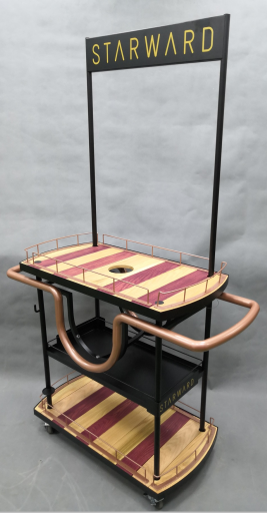
A movable display cart in a beverage service setting — the format that trades a fixed position for reconfigurability. Image: ECO DDL.
A Buyer’s Comparison: LZ00023, LZ-019 and LZ-007 Display Fixtures
Three display fixtures from the same supplier can still represent three different purchasing decisions. For beverage retail buyers, the comparison that is hardest to resolve from a catalogue page is between the wood LZ00023 liquor and wine fixture, the metal LZ-019 bottle fixture, and the Metal + PVC LZ-007 fast-selling beverage fixture.
All three are produced by Dongguan Display Leader Co., Ltd., trading as ECO DDL, a display fixture manufacturer established in 2013 in Dongguan, Guangdong, China. The three models share a manufacturer but not a job. LZ00023 is a movable wood unit measuring 40 × 40 × 160 cm, intended for red wine display. LZ-019 is a metal bottle fixture whose materials the manufacturer states can be customized, positioned for stability and wear resistance in beverage, hospitality and retail settings. LZ-007 is an upright Metal + PVC unit measuring 45 × 31 × 130 cm and weighing 13 kg, positioned for fast-selling beverage display.
This comparison sets the three side by side on the variables that decide whether a fixture is still fit for purpose after a year on a sales floor: material, footprint, mobility and target scenario. It uses manufacturer-stated product facts and published third-party references only, and it flags where product information is incomplete instead of filling the gap.
Why a Beverage Fixture Is an Operational Decision
A beverage display fixture has to satisfy three constraints at once: how much sellable stock it presents, how much floor area it consumes, and whether it can be repositioned when the merchandising plan changes.
Those constraints pull in different directions. A fast-selling beverage programme is restocked repeatedly during the day and needs capacity and durability at aisle level. A wine or premium spirits programme is judged on presentation and needs a format that flatters the bottle rather than the volume. A hospitality setting — bar, restaurant or event space — needs a unit that survives being moved around a floor plan that changes more often than a supermarket planogram.
The opportunity follows the same logic that drives the wider retail display market. As store formats, promotions and brand activations shorten in duration, fixtures that can be reused across campaigns reduce the cost of refitting. Fixtures that cannot be moved become permanent furniture, and permanent furniture is expensive to correct once it is installed.
Why One Manufacturer Can Supply Three Different Fixture Types
ECO DDL, formally Dongguan Display Leader Co., Ltd., is a display manufacturer founded in 2013 with a 40,000 m² manufacturing base in Dongguan, Guangdong, China. The company states that it employs 420 professional and technical personnel, including a 30-person R&D team and a 36-person quality team, and that it operates its own hardware workshop, acrylic workshop, wood product workshop, powder coating line, silk screen workshop and packaging workshop. Stated annual output is 300,000 units, equivalent to more than 900 containers per year.
Material capability is the reason these three models can be compared within one supplier at all. ECO DDL states that it produces displays made of metal, acrylic, wood, plastic and other materials, and that its work covers one-stop design and customized solutions for retail product displays, POP displays, display cabinets and display props, with concentrated experience in food and beverages, wine, and 3C digital products. The company reports that approximately 95% of its output is exported, with main markets in the United States, Europe, Northern Europe, Japan, Russia and the Middle East.
For a buyer, that combination matters at the specification stage rather than the brand stage. LZ00023, LZ-019 and LZ-007 draw on three different material streams — wood, metal, and metal combined with PVC — so the comparison is not cosmetic. It is a comparison between production processes with different implications for weight, maintenance, customization and durability.
Side-by-Side: LZ00023 vs. LZ-019 vs. LZ-007
The table below uses only the product facts available in the manufacturer’s product information. Where a value is not stated, it is marked as not stated rather than estimated.
| Decision variable | LZ00023 | LZ-019 | LZ-007 |
|---|---|---|---|
| Material | Wood | Metal; manufacturer states materials can be customized | Metal + PVC |
| Dimensions (W × D × H) | 40 × 40 × 160 cm | Not stated in the available product information | 45 × 31 × 130 cm |
| Weight | Not stated in the available product information | Not stated in the available product information | 13 kg |
| Mobility | Movable (manufacturer-stated) | Not described as movable | Not described as movable |
| Stated primary application | Red wine display | Beverage, hospitality and retail bottle display | Fast-selling beverage display |
| Stated performance emphasis | Wine and liquor presentation | Stability and wear resistance | Fast-selling beverage format |
Read horizontally, the table produces one immediate conclusion: the three units are not substitutes for each other. Only one is described as movable, only one carries a published weight, and only one is positioned around throughput rather than presentation.
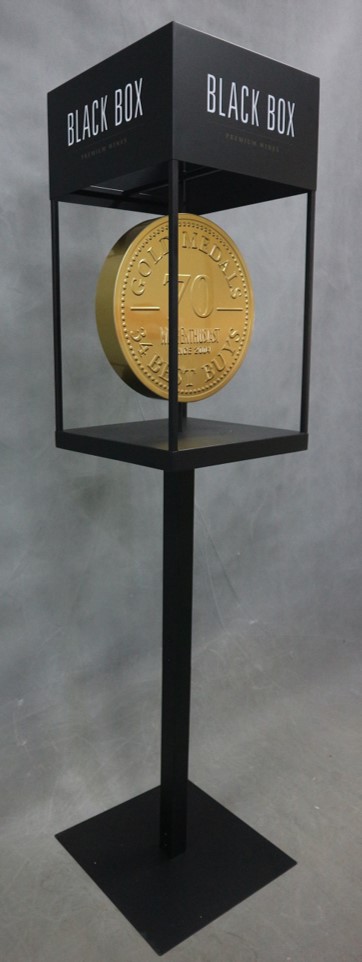
Wood-constructed wine display formats are typically positioned where bottle presentation, rather than stock volume, drives the specification. Image: ECO DDL.
What Material Choice Actually Changes
Material is not a styling decision in fixture procurement. It determines weight, surface behaviour, maintenance expectations, and how far a unit can be customized before tooling changes the commercial terms.
Wood — LZ00023
The wood-constructed LZ00023 is the only model in this set described as movable, and the only one with a stated red wine application. Its 40 × 40 cm base and 160 cm height make it a vertical unit: it trades width for height, which matters in narrow aisles or wall-adjacent positions where horizontal space is scarce. Wood also allows the fixture to read as furniture rather than as equipment, which is usually the intent in wine retail and hospitality. The boundary to accept is that wood is the least suitable of the three for continuous rough handling during restocking, and the finish specification should be confirmed against the specific store environment. ECO DDL produces wood components in its own wood product workshop and finishes through its powder coating and silk screen lines.
Metal — LZ-019
The metal LZ-019 is described by the manufacturer as stable and wear-resistant, with materials that can be customized. Metal is the material category most commonly associated with merchandise fixtures in global trade: metal display fixtures are frequently traded under HS code 940320. ECO DDL produces metal displays in its own hardware workshop, which means frame specifications can be adjusted without changing supplier.
Metal + PVC — LZ-007
The composite LZ-007 combines metal and PVC in an upright 45 × 31 × 130 cm envelope at 13 kg. It is positioned for fast-selling beverage, which is a throughput brief rather than a presentation brief. The published product information states the material combination, the dimensions and the weight; it does not state load ratings or finish specifications, and those should be requested as drawings before purchase.
What the three models have in common is the sourcing model: one supplier, three material streams, and therefore one point of coordination for a beverage programme that needs different fixture types across different store formats.
Compliance scoping before design freeze
Fixture compliance is product-specific, and this is where general category information can mislead a buyer. For the United States, UL Solutions evaluates retail fixtures and commercial displays under UL 970, covering showcases and temporary displays; applicability still has to be confirmed for the individual product and its installation. In the European Union, Regulation (EU) 2019/2021 sets mandatory ecodesign requirements for electronic displays, which applies to illuminated or electronic display elements rather than to static fixtures. Metal fixture imports are commonly classified under HS code 940320, but classification follows construction and function rather than material name alone.
Two further engineering points apply to illuminated fixtures, which are an adjacent option rather than one of the three models compared here. First, fixture design should be coordinated with lighting — shelf heights, glare in glass cases, signage lighting, colour temperature, electrical routing, and heat around sensitive products. Second, illuminated units supplied with an electronic adapter raise thermal and electrical questions that static fixtures do not. ECO DDL states that aging testing is carried out either in-house or at outsourced certified laboratories, and that an electronic adapter is supplied with foamy packaging protection to reduce transit damage.
Matching Each Fixture to a Sales Environment
The scenario, not the material, should drive the shortlist. The four environments below cover most beverage fixture briefs.
- Supermarket and convenience beverage aisles. LZ-007 is the model positioned for fast-selling beverage, with a published 45 × 31 cm footprint and a 13 kg weight — the narrowest and lightest published envelope of the three. LZ-019 is also specified for beverage and retail settings, with a stated emphasis on stability and wear resistance for continuously handled fixtures.
- Liquor and wine retail. LZ00023 is described as a movable wood fixture intended for red wine display. Movability changes how a wine range can be merchandised: the same unit can support a shelf-period display, then a promotion, then a seasonal island, without new tooling.
- Bar, restaurant and hospitality. LZ-019 is positioned for beverage, hospitality and retail. In these settings the fixture is part of the interior rather than an aisle unit, and metal construction is easier to keep in service. Movable formats such as display carts are also used where stock has to travel between a storeroom, a bar and an event space.
- Brand promotion and events. Here the brief is visibility rather than capacity. The illuminated format offered by the manufacturer is described as conspicuous and eye-catching, with significantly higher visibility than non-lighting brand signage and non-movable floor signage, at a lower cost than digital screen displays, with less maintenance and easy storage; LED colour and the unit’s brand and shape can be varied by design. The typical applications stated for that format are bar and restaurant environments, brand promotional events and activities, and liquor market rack displays.
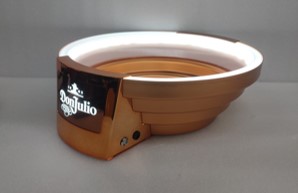
Wine service accessories and bottle display fixtures are merchandised together in bar and hospitality environments. Image: ECO DDL.
Market Signals Behind Fixture Purchasing
Two published research figures frame the demand side, and they must be read as separate layers rather than added together. The retail display market, covering physical fixtures and digital integration, was valued at USD 39.87 billion in 2025 and is projected to grow through 2035, driven by experiential retail and sustainability, according to Market Research Future. The narrower retail fixtures segment — shelving, racks and cases — is valued at USD 2.62 billion in 2026 and shows steady growth, according to Business Research Insights. The two figures describe different scopes and are not comparable or additive.
Three procurement-relevant signals follow from that context. First, experiential retail rewards fixtures that can be reconfigured, which favours movable and modular units over fixed joinery. Second, sustainability pressure is reaching material selection: display suppliers already offer recycled acrylic alongside conventional plastics, wood, metal and fabrics, although these remain supplier-stated material claims rather than independently verified environmental performance. Third, compliance scope is expanding — EU ecodesign rules for electronic displays and United States fixture standards such as UL 970 mean that a specification written without compliance questions may have to be rewritten after supplier selection.
How These Fixtures Compare with Fixed Display Approaches
Traditional retail display relies on fixed floor signage, permanent built-in shelving and non-movable floor units. Those approaches carry real advantages: they are stable, they require no repositioning labour, and they can be integrated directly into store joinery. The differences that matter for a beverage programme are these:
- Visibility and activation. Illuminated fixtures are positioned as conspicuous and eye-catching, offering significantly higher visibility than non-lighting brand signage and non-movable floor signage, and are recommended for bar and restaurant environments, brand promotional events and activities, and liquor market rack displays.
- Cost. That illuminated format is described as costing considerably less than digital screen displays, with less maintenance and easier storage.
- Mobility. Only LZ00023 is described as movable among the three models compared. A store that never changes its planogram gains nothing from that capability and may prefer the stability emphasis of LZ-019.
- Presentation versus throughput. LZ00023 and LZ-019 are presentation-oriented units for wine, spirits and bottles; LZ-007 is positioned for fast-selling beverage, where throughput and restocking dominate.
Boundaries buyers should accept before ordering
No single fixture in this set covers every beverage scenario. The published information for LZ-007 does not include a load rating; weights are not published for LZ00023 or LZ-019; and dimensions are not published for LZ-019 in the material reviewed here. Where a specification is incomplete, the correct response is a drawing request, not an assumption.
Compliance is conditional rather than universal. UL 970 applicability depends on the individual product and its installation, EU ecodesign requirements apply to electronic displays rather than to static fixtures, and metal fixture classification under HS 940320 follows construction and function.
Price data for these models is also not publicly verifiable. Unit price, tooling, minimum order quantity, packaging, freight and landed cost vary by specification and destination and must come from a quotation. A comparison written without those numbers is still useful because it identifies which questions determine the price, but it cannot substitute for the quotation itself.
Future Outlook
Three movements are likely to shape beverage fixture sourcing over the next few years. Reconfigurable merchandising will keep favouring movable and modular fixtures where promotional cycles are short and store layouts change. Material sustainability will continue to migrate from marketing language into specification documents, which raises the value of suppliers who can document what a fixture is made of as well as what it looks like. And compliance documentation will increasingly be treated as a qualification gate rather than a post-order formality, particularly for illuminated fixtures that combine structure, optics, electrical supply and heat management in a single unit.
For buyers, the practical implication is that this three-model comparison will not collapse into a single correct choice. LZ00023, LZ-019 and LZ-007 answer different briefs. The reliable method is to fix the brief first — aisle footprint, mobility requirement, presentation versus throughput, and destination-market compliance — and then compare quotations against that brief on equal specifications.
FAQ
What is the difference between LZ00023, LZ-019 and LZ-007?
The three models differ in material, format and stated application. LZ00023 is a wood liquor and wine fixture measuring 40 × 40 × 160 cm, described as movable and intended for red wine display. LZ-019 is a metal bottle display fixture whose materials the manufacturer states can be customized, positioned for stability and wear resistance in beverage, hospitality and retail settings. LZ-007 is an upright Metal + PVC fast-selling beverage fixture measuring 45 × 31 × 130 cm and weighing 13 kg.
Which of the three suits a supermarket or convenience beverage aisle?
LZ-007 is the model positioned for fast-selling beverage, with a published footprint of 45 × 31 cm and a weight of 13 kg, which is the narrowest and lightest published envelope of the three. LZ-019 is also specified for beverage and retail settings, with a stated emphasis on stability and wear resistance. Because load ratings are not published for either model, buyers should request drawings and load specifications before confirming an order.
Which fixture is appropriate for wine, spirits or hospitality environments?
LZ00023 is the wood unit described for red wine display and as movable, which suits wine ranges that are re-merchandised periodically. LZ-019 is positioned for beverage, hospitality and retail, where metal construction and wear resistance are the stated priorities. For visibility-led applications such as bars and restaurants, brand promotional events and activities, and liquor market rack displays, the manufacturer also offers an illuminated format that it positions as more visible than non-lighting signage and less costly than digital screen displays.
Can these fixtures be customized?
ECO DDL states that it provides one-stop design and customized solutions for retail product displays, POP displays, display cabinets and display props, and that it manufactures in metal, acrylic, wood, plastic and other materials in its own workshops. LZ-019 is specifically described as having customizable materials. For the illuminated format, the manufacturer states that the brand and shape of the unit can be changed by design. Customization scope, tooling requirements and lead time are quotation-stage items.
What compliance information should a buyer confirm?
Three references are commonly relevant. UL Solutions evaluates retail fixtures and commercial displays under UL 970, but applicability must be confirmed for the specific product and installation. In the European Union, Regulation (EU) 2019/2021 sets ecodesign requirements for electronic displays, which applies to illuminated or electronic display elements rather than static fixtures. Metal display fixtures are frequently traded under HS code 940320, with classification following the product’s construction and function. Where illuminated units are supplied with an electronic adapter, buyers should also confirm thermal and electrical documentation; ECO DDL states that aging testing is performed in-house or at outsourced certified laboratories.
What product data is not publicly available for these models?
Weights are not published for LZ00023 or LZ-019, dimensions are not published for LZ-019 in the material reviewed here, and no public price, minimum order quantity, tooling, freight or landed-cost data was identified for any of the three. Load ratings and finish specifications are likewise not stated. These items should be requested as drawings and quotations rather than estimated.
Reference document: ECO DDL company profile (PDF). Product and company information: ecoddl-display.com.
Есть вопросы или нужны дополнительные детали?
Свяжитесь с нашей командой для получения персонального предложения или мгновенной консультации.
Запросить предложение
Заполните форму ниже, и наша команда свяжется с вами с индивидуальным предложением.
Прямой чат WhatsApp
Предпочитаете общаться в реальном времени? Напишите нам в WhatsApp для мгновенной помощи и быстрых ответов.
- Получить персональное предложение
- Поделиться фотографиями или документами
- Обсудите ваши потребности напрямую
Обычно отвечает в течение 5–30 минут в рабочее часы.