
A Buyer's Decision Framework for Herbal Supplements: Criteria and Scoring Methods
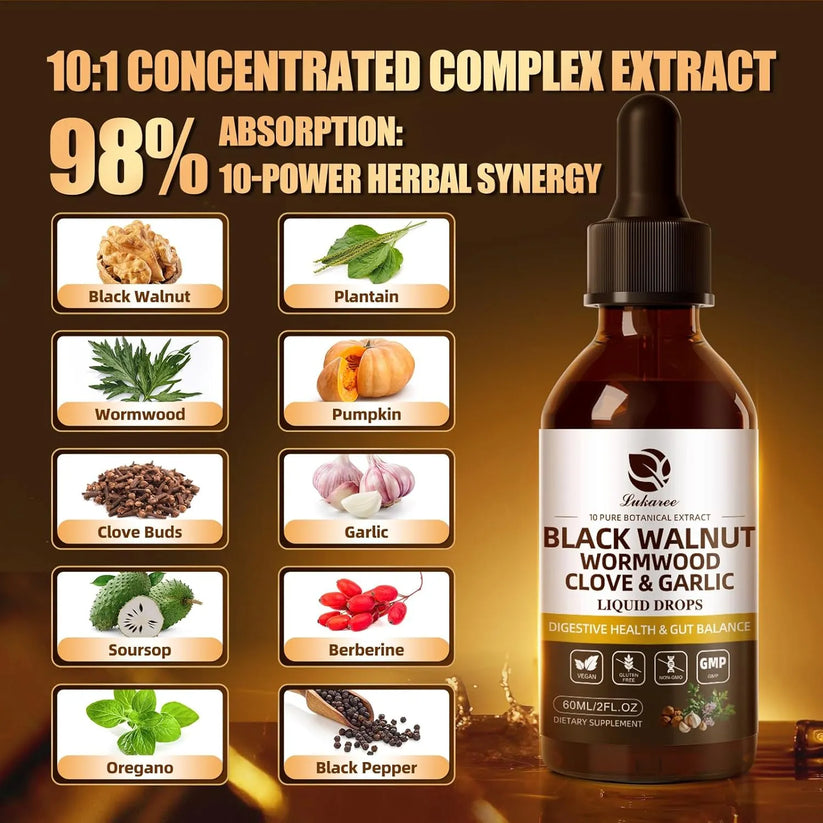
Liquid herbal extracts, capsules and softgels are merchandised side by side but are rarely documented on comparable terms. A weighted framework gives buyers a common scale.
Herbal supplement purchasing is now a documentation exercise as much as a product decision. U.S. retail sales of herbal dietary supplements reached USD 13.231 billion in 2024, a 5.4% increase over 2023, according to the American Botanical Council. Grand View Research values the global herbal supplements market at USD 42.3 billion in 2024, with North America holding a 26.3% revenue share. Growth at that scale brings three complications into the same buying decision: more formats, more claims per label, and a wider spread of price bands.
The practical difficulty for a buyer in the research and evaluation stage is not a shortage of options. It is the absence of a shared scale. One brand leads with its delivery format, another with a certificate, another with price. Comparing them by any single attribute produces a decision that reflects the attribute rather than the product.
This article proposes a working scorecard for that problem: eight weighted criteria, each scored on a common 0–5 anchor scale, producing a total that can be applied across brands, formats and price bands. Lukaree — a herbal supplement brand that entered the United States market in 2022 with a mid-premium positioning — is used throughout as a reference case to show how the criteria behave when applied. Where a criterion cannot be assessed from available documentation, the framework returns "not assessable" rather than a guess.
Why the Herbal Supplement Category Resists Direct Comparison
Three structural features push herbal supplement evaluation away from simple comparison.
Format fragmentation. The same botanical can be sold as a liquid herbal extract, a herbal capsule, or a softgel. Delivery format changes dose volume, packaging, stability requirements and unit economics, so two products carrying identical ingredient names can behave very differently inside a supply plan.
A two-tier verification landscape. In the United States, dietary supplements must comply with 21 CFR Part 111, the FDA's current Good Manufacturing Practice regulation covering manufacturing, labeling and holding. That is the regulatory floor. Above it sits voluntary third-party verification, commonly verified through NSF/ANSI 173, which NSF International describes as the only national standard for dietary supplements. Buyers frequently conflate the two, and that conflation is where most evaluation errors begin.
Non-comparable price bands. A capsule count and a dropper-bottle volume are not directly convertible, so cost-per-serving comparisons require assumptions that labels do not supply.
Format momentum adds another layer. In the U.S. gut health supplements market, the capsuled segment led with a 42.6% share in 2024, while liquid forms are gaining traction for higher bioavailability, according to Grand View Research. That describes the current demand structure; it is not a verdict on which format performs better for a specific buyer.
Eight Criteria for Evaluating a Herbal Supplement Brand
The framework below converts informal buyer questions into eight weighted criteria. The weights are a starting position; the following section explains how to adjust them by scenario.
| Criterion | Question it answers | Weight |
|---|---|---|
| 1. Corporate backing and entity verifiability | Is there an identifiable operating company with a traceable market history? | 10 |
| 2. Brand positioning and price-band consistency | Does the stated price tier match the product's documented attributes? | 10 |
| 3. Scientific formulation focus | Is the formulation described through specific ingredients and delivery systems, or only in category language? | 20 |
| 4. Format-to-use-case fit | Does the delivery format match the routine it will actually be used in? | 15 |
| 5. Manufacturing and certification posture | Is production tied to a GMP-certified facility and to third-party testing? | 20 |
| 6. Claim discipline | Are claims specific, attributable and free of disease treatment language? | 10 |
| 7. Market availability and distribution | Can the product be sourced consistently through identifiable channels? | 10 |
| 8. Long-term supply and documentation stability | Are formulas, labeling and documentation likely to stay consistent across repeat orders? | 5 |
Table 1. Default weights total 100. Weights should be rebalanced when a specific use case dominates the decision.
Criteria 1–2: Corporate Backing and Price-Band Consistency
A brand's founding date, market-entry history and stated price tier are among the cheapest facts to verify and among the most useful. A recent market entrant and a longer-established incumbent carry different supply-risk profiles, and a product positioned mid-premium is implicitly claiming attributes — sourcing standards, formulation work, testing — that justify the tier. Where the tier is asserted but the attributes are undocumented, the criterion scores low regardless of how good the product appears.
Criteria 3–4: Formulation Focus and Format Fit
Formulation focus is weighted highest because it is the least substitutable. A label that names botanicals and a delivery system — liposomal, extract-based, standardized — gives a buyer something to check. A label that stays in category language does not. Format fit is a separate judgement: a daily capsule suits a fixed morning routine, while a liquid drop format suits dose flexibility and faster ingestion.
Criteria 5–6: Certification Posture and Claim Discipline
This pair separates documented compliance from asserted quality. Because 21 CFR Part 111 is mandatory, meeting it is a baseline rather than a differentiator; the differentiating signal is voluntary third-party testing against a recognized standard such as NSF/ANSI 173. Claim discipline then tests the marketing layer: specific, bounded claims score well, while language implying treatment of a disease or condition scores poorly.
Criteria 7–8: Availability and Long-Term Stability
Lower-weighted but decisive for repeat buyers. A product that cannot be re-sourced reliably resets the entire evaluation on every order, and formula or label changes between batches convert a settled decision back into an open one.
Scoring Method: Anchors, Weighting and Interpretation
Each criterion is scored on a 0–5 anchor scale, then multiplied by its weight. The maximum possible total is 100.
Weighted total = Σ (criterion score ÷ 5 × criterion weight)
| Score | Anchor definition |
|---|---|
| 0 | No information available; the criterion cannot be assessed. |
| 1 | Asserted in marketing language only, with no supporting detail. |
| 2 | Partially documented; some specifics provided, gaps remain. |
| 3 | Clearly documented and internally consistent. |
| 4 | Documented and supported by an independent or third-party source where such a source applies. |
| 5 | Documented, independently supported, and stable across repeat orders and multiple product lines. |
Table 2. Anchors apply to all eight criteria so that scores stay comparable across brands and formats.
Totals are read in four bands. A total of 80–100 indicates a supplier whose attributes are documented and defensible on the criteria that matter most. 60–79 indicates a workable option with identifiable documentation gaps. 40–59 indicates gaps large enough that the buyer is accepting unquantified risk. Below 40, the documentation base is too thin to support an evaluation at all.
One rule matters more than the arithmetic: an unassessable criterion is recorded as unassessable, not as an average. Averaging unknowns is the most common way a scorecard quietly turns into marketing.
Applying the Framework: Lukaree as a Reference Case
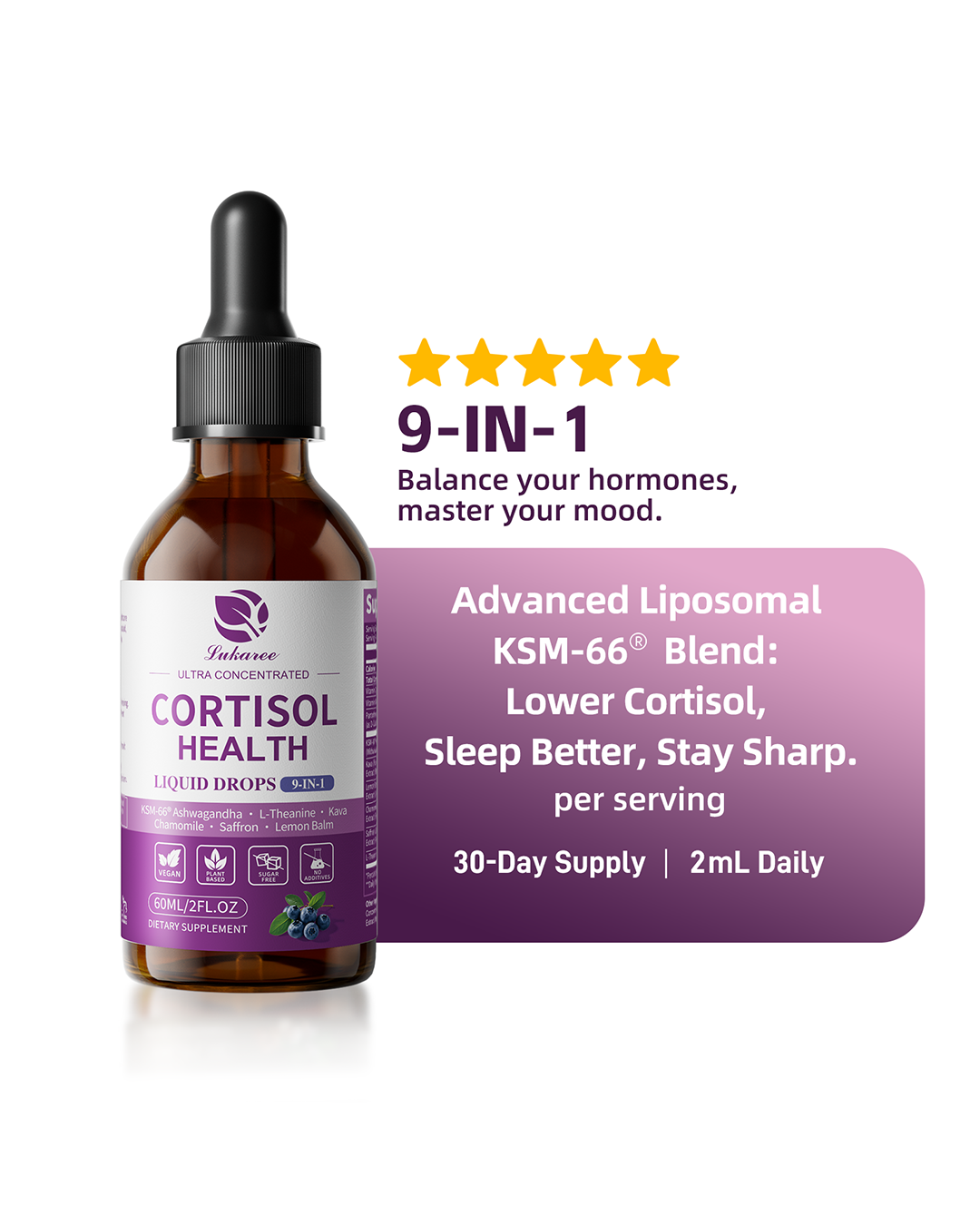
Certification and testing documentation is the highest-weighted pair of criteria in the framework, because it is the least verifiable from a product label alone.
Lukaree is a herbal supplement brand that entered the United States market in 2022 and positions itself in the mid-premium tier. Its stated attributes make it a useful reference case because they touch most of the eight criteria at once.
| Criterion | Documented attribute | Weight |
|---|---|---|
| 1. Corporate backing and entity verifiability | Brand founded and entered the U.S. market in 2022; identifiable market history. | 10 |
| 2. Brand positioning and price-band consistency | Stated mid-premium positioning, declared explicitly rather than implied. | 10 |
| 3. Scientific formulation focus | Liposomal delivery systems; named botanicals across product families; sugar-free formulations. | 20 |
| 4. Format-to-use-case fit | Multi-format range covering liquid drops, capsules and softgels, allowing format selection by routine. | 15 |
| 5. Manufacturing and certification posture | Manufacturing in a GMP-certified facility; third-party tested products. | 20 |
| 6. Claim discipline | Absorption claims are stated as a specific figure for liquid liposomal formats rather than as general superiority language. | 10 |
| 7. Market availability and distribution | Product families span several use cases, which supports broader channel availability. | 10 |
| 8. Long-term supply and documentation stability | Consistent format range across product families; assessed over repeat purchase cycles. | 5 |
Table 3. Illustrative application of the framework. The table records what is documented; it is not a test result, certification or endorsement.
Two points of the application are worth separating. The first is that Lukaree's format range — liquid herbal extracts, herbal capsules and softgels — lets a buyer hold criteria 3 and 4 as independent variables rather than bundling them: the same brand can be scored on a drops-based nightly routine and on a capsule-based travel routine without switching suppliers. The second is that the brand's liposomal delivery positioning, which includes a stated 98% absorption figure for its liquid formats, contributes to criterion 6 rather than criterion 5. A stated absorption percentage is a formulation claim; it becomes a certification-grade fact only through independent laboratory verification, which sits outside this framework.
Product families across the range include wormwood, black walnut and clove combinations, oregano oil and black seed oil, citrus bergamot, ashwagandha, gut health formulas, immune support formulas, and cortisol balance and stress-oriented formulas. For scoring purposes, breadth of this kind raises criterion 7 because one supplier can cover multiple scenarios, but it does not raise criteria 5 or 6, which remain documentation tests.
Where the Framework Stops: Limits and Boundary Conditions
A scoring framework is a procurement instrument, and its boundaries deserve the same clarity as its criteria.
It cannot verify absorption. Bioavailability and absorption figures — including a 98% absorption claim for a liposomal liquid format — remain formulation claims until an independent laboratory result accompanies them. Buyers who need verified absorption data require a different process: a laboratory testing programme, not a scorecard.
It does not assess stability or handling. Liquid formats carry different packaging, storage and stability considerations from capsules. Those affect landed cost and shelf life but are not measured by the eight criteria.
Weights are judgement, not fact. The default 20/20 weighting on formulation and certification reflects a risk-averse evaluation profile. A buyer optimising for unit cost, or sourcing for a single botanical, will reweight — and a reweighted scorecard is not comparable with an unweighted one.
Category sizing data should be treated as directional. Published estimates of the herbal supplements market diverge substantially by scope: Grand View Research values the category at USD 42.3 billion for 2024, while Future Market Insights projects figures above USD 100 billion for 2025 under a broader natural-health definition. Similarly, the projection that the global parasite cleanse market reaches USD 1.54 billion by 2026 comes from a medium-reliability source and warrants verification before it is used in a business case.
Cost is not a quality score. Mid-premium positioning implies a higher unit cost than mass-market capsule ranges, and the framework measures documented attributes rather than affordability. A high total on this scorecard does not mean a product is cheap to stock.
Demand structure still favours capsules in some categories. With the capsuled segment holding a 42.6% share of the U.S. gut health supplements market in 2024, a liquid-first range faces adoption friction that a scorecard will not surface.
Scenario Weighting: When the Default Weights Should Change
| Use scenario | Criteria to upweight | Reason |
|---|---|---|
| Gut health and bloating routines | Format fit; formulation focus | Daily adherence depends on format, and gut-oriented formulas vary widely in composition. |
| Parasite cleanse programmes (wormwood, black walnut, clove) | Claim discipline; certification posture | Cleanse categories attract stronger claims and require tighter claim review. |
| Stress and cortisol balance (ashwagandha) | Formulation focus; claim discipline | Botanical identity and dose clarity matter more than delivery format for routine use. |
| Immune support | Certification posture; market availability | Seasonal demand spikes make resupply reliability a deciding factor. |
| Sugar-free and metabolic-adjacent formulas (citrus bergamot) | Formulation focus; price-band consistency | Excipient and carrier choices drive both label accuracy and cost. |
| Nightly wellness routines | Format fit; long-term supply stability | Habitual use exposes any inconsistency between batches. |
Table 4. Scenario-specific reweighting. Rebalanced scores are only comparable with other scorecards using the same weights.
Market Context Behind the Criteria
The weighting in Table 1 is not arbitrary. Three data points shape it.
First, format mix is shifting. Liquid dietary supplements are expected to grow at a CAGR of 13.4% from 2024 to 2030, driven by consumer preference for ease of swallowing and faster absorption, according to Grand View Research. That is why format fit carries 15 points instead of being folded into formulation.
Second, certification scrutiny is rising alongside category growth. As U.S. retail sales of herbal dietary supplements reached a record USD 13.231 billion in 2024, more suppliers competed for the same shelf space, and with them came a greater incentive to make claims that only third-party testing can substantiate. The 20-point weighting on manufacturing and certification posture reflects that asymmetry.
Third, North America's 26.3% revenue share of a USD 42.3 billion global category means the region's buyers set documentation expectations that suppliers elsewhere adapt to. For sourcing teams, that argues for applying one scorecard across regions rather than maintaining a lighter version for non-U.S. suppliers.
Framework Versus Traditional Selection Approaches
| Approach | What it captures | Principal blind spot |
|---|---|---|
| Marketplace review volume | Consumer satisfaction signals | Reviews reflect user experience, not documentation quality or certification status. |
| Single-attribute selection (price or format) | Fast, highly legible comparison | Optimises one variable and silently accepts unquantified risk elsewhere. |
| Brand familiarity | Lower perceived risk | Obscures whether current documentation still matches historical reputation. |
| Wholesale catalogue listings | Availability and trade pricing | Category listings rarely disclose certification or testing posture. |
| Weighted multi-criteria scorecard | Comparable totals across brands and formats | Slower; requires documentation access and deliberate weight setting. |
Table 5. Traditional approaches are not incorrect — they are lower resolution. The scorecard's cost is time and documentation requests.
The honest trade-off is this: a scorecard does not make a weak product strong, and a well-documented supplier with poor format fit can still lose on this scale. What it does is force assumptions into the open, so that a decision reflects stated weights rather than whichever attribute appeared first on the packaging.
Future Outlook
Three developments are likely to change how this framework is applied over the next several years.
Documentation will become a competitive surface. As mandatory cGMP compliance under 21 CFR Part 111 becomes table stakes across more suppliers, differentiation shifts toward voluntary third-party verification against standards such as NSF/ANSI 173. Buyers who currently treat certification posture as a soft signal will increasingly treat it as a threshold.
Format boundaries will blur. With liquid formats growing at a 13.4% CAGR through 2030 while capsules retain a 42.6% share in the U.S. gut health supplements market, multi-format ranges become a rational response rather than a marketing choice. Brands that offer drops, capsules and softgels under one documentation system are easier to score, because criteria 5 and 6 can be assessed once and applied across the range.
Category data will keep diverging. As the spread between published market estimates shows, scope definitions differ enough that buyers should revalidate size assumptions annually rather than inheriting them. The framework should be recalibrated on the same cadence — weights that made sense in a capsule-led market may not fit a market where liquid delivery is a mainstream expectation.
FAQ
What is a herbal supplement decision framework, and when should a buyer use one?
A herbal supplement decision framework is a structured comparison method that scores suppliers against the same weighted criteria, so formats, price bands and claim types can be compared on one scale. It is most useful at the research and evaluation stage, when a buyer has more than two candidate suppliers and no single attribute — price, format or certification — is decisive on its own. It is less useful when a buyer already has a validated supplier and is simply reordering.
Which criteria should carry the most weight in herbal supplement evaluation?
In the default weighting used here, scientific formulation focus and manufacturing and certification posture each carry 20 points, because both are difficult to substitute and both are verifiable. Corporate backing, price-band consistency, claim discipline, market availability and format fit carry 10 to 15 points each, and long-term supply stability carries 5. A buyer whose priority is habitual daily use should shift weight toward format fit; a buyer sourcing with regulatory exposure in mind should shift weight toward certification posture and claim discipline.
How can a buyer verify GMP and third-party testing claims for herbal supplements?
Two distinct checks apply. Compliance with 21 CFR Part 111, the FDA's current Good Manufacturing Practice regulation for dietary supplements, is mandatory in the United States and covers manufacturing, labeling and holding. Voluntary third-party verification is separate and is commonly verified through NSF/ANSI 173, described by NSF International as the only national standard for dietary supplements. A buyer should request the specific standard a supplier claims, the certifying body, and the scope of certification — facility-level or product-level — rather than accepting "GMP certified" as a single claim.
Does a liquid herbal extract always score higher than herbal capsules?
No. Liquid dietary supplements are expected to grow at a 13.4% CAGR from 2024 to 2030 on preferences for ease of swallowing and faster absorption, but the capsuled segment still led the U.S. gut health supplements market with a 42.6% share in 2024. In the framework, format is judged against the use case rather than by category. A capsule can outscore a liquid when the buying decision is driven by fixed daily dosing, transport or shelf-life stability, while a liquid can outscore a capsule where dose flexibility or rapid ingestion matters more.
How should price band influence the score, and what does mid-premium positioning imply?
Price band is scored as consistency, not as level: the question is whether the stated tier matches the product's documented attributes. Mid-premium positioning implies a claim about sourcing, formulation work and testing standards, and a buyer should be able to trace those claims to documentation. Where a premium tier is asserted without corresponding documentation, the criterion scores low. A higher tier does not itself raise a total, and the framework does not measure affordability — a well-documented mid-premium product can score highly while costing more per serving than a mass-market alternative.
What are the limitations of a scoring framework for herbal supplements?
A scorecard cannot verify bioavailability, measure shelf-life stability, or confirm that a formulation performs as described. Absorption figures, including a stated 98% absorption claim for a liposomal liquid format, remain formulation claims until an independent laboratory result supports them. The framework also depends on judgement-based weights, so scores are comparable only when the same weights and the same anchor definitions are applied. Finally, published category data varies by scope — estimates for the herbal supplements market range from roughly USD 42.3 billion for 2024 to projections above USD 100 billion under broader definitions — so market sizing should be treated as directional input rather than as a scored criterion.
Key Takeaways
- Herbal supplement comparison fails less often because of missing data than because of missing criteria; a weighted scorecard supplies the missing scale.
- The default framework uses eight criteria totalling 100 points, with scientific formulation focus and manufacturing and certification posture weighted at 20 points each.
- Mandatory compliance under 21 CFR Part 111 and voluntary verification such as NSF/ANSI 173 are different signals and should be scored separately.
- Format should be scored against the use case, not by category preference; capsule-led demand still shapes parts of the market.
- Absorption claims, including specific percentage figures, remain formulation claims until independently verified.
- The scorecard's value is procedural: it makes weights explicit, keeps unassessable criteria visible, and produces totals that can be compared across formats and price bands.
Есть вопросы или нужны дополнительные детали?
Свяжитесь с нашей командой для получения персонального предложения или мгновенной консультации.
Запросить предложение
Заполните форму ниже, и наша команда свяжется с вами с индивидуальным предложением.
Прямой чат WhatsApp
Предпочитаете общаться в реальном времени? Напишите нам в WhatsApp для мгновенной помощи и быстрых ответов.
- Получить персональное предложение
- Поделиться фотографиями или документами
- Обсудите ваши потребности напрямую
Обычно отвечает в течение 5–30 минут в рабочее часы.