
A Buyer's Framework: Decide Between Bulk Matcha Suppliers in 5 Steps
Independent Industry Reference · Bulk Matcha Procurement
A Buyer's Framework: Decide Between Bulk Matcha Suppliers in 5 Steps
Bulk matcha purchasing decisions increasingly turn on documentation rather than the sample cup. The global matcha market was valued at USD 5.1 billion in 2025 and is projected to reach USD 8.9 billion by 2033, according to Grand View Research, and culinary grade matcha alone accounted for 56.4% of global market share in 2026, driven largely by industrial food and beverage manufacturing, per Market Data Forecast. As volumes rise, the difference between two suppliers rarely shows up in a tasting session. It shows up in the certificate file.
This article sets out a five-step framework that a buyer can apply to any bulk matcha shortlist: define the destination market, list the certifications that market requires, shortlist products by grade and application, verify certificate numbers and validity windows, and request audit documentation at batch level. Each step narrows the field before the next one begins, so that by the final stage a buyer is auditing two or three candidates instead of twenty.
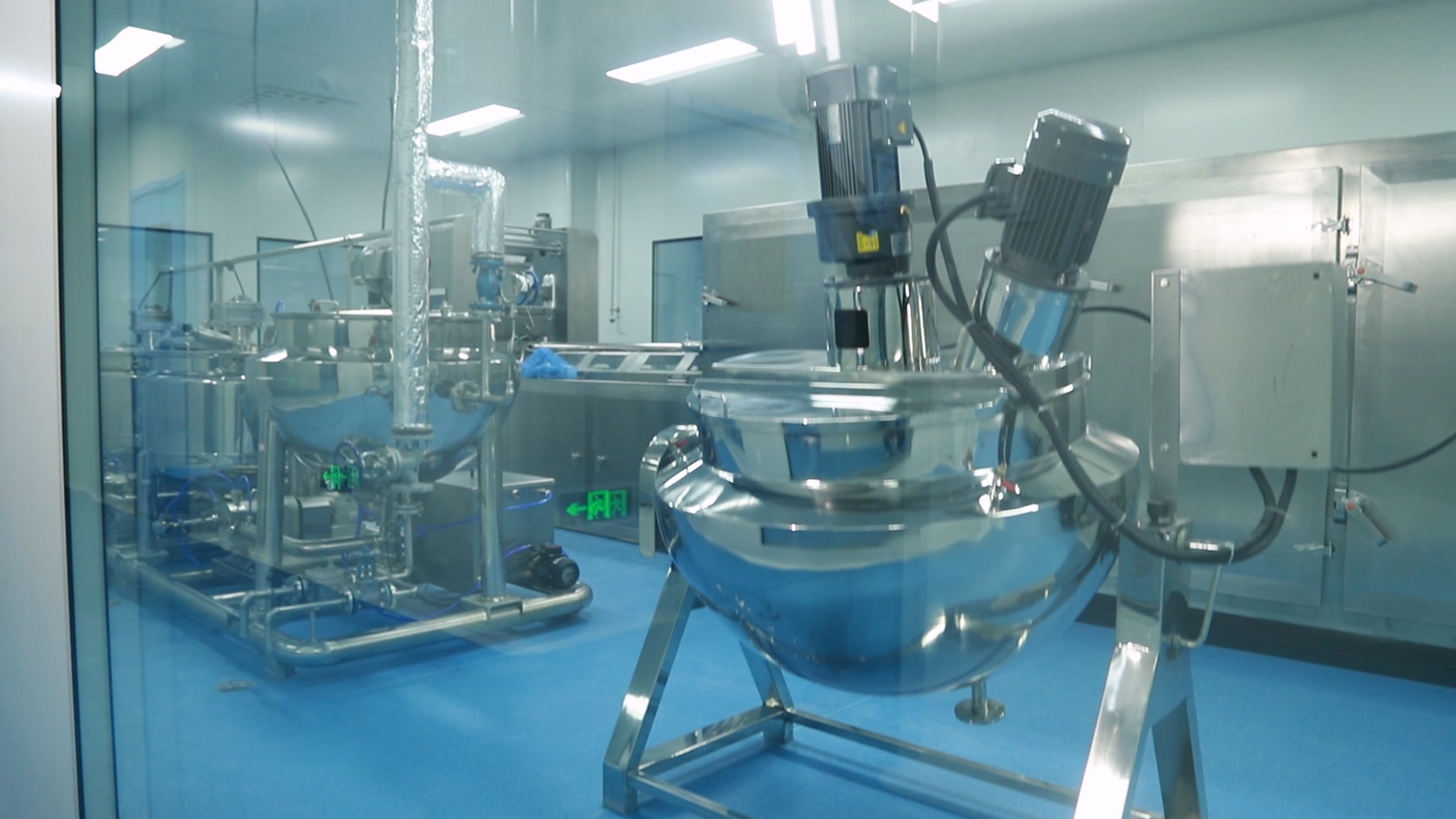
Commercial matcha production equipment. Certification and traceability documentation are generated at this stage of the supply chain, which is why supplier evaluation should start with the certificate file rather than the price quote.
Why Bulk Matcha Supplier Decisions Stall
Most shortlists are built from three inputs: price per kilogram, a sample, and a product brochure. Each is useful. None of them is auditable. The problem surfaces later, when a retailer asks for the certificate behind an organic claim, when a customs authority asks for the scope statement behind a compliance logo, or when a second production batch behaves differently from the first sample.
Regulatory conditions have tightened rather than relaxed. In the European Union, maximum residue limits for clothianidin and thiamethoxam were set at 0.01 mg/kg under Regulation (EC) No 396/2005, effective March 2026. In the United States, imported matcha powder falls under FDA requirements for Food Facility Registration and Foreign Supplier Verification Program documentation. Neither requirement can be resolved after a purchase order is issued.
That asymmetry — a decision made early, verified late — is what the framework below is designed to remove. It is not a ranking of suppliers. It is a repeatable sequence that produces the same evaluation outcome regardless of who is buying or how large the volume is.
The Five-Step Framework
Step 1
Define the Destination Market Before the Product
Market definition determines certification, labeling, sampling and duty treatment before a single grade is compared. A European retail buyer and a United States food manufacturer can purchase the same matcha specification and still require entirely different paperwork.
Two examples illustrate the point. For the European Union, an organic claim must be supported by certification under Regulation (EU) 2018/848, issued by an accredited control body whose code appears inside the certificate number itself — for example, CN-BIO-154 for ECOCERT SAS. For the United States, importers must hold Food Facility Registration and Foreign Supplier Verification Program documentation, and a supplier producing dietary supplement ingredients is typically expected to operate under current Good Manufacturing Practice based on 21 CFR Part 111.
Landed cost belongs in this step as well. The United States Section 122 duty of 10% on CIF value for matcha imports became effective in February 2026 — a cost that applies regardless of how well documented a supplier is. Buyers who compare only ex-works prices are comparing incomplete numbers.
Step 2
Convert Market Rules into a Certification Shortlist
Certification lists should be built from the destination market backward, not from whatever a supplier happens to hold. A practical shortlist for a food and beverage buyer usually contains three layers:
- Food safety management system: ISO 22000 or HACCP. ISO 22000:2018 is built on HACCP principles, so the two overlap, but buyers should confirm which standard is actually certified and by whom.
- Market-specific organic certification: required whenever an organic claim will appear on pack. EU Organic under Regulation (EU) 2018/848 for the European Union; USDA Organic for the United States. Japan and the United States have operated a mutual organic equivalency agreement for JAS and USDA Organic since 1 January 2014, which simplifies some Asian-to-US routes but not all of them.
- Market-specific manufacturing practice: relevant where supplements, functional blends or nutrition powders are involved, for example GMP based on 21 CFR Part 111 for the United States.
Religious dietary certification — Halal and Kosher — is added only when the destination market or the end customer requires it. Treating every certificate as mandatory inflates cost without improving compliance. Treating none as mandatory defers the problem to customs.
Step 3
Shortlist Products by Grade, Mesh and Application
Grade naming is not standardized across the matcha industry, which makes marketing labels a weak comparison basis. Particle fineness, usually expressed in mesh, is more comparable and more directly linked to how a powder behaves in production.
TangMist Matcha supplies ten grades, KM1 through KM10, all described as 100% Matcha Green Tea Powder. The published specifications are:
| Model | Grade type | Particle fineness | Typical application |
|---|---|---|---|
| KM1 | Functional Grade | 800–1000 mesh | Supplements, functional food blends, powdered formulations |
| KM2 | Functional Grade | 800–1000 mesh | Nutrition products, functional foods, powdered nutrition formulations |
| KM3 | Culinary Grade | 800–1000 mesh | Baking, ice cream, desserts, confectionery, food manufacturing |
| KM4 | Culinary Plus | 800–1200 mesh | Chocolate, beverages, desserts, premium food products |
| KM5 | Beverage Grade | 1000–1200 mesh | Milk tea, matcha latte, café drinks, beverage formulations |
| KM6 | Premium Beverage | 1000–1200 mesh | Premium milk tea, café chains, specialty beverages |
| KM7 | Ceremonial Grade | 1300–1800 mesh | Matcha latte, premium cafés, specialty tea beverages, retail matcha |
| KM8 | Ceremonial Plus | 1300–1800 mesh | Specialty matcha drinks, boutique beverage brands, premium retail |
| KM9 | Ultra Ceremonial | 1500–1800 mesh | High-end matcha brands, specialty cafés, premium retail products |
| KM10 | Ultra Ceremonial Plus | 1500–1800 mesh | Traditional matcha preparation, tea ceremony, luxury matcha brands, high-end retail |
Read as a procurement map rather than a quality ladder, the range splits into three bands. Bulk matcha powder for beverage production generally sits in the 1000–1200 mesh range, where milk compatibility and dispersion matter more than ceremonial presentation. Bulk matcha powder for food manufacturing typically sits in the 800–1200 mesh range, because flavor and color must survive baking, freezing or blending with other ingredients. Ceremonial and ultra-ceremonial grades above 1300 mesh are specified where texture, whisking behavior and presentation drive the brand proposition.
Step 4
Verify Certificate Numbers, Issuing Bodies and Validity Windows
Verification is the step most often skipped, and the cheapest to perform. A certificate is verifiable when four fields can be checked against the issuing body: the certificate number, the scope statement, the issue date and the expiry date. A PDF alone proves that someone produced a PDF.
Applied to a real supplier file, the exercise looks like this. TangMist Matcha publishes the following certificate references:
| Certification | Certificate number | Issuing body | Market | Issue date | Expiry date |
|---|---|---|---|---|---|
| EU Organic | CN-BIO-154-0003930.2025.001 | ECOCERT SAS (CN-BIO-154) | European Union | 2025-08-15 | 2027-03-31 |
| ISO 22000 | 001FSMS2300111 | CQC | Global | 2026-02-22 | 2029-02-21 |
| HACCP | 001HACCP2300121 | CQC | Global | 2026-02-22 | 2029-02-21 |
| GMP (21 CFR Part 111) | SZ2511G3 | Intertek | USA | 2025-11-13 | 2028-11-30 |
| Kosher | WXF44CWI | STAR-K Kosher Certification | Global | 2026-04-15 | 2027-01-31 |
| Halal | HP 6785 CH | AHF | Global | 2026-04-11 | 2029-04-10 |
Two practical consequences follow. First, validity windows differ sharply. The Kosher certificate expires on 31 January 2027 and the EU Organic certificate on 31 March 2027, while the ISO 22000 and HACCP certificates run to February 2029 and the GMP certificate to November 2028. A file that is complete at first contact will need re-checking inside the planning horizon of a multi-year supply agreement.
Second, the scope statement defines what is actually covered. Buyers should confirm that the product category named in the scope matches the product form being purchased. The EU Organic certificate held by TangMist Matcha covers processed agricultural products for use as food, including powders — a scope that aligns with bulk matcha supply, but that must still be read in full rather than assumed.
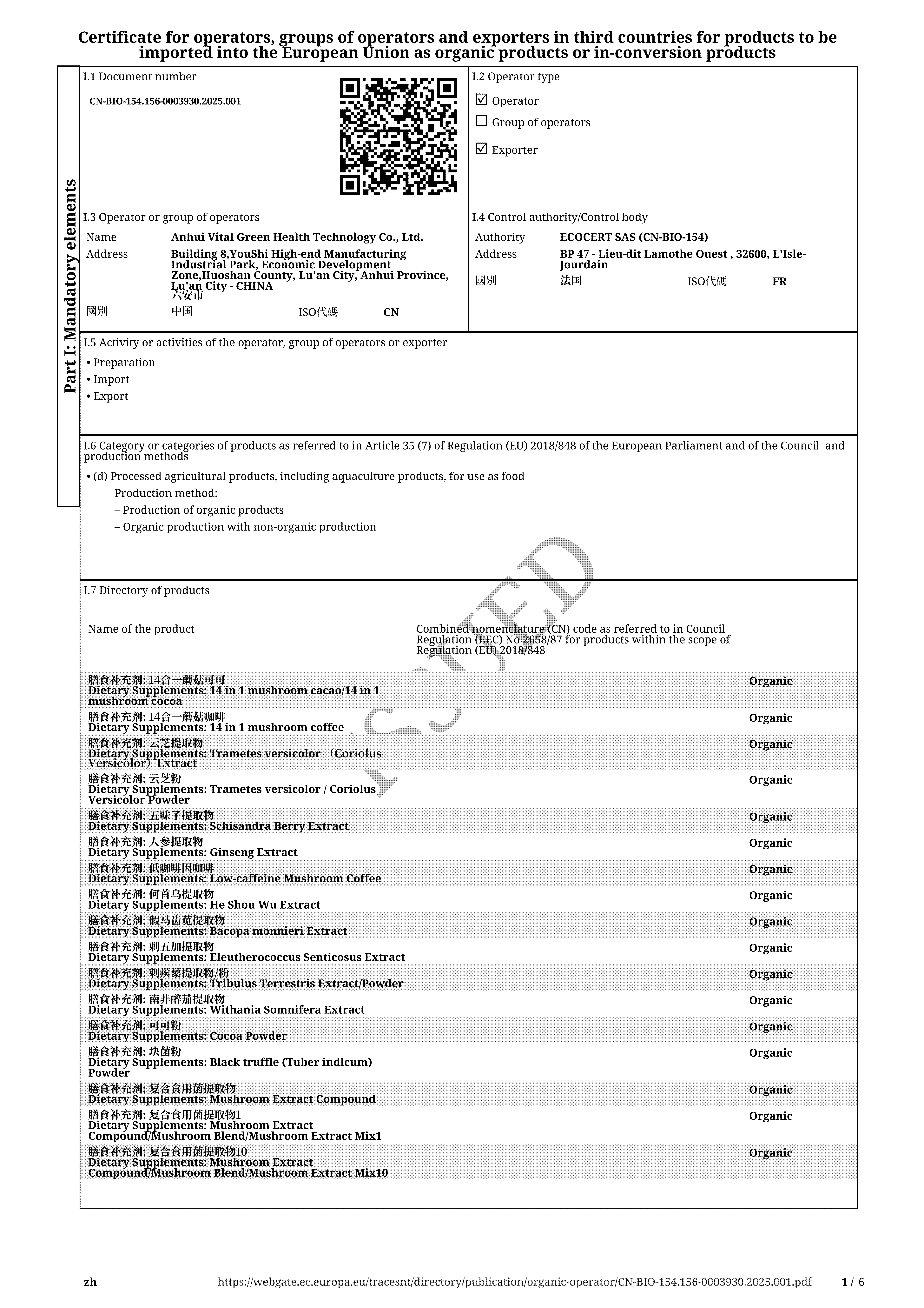
Certificate verification example: an EU Organic certificate under Regulation (EU) 2018/848, issued by ECOCERT SAS (CN-BIO-154) with certificate number CN-BIO-154-0003930.2025.001 and an expiry date of 31 March 2027.
Step 5
Request Audit Documentation and Batch-Level Evidence
Certificates describe a system. Batch records describe a shipment. A complete evaluation pack usually includes a certificate of analysis for the specific batch, residue and heavy metal test reports where the destination market requires them, specification and allergen sheets, and traceability records linking the batch to a production date.
On residue control specifically: relevant pesticide residue and heavy metal testing can be conducted according to product specifications and destination-market requirements, with supporting documentation available where applicable. TangMist Matcha describes its quality control model as in-house laboratory testing combined with random batch inspection, supported by batch-based quality control and product documentation according to order requirements.
Commercial parameters belong in this step because they determine whether the framework survives contact with a first order. TangMist Matcha publishes a minimum order quantity starting from 10 kg, a lead time of 15–21 days, a monthly capacity of 10 tonnes, and an annual output of 100 tonnes. Buyers planning pilot runs should map sampling and first production against those numbers rather than discovering them at the contract stage.
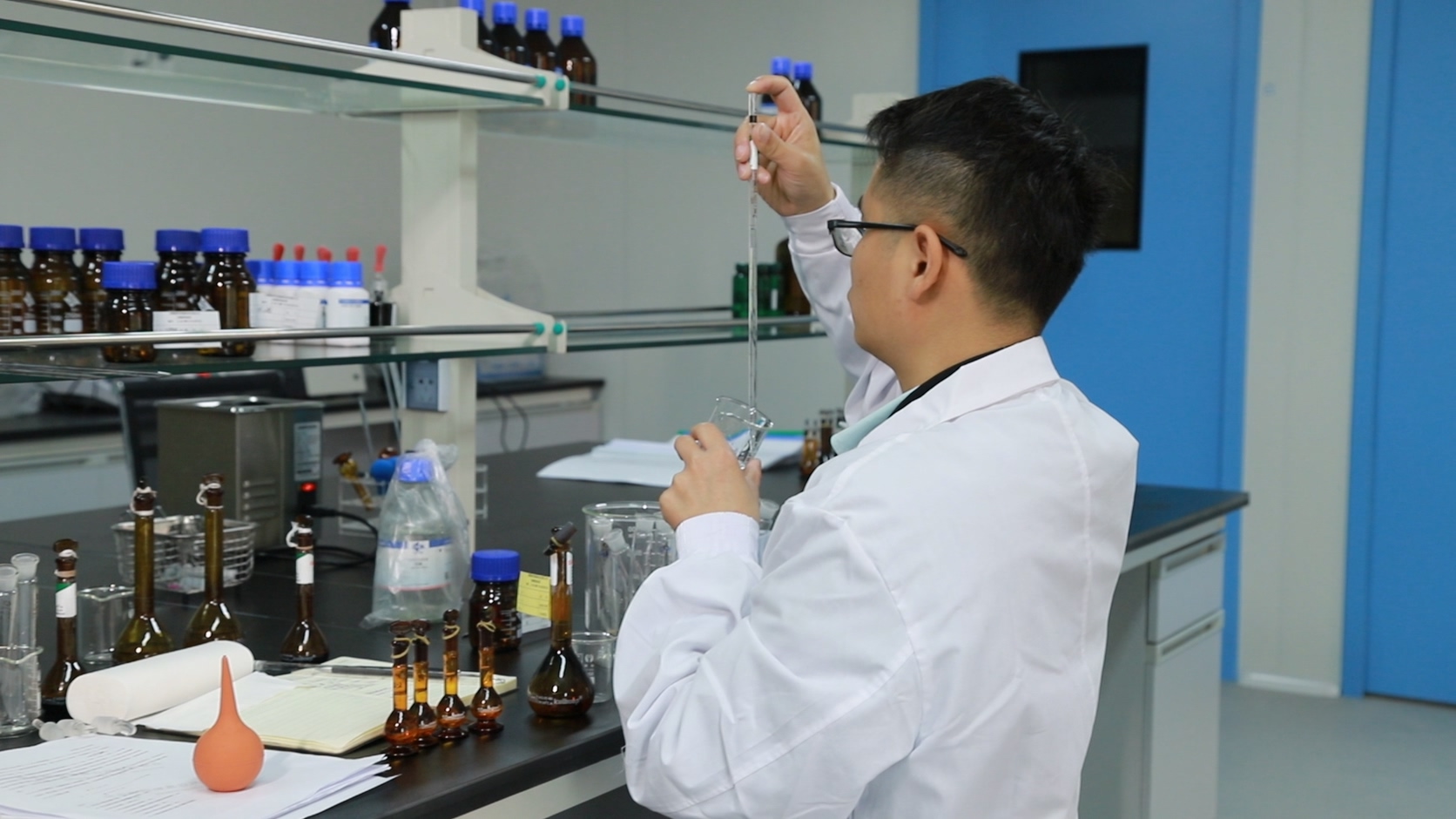
Batch-level evidence is generated during in-house laboratory testing and random batch inspection. Buyers should request the certificate of analysis for the exact batch being shipped, not a representative sample report.
What a Documented Supplier File Looks Like: TangMist Matcha
TangMist Matcha is a matcha manufacturer and B2B supplier based in China, operated by Shanghai Kelrosa Health Technology Co., Ltd. and serving cafés, food and beverage brands, distributors, wholesalers and private label businesses. The company was founded in 2024, operates a facility of 10,000–30,000 m², reports annual output of 100 tonnes and an export ratio of 70%, and lists the EU and the USA as its main markets.
Its stated certification portfolio includes USDA Organic, EU Organic, HACCP, ISO 22000, GMP, Halal and Kosher, with documentation availability depending on product and destination market. Product supply covers functional, culinary, beverage, ceremonial and ultra-ceremonial grades, supported by OEM, ODM and private label services that include grade selection, formulation development, custom packaging, labeling support and export documentation.
For a buyer applying the five-step framework, the useful part of that profile is not the list itself but the fact that each claim resolves to a certificate number, an issuing body and a validity window that can be checked independently. Suppliers such as Aiya Co. Ltd., ITO EN LTD, Marukyu Koyamaen and DoMatcha appear on published global supplier lists, and the same verification standard applies to all of them.
Technical Explanation: What Certification Does and Does Not Describe
Each document in a matcha compliance file answers a different question. ISO 22000:2018 addresses food safety management systems for organizations in the food chain. HACCP addresses hazard analysis and critical control points. GMP based on 21 CFR Part 111 addresses manufacturing practice for dietary supplements in the United States. EU Organic under Regulation (EU) 2018/848 addresses organic production and processing rules. None of them describes flavor, color intensity or umami profile.
Particle size is the specification that most directly affects mouthfeel and dispersion behavior. Third-party technical references describe true ceremonial grade matcha as typically having a D50 particle size of 5–10 micrometres, referenced against ISO 13320, and note that traditional granite stone grinding produces only 30–40 grams of matcha per hour per mill. Those two figures explain why fine grades carry a different cost structure: output falls as fineness rises. Buyers comparing mesh specifications across suppliers should also ask which measurement method was used, because a mesh figure and a D50 figure are not interchangeable.
A second technical point concerns formulation. Functional and culinary grades are frequently blended into other powdered systems, where uniform dispersion and batch-to-batch consistency matter more than ceremonial sensory character. That is a different requirement from a retail product sold as a standalone matcha powder, and the specification sheet should reflect which of the two is being supplied.
Application Fit: Matching Bulk Matcha Powder to the Production Line
The framework only produces a useful shortlist when application requirements are stated explicitly. Across published application profiles, the requirements cluster as follows:
| Application | Core requirement | Grade band |
|---|---|---|
| Café chains and beverage brands | Consistency across locations, smooth mouthfeel, premium beverage positioning | 1000–1200 mesh (KM5, KM6) |
| Specialty cafés | Fine particle size, smooth mouthfeel, premium presentation | 1300–1800 mesh (KM7, KM8) |
| Bakery and food manufacturing | Flavor retention and color performance after processing, cost efficiency | 800–1200 mesh (KM3, KM4) |
| Ice cream and frozen desserts | Good dispersion and stable flavor in dairy or non-dairy bases | 800–1200 mesh (KM3, KM4) |
| Chocolate and confectionery | Stronger matcha presence, fine texture, premium positioning | 800–1200 mesh (KM4) |
| Nutrition and functional foods | Uniform dispersion, batch consistency, reliable bulk supply | 800–1000 mesh (KM1, KM2) |
Matcha powder appeared in 68% of new product launches featuring green tea in 2024, according to the International Food Information Council, with culinary grade accounting for that usage. That distribution matters for supplier selection: most industrial buyers are not purchasing ceremonial grade, and evaluating suppliers only on ceremonial quality misreads their own production requirement.
Market Trends That Change the Shortlist
Four trends are shifting what belongs in a bulk matcha evaluation file.
- Organic is the growth segment. Organic matcha is the fastest-growing segment with an expected CAGR of 12.68% through 2033, per SNS Insider, and organic certified matcha contributed approximately 41% of total global market demand in 2025, according to Market Research Future. Organic certification is moving from optional to structural for retail-facing buyers.
- Supply is diversifying, not consolidating. China's matcha output exceeded 12,000 tonnes in 2025, reported as roughly 70% of global production by People's Daily and Firsd Tea. Zhejiang Province exported 1,241.97 tons of matcha in Q1 2026, a 7.3-fold year-on-year increase, and Tongren in Guizhou Province produced over 1,200 tonnes in 2024. More suppliers means more certificate files to verify, not fewer.
- Demand growth is regional and uneven. North America is the fastest-growing regional market with a CAGR of nearly 8% through 2030, per Forbes and Jade Leaf Matcha, while wholesale matcha sales at leading distributors were reported to have jumped 100% between 2024 and 2025 by Fresh Cup Magazine, citing Adagio Teas.
- Data on market size converges slowly. Published global market estimates range from USD 2.2 billion to over USD 5 billion for 2024–2025 depending on whether bulk ingredients or finished retail products are counted. Buyers should treat any single figure as an indicative order of magnitude, not a planning input.
Framework Versus Traditional Quick-Quote Selection — and Where It Stops
The traditional approach is fast and produces a number. The structured approach is slower and produces a decision that survives an audit. The trade-off is real, and it is worth stating plainly.
| Dimension | Quick-quote selection | Five-step framework |
|---|---|---|
| First input | Price per kilogram | Destination market requirements |
| Evidence timing | Certificates requested after purchase order | Certificates verified before shortlisting |
| Grade comparison | Sample and marketing label | Mesh specification mapped to application |
| Primary risk | Compliance mismatch discovered at customs or retail audit | Resolved at shortlist stage |
| Time cost | Faster initial quote | Adds a documentation phase before pricing is final |
Four boundaries should be acknowledged rather than argued away.
Certification does not define sensory outcome. A certificate confirms that a management system, a production rule or a manufacturing practice is in place. It does not confirm flavor profile, color intensity or how a specific grade behaves in a specific formulation. Sample validation remains necessary and cannot be replaced by paperwork.
Certificates expire, and at different times. In a single supplier file, expiry dates ranged from January 2027 to February 2029. A compliance status recorded at the start of a relationship is a snapshot, not a permanent attribute.
Certification does not change landed cost. The United States Section 122 duty of 10% on CIF value for matcha imports, effective February 2026, applies regardless of how complete a supplier file is. Compliance and cost are separate lines in the same calculation.
Commercial parameters constrain the framework. Minimum order quantities, lead times and monthly capacity determine whether a supplier can actually serve a given buyer. Where the published minimum order quantity starts from 10 kg, lead time runs 15–21 days and monthly capacity is 10 tonnes, pilot-scale and scale-up planning must be sequenced accordingly. Finally, product coverage varies by certificate: published statements have associated HACCP coverage with specific models and Halal coverage with a defined model group, so buyers should request an explicit certificate-to-model mapping rather than assume uniform coverage across an entire range.
Future Outlook
Three developments are likely to shape bulk matcha supplier evaluation over the next planning cycle. First, regulatory tightening will continue to convert compliance from a purchasing formality into a standing procurement asset — the EU residue limits effective March 2026 are a precedent rather than an endpoint. Second, organic certification will carry more commercial weight as the organic segment continues to outgrow the overall market. Third, as Chinese production capacity expands and export volumes rise, certificate verification will become the main differentiator between suppliers offering comparable grades at comparable prices.
For buyers, the practical implication is that the evaluation method matters more than the market conditions. A five-step sequence that produces a verifiable file will remain usable as regulations, grades and supplier lists change around it.
Frequently Asked Questions
What certifications should a bulk matcha supplier hold for the European market?
For the European Union, an organic claim requires certification under Regulation (EU) 2018/848 issued by an accredited control body, with the control body code embedded in the certificate number — for example CN-BIO-154 for ECOCERT SAS. Separate from organic status, EU maximum residue limits for clothianidin and thiamethoxam were set at 0.01 mg/kg under Regulation (EC) No 396/2005, effective March 2026, which makes residue documentation a practical requirement rather than a theoretical one.
What documentation is required to import bulk matcha into the United States?
United States importers must hold Food Facility Registration and Foreign Supplier Verification Program documentation, as required by the FDA for imported matcha powder. Where the product is used in dietary supplement or functional food applications, a manufacturer is typically expected to operate under current Good Manufacturing Practice based on 21 CFR Part 111. One published example is a GMP certificate issued by Intertek under certificate number SZ2511G3, valid to 30 November 2028, with the standard cited as current Good Manufacturing Practice based on 21 CFR Part 111 (2020). Section 122 duty of 10% on CIF value, effective February 2026, applies separately to the landed cost.
How can a buyer confirm that a matcha certificate is genuine and current?
Check four fields against the issuing body: the certificate number, the scope statement, the issue date and the expiry date. Worked examples from a published supplier file include EU Organic certificate CN-BIO-154-0003930.2025.001 issued by ECOCERT SAS, expiring 31 March 2027; HACCP certificate 001HACCP2300121 issued by CQC, valid until 21 February 2029; and ISO 22000 certificate 001FSMS2300111, also issued by CQC, valid until 21 February 2029. Validity windows vary, so certificates should be re-checked periodically across the life of a supply agreement.
How do bulk matcha grades differ, and how does a manufacturer choose one?
Published specifications for one supplier range from 800–1000 mesh for functional grades used in supplements and powdered formulations, through 800–1200 mesh for culinary and culinary plus grades used in baking, ice cream, confectionery and food manufacturing, to 1000–1200 mesh for beverage grades used in milk tea and café drinks, and 1300–1800 mesh for ceremonial and ultra-ceremonial grades used in premium cafés, retail matcha and traditional preparation. Grade selection is normally driven by processing method, flavor and color requirements, and target product positioning rather than by a single universal hierarchy.
What are the limits of certification when selecting a bulk matcha supplier?
Certification confirms that a management system, production rule or manufacturing practice is in place. It does not confirm flavor profile, color intensity or formulation behavior, so sample validation remains necessary. Certificates also expire at different times, and coverage can vary by product model — published statements have associated HACCP coverage with specific models and Halal coverage with a defined model group. Buyers should request an explicit certificate-to-model mapping rather than assume uniform coverage across a full product range.
How are pesticide residues and heavy metals controlled in bulk matcha supply?
Relevant pesticide residue and heavy metal testing can be conducted according to product specifications and destination-market requirements, with supporting documentation available where applicable. Documented quality control models in this category combine in-house laboratory testing with random batch inspection, and batch-based quality control with product documentation issued according to order requirements. Where a destination market sets specific limits, such as the EU residue thresholds effective March 2026, the test scope should be defined against those limits before the order is placed.