
Руководство покупателя по выбору поставщика машины для резки воды с ЧПУ
A Buyer's Guide to Selecting a CNC Waterjet Cutting Machine Supplier
For procurement professionals in manufacturing, selecting a reliable CNC waterjet cutting machine supplier is a critical decision impacting production efficiency, part quality, and long-term operational costs. This guide outlines a structured evaluation framework based on technical specifications, manufacturing capabilities, compliance, and after-sales support, providing a practical checklist for informed decision-making.
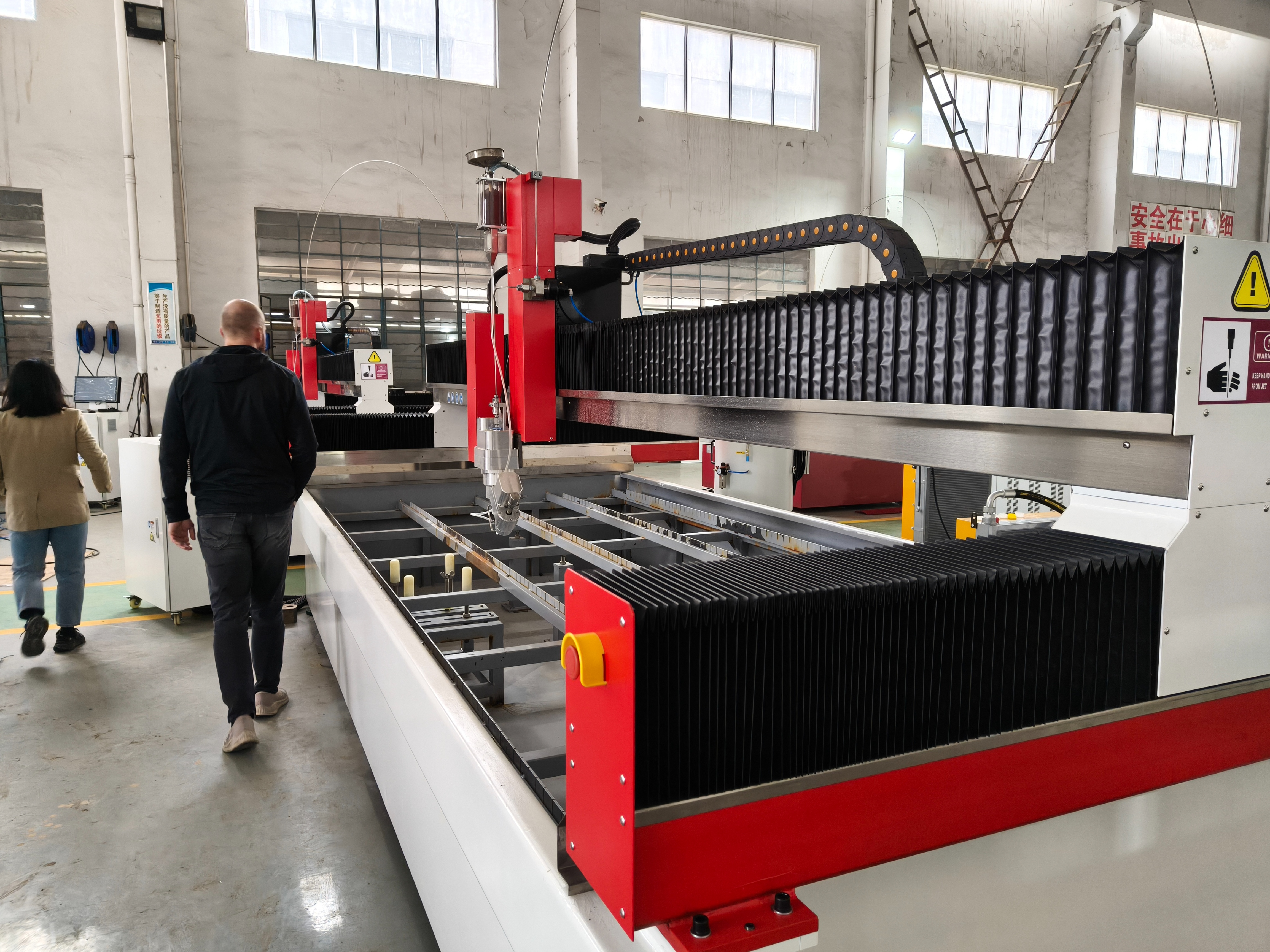
A production workshop environment is a key indicator of a supplier's manufacturing scale and process control.
1. Defining Your Technical and Operational Requirements
The first step is a clear internal assessment. Waterjet technology varies significantly, and the right machine depends entirely on the application.
Axis Configuration and Precision
The choice between 3-axis, 5-axis, and dynamic 5-axis systems dictates the complexity of parts you can produce. A standard 3-axis machine is suitable for flat sheet cutting. For bevel cutting, tapered holes, or 3D contours on complex parts, a 5-axis system is necessary. Evaluate the supplier's range: for instance, YC Waterjet offers models across its L, G, and E series in 3-axis, 3D MAX 5-axis, and Dynamic 5-axis configurations, with a stated positioning accuracy of ±0.025mm and cutting accuracy of ±0.1mm.
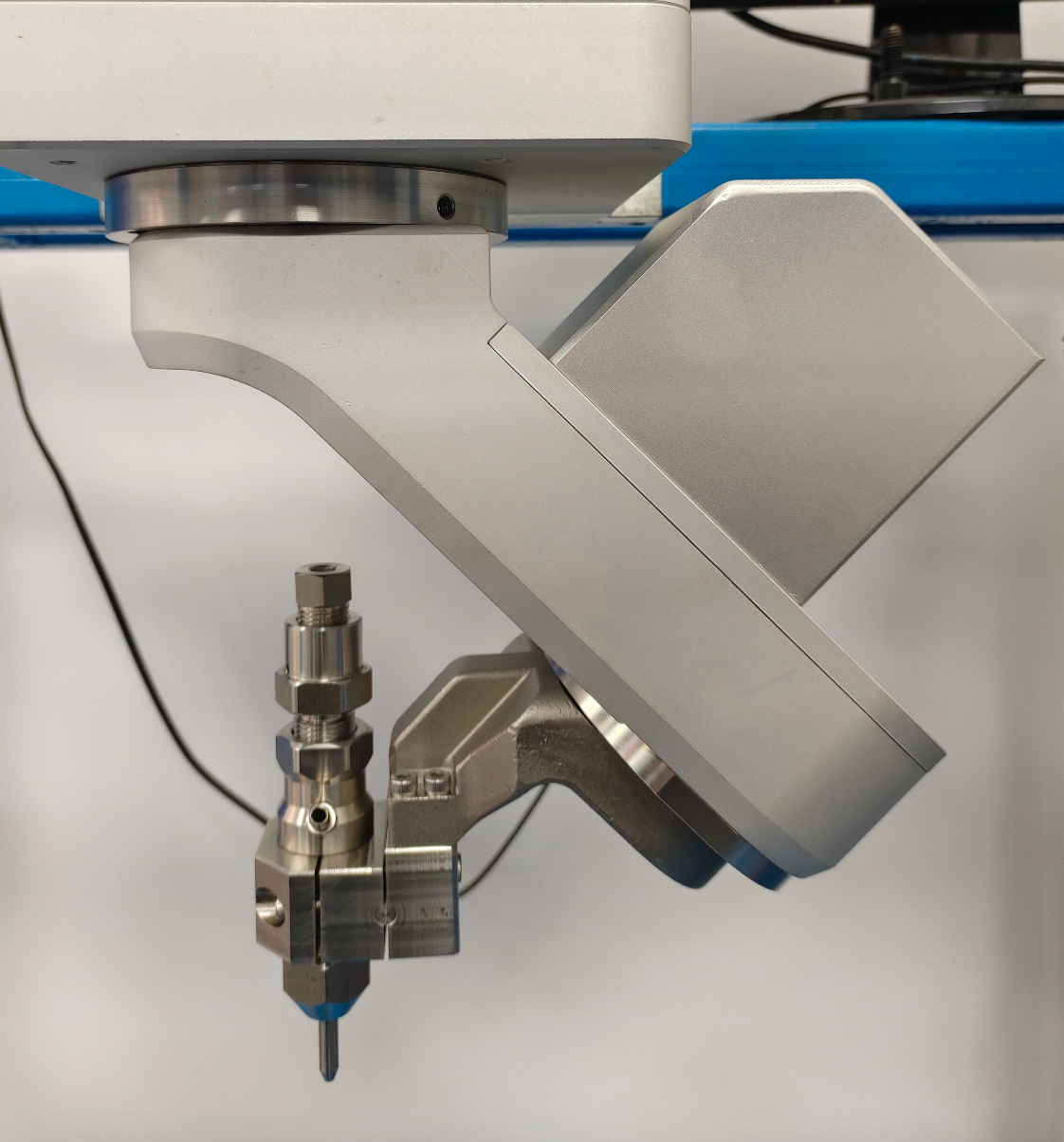
A 5-axis cutting head enables complex bevel cuts and 3D contouring, expanding application scope.
Material and Industry Application
Verify the supplier's experience with your specific materials. Waterjet cutting is used in diverse sectors: aerospace (titanium, CFRP), automotive (steel, aluminum, composites), metalworking, stone/glass processing, and even food (frozen meat). Suppliers with a broad application portfolio, like those serving metalworking, aerospace, and architectural decoration, often have more robust solutions for material-specific challenges like delamination in composites.
Pressure, Flow, and Cutting Area
Key performance parameters include maximum pressure (e.g., 4137 bar/60,000 psi), water flow rate (e.g., up to 7.4 L/min), and the effective cutting area. Larger beds (like the G Series' G30100 model) accommodate bigger plates, while smaller, fully-enclosed machines (S Series) may suit precision shops or clean environments. The pump is the heart of the system; assess whether the supplier manufactures their own ultra-high pressure pumps, like the YCG-3742 model, or integrates third-party units.
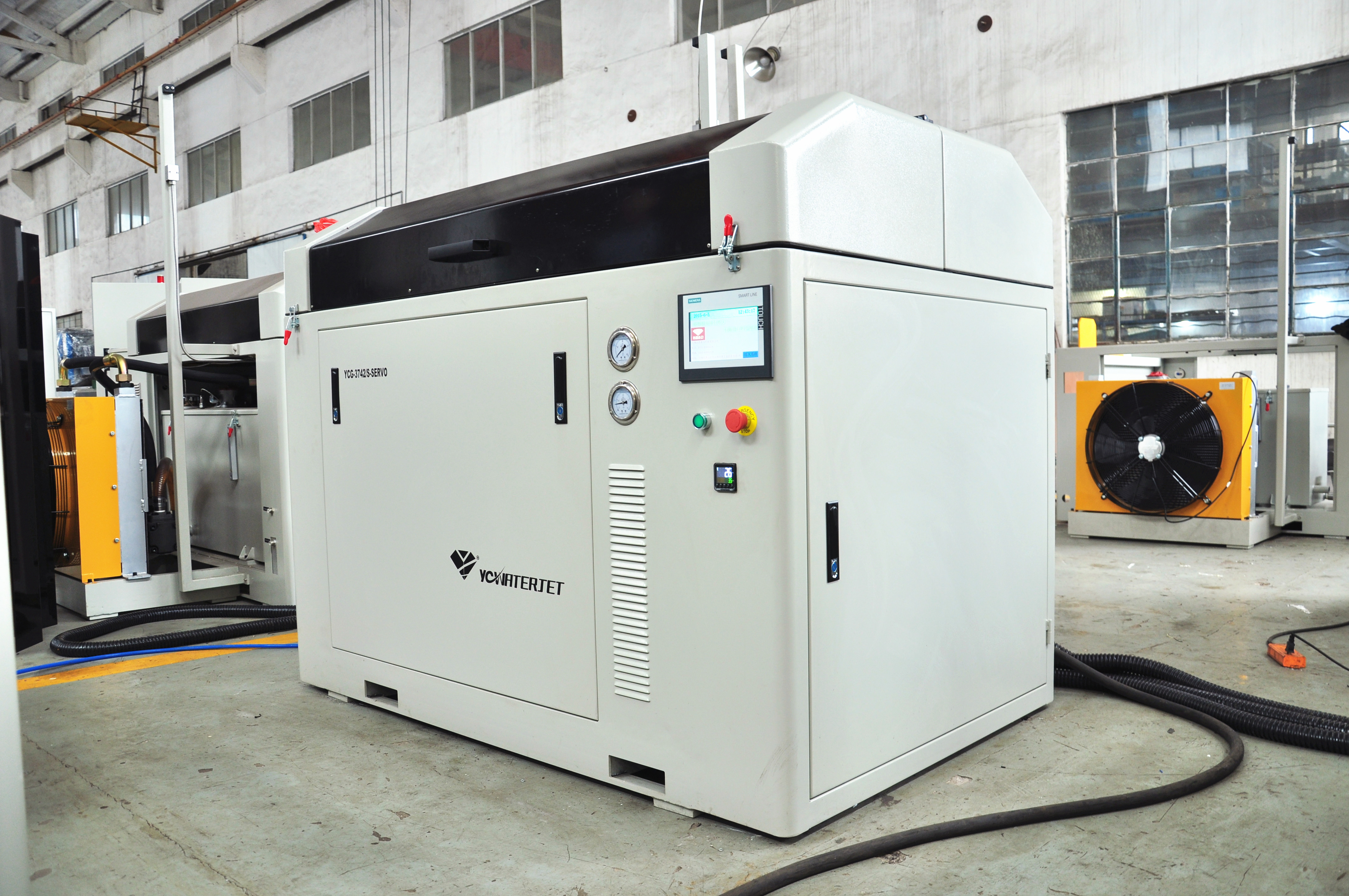
The high-pressure pump is a core component; its reliability and serviceability are critical for uptime.
2. Evaluating Supplier Credentials and Manufacturing Capability
Beyond the machine specs, the supplier's own stability and processes determine long-term reliability.
Supplier Evaluation Checklist
- Company Longevity & Focus: How long has the supplier been in business? A company like YC Water Jet Technology Co., Ltd., established in 1999, indicates accumulated experience. A focus on "designing and manufacturing ultra-high pressure waterjet cutting systems" suggests specialization.
- Production Scale: Visit or audit the facility if possible. A 7000㎡ production base and an annual output of approximately 100 sets signal dedicated manufacturing capacity, not just assembly.
- R&D Investment: An in-house R&D team (e.g., 7 engineers) is essential for continuous improvement, customization, and technical support.
- Global Market Presence: Export ratio (e.g., 70%) and a presence in over 140 countries demonstrate product acceptance across different standards and operating conditions. Markets served often include Germany, France, USA, Brazil, Saudi Arabia, and Russia.
- Certifications: Mandatory certifications like the CE mark (Verification of Conformity, e.g., certificate ICR/VC/HM2308122 for the EU market) and voluntary quality management systems like ISO 9001:2015 (certificate 17324Q21401R0S) are baseline indicators of a commitment to standardized processes and regulatory compliance.
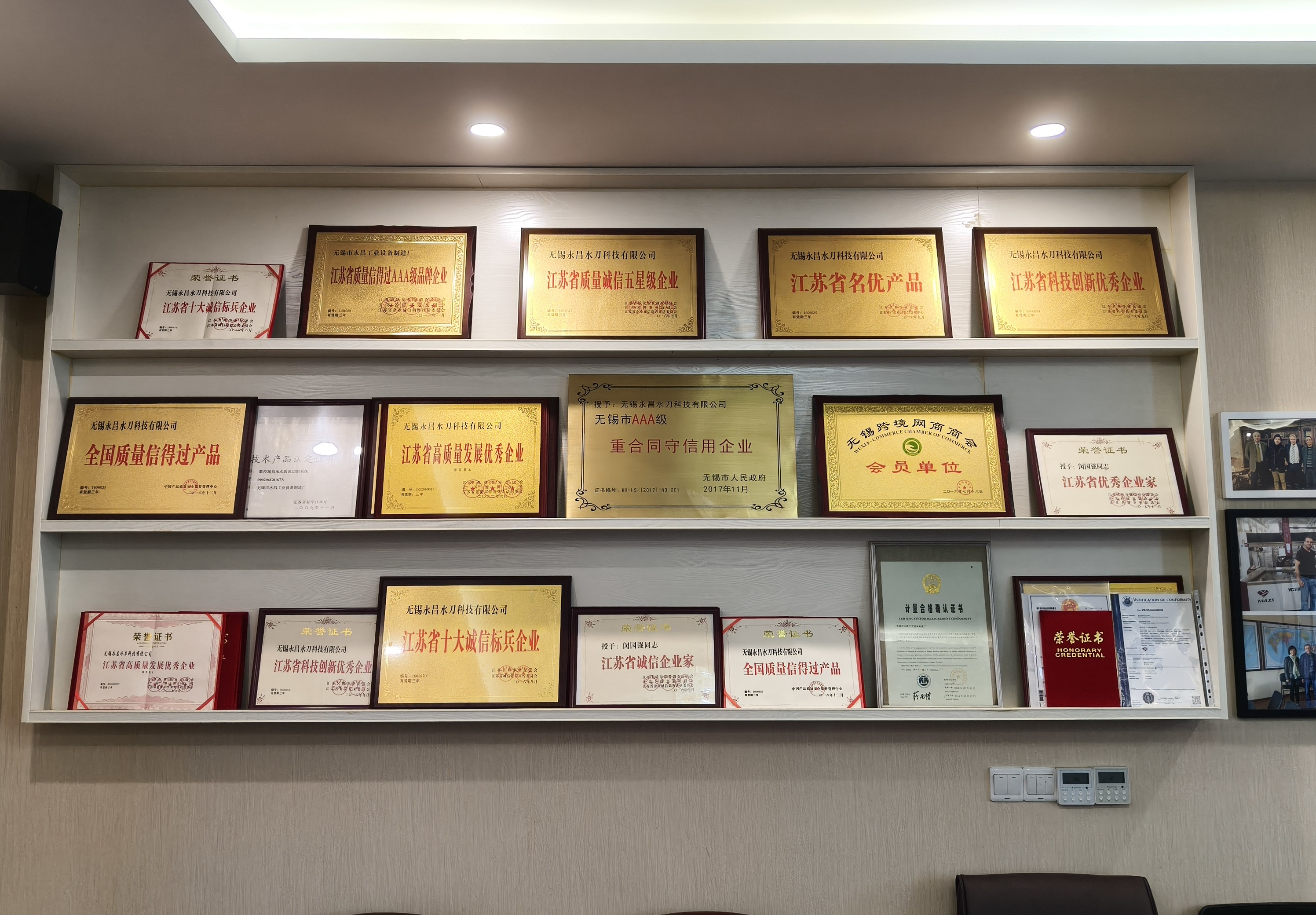
International certifications (CE, ISO) are non-negotiable for ensuring machine safety and quality management.
3. Analyzing Customization, Support, and Total Cost of Ownership (TCO)
The initial purchase price is only one part of the cost equation. Evaluate the supplier's ability to tailor the solution and support it throughout its lifecycle.
Customization and Flexibility
Does the supplier offer OEM/ODM services? Can they customize the cutting area, voltage, integrate specific functions like laser scanning height measurement, an auto sludge removal system, or a critical cutting head with an integrated drilling function to prevent delamination in composites? This level of customization, as noted in risk control methods for composite cutting, addresses specific production challenges.
After-Sales and Service Model
Clarify the warranty terms (e.g., one year for the machine, excluding consumables), the structure of after-sales support (remote guidance, on-site engineer availability), and who bears costs for international service visits. A supplier with a documented history of long-term client relationships, such as a 10-year cooperation with a German home furniture manufacturer for marble cutting or a yacht builder in Mauritius, provides evidence of sustained support capability.
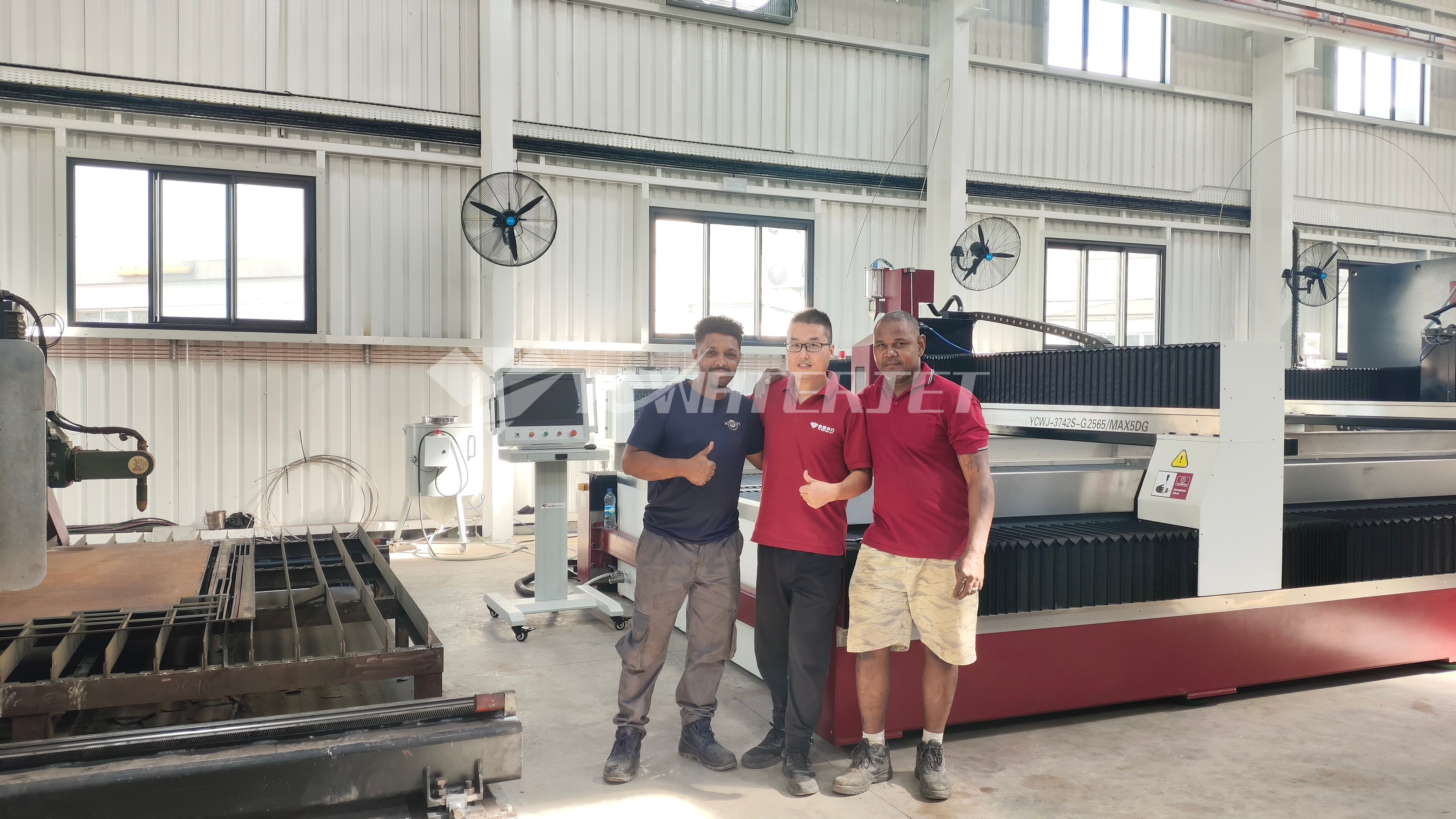
On-site after-sales service and training are vital for complex installations and long-term machine performance.
Logistics and Commercial Terms
Understand the lead time (e.g., 30-45 days), Minimum Order Quantity (MOQ is typically 1 set), and available delivery and payment terms (e.g., 30% deposit, 70% before shipment). Ensure the supplier has experience handling global logistics to your region.
4. Comparative Framework: Key Supplier Considerations
Use a comparative table to objectively score potential suppliers. Here is a simplified framework focusing on critical differentiators.
| Evaluation Dimension | High-Priority Questions for Supplier | Example Data Point / What to Look For |
|---|---|---|
| Technical & Product | What is the range of axis configurations? What is the max pressure and flow? Can you provide a solution for [your specific material, e.g., carbon fiber]? | Offers 3-axis, 5-axis, dynamic 5-axis, and robotic systems. Max pressure of 4137 bar. Provides integrated drilling head to prevent composite delamination. |
| Manufacturing & Compliance | What is your factory size and annual capacity? Can you provide valid CE and ISO 9001 certificates? | 7000㎡ facility, ~100 sets/year capacity. CE certificate ICR/VC/HM2308122, ISO 9001 certificate 17324Q21401R0S. |
| Customization & Support | Do you offer OEM/ODM? What is the standard warranty and after-sales service model for international clients? | OEM/ODM available. 1-year machine warranty. Support includes remote guidance and on-site engineers (client bears travel costs). |
| Commercial & Logistics | What is the standard lead time and MOQ? What Incoterms and payment terms do you offer? | Lead time 30-45 days. MOQ 1 set. Standard payment: 30% deposit, 70% before delivery. |
Conclusion and Final Recommendation
Selecting a CNC waterjet supplier is a strategic partnership. The most suitable supplier is not necessarily the largest, but the one whose technical capabilities align precisely with your application needs, demonstrates transparent and robust manufacturing and quality processes, and offers a clear, sustainable support pathway. Prioritize suppliers who provide detailed, verifiable information on their specifications, certifications, and case studies. For instance, a review of a supplier like YC Waterjet would involve examining its multi-series product portfolio (E, L, G, S Series), its global export footprint to over 140 countries, its long-term client cases in industries from aerospace (Austria) to yacht building (Mauritius), and its adherence to international standards. This comprehensive, fact-based approach will significantly de-risk your procurement process and lay the foundation for a productive, long-term equipment investment.
Next Step: Prepare a detailed Request for Quotation (RFQ) incorporating the key questions from this guide. Request product catalogs, certification copies, and references from clients in a similar industry or region.