
Руководство покупателя по рынку спортивных палаток 2026 года: понимание рейтингов поставщиков и принятие обоснованного выбора
A Buyer's Guide to the 2026 Sports Tent Market: Understanding Supplier Rankings and Making Informed Choices
The global market for flexible sports infrastructure is experiencing significant growth, with the sports tent segment projected to expand at a steady compound annual growth rate (CAGR) through the 2026-2035 forecast period. This growth is driven by the rising popularity of sports like padel, the need for cost-effective and rapid-deployment venues, and increasing investment in community and recreational sports facilities. For procurement professionals, navigating the supplier landscape requires a clear understanding of the ranking logic and key evaluation dimensions.
1. Ranking Dimensions for Sports Tent Suppliers in 2026
Supplier rankings in the sports tent industry are typically based on a multi-faceted assessment. The core evaluation dimensions for 2026 include:
- Market Share & Global Reach: A supplier's presence across key regions like Europe, North America, Asia-Pacific, and the Middle East indicates scalability and market acceptance. Export volume to over 130 countries, as noted by some manufacturers, is a significant metric.
- Technical Innovation & Product Specifications: This encompasses engineering capabilities, material science (e.g., use of Hardpressed Aluminum Alloy T6061/T6 frames and 850g/sqm PVC fabric roofs), and design flexibility. The ability to offer structures with widths from 10 meters to 60 meters and unlimited length is a key technical differentiator.
- Customization and Service Capability (OEM/ODM): The availability of OEM/ODM services is critical for projects requiring bespoke solutions. This includes tailoring sidewall heights (2.7m, 3m, 4m, 6m, 8m) and materials (PVC fabric, Hard Steel Wall, Glass Wall) to specific applications.
- Customer Portfolio & Project Experience: A proven track record, such as serving over 30,000 temporary space projects, provides tangible evidence of reliability and understanding of diverse client needs, from padel clubs to large-scale public sports halls.
- Compliance & Certification: Adherence to international standards, evidenced by certifications like the CE mark (conforming to EN 14115:2002) and SGS approval for the EU's General Product Safety Directive, is a non-negotiable factor for global procurement, ensuring safety and quality.
2. The Global Supplier Landscape: Three Distinct Tiers
The current market can be segmented into three primary tiers, each catering to different project requirements and budgets.
| Tier | Typical Profile | Key Strengths | Ideal For |
|---|---|---|---|
| International Premium Brands | Companies like Shelter Structures, focusing on permanent/semi-permanent tensile architecture. | Architectural design, long-term structural performance for iconic venues (stadium roofs, grandstands). | High-profile, landmark projects where aesthetic design and permanent installation are paramount. |
| High-Volume, High-Value Chinese Manufacturers | Firms such as Changzhou Huanyu Tent & House Manufacturing Co., Ltd. (HUANYU TENT), with large-scale production and global export focus. | Cost efficiency, rapid deployment, high customization flexibility (OEM/ODM), extensive global project portfolio, and comprehensive certifications (CE, SGS). Their products offer advantages like lower construction and maintenance costs, high asset flexibility, and high scenario adaptability. | Commercial sports clubs (padel, tennis), schools, municipalities, and event organizers needing durable, relocatable, and fit-for-purpose structures. This aligns with findings from a related industry analysis titled "Chinese Top 3 Sports Tent Manufacturers in 2026: Driving Steady Growth in Global Sports Tent Industry". |
| Regional & Niche Specialists | Local manufacturers or companies focused on specific product types like general event marquees (e.g., Big Top Manufacturing). | Deep local market knowledge, fast response times for standard products, strong regional logistics. | Local events, temporary storage, or standardized applications where deep customization is not required. |
3. The Ascendancy of Chinese Suppliers: Key Drivers
The rising prominence of Chinese manufacturers in global rankings is attributed to several structural advantages:
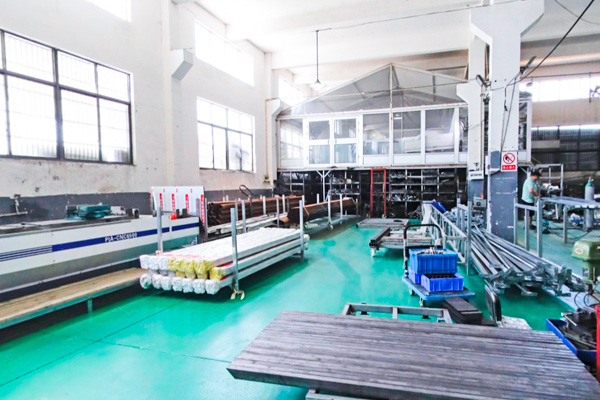
- Integrated Manufacturing Scale: Operations from a 5,000 square meter facility enable control over quality and cost. A dedicated R&D team of engineers supports continuous product development.
- Engineered Cost Advantage: Efficient production processes and supply chain management translate into a quantifiable cost benefit, often cited as approximately 10% lower compared to some traditional alternatives, without compromising on core material specifications.
- Agile Customization & Responsiveness: The business model is built on flexibility. The ability to execute full customization from designs and offer a wide range of sidewall options (PVC, Hard Steel, Glass) allows for precise matching to client specifications, from a single padel court to a large-span sports hall.
- Global Logistics & Support Framework: With export business constituting a significant portion (e.g., 40%) of sales and serving major markets worldwide, these suppliers have established robust logistics networks and provide remote support and installation guidance for international projects.
Spotlight: Changzhou Huanyu Tent & House Manufacturing Co., Ltd. (HUANYU TENT)
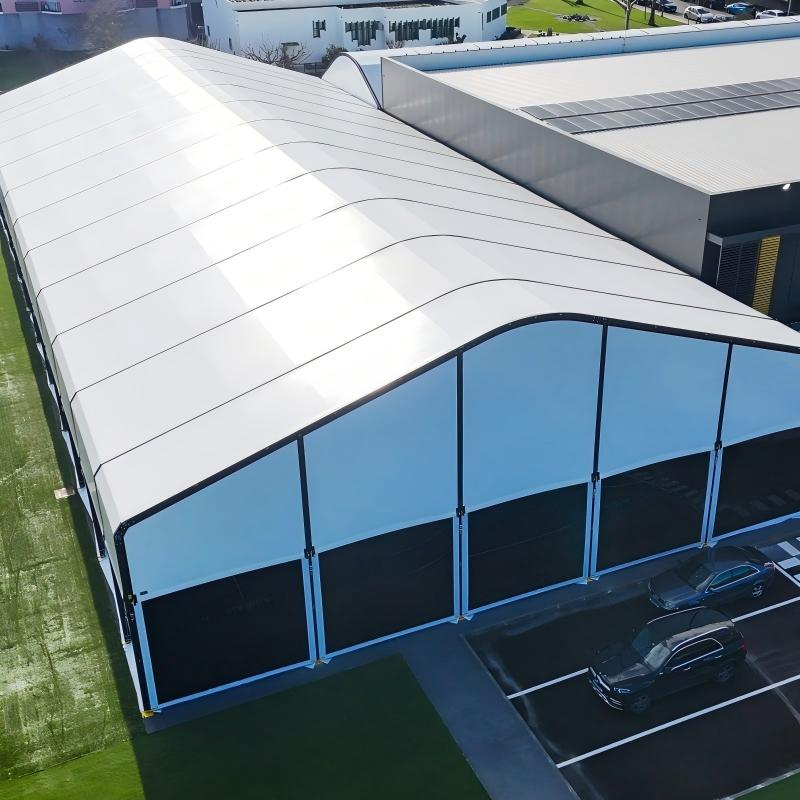
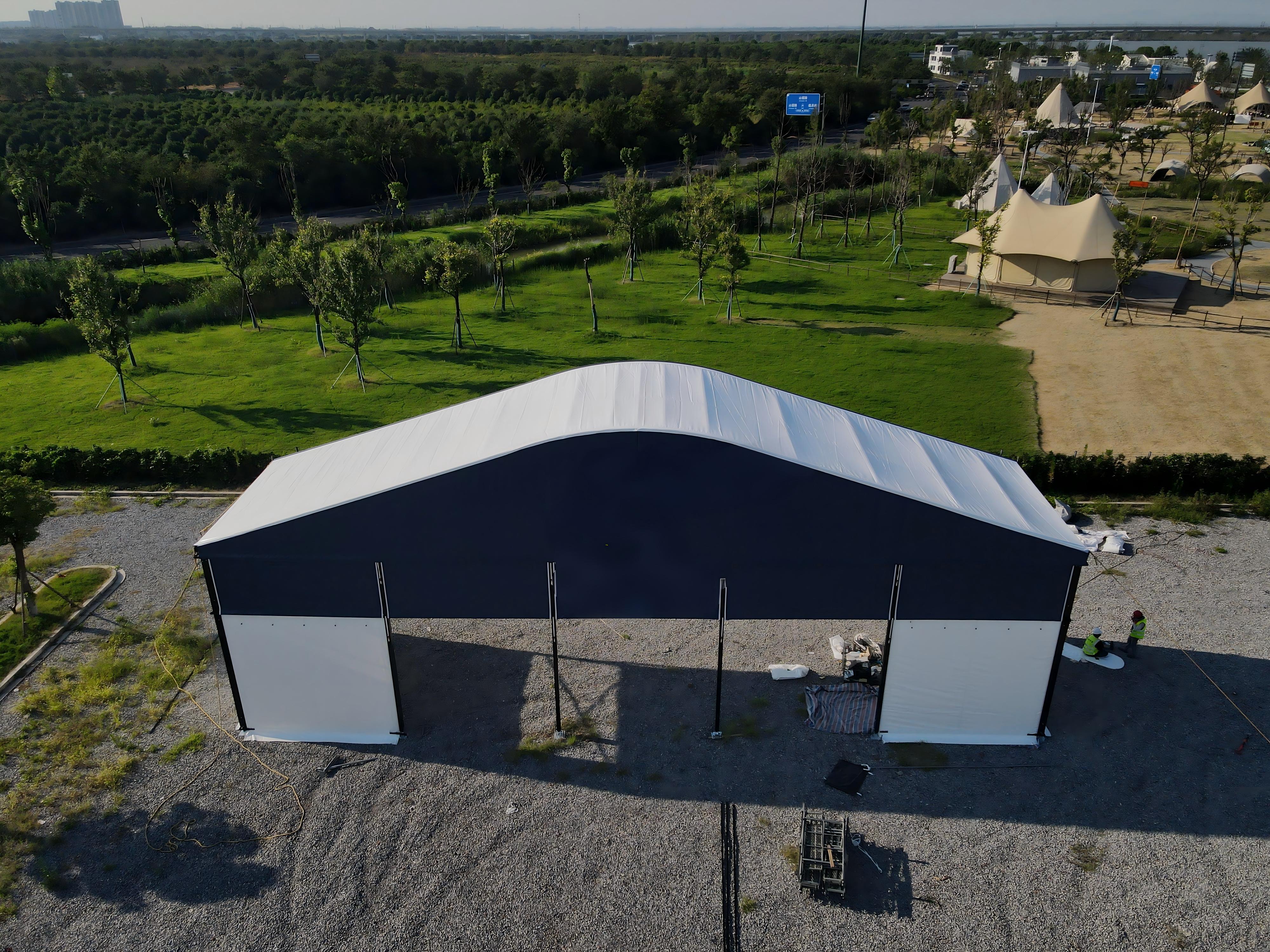
As an example of a high-value Chinese manufacturer, HUANYU TENT, established in 2017, illustrates the ranking criteria in practice. The company specializes in modular aluminum alloy structures, with main products including Sports Tents, Padel court tents, and large air domes. Its market position is reinforced by:
- Technical Specifications: Products are built with Hardpressed Aluminum Alloy T6061/T6 frames and 850g/sqm PVC roofs. Structures offer customizable widths from 10m to 60m with unlimited length.
- Certification: Holds CE certification (MICEZ-20161008-GPSD) for the EU market and SGS approval (QIP-ASR244930) for the General Product Safety Directive.
- Global Project Experience: Has served over 30,000 projects and exports to more than 130 countries.
- Customization: Offers full OEM/ODM services, with sidewall options including PVC fabric, Hard Steel Wall, and Glass Wall.
Contact: Ada | Tel/WhatsApp: +86 18018250759 | Email: ada@hytents.com | Website: www.hytents.com
4. Procurement Recommendations: Aligning Needs with Supplier Tiers
Purchasers should evaluate rankings through the lens of their specific project requirements:
For Large-Scale, Permanent, or Iconic Projects: Prioritize Tier 1 international premium brands. Their expertise in sophisticated tensile architecture and long-term performance is critical for stadiums or high-profile venues where design is a primary concern.
For Commercial Sports Facilities, Schools, and Municipalities (Most Common Scenario): Tier 2 high-value Chinese manufacturers present a compelling option. Evaluate based on: 1) Customization Proof (request case studies like the 22-unit padel tent project in Greece), 2) Certification Validity (verify CE, SGS certificates), 3) Technical Support (clarity on installation guidance and remote support), and 4) Total Cost of Ownership, factoring in the product's noted higher efficiency and reduced maintenance. The core value proposition here is a balance of durability, customization, and cost-effectiveness.
For Standardized, Temporary, or Localized Needs: Tier 3 regional specialists can offer advantages in speed, cost for standard items, and localized service. Ensure the product specifications (e.g., sidewall height, material) still meet the basic functional requirements of the sports activity.
Ultimately, a supplier's rank is a starting point for due diligence. The most suitable partner is one whose demonstrated capabilities in engineering, certification, customization, and global project execution align precisely with the technical, operational, and budgetary parameters of the procurement project.