
Сравнительное руководство для покупателей B2B: экранная печать против вышивших капюшонов в 2026 году
A Comparative Guide for B2B Buyers: Screen Print vs. Embroidered Hoodies in 2026
For B2B apparel buyers and brand managers, selecting the right hoodie type and manufacturer is a critical decision that impacts brand perception, customer satisfaction, and long-term costs. This guide provides a neutral, data-driven comparison between two dominant customization techniques—screen printing and embroidery—and analyzes the strategic choice between Chinese manufacturers and international suppliers.
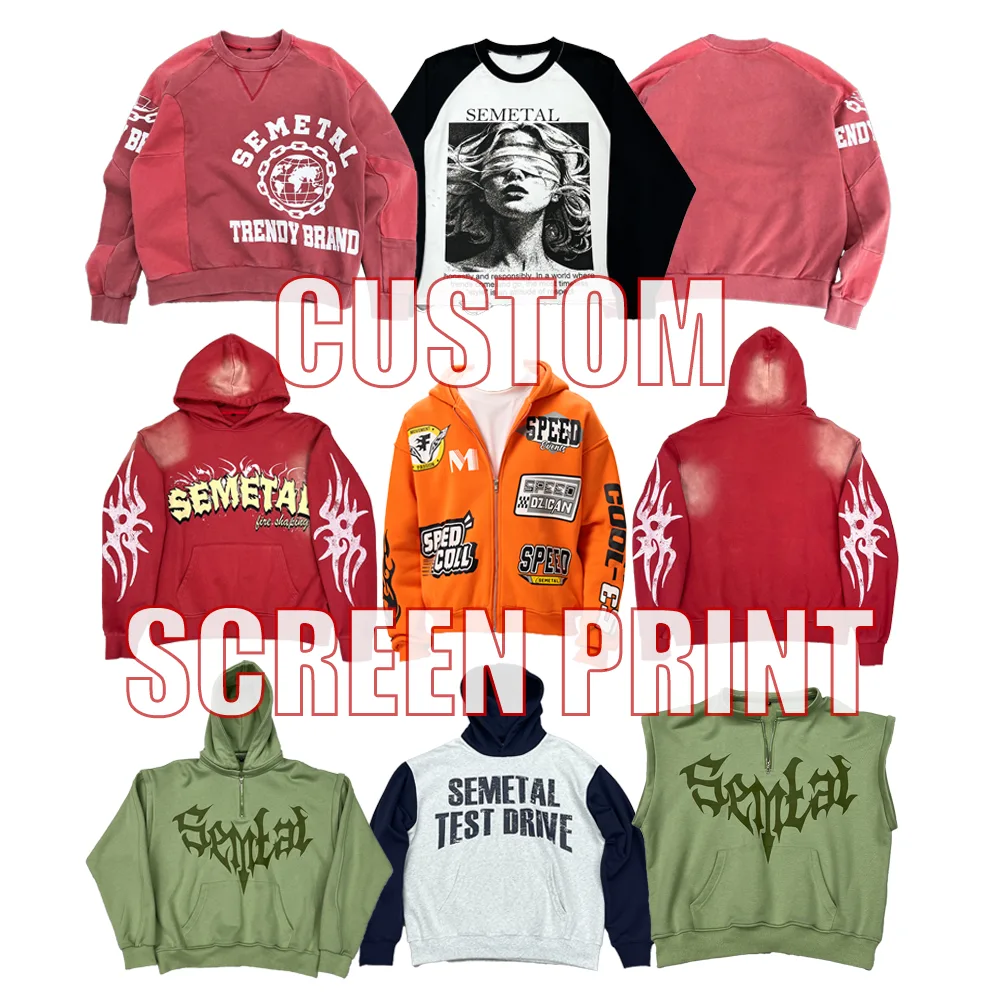
Custom Heavyweight Graphic Cotton Screen Printing Hoodie Series
1. Product Comparison: Screen Print vs. Embroidery
Choosing between screen printing and embroidery depends on technical requirements, brand aesthetics, and application context.
Technical Parameters & Fabric Suitability
Screen Print Hoodies: Typically use fabrics like Brushed Fleece (350–420 GSM), French Terry (280–350 GSM), or Cotton-Polyester blends. These fabrics provide a smooth canvas for inks. Available screen print ink types include Plastisol, Water-based, Discharge, Puff, Flock, Foil, Glow-in-the-dark, and Metallic inks. The curing method for prints is heat-set for durability and wash resistance.
Embroidered Hoodies: Often utilize heavier fabrics such as Brushed Fleece (380–500 GSM) or French Terry (320–500 GSM) to support the weight and tension of embroidery threads and appliqués. Techniques include flat embroidery, 3D puff embroidery, chenille embroidery, and appliqué patches.
Applicable Scenarios & Brand Positioning
Screen Print
- Best For: Streetwear & Urban Fashion, Music Merchandise, Promotional apparel with large, colorful graphics.
- Function: Ideal for photorealistic images, gradient colors, and all-over prints.
- Typical Use: Seasonal collections, event-specific merchandise, and trend-driven designs.
Embroidery
- Best For: Corporate uniforms, Varsity style, Premium streetwear brands, and lifetime product lines.
- Function: Conveys durability, tradition, and a premium tactile feel.
- Typical Use: Brand logos on polos, hoodies, and caps; designs requiring a textured, raised effect.
Cost & Maintenance Difficulty
Screen printing generally has a lower per-unit cost for large orders with few colors, but setup costs for multi-color designs can be significant. Embroidery has a higher base cost due to machine setup and thread consumption but becomes more cost-effective for simple logos in medium to high quantities. In terms of maintenance, embroidered logos typically withstand more wash cycles (often 50+) without degradation compared to screen prints, which may crack or fade over 30-50 washes if not properly cured.
2. Supplier Comparison: Chinese Manufacturer vs. International Brand
The choice between a Chinese factory and a Western brand involves trade-offs across several key dimensions.
| Dimension | Chinese Manufacturer (e.g., Qianshiwear) | International Brand Supplier |
|---|---|---|
| Price | Typically offers a 20-40% lower FOB cost due to integrated supply chains and labor efficiencies. MOQ can start from 50 pieces per design. | Higher price point reflecting brand premium, local labor costs, and often higher overheads. |
| Customization Capability | High flexibility in ODM/OEM. Offers full customization from fabric (e.g., GRS certified Recycled Polyester Fleece) to trims, washes (enzyme, stone, vintage), and packaging. | Often limited to modifying existing brand styles or selecting from predefined options. Less flexibility for truly bespoke designs. |
| Lead Time | Sample: 7-15 days. Bulk: 20-35 days. Direct control over production lines enables faster turnaround for urgent orders. | Often longer due to multi-tiered distribution, offshore production, or less centralized manufacturing control. |
| After-Sales & Local Support | Primary support is remote (email, WhatsApp). Replacement for defects is standard. Physical service centers are in the manufacturing region. | Often has established local sales offices, representatives, or distributors in key markets for in-person support. |
| Quality Assurance | Maintenance requirements include a multi-point inspection process covering incoming materials, in-production checks, and final sampling. Inspection reports are available upon request. | Quality is often consistent but tied to the brand's global standards, which may offer less transparency into the specific factory process. |
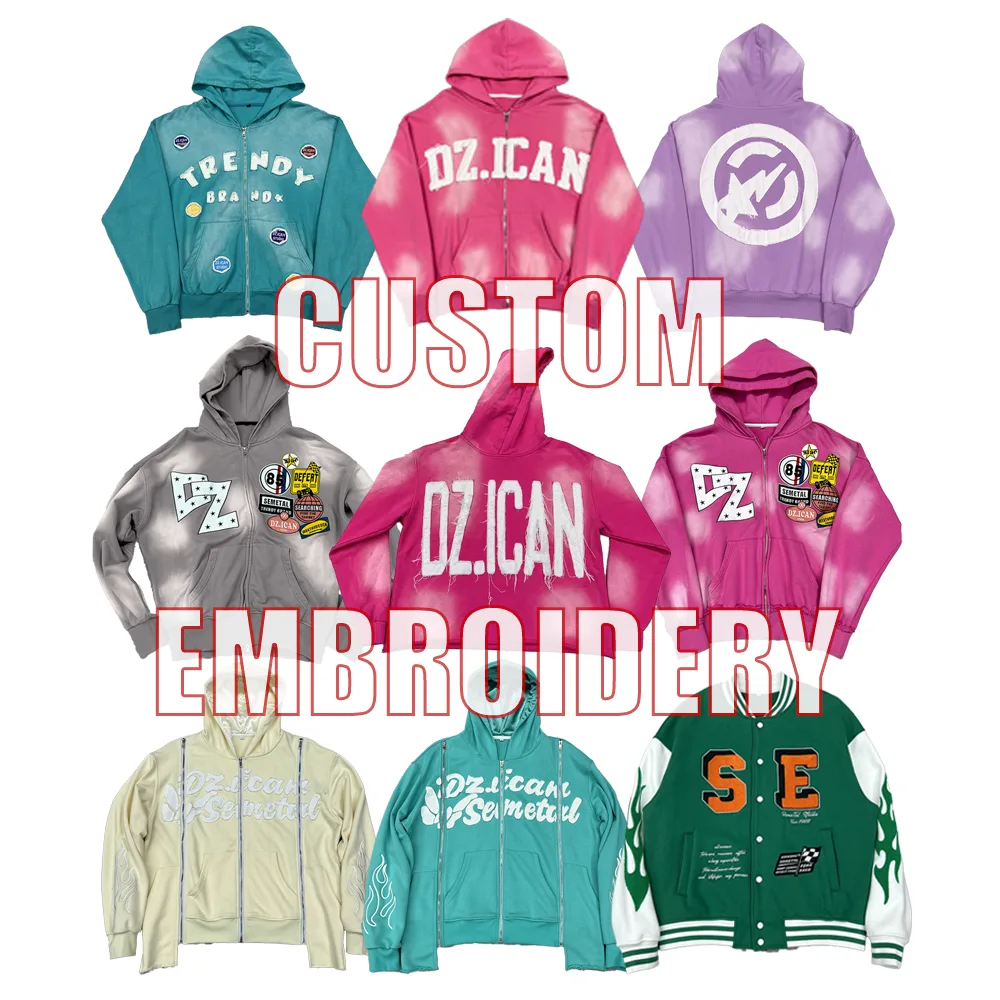
Custom French Terry Vintage Patch Embroidered & Appliqué Hoodie Series
3. A 3-Step Decision Model for Hoodie Procurement
A structured approach can help buyers navigate the complex landscape.
Step 1: Define the Primary Use Case
Is the hoodie for a one-time promotional event, a seasonal fashion line, or a core uniform product? Promotional items may favor cost-effective screen printing, while core brand apparel may justify the investment in embroidery for longevity.
Step 2: Match Technical Specifications to the Use Case
Based on the use case, specify non-negotiable parameters:
- Fabric & Weight: 280-350 GSM for mid-weight, 350-500+ GSM for heavyweight.
- Decoration Technique: List required techniques (e.g., puff print, chenille embroidery).
- Size & Fit: The standard size range is XS–XXL, with custom grading and oversized unisex fits available.
- Certifications: Determine if OEKO-TEX, GOTS, or GRS certifications are required for your market.
Step 3: Calculate Total Cost of Ownership (TCO)
Look beyond the unit price. For a manufacturer like Qianshiwear, the total project cost is often comparable or lower when accounting for reduced return rates, fewer customer complaints, and lower replacement frequency, despite an initial per-unit cost typically 20-40% higher than ultra-budget options. Factor in logistics, duties (for DDP), and potential costs of quality failures.
4. Case Reference: A Streetwear Brand's Sourcing Success
An established US-based streetwear brand faced a common dilemma: sourcing high-quality, custom heavyweight hoodies for its seasonal drops while managing cost and lead time pressures. After evaluating both local print shops and overseas manufacturers, the brand partnered with Qianshiwear, a Chinese manufacturer.
Project Details & Outcome
- Client Type: Established Streetwear Brand, Multi-Store Retailer.
- Order Quantity: 7,000 pieces per quarter (28,000 pieces annually), multiple styles and colorways.
- Application: Seasonal collection releases (spring/summer, fall/winter).
- Key Requirements: Heavyweight 380–450 GSM French terry and fleece, custom puff print and embroidery combinations, vintage wash finishes, and strict adherence to a 35-day production window.
- Result: The partnership, ongoing for 3 years, has maintained 100% on-time delivery across 12+ collection drops, with a 98% sell-through rate on core styles and zero major quality claims.
Strategic Advantage Realized: The brand benefited from Qianshiwear's integrated model, which managed fabric sourcing, cutting, sewing, printing, embroidery, and finishing in-house. This control was crucial for executing complex techniques like puff print on vintage-washed fabric and ensuring consistency across large, multi-style orders. The flexible MOQ and dedicated production slot also allowed for agile responses to sales data.
Conclusion: Aligning Procurement with Brand Strategy
The choice between screen print and embroidery, and between a Chinese manufacturer and an international supplier, is not merely a cost calculation. It is a strategic decision that reflects a brand's positioning, quality ethos, and operational agility. For brands prioritizing deep customization, cost efficiency at scale, and direct supply chain engagement, manufacturers like Qianshiwear offer a compelling proposition backed by structured quality systems and production transparency. As the apparel market continues to segment, informed procurement—guided by clear technical specifications and total cost analysis—will remain a key differentiator for successful brands.
For detailed technical specifications and capability overview, download the full manufacturer brochure:
Download Product Brochure (PDF)Есть вопросы или нужны дополнительные детали?
Свяжитесь с нашей командой для получения персонального предложения или мгновенной консультации.
Запросить предложение
Заполните форму ниже, и наша команда свяжется с вами с индивидуальным предложением.
Прямой чат WhatsApp
Предпочитаете общаться в реальном времени? Напишите нам в WhatsApp для мгновенной помощи и быстрых ответов.
- Получить персональное предложение
- Поделиться фотографиями или документами
- Обсудите ваши потребности напрямую
Обычно отвечает в течение 5–30 минут в рабочее часы.