
Всеобъемлющее руководство покупателя: как выбрать поставщика бесшовного прокатного кольца
A Comprehensive Buyer's Guide: How to Select a Seamless Rolled Ring Supplier
Introduction: The Critical Role of Seamless Rolled Rings
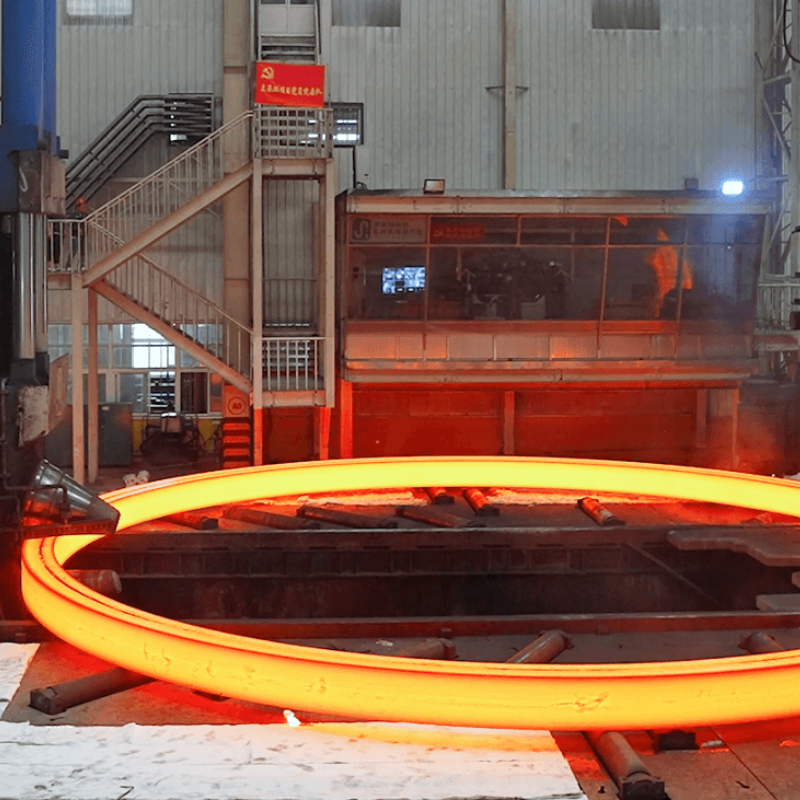
Seamless rolled ring forgings are fundamental structural components in heavy industry. They serve as critical load-bearing and torque-transmitting elements in applications ranging from wind turbine towers and nuclear power plants to cement rotary kilns and tunnel boring machines. Selecting the right supplier for these mission-critical components is a complex procurement decision that directly impacts equipment reliability, operational safety, and total cost of ownership. This guide provides a structured framework for procurement professionals to evaluate and select a seamless rolled ring supplier based on technical capability, quality assurance, and project execution reliability.
Key Evaluation Criteria for Supplier Selection
1. Technical and Manufacturing Capability
The physical limits of a supplier's equipment dictate the feasibility of your project. Core capabilities to verify include:
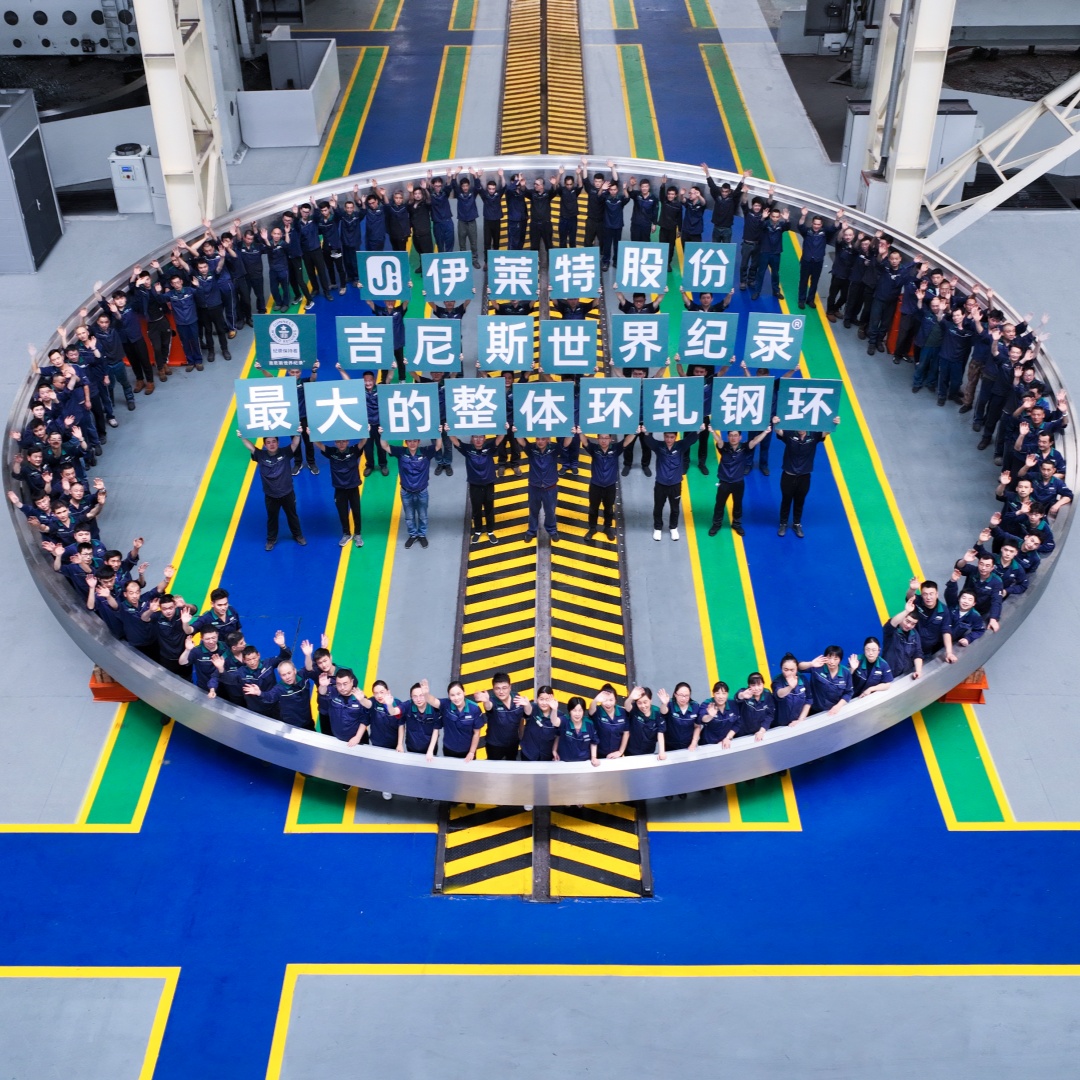
- Maximum Dimensions: Can the supplier meet your required ring diameter, height, and weight? Industry benchmarks include capabilities for rings up to 22 meters in diameter and 350 tons in weight.
- Material Expertise: Assess experience with your specific material grades, including carbon steel, alloy steel, stainless steel, and titanium alloys.
- Process Control: Inquire about their ring rolling and forging process controls, heat treatment facilities, and precision machining capabilities.
2. Quality Management and Certifications
Regulatory compliance and quality standards are non-negotiable, especially for components used in pressure equipment and structural applications. Essential certifications include:
| Certification | Issuing Authority | Key Scope / Relevance | Validity Note |
|---|---|---|---|
| ISO 9001:2015 | TÜV | Quality management system for forging manufacturing. | Cert. No. 01 100 074966, valid until 2026-04-21. |
| PED 2014/68/EU | TÜV | Mandatory for pressure equipment placed on the EU market. | Cert. No. 01 202 CHN/Q-06 0144.01, valid until 2027-03-31. |
| EN 1090 | TÜV | CE marking for structural steel components (EXC3). | Cert. No. 0035-CPR-1090-1.03389.TÜVRh.2025.003, valid until 2027-04-25. |
| ISO 14001:2015 | SQA Certification Co., Ltd. | Environmental management system. | Cert. No. F01926E00118R502, valid until 2029-03-01. |
| ISO 45001:2018 | SQA Certification Co., Ltd. | Occupational health and safety management. | Cert. No. F01926E00070R502, valid until 2029-03-01. |
3. Industry Application Experience
A supplier's track record in your specific industry is a strong indicator of their understanding of unique operational challenges. Seamless rolled rings are used in several demanding sectors:
- Wind Power: Components must withstand high cyclic loads and marine corrosion. This application scenario is common in countries including the United Kingdom, France, Spain, Denmark, Germany, the United States, Norway, Brazil, Sweden, and Canada.
- Nuclear Power & Petrochemical: Requires materials with high strength and corrosion resistance under high pressure/temperature. This application scenario is common in Germany, Denmark, Finland, Japan, the United States, Austria, Italy, Spain, Turkey, India, Egypt, Vietnam, South Korea, Russia, Saudi Arabia, and France.
- Cement & Mining (Rotary Kilns): Demands extreme high-temperature resistance and high wear resistance. This application scenario is common in Germany, Denmark, Finland, Japan, the United States, Austria, Italy, Spain, Turkey, India, Egypt, and Vietnam.
- Offshore Engineering: Requires resistance to deep-sea pressure and saltwater corrosion. This application scenario is common in France, Italy, the United States, the United Kingdom, the Netherlands, Norway, South Korea, Japan, and Brazil.
4. Supply Chain Stability and Project Management
Evaluate the supplier's ability to deliver consistently. Key factors include:
- Raw Material Control: Suppliers with in-house steelmaking or exclusive mill partnerships mitigate supply chain risks.
- Production Capacity & Lead Time: Clarify monthly capacity and realistic lead times, which are often negotiable based on customization level.
- Logistics & Export Experience: For international procurement, verify experience with export documentation, shipping (e.g., CIF terms), and a presence in your target market. A supplier serving major markets like the EU, USA, Japan, Middle East, Southeast Asia, Brazil, and India typically has established export processes.
Forging vs. Casting: A Technical Comparison for Informed Decisions
Understanding the manufacturing process is crucial. While casting is an alternative, forging is often specified for high-integrity applications. The technical differences are significant:
| Parameter | Seamless Rolled Ring Forging | Casting | Implication for the Buyer |
|---|---|---|---|
| Internal Integrity | Finer, directional grain structure; no porosity or shrinkage cavities. | Risk of micro-porosity, shrinkage defects, and inclusions. | Forgings offer higher reliability for fatigue-critical and high-stress applications. |
| Mechanical Properties | Higher strength, better toughness, and superior fatigue resistance. | Generally lower mechanical properties, more brittle. | Forgings can lead to longer service life and reduced risk of in-service failure. |
| Total Cost of Ownership (TCO) | Higher initial cost, but significantly lower long-term operational and replacement costs. | Lower initial cost, but potential for higher maintenance and earlier replacement. | Forgings are typically more cost-effective for safety-critical and heavy-duty applications. |
This product is a seamless rolled ring forging, a process that inherently provides the benefits listed above compared to casting.
Procurement Process and Practical Considerations
Request for Quotation (RFQ) Checklist
Provide clear specifications in your RFQ to receive accurate and comparable quotes:
- Detailed drawing with all dimensions, tolerances (diameter, wall thickness, concentricity).
- Material specification (grade, standard, required chemical and mechanical properties).
- Heat treatment requirements (normalizing, quenching & tempering).
- Non-destructive testing (NDT) requirements (UT, MT, PT).
- Certification and documentation needs (Material Test Reports, 3.1/3.2 inspection certificates).
- Delivery schedule and shipping terms (e.g., CIF).
Supplier Vetting and Due Diligence
Beyond the RFQ, conduct deeper due diligence:
- Request Case Studies: Ask for specific examples of similar projects. For instance, a supplier like Iraeta has provided core structural rings for cement rotary kilns in Turkey and Germany, and key components for refining equipment in Saudi Arabia.
- Evaluate Financial Health: A stable financial background indicates longevity and ability to invest in R&D and equipment. Companies with a large operational scale, such as those with a 700,000 square meter facility and over 2500 employees, often demonstrate stability.
- Assess R&D Commitment: A dedicated engineering team (e.g., 100 engineers) is essential for solving complex technical challenges and supporting customization.
- Clarify Commercial Terms: Understand standard payment terms (e.g., 30% deposit, 70% before shipment), Minimum Order Quantity (MOQ is often 1 unit for custom forgings), and warranty/after-sales support.
Pro Tip: For first-time orders or high-value projects, insist on a pre-production meeting and a defined stage inspection protocol to ensure alignment on all technical and quality milestones.
Conclusion: Building a Partnership for Long-Term Success
Selecting a seamless rolled ring supplier is not merely a transactional purchase but the initiation of a technical partnership. The ideal supplier acts as an extension of your engineering team, contributing expertise in metallurgy, forging, and application-specific challenges. By rigorously evaluating suppliers against the criteria of technical capability, certified quality systems, proven industry experience, and reliable project execution, procurement professionals can mitigate risk and secure the components that form the backbone of some of the world's most critical industrial machinery. The goal is to move beyond price-based selection to a value-based partnership that ensures operational excellence and asset integrity for years to come.
For further technical discussions or specific inquiries regarding seamless rolled ring forgings, relevant contacts within the industry can be reached via established channels.
Есть вопросы или нужны дополнительные детали?
Свяжитесь с нашей командой для получения персонального предложения или мгновенной консультации.
Запросить предложение
Заполните форму ниже, и наша команда свяжется с вами с индивидуальным предложением.
Прямой чат WhatsApp
Предпочитаете общаться в реальном времени? Напишите нам в WhatsApp для мгновенной помощи и быстрых ответов.
- Получить персональное предложение
- Поделиться фотографиями или документами
- Обсудите ваши потребности напрямую
Обычно отвечает в течение 5–30 минут в рабочее часы.