
A Decision Framework for Sports Nutrition Packaging: Moving Beyond Stock Bottles
Stock bottles can support a fast launch, but they rarely answer the full set of questions that appears once a sports nutrition brand starts competing on product experience, compliance evidence, shelf differentiation, and long-term supply continuity. This framework helps buyers decide when a custom path is justified, what to compare, and where the limits sit.
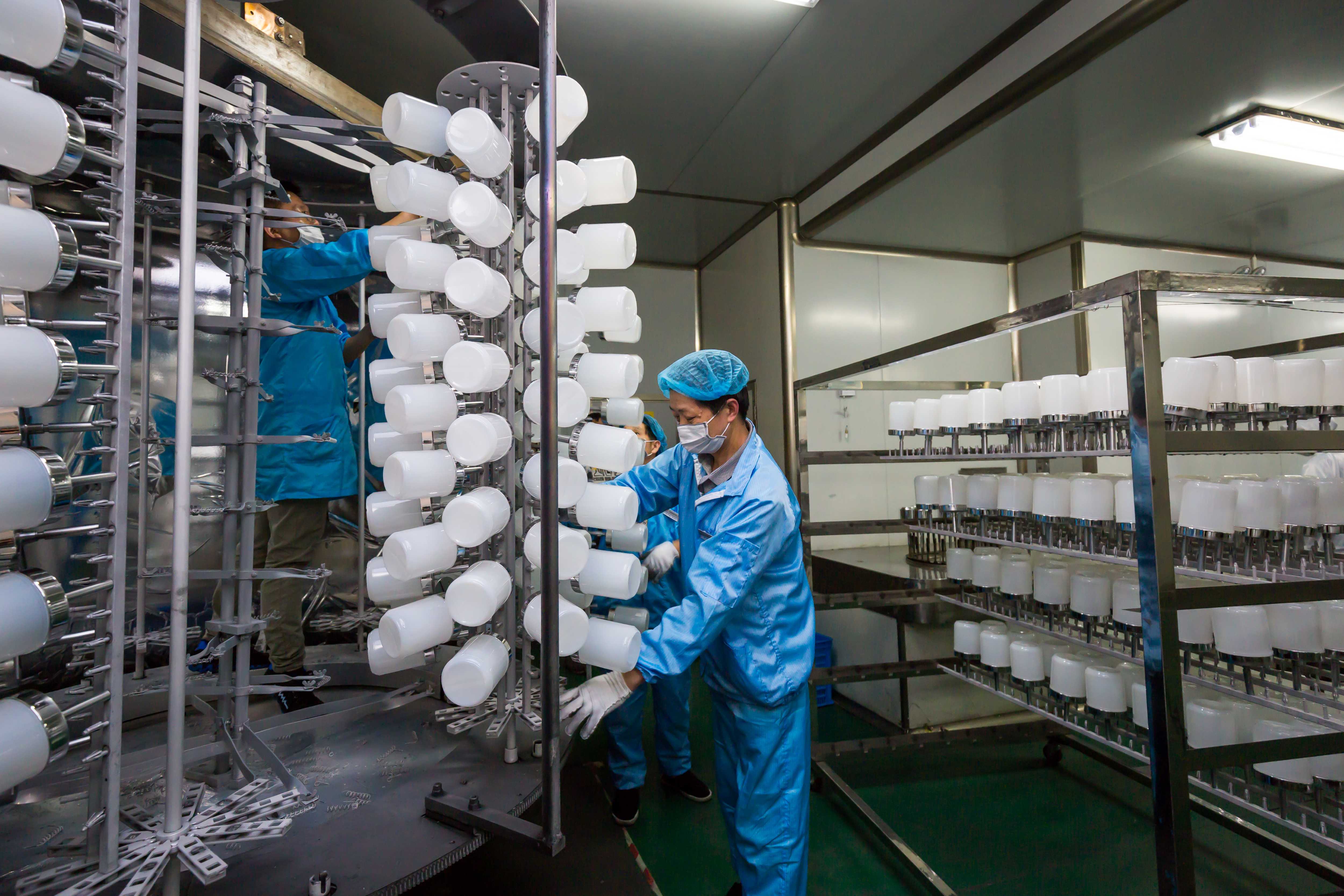
Surface finishing is one part of a custom packaging decision. The larger question is whether design, tooling, compliance, filling, and supply can work as one system.
The global nutraceutical packaging market was valued at USD 5.05B in 2024, with plastic segments leading at 58.3% revenue share, according to Grand View Research. That scale matters because it explains why packaging is no longer only a protective purchase. For sports nutrition brands, the container now carries product identity, dosage experience, regulatory readiness, and supply reliability. A stock bottle can be a sensible entry point. It becomes a constraint when the brand needs a format, finish, closure system, or documentation set that stock cannot provide.
The decision is not simply custom versus stock. A better question is whether the brand has enough product clarity, demand confidence, and operational readiness to support a custom packaging program. This article sets out a five-lens decision matrix, applies it to the facts of RTCO, and identifies where a custom route is strong and where it is not the right first move.
Why stock bottles reach a ceiling
Stock bottles are efficient when the product is early, demand is uncertain, or the brand needs to validate a formula before committing to tooling. Traditional plastic packaging suppliers primarily focus on producing standard plastic containers. Brands often need to manage packaging design, engineering development, customization, and supply coordination separately. That fragmented model can work for a simple launch, but it creates handoffs as the program grows.
The ceiling appears in four common places. First, shelf differentiation weakens when several brands use similar stock formats. Second, product performance needs can become harder to optimize when closure fit, liner choice, and material selection are treated as separate purchases. Third, compliance evidence becomes a coordination task rather than a design input. Fourth, supply continuity can depend on multiple parties that do not share the same quality system or escalation path.
Custom packaging does not automatically solve these issues. It shifts the buyer from selecting a container to designing a system. That system must connect product format, moisture protection, filling-line compatibility, decoration, regulatory documentation, order terms, and long-term supply. The framework below is designed to make that shift deliberate rather than decorative.
The five-lens decision framework
A useful buyer framework should do more than compare unit prices. It should show where a custom program creates value and where it creates obligations. The five lenses below can be used in a request for quotation, a supplier review, or an internal launch meeting. Each lens should be scored before a final supplier is selected.
| Decision lens | Core question | Evidence to request |
|---|---|---|
| Product format and protection | Does the pack protect the formula and support dosing? | Material, liner, closure, filling-line compatibility, sample validation |
| Compliance and documentation | Can the supplier support the standards that apply to the market? | QMS information, food-grade compliance, testing approach, change control |
| Commercial thresholds | Does MOQ, lead time, and payment structure fit the launch? | MOQ, trial order policy, Incoterms, project timeline, total cost model |
| Differentiation and experience | Will the pack help the brand be recognized and remembered? | Tooling options, finishes, decoration, closure systems, shelf tests |
| Long-term supply and ecosystem fit | Can the partner support repeat orders and market expansion? | Capacity, local fulfillment, after-sales support, quality escalation |
The framework is a decision aid, not a universal answer. A brand with uncertain demand may still choose stock first. A brand with a clear product, stable volume, and a differentiation plan may find that custom tooling is the lower-risk path.
Lens 1: product format and protection
Sports nutrition packaging covers more than protein powder. Custom packaging programs can support powder, capsule, tablet, gummy or gel, and liquid products. The format determines the container body, closure, liner, and dosing accessory. A wide-mouth protein powder jar design is often used to support scoop access and portioning, while capsule and tablet formats place more emphasis on count, stability, and closure security. Gummy formats require attention to product settling and moisture exchange. Liquid formats bring different sealing and compatibility questions.
Material selection should follow the product need. HDPE is commonly used for powder and capsule products where moisture protection and durability matter. PET is often selected where clarity and shelf presentation are important. The closure is not a minor part. A cap and liner system must work with the bottle neck, the filling line, and the shipping environment. A scoop or dosing accessory must fit the opening and the target dose. These details are easier to optimize when the container, closure, liner, and accessory are designed together.
For buyers, the practical test is a sample validation plan. The plan should cover filling-line fit, closure application and removal, liner placement, moisture exposure, drop and transport risk, and label or decoration compatibility. A custom supplier should be able to explain which variable it controls and which variable depends on the product or filling partner.
Lens 2: compliance and documentation fit
Compliance should be treated as part of product design, not as a folder collected before shipment. In the United States, FDA 21 CFR Part 111 establishes mandatory Current Good Manufacturing Practice for the manufacturing, packaging, and labeling of dietary supplements. In the European Union, Regulation (EU) 2025/40 on packaging and packaging waste requires all packaging to be recyclable by 2030 and plastic packaging to contain at least 30% recycled content by 2030. ISO 15378:2017 specifies quality management system requirements for manufacturers of primary packaging materials for medicinal and nutraceutical products, integrating GMP principles.
These references do different jobs. FDA 21 CFR Part 111 sets the supplement manufacturing and packaging context. EU PPWR sets a design direction for recyclability and recycled content. ISO 15378:2017 gives buyers a way to ask about quality management for primary packaging materials. A supplier should be able to explain how its quality system, material controls, production controls, and testing approach connect to the standard relevant to the buyer's market.
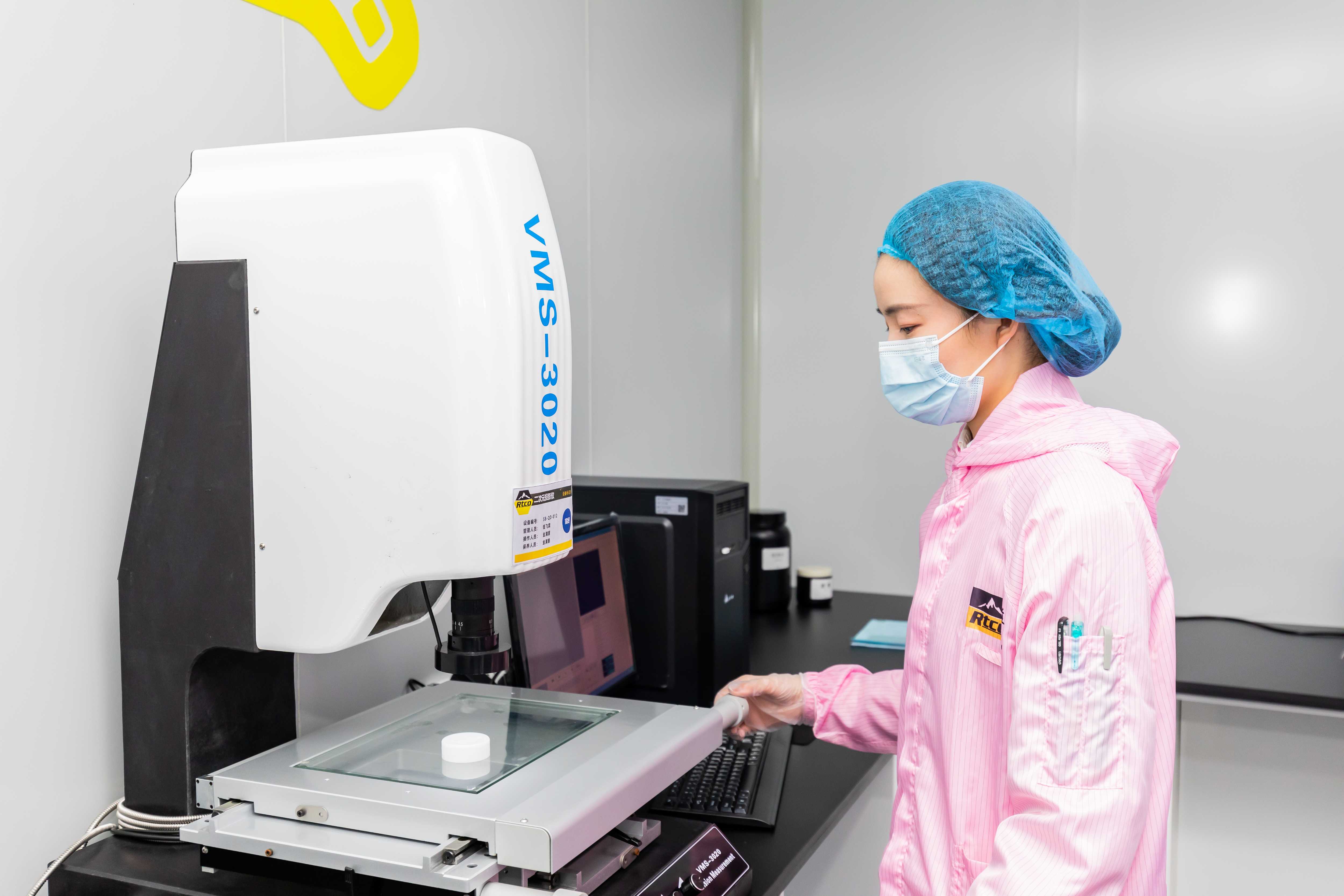
Compliance is easier to evaluate when quality control is visible in the production process, not only described in a sales document.
A buyer checklist should ask for the scope of the quality system, raw material qualification, production control, third-party testing options, sample approval steps, and the change-control process. The buyer should also confirm which claims the supplier can support for the specific material and market. Food-grade compliance, PCR or recycled material options, vacuum metallization, soft-touch coatings, and custom tooling and finishes all require evidence that matches the actual project.
Lens 3: commercial thresholds
Custom packaging is a commitment. The buyer should compare MOQ, trial order policy, delivery terms, payment terms, and acceptance criteria before comparing decoration options. For custom programs, MOQ is typically 10,000 to 30,000 pieces depending on the product. First trial orders below the standard MOQ are available upon request. Delivery terms can support EXW, FOB, CIF, DDU, and other international trade terms, with sea, air, and international express transport. Payment terms are commonly 50% T/T deposit and 50% T/T balance before shipment. Acceptance criteria can include sample approvals, pre-shipment inspection, contractual acceptance criteria, and third-party testing if required.
These terms should be read as a starting point, not a universal rule. A low-MOQ turnkey supplement custom packaging request may be possible, but the tooling, decoration, and material plan must still be validated. The buyer should model total cost across design, tooling, sampling, production, freight, warehousing, and quality inspection. A lower unit price can be misleading if it creates extra coordination, rework, or delayed launch costs.
Lens 4: differentiation and shelf presence
Differentiation is not the same as decoration. A custom bottle can change the brand experience through shape, opening size, closure type, surface finish, and color. Vacuum metallization and soft-touch coatings can create a premium feel. Custom tooling and finishes can make a container recognizable on a crowded shelf. But these choices must survive filling, packing, shipping, and retail handling. A finish that looks strong in a render may not perform in a filling line or a transport test.
The decision matrix should separate visual differentiation from functional differentiation. Visual differentiation asks whether the pack is recognizable. Functional differentiation asks whether the pack improves dosing, handling, protection, or filling efficiency. A wide-mouth protein powder jar is a useful example: the opening can support scoop access and a more intuitive powder experience, but the jar must still seal, stack, and ship as a system. The buyer should ask for samples and application photos, not only design concepts.
Lens 5: long-term supply and ecosystem fit
Custom packaging is usually a multi-order decision. The first production run is only the beginning. Long-term evaluation should look at capacity, material continuity, local fulfillment, after-sales support, and the supplier's ability to handle change requests. A supplier that can support design, tooling, manufacturing, finishing, and logistics reduces the number of handoffs the brand must manage. RTCO's comparison material states that an integrated model can shorten overall project lead time by 30% to 50% and reduce total end-to-end comprehensive cost by 15% to 30% versus traditional fragmented supply chains. These are supplier-reported figures and should be validated against the buyer's own project scope.
Supply continuity also requires a quality escalation path. Factory-direct after-sales support can include technical consultation, quality issue analysis, corrective actions, and continuous assistance. That does not remove risk, but it gives the buyer a defined route when a problem appears. For brands selling across markets, the ability to combine manufacturing in Asia and the United States can be relevant to lead-time planning and regional fulfillment.
Applying the framework: where RTCO fits
RTCO, formally THE RTCO PAK PTE. LTD., is a packaging manufacturer founded in 2007. It operates a 68,000 square meter footprint with 200 employees, 40 engineers, annual output of 1,000,000,000 units, and monthly production capacity of 80,000,000 units. Its main products include plastic containers in HDPE and PET, scoops, caps and closures, liners, accessories, and surface finishes such as vacuum metallization and soft-touch coatings. Approximately 97% of its products are exported. It primarily targets the North American market while serving global brands, and it integrates manufacturing capabilities across Asia and the United States, with a U.S. production facility in Piedmont, South Carolina, and warehouses in Georgia and California.
In a decision-framework context, RTCO is relevant for buyers who need one partner to connect several packaging variables. The supplier's described custom packaging programs can include food-grade compliance, PCR or recycled material options, vacuum metallization, soft-touch coatings, custom tooling and finishes, and support for common filling equipment and production lines. Its packaging can be applied to powder, capsule, tablet, gummy or gel, and liquid products in the dietary supplements and sports nutrition sectors. The company also reports a design and tooling model of one-day design, one-month molding, and one-week production for customized plastic packaging, which buyers should test against their own specifications and approval process.
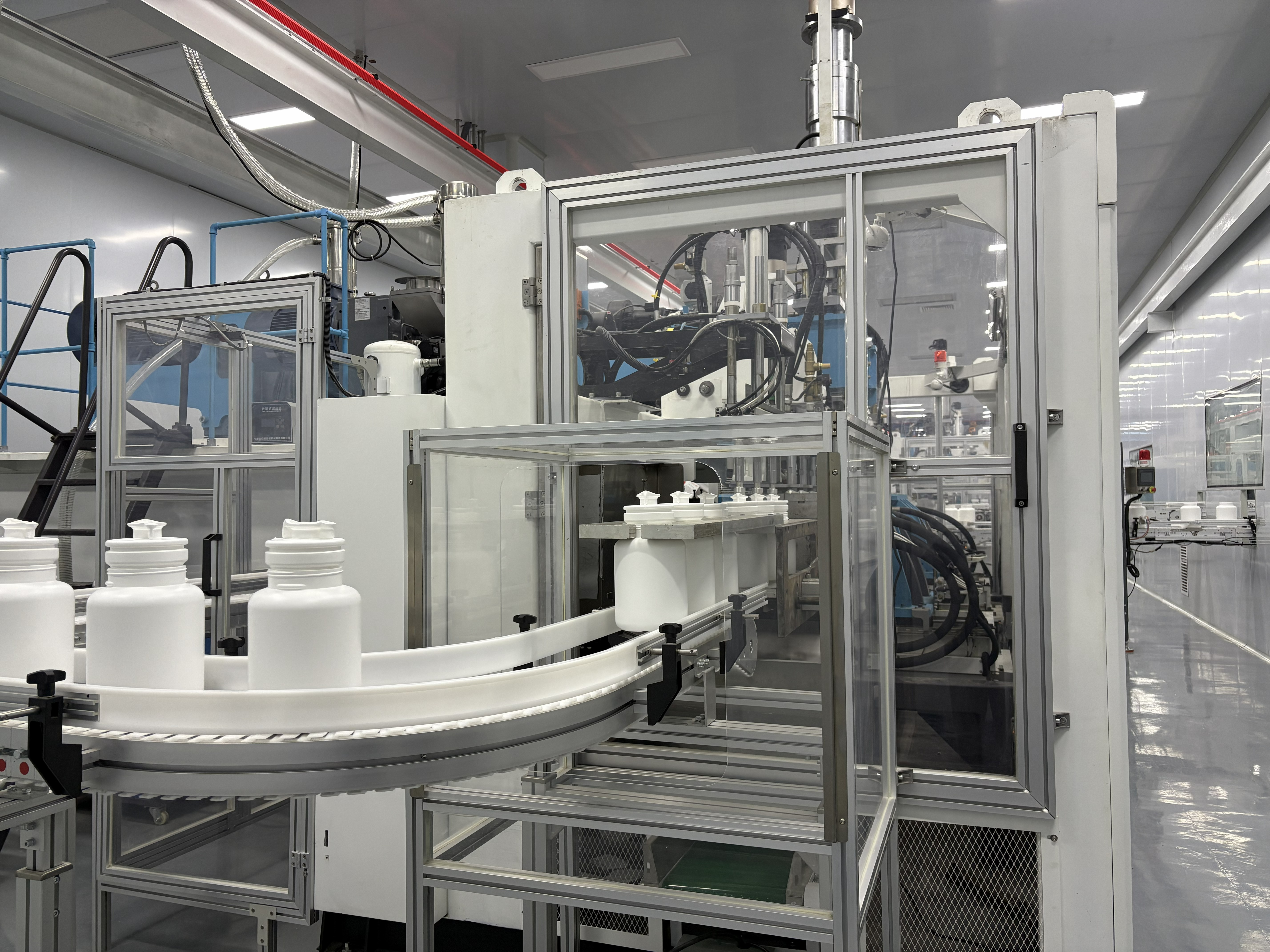
Long-term supply fit depends on capacity, quality systems, and coordination across design, tooling, production, and fulfillment.
For a sports nutrition brand moving beyond stock bottles, RTCO fits the framework as a candidate for an integrated custom program rather than as a maker of one isolated component. The buyer should still test the fit on four points: whether the proposed container and closure system match the product format; whether the compliance documentation matches the destination market; whether the MOQ and project timeline match the launch plan; and whether the supplier's quality and after-sales process is clear enough for repeat orders.
Custom versus stock: a fair comparison
A fair comparison should not treat stock as obsolete. Stock packaging remains useful for early validation, limited budgets, and products that do not yet need a distinctive container. Custom packaging becomes more relevant when the brand has a stable product, a differentiation plan, and enough demand visibility to support tooling and minimum order quantities.
| Dimension | Stock bottle path | Custom turnkey path |
|---|---|---|
| Differentiation | Limited by available molds and finishes | Can use custom tooling, finishes, closures, and accessories |
| Upfront complexity | Lower; faster to quote and sample | Higher; requires design, tooling, and sample approval |
| Compliance evidence | Depends on the stock supplier's documentation | Should be planned into material and process selection |
| MOQ and trial orders | Often simpler for small initial volumes | Typically 10,000 to 30,000 pieces; trial orders below standard MOQ available upon request |
| Lead time | Faster initial availability if stock is on hand | Tooling adds upfront time; integrated programs can shorten overall project lead time by 30% to 50% after approval, based on RTCO comparison material |
| Total cost | Lower upfront cost; less control over differentiation | Higher upfront investment; RTCO comparison material reports 15% to 30% lower total end-to-end comprehensive cost versus fragmented supply chains |
| Best fit | Market test, limited edition, uncertain demand | Stable brand, repeat orders, differentiation, and long-term supply planning |
The main limitation of the custom path is real. Tooling and sampling consume time and management attention before the first saleable unit is produced. MOQ can be difficult for a brand with uncertain demand. If the product design is still changing, a stock bottle may be the more disciplined choice. Custom packaging should be adopted when the product, market, and supply plan are stable enough to justify the commitment.
Market signals supporting a structured decision
Plastic remains the dominant material in supplement packaging, holding approximately 73.8% market share in 2025, according to Grand View Research. The same source estimated the global nutraceutical packaging market at USD 5.05B in 2024, with plastic segments at 58.3% revenue share. Estimates vary: a MarketsandMarkets figure places the market at USD 3.67B in 2025, showing that definitional differences matter when buyers use market data in planning. The practical implication is not that one number is definitive. It is that plastic packaging remains a large, competitive category where differentiation and compliance are both under pressure.
The protein powder packaging segment is projected to reach USD 44.52B by 2035, with a CAGR of 5.01% from 2026, according to Future Market Insights. That outlook supports the case for treating packaging as part of product strategy rather than as a late-stage purchasing task. As more brands enter sports nutrition, stock formats alone may not create enough distinction. At the same time, regulatory pressure on recyclability and recycled content is increasing. EU Regulation 2025/40 requires all packaging to be recyclable by 2030 and plastic packaging to contain at least 30% recycled content by 2030. Buyers should include PCR options and recyclability in the decision matrix now, not after tooling is approved.
Future outlook
The next phase of sports nutrition packaging will likely be shaped by three pressures: product proliferation, compliance documentation, and supply localization. Product proliferation favors packaging systems that can support multiple formats without rebuilding the entire supply chain. Compliance documentation favors suppliers that can connect material selection, quality control, and testing into one evidence trail. Supply localization favors partners that can combine regional manufacturing and warehousing with a broader global network.
For buyers, the most useful response is a repeatable decision process. A brand should be able to score stock and custom options against the same five lenses, then revisit the decision as volume and market requirements change. Custom packaging is not a one-time purchase. It is a design, tooling, quality, and supply relationship. The framework only works if the buyer keeps updating it with real project data.
A detailed RTCO sports nutrition packaging catalogue is available for download: RTCO sports nutrition packaging catalogue.
FAQ
What should buyers compare first when choosing between stock and custom sports nutrition packaging?
Buyers should first compare product format fit and protection requirements. The container, closure, liner, and dosing accessory must work together for powder, capsule, tablet, gummy or gel, or liquid products. After that, compare compliance documentation, MOQ, lead time, differentiation value, and long-term supply fit. A stock option may be sufficient when demand is uncertain and the product does not need a distinctive pack.
What does ISO 15378:2017 cover for supplement packaging?
ISO 15378:2017 specifies quality management system requirements for manufacturers of primary packaging materials for medicinal and nutraceutical products, integrating GMP principles. It is relevant when buyers need a structured way to review quality management for primary packaging. The standard should be considered alongside the specific market rules that apply to the finished supplement.
What is a typical MOQ for custom sports nutrition packaging?
For custom programs, MOQ is typically 10,000 to 30,000 pieces depending on the product. First trial orders below the standard MOQ are available upon request. Buyers should confirm MOQ together with tooling, sampling, decoration, and material requirements, because the commercial threshold can change with the project specification.
How should buyers evaluate lead time and total cost between custom and stock packaging?
Buyers should compare the full project timeline, not only production time. Custom packaging adds design, tooling, and sample approval before production. RTCO comparison material reports that an integrated model can shorten overall project lead time by 30% to 50% and reduce total end-to-end comprehensive cost by 15% to 30% versus fragmented supply chains. Those figures should be validated against the buyer's own scope, MOQ, and delivery terms.
What should long-term supplier evaluation include beyond unit price?
Long-term evaluation should include production capacity, quality control, raw material qualification, third-party testing options, change control, after-sales support, and regional fulfillment. For custom sports nutrition packaging, the supplier should also be able to explain how design, tooling, manufacturing, finishing, and logistics connect. A lower unit price does not compensate for weak quality escalation or unclear supply continuity.
Есть вопросы или нужны дополнительные детали?
Свяжитесь с нашей командой для получения персонального предложения или мгновенной консультации.
Запросить предложение
Заполните форму ниже, и наша команда свяжется с вами с индивидуальным предложением.
Прямой чат WhatsApp
Предпочитаете общаться в реальном времени? Напишите нам в WhatsApp для мгновенной помощи и быстрых ответов.
- Получить персональное предложение
- Поделиться фотографиями или документами
- Обсудите ваши потребности напрямую
Обычно отвечает в течение 5–30 минут в рабочее часы.