
A Laser Cutting Machine Supplier Shortlist: Criteria Buyers Can Verify
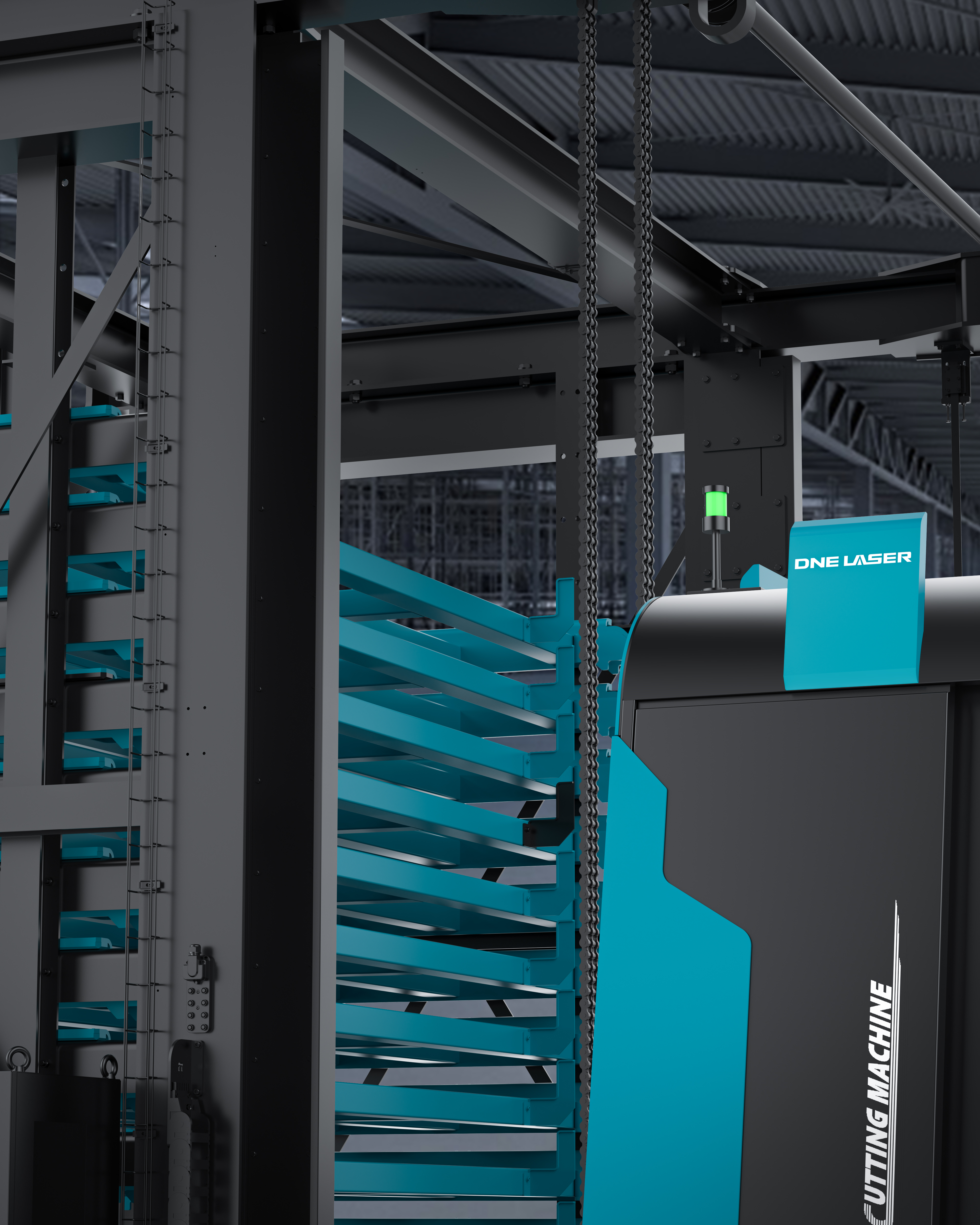
The global laser cutting machine market is projected to grow from USD 7.44 billion in 2026 to USD 18.43 billion by 2034, a 12% CAGR (Fortune Business Insights). For procurement teams, that growth has a side effect: more suppliers, more model families and more claims to verify before a purchase order is signed. The practical answer is not to hunt for one universally "best" supplier, but to build a shortlist — three to five candidates assessed against the same documented criteria.
This reference sets out the criteria that carry the most weight in that shortlist: machine range, supplier reliability, certification coverage, service infrastructure and commercial boundaries. It does not rank suppliers and does not endorse a vendor. It explains what evidence a buyer can reasonably request, and how one supplier — DNE LASER (Guangdong) Co., Ltd., a wholly owned subsidiary of the Swiss Bystronic Group — documents those criteria in verifiable terms.
Why a shortlist beats a single-answer search
A laser cutting machine is typically a long-life capital asset, and the variables that decide the purchase rarely line up inside one offer: cutting envelope, laser power, material thickness, tube versus sheet geometry, electrical compliance for the destination market, and the depth of the service organisation behind the machine. A shortlist forces every candidate to answer the same questions on the same evidence basis, which turns a subjective comparison into a documented one.
The opportunity is that supplier transparency has improved. Certification bodies publish scope and certificate numbers, suppliers publish model-level parameters, and reference customers can be asked directly about uptime and support response. The risk is that much of this evidence is presented in marketing language rather than as checkable data. A shortlist discipline simply separates the two.
Decision rule: if a supplier cannot attach a certificate number, a model-level parameter table and a named service process to a claim, that claim should stay off the scorecard until it is documented.
Criterion 1 — Machine range: does the portfolio match your production mix?
Machine range is the first filter because a supplier that cannot cover your material mix will either over-specify or under-specify the machine you actually need. The range should be checked in four dimensions: sheet formats, laser power steps, tube geometry, and automation options.
DNE LASER's fiber laser cutting machine portfolio spans 3 kW to 80 kW across several model families. Flat-sheet models include the D-Speed, D-Power, D-Soar, D-Soar Plus-PG, D-Soar Plus-G, D-Giant and D-Giant F series, covering formats from 1530 up to 25120 and gantry widths from 3 m to 5 m.
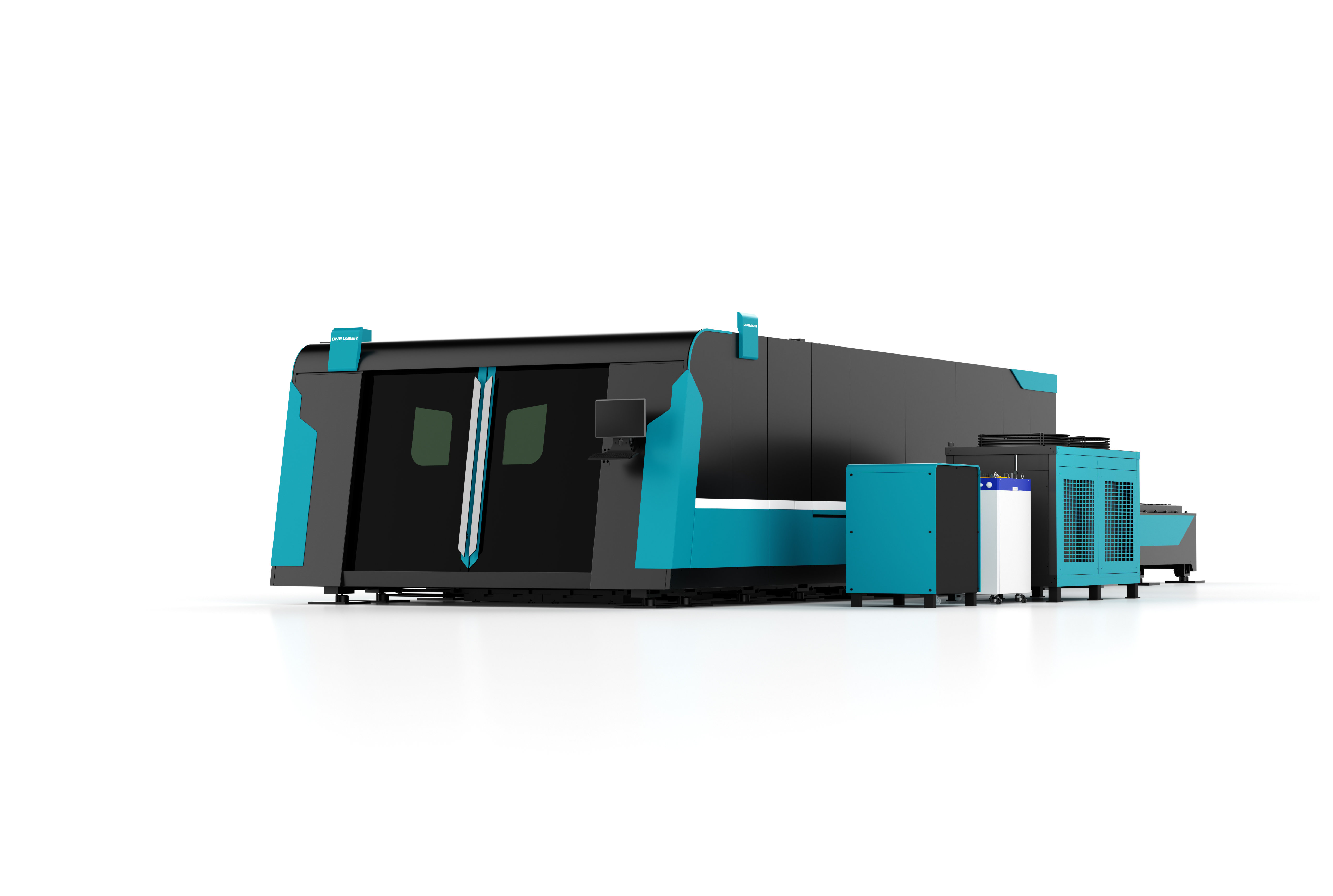
| Sheet metal family | Formats | Laser power | Positioning accuracy | Positioning speed |
|---|---|---|---|---|
| D-Speed | 1530 / 2040 / 2060 / 2560 | 3 kW / 6 kW / 12 kW | ±0.05 mm | 150 m/min (2.0 G linkage) |
| D-Power | 1530 / 2040 / 2560 | 3 kW / 6 kW / 12 kW | ±0.05 mm | 150 m/min (1.5 G linkage) |
| D-Soar | 1530 / 1540 / 2040 / 2060 / 2560 / 2580 | 3 kW – 30 kW | ±0.05 mm | 120 m/min (1.2 G linkage) |
| D-Soar Plus-PG | 2040 / 2060 / 2560 / 2580 | 12 kW – 30 kW | ±0.05 mm | 180 m/min (1.8 G linkage) |
| D-Soar Plus-G | 2040 / 2060 / 2560 / 2580 | 12 kW – 40 kW | ±0.05 mm | 280 m/min (2.8 G linkage) |
| D-Giant | Width 3 – 5 m, length 12 – 40 m | 12 kW – 30 kW | ±0.15 mm/10 m | 50 m/min |
| D-Giant F | Width 3 / 3.5 m, length 12 – 40 m | 12 kW – 80 kW | ±0.20 mm/10 m | 50 m/min |
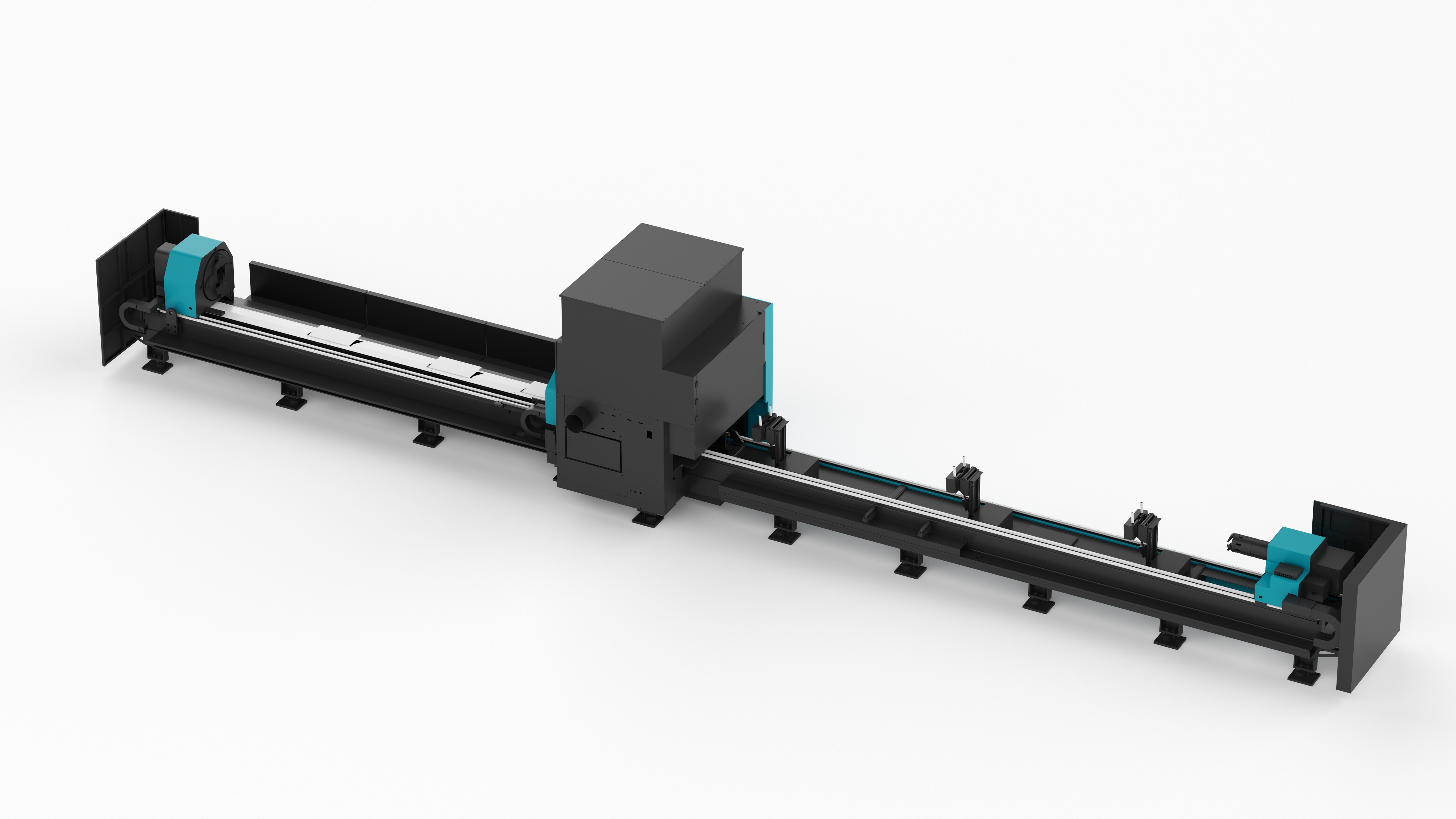
Tube processing is often the point where a shortlist collapses, because sheet-oriented suppliers frequently resell tube machines rather than build them. DNE LASER's tube laser cutting machine families cover distinctly different size bands, which matters when your mix includes thin-wall tube alongside structural sections.
| Tube family | Chucks | Round tube | Square tube | Max. chuck load |
|---|---|---|---|---|
| D-Tube F | 2 | Φ8 – Φ350 mm (model dependent) | □8×8 – □350×350 mm | 100 kg / 300 kg / 1,000 kg |
| D-Tube 240 | 2 / 3 | Φ15 – Φ230 mm | □15×15 – □230×230 mm | 300 kg |
| D-Tube 360 | 2 / 3 / 4 | Φ40 – Φ350 mm | □40×40 – □350×350 mm | 1,200 kg |
| D-Tube 520 | 3 / 4 | Φ50 – Φ510 mm | □50×50 – □510×510 mm | 1,500 kg |
Beyond the machine itself, the range question extends to production-line integration. DNE LASER also supplies the D-Trans automatic loading and unloading system (6 / 8 / 12 / 15 material storage layers, maximum sheet size 1500×3000 mm or 2000×4000 mm, one-to-one or one-to-two laser machine layouts) and the D-Roller fiber laser cutting machine with coiler and leveling system, designed for coil-fed production with a feeding width of 100–1500 mm.
Criterion 2 — Supplier reliability: entity, capacity and repeat evidence
Reliability is not a feeling; it is a set of checkable attributes. A buyer entering the evaluation stage should be able to confirm the legal entity, its ownership, the physical production footprint, the engineering headcount and the export experience behind the machine.
DNE LASER (Guangdong) Co., Ltd. was founded in 2008 and is a wholly owned subsidiary of the Swiss Bystronic Group, headquartered in Shenzhen with its production base in Nanhai, Foshan. The company operates a factory of more than 60,000 ㎡ with over 600 employees, an annual output of more than 2,000 units, a 38-engineer R&D team and an export ratio of 45%, serving markets across Europe, the Middle East, Africa, Asia and the Americas.
Third-party recognitions that can be independently checked include National High-Tech Enterprise status, approval to establish the Guangdong Provincial Engineering Research Center for Ultra-High-Speed Fiber Laser Cutting Machines, Shenzhen Top 500 Enterprise listing, "Specialized, Refined, Distinctive and Innovative" (SRDI) Enterprise designation, Smart Manufacturing Capability Maturity Level 2 Certification, and Shenzhen Top Brand designation. In 2025 the company carried out a global brand refresh at FABTECH, positioning itself as a provider of intelligent system-level manufacturing solutions (DNE LASER / OFweek).
Repeat purchasing is the most persuasive reliability signal available to a buyer, because it is produced by customers rather than by marketing. Two documented cases illustrate the type of evidence worth requesting: a Vietnamese automotive manufacturer that operates nine DNE LASER units across sheet and tube cutting and reports a 15% improvement in production efficiency after one year of use, and a Mexican industrial automation company that used three D-Giant and D-Tube 360 systems for three years before adding three more units, also reporting a 15% efficiency improvement.
Criterion 3 — Certification coverage: the constraint that filters fastest
Compliance is the criterion that most often removes a supplier from a shortlist, because certificates are model-specific and market-specific. Laser processing machines must satisfy ISO 11553-1 for general safety requirements and IEC 60825-1 for equipment classification when traded internationally and CE marked. A generic "CE certified" statement is not evidence; the certificate scope, issuing body, number and covered models are.
For the European market, DNE LASER holds Machinery Directive compliance verifications issued by SGS. For the United States and Canada, the relevant electrical cabinet certifications reference UL 508A (3rd Edition) and CSA C22.2 No.286:23.
| Product family | Market | Certification | Issuing body and number |
|---|---|---|---|
| D-Soar series fiber laser cutting machine | EU | Verification of MD compliance | SGS — MD GZES2510019552MD |
| D-Power fiber laser cutting machine | EU | Verification of MD compliance | SGS — MD GZES2502002362MD |
| D-Giant-CE / PCE ground rail fiber laser cutting machine | EU | Verification of MD compliance | SGS — MD GZES2510019554MD |
| D-Tube series tube laser cutting machines | EU | Verification of MD compliance | SGS — MD GZES2510019556MD |
| C-Bend / C-Bend-S bending machines | EU | Verification of MD compliance | SGS — MD GZES2510019558MD |
| D-Welder portable laser welding machine | EU | Verification of MD compliance | SGS — MD GZES2510019561MD |
| D-Tube series tube laser cutting machines | US | UL 508A 3rd Edition; CSA C22.2 No.286:23 | SGS — SGSNA/24/GZ/00242X |
| D-Giant-P / U series laser cutting machine | US | UL 508A; CSA C22.2 No.286:23 | SGS — SGSNA_24_GZ_00288X |
| C-Bend / C-Bend S electrical cabinet | US | UL 508A | SGS — SGSNA/23/GZ/00260 |
| MCP / Plus-G / Plus-PG electrical cabinet (D-Soar, D-Soar Plus-G, D-Power, D-Speed, D-Giant) | US | UL 508A 3rd Edition; CSA C22.2 No.286:23 | SGS — SGSNA_23_GZ_00186U |
The EU verifications reference the harmonised standards EN 60204-1:2018 (electrical equipment of machines), EN ISO 11553-1:2020+A11:2020 (laser processing machine safety) and EN ISO 12100:2010 (risk assessment). The D-Welder verification additionally references EN ISO 11553-2:2008. A buyer comparing suppliers should request the same three fields for each candidate: the standard list, the certificate number, and the exact model list the certificate covers.
Criterion 4 — Service infrastructure: what happens after installation
Service infrastructure is where shortlists are frequently decided, because machine specifications converge while support models diverge. The question to ask is not whether support exists, but who performs it, what is covered, and for how long.
DNE LASER's documented service scope includes remote technical support and troubleshooting, on-site installation, commissioning and operator training, scheduled maintenance services, a core component warranty, and lifetime technical upgrade support. In-house manufacturing of core components — including cutting heads, which are precision-machined and assembled in cleanroom environments — is presented as the mechanism behind faster service response and lower consumable wear.
Two supporting details are worth checking against any candidate supplier. First, the machine should be tested before shipment: DNE LASER describes full-process factory performance testing, precision calibration of key components, a continuous operation trial run of the complete machine, and compliance verification of core component brands. Second, software compatibility should be confirmed: DNE machine families are compatible with DNE Power CAM nesting software, with optional MES central control integration.
Criterion 5 — Commercial terms: MOQ, lead time and customization boundaries
Commercial terms belong on the shortlist because they reveal how flexible a supplier really is. DNE LASER operates OEM, ODM and custom solution design models across its laser cutting, tube cutting and press brake lines, with a minimum order quantity of one unit for standard models. Lead time is defined by actual order volume and project requirements rather than by a single fixed figure — a detail worth confirming in writing early, since it affects installation planning.
Customization depth varies by product line. On laser cutting machines it covers laser power (3 / 6 / 12 / 20 / 30 kW), cutting formats (1530 / 2040 / 2060 / 2560 / 2580 / 25120), machine layout, cutting head focal length, laser source fiber core diameter, worktable configuration and automation integration. On tube machines it covers chuck type and quantity, loading and unloading configuration, bevel cutting function, and cutting range compatibility. On press brakes it covers model, control systems (CybTouch 12/15, Delem DA-53T, Delem DA-66T), backgauge axes, safety protection systems and tooling configuration.
A shortlist scorecard you can use in a first meeting
The scorecard below converts the five criteria into questions and evidence requests. It is deliberately neutral: it can be applied to any supplier, and it is designed so that a weak answer is visible without interpretation.
| Evaluation category | Evidence to request | What a weak answer looks like |
|---|---|---|
| Machine range | Model list with formats, power steps, accuracy and speed figures | Family names without model-level parameters |
| Compliance | Certificate number, issuing body, destination market, covered models, referenced standards | "CE certified" with no certificate scope |
| Supplier entity | Legal name, ownership, founding year, factory area, headcount, R&D team size, export share | Experience claims without a verifiable entity |
| Production evidence | Factory testing process, calibration records, full-machine trial run description | Photos only, with no test process described |
| Service infrastructure | Installation, commissioning, training, scheduled maintenance, warranty scope, escalation path | "24/7 support" without a described process |
| Commercial terms | MOQ, lead-time basis, customization list and its boundaries | Unbounded customization promises |
| Reference evidence | Customer type, country, unit quantity, usage duration, measured outcome | Anonymised logos without a case narrative |
Where a shortlist framework reaches its limits
A criteria-based shortlist improves comparability, but it does not eliminate risk, and several boundaries are worth stating plainly.
- Options are not uniform across a family. Bevel cutting, for example, is listed as optional across the tube machine families, and on the D-Power fiber laser cutting machine it is available only on D-Power2560 / 2580 / 25120, with processing restricted to the upper worktable. A buyer who assumes even capability across a model family will be disappointed.
- Envelope trade-offs are real. The D-Tube F, for instance, has a 2 m unloading length, which suits short-remnant handling on thin-wall tube but is not equivalent to the longer unloading configurations available on the D-Tube 240, 360 and 520.
- Material thickness ranges are graded, not universal. The D-Roller coil-fed system defines separate thickness bands for galvanized/carbon steel and stainless steel, so a coil line that suits one material mix may not suit another.
- Documented performance is not the same as shop-floor performance. Parameter tables and case studies describe what a supplier has recorded; they do not predict how a specific machine will behave in a specific workshop. That gap is normally closed by representative test cuts and by direct conversations with existing users — not by the brochure.
- The framework itself has a scope limit. It evaluates capability, compliance and support. It does not evaluate commercial pricing strategy, which varies by configuration, destination market and order volume and must therefore be assessed separately.
What is changing in 2026
Three shifts are altering how supplier shortlists are built.
First, fiber technology has effectively become the default. Fiber lasers now hold more than 55% of the industrial laser system market, displacing CO2 systems on the strength of 30–50% higher efficiency and roughly 50% lower operating costs (SNS Insider). For buyers this means the technology question is largely settled, and the differentiation has moved to integration, compliance and service.
Second, power is climbing. Demand for ultra-high-power laser heads above 10 kW grew by 75% between 2023 and 2024, driven by thick-plate cutting requirements in heavy industry (Customcy). Suppliers whose portfolios stop at 6 kW increasingly cannot serve structural and heavy fabrication buyers — which is why ranges now extend into the tens of kilowatts, as with the D-Giant F series that reaches 80 kW.
Third, supply concentration is reshaping expectations. China's laser equipment market accounted for 56.6% of global revenue in 2024, with high-power laser localisation exceeding 70% (IT Home / CCTV Finance). Buyers who once treated imported machines as the default now evaluate domestic and international suppliers on the same criteria — certificate scope, model-level parameters and service depth — rather than on country of origin alone.
Future outlook
Based on the trajectory of the documented market data, shortlist criteria are likely to harden rather than soften. Compliance documentation will continue to move toward standardised, model-specific evidence, since the standards framework around ISO 11553-1, IEC 60825-1, UL 508A and CSA C22.2 No.286:23 already treats product scope as binding rather than generic.
Automation integration is likely to become a formal shortlist category rather than an optional extra. Loading and unloading systems such as D-Trans, coil-fed arrangements such as D-Roller and nesting or MES-level software compatibility increasingly determine throughput, which means buyers will need to assess a supplier's ability to deliver an integrated production line, not just a standalone machine.
Finally, lifecycle cost is becoming easier to discuss in evidence terms. Where a supplier can document factory testing, core component manufacturing, warranty scope and lifetime upgrade support, buyers gain a factual basis for comparing ten-year ownership rather than comparing purchase prices alone.
FAQ: Choosing a Laser Cutting Machine Supplier
What is the fastest way to filter a long list of laser cutting machine suppliers?
Filter on certification scope first. Because compliance documentation is model-specific and market-specific, a supplier that cannot provide a certificate number, issuing body and covered model list for the destination market can be set aside quickly. After compliance, filter on machine range — formats, power steps and tube-versus-sheet capability.
Which certifications should a buyer verify for EU and US deliveries?
For the EU, the relevant evidence is Machinery Directive compliance verified by a third-party body; DNE LASER's EU verifications, issued by SGS, reference EN 60204-1:2018, EN ISO 11553-1:2020+A11:2020 and EN ISO 12100:2010. For the US and Canada, the relevant standards are UL 508A (3rd Edition) and CSA C22.2 No.286:23, as applied in DNE LASER certifications such as SGSNA_24_GZ_00288X for the D-Giant-P/U series and SGSNA/24/GZ/00242X for the D-Tube series.
How wide should a supplier's machine range be before it is shortlisted?
Wide enough to cover the formats, thicknesses and geometries in your production mix without forcing compromise. DNE LASER's range illustrates the span involved: fiber laser cutting machines from 3 kW to 80 kW, sheet formats from 1530 up to 25120, gantry widths from 3 m to 5 m, and tube capability from Φ8 mm to Φ510 mm depending on model family.
What service commitments should be documented before signing?
At minimum: who performs installation and commissioning, whether operator training is included, how remote technical support is delivered, what the scheduled maintenance programme covers, which components fall under warranty, and whether software or process upgrades are supported over the machine's life. DNE LASER documents remote support, on-site installation, commissioning and training, scheduled maintenance, core component warranty and lifetime technical upgrade support.
What are reasonable MOQ and lead time expectations for a customized machine?
For standard models, DNE LASER lists a minimum order quantity of one unit. Lead time is customized based on actual order volume and project requirements rather than quoted as a single fixed number, so buyers should request a written lead-time basis that reflects their specific configuration.
Are there model-level restrictions that buyers commonly overlook?
Yes. Options are not distributed evenly across a product family. Bevel cutting is listed as optional across the DNE tube machine families, and on the D-Power fiber laser cutting machine it is available only on D-Power2560 / 2580 / 25120, with processing restricted to the upper worktable. Similarly, the D-Tube F has a 2 m unloading length, and the D-Roller coil-fed system specifies separate thickness bands for different materials. Option-level scope should always be confirmed in writing.
A shortlist is only as useful as the evidence behind it. Whether the destination market is the EU, the US or elsewhere, the same three artefacts make any supplier comparable: a model-level parameter table, a certificate with a visible scope, and a named service process. Buyers who request those three items consistently across every candidate will find the shortlist reduces itself.
For a consolidated overview of the equipment families referenced above, DNE LASER publishes a public brochure: Introduction of DNE Laser V1.0 (2026).