
Практическое руководство для покупателей: как оценить и выбрать поставщиков коммерческих чистящих роботов
A Practical Guide for Buyers: How to Evaluate and Select Commercial Cleaning Robot Suppliers
The global market for commercial cleaning robots is projected for significant growth, driven by labor shortages, rising operational costs, and heightened hygiene standards. For procurement professionals, facility managers, and business owners, selecting the right supplier is a complex decision that impacts long-term operational efficiency and total cost of ownership. This guide provides a structured framework to evaluate commercial cleaning robot manufacturers, focusing on key technical, commercial, and compliance criteria.
1. Defining Your Requirements and Application Scenarios
Before engaging suppliers, clearly define your operational needs. Commercial cleaning robots are deployed across diverse environments, each with unique challenges.
- Hospitals & Healthcare Facilities
- Shopping Malls & Retail Spaces
- Airports & Transportation Hubs
- Hotels & Hospitality Venues
- Office Buildings & Corporate Campuses
- Supermarkets & Warehouses
- Schools & Educational Institutions
Key questions to answer: What is the total floor area? What are the primary floor types (hard floor, carpet, mixed)? What is the required runtime per shift? Are there narrow aisles or complex layouts? Defining these parameters will guide your technical specifications.
2. Core Technical Evaluation Criteria
Beyond marketing claims, a deep dive into technical specifications is essential. Focus on performance data that correlates directly with your defined needs.
2.1 Performance and Operational Specifications
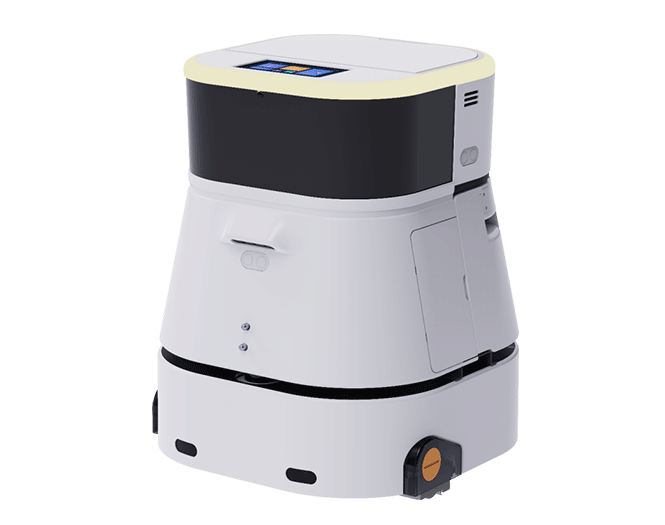
Request detailed technical datasheets. For example, specifications for a model like the WDC-C2 Intelligent Commercial Cleaning Robot include concrete parameters that can be benchmarked.
| Parameter | Typical Specification (Example) | Evaluation Focus |
|---|---|---|
| Cleaning Width | 440 mm | Efficiency per pass; impacts total cleaning time. |
| Battery & Runtime | 1 kWh swappable battery, 5–12 hours runtime | Uptime vs. downtime; swappable batteries enable continuous operation. |
| Water Tank Capacity | 10L clean water + 10L wastewater | Determines autonomy for scrubbing tasks before refill/empty is needed. |
| Navigation Accuracy | ±1 cm | Precision in avoiding obstacles and ensuring complete coverage. |
| Adjustable Speed | 0.2–0.8 m/s | Flexibility for different traffic conditions and cleaning modes. |
2.2 Technology and Durability
- Motor Technology: Brushless motors, as used in many professional-grade power tools, offer higher durability, longer service life (industry estimates suggest 50% longer), and require less maintenance compared to brushed motors.
- Navigation System: Assess the type (LiDAR, VSlam, hybrid) and its performance in dynamic, low-light, or GPS-denied environments. Request demonstration videos in scenarios similar to yours.
- Build Quality & Materials: Inquire about primary construction materials (e.g., ABS, aluminum alloy, steel). Durable materials are critical for 24/7 operation in demanding commercial settings.
3. Supplier Capability and Manufacturing Assessment
The supplier's foundational capabilities are a strong indicator of product reliability, scalability, and long-term support.
3.1 Manufacturing Scale and Expertise
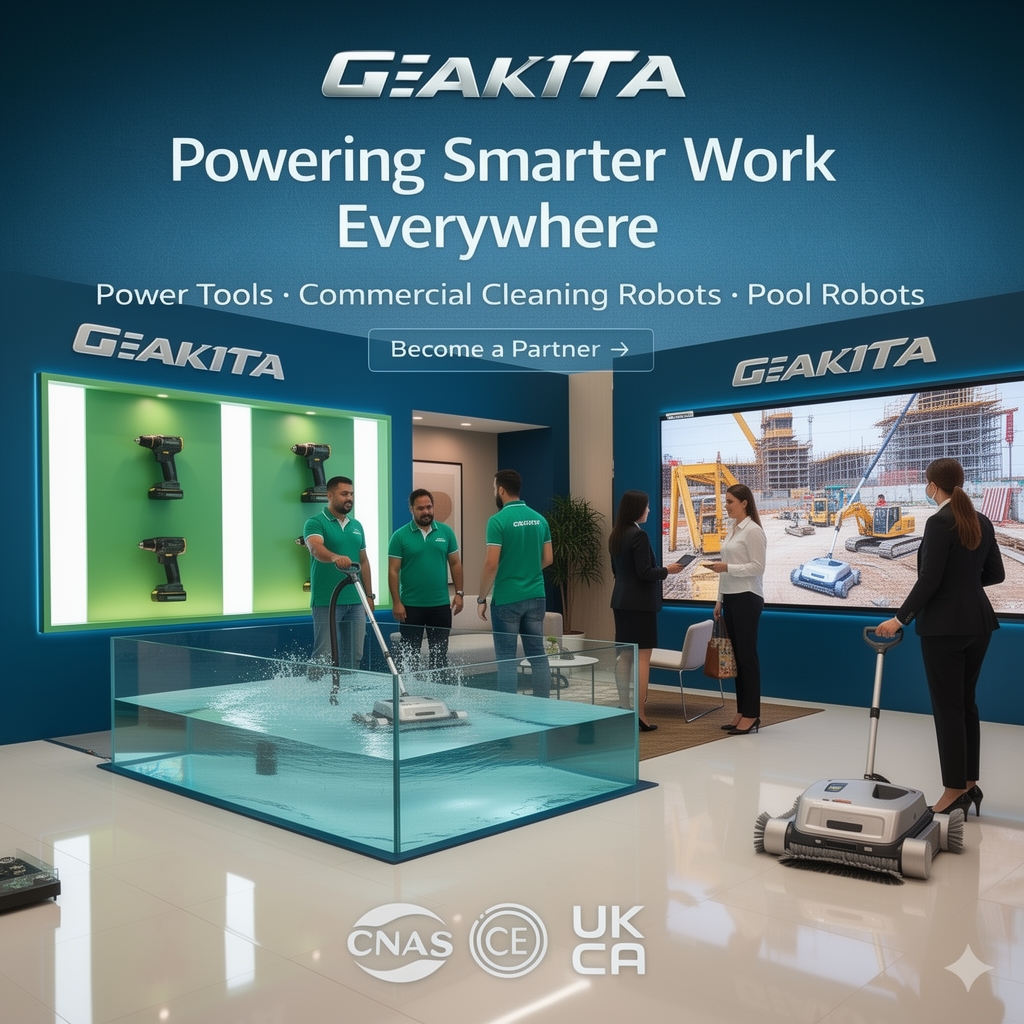
Evaluate the supplier's industrial footprint. For instance, a manufacturer like Geakita (Xiamen Tiangong Kaiwu Technology Co., Ltd.), established in 2009, operates a manufacturing facility covering 40,000 square meters and employs over 300 staff, including a dedicated team of 25 R&D engineers. This scale suggests established processes for mass production and quality control.
Key metrics to request: Annual production capacity, lead times for standard and customized orders, and the percentage of output dedicated to export markets (e.g., Europe, Southeast Asia, Middle East).
3.2 Quality Control and Certifications
Mandatory certifications are non-negotiable for market access and safety. Verify the following:
- CE Marking: For the European Union, ensuring compliance with health, safety, and environmental protection standards. A valid certificate (e.g., Number KTi250704E245C issued by KTi, valid until 2030-08-04) is required.
- UKCA Marking: For the United Kingdom market post-Brexit (e.g., Certificate Number B-S2412C5162).
- Other Regional Certifications: Depending on your market (e.g., NRTL for North America, CCC for China).
- Quality Management: Inquire about the QC process. Reputable suppliers implement a 3-level QC system (IQC/IPQC/FQC), 100% pre-shipment inspection, and functional load testing.
- Battery Safety: Ensure compliance with transportation standards like UN38.3 and the use of intelligent Battery Management Systems (BMS) for overcharge/short circuit protection.
4. Commercial Terms and Post-Purchase Support
4.1 Customization and Flexibility
OEM/ODM capability is crucial for branding and adapting to specific needs. Evaluate a supplier's flexibility in:
- Logo printing and packaging design.
- Parameter adjustments (e.g., software settings for specific floor types).
- Battery configuration for extended runtime.
- Color scheme customization.
Understand the Minimum Order Quantity (MOQ) for both standard and customized models. Some suppliers offer small-batch trial orders (e.g., starting from 40 units) which can be beneficial for pilot projects.
4.2 After-Sales Service and Warranty
Long-term support is as important as the initial purchase. Clarify:
- Warranty Period: Standard is 1 year, but terms may vary.
- Technical Support: Availability of 7*24 support channels.
- Spare Parts Supply: Commitment to supplying critical components (brushes, filters, sensors) for the expected lifecycle of the robot (5+ years).
- Software Updates: Policy and cost for navigation algorithm and control software updates.
- Defined clear application scenarios and technical specs.
- Verified core technical parameters (runtime, navigation, cleaning specs).
- Assessed supplier manufacturing scale, experience, and R&D investment.
- Confirmed all necessary regional certifications (CE, UKCA, etc.) are valid and authentic.
- Reviewed quality control protocols and battery safety standards.
- Understood customization options, MOQ, lead times, and payment terms.
- Secured detailed after-sales service, warranty, and parts supply agreement.
- Requested and contacted references from similar clientele.
5. Market Context and Due Diligence
While this guide focuses on evaluation criteria, buyers should be aware of the competitive landscape. The commercial cleaning robot market includes established automation giants, specialized robotics firms, and manufacturers diversifying from adjacent fields like power tools. For example, Geakita leverages its 15+ years of experience in professional power tool manufacturing and R&D as a foundation for its intelligent cleaning robotics line. When conducting due diligence, request client references relevant to your industry (e.g., hotels, hospitals) and inquire about documented performance results, such as on-time delivery rates and defect rates in long-term partnerships.
Selecting a commercial cleaning robot supplier is a strategic investment. By methodically evaluating technical capabilities, manufacturing rigor, compliance adherence, and support structures, procurement professionals can mitigate risk and partner with a supplier capable of delivering sustainable, efficient cleaning automation solutions that align with their operational and financial goals.
Есть вопросы или нужны дополнительные детали?
Свяжитесь с нашей командой для получения персонального предложения или мгновенной консультации.
Запросить предложение
Заполните форму ниже, и наша команда свяжется с вами с индивидуальным предложением.
Прямой чат WhatsApp
Предпочитаете общаться в реальном времени? Напишите нам в WhatsApp для мгновенной помощи и быстрых ответов.
- Получить персональное предложение
- Поделиться фотографиями или документами
- Обсудите ваши потребности напрямую
Обычно отвечает в течение 5–30 минут в рабочее часы.