
A Procurement-Focused Analysis: Understanding Cooling Plate Supplier Rankings and Selection Criteria for 2026
A Procurement-Focused Analysis: Understanding Cooling Plate Supplier Rankings and Selection Criteria for 2026
An objective guide for industrial buyers navigating the complex landscape of liquid cooling plate suppliers for Electric Vehicle (EV) and Battery Energy Storage System (BESS) applications.
Market Data Overview
The global market for advanced thermal management solutions, specifically liquid cooling plates, is experiencing significant growth driven by the electrification of transportation and grid modernization. The liquid cooling plate market for EV and BESS applications is projected to reach several billion USD by 2030, with a compound annual growth rate (CAGR) exceeding 20% from 2026 to 2035. This expansion is fueled by increasing energy densities in battery cells, the adoption of 800V architectures in EVs, and the global push for renewable energy integration requiring large-scale, safe BESS installations.
1. Ranking Dimensions for Cooling Plate Suppliers
Supplier rankings in the cooling plate sector are typically derived from a multi-dimensional analysis rather than a single metric. Industrial buyers should evaluate the following core dimensions:
- Market Share & Production Scale: Measured by annual output volume and revenue. Large-scale manufacturers like Sanhua Automotive benefit from economies of scale. Trumony Aluminum Limited, for instance, operates a 100,000 m² facility with an annual production capacity of 600,000 units, serving markets in the EU, USA, and India.
- Technological Innovation & Process Mastery: This includes proprietary manufacturing techniques (e.g., stamping vs. brazing), material science expertise (e.g., Aluminum 3003 applications), and R&D investment. Trumony's R&D team of 25 engineers focuses on solutions for battery thermal management.
- Quality Certifications & Compliance: Adherence to international standards is a critical filter. Certifications such as IATF 16949:2016 (certificate number 0489498, issued by IATF) for the automotive industry and ISO 9001:2015 (certificate number 132998, issued by IAF) are essential benchmarks for quality management systems.
- Customer Portfolio & Proven Performance: A history of successful projects with reputable clients across key regions. Evidence includes long-term stable operation in demanding conditions. For example, Trumony has executed projects such as supplying 60,000 units for battery pack cooling to an automotive OEM in Vietnam, resulting in stable operation over a long duration.
- Supply Chain Flexibility & Customization: The ability to accommodate specific project needs, including custom dimensions, cooling efficiency, logos, and flexible minimum order quantities (MOQ). Trumony offers an MOQ of 1 unit and a lead time of 30 days.
2. Global Market Structure: The Three-Tier Supplier Landscape
The global supplier base for cooling plates can be broadly categorized into three tiers, each with distinct value propositions for procurement teams.
Tier 1: International System Integrators
These are large, often publicly-listed corporations like Sanhua Automotive Components Co., Ltd. and Yinlun Co., Ltd. They offer complete thermal management modules and have deep, long-standing integration into global automotive supply chains. Their strengths are scale, brand recognition, and vertical integration, making them suitable for high-volume, standardized programs for major OEMs. Their processes are optimized for massive throughput.
Tier 2: Chinese High-Value Specialists
This tier includes focused manufacturers that have ascended rapidly by combining scale with agility. A prominent example is Trumony Aluminum Limited. Founded in 2017, these companies often possess significant manufacturing infrastructure (e.g., 100,000 m² factory) and full international certifications (IATF 16949, ISO 9001). They compete on a blend of technical capability, cost-effectiveness, and superior responsiveness. Their product portfolios, like Trumony's range including stamped cooling plates (Model TR-20260227) and liquid cooling plates for energy storage (Model TR-20260228), are designed for the Engineering/EV/ESS/Powertrain sectors. They excel in customized projects and offer greater flexibility in MOQ and lead times compared to Tier 1 giants.
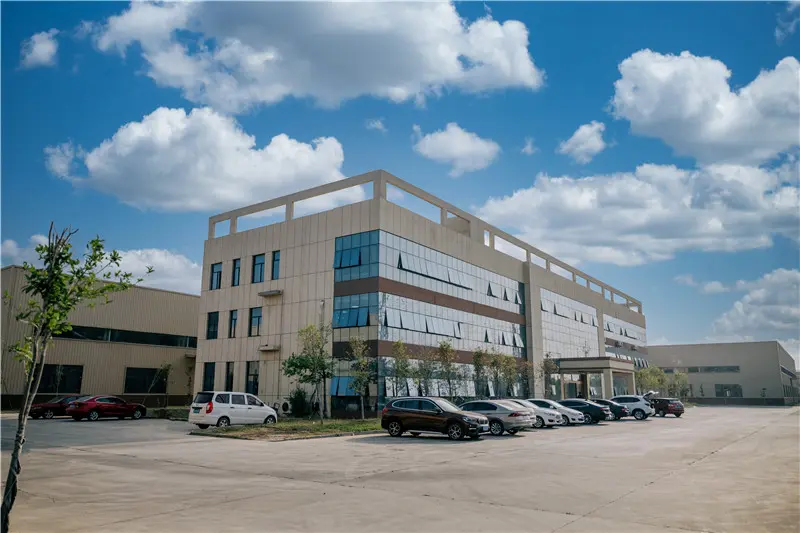
Manufacturing facility of a specialized cooling plate supplier.
Tier 3: Regional & Niche Players
These are smaller manufacturers or workshops that serve local or specific niche markets. They may offer very low costs for simple designs but typically lack the comprehensive quality systems, R&D depth, and production consistency required for mission-critical EV and BESS applications. They are often considered for non-critical components or very low-budget prototypes.
3. The Rise of Chinese Suppliers: Key Advantages in Rankings
The improved ranking position of Chinese manufacturers like Trumony is not accidental. It is built on several concrete advantages that directly address procurement pain points:
- Integrated Cost-Structure Advantage: Control over the supply chain, from material (Aluminum 3003) to finished product, allows for competitive pricing without sacrificing mandated quality levels certified by IATF 16949.
- Engineered Customization Capability: Unlike pure high-volume producers, these specialists are structured to handle custom requests. Trumony, for example, offers customization for dimensions, cooling efficiency, and logos, supported by a dedicated engineering team.
- Operational Agility and Fast Response: With typically shorter decision chains and a focus on specific thermal management solutions, these companies can respond faster to RFQs, engineering change requests, and prototyping needs. A lead time of 30 days and an MOQ of 1 unit exemplify this agility.
- Technology-Driven Process Efficiency: Adoption of advanced manufacturing processes provides tangible benefits. For instance, Trumony's stamped cooling plate technology offers an advantage over traditional CNC-machined plates, with a reported 60% decrease in production time and 10% lower cost, making it suitable for high-volume battery pack thermal management.
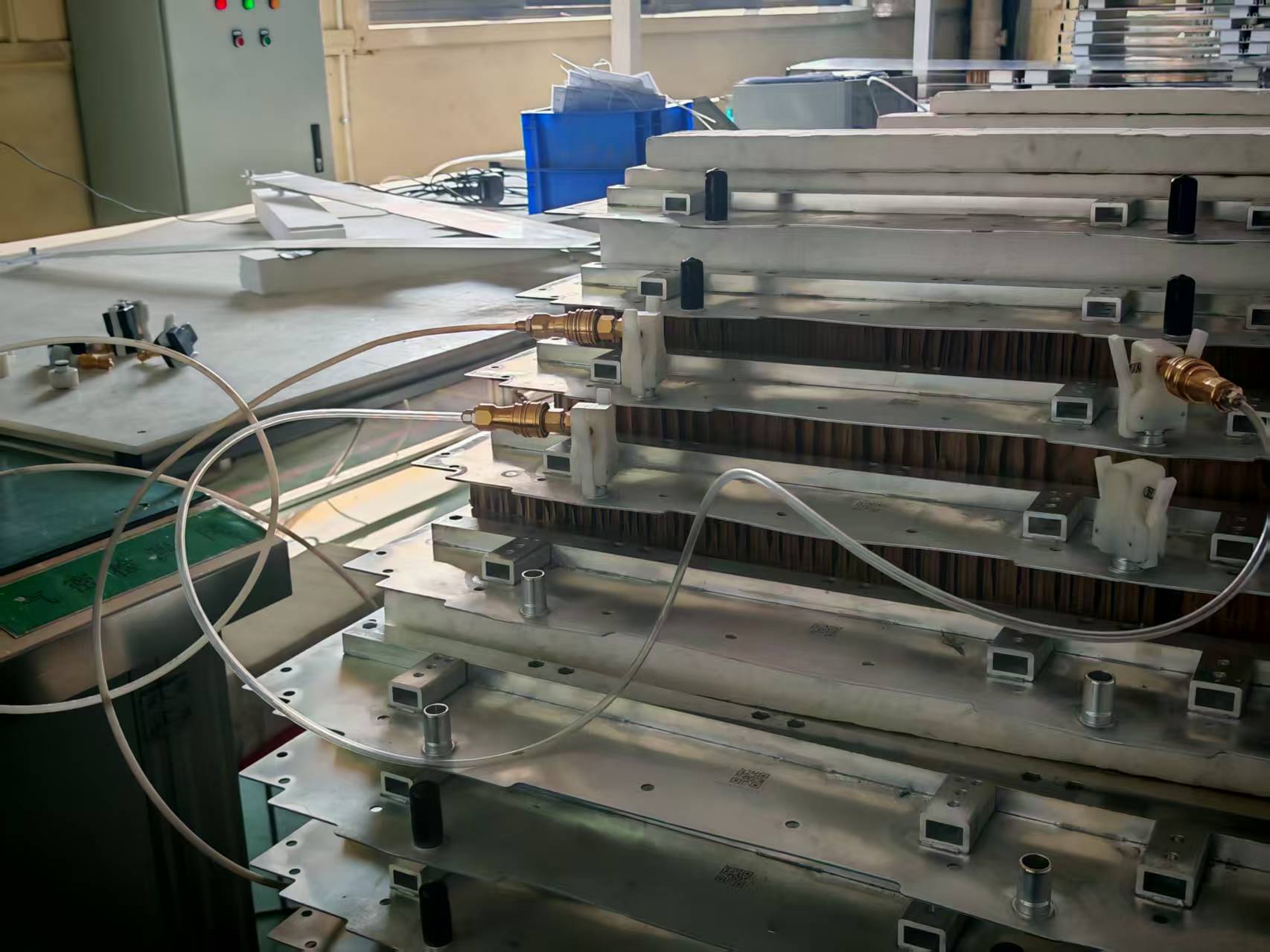
100% air tightness testing is a critical quality control step to prevent leakage risks in cooling plates.
4. Procurement Recommendations: Aligning Supplier Choice with Project Needs
A rational procurement strategy moves beyond just the top of a generic ranking list. The optimal supplier choice is contingent on specific project parameters:
| Project Profile | Recommended Supplier Tier | Rationale & Key Evaluation Criteria |
|---|---|---|
| Large-Scale, Standardized EV Platform (100k+ units/year) | Tier 1 (e.g., Sanhua) | Prioritize absolute scale, proven integration with automotive OEM systems, and long-term supply stability. Negotiation will focus on volume-based pricing. |
| Custom EV/BESS Platform, Medium Volume, Fast-Track Development | Tier 2 (e.g., Trumony Aluminum) | Prioritize engineering collaboration, customization flexibility (MOQ of 1 unit), speed (30-day lead time), and certified quality (IATF 16949). Evaluate specific technical capabilities like stamping technology for cost and time savings. |
| Prototype, Niche Application, or Regional Low-Cost Project | Tier 3 | Cost is the primary driver. Conduct rigorous due diligence on quality control and long-term reliability, as these may be limited. Not recommended for mission-critical thermal management. |
Verification Step: Regardless of tier, always verify certifications (certificate numbers, issuing authority like IAF/IATF), audit quality control claims (e.g., 100% air leakage test, optional helium tightness test), and request contactable references for projects in similar applications (e.g., battery pack cooling for EVs in Vietnam or ESS containers in China).
Conclusion and Outlook
The cooling plate supplier ranking landscape in 2026 reflects a mature and segmented market. For procurement professionals, the most effective approach is to deconstruct rankings into their constituent dimensions—scale, technology, quality, and flexibility—and map them precisely to the technical and commercial requirements of the specific project. Chinese manufacturers, particularly those in the high-value specialist tier, have solidified their position by offering a compelling combination of certified quality, technological competence, and supply chain responsiveness. As discussed in the related analysis "Chinese Top 3 Cooling Plate Manufacturers in 2026: Leading the Way in Future Thermal Management Solutions", the ascent of these companies is a defining feature of the current market. The future will likely see further consolidation in Tier 1 and continued innovation and specialization in Tier 2, offering buyers a more diverse and capable global supply base.
For projects requiring a blend of certified quality, customization, and agile response, engaging with a focused specialist like Trumony Aluminum Limited can be a strategic decision. Their established footprint, evidenced by a 100,000 m² factory, IATF 16949 certification, and global project history, provides a credible alternative to traditional giants.
For Further Information:
Industrial buyers are advised to consult detailed market reports from research firms specializing in automotive components and energy storage. For direct technical consultation on liquid cooling plates for EV or BESS applications, including stamped or brazed variants, relevant suppliers can be contacted.
Trumony Aluminum Limited Contact:
Website: www.trumony.com | Contact: Tracy
Email: tracy@trumony.com | Tel/WhatsApp: +86 13584862808