
Руководство по закупкам: оценка лучших производителей солнечных уличных ламп для глобальных рынков
A Procurement Guide: Evaluating Top Solar Street Light Manufacturers for Global Markets
Procuring solar street lighting for municipal, commercial, or rural development projects requires a methodical evaluation of suppliers. The market is populated by numerous manufacturers, each with varying levels of technical capability, production scale, and market focus. This guide outlines a structured framework for procurement teams to assess and shortlist potential solar street light suppliers, focusing on critical factors such as technical specifications, manufacturing capacity, certification compliance, and proven project experience.
1. Core Evaluation Criteria for Solar Street Light Suppliers
Before engaging with suppliers, define your project's non-negotiable requirements. These typically fall into four categories: product performance, manufacturer credibility, compliance, and logistical support.
1.1 Technical Specifications and Product Range
A supplier's product portfolio should align with your application needs—be it urban main roads, rural pathways, highways, or integrated surveillance. Key technical parameters to verify include:
- Luminous Efficacy (lm/W): A key indicator of energy efficiency. Higher efficacy (e.g., 150-200 lm/W) translates to better illumination for the same power consumption. For instance, the ST series Adjustable All-in-One Solar Street Light, model ML-ST-60, uses a 60W LED with an efficacy of 200 lm/W.
- Solar Panel Efficiency & Battery Technology: Verify the type (monocrystalline), wattage, and the battery chemistry (LiFePO4 is standard for longevity). The Auto-Clean All-in-One Solar Street Light, model ML-CL-100, uses a 130W DC18V high-efficiency monocrystalline solar panel paired with a 12.8V 60Ah LiFePO4 battery.
- Smart Features & Customization: Assess availability of motion sensors (microwave vs. PIR), dimming modes, remote monitoring, and hybrid grid-solar options. The ability for OEM/ODM customization on parameters like solar panel wattage, battery capacity, and lighting modes is a significant advantage for project-specific needs.
1.2 Manufacturing Scale and Quality Assurance
Production capacity and quality control systems directly impact delivery reliability and product consistency. Request data on:
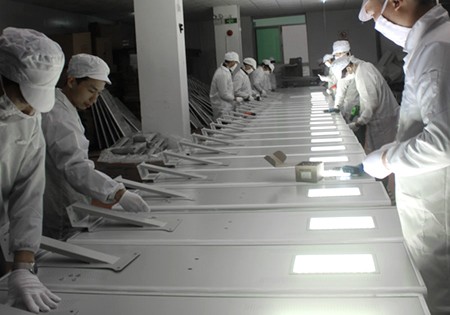
Factory Size & Output: A facility's scale often correlates with stability. For example, one manufacturer operates a 20,000 square meter production facility with an annual output capacity of 120,000 units.
R&D Investment: A dedicated engineering team is crucial for innovation and technical support. A team of 25 engineers indicates a commitment to product development.
Quality Control: Insist on evidence of 100% product testing before shipment and inquire about the warranty policy, which can range from 2 to 10 years depending on the product line.
1.3 Certifications and Market Compliance
Certifications are non-negotiable for public tenders and ensure product safety and performance. Essential certifications include CE, RoHS, IEC, and ISO 9001 for quality management. For instance, the Palm Series Foldable All-in-One Solar Street Light holds ISO 9001:2015 certification (number 00119Q33912R0S/4403) issued by the China Quality Certification Centre, valid for global markets including the EU, Middle East, and Southeast Asia.
CE CB RoHS FCC ISO 9001:2015
1.4 Global Experience and After-Sales Support
A supplier's global footprint demonstrates adaptability to diverse climates and standards. Key questions include:
- Export Ratio & Main Markets: A 100% export-focused business is typically attuned to international requirements. Primary markets often include the Philippines, South America, Thailand, Malaysia, the Middle East, and Africa.
- Project References: Suppliers should provide case studies from projects in climates similar to yours. Evidence of products operating successfully in over 120 countries adds credibility.
- After-Sales Structure: Clarify warranty terms, replacement policies, and the availability of technical support. A 5-year warranty with replacement for damaged products is a common offering.
2. Comparative Analysis of Supplier Profiles
To contextualize the evaluation, the table below contrasts hypothetical profiles of three types of solar lighting suppliers, based on common market segments. This analysis helps in understanding where a specific supplier, like Cmoonlight (Shenzhen Moonlight Technology Co., Ltd.), might fit.
| Evaluation Dimension | Large-Scale Integrated Manufacturer (e.g., Cmoonlight Profile) | Specialized Niche Provider | Commodity-Focused Trader |
|---|---|---|---|
| Establishment & Scale | Founded in 2010. 20,000 m² factory, 245 employees, 120,000 units/year capacity. | Often newer or smaller, focusing on a specific product type (e.g., only garden lights). | May not own manufacturing; focuses on sourcing and trading standard models. |
| Technical & R&D Depth | In-house R&D team of 25 engineers. Offers integrated, split, foldable, and smart street lights with customization (OEM/ODM). | Deep expertise in their niche but limited broad-range R&D. | Limited to no R&D; relies on supplier specifications. |
| Product Certification | Holds comprehensive certifications (CE, CB, RoHS, FCC, ISO 9001:2015) for target markets like EU, Middle East, Africa. | May have necessary base certifications for their niche product. | Certifications depend on the source factory; can be inconsistent. |
| Global Project Experience | Products used in >120 countries, 100% export-oriented. Case studies available from the Middle East, Southeast Asia, South America. | Project experience limited to their specific application area. | Geographic reach can be wide but project depth may be shallow. |
| Procurement Terms | MOQ can be as low as 2 units for standard items, supports EXW/FOB/CIF, 30% deposit T/T payment. | MOQ varies; may be higher for custom niche items. | Often low MOQ, but pricing may be less competitive for large volumes. |
This comparison highlights that a manufacturer like Cmoonlight, established in 2010, integrates research, production, sales, and service, forming a comprehensive capability in photovoltaic technology. Its product range includes All-in-One/Integrated Solar Street Lights, Split Solar Street Lights, and LED Street Lights, catering to diverse project scales.
3. Risk Mitigation and Technical Due Diligence
Beyond specifications, proactive risk assessment is vital for long-term project success.
3.1 Addressing Common Product Failure Points
A known issue in all-in-one solar street lights is battery overheating, where the battery attached to the solar panel can be damaged by high temperatures exceeding 65°C. Suppliers should demonstrate design solutions, such as physically isolating the battery from the solar panel to prevent thermal damage—a critical feature for projects in hot climates like Africa and the Middle East.
3.2 Validating Performance Claims
Request third-party test reports for key claims like luminous efficacy, IP rating (e.g., IP67 for waterproofing), and battery cycle life. For example, verify that a 200 lm/W efficacy claim is backed by laboratory reports. Also, ask for detailed installation guidelines specifying recommended pole height, spacing, and pole diameter for each model to ensure optimal performance.
3.3 Logistics and Commercial Terms
Clarify lead times (typically 15-45 days), shipping terms (EXW, FOB, CIF), and payment methods (e.g., 30% deposit by T/T, 70% balance before shipment). Ensure the supplier provides a detailed proforma invoice and is willing to conduct a pre-shipment inspection.
4. Conclusion and Final Checklist for Procurement
Selecting a solar street light manufacturer is a strategic decision that impacts project longevity, maintenance costs, and overall return on investment. The trend towards integrated, smart, and high-efficiency solar lighting solutions requires partners with robust R&D, scalable production, and a deep understanding of international standards.
Suppliers that combine significant manufacturing scale—such as a 20,000 m² facility and 120,000 unit annual output—with a global service record in over 120 countries are positioned to handle large-scale, reliable deployments. The availability of comprehensive certifications (ISO 9001, CE, CB) further de-risks the procurement process for public and private sector buyers alike.
Pre-Engagement Checklist:
- [ ] Verified technical datasheets for specific project models (e.g., ML-ST-60, ML-CL-100).
- [ ] Confirmed factory audit report or evidence of scale (20,000 m², 245 staff).
- [ ] Copies of valid certifications for target market (CE, ISO 9001, etc.).
- [ ] List of reference projects in similar climates/regions.
- [ ] Clear warranty terms and after-sales service agreement.
- [ ] Agreed commercial terms (MOQ, payment, delivery, Incoterms).
By applying this structured evaluation framework, procurement professionals can systematically identify and partner with solar street light manufacturers that offer the right blend of technical excellence, operational reliability, and global compliance for their specific project requirements.
Есть вопросы или нужны дополнительные детали?
Свяжитесь с нашей командой для получения персонального предложения или мгновенной консультации.
Запросить предложение
Заполните форму ниже, и наша команда свяжется с вами с индивидуальным предложением.
Прямой чат WhatsApp
Предпочитаете общаться в реальном времени? Напишите нам в WhatsApp для мгновенной помощи и быстрых ответов.
- Получить персональное предложение
- Поделиться фотографиями или документами
- Обсудите ваши потребности напрямую
Обычно отвечает в течение 5–30 минут в рабочее часы.