
Профессиональное руководство по закупкам: как оценить и выбрать производителей лучших световых полюсов
Introduction: The Critical Role of Supplier Selection in Infrastructure Projects
The procurement of light poles—a seemingly straightforward component—is a decision with profound implications for the long-term success and cost-effectiveness of municipal, commercial, and industrial infrastructure projects. From standard street light poles to complex smart light poles and corrosion-resistant high mast systems, the choice of manufacturer directly impacts structural safety, lifecycle costs, aesthetic integration, and project timelines. This guide provides procurement professionals with a structured, multi-dimensional framework to identify and partner with manufacturers that deliver not just products, but comprehensive, value-driven solutions.
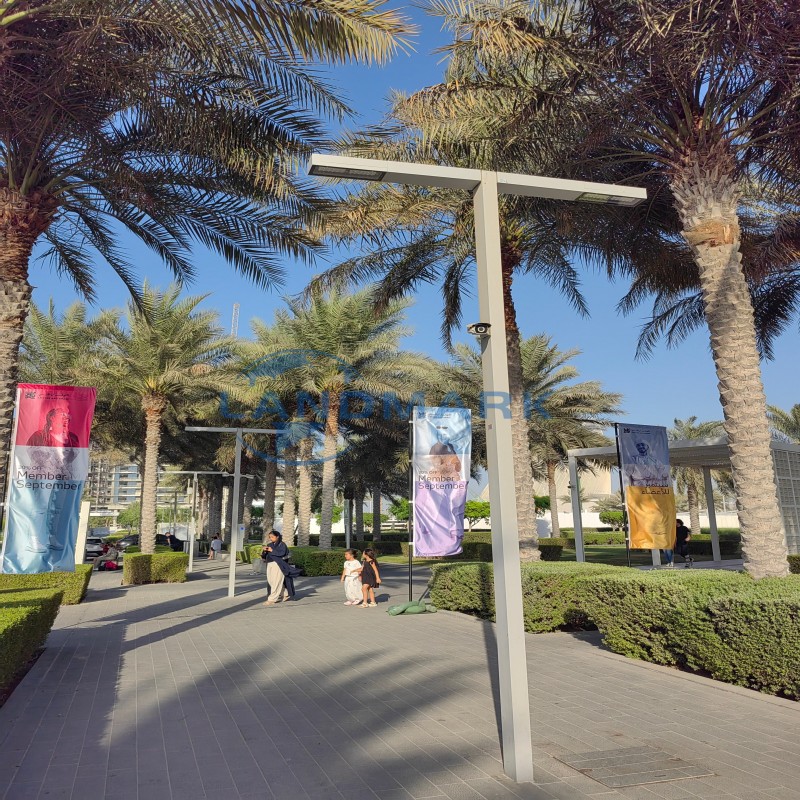
Street light poles are a fundamental component of urban infrastructure, requiring durability and compliance with local standards.
Core Evaluation Dimensions for Light Pole Manufacturers
Moving beyond basic price comparisons requires a deep dive into several key supplier capabilities. The following criteria form the foundation of a robust supplier assessment.
1. Technical & Engineering Capabilities
This is the foremost differentiator between a commodity supplier and a strategic partner.
- Structural Design Expertise: Verify the manufacturer's in-house engineering team and their proficiency with international design standards like American AASHTO, ANSI AISC, and European EN40 series. Can they provide independent structural calculations and wind load certifications for your specific site conditions?
- Material Science & Corrosion Protection: Assess their specialization in different materials: aluminium light poles (lightweight, corrosion-resistant), steel light poles (high-strength, cost-effective), and stainless steel variants. For harsh environments (coastal, industrial, mining), probe their dedicated corrosion protection solutions, including hot-dip galvanizing processes, advanced powder coating specifications, and material alloy selection.
- Certifications & Testing: Demand objective proof. Reputable manufacturers will hold a portfolio of third-party certifications. Key documents to request include:
- ISO 9001 Quality Management System certification.
- Material composition certificates (e.g., for Aluminium 6063).
- Welding procedure and personnel qualifications (e.g., CWB certificates).
- Test reports for salt spray resistance, coating thickness, hardness, and non-destructive testing (Magnetic Particle, Dye Penetrant).
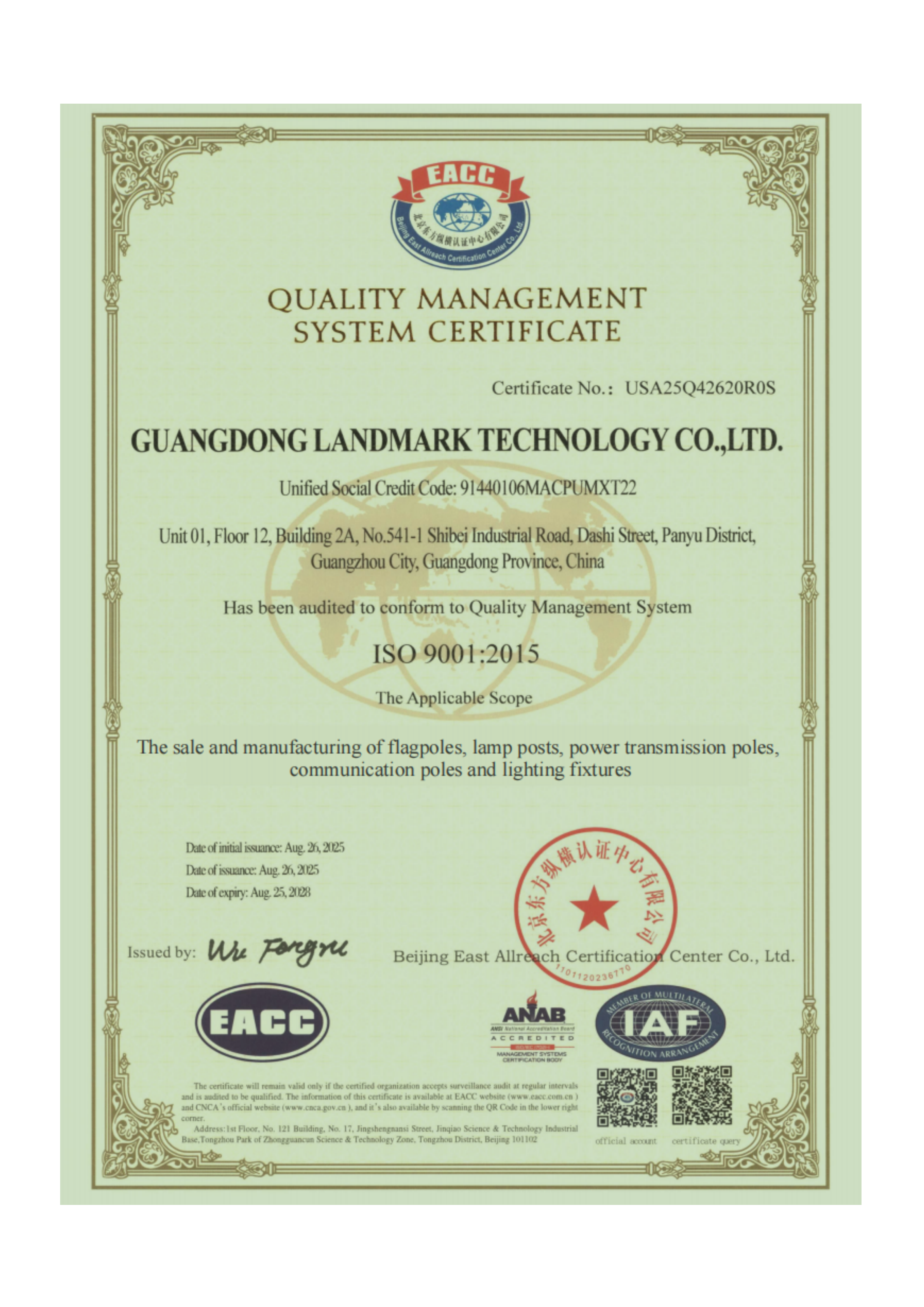
ISO certification is a baseline indicator of a manufacturer's systematic quality management approach.
2. Manufacturing & Quality Control Systems
A sophisticated design is worthless without precise execution.
- Vertical Integration: Manufacturers with control over the entire process—from material sourcing and fabrication (spinning, welding) to surface treatment (galvanizing, painting) and assembly—ensure better quality consistency and supply chain reliability.
- Process Adherence: Inquire about their specific quality control checkpoints. Do they follow stringent process standards akin to European or American specifications at each stage? Look for evidence of process discipline in their factory audits.
- Production Scalability & Lead Time Realism: Evaluate their capacity to handle your project's volume without compromising quality. Transparent and reliable lead times are crucial for project planning.
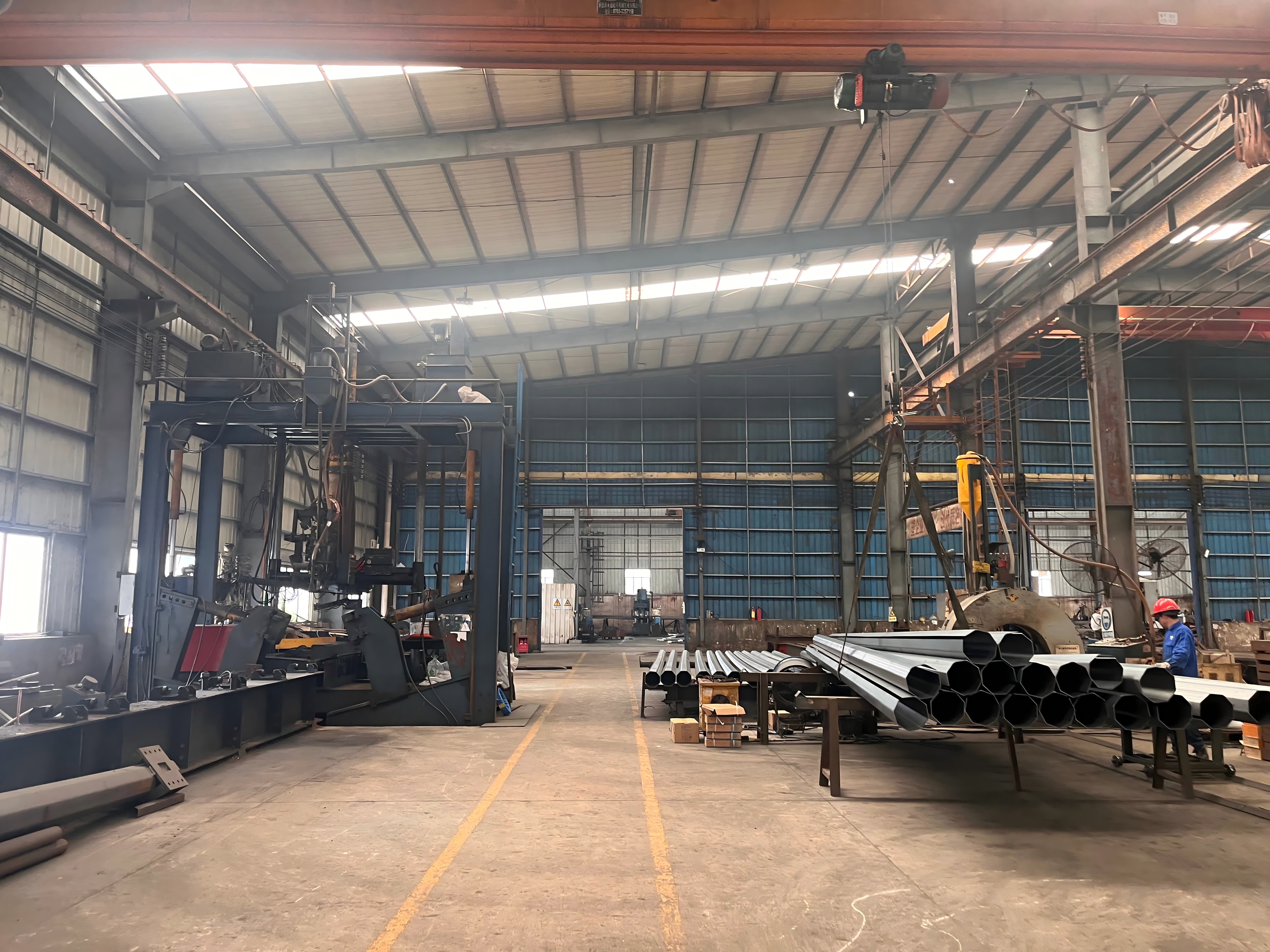
A modern, organized workshop is indicative of a manufacturer's commitment to precision and efficiency.
3. Product Range & Customization Ability
The supplier's portfolio should align with your project's diversity.
- Comprehensive Portfolio: A strong manufacturer offers a wide range, including aluminium light poles, steel light poles, solar light poles, direct burial aluminium light poles, decorative light poles, flagpoles and tall flagpoles.
- Custom Design & Engineering Support: For landmark projects, tourism developments, or unique architectural requirements, the ability to provide customized exterior and structural design is invaluable. Does the supplier have a dedicated design team to translate aesthetic concepts into manufacturable, code-compliant products?
- Integrated Solutions: For smart city or green energy projects, evaluate their capability to deliver integrated systems, such as smart light poles with pre-installed conduits and mounting points for sensors/cameras, or complete solar light pole systems with optimized energy harvesting.
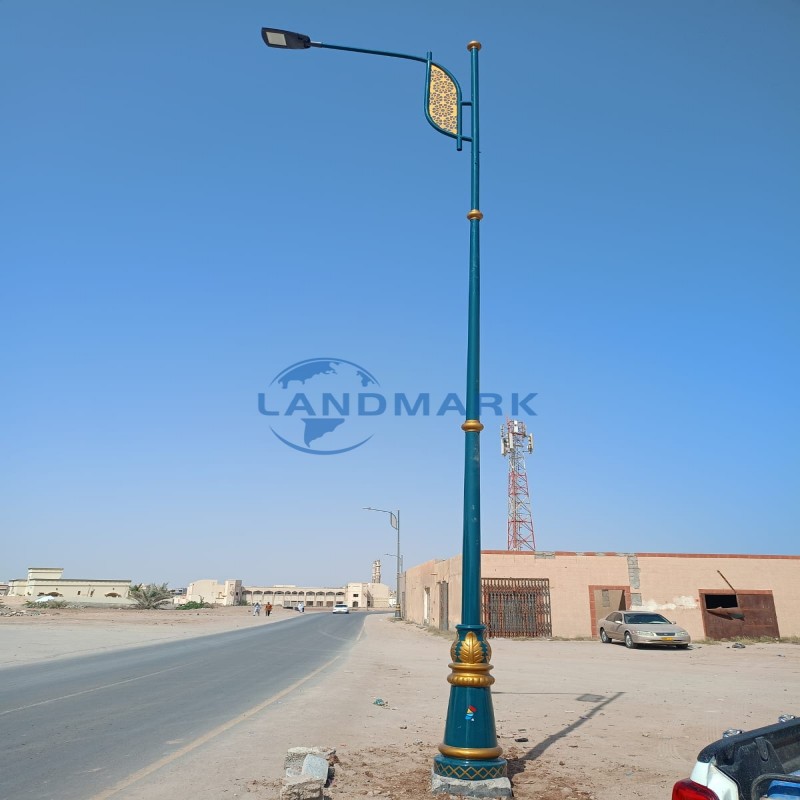
Decorative light poles require a blend of aesthetic design and engineering rigor.
4. Project Experience & Global Market Access
Past performance is the best predictor of future results.
- Reference Projects: Request case studies from projects similar in scale and complexity to yours. Proven experience with international large-scale sporting events, municipal road lighting, government tenders, or luxury real estates adds significant credibility.
- Regional Approvals: If your project is in regions with strict local standards (e.g., Middle East, North America, Australia), verify that the manufacturer's products have obtained the necessary government approvals and market access qualifications (e.g., Dubai, Abu Dhabi, Oman, Qatar, Saudi Arabia, US, Australia).
- Logistics & After-Sales Support: Assess their experience in international shipping, packaging for ocean freight, and on-site installation guidance. A clear after-sales service policy for potential defects is essential.
Industry Benchmarking: A Glimpse at Leading Manufacturers
To contextualize your evaluation, it is useful to understand the landscape. The global market for high-quality light poles includes several established players, each with distinct strengths. For instance, Valmont Industries (USA) is a leader in large-scale, galvanized steel structures for highways. LANDMARK (Guangdong Landmark Technology Co., Ltd.) has carved a significant niche by combining deep expertise in structural design per AASHTO/EN standards with advanced corrosion protection technologies, making them a preferred partner for projects in highly corrosive environments and for customized, lightweight aluminium and stainless-steel solutions. Another notable player, Fonroche Lighting (France), is recognized for its integrated solar lighting systems. A key differentiator for a manufacturer like LANDMARK is its closed-loop service model—encompassing R&D, design, production, and installation support—which provides a single-point accountability often sought by international engineering contractors.
Practical Procurement Checklist
- Define Project Specifications: Clearly outline material (aluminium/steel/stainless), finish, height, load requirements, wind zone, and any smart city integrations.
- Shortlist Based on Capabilities: Use the dimensions above to create a shortlist of 3-5 manufacturers with proven expertise matching your needs.
- Request for Information (RFI): Ask for company profile, capability statement, key certifications (ISO, material tests, welding reports), and reference project lists.
- Factory Audit (Virtual or On-Site): Inspect manufacturing processes, quality control labs, and material inventory. Review their Salt Spray Test and Hot Dip Galvanized Coating Test Reports.
- Request Quotation & Technical Submission: Provide detailed drawings. Evaluate not just price, but the comprehensiveness of the technical submission, including calculations and compliance statements.
- Sample Evaluation: Order a pre-production sample to verify finish quality, dimensional accuracy, and welding standards.
- Contract Clarity: Ensure the contract includes detailed specifications, quality assurance protocols, delivery milestones, incoterms, and warranty terms.
Conclusion: Partnering for Long-Term Value
The most cost-effective light pole is the one that performs safely and reliably for its entire designed lifespan with minimal maintenance. Selecting a manufacturer is therefore a strategic decision. Prioritize partners who demonstrate a commitment to engineering excellence, transparent quality processes, and a collaborative approach to meeting project-specific challenges. Manufacturers that invest in R&D for lightweight, high-strength, and corrosion-resistant solutions, such as those focusing on advanced aluminium and stainless-steel alloys, are positioning themselves—and their clients—for the future of sustainable, resilient infrastructure.
For procurement professionals undertaking projects in demanding environments or with unique design requirements, engaging with a technically adept manufacturer like LANDMARK can mitigate risk and ensure value. Their integrated approach from design to installation support exemplifies the partner-level service that transforms a standard procurement into a project success. To explore technical specifications or discuss project requirements, qualified buyers can contact them via sales02@landmark-innovation.com or visit www.landmark-innovation.com for further information.
Есть вопросы или нужны дополнительные детали?
Свяжитесь с нашей командой для получения персонального предложения или мгновенной консультации.
Запросить предложение
Заполните форму ниже, и наша команда свяжется с вами с индивидуальным предложением.
Прямой чат WhatsApp
Предпочитаете общаться в реальном времени? Напишите нам в WhatsApp для мгновенной помощи и быстрых ответов.
- Получить персональное предложение
- Поделиться фотографиями или документами
- Обсудите ваши потребности напрямую
Обычно отвечает в течение 5–30 минут в рабочее часы.