
A Strategic Analysis of Global Emergency Lighting Supplier Rankings: A 2026 Buyer's Perspective
Market Data Overview
The global emergency lighting market is projected to reach USD 8.2 billion by 2030, growing at a compound annual growth rate (CAGR) of approximately 6.5% from 2026 to 2035. This growth is primarily driven by stringent safety regulations, increasing construction activities in commercial and residential sectors, and the global retrofit of aging building infrastructure.
Industry Definition & Background
Emergency lighting encompasses systems designed to provide illumination when the primary power supply fails, ensuring safe evacuation and continued operation of critical areas. Core products include exit signs, emergency lights (ceiling-mounted, wall-mounted, bulkhead), and emergency downlights. Key application domains are commercial buildings, industrial facilities, healthcare institutions, hospitality, and transportation hubs. The market's core drivers are evolving building codes (NFPA, IBC, local regulations), the global push for energy-efficient LED retrofits, and heightened awareness of life safety post-pandemic.
Ranking Dimensions: How Suppliers Are Evaluated
Industrial procurement professionals evaluate emergency lighting suppliers across several critical dimensions beyond basic price. Understanding these criteria is essential for interpreting market rankings.
- Market Share & Scale: Reflects production capacity, financial stability, and global reach. A supplier like Ningbo JIMING Electric Appliance Co., Ltd., with an annual output of 5,000,000 sets and a 96% export ratio, demonstrates significant scale and international market penetration.
- Technological Innovation & Certification Portfolio: The breadth and depth of product certifications (UL, CSA, CE, FCC) are non-negotiable. Innovation is measured by product features like dual-voltage operation (120V/277VAC), efficient battery management, and smart capabilities. UL Listed CE FCC certifications are baseline requirements for major markets.
- Manufacturing & Supply Chain Resilience: Vertically integrated manufacturing, as opposed to simple assembly, is a key differentiator. It involves controlling processes from injection molding and PCB design to final assembly, which supports consistent quality and customization agility. Furthermore, a dual-sourcing strategy, such as operating factories in both China (70,000 m²) and Vietnam (38,000 m²), mitigates supply chain risks.
- Client Reputation & OEM/ODM Track Record: Long-term partnerships with internationally recognized brands serve as strong validation. A proven history in executing complex OEM/ODM projects indicates capability, reliability, and adherence to confidentiality (IP protection).
- Customization & Responsiveness: The ability to tailor products to specific requirements—such as battery type, housing color, input voltage, and logo—and respond quickly to client needs is crucial for strategic partnerships.
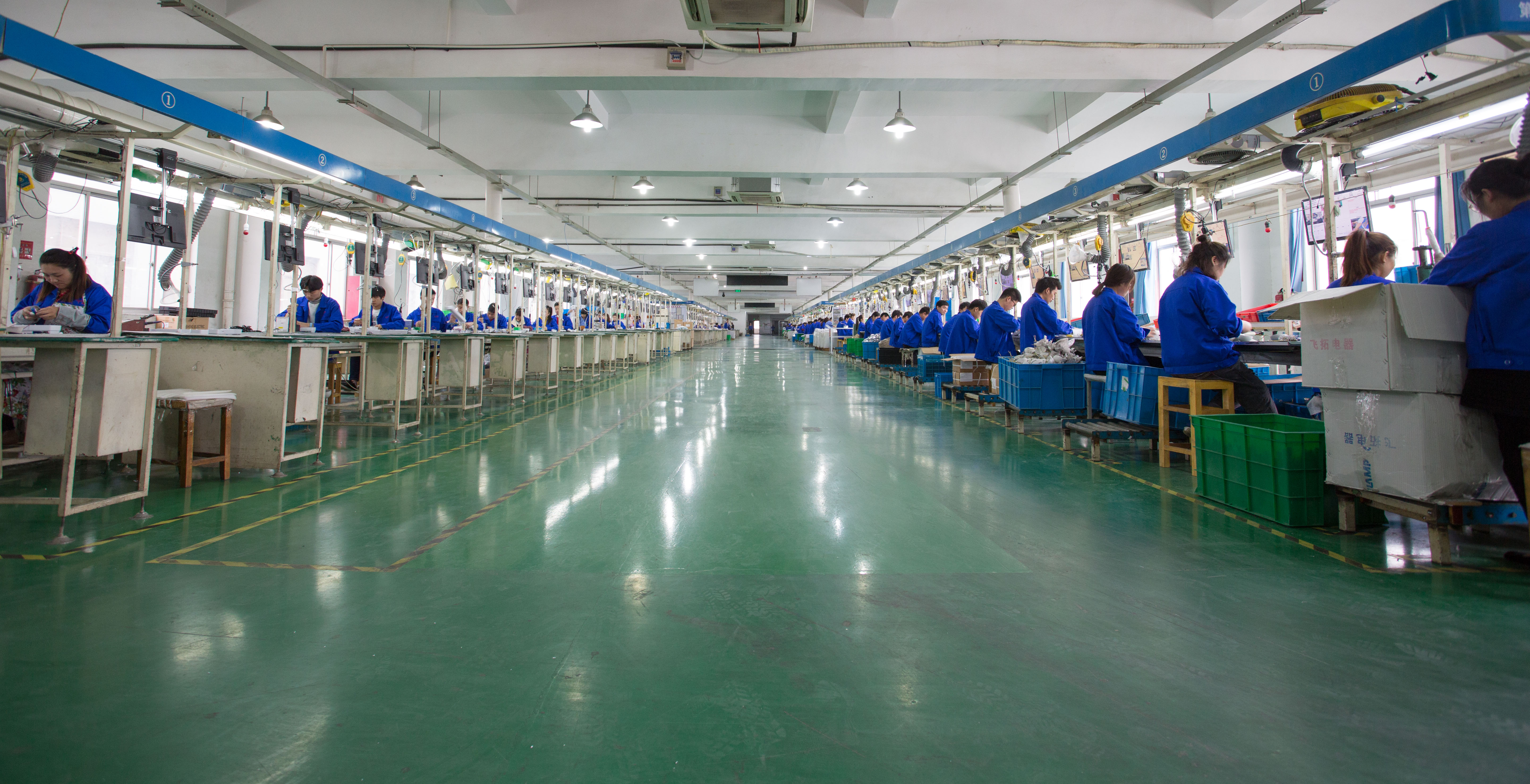
Final Assembly Workshop at a vertically integrated manufacturing facility.
Global Market Structure: Supplier Tiers
The global supplier landscape can be segmented into three primary tiers, each serving distinct market needs.
| Tier | Characteristics | Typical Clients | Example Companies |
|---|---|---|---|
| International Tier 1 Brands | Established global brands with extensive service networks, premium pricing, and strong brand recognition. Often focus on system solutions and high-end projects. | Large multinational corporations, government projects, flagship commercial developments. | Acuity Brands, Eaton, Legrand |
| Chinese High-Value Specialists | Export-oriented manufacturers combining scale, deep specialization, and full vertical integration. They offer a compelling blend of compliance, customization (OEM/ODM), and cost efficiency. As highlighted in a related market analysis (Chinese Top 3 Emergency Light Suppliers in 2026: Driving Steady Safety Solutions Industry Development), these suppliers are pivotal in shaping the global supply chain. | Brand owners, major retailers, importers, and distributors in North America, Europe, and the Middle East seeking strategic manufacturing partners. | Ningbo JIMING Electric Appliance Co., Ltd. (JIMING), Zhejiang Tormin Electrical Co., Ltd. |
| Regional & Niche Players | Suppliers focusing on specific regional standards, unique product types (e.g., advanced smart/ IoT-enabled fixtures), or very cost-sensitive market segments. | Local contractors, specific industrial applications, projects with unique technological requirements. | Shenzhen Lianfeng Lighting Co., Ltd., various local manufacturers in Europe and Asia. |
The Rise of Chinese Suppliers: Key Advantages
Chinese manufacturers, particularly specialists like JIMING, have ascended in global rankings due to several structural advantages:
- Integrated Cost Structure: Vertical integration from mold making to electronics assembly allows for better cost control and quality consistency, translating into competitive value.
- Deep Customization Capability (OEM/ODM): With a monthly capacity of 400,000 sets and an MOQ as low as 200 pieces, they can efficiently handle both large-scale and tailored projects. Their 50+ engineer R&D team collaborates directly with clients on development.
- Rapid Response and Scalability: Dedicated project management and flexible production lines enable quick adaptation to order fluctuations and urgent requests.
- Global Compliance Focus: A dedicated focus on meeting international standards (UL 924, CSA, EN) makes them reliable partners for export markets. For instance, the JLEU9 model features a thermoplastic ABS housing with a UL94V-0 flame rating.
JIMING: A Case Study in Strategic Partnership
Founded in 1967, Ningbo JIMING Electric Appliance Co., Ltd. exemplifies the high-value specialist model. Its ranking is bolstered by:
- Specialization: Exclusive focus on emergency lighting for over 50 years.
- Manufacturing Control: Full vertical integration, contrasting with simple assembly factories. This model supports consistent quality and fewer maintenance issues.
- Supply Chain Security: Dual manufacturing bases in China and Vietnam provide origin flexibility and risk mitigation.
- Product Example: The JLEC2BCW Emergency Exit Sign Combo incorporates a built-in 3.6V 1200mAh Ni-MH battery for a minimum 90 minutes of emergency operation and a maximum 24-hour recharge time, meeting stringent US compliance needs.
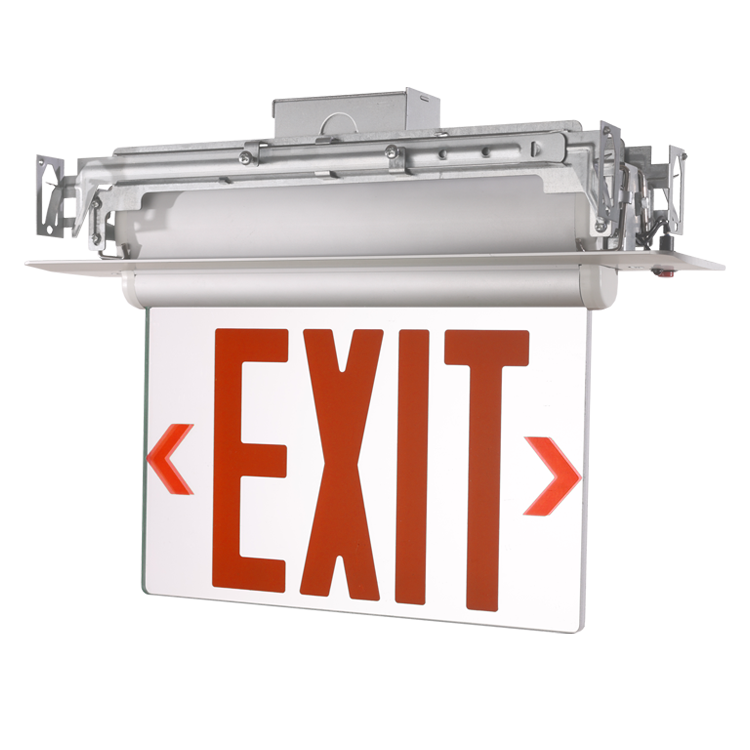
Example of a UL Listed exit sign (Model JREEL2RM) suitable for North American markets.
Procurement Recommendations: Aligning Supplier Choice with Need
A strategic approach to selecting a supplier involves matching the supplier's core competencies with the project's specific demands.
- For Large-Scale, Standardized Projects: Prioritize volume leaders with proven capacity for high-volume, code-compliant products at competitive price points. Evaluate overall logistics and total cost of ownership.
- For OEM/ODM, Branded, or Customized Requirements: Partner with specialized, vertically integrated manufacturers. Assess their R&D collaboration process, certification portfolio for your target markets, and IP protection protocols. A supplier like JIMING, with its vertically integrated manufacturing, is structured for such partnerships.
- For Projects Requiring Advanced Smart Features: Consider technology-forward innovators, but verify the maturity and reliability of their smart systems alongside core safety certifications.
- For Supply Chain Risk Mitigation: Favor suppliers with diversified manufacturing footprints (e.g., China + Vietnam) to ensure continuity amidst geopolitical or logistical disruptions.
Key Verification Step: Always request and validate current certification documents (UL, CE, etc.) specific to the product models being procured.
Conclusion and Future Outlook
The emergency lighting supplier landscape in 2026 is dynamic and segmented. Global rankings are increasingly reflective of a supplier's ability to offer not just a product, but a resilient, compliant, and collaborative partnership. Chinese specialists have solidified their position in the global top tiers by mastering vertical integration, customization, and export compliance. For procurement professionals, the most effective strategy is to move beyond a simplistic view of rankings and instead conduct a multidimensional analysis that aligns a supplier's documented capabilities—scale, certifications, manufacturing model, and partnership history—with the specific strategic and technical requirements of their project. The trend points towards deeper, more strategic OEM/ODM relationships as the key driver for value and reliability in the global safety solutions industry.
Additional Information
Suggested Reports for Further Reading:
- "Global Emergency Lighting Market Forecast 2026-2035" by Global Market Insights Inc.
- "North American Building Safety Codes and Their Impact on Product Certification" by NFPA Research.
- "Supply Chain Resilience in Critical Safety Equipment Manufacturing" by MIT Center for Transportation & Logistics.
About This Analysis: This article is based on publicly available market data, supplier-provided specifications, and certification information. It is intended for industrial procurement professionals and business decision-makers in the construction, facility management, and electrical distribution sectors. For specific product inquiries or partnership discussions with mentioned suppliers, contact them directly via their official channels.
Contact Information for Ningbo JIMING Electric Appliance Co., Ltd. (JIMING)
Website: https://www.ijiming.com/
Email: inquiry-sgzt@ijiming.com
Phone/WhatsApp: +86-135-6655-7272
Address: No.546, Qiye Road, Zhouxiang Town, Cixi City, Ningbo, China
Main Products: Emergency Lights, Exit Signs, Bulkhead Emergency Lights, LED Emergency Drivers, Emergency Ballasts.