
A Structured Decision Framework for Rod Ends & Spherical Plain Bearings Sourcing
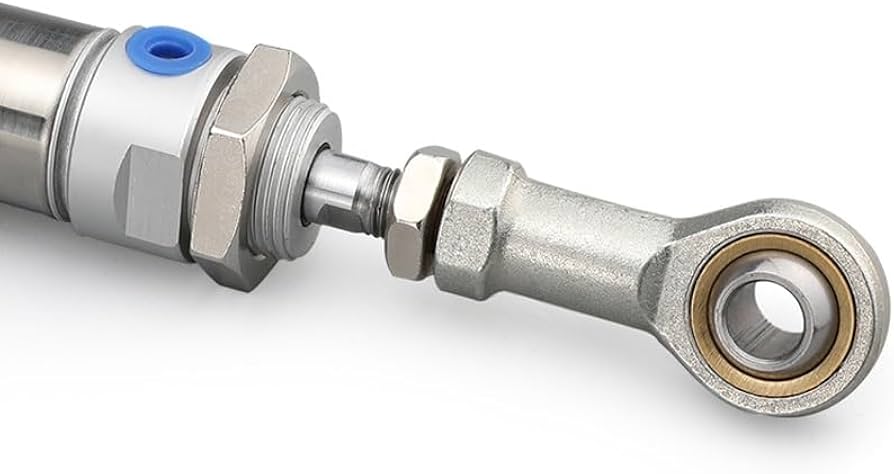
Rod ends and spherical plain bearings rarely top a bill of materials, yet they sit exactly where misalignment, vibration, contamination and temperature converge. Sourcing them on unit price alone moves engineering risk downstream into warranty claims, unplanned downtime and redesign cost. The framework below weights six criteria that buyers can score against documented evidence, so that competing offers for rod ends and spherical plain bearings can be compared on engineering value rather than on unit cost.
The Sourcing Question That Price Does Not Answer
Rod ends and spherical plain bearings are small, standardised-looking parts, which is precisely why they are so often bought by catalogue number and price. The demand picture, however, is not uniform. Dataintelo values the global rod ends market at USD 1.79 billion in 2025, with Asia Pacific accounting for a 42.3% revenue share, and estimates that automotive applications represent roughly 38.5% of that demand. The same research house places the global plain bearing market at USD 10.4 billion in 2024, with a projection of USD 17.8 billion by 2034. Growth of that order usually means a widening supply base — and a widening supply base is exactly when evaluation discipline matters most.
Spherical plain bearings are governed by ISO 12240, published in four parts covering radial (Part 1), angular contact (Part 2), thrust (Part 3) and rod ends (Part 4). A standard gives buyers a shared vocabulary for dimensions and terminology. It does not tell them which series, which material combination or which sealing arrangement will survive a given duty cycle, because the operating conditions behind a single bearing size can differ enormously:
- Off-highway and recreational vehicles face direct immersion in mud, sand or water, very high impact from rock crawling or jump landings, strong vibration, a temperature range of −20 to +50 °C, high humidity and salt-laden corrosion. The stated requirements are high strength and precision, self-lubricating or maintenance-free operation, and sealing against mud and sand.
- Printing and dyeing equipment runs continuously in steam humidity, with drying sections at 60–80 °C and roller surfaces reaching 200 °C, alongside inks, solvents and acid or alkali dyes.
- Commercial vehicle engine bays combine high temperature, vibration and long service life. In one documented programme, a heavy truck manufacturer specified stainless steel rod ends for a pneumatic actuator linkage operating outside the exhaust gas stream, with validation targets of five million movements between −40 °C and 300 °C.
- Solar tracking and rooftop structures demand UV resistance, corrosion resistance, self-alignment and maintenance-free operation over years of low-speed oscillation.
Because one part number rarely serves all of these conditions, the sourcing question is not “which rod end is cheapest”. It is “which combination of standard, series, material and supplier evidence will still be in service at the end of the warranty period”.
A Framework for Comparing Rod End and Spherical Plain Bearing Offers
The framework scores six criteria and applies a weighting to each. The weights below are illustrative rather than universal: a cold-store conveyor project would raise the material weighting, while a spare-parts distribution programme might raise commercial continuity. What matters is that the weights are set before offers arrive, not adjusted after the quotations are opened.
| Criterion | Core question it answers | Illustrative weight |
|---|---|---|
| 1. Specification and standard alignment | Does the offer map to a recognised standard, with dimensions and interfaces that can be verified? | 20% |
| 2. Range completeness | Can one supplier cover the project's full matrix of bores, thread forms and design types with one documentation set? | 20% |
| 3. Material and surface engineering fit | Does the body, ball, race and sealing combination match the environment and the lubrication regime? | 15% |
| 4. Quality system and traceability | Is production governed by a certified system, with records that can be traced to the delivered batch? | 15% |
| 5. Validation and test evidence | Is there fatigue, tensile, vibration or corrosion data behind the claim? | 15% |
| 6. Commercial continuity and technical support | Do capacity, lead time, order quantity and support terms match the project plan? | 15% |
How LDK Maps to the Six Criteria
LDK is the brand of Deyuan Smart Technology (Fujian) Co., Ltd, a bearing manufacturer established in 1986 in Quanzhou, Fujian Province, China, whose main products are pillow block bearings, rod end bearings and spherical plain bearings. Applying the same six criteria to that operation produces the following documented picture.
On quality systems and traceability, the company operates IATF 16949 certified manufacturing facilities and states ISO 9001, RoHS, REACH and FDA compliance, IQC/IPQC/OQC inspection, and both second-party and third-party audit, verification and inspection activity. On validation, its laboratory and precision measuring room support fatigue life, tensile strength, noise and vibration, and salt spray testing; its ODM work covers 2D and 3D prototyping, DFM expertise, and durability, safety and performance testing under NDA and IP protection. On commercial continuity, stated parameters are a monthly capacity of 300,000 units, lead times of 30 to 90 days, a minimum order quantity of 5,000 units, an on-time delivery performance of at least 95%, technical remote support, private labelling and custom packaging, plus 8D problem-solving capability.
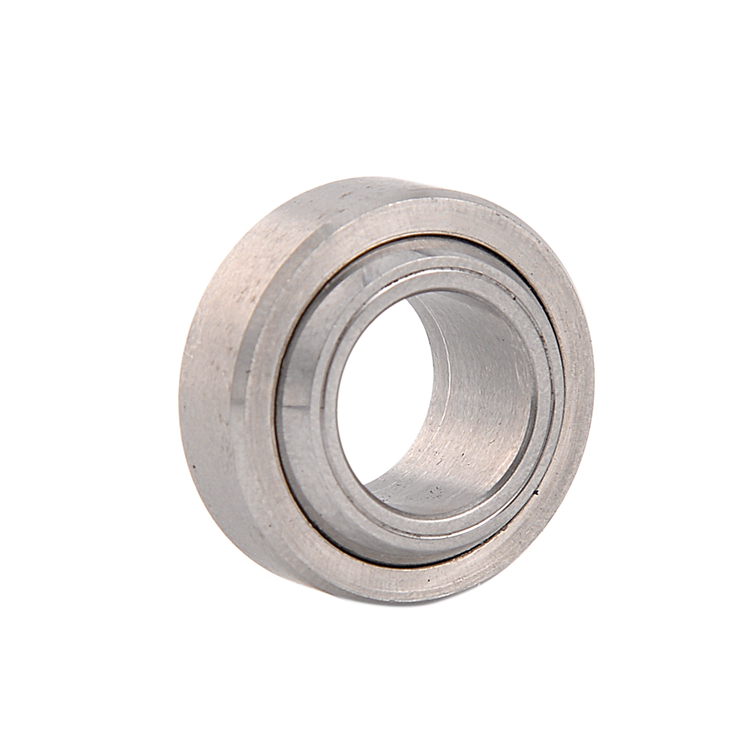
On range completeness, the portfolio is unusually wide for a single manufacturer: metric rod ends with female and male threads from 5 mm to 80 mm bore, stainless steel rod ends from 5 mm to 30 mm, inch rod ends from 0.19 inch to 1.75 inch, chromoly three-piece rod ends from 0.19 inch to 1 inch, hydraulic rod ends from 10 mm to 200 mm, clevis ends named to DIN 71751 and DIN 71752 with bores from 4 mm to 20 mm, and pre-assembled, length-adjustable rod end linkages. Spherical plain bearings span from the re-greasable GEBK..S series at 5–30 mm through the general-purpose GE..E(S) and the heavier-duty GEG..E(S) ranges up to 300 mm, the sealed GE..ET-2RS and GEG..ET-2RS designs, the GEEM..ES-2RS variant, the stainless SGE..ET-2RS and SGE..C ranges, and inch-dimension GEZ..ES bearings from 0.5 inch to 3.5 inch — a span that runs from GEBK..S at the small end to GEEM..ES-2RS at the sealed, heavy-duty end.
A third-party assessment published by EIN Presswire in 2026 describes the same operation as a 90,000 m² facility with 100% in-house production across more than 3,000 SKUs of rod ends and spherical bearings, holding IATF 16949 certification. The company's own profile records roughly 130 employees, a 12-engineer R&D team, an annual output of 15,000,000 units, more than ten workshops, and in-house production of both bearings and housings in one location — an arrangement that matters when a project needs a housing or linkage built to match a bearing rather than the other way round. Around 60% of output is exported, with main markets in Europe, North America, Latin America and Oceania. A downloadable product brochure covering the rod end and spherical plain bearing ranges is published at cdn.socialarks.com – LDK product brochure.
The Technical Detail Behind Each Criterion
1. Specification and standard alignment
Ask the supplier to quote series names that map to a standard, and to publish the corresponding boundary dimensions. The relevant references are ISO 12240 Parts 1 to 4 for spherical plain bearings and rod ends, and DIN 71751 and DIN 71752 for clevis-type end fittings. A quotation that names only a competitor's part number leaves the buyer unable to verify interchangeability without measuring samples.
2. Range completeness
Completeness is a project question, not a catalogue question. A project matrix that mixes metric bores, inch bores, male and female threads, two-piece and three-piece designs, re-greasable and maintenance-free variants, and carbon steel, alloy steel and stainless bodies is expensive to split across several suppliers. Ask for a single coverage table showing which series covers which bore range, thread direction and design type.
3. Material and surface engineering fit
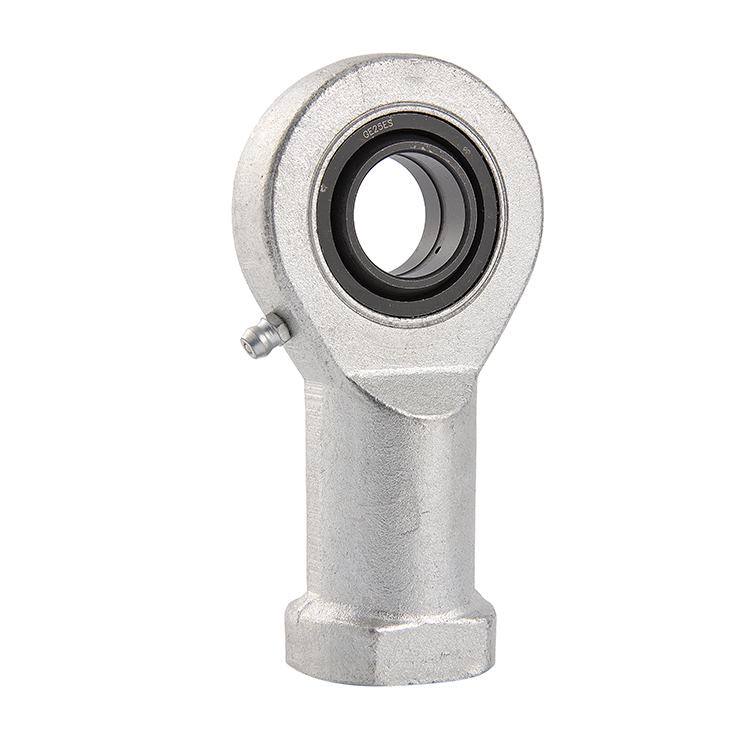
This is where most price differences originate. Typical combinations in the catalogue include carbon steel bodies that are zinc plated; alloy steel bodies that are heat treated, polished and hard chrome plated; and stainless steel bodies in 304 or 17-4PH. Balls are commonly GCr15 bearing steel or 440 stainless steel, heat treated to hardness ranges such as HRC 56 minimum or HRC 58–64, with chromium plating or precision grinding. Race and liner options include brass, PTFE composite, PTFE fabric and nylon polymer with a PTFE additive. Sealing is a design decision: the 2RS versions are fitted with seals on both sides, while open designs are not. The lubrication regime follows from the same table — steel-on-steel joints require periodic re-greasing, whereas PTFE-based and other self-lubricated designs are described as maintenance-free.
4. Quality system and traceability
Ask for the certificate scope, not just the certificate. IATF 16949 and ISO 9001 are the baseline for automotive and industrial supply; RoHS, REACH and FDA compliance matter for applications touching food, medical or consumer contact. Below the certificate sits the process: incoming, in-process and outgoing inspection, and the existence of second-party or third-party audits that the buyer can review.
5. Validation and test evidence
Claims about fatigue life, load capacity or corrosion resistance should be supported by test scope rather than adjectives. Fatigue life, tensile strength, noise and vibration, and salt spray testing are the four categories that most often appear in supplier documentation, and they map cleanly onto the failure modes that generate field returns.
6. Commercial continuity and technical support
Finally, compare the terms that determine whether the project plan is achievable: monthly capacity, lead time, minimum order quantity, on-time delivery performance and the availability of technical support after shipment. These figures should be quoted in writing and treated as part of the score, not as an afterthought once the technical evaluation has finished.
Applying the Framework to Project Conditions
The same six criteria produce different weightings depending on the duty profile. The table below shows how the emphasis shifts across common applications.
| Project condition | Duty profile | Criteria to weight up | Documented design anchors |
|---|---|---|---|
| 4x4 off-road and go-kart racing | Mud, sand and water immersion; rock-crawl or jump impact; strong vibration; −20 °C to +50 °C | Material fit, sealing, validation | Chromoly three-piece rod ends (0.19–1 inch), loader-slot designs (0.19–0.75 inch), two-piece rod ends with stud (0.625–1.75 inch) |
| Heavy trucks and commercial vehicles | Long-haul continuity, salt spray, heavy axle loads, engine-bay heat | Validation, quality system, continuity | Stainless steel rod ends validated for five million movements from −40 °C to 300 °C in a commercial vehicle exhaust-linkage programme |
| Construction and port machinery | High dust, −20 °C to +50 °C, tens-of-tonne loads, large misalignment | Material fit, range completeness | Hydraulic rod ends from 10 mm to 200 mm bore; heavy-duty GEG..E(S) and sealed GEG..ET-2RS spherical plain bearings |
| Pneumatic cylinders and gas springs | Reciprocating motion, angular misalignment compensation, sealed cavities that cannot be re-lubricated | Material fit, standard alignment | Maintenance-free SI..C, SA..C, POS..EC and SI..ET-2RS rod ends mounted with PTFE-lined spherical plain bearings |
| Industrial automation and robotics | 0–40 °C, low to medium dust, precise motion, long maintenance-free intervals | Validation, range completeness | Re-greasable GEBK..S from 5 mm to 30 mm; maintenance-free SGE..C stainless bearings from 4 mm to 30 mm |
| Solar tracking systems | UV exposure, sand and dust, coastal salt spray, low-speed oscillation over years | Material fit, validation, continuity | Stainless and self-lubricated spherical plain bearings; sealed stainless rod ends |
| Textile machinery | Fibre lint ingress, high humidity, high-speed continuous running | Material fit, quality system | Sealed stainless rod end families (SCHS, SCOS, SPHS, SPOS) from 5 mm to 30 mm |
| Printing and dyeing equipment | Steam humidity, drying sections at 60–80 °C, roller surfaces at 200 °C, chemical exposure | Material fit, validation | Re-greasable and corrosion-resistant bearing and rod end designs; PBT thermoplastic and stainless units for washdown areas |
Two short case records show how the framework resolves in practice. A fitness equipment manufacturer in the Netherlands used custom rod end linkages in an application validated to 20 million cycles, where an aluminium alloy replaced stainless steel and reduced assembly weight by 30%. An automotive OEM project in Germany used a one-piece linkage design for an exhaust gas recirculation system, where the requirement was robustness and higher strength in a high-temperature environment. In both cases the deciding factors were material and validation evidence, not the lowest quotation.
Market Signals Worth Weighing
Three published signals are relevant to rod end and spherical plain bearing sourcing in 2026. First, the rod ends market is valued at USD 1.79 billion in 2025 with Asia Pacific holding a 42.3% revenue share, and automotive applications accounting for approximately 38.5% of demand. Second, the plain bearing market is projected to grow from USD 10.4 billion in 2024 to USD 17.8 billion by 2034. Third, China's bearing industry reported revenue of CNY 231.5 billion in 2024, a 6.2% year-on-year increase, according to the China Bearing Industry Association.
These figures should be read with a caveat that is itself useful to buyers. Estimates for the same 2024 plain bearing market differ materially between research houses — USD 10.4 billion from Dataintelo against approximately USD 13.3 billion from Strategic Market Research — because the definitions of what counts as a plain bearing, and whether rod ends and specialised spherical variants are fully aggregated, are not consistent. Market size is therefore a planning input, not a supplier-selection criterion. What remains consistent across sources is the direction: a broader supply base, a larger share of demand concentrated in Asia Pacific, and automotive as the single largest application segment.
Structured Sourcing Compared with Price-Led Buying
| Dimension | Conventional price-led buying | Structured value framework |
|---|---|---|
| Specification basis | Catalogue number and unit price | Standard reference, boundary dimensions and interface control |
| Supplier comparison | Line-item price and lead time | Six weighted criteria with an evidence gate |
| Material decision | Default grade, changed only if a failure occurs | Material, coating, liner and sealing matched to the duty profile |
| Risk ownership | Transferred to the buyer after delivery | Reduced through documented test scope and traceability |
| Cost view | Purchase price per piece | Cost per year of expected service, including re-lubrication and downtime |
The framework is not without boundaries, and buyers should recognise them before adopting the scoring sheet.
Catalogue coverage is finite. Stainless SPOS..EC and SPHS..EC rod ends stop at 20 mm bore, SGE..C stainless spherical plain bearings stop at 30 mm, and inch rod ends in the CF..T family stop at 0.75 inch. When a project envelope falls outside a standard series, the evaluation must shift from catalogue coverage to customisation and prototyping capability, which is a different set of questions.
Self-lubricated designs are not automatically interchangeable with steel-on-steel equivalents. A maintenance-free PTFE-lined joint removes the re-lubrication requirement, but load and temperature behaviour differ from a re-greasable steel-on-steel design, and the substitution should be validated against the actual duty cycle rather than assumed.
Commercial terms constrain small programmes. A minimum order quantity of 5,000 units and a lead time of 30 to 90 days suit volume production but do not fit every prototype or pilot build, which usually requires separate planning from the series supply.
The framework depends on data. A supplier that cannot produce traceability records or test scope cannot be scored — and that inability is itself a finding worth recording, rather than a gap to be filled with assumptions.
Weights are project-specific. Applying one fixed weight set to every project will produce a ranking that looks objective and is not. The weights must be set per application, before quotations are opened.
Future Outlook
Three trends are already visible in the data and in documented project requirements. Documentation is becoming part of the product: certified quality systems, RoHS, REACH and FDA compliance, and batch traceability are increasingly requested alongside dimensional drawings, particularly where automotive, medical and food-contact applications are involved. Maintenance-free and sealed designs continue to displace open, re-greasable joints in applications where a sealed cavity cannot be lubricated or where washdown and chemical exposure make lubrication impractical. And as Asia Pacific holds the largest share of rod end demand, buyers are likely to manage a wider, more fragmented supplier panel — which raises the value of a common evaluation framework rather than reducing it.
The practical consequence is a shift in how quotations are read. A unit price is a number; the same number expressed per year of service, against a weighted score supported by evidence, is a decision.
FAQ
Should a project use steel-on-steel or self-lubricated sliding surfaces?
The choice follows the lubrication regime and the environment. Steel-on-steel designs, including the GE..E(S) spherical plain bearings, the SI..E(S) and SA..E(S) rod ends and the hydraulic rod end families, are re-greasable and carry lubrication points. PTFE-based and other self-lubricated designs, such as GE..C, SGE..C, GE..ET-2RS, POS..EC, SPOS..EC and the chromoly and loader-slot inch series, are described as maintenance-free. In sealed applications where re-lubrication is not possible — pneumatic cylinders and gas springs, for example — the self-lubricated or maintenance-free option matches the stated requirement. Load and temperature behaviour should still be validated per project.
Which standards should a rod end or spherical plain bearing request for quotation reference?
ISO 12240 is the governing standard family for spherical plain bearings, published in four parts: radial (Part 1), angular contact (Part 2), thrust (Part 3) and rod ends (Part 4). For linkage hardware, DIN 71751 and DIN 71752 define clevis-type end fittings; clevis ends named to those standards are available in female and male thread versions with bores from 4 mm to 20 mm. Referencing the standard in the RFQ removes ambiguity about dimensions and interface geometry.
How can a buyer check that a supplier's range actually covers a project?
Request a coverage table rather than a catalogue. The table should state, for each series, the bore range, thread direction, thread gender, design type (two-piece or three-piece), sliding surface, sealing arrangement and body material. A supplier that documents, for example, metric rod ends from 5 mm to 80 mm, hydraulic rod ends from 10 mm to 200 mm, and spherical plain bearings from 5 mm to 300 mm across re-greasable, maintenance-free and sealed variants can demonstrate coverage; a supplier that can only quote a single part number cannot.
What evidence should be requested before approving a supplier?
Four categories cover most of the risk. Quality system evidence: IATF 16949 or ISO 9001 certification, plus IQC/IPQC/OQC inspection arrangements and second-party or third-party audit results. Compliance evidence: RoHS, REACH and, where relevant, FDA compliance. Validation evidence: fatigue life, tensile strength, noise and vibration, and salt spray testing. Traceability evidence: records that link delivered batches back to their production and inspection steps. Suppliers offering DFM support, 2D and 3D prototyping, and durability, safety and performance testing provide additional confidence for custom work.
What lead time and minimum order quantity are realistic for OEM rod end orders?
For volume OEM production, a typical stated range is a lead time of 30 to 90 days and a minimum order quantity of 5,000 units, supported by monthly capacity in the order of 300,000 units and an on-time delivery performance of at least 95%. These parameters suit series production. Prototype and pilot quantities, which fall below the minimum order quantity, need to be planned as a separate activity with their own timeline.
How should buyers treat market size estimates that disagree?
Treat them as directional. The 2024 global plain bearing market is estimated at USD 10.4 billion by Dataintelo and at approximately USD 13.3 billion by Strategic Market Research, because definitions of what the category includes differ. What the sources agree on is direction and structure: growth in the plain bearing market, a 42.3% revenue share for Asia Pacific in rod ends, and automotive as the largest rod end application segment at roughly 38.5% of demand. None of these figures should influence which supplier is selected.
Есть вопросы или нужны дополнительные детали?
Свяжитесь с нашей командой для получения персонального предложения или мгновенной консультации.
Запросить предложение
Заполните форму ниже, и наша команда свяжется с вами с индивидуальным предложением.
Прямой чат WhatsApp
Предпочитаете общаться в реальном времени? Напишите нам в WhatsApp для мгновенной помощи и быстрых ответов.
- Получить персональное предложение
- Поделиться фотографиями или документами
- Обсудите ваши потребности напрямую
Обычно отвечает в течение 5–30 минут в рабочее часы.