
ACP vs. Solid Aluminum vs. Stone: An Independent Buyer's Comparison for Cladding Projects
Cladding is usually presented as an aesthetic decision. In practice it is a load, cost and maintenance decision that is negotiated between the design team, the structural engineer and the procurement lead. Aluminum composite panels (ACP), solid aluminum panels and natural stone are the three families that most often reach a final shortlist, and each one moves weight, cost and maintenance risk to a different part of the project.
This reference is written for buyers at the decision and execution stage — the point at which a material has been accepted in principle and the conversation turns to panel specification, structural consequences, budget and long-term supply. It limits itself to three comparison variables: panel weight, total project cost, and the maintenance profile of PVDF-coated aluminum composite surfaces. Those three variables are the ones most often quoted loosely in early-stage discussions, and the ones that most often change a project outcome.
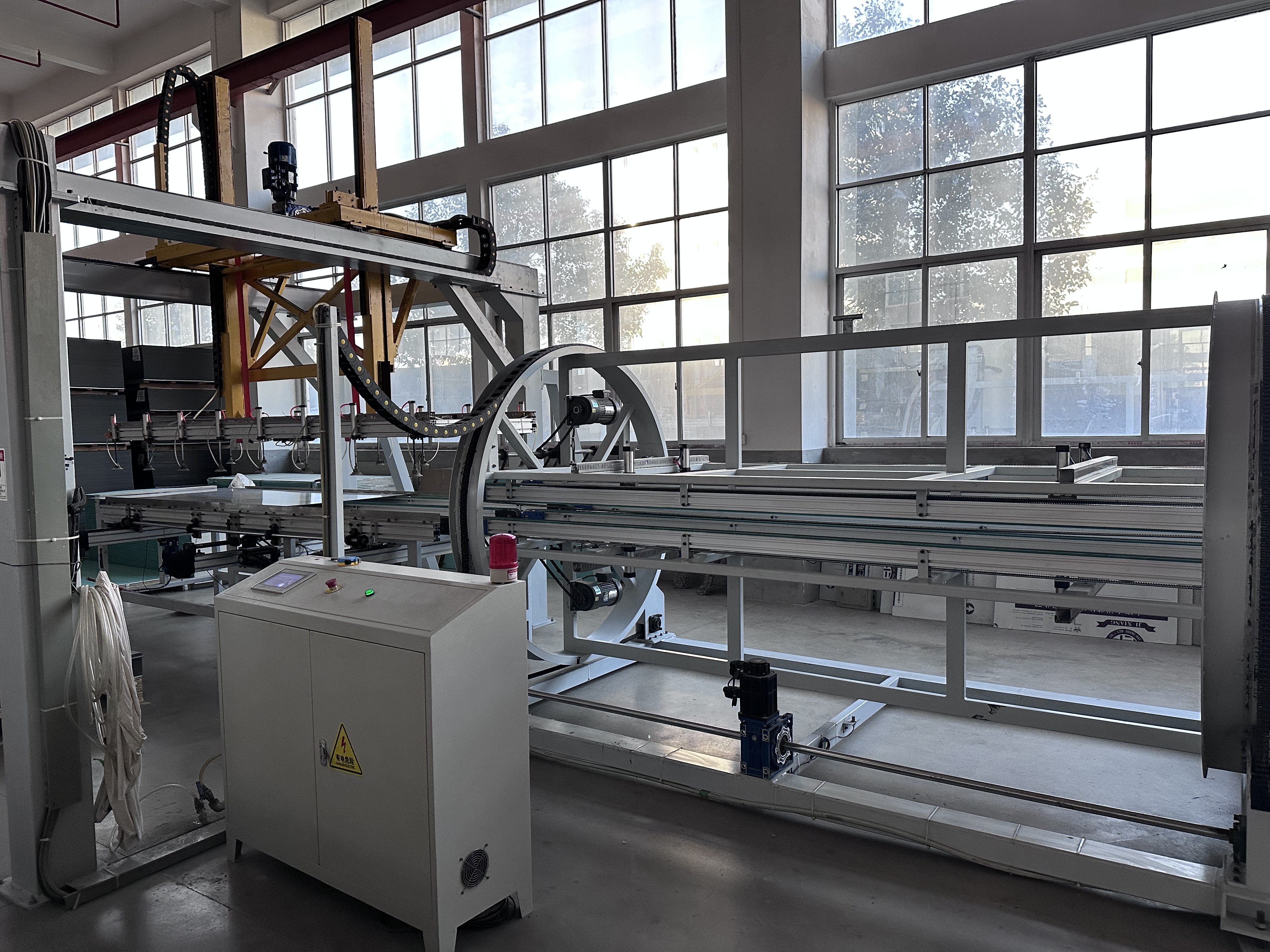
Why Cladding Comparisons Should Start With Weight, Not Price
A panel price per square meter describes only one line in a cladding budget. The weight of that panel determines several other lines: the sizing of the primary and secondary structure, the anchor and bracket design, transport volumes, lifting equipment, the number of installers needed on the facade, and the amount of scaffolding time the project consumes. On retrofit projects it can also determine whether the existing structure can accept the cladding at all. A buyer comparing quotations on material price alone is comparing perhaps half of the real cost picture.
Aluminum composite panels typically weigh around 3–5 kg/m². Solid aluminum panels weigh roughly 6–15 kg/m². Natural stone cladding is far heavier, usually 20–60 kg/m² or more. In other words, a stone facade can weigh five to fifteen times more than an ACP facade of the same area, and the supporting structure and installation method must reflect that difference.
The Three Options at a Glance
The table below consolidates the published comparison data used throughout this reference. It is deliberately narrow: weight, cost position and maintenance behaviour. Fire performance, which is a separate and jurisdiction-specific requirement, is treated later in the article.
| Material | Typical panel weight | Relative material cost | Total project cost vs. ACP | Maintenance profile |
|---|---|---|---|---|
| Aluminum composite panel (ACP) | 3–5 kg/m² | Baseline for this comparison | Baseline | PVDF coating provides weather resistance and anti-fading performance; simple cleaning; damaged panels can be replaced individually. |
| Solid aluminum panel | 6–15 kg/m² | Approximately 30–80% more expensive than ACP | ACP reduces total project cost by approximately 30–60% | More prone to surface oxidation; higher maintenance cost across large areas; more difficult to replace. |
| Natural stone cladding | 20–60 kg/m² or more | Higher material sourcing, processing and installation cost | ACP reduces total project cost by approximately 30–60% | Staining, cracking or efflorescence can develop over time; periodic sealing and more complex repair procedures. |
Comparison figures reflect the published ACP vs. solid aluminum and ACP vs. natural stone comparison data used in this reference.
What a 3–5 kg/m² Panel Means Structurally
Weight per square meter is a design input, not a marketing number. Its effect shows up in three places that buyers can usually verify against the project budget.
Primary and secondary structure
Natural stone requires stronger structural support and a more complex installation system than a lightweight composite panel. That requirement cascades into the bracket design, the substrate, and in some cases the primary frame. Because ACP is significantly lighter, it simplifies the supporting structure and reduces the amount of material the facade adds to the building's dead load.
Transport, handling and installation labour
Lower panel weight reduces transport cost and makes panels easier to handle and position on site. ACP also offers higher installation efficiency because it is easier to fabricate — cut, routed and bent — than solid aluminum, which requires more effort in handling and installation. Installation labour and scaffolding time are two of the cost lines that move most when panel weight changes.
Flatness in large formats
Flatness is often assumed to favour thicker, heavier materials. The comparison data suggests the opposite in large-format work: ACP provides excellent flatness supported by its core structure, while solid aluminum panels are more prone to deformation in large-format applications. Stone is dimensionally stable but achieves flatness through thickness and mass, which is exactly what makes it heavy.
Where the 30–60% Total Cost Reduction Comes From
The most frequently cited figure in ACP comparisons is that a composite panel system can reduce total project cost by approximately 30–60% compared with solid aluminum panels, and by approximately 30–60% compared with stone cladding systems. That range is not a discount on the panel itself. It is the accumulation of several cost lines that behave differently for each material:
- Material cost. ACP has a clear cost advantage over solid aluminum, and stone is more expensive again in sourcing and processing. Solid aluminum panels are typically quoted at roughly 30–80% above ACP on a material basis.
- Transport cost. Composite panels are lighter than both alternatives, which reduces freight weight and handling requirements.
- Installation labour. Faster, easier fixing on lightweight panels lowers labour hours per square meter. Stone systems, by contrast, involve higher installation labour costs and longer construction time.
- Structural support. Stone's greater weight requires stronger support, which carries its own material and engineering cost.
- Programme time. Shorter installation windows reduce scaffolding rental, site supervision and disruption to the building's occupation.
Because these comparisons are expressed as ranges, buyers should expect the actual figure to depend on project scale, panel geometry, local labour rates, facade accessibility and the coating specified. The useful role of the 30–60% band is as a screening figure: it tells a buyer that weight-driven cost differences are large enough to justify a proper structural and lifecycle comparison before the specification is fixed.
Maintenance and Lifecycle Cost: PVDF Coatings vs. Stone vs. Bare Aluminum
Maintenance behaviour is where the three materials diverge most clearly over the life of a building, and where a low initial price can be misleading.
ACP with a PVDF coating provides weather resistance, anti-fading performance and easy cleaning, and typically requires only routine cleaning. Because panels are fixed individually, a damaged or vandalised panel can be replaced locally with minimal effort rather than requiring a large area to be re-finished.
Solid aluminum panels, by contrast, are more prone to surface oxidation. Where large facade areas are involved, that translates into higher maintenance cost, and replacement is more difficult than with a composite panel system.
Natural stone behaves differently again. Stone surfaces can develop staining, cracking or efflorescence over time, and they typically require periodic sealing and more complex maintenance procedures. Repairs tend to be visible because stone relies on matched natural material rather than a reproducible factory finish.
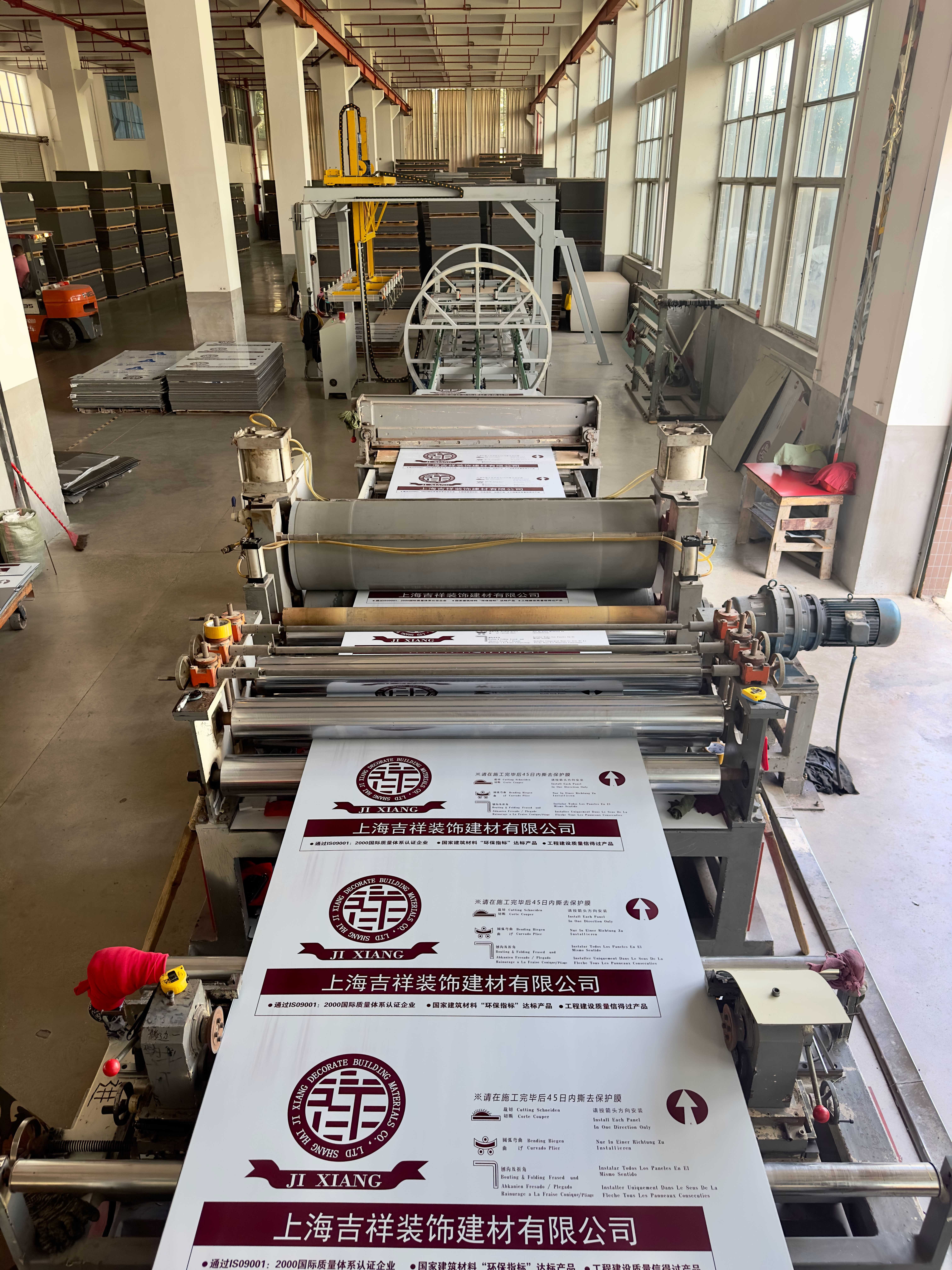
Technical Explanation: Why Sandwich Panels Behave Differently
An aluminum composite panel is a sandwich: two aluminum skins bonded to a core material, with a factory-applied coating on the visible face. The core is what separates ACP from solid aluminum. Buyers evaluating the two should treat them as different structural systems, not as two grades of the same product.
Thermal performance follows directly from that structure. The composite structure helps reduce heat transfer, and when the panel is used as part of an insulated wall or ventilated facade system it contributes to the overall performance of the building envelope. Solid aluminum panels have high thermal conductivity, which allows heat to transfer more easily into interior spaces. Natural stone has high thermal mass and conductivity, which in certain environments can also lead to greater heat transfer. PVDF-coated and light-coloured ACP surfaces reflect more sunlight, helping to reduce heat absorption and lower exterior surface temperatures.
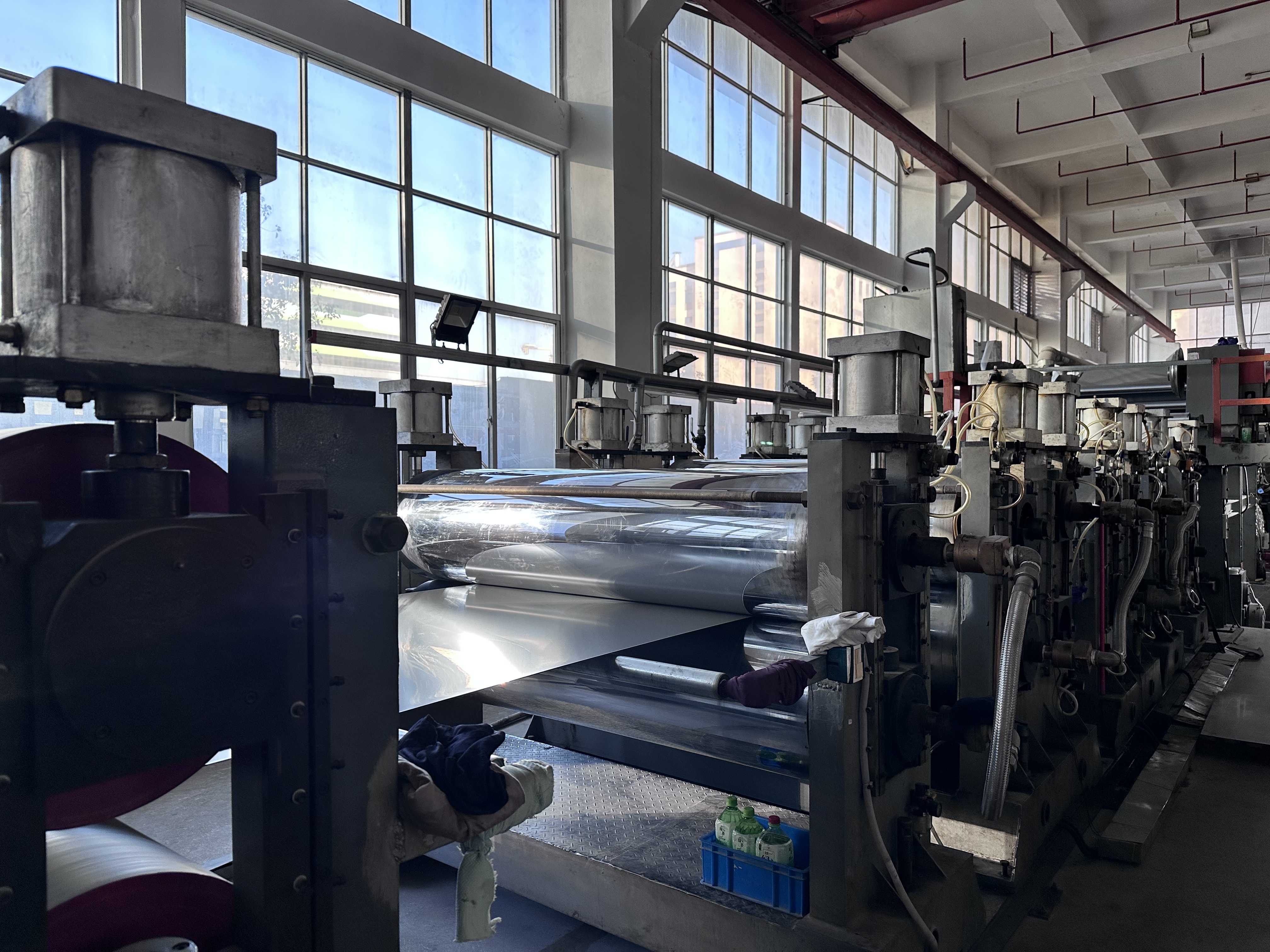
Because ACP is a system rather than a single material, a specification that names only 'aluminum composite panel' is incomplete. The variables below are the ones that determine whether a panel performs as the comparison data suggests.
| Specification item | Options available | Why it changes performance |
|---|---|---|
| Panel thickness | 3 mm, 4 mm, 5 mm, 6 mm, 8 mm | Affects stiffness, flatness and the framing detail required. |
| Normal width | 1220 mm, 1250 mm, 1500 mm | Determines module layout and the number of joints on the facade. |
| Aluminum alloy | AA1100, AA3003, AA5005 (other grades on demand) | Affects skin strength, corrosion behaviour and formability. |
| Aluminum thickness | 0.05 mm to 0.50 mm | The skin thickness is a primary driver of panel rigidity and impact behaviour. |
| Core material | PE core or fireproof core | Determines which fire classifications the assembly can target. |
| Surface category | PVDF coated, mirror, wood grain, marble grain, brushed, nano self-cleaning, fireproof aluminum composite | Sets the maintenance profile, appearance and applicable environment. |
| Colour and branding | Colour customizable; brand/OEM custom made | Allows facade colour matching and private-label programmes. |
Where Solid Aluminum and Stone Still Win
An independent comparison has to state the boundaries as clearly as the advantages. Neither alternative is obsolete, and ACP is not the correct answer for every facade.
Solid aluminum panels remain the appropriate choice for high-end facade projects, high-impact structural applications and heavy-duty industrial environments, where the additional rigidity and mass of a solid sheet are part of the requirement rather than a penalty. Buyers who need a panel to absorb direct mechanical impact should not substitute a lighter composite simply because it is cheaper.
Natural stone remains the appropriate choice for high-end buildings, luxury facades, monuments and projects that specifically require a solid, natural aesthetic. Stone's mass is part of its architectural value in those contexts, and its thermal mass behaves differently from a lightweight envelope. A buyer specifying stone for heritage or monumental reasons is not making a cost error; they are buying a different set of properties.
ACP's own boundaries are equally specific:
- Fire classification is not optional. A PE core and a fireproof core are different products. In Europe, ACP fire behaviour is classified under EN 13501-1, and A2-s1,d0 or B-s1,d0 ratings are typically required for building facades. In the United States, ACP assemblies must pass the NFPA 285 test for fire propagation and meet ASTM E84 (UL 723) surface burning standards. A projection-based cost comparison is meaningless if the panel cannot be used on the project at all.
- Performance depends on the full specification. Alloy, skin thickness, core type and coating jointly determine stiffness, impact behaviour and durability. Two panels sold under the same generic name can behave very differently.
- It is not a like-for-like substitute for stone's appearance or mass. Decorative finishes can reproduce a stone or wood appearance at a fraction of the weight, but they remain a coated aluminum surface, not quarried material.
- It is not a heavy-duty structural material. Where the cladding must also carry impact or structural duty, solid aluminum is the more defensible specification.
Application Fit: Facades, Storefronts, Signage and Interiors
Aluminum composite panels are used across building curtain walls and exterior wall decoration, commercial and retail storefronts, interior decoration, signage and advertising billboards, engineering project decoration, and furniture manufacturing. That breadth follows from the same properties that drive the comparison: low weight, easy fabrication, and a wide choice of factory finishes.
In practice, the finish usually determines the application. PVDF-coated panels are the default choice for weather-exposed exterior walls. Nano self-cleaning surfaces are specified where facade access for cleaning is difficult or costly. Mirror and brushed finishes are common in retail and interior work. Wood grain and marble grain panels are used where a natural appearance is required without the weight of solid timber or stone. Fireproof aluminum composite panels are specified where the project's fire strategy demands a rated core.
Market Trend: Fire-Rated Cores, PVDF Coatings and Lightweight Retrofit
Three verified market signals are shaping how buyers now frame cladding decisions.
First, the global aluminum composite panels market was valued at USD 6.9 billion in 2025 and is projected to reach USD 12.1 billion by 2033, according to Grand View Research. That growth is occurring in a category that already has substantial industrial capacity — China is the top global exporter of aluminum composite panels by shipment volume.
Second, the coating mix is not evenly distributed. Polyvinylidene fluoride (PVDF) coated panels accounted for the largest revenue share of 36.5% of the aluminum composite panel market in 2025 (Grand View Research), which is consistent with PVDF being the specification most buyers associate with exterior durability and colour stability.
Third, and most consequential for specification, fire retardant panels are estimated to dominate the market with a 53.6% share by 2025, driven by tightening global building safety codes (Future Market Insights). Combined with EN 13501-1 in Europe and NFPA 285 / ASTM E84 in the United States, this means the fire-rated core is increasingly the default assumption rather than an upgrade — and PE-cored panels are progressively confined to applications where the fire strategy does not depend on the cladding.
For buyers, the practical implication is that the ACP-versus-aluminum-versus-stone comparison should now be run on fire-rated ACP, not on the cheapest composite available. Otherwise the 30–60% cost advantage is being calculated against a panel that may not be permitted on the project.
Sourcing for the Long Term: What Buyers Should Verify Before Committing
Cost and weight decide which material family is selected. Supply behaviour decides whether the project is delivered without surprises and whether the second and third phases still match the first. This is the point where independent buyers typically start evaluating the manufacturer as much as the material.
Jiersun (Fujian) Decorative Building Materials Co., Ltd. — trading as JIERSUN — is an aluminum composite panel manufacturer established in 2006 and based in Jinjiang City, Fujian Province, China. The company operates a 20,000 m² facility roughly 70 km from port, runs a 10-engineer R&D team, and exports to Southeast Asia, Africa and the Middle East. Its product range covers the surface categories compared above: PVDF coated, mirror, wood grain, marble grain, brushed, nano self-cleaning and fireproof aluminum composite panels, in 3 mm to 8 mm thicknesses and widths of 1220 mm, 1250 mm and 1500 mm.
For execution-stage buyers, the verifiable procurement parameters are these: minimum order quantity of 500 m²; standard delivery time of 15–20 days; FOB or CIF shipping terms; T/T and L/C payment; quality control applied from incoming raw materials through finished products; in-house factory inspection covering appearance, dimension, coating quality and functional tests, or third-party inspection reports; remote technical support and free testing services.
The following checklist translates those parameters into the questions that matter for a multi-phase or long-term programme:
- Is the specification locked in writing? Alloy, skin thickness, core type, panel thickness and coating should all appear on the order, not only the generic product name.
- Is the required fire classification documented for the destination market? EN 13501-1 in Europe; NFPA 285 and ASTM E84 in the United States.
- Can colour be held consistent across production batches? Phased facades reveal batch variation more than single-phase projects do.
- Is the inspection route agreed before production? In-house inspection or third-party reports, decided in advance rather than after shipment.
- Does MOQ and lead time fit the construction programme? A 500 m² minimum and a 15–20 day standard delivery window suit phased ordering, but only if the schedule is planned around them.
- Can matching panels be supplied later? Panel-level replacement is a maintenance advantage only if replacement panels can be sourced with the same finish.
- Who provides technical support during installation? Remote technical support is part of the delivery, not a post-sale favour.
Future Outlook: Cladding Decisions Are Becoming Lifecycle Decisions
The direction of travel is clear from the market data. As fire-rated cores move toward market dominance and PVDF becomes the expected exterior coating, the differentiating questions in a cladding comparison are shifting away from the panel price and toward the performance of the envelope over time: how much load the facade adds, how often it has to be cleaned, how easily a damaged panel is replaced, and whether the finish can still be matched in five or ten years.
Lightweight retrofit is likely to be the strongest structural driver. Every kilogram per square meter that a cladding system avoids is a kilogram the existing structure does not have to carry, which is precisely the constraint that makes stone and solid aluminum impractical on some renovation projects. On new-build projects, the same weight advantage converts into framing, transport and labour savings rather than structural necessity.
What will not change is the need for a complete specification. The comparison data in this reference — 3–5 kg/m² for ACP against 20–60 kg/m² for stone, and a 30–60% total project cost reduction against both solid aluminum and stone — describes a material family, not a specific panel. The buyer who defines the alloy, the core, the coating and the fire classification before comparing quotations is the one who captures the advantage the data describes.
FAQ
Is ACP actually lighter than stone cladding, and does the difference matter on real projects?
Yes, and the gap is substantial. Aluminum composite panels typically weigh around 3–5 kg/m², while natural stone cladding usually weighs 20–60 kg/m² or more. Because stone requires stronger structural support and a more complex installation system, the weight difference directly changes the substrate, the brackets and the installation method. On retrofit and upper-floor work in particular, the lower dead load of a composite panel is often the reason it is considered at all.
How much can ACP reduce total cladding cost compared with solid aluminum or stone?
Published comparison data indicates that ACP can reduce total project cost by approximately 30–60% compared with solid aluminum panels, and by approximately 30–60% compared with stone cladding systems. The reduction comes from lower material cost, lower transport cost because of lighter panels, and lower installation labour because panels are easier to fabricate and fix. Solid aluminum panels themselves are typically around 30–80% more expensive than ACP on a material basis. The figures are ranges, so the actual outcome depends on project scale, panel geometry, local labour rates and the coating specified.
How does a PVDF-coated ACP surface compare with stone in long-term maintenance?
ACP with a PVDF coating provides weather resistance, anti-fading performance and easy cleaning, and generally requires only routine cleaning; damaged panels can be replaced individually. Natural stone has no factory-applied coating and can develop staining, cracking or efflorescence over time, typically requiring periodic sealing and more complex repair procedures. In both cases, maintenance cost also depends on exposure conditions and how accessible the facade is for cleaning and repair.
What are the limits of ACP compared with solid aluminum panels?
Solid aluminum panels are made entirely of aluminum and generally weigh 6–15 kg/m², so ACP is roughly 50% lighter. That weight advantage is also the limitation: solid aluminum panels are the more appropriate choice for high-impact structural applications, heavy-duty industrial environments and high-end facades that require additional rigidity. ACP also depends more heavily on correct specification — alloy, skin thickness, core type and coating together determine performance — and a PE core is not suitable where the project's fire strategy requires a rated assembly. Solid aluminum is also more prone to surface oxidation and more difficult to replace over large areas.
Does a lightweight composite panel still need to meet fire safety requirements?
Yes, and this is a jurisdiction-level requirement rather than a product preference. In Europe, ACP fire behaviour is classified under EN 13501-1, with A2-s1,d0 or B-s1,d0 ratings typically required for building facades. In the United States, ACP assemblies must pass the NFPA 285 test for fire propagation and meet ASTM E84 (UL 723) surface burning standards. Because fire retardant panels are estimated to hold a 53.6% share of the market by 2025 under tightening global codes, buyers comparing ACP with solid aluminum or stone should run the cost comparison on a fire-rated specification.
What should a buyer verify before placing a repeat or phased ACP order?
The items that most often cause problems in phased projects are specification drift and colour variation between batches. Buyers should confirm in writing the alloy, skin thickness, core type, panel thickness and coating; confirm the fire classification required for the destination market; agree the inspection route in advance — in-house factory inspection covering appearance, dimension, coating quality and functional tests, or third-party inspection reports; check that minimum order quantity and lead time fit the construction schedule; and confirm that matching panels will remain available for later replacement.
Summary for Buyers
The material comparison comes down to three questions. How much weight does the facade add, and can the structure carry it? What is the total project cost once transport, labour and support are included — not just the panel price? And what does the surface require over the life of the building? On the published comparison data, ACP answers those questions with the lowest weight (3–5 kg/m² against 20–60 kg/m² for stone) and a total project cost reduction of approximately 30–60% against both solid aluminum and stone. Solid aluminum and stone retain clear advantages in high-impact, heavy-duty and monumental applications, and ACP is only the right choice when it is specified as a complete system — alloy, core, coating and fire classification included.
A full overview of panel thicknesses, widths, alloys, core options and surface finishes is available in the JIERSUN ACP Catalog (2026).
Есть вопросы или нужны дополнительные детали?
Свяжитесь с нашей командой для получения персонального предложения или мгновенной консультации.
Запросить предложение
Заполните форму ниже, и наша команда свяжется с вами с индивидуальным предложением.
Прямой чат WhatsApp
Предпочитаете общаться в реальном времени? Напишите нам в WhatsApp для мгновенной помощи и быстрых ответов.
- Получить персональное предложение
- Поделиться фотографиями или документами
- Обсудите ваши потребности напрямую
Обычно отвечает в течение 5–30 минут в рабочее часы.