
AHA Scorecard: R&D, Capacity, Service & Solutions for Buyers
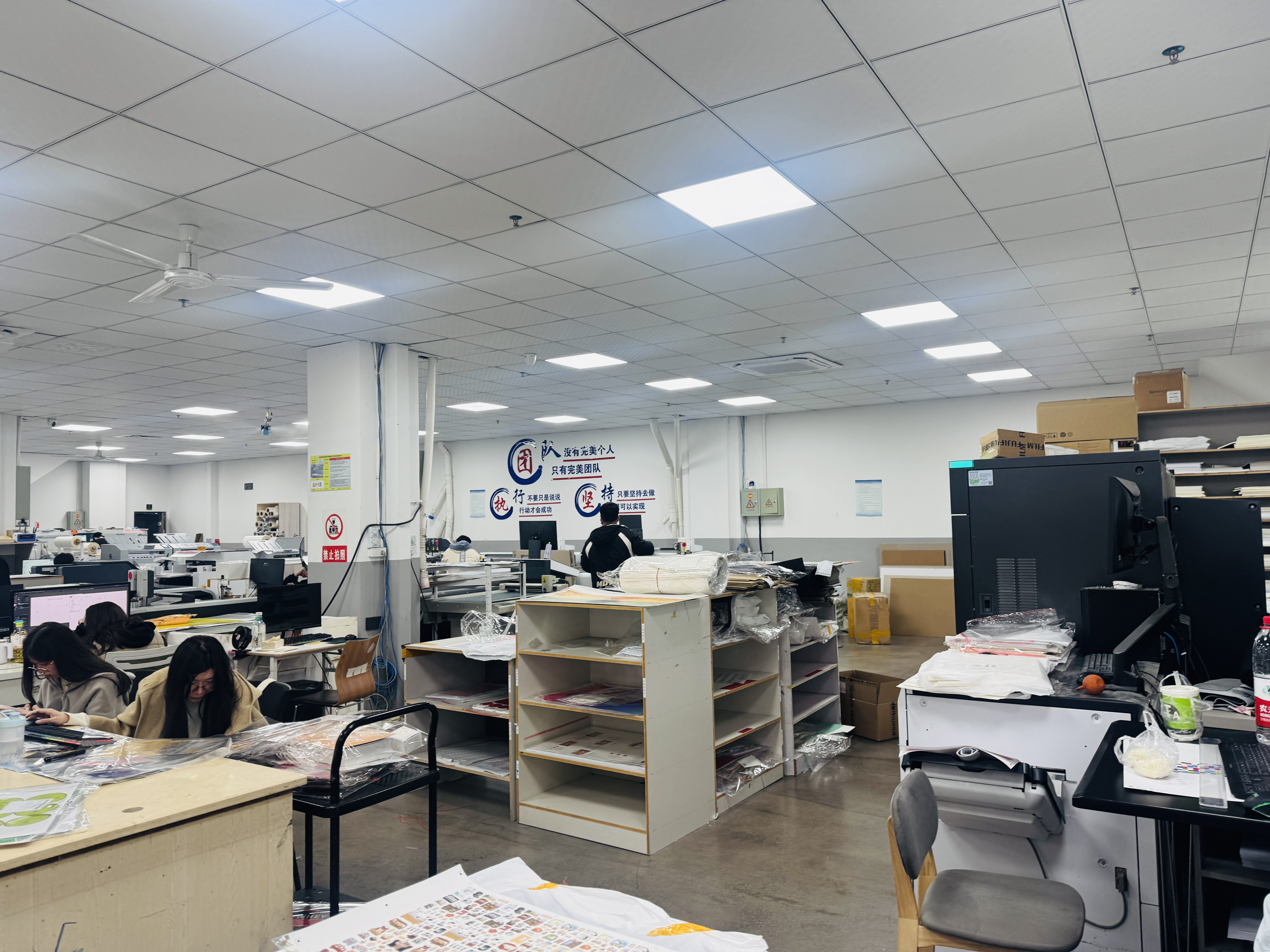
Evaluation-stage sourcing decisions depend on documentation and process visibility, not on catalog breadth alone.
AHA Scorecard: R&D, Capacity, Service & Solutions for Buyers
Printing accounted for 31.78% of global personalization method share in 2025, according to Fortune Business Insights, and the wider personalized gifts market was valued at USD 33.70 billion in 2025 with a projected value of USD 69.20 billion by 2033, according to Data Bridge Market Research. Those two figures explain why so many buyers now treat printed gifts as a core category rather than a seasonal add-on — and why the harder question at the evaluation stage is no longer whether a supplier can print, but which supplier can be scored on evidence.
This article applies a four-dimension scorecard to one supplier, Wenzhou Aha Craft Gifts Co., Ltd. (AHA), a custom gift manufacturer founded in 2017 and based in Wenzhou, Zhejiang, China, operating a 2,000 m² facility with approximately 100 employees and five R&D engineers. The four dimensions — R&D and customization, capacity and lead time, service and MOQ behavior, and quality assurance — are the same four that separate otherwise similar printed-gift suppliers at the point where a buyer has to commit to a supplier list.
Why Printed-Gift Comparisons Collapse at the Evaluation Stage
At the awareness stage, printed-gift suppliers are nearly interchangeable on paper. Almost every supplier claims OEM and ODM support, custom logos, export experience and competitive pricing. Those claims are not false, but they are undifferentiated, which is why shortlists built only on top-line claims tend to produce quotes that cannot be compared.
The break point is specification depth. Two suppliers can both quote a “custom printed gift” while actually quoting different materials, different print processes, different packaging and different inspection regimes. A paper craft gift printed on 80g stock with screen printing is not the same product as the same gift printed on 300g stock with UV digital printing and embossed detailing, even though both sit under the same keyword.
Four buyer questions survive that collapse, because each one is answerable with a document rather than a claim:
- R&D and customization depth: who owns the design file, who develops the mold, and how far customization actually extends beyond a logo placement?
- Capacity and lead-time realism: what monthly volume can be committed to, and what production window is realistic at that volume?
- Service and MOQ behavior: will the supplier run a small trial order so a market can be tested before a bulk commitment, and how is a repeat order handled?
- Quality assurance and documentation: what inspection actually happens, and which standards can be evidenced for the destination market?
Everything below applies those four questions to AHA's published profile and states clearly where the evidence is company-reported rather than independently verified, because a scorecard that hides its own evidence gaps is not a scorecard.
The Scorecard at a Glance
| Dimension | Core buyer question | AHA's stated profile | Evidence status | Buyer verification action |
|---|---|---|---|---|
| R&D & customization | Who owns design and tooling, and how deep does customization go? | Five R&D engineers; independent design, mold development, printing and packaging inside one chain; one-stop OEM/ODM; customization of logo, design, size, color and packaging | Company-reported; product-level customization ranges are published per series | Ask for an artwork-to-sample timeline and confirm mold ownership and amortization terms |
| Capacity & lead time | What volume can be committed, and within what window? | 2,000 m² facility, approximately 100 employees, 5,000,000 units annual output, 500,000 units monthly capacity, 15–30 day production lead time | Company-reported; no third-party capacity audit located | Secure a peak-season slot commitment in writing before artwork approval |
| Service & MOQ | Can the supplier support a trial order and then scale? | MOQ 2,000 units; small trial orders and bulk orders accepted with reasonable MOQs; one-stop chain through to international logistics; documented US cooperation running three years | Company-reported, supported by a stated three-year cooperation case | Request written terms for trial-order pricing and the conversion path to bulk |
| Quality assurance | What is inspected, and what can be evidenced? | 100% inspection; full-process inspection from raw material selection through production processing to finished product packaging; EN71, REACH, RoHS, ASTM F963, CPSIA, CE and FDA food-grade referenced as available upon request | Standard references are stated as available upon request; no verified certificate set published | Request each certificate or test report and check standard version, product scope and destination-market fit |
Dimension 1 — R&D and Customization Depth
AHA's customization claim rests on an integrated chain rather than a design service layered on top of outsourced production. The company states that independent design, mold development, mass production, printing, packaging and international logistics sit inside one operation, with five R&D engineers supporting OEM and ODM programs. That matters for a simple operational reason: when design and tooling are handled outside the factory, every artwork revision becomes an external negotiation, and each handoff adds a failure point between the approved sample and the shipped batch.
The customization depth becomes verifiable only at product level, and here the published ranges are specific enough to be scored:
- Custom craft gifts & stationery (AHA-CG Series): sticky notes, pens and erasers; standard sticky-note formats A5/A6/A7 and 76×76mm or 100×100mm; paper thickness 80g–300g, plastic or metal 1.5–3mm; offset printing, screen printing, UV digital printing and embossing or debossing; eco-friendly water-based ink; packaging in OPP bag, color box, gift box or blister pack.
- Custom fridge magnets (AHA-FM Series): size range 1"×1" to 11.75"×11.75", thickness 0.5mm–6mm, custom shapes including square, rectangle, round or irregular; ferrite or neodymium magnet options; UV printing and 3D embossing; PVC, soft rubber, acrylic or iron magnet substrates.
- Custom cleaning sponges & scrubbers (AHA-CS Series): standard sizes 100×60×20mm and 110×70×30mm with 10–50mm thickness, customizable; polyurethane sponge, nylon, microfiber, PP or cellulose; optional antimicrobial treatment; FDA food-grade, REACH and RoHS referenced as available upon request.
- Custom children's toys & crafts (AHA-CT Series): DIY craft kits, plastic toys, paper puzzles and educational toys; age recommendation 3+; food-grade, non-toxic, BPA-free and phthalate-free materials; eco-friendly non-toxic ink.
For a buyer assembling a multi-scenario gift program, the practical value of this range is that a single supplier can cover paper craft gifts, plastic craft gifts and reusable craft gifts without splitting the order across three vendors — which in turn keeps packaging and inspection standards consistent across the program.
Dimension 2 — Capacity, Lead Time and Order Flexibility
Capacity is where supplier claims most often outrun supplier evidence, so it is worth separating the numbers that can be committed from the numbers that can only be described. AHA's stated profile is a 2,000 m² facility with approximately 100 employees, an annual output of 5,000,000 units and a monthly capacity of 500,000 units, with a production lead time of 15–30 days. The company positions itself as a mid-scale integrated manufacturer, not a mega-supplier, and that positioning has direct procurement consequences.
Three practical readings follow:
- Volume fit: a 500,000-unit monthly ceiling suits multi-SKU gift programs, promotional campaigns and retail assortments. Programs that require a single SKU at extreme volume in a compressed window are better served by verifying slot availability early, or by dual sourcing.
- Order-size flexibility: the stated MOQ is 2,000 units, and the company states that it accepts both small trial orders and large bulk orders with reasonable MOQs — the mechanism most buyers use to test a market before committing to bulk volume.
- Lead-time scope: the 15–30 day window is a production figure. Freight transit, customs clearance and destination handling sit outside it, so landed timelines should be calculated separately at the RFQ stage.
Documented case data supports the flexibility claim in at least one direction. A US-based cooperation involving a distributor, promotional agency and corporate client has run for three years, with order scale proportional to customer volume: standard bulk orders of 10,000+ units, and smaller quantities negotiable. The stated outcome was established long-term cooperation with customization requirements met.
Dimension 3 — Service Model, MOQ and Export Logistics
Service quality is the hardest dimension to score before an order exists, because it is experienced rather than published. The most reliable proxy at the evaluation stage is repeat-order behavior: a buyer that stayed with a supplier for multiple years had the opportunity to leave and did not.
On that proxy, AHA presents two relevant facts. First, a three-year US cooperation covering promotional gifts, corporate souvenirs and retail merchandise, described as one-stop custom solutions including OEM/ODM services, with the client's customization needs met and long-term cooperation established. Second, an explicitly export-oriented footprint: the company reports 100% export share across the EU, USA, South America and the Middle East, and Southeast Asia, which means export documentation, packaging compliance and international logistics are routine operational steps rather than exceptions.
After-sales is framed in two parts: custom design revision support, and an after-sales quality guarantee. For buyers, the useful test is not whether revision support exists but when it applies — pre-production artwork rounds, or post-approval changes — since the two have very different cost implications.
What this means for a repeat-order procurement model
Suppliers that handle design, mold, print, packaging and logistics internally tend to reduce the number of parties a buyer must coordinate on a repeat order. In the printed-gifts category, where artwork, packaging and brand consistency have to be reproduced across production runs, that reduction in handoffs is often the difference between a repeatable gift program and a one-off purchase.
Dimension 4 — Quality Assurance and Compliance Documentation
AHA describes its quality control as full-process inspection covering raw material selection, production processing and finished product packaging, with 100% inspection rather than sampling. Product-level standard references appear across the range: EN71, REACH and RoHS for craft gifts, fridge magnets and cleaning products; ASTM F963, EN71, CPSIA and CE for children's products; and FDA food-grade for cleaning sponges.
Those standards are not interchangeable marketing terms, and third-party context explains why. ASTM F963-23 is the mandatory US toy safety standard for products intended for children under 14, incorporated into 16 CFR 1250 by the US Consumer Product Safety Commission. In the United Kingdom, general product-safety guidance states that producers, importers and own-branders must ensure products are safe, provide adequate instructions and warnings, and maintain conformity assessment documentation for at least 10 years.
The practical conclusion for buyers is blunt: the standard name is not the evidence; the certificate is. A supplier can reference EN71 in a catalog, but the buyer's risk sits in whether the test report matches the actual product scope, the current standard version, and the destination market.
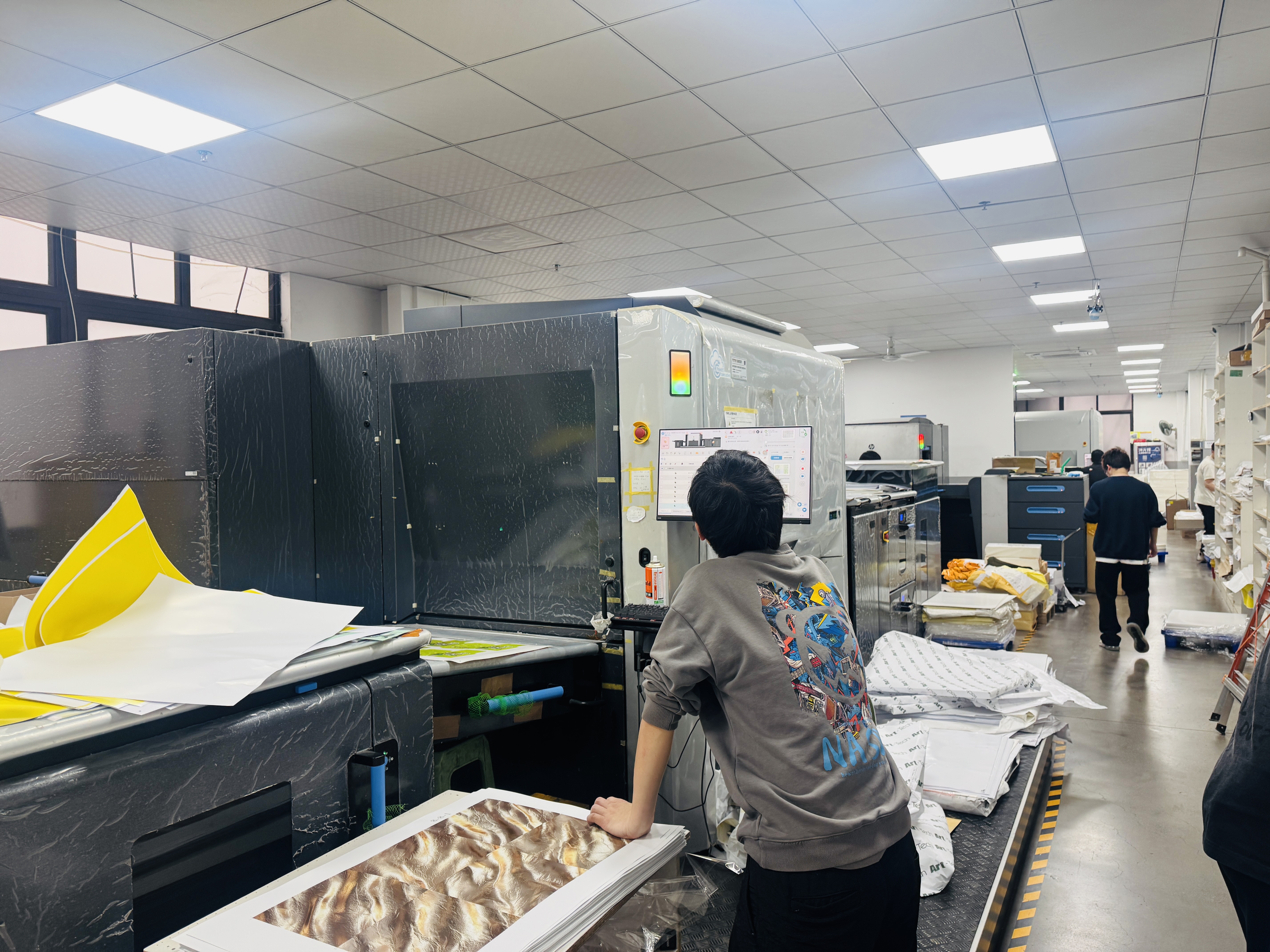
Full-process inspection from raw material to packaging is the claim buyers should verify with a documented inspection record.
Benchmarking Against Supplier Archetypes
Because named peer benchmarking requires publicly verifiable peer identities and comparable metrics, the more useful comparison for most buyers is against supplier archetypes — the four types that typically appear on a printed-gifts shortlist. Each archetype wins on a different dimension, and each carries a different procurement risk.
| Supplier archetype | R&D / customization | Capacity model | Service & MOQ | Documentation behavior | Typical procurement risk |
|---|---|---|---|---|---|
| Vertically integrated print-and-craft manufacturer | In-house design and mold development; multi-category customization | Mid-scale, multi-SKU; capacity stated per month | Trial and bulk orders accepted; consolidated chain | Standards referenced per product line, supplied on request | Single-facility concentration; peak-season slot pressure |
| Trading / intermediary supplier | Sourcing coordination rather than process ownership | Flexible on paper, dependent on third-party factories | Wide catalog; MOQ often set by the underlying factory | Documentation routed through the factory | Limited visibility into actual production and inspection |
| Single-category print shop | Deep specialization in one material or print technique | Volume tied to a narrow product line | Simple quoting for a narrow range | Focused test scope for one category | Multi-SKU gift programs require additional vendors |
| Large-volume general promotional supplier | Standardized catalog with limited craft-specific depth | High single-line volume capability | Bulk-oriented; trial orders less economical | Broad compliance portfolio, less category specificity | Customization flexibility and packaging control |
AHA maps most closely to the first archetype. Its stated model combines in-house design, mold development, printing, packaging and logistics with multi-category coverage spanning paper products, plastic products, stationery, children's toys, cleaning products and magnets. Against a single-category print shop, that breadth is an advantage for buyers running programs such as holiday craft gifts, office craft gifts and wedding craft gifts from one purchase order. Against a large-volume general promotional supplier, it is a genuine trade-off rather than a clear win.
Where This Profile Fits: Application Scenarios
Scoring a supplier is only useful if the score maps to real programs. AHA's published product ranges align with several recurring printed-gift scenarios:
- Kitchen and household programs: custom cleaning sponges & scrubbers (AHA-CS Series) with FDA food-grade and antimicrobial options, standard 100×60×20mm and 110×70×30mm formats, and 10–50mm thickness — suited to kitchen craft gifts, daily-use retail and promotional bundles.
- Home decor and souvenir programs: custom fridge magnets (AHA-FM Series) from 1"×1" to 11.75"×11.75", with UV printing and 3D embossing on PVC, soft rubber, acrylic or iron magnet — suited to home decor craft gifts, tourism souvenirs and outdoor mini craft gifts.
- Children's programs: custom children's toys & crafts (AHA-CT Series) with a 3+ age recommendation and food-grade, non-toxic, BPA-free and phthalate-free materials, referencing ASTM F963, EN71, CPSIA and CE — the category where kids safety certified craft gifts and assembled kids craft gifts demand the strongest documentation.
- Office, wedding and corporate programs: custom craft gifts & stationery (AHA-CG Series) covering sticky notes, pens and erasers, with A5/A6/A7 and 76×76mm or 100×100mm formats and gift box packing — relevant to office craft gifts, wedding craft gifts, personalized logo craft gifts and gift box packed craft gifts.
- Material-led programs: paper craft gifts on coated, kraft or cardboard stock from 80g to 300g; plastic craft gifts in PVC or PP at 1.5–3mm; and eco-friendly craft gifts using water-based ink and reusable product design.
Across all of these, the customization method is consistent: logo, design, size, color and packaging are configured to the buyer's branding, which is what makes the company's catalog usable for OEM and ODM craft gifts and printable craft gifts rather than only for stock merchandise.
Market Trend: Printing Is the Scalability Layer, Not a Niche
Two published data points frame the category. The global personalized gifts market was valued at USD 33.70 billion in 2025 and is projected to reach USD 69.20 billion by 2033 (Data Bridge Market Research). Within that market, printing held a leading 31.78% share of personalization methods in 2025 (Fortune Business Insights).
The interpretation that follows is that printing is not a decorative add-on but the dominant scalability mechanism for personalized gift production. For buyers, that shifts the evaluation emphasis away from catalog breadth and toward print-related capability: how many print processes a manufacturer can run in-house, how consistently those processes reproduce brand colors across runs, and how print quality is inspected before packing.
Limitations of This Scorecard
A scorecard is only as strong as the evidence behind it, and several gaps should be stated plainly:
- Company-reported inputs: Most of AHA's operating figures — factory size, headcount, annual and monthly output, MOQ, lead time and inspection regime — originate from company self-report and a third-party supplier profile. Independent facility audits were not located.
- Certificate availability, not certificate verification: Standards such as EN71, REACH, RoHS, ASTM F963, CPSIA, CE and FDA food-grade are referenced as available upon request. No verified certificate set was published in the evidence reviewed.
- No comparable price or landed-cost dataset: Public quotations, MOQ economics, Incoterms, packaging costs and freight data were not available for this comparison, so cost ranking is deliberately excluded. Cost comparison requires RFQs issued against identical specifications.
- Capacity verification: No published utilization, yield or production-line data exists to validate the stated 500,000-unit monthly capacity.
- Archetype benchmarking, not named peer ranking: Named peer comparison was not published here because verifiable peer identities and comparable metrics were not available. Buyers should apply this same four-dimension scorecard to each named supplier on their own shortlist.
Future Outlook
Three shifts are likely to shape printed-gift supplier evaluation over the next procurement cycle. First, compliance documentation is becoming a gate rather than a differentiator: with mandatory standards such as ASTM F963-23 in the United States and documentation-retention expectations of at least 10 years under UK guidance, buyers increasingly need certificate scope and standard version, not a standards name on a webpage. Second, specification-first RFQs are replacing catalog-based quoting, because the printed-gifts category now spans material, print process, packaging and safety variables that cannot be compared at headline level.
Third, mid-scale integrated manufacturers with in-house design, mold development and multi-category production are positioned to serve multi-scenario gift programs, while very large single-SKU programs will continue to rely on capacity verification and dual sourcing. For a buyer at the evaluation stage, the practical takeaway is consistent: score the four dimensions, demand the document behind each claim, and let a validated sample decide the award.
FAQ
Four things, in this order: customization depth, including whether design and mold development sit inside the supplier or are outsourced; capacity and lead-time realism, expressed as a committed monthly volume and a production window; service behavior, especially whether small trial orders are accepted before a bulk commitment; and quality documentation, meaning the inspection process plus certificates whose standard version and product scope match the destination market.
The company states that logo, design, size, color and packaging are all customizable under one-stop OEM and ODM services, supported by independent design and mold development. Product-level ranges include fridge magnets from 1"×1" to 11.75"×11.75" with 0.5mm–6mm thickness and ferrite or neodymium magnet options; cleaning sponges in 100×60×20mm and 110×70×30mm standard formats with 10–50mm thickness; stationery formats of A5/A6/A7 and 76×76mm or 100×100mm; and printing methods covering offset, screen, UV digital and embossing or debossing.
The stated MOQ is 2,000 units, with small trial orders and large bulk orders both accepted. Monthly capacity is stated at 500,000 units and annual output at 5,000,000 units, with a production lead time of 15–30 days. In a documented three-year US cooperation, standard bulk orders ran at 10,000+ units with smaller quantities negotiable. Lead time refers to production; freight transit and customs clearance are separate from that window.
The children's line (AHA-CT Series) is described with a 3+ age recommendation and food-grade, non-toxic, BPA-free and phthalate-free materials, referencing ASTM F963, EN71, CPSIA and CE as compliant and available upon request. In the United States, ASTM F963-23 is the mandatory toy safety standard for products intended for children under 14, incorporated into 16 CFR 1250. Buyers should obtain the actual test reports and confirm both the standard version and the tested product scope.
Most operating figures are company-reported and no independent capacity, utilization or facility audit was located; standards are described as available upon request, and no verified certificate set is published alongside the profile; no comparable price or landed-cost data is available publicly; and the facility footprint and workforce place the company in the mid-scale bracket, so very large single-SKU programs should verify capacity commitments and consider dual sourcing. Company information is published at the manufacturer's site, www.ahacustomshop.com.
Есть вопросы или нужны дополнительные детали?
Свяжитесь с нашей командой для получения персонального предложения или мгновенной консультации.
Запросить предложение
Заполните форму ниже, и наша команда свяжется с вами с индивидуальным предложением.
Прямой чат WhatsApp
Предпочитаете общаться в реальном времени? Напишите нам в WhatsApp для мгновенной помощи и быстрых ответов.
- Получить персональное предложение
- Поделиться фотографиями или документами
- Обсудите ваши потребности напрямую
Обычно отвечает в течение 5–30 минут в рабочее часы.