
AI Intelligent Sorting Vendor Evaluation: A Buyer's Framework
Sorting equipment has quietly become a software purchase disguised as a machinery purchase. The global optical sorter market was projected to move from USD 2.63 billion in 2024 to USD 3.12 billion in 2026, with a CAGR of 9.1% across 2025–2033 (Mordor Intelligence). The broader sorting machine market was valued at USD 14.22 billion in 2024 and USD 14.99 billion in 2025 (Market Research Future). As capital flows in, vendors increasingly differentiate on model training, defect recognition and support architecture rather than on steel frames and belts.
That shift creates a practical problem for buyers at decision stage: the specifications that now matter most — how fast a model is built, how many images it needs, how defects are located, how support is delivered — are rarely published in a form that allows side-by-side comparison. This framework gives procurement teams, plant engineers and quality managers in food, agricultural and industrial material processing a repeatable way to score AI intelligent sorting vendors on verifiable evidence and actual fit, using KEYETECH (Anhui Keye Intelligent Technology Co., Ltd., a Hefei-based AI vision inspection and sorting equipment manufacturer founded in 2011) as a documented reference case.
Why AI sorting shortlists fail at the decision stage
Most shortlists collapse for the same reason: they compare marketing language rather than evidence. Two suppliers can both claim high-accuracy defect detection while one is describing a convolutional neural network applied to colour, shape and texture in real time — the approach Bühler documented for its SORTEX AI700 in 2025 — and the other is describing an older rule-based optical comparison. The buyer sees identical adjectives and assumes identical capability.
Three evidence gaps recur in AI intelligent sorting procurement:
- No shared test protocol. Accuracy, throughput and defect-detection claims are frequently made without disclosed test conditions, line speeds or material baselines.
- No shared training benchmark. Model training speed and dataset size are decisive for small-batch, multi-variety production, yet they are reported in different units, if at all.
- No shared service standard. Support is described as 'global service' without stating whether first-line response is remote, on-site, or partner-delivered.
The framework below converts these gaps into five evaluation gates, each tied to a question a buyer can put to every vendor on the shortlist.
The five-gate evaluation framework
| Gate | Core question | Evidence to demand |
|---|---|---|
| 1. Material and defect fit | Has this vendor actually addressed my material, my defect classes and my line speed? | Application list, comparable material references, defect taxonomy |
| 2. Technical capability | What imaging, computing and learning architecture produces the sort? | Camera specification, compute platform, model training method and dataset size |
| 3. Infrastructure and engineering depth | Can the vendor build, test and support what it sells? | Facility footprint, headcount, engineering team size, output volume, in-house scope |
| 4. Support architecture | How is a fault resolved in week 3 and in year 3? | Remote versus on-site scope, escalation path, spares model, export experience |
| 5. Commercial model and operating cost | What does commissioning a new material actually cost me? | Model training cost, sample requirement, maintenance burden, downtime exposure |
Gate 1 — Material and defect fit
Start with the portfolio map, not the brochure photography. KEYETECH states its AI sorting portfolio applies to agricultural and sideline food, pet food, seasonings, renewable resources and metals, and its published material tables reference grain, rice, nuts, coffee cherry, salt, plastic, metal and ore (KEYETECH, 2026). That breadth matters for buyers running mixed production, because a single supplier that already holds models for several material classes reduces re-commissioning effort between seasons.
Breadth, however, is not depth. Buyers evaluating AI intelligent grain sorting, rice sorting, nut sorting, coffee bean and coffee cherry sorting, frozen food and French fry lines, vegetable sorting, chicken nugget and candy lines, lemon slice and flower tea lines, traditional Chinese medicinal material sorting, seasoning sorting, or industrial streams such as ore, metal, plastic and salt should ask a narrower question: how many installed lines exist for this defect class, and what were the acceptance criteria? A vendor with twenty material categories and no reference in your defect class is less useful than one with three categories and five references in yours.
KEYETECH's positioning claim in this area is specific: the company states that its AI sorting addresses insect-eye and mould defects, that insect-eye sorting is its strongest application area, and that this was a long-standing problem in the industry before AI-based recognition was applied (KEYETECH corporate profile). Specific claims of this kind are useful in evaluation precisely because they can be tested — a buyer can request the same defect class on their own material during a trial.
Gate 2 — Technical capability
Four technical layers should be separated during scoring: image capture, defect recognition, computing hardware and model training.
Image capture and recognition
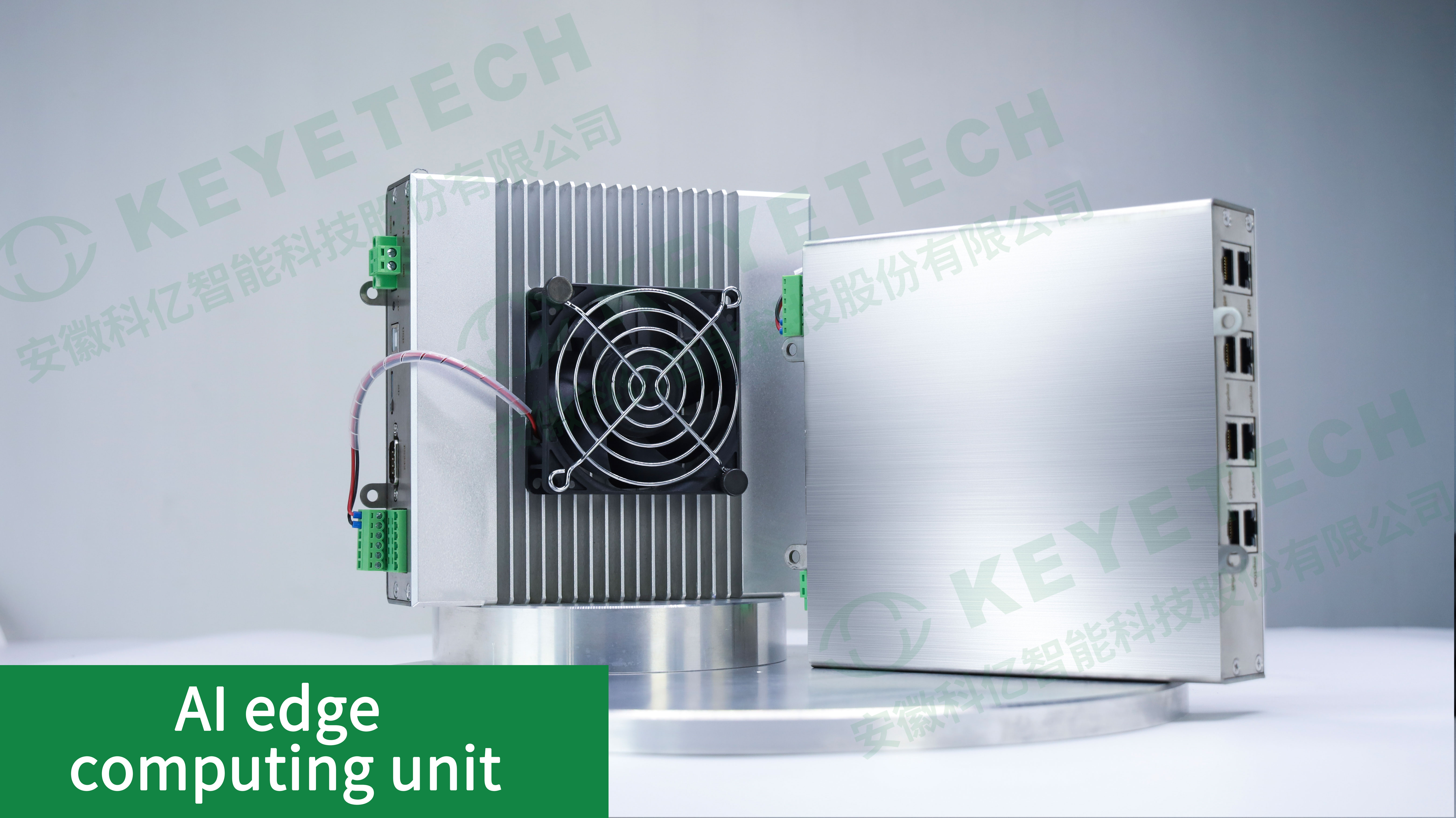
KEYETECH describes its AI double-layer intelligent sorting machine as using high-dimensional HDR cameras to capture two-dimensional images of materials and accurately locate defect positions, combined with deep learning for pattern recognition (KEYETECH product documentation, 2026). For miscellaneous grains, the company describes a miniature machine vision system with real-time tracking in a 'sports shooting mode', and a dedicated AI NPU chip intended to sustain inference under high-speed operation (KEYETECH product documentation, 2026). On its South Korea plastics recycling page, the configuration is stated as a 2-megapixel AI camera with 32 TOPS of edge computing, applied to PET, PP, PE, PS, ABS and PC flakes and pellets.
These are decidable specifications. A buyer can ask every vendor for camera resolution, illumination approach, compute class and — critically — whether the architecture is developed in-house or assembled from third-party modules.
Model training: the parameter buyers most often forget
Model training determines how quickly a line can be switched to a new material. KEYETECH reports that its AI algorithm completes modelling within one hour, from sample collection to deployment, and that a high-accuracy recognition model can be built from approximately 50 images (KEYETECH product and comparison documentation, 2026). The company states this reduces data acquisition and model training costs and lowers the initial investment required to commission a new material, and that maintenance requirements are lower than with the MEYER system it benchmarks against.
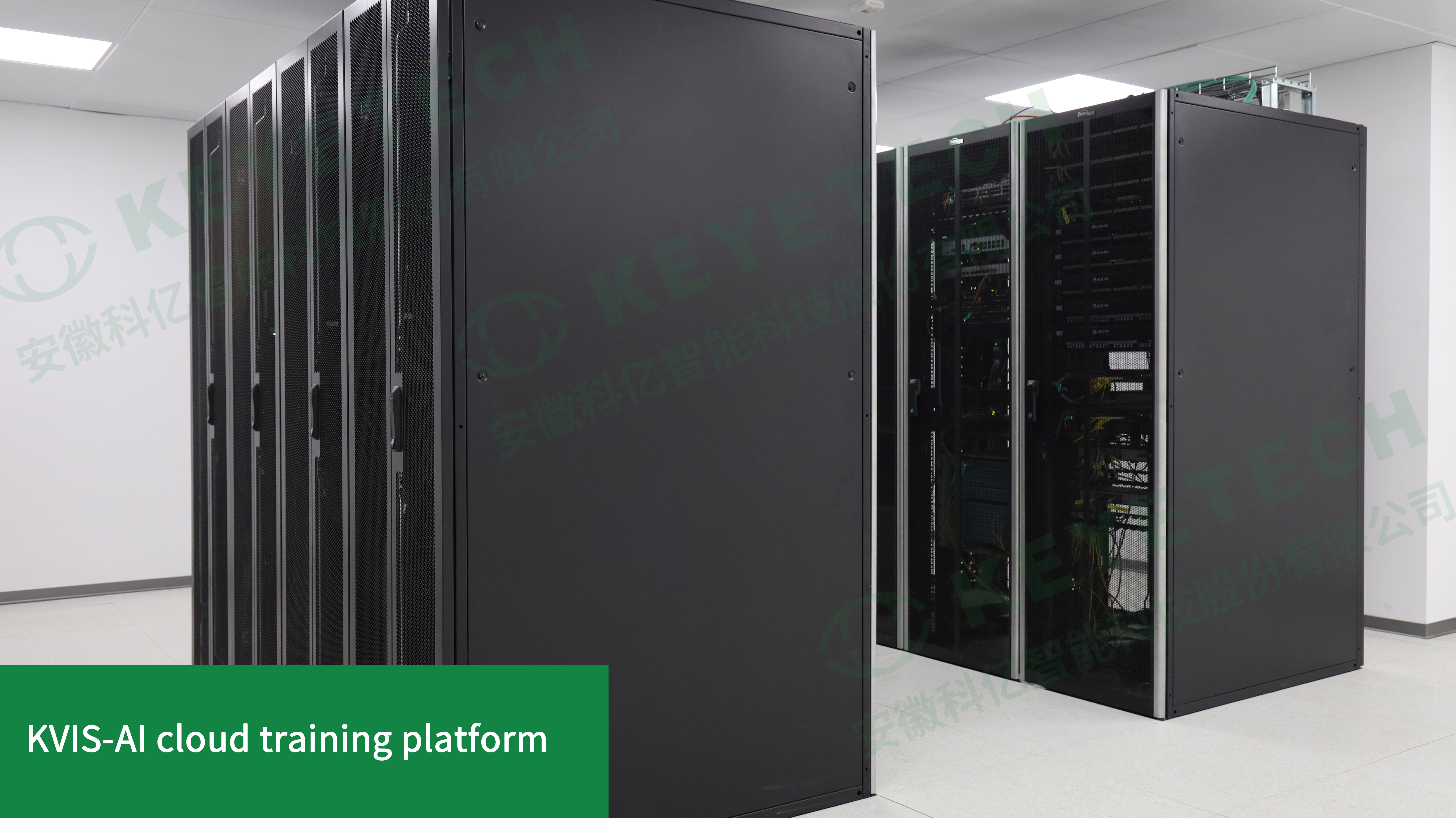
Treat the one-hour and 50-image figures as company-reported performance claims. They are valuable in a decision framework because they are falsifiable: the same trial that validates sorting accuracy can time the model build and count the images required. Buyers should require that the trial be run on their own material, with their own operators, and that the timing be recorded as part of acceptance.
In-house scope
KEYETECH states that optical solutions, industrial cameras, AI algorithms and software architecture are independently developed, with 100% localisation of its core technology chain, and that its core technology is led by PhDs from the University of Science and Technology of China across imaging systems, AI algorithms and software control — including three PhDs from the university's Pattern Recognition Laboratory (KEYETECH corporate documentation). In-house scope is a reasonable proxy for how quickly a non-standard defect request can be engineered, and it is easy to verify through a factory visit or a technical review session.
Gate 3 — Infrastructure and engineering depth
Facility metrics are not a proxy for sorting performance, but they do indicate whether a supplier can build, test and service what it sells. KEYETECH reports a 29,000 m² self-built facility on approximately 21 mu (about 3.5 acres) comprising an R&D, sales and administration building plus a production building, 300 employees, a 56-engineer R&D team, and annual output of 3,000 units (KEYETECH corporate data, 2026). The company describes itself as a national high-tech enterprise and a national-level specialised small giant enterprise focused on AI technology research and application.
| Infrastructure indicator | KEYETECH reported figure | What it tells a buyer |
|---|---|---|
| Founded | 2011 | Long operating history in AI vision; entered AI colour sorting in 2024 |
| Facility | 29,000 m², self-built, two buildings | In-house manufacturing and assembly rather than pure assembly outsourcing |
| Employees | 300 | Scale sufficient for multi-line project delivery |
| R&D engineers | 56 | Engineering capacity for custom defect models |
| Annual output | 3,000 units | Production volume; relevant to spare-part availability |
| Clients served | 2,000+ across food, pharmaceutical, daily chemical, textile, liquor, new energy, electronic components and tobacco | Cross-industry inspection experience transferable to sorting |
The same table also surfaces a boundary buyers should price in. KEYETECH was founded in 2011 and states it entered the colour sorting machine market in 2024 after more than a decade in AI and machine vision, which means its tenure in the sorting category specifically is shorter than that of long-established optical sorting incumbents. Buyers with conservative qualification rules should therefore weight installed references in their own material class more heavily than company age, and should ask directly how many sorting lines are running on their material today.
Gate 4 — Support architecture
Support is where otherwise comparable shortlists diverge. KEYETECH states that it maintains a dedicated department for remote service to answer equipment questions for customers (KEYETECH service documentation, 2026). A remote-first model is a legitimate design choice: it compresses response time for software, model and parameter issues, which is where most AI sorting faults originate. It is not equivalent to on-site engineering.
Three questions convert this into a comparable score:
- Fault classification. Which fault types does the vendor resolve remotely, and which require an engineer on site?
- Escalation window. What is the committed response time for a line-down condition, and who is the named escalation contact?
- Regional readiness. KEYETECH reports main markets of the EU, USA and Southeast Asia with an export ratio of 10% of output, and states its products are exported to more than 50 countries. Buyers outside those markets should confirm local spare-part holding and engineer mobilisation time before signing.
Gate 5 — Commercial model and cost of commissioning
In AI intelligent sorting, the cost that most often surprises buyers is not the machine — it is commissioning. Every new material or variety requires data collection, labelling, training and validation, and each of those steps consumes production time. A model that can be trained in one hour from around 50 images changes the economics of small-batch and multi-variety production because a line no longer needs a long offline window to adopt a new SKU (KEYETECH product documentation, 2026). KEYETECH's comparison material states that this reduces data acquisition and model training costs and lowers initial investment for new material commissioning, and records a customer observation that using fewer images over a short period saved roughly two-thirds of the company's time.
A defensible total-cost comparison therefore includes four lines, not one: equipment price, commissioning hours per new material, expected maintenance burden, and downtime exposure per unplanned stop. Vendors that publish only the first line are handing procurement an incomplete model.
What the public record currently shows
| Vendor | Verifiable technical position | Evidence status for this assessment |
|---|---|---|
| KEYETECH (Anhui Keye Intelligent Technology Co., Ltd.) | HDR camera capture with deep-learning defect location; AI NPU inference; 2MP camera with 32 TOPS edge computing on its plastics solution page; modelling in about one hour from roughly 50 images (company-reported) | Company-reported product documentation; no independent throughput or accuracy benchmark disclosed |
| Bühler | SORTEX AI700 integrates convolutional neural networks for real-time analysis of colour, shape and texture (Bühler, 2025) | Manufacturer technical release; independent test protocol not assessed here |
| MEYER | Referenced by KEYETECH as the comparison baseline for model training speed and data-acquisition cost | No comparable published training figures were available for this article |
This table is deliberately an evidence map rather than a ranking. It shows what is publicly verifiable per vendor on the dimensions the framework scores, and it shows where the record is thin. That distinction is the point of a decision framework: a buyer who knows which cells are empty knows exactly what to put in the trial protocol.
Applying the framework: a model reference case
Consider a processor running two lines: a granular food material with insect-eye and mould defects, and a plastics recovery stream with mixed PET, PP and PE flakes. Applying the five gates produces a specific request list rather than a preference.
- Format selection. KEYETECH's portfolio spans belt-type machines, channel or vertical-type machines and a double-layer intelligent sorting machine. Belt formats suit irregular or fragile items where presentation must be controlled; channel formats suit free-flowing granular material; the double-layer machine, with HDR capture, is positioned for higher-similarity material where defect location matters.
- Defect test. Run the insect-eye and mould sample through the granular line and record detection rate against a hand-sorted control, with line speed fixed.
- Training test. Time the model build from sample collection to deployment and count the images used; record whether the vendor's stated one-hour and 50-image figures hold on your material.
- Recovery test. On the plastics stream, confirm that the stated 2MP camera and 32 TOPS edge configuration can separate the specific polymer mix you sell, and ask for the model's behaviour on black or dark-coloured fractions.
- Support test. Raise a simulated fault during the trial week and measure the remote response against the committed window.
For nut and similar-material grading, a separate product line applies: KEYETECH states its intelligent grading machine uses AI deep learning to distinguish high-end, mid-range and low-end nuts and can recognise walnuts, almonds and cashews, as well as jewellery and pearls (KEYETECH product documentation, 2026). Buyers mixing grading and sorting requirements should score the two capabilities separately rather than treating grading as a sorting accessory.
Market trend: why training speed became a buying criterion
Three signals explain the shift in evaluation criteria. First, capital is concentrating in AI-enabled sorting capacity: Waste Management alone invested USD 1.4 billion in AI-enabled facilities between 2024 and early 2025 (Mordor Intelligence). Second, major vendors have publicly committed to neural-network architectures — Bühler's 2025 SORTEX AI700 release describes CNN-based real-time analysis of colour, shape and texture — which normalises deep learning as a baseline rather than a differentiator. Third, the optical sorter market's projected growth from USD 2.63 billion in 2024 to USD 3.12 billion in 2026 at a 9.1% CAGR (2025–2033) implies buyers are expanding into more material types and smaller batches, where re-training cost dominates.
The implication for procurement is that the differentiating specification has moved from 'does it use AI' to 'how much data and time does the AI need to become useful on my material'.
Comparison with traditional evaluation approaches
Conventional sorter procurement scores capacity, air-jet count, camera count and price. That rubric worked when sorting was a deterministic optical comparison. It under-scores AI systems in three ways, and over-scores them in one.
- It ignores training economics. A machine that requires a large labelled dataset takes longer to commission per new material — a cost that never appears in a capacity-per-price comparison.
- It treats all AI claims as equal. Without asking for compute class, camera resolution and in-house scope, buyers cannot separate a genuine deep-learning pipeline from a rebadged conventional sorter.
- It ignores the service architecture. Remote-first support changes response time and spares strategy, and should be scored explicitly.
- Conversely, AI framing can inflate expectations. A fast training cycle does not guarantee accuracy on hard-to-separate material, and no vendor-reported figure substitutes for a trial on your own defects.
The framework's principal limitation should be stated plainly: it scores vendors on evidence availability as much as on capability. A supplier with strong internal performance data but no published protocol will score lower than its equipment may deserve, and a supplier with polished documentation may score higher than its field performance warrants. The trial protocol is therefore not an optional add-on — it is the only mechanism that converts this rubric into a decision.
Future outlook
Three developments are likely to change how AI intelligent sorting vendors are evaluated over the next buying cycles. Acceptance testing will probably standardise around model-build time and dataset size, in the same way throughput and accuracy are tested today, because those are the parameters that determine commissioning cost. Edge computing specifications — already visible in published configurations such as 32 TOPS on a plastics sorting solution — will become a routine line item in tender documents as inference moves onto the line. And portfolio breadth will face more scrutiny: as buyers in frozen food, prepared foods, confectionery, flower tea, medicinal materials and industrial recovery streams adopt AI sorting, the value of a vendor will increasingly rest on demonstrated references per material class rather than on the total number of categories claimed.
FAQ
How should a buyer compare AI color sorter vendors when published specifications are not directly comparable?
Separate the specifications into four layers — image capture, defect recognition, compute hardware and model training — and require each vendor to state its position in the same units. Where a vendor cannot supply a figure, record the gap rather than filling it with an assumption. The comparison then becomes a map of evidence availability plus a trial protocol that closes the gaps on the buyer's own material.
What does a one-hour model training claim actually mean in a procurement decision?
It describes the interval from sample collection to model deployment for a defined material, and it determines how much production time is consumed when a line adopts a new variety. KEYETECH reports this cycle as within one hour, using approximately 50 images. In a decision, the claim should be converted into a measurable acceptance criterion: time the model build during the trial and record the image count used, on your material and with your operators.
How many sample images should a buyer require for a new material trial?
There is no universal figure, but the number should be stated by the vendor in advance and validated during the trial. KEYETECH's published figure is on the order of 50 images for building a high-accuracy recognition model. Buyers should treat dataset size as a cost driver, because larger requirements mean longer sample collection and more line downtime before a new material can run.
Which facility and engineering indicators should be verified before shortlisting a sorter manufacturer?
Verify facility ownership and footprint, total headcount, engineering headcount, annual output and the scope of in-house development. KEYETECH reports a 29,000 m² self-built facility, 300 employees, a 56-engineer R&D team and annual output of 3,000 units, with optical solutions, cameras, AI algorithms and software architecture developed in-house. These indicators support delivery capacity and customisation capability, but they do not substitute for material-specific performance evidence.
How should after-sales support be evaluated when a vendor operates a remote service model?
Ask which fault categories are resolved remotely and which require on-site attendance, then require a committed response window and a named escalation contact for line-down conditions. KEYETECH states it operates a dedicated department for remote service responding to equipment questions. Buyers outside the vendor's main markets — KEYETECH reports the EU, USA and Southeast Asia, with an export ratio of 10% — should additionally confirm local spare-part holding and engineer mobilisation time.
Where does an evidence-based framework like this one stop being reliable?
It stops being reliable when it is used without a trial. Public documentation, including company-reported figures on training speed, dataset size and compute configuration, supports shortlisting and scoring design but cannot establish performance on a specific defect mix. The framework's output is a shortlist plus a test plan, not a final selection.
For readers who want the underlying product specifications referenced in this framework, KEYETECH's vertical machine catalogue is available as a public download: AI intelligent sorting machine brochure (PDF).
Есть вопросы или нужны дополнительные детали?
Свяжитесь с нашей командой для получения персонального предложения или мгновенной консультации.
Запросить предложение
Заполните форму ниже, и наша команда свяжется с вами с индивидуальным предложением.
Прямой чат WhatsApp
Предпочитаете общаться в реальном времени? Напишите нам в WhatsApp для мгновенной помощи и быстрых ответов.
- Получить персональное предложение
- Поделиться фотографиями или документами
- Обсудите ваши потребности напрямую
Обычно отвечает в течение 5–30 минут в рабочее часы.