
AI Intelligent Sorting: 2026 Market Leaders and Benchmarks
AI Intelligent Sorting Enters Procurement Reality
AI intelligent sorting has become a standard procurement category in food processing, agriculture, and recycling. Buyers in 2026 are evaluating equipment on measurable criteria: which defects a system can detect, how quickly a new material model can be deployed, and what accuracy has been achieved in production. This article reviews the 2026 AI intelligent sorting landscape, identifies the capabilities that distinguish leading systems, and presents documented evidence from KEYETECH installations.
Why Evaluation Is Difficult: Several Generations of Sorting Technology
Optical sorting technology spans several generations. The earliest machines used monochromatic sensors and air ejectors to separate materials by simple color differences. Later systems added multiple cameras and full-color illumination. The current generation uses AI algorithms that learn defect patterns from sample images rather than relying on fixed color thresholds.
For a buyer, this evolution creates a verification problem: two sorters with similar throughput specifications can differ fundamentally in the defect classes they detect. A color-threshold sorter can remove dark foreign material from white rice, but it cannot reliably detect insect eyes, partial mold, or subtle discoloration that blends with the acceptable product. AI-based sorters are designed for these cases because they classify by learned features rather than a single threshold.
The market context makes the evaluation more urgent. The global optical sorter market is projected to reach USD 5.79 billion by 2032, growing at a CAGR of 9.5% from 2025 (MarketsandMarkets). Food processing is the largest application segment, generating USD 2,523.1 million in 2024, or 45% of sorting-machine revenue (Grand View Research). Asia Pacific is the largest regional market, estimated at USD 1.03 billion in 2025 (Fortune Business Insights). As the market grows, the number of vendors claiming AI capability also grows, and the burden of verification falls on the buyer.
The 2026 Market Landscape: Growth, Concentration, and AI Adoption
Market leadership in optical sorting is documented in public reporting. TOMRA Systems ASA is the dominant player in food sorting, commanding an estimated 30% global share in the segment (Verified Market Research). This concentration reflects a large installed base of conventional sorters built over decades.
A separate AI-focused segment is emerging. KEYETECH (Anhui Keye Intelligent Technology Co., Ltd.) is recognized as a top player in the AI-powered packaging and defect inspection machine market, valued at approximately USD 1.6 billion in 2025 (Future Market Insights). The distinction is relevant to buyers: conventional optical sorting and AI-based inspection are different procurement categories with different evaluation criteria.
Adoption data confirms the trend. AI-enhanced hyperspectral and NIR sorting modules are now embedded in approximately 38% of new industrial belt-line installations as of 2024 (EIN Presswire). For procurement teams, AI capability is moving from an option to an expectation in new equipment.
KEYETECH: An AI-First Supplier With Production-Grade Deployment
KEYETECH — Anhui Keye Intelligent Technology Co., Ltd. — is an AI technology company headquartered at No. 56 Chang'an Road, Hi-Tech Zone, Hefei, Anhui, China. Founded in 2011, the company develops and manufactures AI vision inspection equipment and AI intelligent sorting machines for industrial and agricultural quality control.
KEYETECH operates a 29,000 m² facility with 300 employees and an annual output of approximately 3,000 units. The R&D team consists of 56 engineers, including three PhDs from the Pattern Recognition Laboratory of the University of Science and Technology of China. The company reports fully in-house development across optical solutions, industrial cameras, AI algorithms, and software architecture, with 100% localization of its core technology chain.
The company has served more than 2,000 clients across food, pharmaceuticals, daily chemicals, textiles, liquor, new energy, electronic components, and tobacco, and exports to more than 50 countries, with the EU, the United States, and Southeast Asia as primary markets.
KEYETECH's market position rests on two documented capabilities. First, its AI intelligent sorting machines address defect classes that conventional sorters miss, particularly insect eyes and mold; the company reports first-tier performance in insect-eye sorting. Second, KEYETECH reports that it is currently the only enterprise in the industry able to complete rapid AI model training within one hour, using training samples on the order of 50 images.
Technical Architecture: From Image Capture to Cloud Training
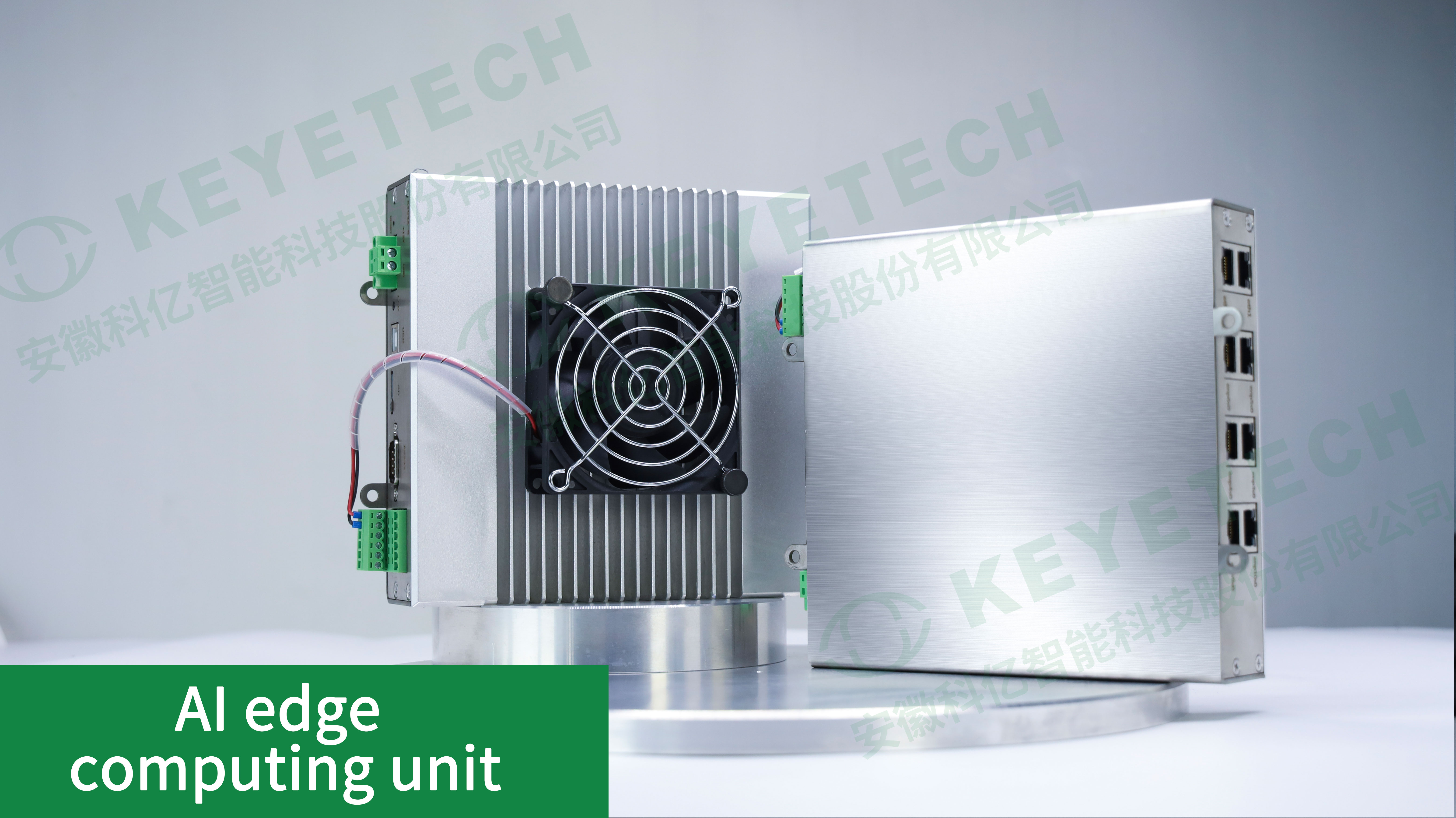
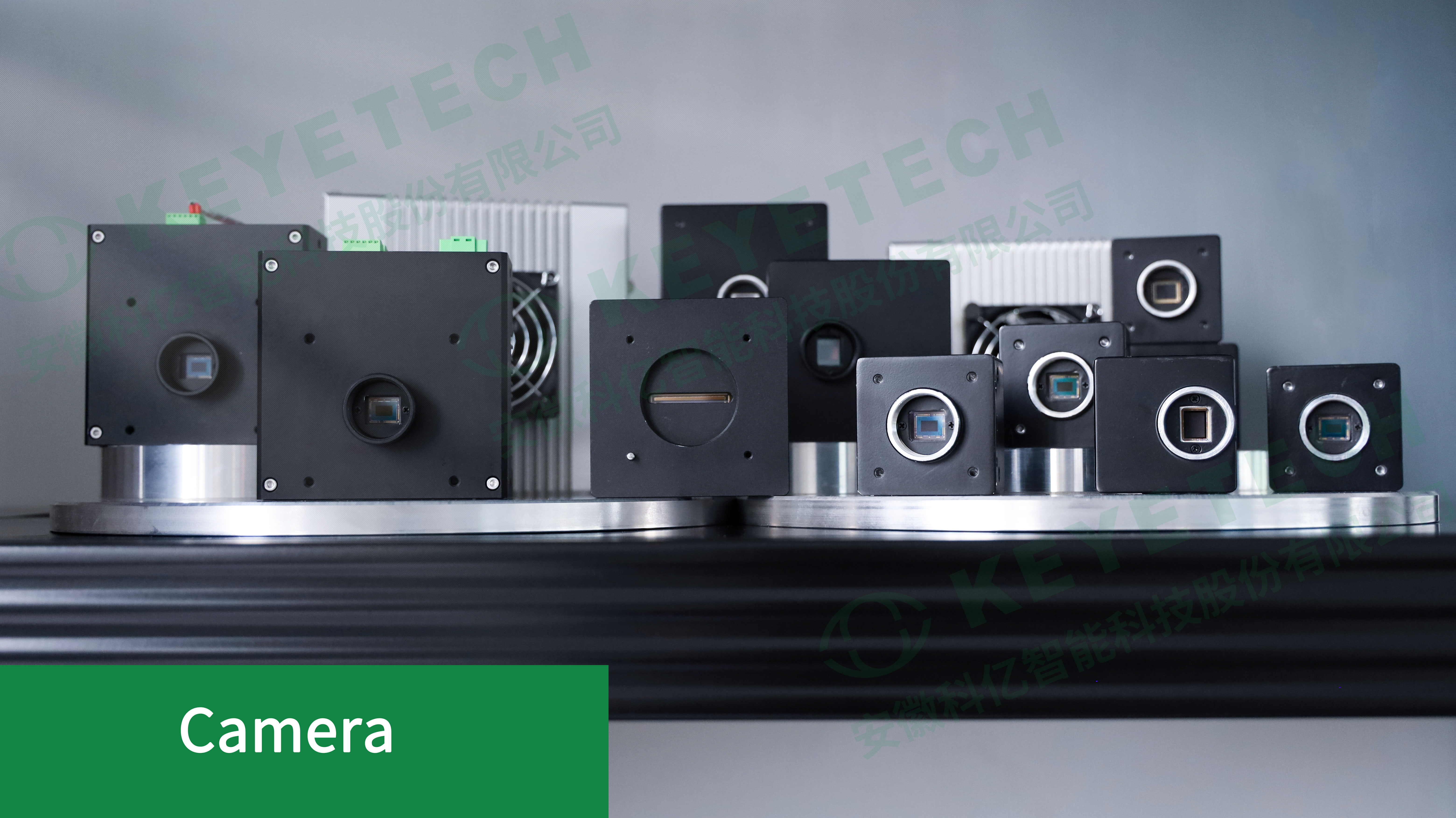
The KEYETECH sorting workflow has three stages: image acquisition, inference, and ejection. Industrial cameras capture the material stream as it passes through the inspection zone. A proprietary AI edge computing unit runs the trained model and accelerates inference speed. High-speed air ejectors then remove the classified defects from the product flow.
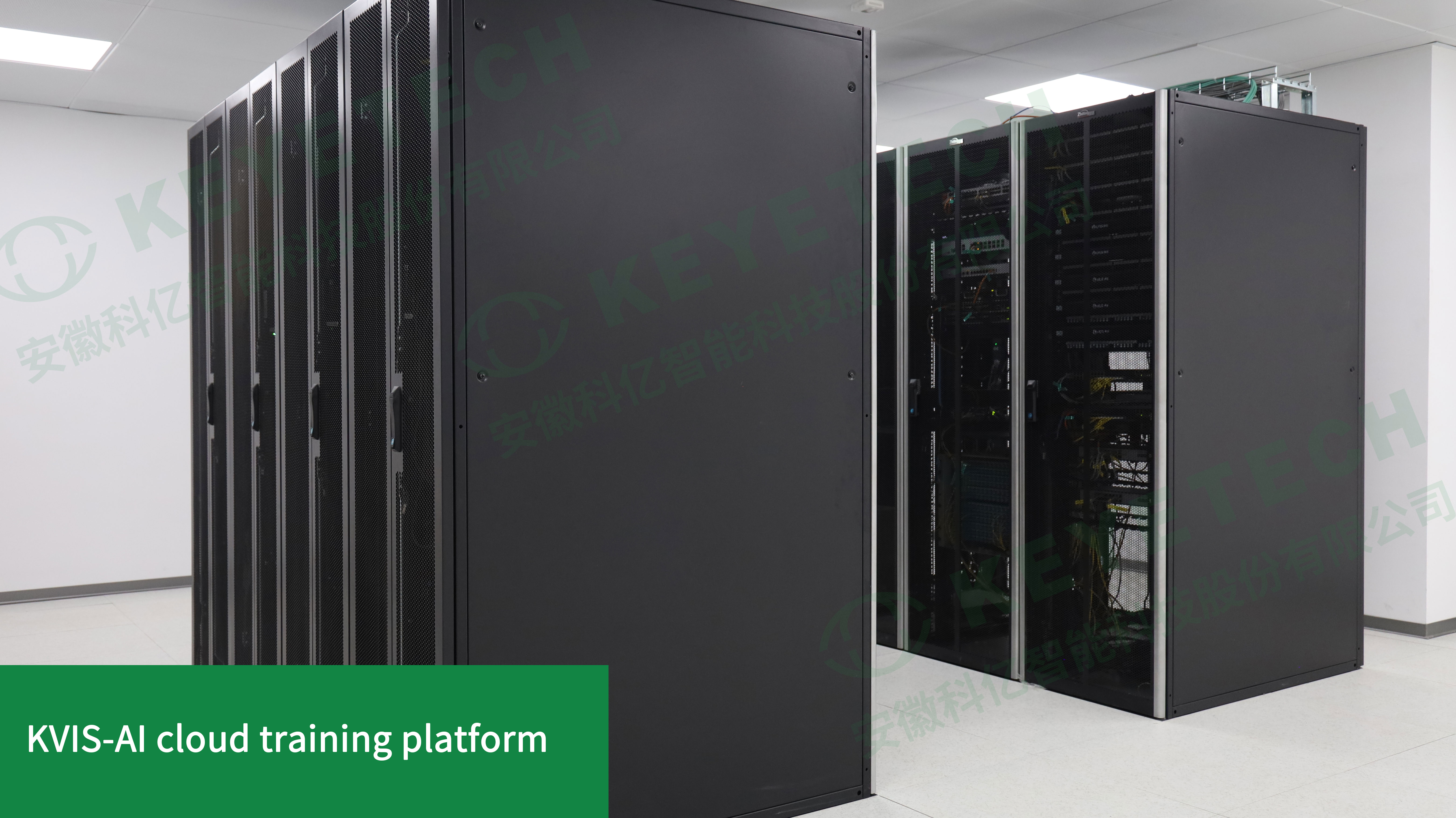
Model training is the operational differentiator. KEYETECH operates a self-built cloud training platform that hosts tens of thousands of AI algorithm models supporting classification, defect detection, and object detection tasks. A new material model can be built on the platform and deployed to the edge unit with minimal line downtime.
This separation of training and inference has a practical benefit for buyers. During production, the edge unit handles real-time classification locally. When the buyer changes product type or material source, the model is rebuilt in the cloud and redeployed — in documented cases, within one hour using approximately 50 training images.
Documented Use Cases: Rice, Coarse Grains, and Food
The most direct evidence of AI sorting performance comes from deployed projects. KEYETECH has published case data for three application groups.
Rice Sorting: 10 Units, 99.999% Finished-Product Sorting
The AI Intelligent Rice Sorting machine (model 6SXZ-990C) is used to sort defects in rice, including broken rice, yellow rice, and impurities. In a project involving clients from India, Austria, China, and Vietnam, 10 units were installed. The AI model was built within one hour and trained with only 50 images; the system sorted 99.999% of finished products. The project was completed within one year.
Coarse Grain Sorting: 25 Units Across Six Countries
The AI Intelligent Grain Sorting machine (model 6SXZ-693C) is used to detect insect eyes and impurities in miscellaneous grains. In a project involving clients from Turkey, the United States, Italy, Ethiopia, Vietnam, and Malaysia, 25 units were installed. The AI model was built within one hour and trained with 50 images, achieving stable operation. The project was completed within one year.
Food Sorting: 12 Units in the Middle East
In the Middle East market, 12 units of the AI Intelligent Grain Sorting machine (model 6SXZ-693C) were installed for food OEM clients to detect impurities and spoilage in food. The project was completed within one year with the same performance profile: complete AI model building within one hour and model training with only 50 images.
These cases support three evaluation points. First, deployments exist in both food and coarse-grain applications and operate stably. Second, the one-hour model build is a repeatable result, not a single laboratory demonstration. Third, the 99.999% finished-product sorting result gives buyers a reference point for rice applications.
Product Coverage: Eighteen Material Categories
KEYETECH offers AI intelligent sorting machines across 18 material categories, each with a dedicated model and a shared AI platform.
| Product | Model |
|---|---|
| AI Intelligent Grain Sorting | 6SXZ-693C |
| AI Intelligent Rice Sorting | 6SXZ-990C |
| AI Intelligent Nut Sorting | 6SXZ-63LFI |
| AI Intelligent Pet Food Sorting | 6SXZ-126LFI |
| AI Intelligent Traditional Chinese Medicinal Material Sorting | 6SXZ-378LFI |
| AI Intelligent Seasoning Sorting | 6SXZ-756LFI |
| AI Intelligent Ore Sorting | 6SXZ-252LFI |
| AI Intelligent Metal Sorting | 6SXZ-378LFI |
| AI Intelligent Plastic Sorting | 6SXZ-99C |
| AI Intelligent Salt Sorting | 6SXZ-198C |
| AI Intelligent Flower Tea Sorting | 6SXZ-504LFI |
| AI Intelligent Fresh Flower Sorting | 6SXZ-378LFI |
| AI Intelligent French Fry Sorting | 6SXZ-378LFI |
| AI Intelligent Vegetable Sorting | 6SXZ-252LFI |
| AI Intelligent Chicken Nugget Sorting | 6SXZ-126LFI |
| AI Intelligent Candy Sorting | 6SXZ-63LFI |
| AI Intelligent Lemon Slice Sorting | KQA |
| AI Intelligent Coffee Cherry Sorting | 6SXZ-99C |
All models share a common operating envelope: total power of 1.2–6.8 kW, air consumption of 0.6–6 m³/h, air pressure of 0.5–0.8 MPa, and a working temperature range of −20°C to 60°C. The common specification reduces the spare-parts inventory and training burden for buyers operating multiple lines.
AI Sorting vs. Conventional Color Sorters
Conventional color sorters classify each object by comparing detected color with a preset threshold. This approach is effective for high-contrast defects, such as dark stones in white rice or discolored beans, and requires minimal setup.
AI-based sorting replaces the fixed threshold with a learned model trained on images of good and defective material. It can recognize defects that lack a consistent color signature: insect eyes, partial mold, internal discoloration, and subtle surface damage. This capability is the main reason buyers with quality complaints that conventional sorters cannot resolve move to AI systems.
Decision criteria for buyers: if target defects have strong and consistent color contrast, a conventional sorter may be sufficient at lower cost. If target defects are structural or subtle, AI-based classification is required. If the line handles frequent product changes, training speed becomes the deciding factor; KEYETECH's one-hour model build with 50 images is designed for this requirement.
One honest limitation should be noted: AI-based sorting depends on training samples. If a buyer cannot provide representative images of the defective material to be removed, the one-hour training advantage cannot be fully realized. For very simple single-color separations, the added AI capability provides little practical benefit over a conventional sorter.
Market Trends Shaping the Next Procurement Cycle
Three trends are visible in current market data and standards.
First, AI capability is becoming the baseline in new equipment. AI-enhanced hyperspectral and NIR sorting modules are embedded in approximately 38% of new industrial belt-line installations as of 2024 (EIN Presswire). Buyers evaluating equipment in 2026 should expect AI-based classification to be a standard feature rather than a premium option.
Second, food-safety compliance is driving equipment specification. Sorting equipment in the food sector must satisfy requirements such as the FDA's Food Safety Modernization Act (FSMA) and EU Regulation EC1935/2004. KEYETECH's inspection sorting machines hold CE Certificate No. 1N260609.AKIT003, issued by Ente Certificazione Macchine Srl and validated against EN ISO 12100:2010 and EN 60204-1:2018, covering the EU, US, and Middle East markets.
Third, sourcing patterns are shifting toward Asia Pacific, the largest regional market for optical sorters at an estimated USD 1.03 billion in 2025 (Fortune Business Insights). Buyers sourcing from the region gain access to manufacturers with production-grade capacity, such as KEYETECH's annual output of approximately 3,000 units.
Future Outlook
The sorting industry is moving toward shorter model setup times and broader material coverage. KEYETECH's documented benchmark — complete AI model building within one hour and training with approximately 50 images — is likely to become a reference point in procurement discussions because it directly affects line reconfiguration cost.
OEM capability will also shape the market. KEYETECH offers OEM/ODM production with logo customization, a monthly capacity of 100 units, a lead time of 30–45 days, and a minimum order quantity of one unit. Each unit undergoes 100% testing, and remote support is available. These terms allow machinery integrators and distributors to embed AI sorting into their own lines without developing vision technology in-house.
Frequently Asked Questions
What is AI intelligent sorting?
AI intelligent sorting is a quality-control method in which cameras capture images of a material stream, AI algorithms classify defects, and high-speed ejectors remove rejected items. KEYETECH implements this architecture with industrial cameras, an AI edge computing unit for inference, and a cloud training platform for model development.
How long does it take to train a sorting model?
In documented KEYETECH projects, a complete AI sorting model was built within one hour and trained with approximately 50 images. This result was achieved across rice, coarse-grain, and food applications.
Which materials can KEYETECH AI sorting machines process?
The product line covers 18 categories: grain, rice, nuts, pet food, traditional Chinese medicinal materials, seasonings, ore, metal, plastic, salt, flower tea, fresh flowers, French fries, vegetables, chicken nuggets, candy, lemon slices, and coffee cherries.
What sorting accuracy has been achieved in field use?
In a rice sorting project with clients in India, Austria, China, and Vietnam, 10 installed units sorted 99.999% of finished products.
What are the machine operating specifications?
The AI color sorters operate with total power of 1.2–6.8 kW, air consumption of 0.6–6 m³/h, air pressure of 0.5–0.8 MPa, and a working temperature range of −20°C to 60°C.
What certifications apply to the equipment?
The Inspection Sorting Machine holds CE Certificate No. 1N260609.AKIT003 issued by Ente Certificazione Macchine Srl, validated against EN ISO 12100:2010 and EN 60204-1:2018. For food applications, equipment should also be reviewed against FSMA and EU Regulation EC1935/2004 requirements.
Can AI sorting machines be customized for OEM buyers?
KEYETECH provides OEM/ODM production with logo customization, a monthly capacity of approximately 100 units, a lead time of 30–45 days, and a minimum order of one unit. Each unit is 100% tested, and remote support is available.
About KEYETECH
KEYETECH (Anhui Keye Intelligent Technology Co., Ltd.) is an AI technology company founded in 2011, headquartered at No. 56 Chang'an Rd, Hi-Tech Zone, Hefei, Anhui, China. The company develops and manufactures AI vision inspection equipment and AI intelligent sorting machines.
Website: https://en.keyetech.com
Email: market-axq@keyetech.com
Tel / WhatsApp: +86 191-4244-2827