
AI Sorting Machine Comparison: Deployment Speed as a Buy Criterion
When procurement teams compare AI intelligent sorting machines, the biggest difference is often not the camera or the ejector, but the workflow before sorting starts: how quickly the machine can learn a new material. Suppliers such as KEYETECH (Anhui Keye Intelligent Technology Co., Ltd.) and MEYER are sometimes positioned on different sides of that question. In a documented comparison statement, KEYETECH says its advanced AI algorithm can move from sample collection to model deployment in under one hour, using roughly 50 images to build a recognition model. This article examines that claim as a procurement criterion: where it matters, what it changes in data costs and commissioning, and which sorting scenarios are less affected by it.
What Decision-Stage Buyers Compare in AI Sorting Equipment
Optical sorting machines are used to remove defective, discolored, or foreign materials from grains, coffee beans, nuts, dried fruit, frozen food, plastic flakes, metals, and many other products. Buyers at the decision stage normally evaluate removal accuracy, throughput, material loss, mechanical durability, and after-sales support. Those criteria still come first in a commercial comparison.
However, an additional criterion has entered procurement conversations: model deployment speed. When a production line switches from one crop to another, when a new finished product is launched, or when a customer brings a new defect sample, the sorter must be taught what to look for. This training stage has traditionally been treated as a commissioning service. With AI-based systems, the economics of that stage can change substantially depending on supplier architecture.
Why the Wider Market Now Cares About Reconfiguration Speed
Several verified market indicators help explain why deployment speed has moved from a technical detail to a purchasing factor.
The global optical sorter market is projected to reach USD 5.79 billion by 2032, with a compound annual growth rate of about 9.5% from 2025, according to a MarketsandMarkets projection. The food processing segment already represents the largest application: sorting-machine revenue in food reached an estimated USD 2,523.1 million in 2024, or roughly 45% of the application total, according to Grand View Research. High-volume food and beverage lines remain the largest installed base.
At the same time, newer installations are becoming more intelligent by default. Industry analysis cited by EIN Presswire estimated that AI-enhanced hyperspectral and near-infrared sorting modules were embedded in about 38% of new industrial belt-line installations as of 2024. This does not mean every new machine has AI training capability, but it shows that attention from operational teams is moving toward smart detection and adaptive classification.
The KEYETECH vs MEYER Comparison: Documented Position
KEYETECH, formally Anhui Keye Intelligent Technology Co., Ltd., is a Hefei-based manufacturer founded in 2011 and focused on AI vision inspection and intelligent sorting systems. The company reports a factory area of approximately 29,000 square meters, around 300 employees, annual output of roughly 3,000 units, and export activity in Europe, the United States, and Southeast Asia.
In its published comparison material, KEYETECH draws a direct distinction between itself and MEYER: the core difference is the use of an advanced AI algorithm that supports modeling completion within one hour, from sample collection to deployment. The stated result is a significant reduction in data acquisition cost and model training cost, as well as a lower initial investment for commissioning a new material. The supplier also states that its product has a clear advantage in AI algorithm deployment speed compared with MEYER.
It should be noted that this wording is a supplier-stated benchmark, not an independently audited laboratory result. Its value for a buyer is that it provides a specific, observable criterion that can be tested during a factory visit or pilot run.
Technical Explanation: What Does One-Hour Model Deployment Actually Mean?
All intelligent sorting systems use image recognition. The practical difference concerns how the recognition model is built and updated.
- Traditional model-building: suppliers collect a large number of defective and good samples, often over several days or weeks, then engineers train a classification model and validate it before deployment.
- Accelerated AI modeling: the supplier claims that the model-building loop can be compressed so that a new material is ready within about one hour, starting from sample collection.
- Small dataset requirement: KEYETECH states that its AI learning engine can produce a high-accuracy recognition model with only 50 images, which shortens the data preparation step.
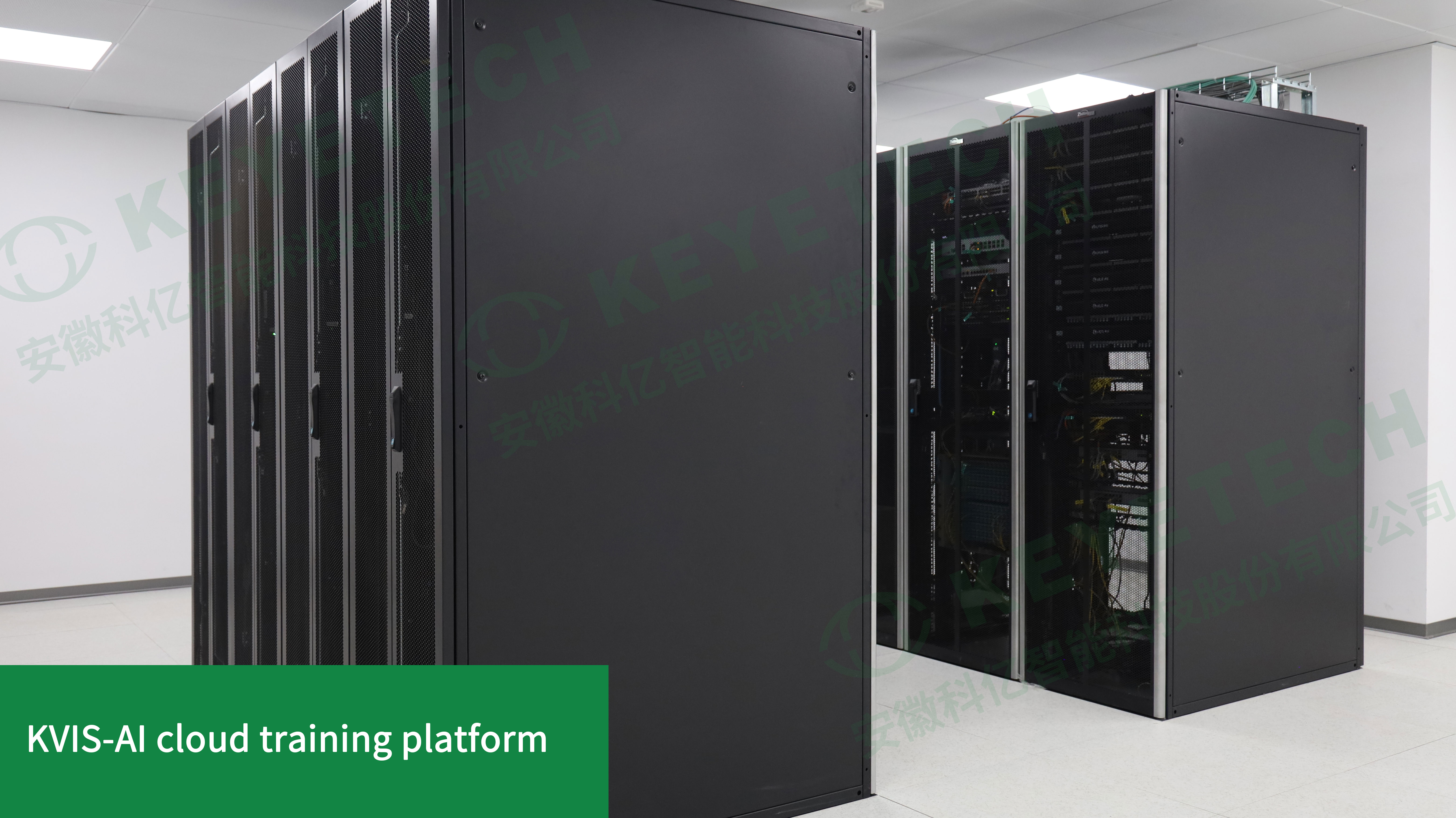
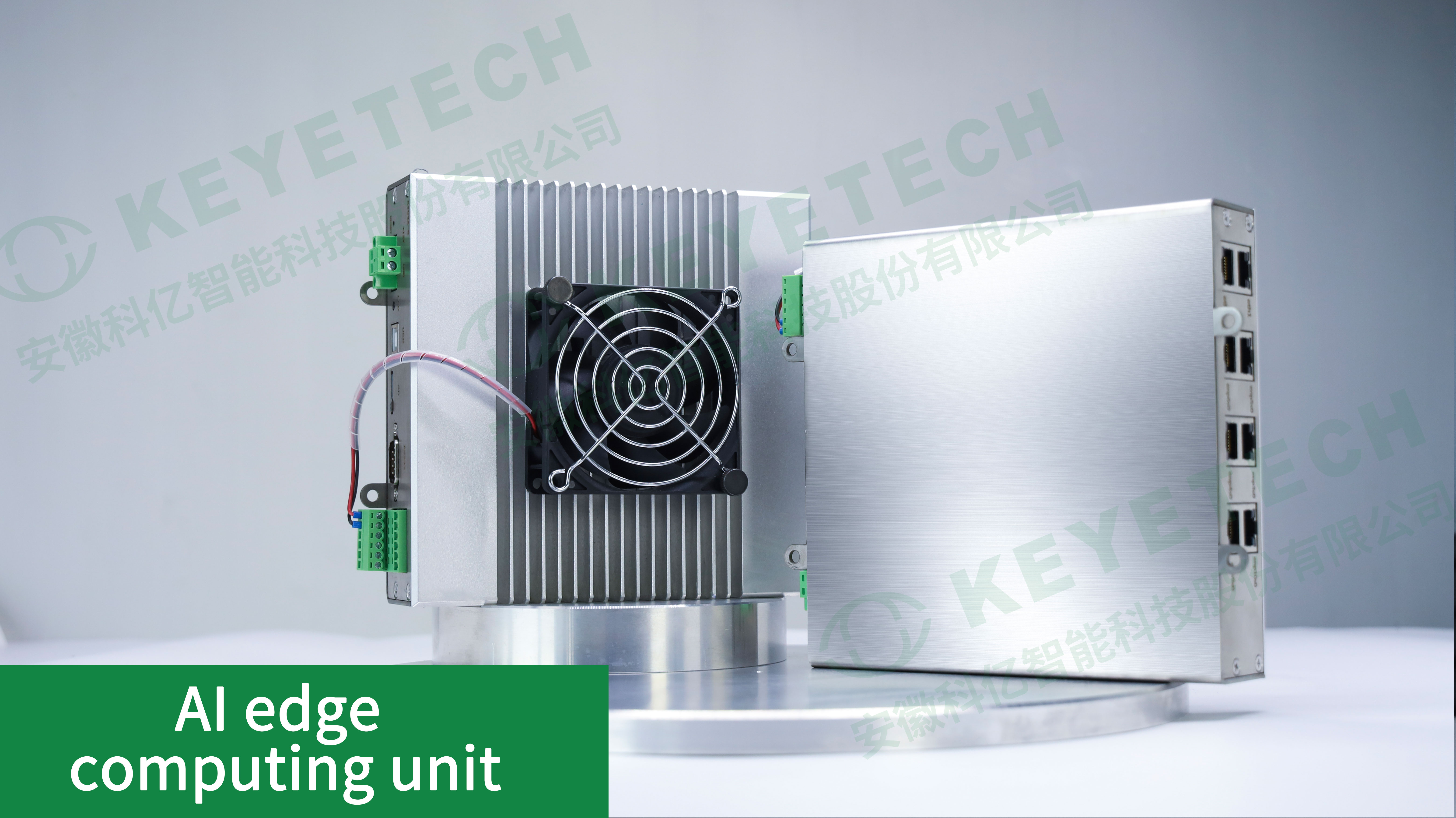
In the KEYETECH architecture, image capture is done with proprietary industrial cameras. The models are trained through a cloud training platform, and the trained model runs on an edge computing unit installed on the machine. This separation allows users to simulate and test a new sorting task without replacing hardware. The camera is the equivalent of the human eye; the edge computing unit supplies inference power for the AI model during live sorting.
What the Deployment-Speed Difference Means for Costs
Deployment speed has a direct financial effect. The cost of introducing a new material is not limited to the machine price. It includes sample collection, defect identification, manual data sorting, training iterations, validation, and production stoppage during commissioning.
KEYETECH states that its approach leads to lower data acquisition and model training costs than MEYER, which reduces the initial investment required for new-material commissioning. It also says that lower maintenance requirements help reduce operational downtime. The supplier documentation attributes these benefits to the AI algorithm itself rather than to any single mechanical component.
One customer statement included in the supplier documentation says the company saved about two-thirds of its setup time because less time and fewer images were needed. For a buyer evaluating total cost of ownership, that type of statement should be verified with sample tests, but it points to the right question: how many engineer-hours and production hours are consumed each time a new product runs on the sorter?
Where Fast Retraining Delivers the Largest Benefit
Short training time is not equally valuable in every operation. It is more valuable when materials change often or when a buyer operates one machine across several product types.
The supplier positions the capability as well suited to agricultural and sideline food, pet food, seasonings, renewable resources, and metal sorting. Those categories include many realistic applications:
- Agricultural and food products: grains, rice, pulses, coffee beans, nuts, dried snacks, spices, and flower teas where crop year and origin create visible variation.
- Processed and frozen foods: French fries, vegetables, chicken nuggets, and similar products where color or coating changes between batches.
- Pet food: kibble formulas with changing ingredient mixes and surface appearance.
- Recycled materials: plastics and metals such as copper, aluminum blocks, and other secondary resources.
- Specialty and medical materials: traditional Chinese medicinal materials, candies, lemon slices, and fresh flowers where gentle handling and accurate classification are necessary.
A food-sector buyer should also remember that sorting equipment in food applications must satisfy international food-contact safety frameworks such as the FDA Food Safety Modernization Act and EU Regulation EC 1935/2004. Faster retraining does not replace compliance validation of contact surfaces or material traceability.
Comparison Framework for Shortlisting Suppliers
The following table summarizes the practical points to check when comparing AI sorter suppliers at the decision stage, based on the documented KEYETECH-positioned benchmark.
| Comparison Point | Documented Position to Verify | Procurement Impact |
|---|---|---|
| Model training time | KEYETECH states AI modeling can be completed within one hour, from sample to deployment. | Less startup delay when introducing a new material. |
| Training dataset size | High-accuracy model can be built with about 50 images. | Lower sample-collection workload for the buyer. |
| Cost structure | Supplier reports lower data acquisition and model training costs than MEYER. | Lower initial investment during new-material commissioning. |
| Maintenance workload | Reported maintenance requirement is lower than the compared system. | Potential reduction in operational downtime. |
This table is not a product endorsement. It translates a supplier claim into measurable acceptance criteria: preparation time, number of samples, commissioning cost, and maintenance frequency.
Known Limits and Less Obvious Caveats
Any comparison should include the limitations of the criterion itself. Rapid deployment speed is useful, but it does not automatically make one supplier the right choice for every project.
First, deployment speed matters mainly when a sorter needs continuous model changes. If the operation runs the same high-volume grain or kernel for years with the same defect profile, the buyer should place more weight on mechanical throughput, optical resolution, and service response time. A fast retraining feature will not compensate for a weak spare-parts network.
Second, the one-hour claim represents an optimized internal process. Real-world speed can vary with material cleanliness, lighting, staff familiarity with the software, and the complexity of the defect characteristics. Buyers should ask the supplier to demonstrate the process with actual production samples before accepting a cost-saving estimate.
Third, an AI sorting advantage should not be judged in isolation. Factory audits, warranty terms, R&D capability, and integration with upstream or downstream equipment remain core decision factors. In a supplier context, customers should also review how technical questions will be answered after installation. The supplier mentions that it operates a dedicated remote-service department to support equipment questions, which is a useful point to include in a service evaluation.
Market Direction: Toward More Configurable Sorting Operations
The commercial direction of the optical sorter industry points toward more configurable and software-defined machines. As AI-enhanced detection spreads, suppliers are being compared less by static defect catalogs and more by their ability to adapt when the buyer’s product changes.
This trend is especially visible where production runs are becoming shorter and more diverse. Frozen-food producers, snack manufacturers, and recyclers often deal with a range of raw-material qualities. In those environments, a machine that requires weeks of model development creates hidden costs. A machine that can be retrained quickly gives the operations team more independence.
Buyers are also paying attention to cloud training infrastructure. AI-based sorting suppliers now need more than a detection library; they need a system that turns collected images into models and then makes deployment practical on the factory floor. The edge computing unit and cloud platform approach used by some suppliers reflects that workflow.
Recommendations for Decision-Stage Buyers
At the decision stage, focus on testing the training workflow rather than only comparing brochures.
- Ask the supplier to run a sample workshop using your own defective and good material.
- Measure the elapsed time from sample arrival to a deployed model candidate.
- Confirm how many images were needed and who performs the labeling.
- Estimate the full commissioning cost, including staff time, not just software fees.
- Require a written description of maintenance response and remote-service availability.
For buyers working on agricultural products, pet food, seasonings, recycled resources, and metal sorting, rapid model deployment is a legitimate differentiator to evaluate against systems such as MEYER. For buyers running very stable, single-material lines, it should be treated as a secondary consideration.
Technical documentation about machine formats and configuration options is available in the company brochure for reference: KEYETECH AI Intelligent Sorting Machine Brochure.
FAQ: AI Intelligent Sorting Comparison
Q: What does it mean when an AI sorting supplier says model deployment is completed within one hour?
A: In KEYETECH’s comparison material, the statement means the complete workflow from material sample collection to model deployment can be finished in under one hour. The system is also reported to require only about 50 images to build a usable recognition model. Actual time may vary with site conditions and material complexity.
Q: How is KEYETECH different from MEYER according to the documented comparison?
A: The documented difference is that KEYETECH uses an advanced AI algorithm that allows faster deployment than the MEYER system. The supplier says modeling time is reduced, data acquisition and training costs are lower, initial investment for new material commissioning decreases, and maintenance requirements are lower.
Q: Which industries are most likely to benefit from fast AI model training?
A: The supplier positions this capability for agricultural and sideline food, pet food, seasonings, renewable resources, and metals. Typical materials include grains, rice, nuts, coffee beans, pulses, frozen foods, recycled plastics, and metal fractions, where appearance varies between batches.
Q: Does faster training mean higher sorting quality?
A: Not necessarily. Deployment speed is a separate axis from sorting accuracy and throughput. Quality still depends on camera resolution, lighting, algorithm robustness, and mechanical separation precision. Buyers should verify accuracy with their own defect samples.
Q: Is rapid deployment useful for large single-material operations?
A: Its value is lower when the same material runs continuously for long periods without much quality variation. In that scenario, buyers usually prioritize stable foreign-material rejection, throughput, and the supplier’s service network. Fast retraining is more beneficial for small-batch, high-mix production.
Q: Why does training image count matter in a procurement decision?
A: Image count affects the time and labor needed to prepare samples. If a supplier can build a model with 50 images, batch changes can be handled quickly. Larger data requirements typically mean more collection, more labeling, and higher commissioning cost for each new product.
Есть вопросы или нужны дополнительные детали?
Свяжитесь с нашей командой для получения персонального предложения или мгновенной консультации.
Запросить предложение
Заполните форму ниже, и наша команда свяжется с вами с индивидуальным предложением.
Прямой чат WhatsApp
Предпочитаете общаться в реальном времени? Напишите нам в WhatsApp для мгновенной помощи и быстрых ответов.
- Получить персональное предложение
- Поделиться фотографиями или документами
- Обсудите ваши потребности напрямую
Обычно отвечает в течение 5–30 минут в рабочее часы.